


Plant Profile & Key Characteristics
Overview: Pink bleeding heart (Lamprocapnos spectabilis) is a herbaceous perennial 0.4-1.2 m grown as an ornamental and cut flower for its arching sprays of pink heart-shaped blooms. It dies back after flowering, especially in summer heat.
Quick Specifications
| Specification | Attribute |
|---|---|
| Plant Type / Life Cycle | Perennial |
| Foliage Type | Deciduous (herbaceous, dies back) |
| Mature Size | 0.4-1.2 m (16-48 in) |
| Growth Rate | Moderate |
| Toxicity | Toxic if ingested; sap can irritate skin |
| Hardiness | USDA zones 3-9 |
Growth Form & Structure
- Height & Spread: 0.4-1.2 m; can be grown in containers, even indoors.
- Growth Habit & Form: Clumping herbaceous perennial with arching flower stems.
- Lifespan & Maturity: Perennial; goes dormant after blooming and in summer heat.
Anatomy & Physical Features
- Leaves & Foliage: Green to yellowish, deeply lobed (3-lobed) leaves in a pinnate arrangement.
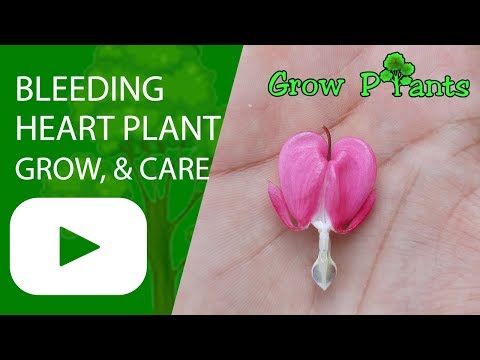
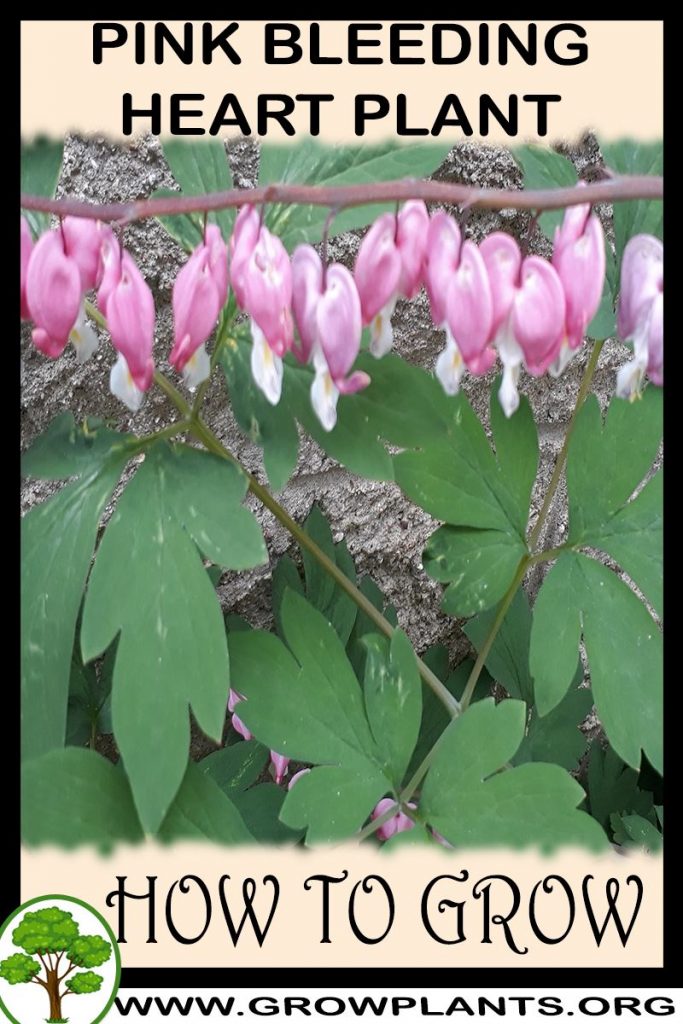
- Flower Characteristics: Pink, heart-shaped pendant flowers with a protruding white or pink ‘drop’, borne on arching racemes.
Primary Uses & Landscape Value
- Functional & Ornamental Roles: Shade and woodland ornamental and cut flower; containers or houseplant.
Care Guide: Planting, Soil & Watering
Overview: Bleeding heart is a woodland perennial for cool climates that flowers in full sun to full shade and prefers a cold winter to rest. It likes rich, consistently moist, well-mulched soil and dislikes heat and drought.
Quick Care Requirements
| Requirement | Ideal Condition |
|---|---|
| Planting Season | Winter or spring while dormant, or summer in growth |
| Growth Rate | Moderate |
| Soil Type | Rich, humus-rich, moist and well-mulched |
| Water Need | Moderate to high; keep the soil evenly moist |
Planting & Establishment
- Best Planting Season: Plant in winter or early spring while dormant, or in summer in growth; it needs a cold winter and resents hot, dry conditions.
- How to Plant:
- Hole Preparation: Dig a hole a little wider than the root ball in humus-rich, moisture-retentive soil.
- Soil Amendments: Work in plenty of leaf mould or compost and mulch the surface to keep the roots cool and damp.
- Planting Depth: Set the crown at soil level – not buried – and firm gently.
- Growth Speed & Expectations: A moderate grower to about 0.4-1.2 m that emerges each spring, flowers, then often dies back in summer heat; do not assume it is dead when it goes dormant.
Soil, Watering & Drainage Care
- Soil Mix & Drainage Needs: Wants rich, moisture-retentive but well-drained soil; in a pot use a humus-rich mix and keep it shaded and damp.
- Watering Schedule & Technique:
- Young / Newly Planted: Keep newly planted crowns consistently moist as they establish.
- Established: Water regularly to keep the soil evenly moist, especially in spring growth; never let it bake dry.
- Seasonal Adjustments: Water freely in spring; as it dies back in summer heat it needs less, then keep just moist through winter dormancy.
Climate, Light & Hardiness
Bleeding heart is a cool-temperate woodland perennial that thrives in humus-rich, moist soil under mild conditions, preferring dappled or part shade and tolerating full sun only where summers stay cool. Its dormant rootstock is extremely cold hardy, but the soft spring foliage is heat-sensitive and vulnerable to late frosts.
Quick Climate Specifications
| Climate Zones | Temperate to cool subtropical, with distinct cold winters |
|---|---|
| USDA Hardiness Zones | 3–9 (site data) |
| Optimal Temp Range | Cool, roughly 13–21 °C (55–70 °F) |
| Cold Damage Begins | Emerging spring shoots nipped by late frost near 0 °C (32 °F); dormant crown far hardier |
| Approx. Survival Minimum | Dormant rootstock survives hard freezes typical of zone 3, around −37 °C (−35 °F) |
| Frost Tolerance | Dormant crown High; actively growing foliage Low |
| Light Conditions | Part/dappled shade; full sun only in cool-summer climates |
| Wind Tolerance | Low–Moderate (brittle, succulent stems) |
Sunlight & Light Exposure
Optimal Light Setup
Dappled or part shade suits it best - morning sun with shade through the hottest part of the day, or the light shade of a deciduous tree. Full sun is acceptable only in cool-summer climates where the soil stays reliably moist.
Shade & Heat Management
In warm regions provide afternoon shade. Hot sun combined with heat scorches the foliage and triggers early summer dormancy, when the plant naturally dies back - this is normal and not a sign of failure.
Best Exposure / Orientation
A north- or east-facing aspect, a shaded border, or the edge of light woodland gives the cool, sheltered root run this plant prefers.
Temperature Extremes & Hardiness
USDA Hardiness & Regional Limits
Reliably hardy across zones 3–9. The warm end of that range is limited by summer heat rather than winter cold - where summers are long and hot the plant simply goes dormant earlier and may struggle to persist.
Cold Damage & Winter Protection
Foliage dies back to the ground in autumn and the plant overwinters as a dormant crown that shrugs off severe cold; a winter mulch helps in the coldest zones (site data notes cold winter and mulch). Late spring frosts can nip newly emerged shoots, so a sheltered spot is useful in frost-prone gardens.
Frost Sensitivity
Soft new growth is frost-tender, but the established dormant crown is very frost hardy.
Extreme Heat Tolerance
Low - the plant is explicitly heat-sensitive (site data). Prolonged heat forces early summer dormancy; keep it cool, shaded and evenly moist to prolong the display.
Wind, Humidity & Microclimate
Humidity Preferences
Prefers the moderate humidity of a cool, moist woodland setting; it is not otherwise fussy about humidity.
Dry-Air Tolerance
Low - hot, dry air accelerates the summer dieback of the foliage.
Wind Tolerance
The stems and flowering arches are brittle and snap easily, so give shelter from strong wind.
Rainfall & Seasonal Moisture
Suited to climates with reliable spring moisture; because it goes summer-dormant it copes with drier summers by dying back rather than by drought resistance.
Microclimate Recommendations
A sheltered, shaded, humus-rich pocket - think woodland edge - is ideal; avoid hot, dry, exposed positions. Flower-colour selections share the species' hardiness and cultural needs; golden-leaved forms scorch more readily and want extra shade.
Growing in Pots, Balconies & Indoors
Pink bleeding heart (Lamprocapnos spectabilis) is a shade-loving woodland perennial that the grower rates as suitable both indoors and in containers. In a pot of moist, rich soil in bright, indirect light it makes a graceful houseplant, and it thrives on a shaded balcony or patio. One quirk to expect: after flowering it naturally dies back and rests through summer – that dormancy is normal, not death.
Quick Details
- Container Size: A medium pot with good drainage and room for its fleshy roots
- Indoor Suitability: A genuine houseplant in a cool room with bright, indirect light (the grower confirms it)
- Best Spot: Bright indirect light or part to full shade – not hot, direct sun
- Soil & Drainage: Rich and moisture-retentive but still free-draining
- Watering in Pots: Keep evenly moist – it likes generous water – but never waterlogged
Indoors & On the Windowsill
- A real houseplant: Give it a cool room with bright, indirect light, away from hot, dry air and direct midday sun, and keep the soil consistently moist.
- Natural dormancy: After blooming the foliage yellows and dies back – this is normal. Ease off watering, let it rest, and it returns; a cool winter spell helps it flower again the next year.
- Safety: All parts of bleeding heart are toxic if eaten, and the sap can irritate skin, so keep it away from children and pets and wash your hands after handling.
On a Balcony or Patio
- Shade & shelter: Unlike most balcony plants it wants shade, not sun – a cool, bright, shaded balcony is ideal. Shelter the brittle stems from wind, and remember pots dry faster than open ground, so keep the mix moist.
Choosing the Pot, Soil & Long-Term Care
- Pot & drainage: Strong drainage holes and no standing saucer, to avoid root rot. Being a moisture-lover, it may dry too fast in terracotta, so a glazed or plastic pot that holds moisture suits it well.
- Potting mix: Rich, organic, and moisture-retentive – peat or coir with some perlite for aeration.
- Feeding: Feed through the growing season as pots leach nutrients, then stop as it enters dormancy.
- Repotting: Refresh the mix or pot on about every two years while it is dormant, and divide older clumps to keep them vigorous.
Growing this plant in a greenhouse
A greenhouse can give pink bleeding heart plant frost protection, cold protection, a longer growing season and winter growing.
Greenhouse at a glance
| Greenhouse suitability | Good - clearly useful |
|---|---|
| Main benefits | frost protection, cold protection, a longer growing season, winter growing |
| Season extension | can grow through winter |
| Outdoor protection advisable below | about 0°C |
| Suitable types | unheated greenhouse, polycarbonate greenhouse |
| Heating | No added heat is normally needed. |
Related greenhouse guides
- Greenhouses: How to Choose the Right Greenhouse
- Polycarbonate Greenhouses: What to Look for Before Buying
- Greenhouse Propagation Equipment
Fertilizing & Feeding
Bleeding heart is a modest feeder that thrives in moist, humus-rich woodland soil; balanced feeding during the spring flush is enough, and it wants none once it goes dormant.
Quick Fertilizing Specs
| Feeding Level | Moderate |
|---|---|
| Main Nutrient Priority | Balanced feeding; no need for high phosphorus |
| Best Feeding Period | During the spring growth flush |
| Organic Options | Compost or leaf-mould |
| Soil pH | Neutral to slightly acidic, moist and humus-rich |
| Reduce/Stop Feeding | Stop once foliage dies back into dormancy |
Feeding by Growth Stage
Spring growth flush
Fuel emerging shoots and lush ferny foliage as the plant breaks dormancy in spring.
| Nutrient direction | A balanced complete fertilizer with steady nitrogen supports the spring flush of foliage. |
|---|---|
| Timing | As shoots emerge in early spring. |
| Frequency | Light feeding as growth emerges. |
| Fertilizer types | Balanced complete fertilizer, Compost or leaf-mould worked into moist, humus-rich soil |
| Precautions | Keep soil moist and rich in organic matter; this woodland plant dislikes hot, dry, lean conditions. |
Bloom period
Support the arching sprays of heart-shaped flowers in spring and early summer.
| Nutrient direction | Continue balanced feeding; there is no need to push phosphorus for these blooms. |
|---|---|
| Timing | Through the spring and early-summer bloom. |
| Frequency | A couple of light feedings during the bloom period. |
| Fertilizer types | Balanced complete fertilizer |
| Precautions | Avoid high-phosphorus bloom products; balanced feeding and the right light drive flowering. |
Summer and winter dormancy
Let the plant die back and rest through summer heat and winter dormancy.
| Nutrient direction | None – withhold fertilizer while the plant is at rest. |
|---|---|
| Timing | As foliage yellows and dies back after bloom, through summer heat and winter. |
| Frequency | No feeding at this stage. |
| Fertilizer types | No feeding at this stage – withhold fertilizer until active growth resumes. |
| Precautions | Do not fertilize a resting or dormant plant; wait for new growth in spring. |
Nutrient Deficiency Signs & Corrections
Foliage yellows and dies back, sometimes earlier than expected.
| Possible causes | Natural summer dormancy in heat (not a deficiency), Drought stress and dry soil, Nitrogen shortage in poor soil |
|---|---|
| Appears first on | Older, lower foliage first |
| What to check | Season and temperature, Soil moisture, Recent feeding and soil fertility |
| Possible correction | Distinguish natural dormancy from stress; keep soil moist and humus-rich, and feed lightly during active growth. |
Newest leaves yellow between green veins.
| Possible causes | Iron unavailable at high soil pH, Wet, poorly aerated soil, Alkaline soil |
|---|---|
| Appears first on | Youngest leaves |
| What to check | Soil pH, Drainage, Watering |
| Possible correction | Correct pH and drainage; apply a chelated iron product per its label if it persists. |
Older leaves pale and lose their fresh green.
| Possible causes | Low nitrogen in lean soil, Leaching in wet soil, Insufficient organic matter |
|---|---|
| Appears first on | Older, lower leaves |
| What to check | Soil fertility, Organic matter, Watering |
| Possible correction | Enrich with organic matter and give a light balanced feed during active growth. |
Pruning, Training & Seasonal Maintenance
The pink bleeding heart is the familiar rose-pink form of Lamprocapnos spectabilis. Bleeding heart is a herbaceous perennial that arches up from a fleshy-rooted crown in spring, flowers on the current season’s stems, and — being sensitive to heat — naturally dies back into summer dormancy as the foliage yellows. That dormancy, not any pruning need, governs the whole approach: the plant is cut back only when its leaves have yellowed, never while they are green and still feeding the crown for next year. Beyond timely deadheading and removing the dying foliage, there is no structural pruning to do. Blank Latin in the source — identified from the facts (scientific name given as Lamprocapnos spectabilis); a pink colour form, not a separate species, so not flagged.
Quick Pruning & Maintenance Specs
| Pruning Tolerance | Low – soft herbaceous crown; deadhead and cut back dormant foliage only |
| Primary Pruning Window | Summer, once the foliage yellows into natural dormancy |
| Secondary Maintenance Window | Autumn / winter clear-up of any remaining dead top-growth |
| Typical Frequency | Deadhead after bloom; one cut-down at dormancy; a winter tidy |
| Main Objective | Let the crown recharge; remove spent flowers and dying foliage cleanly |
| Young Plant Priority | Leave the brittle fleshy roots undisturbed; remove only damaged stems |
| Mature Plant Priority | Deadhead racemes, then cut yellowed foliage to the ground |
| Best Tool Type | Precision snips or bypass secateurs for soft, brittle stems |
| Avoid Heavy Pruning During | Active spring growth and flowering (leaves are still green) |
Pruning by Plant Age & Size
Newly Established
The brittle, fleshy roots resent disturbance, so a new plant is best left alone; remove only broken or damaged stems and let the crown settle and bulk up.
Young / Formative
No structural training — this is a soft mounding perennial with no framework to shape. The stems arch naturally; do not pinch or head them.
Mature / Established
On an established clump the routine is to deadhead the spent flower racemes after bloom, then — only once the foliage yellows in summer — cut the whole clump down to just above the crown. A light autumn or winter pass removes anything left standing.
Seasonal Pruning Schedule
Spring (bloom): deadhead spent racemes as they fade to tidy the plant and, in cooler gardens, encourage a little more flower; leave all green foliage.
Early–mid summer (onset of dormancy): as the leaves yellow with heat, cut the clump to the ground. This is the main cut of the year and is dictated by the plant’s natural die-back, not a fixed date.
Autumn / winter (tidy): remove any remaining dead stems and leaves, as the facts advise, and mulch the crown. Do not force an autumn cut if the plant has already gone dormant and been cut back in summer.
Structural Pruning & Training
There is no structure to prune. The only significant cut is taking the whole clump down when it is dormant; because the stems are soft and brittle, handle them gently and cut rather than pull, so the crown is not torn.
Special Growth to Remove
Remove spent flower racemes after bloom, and yellowing or dead foliage — but only once it has actually turned, since green leaves are still feeding the crown. There are no suckers or runners; the plant spreads slowly by its own crown, not by unwanted shoots.
Container & Small-Space Pruning
Grown in a pot in a cool, shaded spot, a bleeding heart still goes summer-dormant, so do not assume a bare pot has died — cut back the yellowed foliage and keep the crown just moist until it re-emerges. Avoid root-pruning the brittle roots.
Tools
The stems are soft and hollow-brittle, so precision snips (deadheading) and bypass secateurs (cutting the clump down) are all that is needed. Loppers, a saw and hedge shears have no place on this plant.
Tool Hygiene & Disease Risk
Routine. The only listed pest is aphids, and there is no significant tool-borne disease; keep blades clean and sharp so the soft stems are cut, not crushed. No routine between-cut disinfection is warranted.
Cut Placement & Technique
Deadhead by cutting the spent raceme back to a leaf or side-stem. When the clump is dormant, cut the soft stems cleanly a few centimetres above the crown; mark the spot afterwards, because the bare space is easily forked into or planted over by mistake.
Heavy Pruning & Rejuvenation
There is no hard-pruning renovation for a bleeding heart, and cutting the crown back to force growth only weakens it. The plant is renewed by dividing the dormant crown in autumn — a propagation and vigour task, done with care because the roots are brittle, not a pruning one.
Post-Pruning Care
After the summer cut-down keep the crown lightly moist and mulched through the heat it dislikes, but do not overwater the dormant roots or they rot. No feeding is needed to trigger regrowth; the crown re-emerges on its own the following spring.
Common Pruning Mistakes
- Cutting the foliage while it is still green, starving the crown and reducing next spring’s display.
- Panicking at normal summer yellowing and overwatering or digging up a healthy dormant crown.
- Trying to hard-prune the crown to ‘rejuvenate’ it, which only weakens the plant.
- Snapping the brittle stems or roots by pulling instead of cutting.
When NOT to Prune
Do not remove green leaves before they yellow, do not cut or divide during active spring growth or flowering, and do not disturb the dormant crown during summer heat. Cutting at the wrong time is the single biggest cause of a weak return.
Recommended Tools (by task)
- precision_snips – deadheading spent racemes cleanly on soft stems.
- bypass_secateurs – cutting the yellowed clump down to the crown at dormancy.
Propagation Guide
Pink bleeding heart plant is easiest to increase by lifting and dividing the dormant crown, working gently because the fleshy roots are brittle and snap easily. Seedlings are variable and slow, so division or root cuttings are preferred when a particular plant is wanted. Overall it is an easy plant to propagate vegetatively, with seed being the slow and unreliable route.
Quick Propagation Specs
| Best Propagation Method | Division of the dormant crown |
| Alternative Methods | Root cuttings; basal stem cuttings; seed |
| Propagation Difficulty | Easy by division; Moderate and slow from seed |
| Seed True-to-Type | No – seedlings vary; divide to keep the pink form |
| Vegetative True-to-Type | Yes |
| Best Propagation Season | Late winter to early spring, or autumn, while dormant |
| Seed Germination Time | Slow and often erratic |
| Seed Sowing Depth | Barely covered – small seed sown shallowly |
Growing from Seed
Seed Handling & Viability
Viability falls as the seed dries, so sow fresh where possible; if seed must be held, keep it cool and dry until sowing.
Dormancy & Pre-Sowing Treatment
Seed carries a cold-requiring dormancy. A cold-moist period (sowing in autumn and leaving trays outside over winter, or several weeks of moist chilling in a refrigerator) breaks it; without chilling, germination is very poor.
Sowing Depth & Orientation
Sow shallowly and barely cover the small seed.
Germination Conditions
Germination follows cool, moist conditions rather than heat; do not force it with a hot propagator.
Germination Time
Emergence is slow and staggered, often over an extended period and sometimes into a second season, so keep trays rather than discarding them early.
Seedling Care
Grow the young plants on in a cool, shaded, evenly moist spot; they resent heat and take a few seasons to reach flowering size.
Stem Cuttings
Cutting Type
Basal shoot cuttings taken from the new growth as it emerges in spring.
Best Timing
Early spring, when young shoots are a few centimetres tall.
Cutting Preparation
Remove a young shoot with a small heel or piece of crown attached, keeping it clean and turgid.
Rooting Setup
Insert into a free-draining, gritty mix kept moist and shaded in a cool frame or covered tray to hold humidity without cooking the soft growth.
Rooting Hormone
Optional; a rooting hormone can improve strike on the soft basal cuttings but is not essential.
Leaf & Root Cuttings
This plant roots readily from root cuttings, a reliable alternative to division. While the plant is dormant, lift it and cut sections of the thicker, fleshy roots a few centimetres long. Lay or set them in moist, gritty compost, keep cool and just moist, and new shoots arise from the root pieces. Handle the brittle roots carefully to avoid crushing them. Leaf cuttings are not used for this plant.
Division, Offsets, Pups & Suckers
Division is the most dependable method and keeps a chosen plant identical. Lift the whole clump while it is dormant — late winter to early spring before the shoots run up, or in autumn as top growth dies back. The roots are fleshy and snap easily, so ease the crown apart by hand into pieces that each carry at least one healthy growth bud (eye) and a portion of root. Replant at the original depth in cool, moisture-retentive soil and keep the divisions shaded and evenly moist while they re-establish. Avoid dividing in summer heat, to which the plant is sensitive.
Bloom & Flower Guide
Quick Details
- Bloom Season: Spring to early summer
- Time to First Bloom: Usually the spring after planting; established clumps flower each spring
- Flower Appearance: Rows of pendant pink heart-shaped flowers, each with a white or pink protruding tongue
- Edibility: Not edible – this bleeding heart (genus Lamprocapnos) is toxic if eaten; keep away from children and pets
Detailed Blooming Overview
The pink bleeding heart is the best-loved colour form of the classic Lamprocapnos, hanging rows of soft-pink hearts along arching stems in spring and into early summer, each heart tipped with a white or pink tongue. After flowering the plant commonly dies back for the summer, which is a normal seasonal rest rather than a problem.
Flower Characteristics
- Pendant, heart-shaped flowers in a row along arching stems.
- Pink hearts with a white or pink protruding tongue.
Bloom Care & Thinning
- Pollination: Worked by long-tongued bees and bumblebees.
- Siting and rest: Best in part shade with cool, moist soil; it often goes summer-dormant after flowering, so pair it with later perennials. Lovely as a cut flower.
- Safety: All parts are toxic if ingested and the sap can irritate skin – handle with care and site away from children and pets.
Pests, Diseases & Troubleshooting
Bleeding heart is a woodland perennial with few pests – aphids on the soft spring growth and slugs on the emerging shoots are the main ones, with spider mites possible in hot, dry spells. It is prone to a handful of leaf and wilt diseases in damp or stressed conditions. Its most important quirk is abiotic and normal: in heat it dies back and goes dormant for summer, which is easily mistaken for disease.
Quick Troubleshooting Overview
| Issue / Pest | Main Symptom | Primary Solution |
|---|---|---|
| Aphids | Sticky, curled soft spring growth | Water-jet, beneficials, insecticidal soap |
| Slugs & snails | Grazed emerging shoots, slime trails | Hand-pick at night, iron-phosphate pellets |
| Powdery / downy mildew | White coating or yellow blotches | Airflow, remove leaves, avoid wet foliage |
| Wilt | Sudden yellowing and collapse of stems | Remove affected plants, improve drainage, rotate |
| Summer die-back | Whole plant yellows and dies down in heat | Normal dormancy – do not overwater; mulch, shade |
Common Pests & Management
- Aphids (Aphis / Myzus / Macrosiphum spp.):
- Symptoms: Small soft-bodied insects (green, black or grey) clustering on the soft, fleshy spring shoots and flower stalks; they suck sap, causing curled, distorted and yellowing growth plus a sticky honeydew that blackens with sooty mould and draws ants. Winged forms spread them plant to plant and can carry viruses.
- Prevention & Control: Blast colonies off with a firm jet of water and pinch out badly infested tips; encourage and protect ladybirds, lacewings and hoverflies, and grow flowering companions to feed them. For persistent outbreaks use insecticidal soap or a light horticultural/neem oil, wetting leaf undersides in the cool of the evening to spare pollinators.
- Slugs & snails (Deroceras / Helix spp.):
- Symptoms: Irregular holes in leaves and stems with tell-tale silvery slime trails, worst on soft young growth in damp, shady conditions and after rain or watering; seedlings can be grazed to the ground overnight.
- Prevention & Control: Clear hiding places, water in the morning so surfaces dry by nightfall, and hand-pick after dark. Set beer traps or ring vulnerable plants with grit, copper tape or crushed shell. Where pressure is high, scatter iron-phosphate pellets, which are safe around pets and wildlife.
- Two-spotted spider mite (Tetranychus urticae):
- Symptoms: Fine pale stippling that bronzes whole leaves, with delicate webbing on the undersides and growing tips in hot, dry, dusty spells; heavily fed leaves dry and drop. Look for the moving specks with a hand lens.
- Prevention & Control: Raise humidity and hose foliage down regularly, and never let plants suffer dust or drought stress. Introduce predatory mites (Phytoseiulus persimilis) under cover. Treat hot-spots with insecticidal soap or horticultural oil, repeating at 5-7 day intervals to catch newly hatched mites.
Diseases & Fungal Issues
- Downy & powdery mildew (Peronospora / Erysiphe spp.):
- Symptoms: Yellow blotches with grey mould beneath (downy) or a white powdery coating on the surface (powdery) of leaves, in damp, crowded or stressed plantings.
- Treatment & Management: Space plants for airflow, avoid overhead watering, and remove affected leaves; grow in the cool, humus-rich, part-shaded conditions it prefers so it is not stressed.
- Fusarium / Verticillium wilt (Fusarium / Verticillium spp.):
- Symptoms: Sudden yellowing, wilting and collapse of stems, sometimes with darkened tissue at the base; soil-borne and persistent.
- Treatment & Management: Remove and destroy affected plants, improve drainage, avoid replanting bleeding hearts in the same spot, and keep plants unstressed; there is no cure once badly infected.
- Leaf spot / Botrytis (Cercospora / Botrytis cinerea):
- Symptoms: Brown spots or grey fuzzy mould on leaves and faded flowers in cool, wet, still conditions.
- Treatment & Management: Improve airflow, remove affected foliage and spent flowers, and avoid wetting the leaves.
Growing Difficulties & Abiotic Problems
- Summer dormancy / die-back:
- Cause & Symptoms: In heat and dry soil the whole plant naturally yellows and dies down to rest for the summer – normal behaviour that is easily mistaken for disease, though heat stress can worsen it.
- Correction Strategy: Grow in cool part-shade with humus-rich, moisture-retentive soil, mulch to keep the roots cool, and do not overwater a dormant crown; it will return the following spring.
- Scorch:
- Cause & Symptoms: Sun, wind and dry soil brown and crisp the delicate foliage, as it is a shade-loving woodlander sensitive to heat.
- Correction Strategy: Site in dappled shade sheltered from hot afternoon sun and drying wind, and keep the soil evenly moist while in growth.
What Helps – Products & Tools
Insecticidal soap or neem oil handles the spring aphids, and iron-phosphate pellets deal with slugs on the emerging shoots. Otherwise the key ‘tools’ are cultural – cool, moist, part-shade siting and good airflow – with fungicides rarely needed on a well-placed plant.