
Plant Profile & Key Characteristics
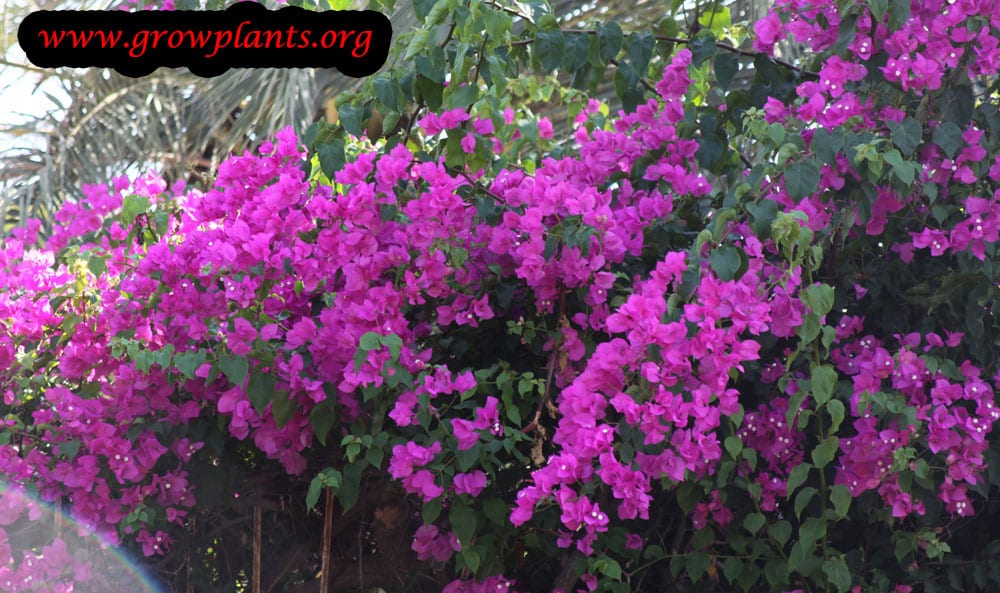
Overview: Bougainvillea glabra (paperflower) is a perennial evergreen plant grown as a thorny shrub or climber about 1-5 m, prized for its papery bracts in mediterranean, subtropical and tropical climates. It flowers freely in hot, sunny, well-drained sites.
Quick Specifications
| Specification | Attribute |
|---|---|
| Plant Type / Life Cycle | Perennial (shrub or climber) |
| Foliage Type | Evergreen |
| Mature Size | 1-5 m (3-16 ft) |
| Growth Rate | Fast to moderate |
| Toxicity | Low toxicity; the sap and thorn punctures can cause skin irritation. |
| Hardiness | USDA zone 9+ |
Growth Form & Structure
- Height & Spread: 1-5 m (3-16 ft), trained on a trellis; also grown in containers.
- Growth Habit & Form: Thorny shrub or climber; responds well to pruning of inner, dead and outer growth.
- Lifespan & Maturity: Long-lived perennial in a frost-free position.
Anatomy & Physical Features
- Leaves & Foliage: Green, oval leaves.
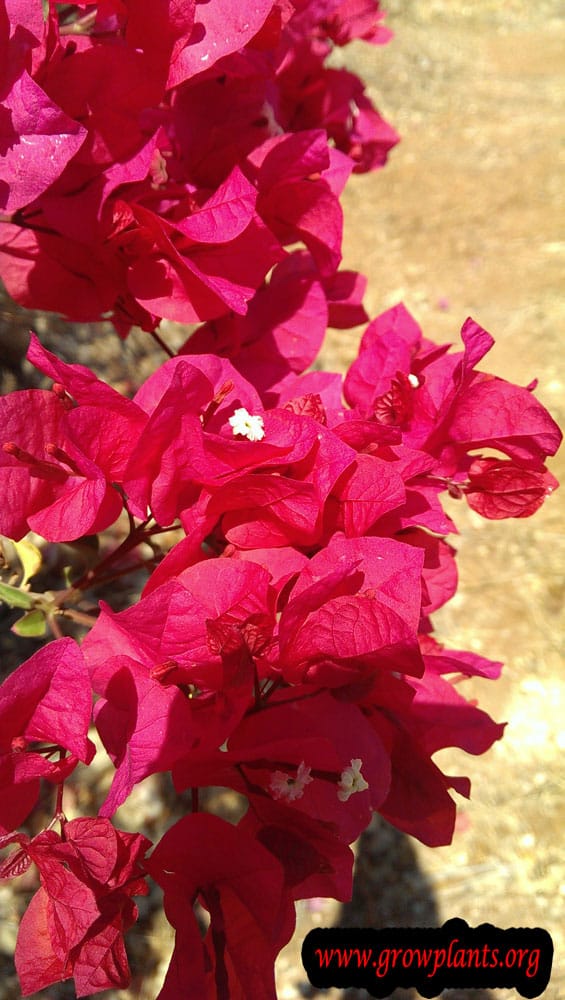
- Flower Characteristics: Small white-yellow flowers backed by papery bracts in white, purple, pink, red and purplish with many hues (summary only – see the Bloom guide).
Primary Uses & Landscape Value
- Functional & Ornamental Roles: Ornamental climber and hedge plant for walls, fences and containers.
Note: A vigorous, fast-growing shrub, sensitive to cold/frost, and prone to root rot in waterlogged or flooded soil.
Care Guide: Planting, Soil & Watering
Overview: Bougainvillea glabra (paperflower) is an evergreen, thorny shrub-climber for frost-free Mediterranean, subtropical and tropical gardens, flowering best in hot, bright, fairly dry conditions. It insists on sharply drained soil and prefers to be kept on the drier side, resenting constantly wet feet.
Quick Care Requirements
| Requirement | Ideal Condition |
|---|---|
| Planting Season | Warm season – spring, summer or autumn in frost-free areas |
| Growth Rate | Fast to moderate |
| Soil Type | Well-drained soil |
| Water Need | Low to moderate – dislikes standing water |
Planting & Establishment
- Best Planting Season: Plant through the warm months, spring, summer or autumn, in frost-free conditions.
- How to Plant:
- Hole Preparation: Dig a hole the depth of the rootball and about half again as wide on free-draining ground.
- Soil Amendments: Blend organic matter into the backfill and ensure sharp drainage; add grit on heavy soil.
- Planting Depth: Set the root collar at soil level and firm gently, handling the roots as little as possible.
- Growth Speed & Expectations: Fast to moderate; trained on a trellis it quickly forms a flowering screen or hedge.
Soil, Watering & Drainage Care
- Soil Mix & Drainage Needs: Free-draining soil is essential; give container plants good drainage and no water-holding saucer.
- Watering Schedule & Technique:
- Young / Newly Planted: Keep the rootzone lightly moist while it establishes.
- Established: Water sparingly to moderately, letting the soil dry between waterings for the best flowering.
- Seasonal Adjustments: More in summer heat, much less in winter; mulch over the roots in the coldest weather.
Climate, Light & Hardiness
The paperflower bougainvillea (Bougainvillea glabra) is a heat-loving shrub or climber for Mediterranean, subtropical and tropical climates, flowering most freely in hot, sunny, drier conditions. It is frost-sensitive: the site rates it for hardiness zone 9 and warmer, and cold is the main factor limiting outdoor culture.
Quick Climate Specifications
| Climate Zones | Mediterranean, subtropical, tropical |
|---|---|
| USDA Hardiness Zones | 9+ (per site data) |
| Optimal Temp Range | Warm, roughly 20–30 °C (68–86 °F) |
| Cold Damage Begins | Around freezing, roughly 0–2 °C (32–36 °F) |
| Frost Tolerance | Very Low to Low |
| Light Conditions | Full sun (tolerates light shade) |
| Wind Tolerance | Moderate |
| Salt / Coastal Tolerance | Moderate |
Sunlight & Light Exposure
Optimal Light Setup
A full-sun plant - the more direct sun and heat it receives, the better and longer it flowers.
Direct Sun Requirement
Direct sun is needed for a strong bract display; the site notes it prefers full sun though it will grow in partial shade, where flowering is sparser.
Best Exposure / Orientation
A hot, bright, well-drained position - trained on a warm wall or trellis - gives the heaviest bloom.
Temperature Extremes & Hardiness
USDA Hardiness & Regional Limits
The site places it in zone 9 and warmer. Cold limits where it can grow outdoors year-round; in colder areas it is kept in containers and protected, or treated as a warm-season plant.
Cold Damage & Winter Protection
The site calls for a frost-free area and notes the plant is sensitive to cold. Foliage is damaged as temperatures reach freezing, roughly 0–2 °C (32–36 °F). Container roots freeze faster than those in the ground, so pots need protection first. Cold tolerance varies by cultivar, plant age, exposure duration and conditions.
Frost Sensitivity
High: light frost burns the foliage and soft growth. Established plants may resprout from the base after a brief, light frost, but sustained freezing kills them.
Extreme Heat Tolerance
Excellent - it positively thrives in heat, and the hotter and sunnier the climate the more profusely it blooms.
Wind, Humidity & Microclimate
Humidity Preferences
Prefers warm, drier air; it blooms best in dry heat, and persistently wet, humid conditions reduce flowering and encourage problems.
Dry-Air Tolerance
High - well suited to dry, sunny climates.
Wind Tolerance
Moderate; the thorny, vigorous stems are tough but need tying to a support, and very exposed sites can shred the soft new growth.
Coastal / Salt Tolerance
Moderate; it is widely used in warm coastal gardens and tolerates some salt spray, though it is not a front-line seaside plant. This refers to airborne salt, not saline irrigation water.
Microclimate Recommendations
A hot, sunny, sheltered-from-frost pocket - such as a warm south- or west-facing wall - extends both flowering and cold survival at the margins of its range.
Growing in Pots, Balconies & Indoors
Bougainvillea glabra (1-5 m / 3-16 ft) is a superb container and balcony plant but not a houseplant – it needs strong, direct sun to flower and simply will not bloom in ordinary indoor light. In a pot on a hot, sunny patio or balcony it flowers freely, and it takes well to pruning, training, and even bonsai.
Quick Details
- Container Size: A medium tub with excellent drainage; bougainvillea flowers best slightly root-bound, so do not over-pot it
- Indoor Suitability: Not a houseplant – too little light indoors to bloom; only worth bringing inside to overwinter in cold climates
- Best Spot: Full sun and warmth – the sunniest wall, patio, or balcony
- Soil & Drainage: Free-draining, aerated mix; never waterlogged
- Watering in Pots: Water when the top of the mix dries; slight dryness actually encourages flowering, but pots dry fast in heat
Indoors & On the Windowsill
- Houseplant limits: It will not thrive as a room plant – without strong direct sun it drops its leaves and refuses to flower.
- Overwintering indoors: Bougainvillea is frost-tender. In cold climates move the pot into a bright, cool, frost-free room for winter, water sparingly while it rests, then return it outside once frost has passed.
On a Balcony or Patio
- Light, wind & heat: Give it the hottest, sunniest spot. Walls and railings reflect heat and pots dry quickly, so check moisture often in summer.
- Thorns & support: The stems are thorny and vigorous – tie in or trellis climbing types, shelter them from strong wind, and take care when handling as the thorns and sap can irritate skin.
Choosing the Pot, Soil & Long-Term Care
- Pot & drainage: Strong drainage holes and no standing saucer, to avoid root rot. Terracotta breathes and dries fast; glazed or plastic holds moisture longer.
- Potting mix: Aerated, organic-rich – peat or coir with perlite or vermiculite.
- Feeding: Potted bougainvillea needs feeding through the growing season as nutrients leach; a lower-nitrogen bloom feed supports flowers rather than just leafy growth.
- Repotting: Refresh the mix and pot on about every two years, which is the grower’s own guidance. Keep it only modestly larger so it stays free-flowering, and give it a light root and top prune to hold its shape.
Growing this plant in a greenhouse
A greenhouse can give bougainvillea glabra frost protection and cold protection. In the right climate it may also be kept growing through winter, depending on how much warmth and light are provided.
Greenhouse at a glance
| Greenhouse suitability | Conditional - depends on your climate |
|---|---|
| Main benefits | frost protection, cold protection |
| Season extension | earlier spring & later autumn |
| Outdoor protection advisable below | about 5°C |
| Maintain greenhouse minimum | around 5°C for active growth |
| Suitable types | unheated greenhouse, polycarbonate greenhouse, lean-to |
| Heating | Heating is optional - useful mainly for winter growing in cold areas. |
Related greenhouse guides
- Greenhouses: How to Choose the Right Greenhouse
- Best Lean-To Greenhouses
- Polycarbonate Greenhouses: What to Look for Before Buying
Fertilizing & Feeding
Bougainvillea glabra is a moderate feeder that blooms best on balanced feeding and good light; skip high-phosphorus ‘bloom boosters’ and rest it over dormancy.
Quick Fertilizing Specs
| Feeding Level | Moderate |
|---|---|
| young_feeding | Balanced complete fertilizer as growth starts in spring. |
| mature_feeding | Light, steady balanced feeding through the flowering season. |
| Main Nutrient Priority | Balanced nutrition with adequate nitrogen; no need for extra phosphorus. |
| Best Feeding Period | Through active growth and the flowering season. |
| Organic Options | Compost and organic matter worked into bed or container. |
| Micronutrients | Watch for iron and magnesium, especially in containers or alkaline soil. |
| Soil pH | Prefers slightly acidic, well-drained soil. |
| Reduce/Stop Feeding | Stop feeding through winter dormancy or the cool-season rest. |
Feeding by Growth Stage
Spring growth (leaf and stem)
Push fresh healthy foliage and stems on Bougainvillea glabra as growth resumes.
| Nutrient direction | A balanced complete fertilizer with adequate nitrogen to fuel new growth. |
|---|---|
| Timing | As new growth starts in spring. |
| Frequency | Light, regular feedings as active growth gets going. |
| Fertilizer types | A balanced complete fertilizer, Compost or organic matter in the bed or container |
| Routine trace nutrients | iron |
| Precautions | Avoid pushing lush growth with excess nitrogen, which can come at the expense of flowers. |
Blooming
Support a strong flush of colorful bracts without forcing soft growth.
| Nutrient direction | A balanced complete fertilizer with adequate nitrogen carries bloom; high-phosphorus ‘bloom boosters’ are not needed. |
|---|---|
| Timing | Through the flowering period. |
| Frequency | Steady light feedings as flowering continues. |
| Fertilizer types | A balanced complete fertilizer |
| Routine trace nutrients | iron |
| Precautions | Do not rely on high-phosphorus products to drive bloom; balanced feeding and good light matter more. |
Repeat bloom / deadheading
Keep Bougainvillea glabra flowering in successive flushes over a long season.
| Nutrient direction | Maintain gentle balanced feeding to sustain repeat flushes after deadheading. |
|---|---|
| Timing | Between and during successive flushes over the flowering season. |
| Frequency | Keep feeding light and regular to sustain repeat bloom. |
| Fertilizer types | A balanced complete fertilizer, Light liquid feed for container plants |
| Routine trace nutrients | iron |
| Precautions | Container plants lose nutrients with watering, so keep feeding light and steady. Keep watering restrained to favour bract colour over leafy growth. |
Dormancy / seasonal rest
Let Bougainvillea glabra rest through its cool or off-season slowdown.
| Nutrient direction | None – withhold fertilizer while the plant is resting. |
|---|---|
| Timing | During winter dormancy or the cool-season slowdown when growth stops. |
| Frequency | No feeding at this stage. |
| Fertilizer types | No feeding at this stage – withhold fertilizer while the plant is resting. |
| Precautions | Do not fertilize until active growth resumes. |
Nutrient Deficiency Signs & Corrections
Uniform pale-green to yellow older leaves with weak, leggy growth and few flowers.
| Possible causes | Low soil or media nitrogen, Leaching from frequent watering in containers, Cold, wet soil slowing uptake |
|---|---|
| Appears first on | Older, lower leaves first. |
| What to check | Overall colour and vigor, Watering and leaching pattern, Recent feeding history |
| Possible correction | Resume a balanced complete fertilizer during active growth. |
Interveinal yellowing on the newest leaves while the veins stay green.
| Possible causes | High or alkaline soil pH locking up iron, Overwatering or poor drainage stressing roots, Low available iron |
|---|---|
| Appears first on | Newest leaves at the growing tips. |
| What to check | Soil or media pH, Drainage and watering, Whether new growth is worst affected |
| Possible correction | Correct pH and drainage; where needed apply a chelated iron product per its label. Prefers slightly acidic, well-drained soil. |
Scorching and browning along the margins of older leaves, with weak stems.
| Possible causes | Low soil or media potassium, Leaching from frequent container watering, Imbalanced feeding |
|---|---|
| Appears first on | Margins of older, lower leaves. |
| What to check | Leaf margins versus centres, Watering and leaching, Feeding balance |
| Possible correction | Use a balanced complete fertilizer that supplies potassium through the season. |
Interveinal yellowing on older leaves, sometimes with a reddish or bronzed cast.
| Possible causes | Low soil or media magnesium, Heavy potassium feeding competing with magnesium, Leaching in containers |
|---|---|
| Appears first on | Older, lower leaves first. |
| What to check | Pattern on old versus new leaves, Feeding balance, Media age and leaching |
| Possible correction | Where confirmed, apply a magnesium product per its label and rebalance feeding. |
Pruning, Training & Seasonal Maintenance
Bougainvillea glabra (paperflower) is the most commonly grown and freest-flowering bougainvillea, and it is versatile in habit — it can be trained as a rounded shrub or as a climber (1–5 m), and its willingness to flower on short new growth makes it the species of choice for close shaping such as topiary and bonsai. As with the whole genus, bracts appear on new, current-season growth, so pruning after a flush is what drives the next wave of colour; it takes hard cutting readily. Its facts specify a late-autumn / early-winter cutback and interior thinning, to be tempered where frost threatens.
Quick Pruning & Maintenance Specs
| Pruning Tolerance | High – flowers freely on new growth; takes close shaping |
| Primary Pruning Window | After a bloom flush; late autumn in frost-free areas |
| Typical Frequency | Regular tip-work; a main cutback each year |
| Main Objective | Chosen form (shrub / climber / topiary) with repeated bloom |
| Young Plant Priority | Decide the form; pinch to build a dense, well-branched frame |
| Mature Plant Priority | Cut back flushes; open the interior; maintain the form |
| Best Tool Type | Bypass secateurs (precision snips for bonsai/topiary detail) |
| Avoid Heavy Pruning During | Before frost and mid-bloom-flush |
Pruning by Plant Age & Size
Newly Established
Let the young plant root and start growing, removing only damaged shoots. Decide early whether you want a shrub, a climber or a shaped specimen, because that choice sets your training from the first pinches.
Young / Formative
For a shrub, tip-pinch repeatedly for a dense bushy frame; for a climber, select and tie leader canes to a support and pinch their laterals; for topiary or bonsai, begin the close, frequent tip-pruning (and, for bonsai, wiring) that this species tolerates unusually well. In every case, more shoot tips mean more bracts.
Mature / Established
After each flush, cut back the flowered growth to shape and renew bloom, and thin the inner branches that shade out and atrophy over a few years. Maintain the chosen form by shortening extension growth to outward buds.
Seasonal Pruning Schedule
After a bloom flush (primary): the trigger for cutting back — prune spent flowered shoots and the plant re-flushes with new flowering wood.
Late autumn / early winter (frost-free only): a harder cutback and interior thinning as its facts advise, but only where frost will not damage the tender regrowth.
Ongoing: frequent light tip-pruning for topiary/bonsai or to keep a shrub compact.
Flowering & Fruiting Wood
Bracts form on current-season shoots, and glabra flowers on relatively short new growth — which is exactly why it takes to bonsai and topiary, where constant tipping still yields bloom. Prune after a flush, not into it, and keep the plant warm, sunny and slightly lean/dry for the most colour; excess water and feed give leaf instead of bracts.
Structural Pruning & Training
Structure depends on the chosen form: a few main stems for a shrub, tied leader canes for a climber, or a defined silhouette maintained by shearing/tipping for topiary. Open the centre by removing inner atrophied branches, and control size by cutting extension growth back to outward-facing buds.
Special Growth to Remove
Remove dead and shaded inner twigs and cut spent flowered shoots back to force renewal. Own-rooted/cutting-grown, so no graft suckers; manage basal shoots according to the form you are keeping (retain a useful one for a shrub or climber, remove clutter).
Container & Small-Space Pruning
This is the classic bougainvillea for pots, bonsai and small trained specimens, precisely because it flowers on short growth and tolerates constant tipping and root restriction — a pot-bound, lean, sunny plant blooms best. Prune often to hold size and shape, refresh the soil periodically, and for bonsai combine tip-pruning with careful wiring while stems are young.
Tools
Bypass secateurs cover most shrub and climber work; precision snips are the right tool for bonsai and topiary detail; loppers handle the occasional thick old stem. A saw is rarely needed at 1–5 m. Wear thick gloves for the thorns.
Tool Hygiene & Disease Risk
Routine. Bougainvillea has no significant tool-borne pruning disease; keep blades clean and sharp so cuts on the sometimes brittle stems are clean. Its pests (aphids, leaf miner, caterpillars/moths) are treated directly, not by tool hygiene. The real safety point is the thorns — wear thick gloves and eye protection, since the spines are stiff and can cause a lingering skin reaction.
Cut Placement & Technique
Cut to outward-facing buds to keep the form open, and shorten flowered shoots to a healthy bud pair to force new flowering growth. For fine shaping, frequent light tip cuts on soft growth give the densest, most floriferous result.
Heavy Pruning & Rejuvenation
Tolerated well — an overgrown or bare-based glabra can be cut back hard into old wood in warm weather and reshoots strongly, restoring a dense, floriferous plant after a pause in bloom. Do it after frost risk has passed.
Post-Pruning Care
Keep the plant warm, sunny and on the drier, leaner side after cutting back — this brings bracts rather than leaf — and avoid heavy feeding as a “recovery” step. Retie any climber framework and monitor the regrowth.
Common Pruning Mistakes
- Pruning into a developing flush and removing the shoots about to colour.
- Over-watering/feeding after pruning, producing leaves instead of bracts.
- Cutting back close to frost and losing tender regrowth.
- Letting the shaded interior atrophy so bloom sits only on the outer layer.
When NOT to Prune
Do not prune hard just before frost or in the middle of a flush, and avoid heavy cutting on a cold-stressed or waterlogged plant.
Recommended Tools (by task)
- bypass_secateurs – shaping the shrub or climber and cutting back flushes.
- precision_snips – close tip-work for topiary and bonsai on soft growth.
- loppers – the occasional thick old stem during renewal.
Pruning Troubleshooting
| Problem | Possible Cause | What to Check | Corrective Action |
| Plenty of leaf, few bracts | Too much water/feed; pruning into flushes | Water/feed and cut timing | Keep lean, dry, sunny; prune after flushes |
| Bloom only on the outer canopy | Shaded, congested interior | Inner branch density | Thin inner atrophied stems; open the centre |
| Sparse bloom on a bonsai/topiary | Wrong timing of tip cuts, or too shaded/fed | When tips were last cut; light and feed | Let a flush form after tipping; give full sun, lean feed |
| Frost-scorched regrowth | Pruned too near frost | Season of the cut | Delay hard cuts until frost risk passes |
Propagation Guide
Paper flower is normally increased by stem cuttings, which root easily and keep the bract colour; the species can also be raised from seed, though seedlings vary. Grafting is optional (useful to combine colours) and never required.
Quick Propagation Specs
| Best Propagation Method | Stem cuttings (semi-hardwood) |
| Alternative Methods | Seed; ground layering; grafting |
| Propagation Difficulty | Easy to Moderate |
| Seed True-to-Type | Variable – bract colour may differ from the parent |
| Vegetative True-to-Type | Yes |
| Best Propagation Season | Warm season |
Growing from Seed
Sowing & Conditions
Where viable seed is available, sow in the warm season into a moist, free-draining, slightly acidic medium with warmth and good light. Use seed for experimentation, since colour is not guaranteed.
Stem Cuttings
Cutting Type & Timing
Take semi-hardwood cuttings in the warm season — the most reliable method for this plant.
Rooting Setup & Hormone
Root in a moist, free-draining medium (or in water, changed daily) under warm, humid conditions in half shade. Rooting hormone is beneficial but optional.
Air & Ground Layering
Low, flexible stems peg down readily onto moist soil, root at the nodes, and can then be separated — an easy true-to-type extra.
Bloom & Flower Guide
Quick Details
- Bloom Season: Late spring to midsummer, sometimes into late summer
- Time to First Bloom: Often flowers while still young, within its first season or two
- Flower Appearance: Small white-yellowish true flowers set within three papery bracts in white, purple, pink, red and purplish shades
- Edibility: Ornamental – grown for its colourful bracts; the flowers are not eaten
Detailed Blooming Overview
Bougainvillea glabra (paperflower) earns its name from the papery texture of its bracts. The small white-yellow true flowers are easy to miss; it is the three surrounding bracts – white, purple, pink, red and purplish, with a wide range of hues between – that light up the plant from late spring through midsummer and sometimes into late summer.
Flower Characteristics
- Small, white-yellowish true flowers.
- Surrounded by three papery bracts in white, purple, pink, red and purplish, with many intermediate hues.
Bloom Care & Thinning
- Encouraging bloom: Full sun, lean feeding and slight drying between waterings favour more bracts over leafy growth.
- Pollinators: The bright bracts help draw in butterflies and, in some regions, hummingbirds.
- Handling: Wear gloves when pruning or training – the stems are thorny.
Pests, Diseases & Troubleshooting
Overview: Bougainvillea is a tough, sun-loving, semi-tropical vine that shrugs off most problems when grown hard and dry, but it has a few signature pests – above all the bougainvillea looper caterpillar that scallops the leaf edges overnight – plus sap-suckers and the occasional leaf-spot fungus. Most trouble here is self-inflicted through overwatering or overfeeding, so lean cultural care, good airflow and full sun are the backbone of management; reach for oils and soaps only when scouting shows a real infestation. The common ‘paper flower’ – free-flowering and slightly more prone to looper and mildew in humid, crowded plantings; keep it open and airy.
Quick Troubleshooting Overview
| Issue / Pest | Main Symptom | Primary Solution |
|---|---|---|
| Bougainvillea looper | Ragged, scalloped notches eaten from leaf margins; leaves skeletonised | Hand-pick at night; spray Bt (Bacillus thuringiensis) |
| Aphids / mealybugs | Sticky honeydew, sooty mould, distorted new growth, white cottony tufts | Blast with water; insecticidal soap or horticultural oil |
| Scale insects | Brown/white bumps on stems and leaf undersides; sticky, sooty foliage | Horticultural oil; prune heavily infested wood |
| Spider mites | Fine stippling, bronzing and webbing in hot, dry, dusty conditions | Raise humidity, hose foliage; miticidal oil |
| Leaf spot | Brown/reddish spots with yellow halos, worst in wet, crowded canopies | Improve airflow, avoid wetting foliage; copper if severe |
| Few flowers | Lush green growth but little colour | Cut water and nitrogen; give full sun and a lean, high-potassium feed |
Common Pests & Management
- Bougainvillea looper caterpillar (Disclisioprocta stellata):
- Symptoms: The signature bougainvillea pest. Small green-to-brown inchworm (measuring/looper caterpillar) that feeds at night and hides by day, chewing irregular scalloped notches from leaf margins so the canopy looks ragged and moth-eaten; heavy feeding skeletonises leaves. Damage is easy to confuse with wind or salt burn – look for the loopers themselves at dusk and their dark frass pellets under the plant.
- Prevention & Control: Scout after dark with a torch and hand-pick; shake branches over a sheet. Encourage birds, lacewings and parasitic wasps. For active outbreaks spray Bacillus thuringiensis (Bt kurstaki) in the evening onto the foliage the loopers are eating, or spinosad; repeat as new leaves harden. Avoid broad-spectrum sprays that wipe out natural enemies.
- Aphids (Aphis spp.):
- Symptoms: Clusters of soft green, yellow or black aphids on soft new shoots, bracts and flower stalks, causing curled, distorted tips and a sticky honeydew film that blackens into sooty mould and draws ants.
- Prevention & Control: Knock colonies off with a firm jet of water; support ladybirds and lacewings. Treat persistent colonies with insecticidal soap or a light horticultural-oil spray, coating shoot tips and leaf undersides. Ease off high-nitrogen feed, which fuels soft, aphid-prone growth.
- Mealybugs (Planococcus / Pseudococcus spp.):
- Symptoms: White, cottony, waxy tufts tucked into leaf axils, stem joints and along veins; feeding causes yellowing, stunting and honeydew with sooty mould. Common on container and indoor plants.
- Prevention & Control: Dab colonies with an alcohol-moistened swab; hose off and prune badly infested tips. Release or protect predators such as mealybug destroyer beetles. Spray horticultural oil or insecticidal soap thoroughly, including hidden crevices, and repeat every 7–10 days until clear.
- Scale insects (Coccidae / Diaspididae):
- Symptoms: Immobile brown, grey or white bumps clinging to stems, leaf undersides and midribs; soft scales exude honeydew that fuels sooty mould, while armoured scales cause yellow spotting and dieback.
- Prevention & Control: Scrub light infestations off with a soft brush; prune out heavily encrusted wood. Conserve parasitic wasps and predatory beetles. Apply horticultural oil to smother scale, targeting crawlers and repeating to catch successive generations.
- Spider mites (Tetranychus urticae):
- Symptoms: Fine pale stippling and a dull, bronzed cast to the leaves, with fine webbing on undersides and shoot tips in hot, dry, dusty spells – a common problem on sheltered or indoor plants.
- Prevention & Control: Raise humidity and periodically hose down the foliage to disrupt colonies and dust. Protect predatory mites. For outbreaks use a miticidal horticultural oil or insecticidal soap, covering leaf undersides, and repeat to break the life cycle; avoid drought-stressing the plant.
Diseases & Fungal Issues
- Leaf spot (Cercospora / Colletotrichum spp.):
- Symptoms: Small brown to reddish-brown spots, often with yellow halos, mainly on lower and interior leaves; spots enlarge and merge in warm, wet, crowded conditions, causing yellowing and leaf drop.
- Treatment & Management: Prune for open, airy structure and space plants; water at the roots, never overhead, and clear fallen leaves. Bougainvillea in full sun with good airflow rarely needs spraying; if disease persists in humid weather apply a copper-based fungicide.
- Botrytis / bract blight (Botrytis cinerea):
- Symptoms: Tan to brown watery blotches and grey fuzzy mould on bracts and flowers during cool, damp, humid weather, causing them to collapse and rot prematurely.
- Treatment & Management: Improve air movement, avoid overhead watering and remove spent, mouldy bracts promptly. Reduce humidity around container plants. Fungicide is rarely warranted outdoors; focus on sanitation and airflow.
- Sooty mould (Capnodium spp.):
- Symptoms: A black, soot-like film coating leaves and stems. It is not a true infection of the plant but grows on the honeydew excreted by aphids, mealybugs, scale and whitefly, dulling foliage and reducing photosynthesis.
- Treatment & Management: Control the underlying sap-sucking pest and the mould loses its food source. Wash off residual film with a soft, soapy cloth or a gentle hose once the insects are gone.
Growing Difficulties & Abiotic Problems
- Few flowers from overwatering / overfeeding:
- Cause & Symptoms: The classic bougainvillea complaint: lush green leaves but little or no colour. Too much water and too much nitrogen push vegetative growth at the expense of the bracts, which form best under bright light and mild stress.
- Correction Strategy: Grow in full sun (6+ hours), let the soil dry appreciably between deep waterings, and switch to a lean, bloom-type feed higher in potassium and phosphorus. A controlled dry spell often triggers a flush of bracts.
- Chlorosis (iron / manganese deficiency):
- Cause & Symptoms: Yellowing leaves with green veins, worst on new growth, common in cold, wet or alkaline soils where roots cannot take up iron and manganese.
- Correction Strategy: Improve drainage and avoid waterlogging cold soil. Correct alkalinity and apply chelated iron (and manganese) as a foliar feed or soil drench for a faster green-up; mulch to keep roots evenly warm and healthy.
- Root rot from overwatering / poor drainage:
- Cause & Symptoms: Wilting despite moist soil, yellowing, dieback and blackened, mushy roots – bougainvillea resents wet feet and heavy soils.
- Correction Strategy: Plant in free-draining soil or raised beds and water only when the top few centimetres are dry. Never leave containers standing in saucers of water. Established plants are notably drought-tolerant, so err dry.
- Bract / leaf drop after transplanting or cold:
- Cause & Symptoms: Sudden leaf and bract drop after repotting, a move, or a cold snap. Bougainvillea has brittle, sensitive roots and dislikes disturbance and chilling.
- Correction Strategy: Disturb the root ball as little as possible when planting, keep above frost, and shelter from cold wind. After a shock, hold off heavy watering and let it re-leaf; it usually recovers with warmth and light.
What Helps – Products & Tools
For this vine the go-to toolkit is Bt (Bacillus thuringiensis) or spinosad for the looper caterpillar, insecticidal soap and horticultural/neem oil for aphids, mealybugs, scale and mites, and a copper fungicide held in reserve for persistent leaf spot in humid weather. Chelated iron corrects chlorosis, and a lean, high-potassium bloom fertiliser fixes the all-leaves-no-colour problem. Spray oils in the cool of the evening to protect pollinators. Gloves and long sleeves help against the sharp thorns.
Frequently Asked Questions
How do you grow Bougainvillea glabra?
Give it a hot, full-sun position in sharply drained soil, planting through the warm months (spring, summer or autumn) in frost-free conditions. Dig a hole the depth of the rootball and about half again as wide, set the root collar at soil level, and handle the roots as little as possible. Once established, water sparingly to moderately and let the soil dry between waterings, since this plant flowers best kept on the drier side and resents constantly wet feet.
Can Bougainvillea glabra be grown as a bonsai?
Yes. It flowers on relatively short new growth, which is exactly why it takes so well to bonsai and topiary: for these forms you begin the close, frequent tip-pruning (and, for bonsai, wiring) that this species tolerates unusually well. It is the classic bougainvillea for pots, bonsai and small trained specimens, precisely because it flowers on short growth and tolerates constant tipping and root restriction.
When does Bougainvillea glabra flower, and what do the flowers look like?
It blooms from late spring to midsummer, sometimes continuing into late summer, and often flowers while still young, within its first season or two. The true flowers are small and white-yellowish, set within three papery bracts in white, purple, pink, red and purplish shades.
How do you grow Bougainvillea glabra from seed?
This plant is normally propagated from stem cuttings rather than seed, since cuttings keep the bract colour true while seedlings raised from seed vary. Where viable seed is available, sow it in the warm season into a moist, free-draining, slightly acidic medium with warmth and good light, treating it as an experiment since the resulting bract colour is not guaranteed.