Plant Profile & Key Characteristics
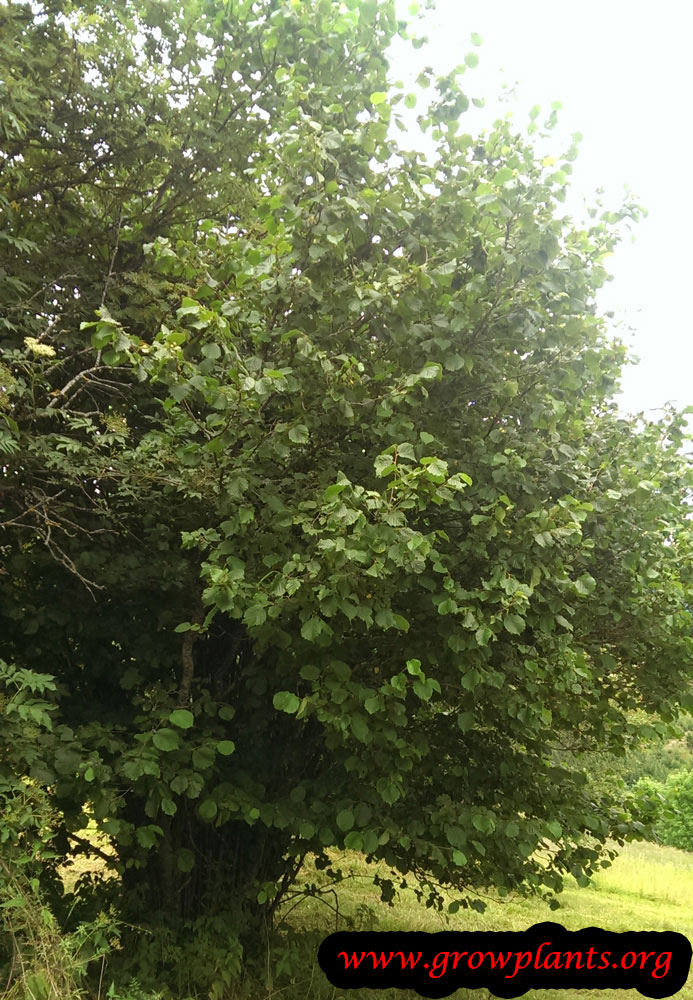
Overview: The hazelnut (Corylus avellana) is a deciduous large shrub or small tree reaching 5-10 m (15-30 ft), grown for its edible nuts. It is a hardy perennial that crops in temperate climates and can also serve as an ornamental or hedge.
Quick Specifications
| Specification | Attribute |
|---|---|
| Plant Type / Life Cycle | Perennial |
| Foliage Type | Deciduous |
| Mature Size | 5-10 m (15-30 ft) |
| Growth Rate | Moderate to fast |
| Root System | Suckering, spreading roots (produces basal suckers) |
| Toxicity | Non-toxic (nuts are edible) |
| Hardiness | USDA zones 4-8 |
Growth Form & Structure
- Height & Spread: A large multi-stemmed shrub or small tree of 5-10 m (15-30 ft); not suited to container growing.
- Growth Habit & Form: Multi-stemmed, suckering deciduous shrub or small tree, easily coppiced and often grown as a thicket or hedge.
- Lifespan & Maturity: Moderate to fast-growing and long-lived, beginning to bear nuts in about 2-3 years.
Anatomy & Physical Features
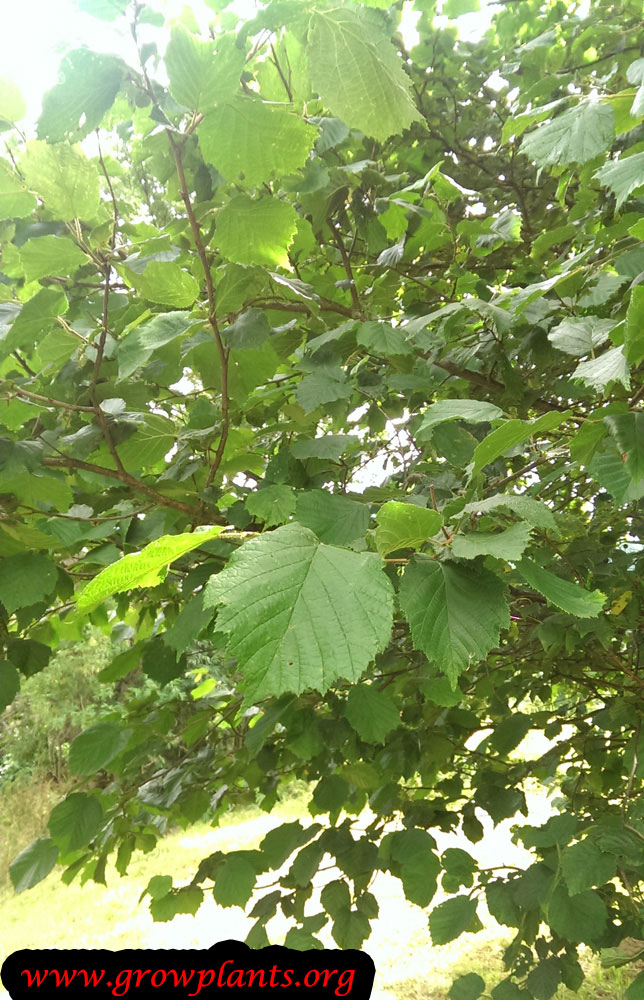
- Leaves & Foliage: Green, rounded rhomboid leaves with serrated edges.
- Flower Characteristics: Monoecious and wind-pollinated, with yellow male catkins and tiny red female flowers on the same plant, opening in late winter to spring.
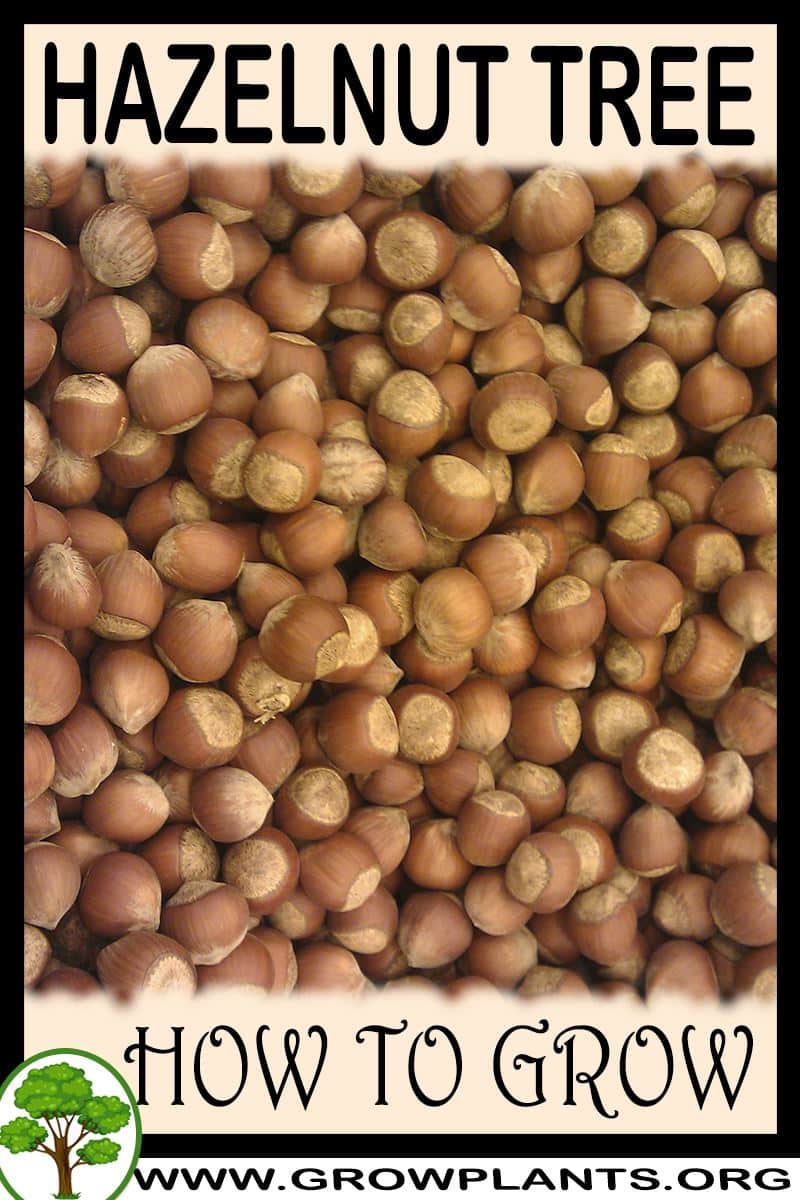
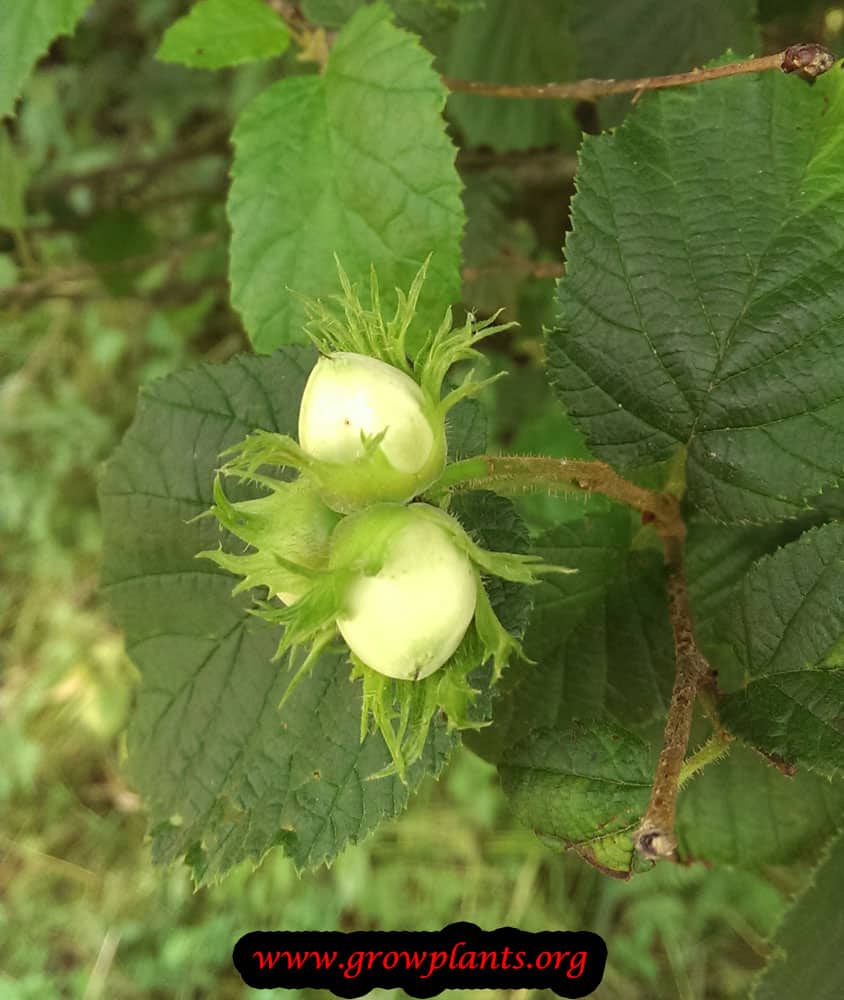
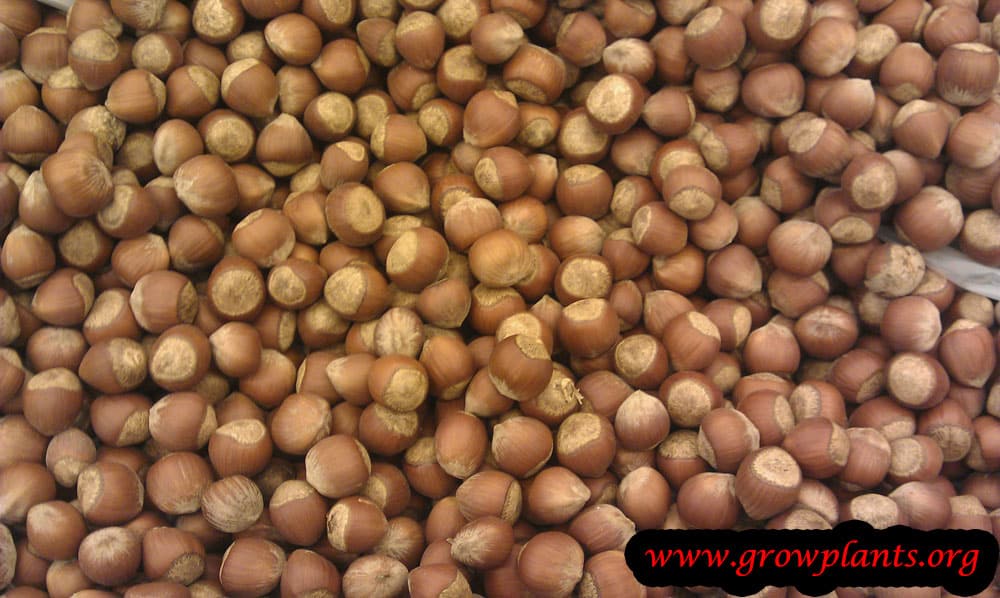
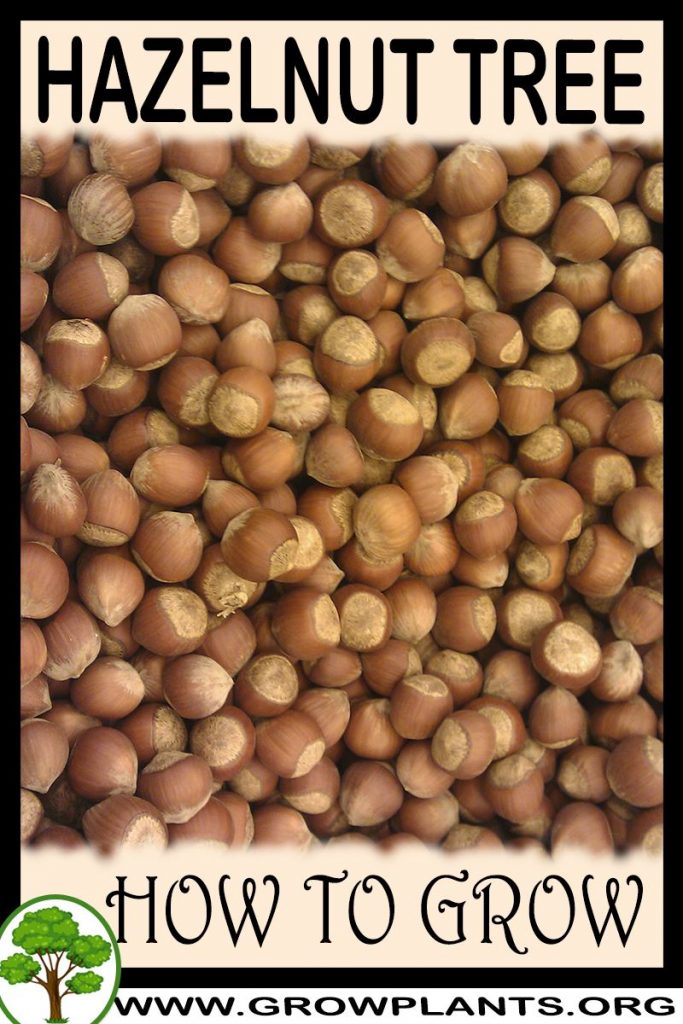
- Fruit Profile: Brown to cream nut (the hazelnut) enclosed in a brown shell, harvested in autumn.
Primary Uses & Landscape Value
- Edible Uses: Nuts eaten raw or roasted and made into spreads; can be picked before they are fully ripe.
- Functional & Ornamental Roles: Nut crop that also works as an ornamental, hedgerow or coppice shrub.
Care Guide: Planting, Soil & Watering
Overview: A temperate deciduous nut tree. It grows in full sun in fertile, well-drained soil, needs winter chill, and appreciates ample moisture.
Quick Care Requirements
| Requirement | Ideal Condition |
|---|---|
| Planting Season | In the dormant season – winter to spring |
| Growth Rate | Moderate to Fast |
| Soil Type | Fertile, well-draining |
| Water Need | Moderate to High |
Planting & Establishment
- Best Planting Season: Plant while dormant, in winter to early spring; hazelnut needs winter chilling hours to fruit well.
- How to Plant:
- Hole Preparation: Dig a hole twice the width of the root ball and equally deep.
- Soil Amendments: Incorporate compost or other organic matter for fertility and moisture retention.
- Planting Depth: Set the root collar level with the soil surface and do not bury the trunk.
- Growth Speed & Expectations: Fast to moderate; it begins bearing nuts in about 2-3 years.
Soil, Watering & Drainage Care
- Soil Mix & Drainage Needs: Fertile, well-drained soil; it is not suited to container growing, as it becomes a large multi-stemmed tree.
- Watering Schedule & Technique:
- Young / Newly Planted: Water regularly and deeply to establish it.
- Established: Water moderately to generously, especially as the nuts develop.
- Seasonal Adjustments: Water more in summer and during nut-fill, and less in dormancy.
Climate, Light & Hardiness
The common hazel (Corylus avellana) is a hardy temperate deciduous nut tree that needs a genuine cold winter and grows best in full sun. The site rates it across hardiness zones 4–8 and notes a definite winter chilling requirement.
Quick Climate Specifications
| Climate Zones | Temperate |
|---|---|
| USDA Hardiness Zones | 4–8 |
| Frost Tolerance | High (dormant wood); flowers frost-sensitive |
| Light Conditions | Full sun |
| Wind Tolerance | Moderate |
Sunlight & Light Exposure
Optimal Light Setup
Full sun gives the best growth and nut yield, though it tolerates light shade.
Direct Sun Requirement
An open, sunny position supports good flowering and cropping; heavy shade reduces yield.
Best Exposure / Orientation
A bright, sunny site with good air movement suits it well.
Temperature Extremes & Hardiness
USDA Hardiness & Regional Limits
Rated by the site for zones 4–8, this is a cold-hardy temperate tree. Its upper limit reflects a need for real winter cold, so it is poorly suited to warm-winter subtropical climates.
Cold Damage & Winter Protection
Dormant wood tolerates hard winter frost across its zone range and needs no special protection. Little winter care is required within the rated zones.
Frost Sensitivity
The catch is early bloom: hazels flower in late winter to early spring, and hard frosts during flowering can damage the catkins and female flowers, reducing the nut set even though the tree itself is very hardy.
Chilling Requirement
The site records a winter chilling-hours requirement. Adequate winter chill is needed to break dormancy and flower properly; in mild, warm-winter regions insufficient chilling leads to poor bud break, weak flowering and reduced cropping. A precise chill-hour figure is not established here, so treat this as a genuine cold-winter need.
Wind, Humidity & Microclimate
Humidity Preferences
Comfortable in typical temperate humidity; no special requirement.
Dry-Air Tolerance
Moderate; it favours climates that are not persistently hot and dry.
Wind Tolerance
Moderate. Since it is wind-pollinated, some air movement aids pollination, but harsh cold winds during flowering can hurt the crop.
Microclimate Recommendations
A sunny, temperate site with cold winters and a spring that is not prone to hard late frosts gives the most reliable nut production.
Growing in Pots, Balconies & Indoors
Both of the grower’s key facts point the same way: this is not a houseplant, and it is not suited to long-term container growing. The hazelnut tree is a full-size deciduous nut tree/large shrub (5-10 m), best grown in open ground; a pot is only a temporary home for a young seedling.
Quick Details
- Container Size: Not recommended long-term; only a deep nursery pot for a young seedling
- Indoor Suitability: Not a houseplant – a large outdoor tree
- Best Spot: Full sun, in the open ground
- Soil & Drainage: Deep, free-draining soil
- Watering: Regular water while young and establishing
Indoors & On the Windowsill
- Not for indoors: A large tree needing full sun – no room or windowsill will suit it.
- Young plants only under cover: In a climate colder than its range, a seedling can be kept in a pot in a bright, frost-free spot for its first winters, but it must ultimately go in the ground.
On a Balcony or Patio
- Ground, not balcony: This tree isn’t a practical balcony or patio container subject – it needs room to root and spread. Grow it in the garden where the climate allows.
- While young in a pot: keep it in the deepest pot you can, in full sun and sheltered from wind, and move it on before the roots circle.
Choosing the Pot, Soil & Long-Term Care
- Not a long-term pot plant: The grower marks containers as unsuitable. Hazel suckers and roots strongly and forms a broad multi-stemmed shrub, too big for a container long-term. A young seedling can spend its first year or two in a deep pot, but plan to plant it in open ground.
- If you must start it in a pot: use the deepest container you can (to suit the developing taproot), a free-draining mix and strong drainage holes; skip a standing water saucer to avoid root rot; terracotta breathes and dries faster, while glazed or plastic holds moisture longer.
- Feeding & moving on: feed lightly while young and pot on before it becomes root-bound – then transplant to its permanent site.
Fertilizing & Feeding
A moderate feeder: young trees appreciate nitrogen-forward feeding to build structure, while bearing trees do best with balanced nutrition and steady potassium through the growing season.
Quick Fertilizing Specs
| Feeding Level | moderate |
|---|---|
| young_feeding | Nitrogen-forward feeding through the growing season to build the tree. |
| mature_feeding | Balanced feeding with steady potassium to support cropping. |
| Main Nutrient Priority | Nitrogen while young; balanced nutrition with potassium once bearing. |
| Best Feeding Period | From when growth resumes through active growth and crop development. |
| Organic Options | Compost, well-rotted manure, and organic mulch over the root zone. |
| Micronutrients | A complete tree fertilizer usually supplies iron, manganese, and zinc; watch for chlorosis on alkaline soils. |
| Soil pH | Best in well-drained soil that is slightly acidic to near-neutral. |
| Reduce/Stop Feeding | Ease off feeding after harvest and through the cool, dormant season. |
Feeding by Growth Stage
Newly planted tree
Help the young tree establish roots after planting.
| Nutrient direction | Go light on fertilizer at first; let roots settle, then begin light balanced feeding once new growth appears. |
|---|---|
| Timing | The first season after planting. |
| Frequency | Feed sparingly until the tree is established and actively growing. |
| Fertilizer types | Light application of a balanced complete fertilizer, Compost or well-rotted organic matter worked into the planting area |
| Precautions | Keep fertilizer off the trunk and avoid heavy feeding, which can burn tender new roots. |
Young, non-bearing tree
Build a strong framework of branches and roots during the years before bearing.
| Nutrient direction | A nitrogen-forward complete fertilizer to drive steady vegetative growth and canopy development. |
|---|---|
| Timing | Through the growing seasons before the tree begins to bear. |
| Frequency | Feed through the active growing season, tapering as growth slows toward the cool season. |
| Fertilizer types | Nitrogen-forward complete tree fertilizer, Slow-release granular tree fertilizer, Compost or organic matter |
| Routine trace nutrients | iron, manganese, zinc |
| Precautions | Avoid late-season nitrogen that pushes tender growth vulnerable to cold. |
Established tree approaching bearing
Maintain healthy growth and prepare the tree to carry a crop.
| Nutrient direction | Shift toward a balanced complete fertilizer as the tree matures and prepares to fruit. |
|---|---|
| Timing | As the tree fills out and nears bearing age. |
| Frequency | Feed through the active growing season with balanced nutrition. |
| Fertilizer types | Balanced complete tree fertilizer, Slow-release granular feed, Compost or organic matter |
| Routine trace nutrients | iron, manganese, zinc |
| Precautions | Keep nutrition balanced; excess nitrogen can delay or reduce fruiting. |
Mature, bearing tree
Support a healthy canopy and a good crop year after year.
| Nutrient direction | A balanced complete fertilizer with steady potassium to support nut development. |
|---|---|
| Timing | Each growing season, with feeding concentrated as growth resumes and through crop development. |
| Frequency | Feed through the active growing season; ease off after harvest as the tree slows. |
| Fertilizer types | Balanced complete fertilizer with potassium, Slow-release granular tree fertilizer, Compost or organic matter |
| Routine trace nutrients | iron, manganese, zinc |
| Precautions | Watch for micronutrient chlorosis on alkaline soils and correct the cause rather than overfeeding. |
Nutrient Deficiency Signs & Corrections
Overall pale, yellow-green foliage with weak, slow growth.
| Possible causes | Low soil nitrogen, Heavy leaching in sandy or frequently watered soils, Cold or waterlogged soil limiting uptake |
|---|---|
| Appears first on | Older, lower leaves |
| What to check | Feeding history, Whether the oldest leaves yellow first, Soil drainage and temperature |
| Possible correction | Apply a nitrogen-forward complete fertilizer during the growing season and build soil organic matter. |
New leaves yellow between green veins, most on the youngest growth.
| Possible causes | High or alkaline soil pH making iron unavailable, Waterlogged, poorly aerated roots, Cold soil slowing uptake |
|---|---|
| Appears first on | Youngest leaves |
| What to check | Soil pH, Drainage and root health, Whether yellowing is interveinal on new leaves |
| Possible correction | Correct soil pH and drainage; apply a chelated iron product per its label if needed. |
Small, narrow leaves clustered in rosettes at shoot tips with shortened internodes.
| Possible causes | Low available zinc, High soil pH reducing zinc uptake, Sandy, low-organic soils |
|---|---|
| Appears first on | New shoot tips |
| What to check | Leaf and internode size on new growth, Soil pH, History of micronutrient issues |
| Possible correction | Correct high pH and apply a zinc product per its label if a deficiency is confirmed. |
Poor nut set, misshapen or aborted kernels, and dieback of shoot tips.
| Possible causes | Low soil boron, Sandy soils and heavy leaching, Dry conditions limiting boron movement to developing nuts |
|---|---|
| Appears first on | Developing nuts and shoot tips |
| What to check | Nut set and kernel fill, Soil boron history, Whether shoot tips die back |
| Possible correction | Correct only a confirmed shortage; apply boron carefully to a soil test and label, as the safe margin is narrow. |
Pruning, Training & Seasonal Maintenance
Hazelnut (Corylus avellana) is a deciduous, vigorously suckering, multi-stemmed nut shrub (Betulaceae) traditionally grown as an open-centre bush of a few strong stems rather than a single-trunk tree. Pruning does three things: it holds an open, well-lit goblet shape, it renews the fruiting wood, and — above all — it keeps the plant’s heavy root suckering under control. Structural work is done in late winter while dormant, but ideally after the catkins have shed pollen, since the plant is wind-pollinated and flowers very early.
Quick Pruning & Maintenance Specs
| Pruning Tolerance | High – coppices and resprouts strongly |
| Primary Pruning Window | Late winter, after pollen shed |
| Secondary Maintenance Window | Summer ‘brutting’ of side shoots |
| Typical Frequency | Annual winter prune plus ongoing sucker removal |
| Main Objective | Open goblet, renewed fruiting wood, sucker control |
| Young Plant Priority | Build an open-centre bush of ~6–8 well-spaced stems |
| Mature Plant Priority | Remove suckers; renew oldest stems; open the centre |
| Best Tool Type | Secateurs & loppers, saw for old stems, spade for suckers |
| Avoid Heavy Pruning During | Catkin/pollination time if a crop matters |
Pruning by Plant Age & Size
Newly Established
Remove damaged growth and begin shaping an open-centred bush. Select several strong, well-spaced stems from low down and rub or dig off the many suckers so the plant does not become a dense thicket from the start.
Young / Formative
Train a goblet of roughly six to eight main stems around an open centre, shortening the leaders to encourage branching and outward-facing laterals. Keep the middle clear so light and air reach the fruiting wood.
Mature / Established
Work on renewal: each winter remove the oldest, tired stems to the base (or to a strong low replacement), take out crowding, crossing and inward shoots, and keep clearing suckers. This steady turnover keeps a supply of the younger wood that fruits best.
Seasonal Pruning Schedule
Late Winter (dormant)
Objective: the main structural and renewal cut, ideally once the male catkins have finished shedding pollen. Remove old stems, open the centre and thin congestion; retain plenty of healthy one-year and young laterals, which carry the female flowers and nuts.
Summer — ‘Brutting’
A traditional hazel technique: about midsummer, break (but do not fully remove) the season’s stronger side shoots, snapping them half-through so they hang. This checks vegetative vigour and encourages the formation of female flower buds, improving the next crop; the broken tips are tidied off in winter.
Flowering & Fruiting Wood
Hazel is monoecious and wind-pollinated: pendant male catkins shed pollen in late winter onto tiny red female flowers on the same bush. The nuts then swell on the current season’s growth, and fruiting is favoured on younger one-year and short-shoot wood rather than old stems — which is exactly why renewal pruning and brutting, both aimed at keeping young, well-lit fruiting wood, raise the crop. Heavy winter cutting during pollination can also knock pollen off, so time structural work after catkin drop.
Structural Pruning & Training
Maintain the open goblet: select and space main stems, remove inward and crossing growth, and renew the oldest stems on rotation. Good light penetration into an open centre is central to cropping, so thinning genuinely helps this plant.
Special Growth to Remove
Root suckers are the main target on own-root bushes — the source flags this plant as aggressively suckering — so pull or dig them out repeatedly (unless you want to increase stems or propagate). On grafted named cultivars worked onto a non-suckering rootstock, remove any suckers arising below the graft union, as those are the rootstock, not your cultivar.
Container & Small-Space Pruning
In a large container, confined roots curb the suckering; keep a compact few-stemmed bush, renew the oldest stem each year, and root-prune at repotting. Crop will be modest, but the plant stays manageable.
Tools
Secateurs take shoots and young laterals, loppers the stems up to a few centimetres, and a pruning saw the oldest basal stems on renewal. A spade is the practical sucker tool — sever them below ground.
Tool Hygiene & Disease Risk
Routine to increased — clean, sharp tools are usually enough, but disinfect blades if you are cutting out material affected by hazel diseases such as bacterial blight or the phytoplasma ‘hazelnut yellows’, so you do not carry it between stems.
Cut Placement & Technique
Cut old stems low to a strong outward shoot or to the base on renewal; thin to a bud or lateral rather than leaving stubs; sever suckers below soil level; and for brutting, snap — do not cut — the side shoots half through in summer.
Heavy Pruning & Rejuvenation
Fully tolerated: a neglected, overgrown hazel can be coppiced hard and will resprout vigorously. Renew a big overgrown stool over one or two winters, accepting a season or two of reduced nuts while young fruiting wood rebuilds.
Post-Pruning Care
Water after hard renewal to fuel the resprout, and expect a flush of new stems and suckers to thin and manage. No heavy feeding is needed; over-feeding simply drives more suckering and leafy vigour at the expense of nuts.
Common Pruning Mistakes
- Letting suckers build into a dense thicket that shades out the fruiting wood.
- Never renewing old stems, so cropping declines on aging wood.
- Doing heavy structural cutting during catkin/pollination time and reducing the crop.
- Leaving the graft-union suckers on a grafted cultivar, so the rootstock takes over.
When NOT to Prune
Avoid heavy pruning while the catkins are shedding pollen (you lose pollination), and avoid cutting into the plant during active drought stress.
Recommended Tools (by task)
- bypass_secateurs — for shoots, laterals and thinning to a bud.
- loppers — for stems up to a few centimetres and renewal cuts.
- pruning_saw — to cut the oldest basal stems on renewal or coppicing.
- garden_spade — to sever root suckers below ground.
Pruning Troubleshooting
| Problem | Possible Cause | What to Check | Corrective Action |
| Dense suckering thicket | Vigorous root suckering left unchecked | Suckers around and beyond the stool | Sever suckers below ground; keep an open few-stem bush |
| Declining nut crop | Old wood retained; young fruiting wood shaded | Age of stems and light in the centre | Renew oldest stems on rotation; open the centre |
| Poor pollination / few set nuts | Structural pruning during catkin shed / isolated tree | Timing of winter work; pollen partner nearby | Prune after pollen shed; grow more than one seedling/cultivar |
| Rootstock taking over a grafted plant | Suckers below the graft union kept | Origin of basal shoots (above/below union) | Remove all below-union suckers promptly |
Propagation Guide
Hazels sucker freely from the base, so the traditional and easiest way to reproduce a chosen bush is by layering or by detaching rooted suckers. Seed germinates but needs cold stratification and gives variable seedlings, and named cultivars are kept true only by these vegetative methods. Easy to moderate.
Quick Propagation Specs
| Best Propagation Method | Layering (mound / stool) and rooted suckers |
| Alternative Methods | Seed (stratified); grafting of named cultivars |
| Propagation Difficulty | Easy to Moderate |
| Seed True-to-Type | Variable — cultivars are not reproduced from seed |
| Vegetative True-to-Type | Yes |
| Best Propagation Season | Layering and suckers in the dormant season; sow seed in autumn/winter for natural chilling |
| Seed Germination Time | Germinates in spring after chilling |
| Germination Temperature | Cold stratification near 1–5°C (34–41°F), then cool spring warmth |
| Seed Sowing Depth | A few centimetres |
Growing from Seed
Seed Handling
Sow the ripe nuts and protect them from rodents.
Dormancy & Pre-Sowing Treatment
Seed needs a period of cold, moist stratification (roughly 1–5°C / 34–41°F for a couple of months); an autumn or winter outdoor sowing supplies this naturally.
Germination Time
Germinates in spring after chilling; seedlings are variable.
Division, Offsets, Pups & Suckers
Hazel suckers strongly from the base — the site notes it can be aggressive with suckers. In the dormant season, lift rooted suckers with roots attached and replant them.
Air & Ground Layering
Mound (stool) layering is the classic method: cut the bush back, mound soil over the new shoots, and they root through the season; separate the rooted layers when dormant. Simple ground layering of low branches also works well.
Grafting & Budding
Named cultivars are sometimes grafted or budded onto seedling or non-suckering rootstock to produce a tidy single-stem tree.
Bloom & Flower Guide
Quick Details
- Bloom Season: Late winter to early spring, well before the leaves emerge
- Time to First Bloom: Usually a few years after planting (often around the fourth to fifth year)
- Flower Appearance: Separate male and female flowers on the same tree – long, dangling yellow male catkins and tiny red female flowers that differ in shape, colour and timing
- Edibility: Ornamental – grown for its nuts; the flowers are not eaten
Detailed Blooming Overview
Hazel is one of the earliest plants to flower, often opening in the depths of late winter while the branches are still bare. It is monoecious, carrying both sexes on the same tree: the males form long, pendulous yellow catkins that shed clouds of pollen, while the females are minute buds tipped with a tuft of crimson styles. The two are deliberately out of step in shape, colour and hours of opening, which favours cross-pollination between different trees.
Flower Characteristics
- Male flowers: long yellow catkins, very showy as they lengthen and release pollen.
- Female flowers: tiny, bud-like, with red styles that catch wind-blown pollen.
- Both appear before the foliage, so nothing screens the flowers.
Bloom Care & Thinning
- Pollination: Wind-pollinated – the light catkin pollen is carried on the breeze, not by bees.
- For a good nut set: Hazels are largely self-incompatible, so plant more than one compatible variety nearby to cross-pollinate.
Fruit & Uses
The edible part is the hazelnut kernel, brown to cream inside a hard brown shell. Kernels are eaten raw or roasted and are widely used in spreads. They can even be eaten before the nut is fully ripe.
Quick Edible Specs
| Edible Parts | Nut (kernel) |
|---|---|
| Main Use(s) | Culinary: eaten raw or roasted, made into spreads |
| Eaten Raw or Cooked | Both — raw or roasted |
| Preparation Required | Crack the shell (roasting optional) |
| Harvest Season | Autumn (also usable slightly under-ripe) |
| Time to First Harvest | A few years from planting (see growing notes) |
| Storage | Keeps well in the shell |
Seeds, Pods & Nuts
The kernel ripens brown to cream in a hard brown shell during autumn. Ripe nuts are simply collected from the ground; the site notes they can also be eaten before they are fully ripe.
Preparation, Uses & Safety
Crack the shell and eat the kernel raw or roasted, or use it in spreads. No detoxification is required.
Pests, Diseases & Troubleshooting
Overview: Corylus (hazelnut/filbert) is a hardy nut-bearing shrub-tree whose problems center on nut and bud pests and a few serious diseases. The signature pests are the hazelnut/filbert weevil (which grubs inside the nuts), the big bud mite (which swells and destroys buds), filbert aphids and leaf-eating caterpillars, with squirrels and other wildlife taking nuts. The most damaging disease is eastern filbert blight (Anisogramma anomala), along with bacterial blight, powdery mildew and dieback. Sanitation, resistant varieties and good airflow are the backbone of control.
Quick Troubleshooting Overview
| Issue / Pest | Main Symptom | Primary Solution |
|---|---|---|
| Filbert/hazelnut weevil | Round exit holes in nuts; grubs inside kernels | Collect/destroy fallen nuts, sanitation, till soil |
| Big bud mite | Swollen, rounded, blasted buds that fail to open | Remove infested buds, resistant varieties |
| Filbert aphid | Sticky, curled leaves; honeydew and sooty mold | Water jet, insecticidal soap, beneficials |
| Eastern filbert blight | Rows of black stroma on branches; dieback | Resistant cultivars, prune out cankers, fungicide |
| Bacterial blight | Dark leaf/shoot lesions, bud and branch dieback | Prune out, copper, avoid wounds |
| Squirrels / nut wildlife | Nuts stripped before harvest | Netting/guards, timely harvest, deterrents |
Common Pests & Management
- Hazelnut/filbert weevil (Curculio nucum / Curculio spp.):
- Symptoms: The classic hazelnut pest: long-snouted weevils lay eggs in developing nuts, and the white grubs eat the kernel, leaving a neat round exit hole; infested nuts are hollow or frass-filled.
- Prevention & Control: Collect and destroy fallen and infested nuts promptly to break the cycle, cultivate the soil beneath trees to expose overwintering larvae/pupae, encourage ground-feeding birds and poultry, and time any spray to adult emergence before egg-laying.
- Hazelnut big bud mite (Phytoptus avellanae):
- Symptoms: Microscopic mites infest buds, which swell into abnormally large, rounded “big buds” that fail to open and drop, reducing catkins and yield.
- Prevention & Control: Pick off and destroy swollen buds in the dormant season, avoid propagating from infested wood, plant resistant varieties, and keep trees vigorous; a lime-sulfur or oil spray at bud movement can suppress migrating mites.
- Filbert aphid (Myzocallis coryli) & other aphids:
- Symptoms: Pale green aphids on leaf undersides and new shoots, causing curling, honeydew, sooty mold and reduced vigor and nut fill.
- Prevention & Control: Hose off colonies and conserve lady beetles, lacewings and parasitic wasps (which usually keep filbert aphid in check); use insecticidal soap for heavy infestations and avoid over-feeding.
- Leaf-eating caterpillars & leafrollers (winter moth, tortrix, etc.):
- Symptoms: Chewed, rolled or webbed leaves and damaged buds/catkins, with frass; heavy feeding reduces vigor.
- Prevention & Control: Hand-pick and unroll leaves, encourage birds and parasitic wasps, use sticky/pheromone traps to monitor, and apply Bacillus thuringiensis (Bt) for caterpillars.
- Scale insects & nut borers (occasional):
- Symptoms: Waxy bumps on bark with honeydew (scale), or larvae boring into nuts and shoots.
- Prevention & Control: Prune out infested wood, apply horticultural oil for scale crawlers, and maintain sanitation to reduce nut-boring larvae.
- Squirrels, jays & nut-eating wildlife:
- Symptoms: Nuts stripped from the tree or cached before they can be harvested — often the biggest practical “pest.”
- Prevention & Control: Harvest promptly as nuts ripen, use netting or trunk guards on smaller trees, and deploy deterrents; competition pressure eases with larger, established plantings.
Diseases & Fungal Issues
- Eastern filbert blight (Anisogramma anomala) — the major disease:
- Symptoms: Football-shaped cankers bearing rows of raised black fungal stromata along branches; cankers girdle and kill branches over a few seasons, and can destroy susceptible trees.
- Treatment & Management: Plant resistant cultivars where the disease is present, scout and prune out cankered wood well below the visible canker in the dormant season (destroying prunings), and apply protective fungicides during the spring infection window on susceptible trees; sanitation and resistance are the backbone.
- Bacterial blight (Xanthomonas arboricola pv. corylina):
- Symptoms: Dark, angular, water-soaked leaf and shoot lesions, bud death, and branch dieback, especially on young trees in wet weather.
- Treatment & Management: Avoid wounding, prune out infected wood in dry weather, improve airflow, and apply copper sprays in autumn/early spring on susceptible young trees; use clean nursery stock.
- Powdery mildew (Phyllactinia/Erysiphe spp.):
- Symptoms: White powdery growth (often on leaf undersides) in humid, shaded conditions; usually cosmetic but can weaken heavily infected trees.
- Treatment & Management: Improve airflow and light, remove badly affected leaves, and use sulfur if warranted.
- Canker & dieback (Cytospora, Nectria and others):
- Symptoms: Sunken bark cankers and branch dieback on stressed or wounded wood.
- Treatment & Management: Keep trees vigorous and unwounded, prune out cankered wood in dry weather, and dispose of it; there is no chemical cure for established canker.
Growing Difficulties & Abiotic Problems
- Empty/blank nuts & poor set
- Cause & Symptoms: “Empty shells” (blank nuts) and poor fill result from inadequate cross-pollination, poor pollinizer overlap, cold at flowering, or drought during nut fill — not a pest.
- Correction Strategy: Plant compatible pollinizer varieties nearby, ensure good bloom overlap, and water adequately during nut development; hazels are wind-pollinated and need cross-pollination.
- Sun scald & bark cracking
- Cause & Symptoms: Cracked, sunken bark on the south/west side of trunks from winter sun and temperature swings, which invites canker and borers.
- Correction Strategy: Protect young trunks from winter sun with guards or white paint, keep trees vigorous, and avoid mechanical wounds.
- Chlorosis in alkaline soil
- Cause & Symptoms: Interveinal yellowing of leaves in high-pH or nutrient-poor soils.
- Correction Strategy: Maintain fertile, well-drained, near-neutral soil, mulch, and correct with chelated iron where needed.
- Frost & cold at bloom
- Cause & Symptoms: Late frosts damage the early catkins and female flowers, reducing the crop.
- Correction Strategy: Site out of frost pockets, choose later-blooming varieties in cold areas, and accept some year-to-year crop variation.
What Helps – Products & Tools
Sanitation and resistance carry hazelnut health: collect and destroy fallen nuts (weevil), remove big-bud and cankered wood, and plant blight-resistant cultivars. For insects, insecticidal soap and horticultural oil handle aphids and scale, lime-sulfur/oil suppresses bud mite, and Bacillus thuringiensis (Bt) plus pheromone traps manage caterpillars. Against disease, use copper for bacterial blight and a protective fungicide for eastern filbert blight in the infection window; netting/guards deter squirrels. Follow the label and protect pollinators.