

Plant Profile & Key Characteristics
Overview: Blue kuni-rhus (Rhus/Searsia glauca) is an evergreen shrub to small tree 1-8 m, drought-tolerant and grown as an ornamental hedge. New foliage is reddish, maturing to blue-green.
Quick Specifications
| Specification | Attribute |
|---|---|
| Plant Type / Life Cycle | Perennial |
| Foliage Type | Evergreen |
| Mature Size | 1-8 m (3-24 ft) |
| Growth Rate | Moderate to slow |
| Hardiness | USDA zones 5-10 |
Growth Form & Structure
- Height & Spread: 1-8 m; can be kept as a hedge and grown in containers while young.
- Growth Habit & Form: Dense shrub to small tree, well suited to hedging.
- Lifespan & Maturity: Long-lived perennial; medium to slow growing.
Anatomy & Physical Features
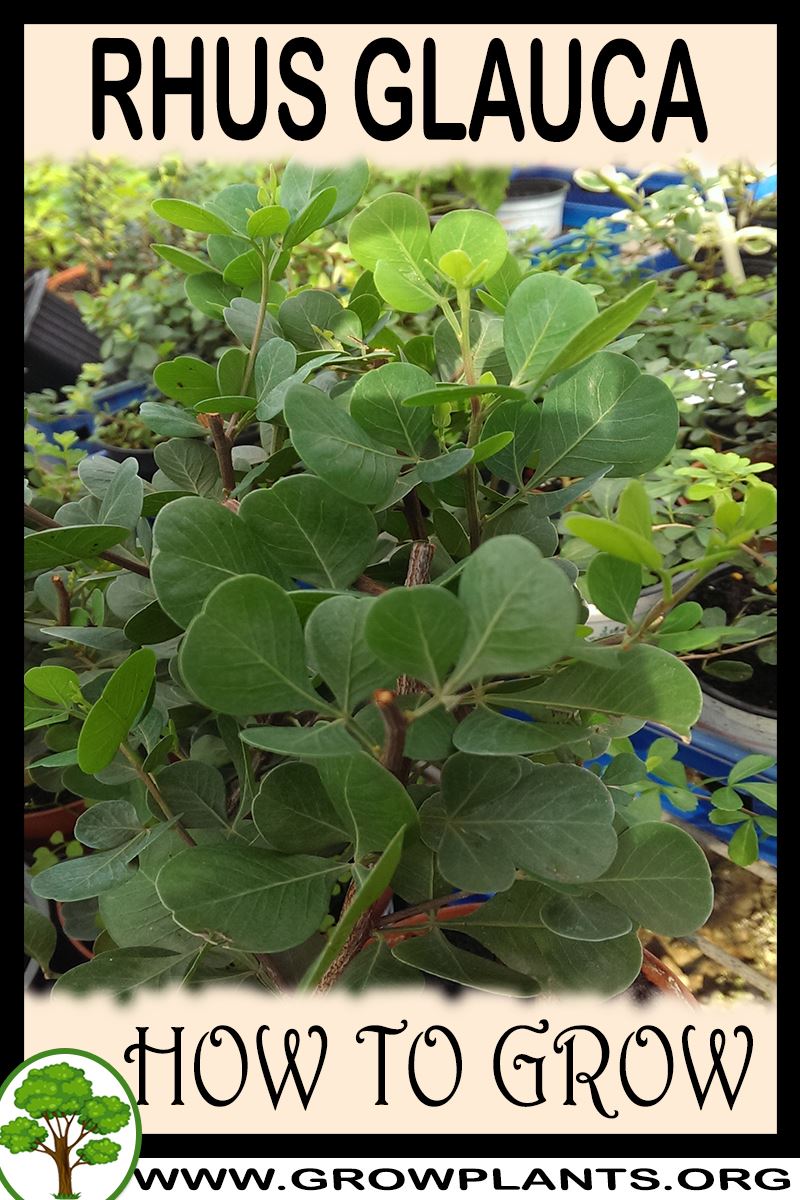
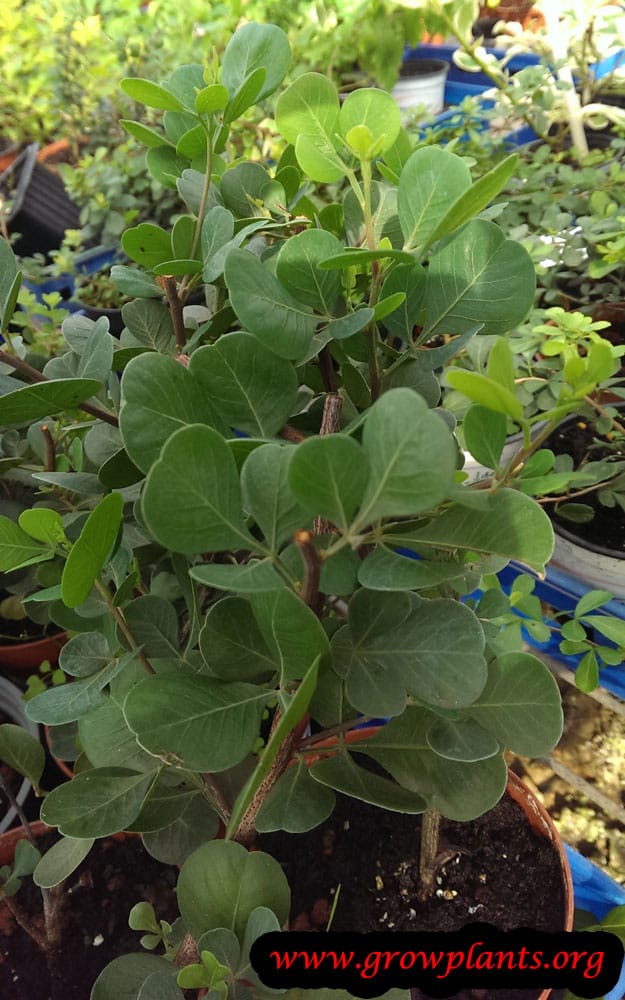
- Leaves & Foliage: Blue-green leaves, red when young, round to elliptic in shape.
- Flower Characteristics: Small yellow-white flowers borne on stalks in clusters.
Primary Uses & Landscape Value
- Functional & Ornamental Roles: Drought-tolerant hedge or screen with ornamental foliage; suited to containers.
Care Guide: Planting, Soil & Watering
Overview: Rhus glauca is a drought-tolerant evergreen shrub or small tree for full sun to half shade, hardy across zones 5-10 and happiest with a cool winter. It needs well-drained soil and little water once established.
Quick Care Requirements
| Requirement | Ideal Condition |
|---|---|
| Planting Season | Spring or autumn |
| Growth Rate | Slow to moderate |
| Soil Type | Well-draining |
| Water Need | Low to moderate; drought-tolerant once established |
Planting & Establishment
- Best Planting Season: Plant in spring or autumn so it settles in during mild weather; it appreciates a cool winter.
- How to Plant:
- Hole Preparation: Dig a hole a little wider than the root ball in free-draining soil.
- Soil Amendments: Improve heavy ground with grit or compost to sharpen drainage; it is otherwise undemanding.
- Planting Depth: Set the root ball level with the soil surface and firm in.
- Growth Speed & Expectations: A slow-to-moderate grower that can reach anywhere from 1 m to 8 m depending on how it is grown; patient but tough and long-lived.
Soil, Watering & Drainage Care
- Soil Mix & Drainage Needs: Wants free-draining soil and dislikes waterlogging; grows well in a large container with a gritty mix.
- Watering Schedule & Technique:
- Young / Newly Planted: Water regularly in the first season to establish the roots.
- Established: Drought-tolerant thereafter – water sparingly and let the soil dry well between waterings.
- Seasonal Adjustments: A little water in summer heat; keep dry in winter.
Climate, Light & Hardiness
Rhus glauca (blue kuni-rhus) is a drought-tolerant evergreen shrub or small tree for subtropical, Mediterranean, desert and temperate climates, growing well in full sun to light shade. The site rates it across hardiness zones 5–10 and notes it appreciates a cool winter.
Quick Climate Specifications
| Climate Zones | Subtropical, Mediterranean, desert, temperate |
|---|---|
| USDA Hardiness Zones | 5–10 (per site data) |
| Frost Tolerance | Low to Moderate (varies with age and exposure) |
| Light Conditions | Full sun to partial shade |
| Wind Tolerance | Moderate to High |
Sunlight & Light Exposure
Optimal Light Setup
Full sun gives the densest, most compact growth for hedging; it also tolerates partial shade.
Direct Sun Requirement
An open, sunny position best supports its drought-tolerant, evergreen habit.
Best Exposure / Orientation
Warm, bright, well-lit aspects suit it, and it copes with reflected heat in dry-climate gardens.
Temperature Extremes & Hardiness
USDA Hardiness & Regional Limits
The site's data places it in zones 5–10, which is treated here as the primary reference for its cold limit. As an evergreen more typical of warm, dry climates, cold tolerance is likely to vary with plant age, exposure and conditions, so treat the colder end of that range cautiously and protect young plants.
Cold Damage & Winter Protection
Established plants tolerate cool winters, which the site notes they benefit from, but hard or prolonged frost can damage foliage - young specimens most of all. Shelter and container protection help at the cold edge of its range.
Extreme Heat Tolerance
High. As a drought-tolerant, desert-capable species it handles hot, dry summers well.
Wind, Humidity & Microclimate
Humidity Preferences
Suited to dry air; it does not require humid conditions.
Dry-Air Tolerance
High - a strength of this drought-adapted shrub.
Wind Tolerance
Moderate to high, which supports its use as a hedge and windbreak.
Microclimate Recommendations
A sunny, free-draining site with a cool but not severe winter gives the most dependable results.
Growing in Pots, Balconies & Indoors
The grower confirms Rhus glauca is not a houseplant – it is an evergreen shrub or small tree (1-8 m). It does grow well in a large container while young, giving a fine sun-loving patio or courtyard plant, but a big woody specimen ultimately wants the open ground.
Quick Details
- Container Size: a large 40 L+ (10 gal+) tub; it only stays pot-happy while young
- Indoor Suitability: Not a houseplant – too large and sun-hungry
- Best Spot: Full sun to part shade; drought-tolerant
- Soil & Drainage: Free-draining mix; it dislikes wet feet
- Watering in Pots: Water when the top of the mix dries; drought-tolerant once established
Indoors & On the Windowsill
- Not for indoors: Rhus glauca is an outdoor an evergreen shrub or small tree (1-8 m) – it needs full sun and space no room can give.
- Overwintering: Where winters are colder than it likes, a young plant in a pot can be sheltered in a bright, frost-free spot for the cold months and moved back out in the warm season.
On a Balcony or Patio
- Light & wind: Give it the sunniest spot; walls and paving throw back heat so pots dry fast – check moisture in summer, and stake or shelter the top growth from wind.
- Keep it in bounds: Prune each year to hold it to size and keep it flowering or dense in the pot.
- Practicalities: A full pot of moist soil is heavy – check the balcony can take the weight, and stand pots so drainage water runs off cleanly instead of pooling.
Choosing the Pot, Soil & Long-Term Care
- Pot & drainage: a large 40 L+ (10 gal+) tub with strong drainage holes; skip a standing water saucer to avoid root rot; terracotta breathes and dries faster, while glazed or plastic holds moisture longer.
- Potting mix: A light, aerated mix – peat or coir blended with perlite or vermiculite so roots get both moisture and air.
- Feeding: Potted plants use up their soil faster as nutrients wash out with each watering, so feed a little and often through the growing season.
- Repotting: Pot up or root-prune every year or two; a large woody plant will eventually outgrow any pot and is best planted out.
Fertilizing & Feeding
A light feeder; drought-adapted and content with modest, occasional feeding during the active growing season rather than rich or frequent doses.
Quick Fertilizing Specs
| Feeding Level | light |
|---|---|
| young_feeding | Light, regular balanced feeding as plants establish. |
| mature_feeding | Steady balanced feeding through the growing and blooming season. |
| Main Nutrient Priority | Balanced nutrition with enough nitrogen for growth; avoid over-emphasis on phosphorus. |
| Best Feeding Period | Through the active growing and flowering season. |
| Organic Options | Compost or well-rotted organic matter; balanced organic fertilizers. |
| Micronutrients | Usually supplied by a complete fertilizer; watch for iron chlorosis on alkaline soils. |
| Soil pH | Adaptable; generally does best in slightly acidic to near-neutral soil. |
| Reduce/Stop Feeding | Ease off feeding as growth slows into the cool season. |
Feeding by Growth Stage
Spring growth flush
Support the flush of new stems and leaves as active growth resumes in the warm season.
| Nutrient direction | A balanced complete fertilizer with steady nitrogen to build healthy foliage and stems. |
|---|---|
| Timing | As new growth begins and the plant leaves its cool-season slowdown. |
| Frequency | Begin light, regular feeding through the active growing season. |
| Fertilizer types | Balanced complete garden fertilizer, Slow-release granular feed, Compost or other organic matter worked into the soil |
| Precautions | Avoid heavy nitrogen, which pushes soft leafy growth at the expense of flowers. |
Bloom period
Fuel steady flowering without forcing excess leafy growth.
| Nutrient direction | Keep feeding balanced; adequate nitrogen with steady potassium supports repeated blooms. |
|---|---|
| Timing | Through the main flowering season. |
| Frequency | Continue light, regular feeding while the plant is in bloom. |
| Fertilizer types | Balanced complete flowering-plant fertilizer, Slow-release granular feed |
| Precautions | Do not rely on high-phosphorus ‘bloom booster’ products; balanced nutrition with enough nitrogen drives flowering. |
Cool-season rest
Let the plant rest during its low-growth cool season.
| Nutrient direction | None – withhold fertilizer while growth is minimal. |
|---|---|
| Timing | During the cool, low-light part of the year when growth slows. |
| Frequency | No feeding at this stage. |
| Fertilizer types | No feeding at this stage while the plant is resting. |
| Precautions | Do not fertilize until active growth resumes. |
Nutrient Deficiency Signs & Corrections
Older, lower leaves turn pale green to yellow and growth is weak.
| Possible causes | Low soil nitrogen, Leaching from frequent watering, especially in containers, Cold soil limiting nutrient uptake |
|---|---|
| Appears first on | Older, lower leaves |
| What to check | Recent feeding history, Whether the oldest leaves yellow first, Drainage and watering |
| Possible correction | Apply a balanced complete fertilizer and resume regular light feeding through the growing season. |
New leaves yellow between the veins while the veins stay green.
| Possible causes | High or alkaline soil pH locking up iron, Waterlogged or cold roots reducing uptake, Genuinely low micronutrient availability |
|---|---|
| Appears first on | Youngest leaves |
| What to check | Soil pH, Drainage, Whether yellowing is interveinal on new growth |
| Possible correction | Correct soil pH and, if needed, apply a chelated iron product following its label. |
Leaf edges and tips brown and scorch, especially in containers.
| Possible causes | Excess fertilizer salts building up in the soil, Underwatering that concentrates salts, Poor drainage |
|---|---|
| Appears first on | Leaf margins and tips |
| What to check | Recent fertilizer amounts, Whether pots drain freely, How thoroughly the plant is watered |
| Possible correction | Water thoroughly to rinse excess salts from the root zone and reduce feeding. |
Pruning, Training & Seasonal Maintenance
Rhus glauca (Searsia glauca, Blue kuni-rhus) is an evergreen, drought-tolerant screening shrub grown mainly for its foliage; it takes shaping and shearing well and resprouts readily from old wood, so pruning is about form, density and size — not flowering, since its tiny clustered flowers are ornamentally insignificant. at small-tree size it works equally well as a loose screen or clipped hedge Prune the main shape in late winter, after the coldest weather, and it can be kept as an informal screen, a clipped formal hedge, or a small single-trunk tree.
Quick Pruning & Maintenance Specs
| Pruning Tolerance | Moderate–High – resprouts from old wood |
| Primary Pruning Window | Late winter (after hardest frosts) |
| Secondary Maintenance Window | Light shear/tip during the growing season |
| Typical Frequency | Formal hedge 2–3×/yr; informal screen ~1×/yr |
| Main Objective | Screen density, hedge shape and size control |
| Young Plant Priority | Tip-prune to force branching and a well-clothed base |
| Mature Plant Priority | Shear to shape; renew leggy or bare old stems |
| Best Tool Type | Hedge shears for formal faces; secateurs for selective cuts |
| Avoid Heavy Pruning During | Peak summer heat and drought stress |
Pruning by Plant Age & Size
Newly Established
Let the plant root in for its first season, removing only damaged shoots; tip-prune lightly to start branching.
Young / Formative
Decide the role now. For a hedge, begin clipping early and taper the top narrower than the base (a batter) so the bottom stays lit and clothed; for an informal screen just tip wayward shoots; for a specimen, select and clean a single leader into a small tree. Because it can reach small-tree size, it also suits an informal, loosely-shaped screen or a single-trunk specimen rather than only a tight clipped hedge.
Mature / Established
Maintain by shearing to shape and by thinning out the oldest, leggy or bare stems to a strong low shoot so the shrub renews itself from the base.
Seasonal Pruning Schedule
Dormant / Late Winter
Objective: main reshaping and size reduction. Remove deadwood and thin congested or leggy old stems; reduce height and spread. This is the time for any harder cuts because regrowth follows in spring.
Summer Canopy Management
On formal hedges give a light shear or two to keep a crisp face; on informal screens simply tip back wayward shoots. Avoid big cuts in the heat.
Structural Pruning & Training
Select and space branches for an even screen, remove crossing and dead wood, and control height and spread. Because it resprouts, the oldest stems can be renewed from near the base over time. Keep a tapered (battered) profile so light reaches the lower growth. Its blue-green foliage with reddish young growth is the main ornamental feature, so avoid shearing so constantly that you remove every flush of coloured new growth.
Special Growth to Remove
On leggy specimens cut out weak, inward and exhausted basal stems to force fresh growth; being grown on its own roots there are no graft suckers to manage.
Container & Small-Space Pruning
In a large container it makes a good drought-tolerant patio screen: tip-prune to keep it compact, cut back harder every year or two to renew, and root-prune when repotting.
Tools
Hedge shears are genuinely appropriate here — it is a true hedging/screening plant. Use secateurs for selective and renewal cuts, and loppers or a pruning saw for thick old stems when renovating.
Tool Hygiene & Disease Risk
Routine — clean, sharp tools; aphids are the only real pest and there is no major tool-borne disease. As an Anacardiaceae, its sap can irritate sensitive skin, so wear gloves.
Cut Placement & Technique
Shear to an even, tapered face; for renewal cut old stems low to a strong outward shoot; head tips to thicken a thin screen.
Heavy Pruning & Rejuvenation
Well tolerated: an overgrown plant can be cut hard back into old wood and will resprout. Spread a big renovation over one to two seasons and water afterwards to support the regrowth.
Post-Pruning Care
Even though it is drought tolerant, water after hard cuts because resprouting needs moisture, and make sure the opened interior gets enough light to green up.
Common Pruning Mistakes
- Shearing a top wider than the base, which shades out and bares the bottom of the hedge.
- Letting it grow leggy without ever renewing the old stems.
- Over-tight shearing that constantly removes the attractive coloured new growth flushes.
When NOT to Prune
Avoid hard pruning in peak summer heat or drought stress, and just before a hard frost when tender new regrowth would be damaged.
Recommended Tools (by task)
- hedge_shears — to clip formal hedge and screen faces.
- bypass_secateurs — for selective shaping and renewal of individual stems.
- loppers — to cut thick old stems low when rejuvenating a leggy plant.
Pruning Troubleshooting
| Problem | Possible Cause | What to Check | Corrective Action |
| Bare, thin base of the hedge | Top clipped wider than base; over-shading | The hedge profile (should taper inward at top) | Re-cut to a battered taper and renew low stems |
| Leggy, sparse screen | Never tip-pruned to branch | Branch density and tip growth | Head shoots back to force branching; feed & water |
| Dieback after a hard cut | Cut back during heat/drought stress | Season and soil moisture at time of cut | Do hard cuts in the cool season and water in |
Propagation Guide
This evergreen blue kuni-bush is grown from seed or from semi-hardwood cuttings. Seed is the usual nursery route, while cuttings reproduce a chosen plant faster and keep it identical. Moderate overall.
Quick Propagation Specs
| Best Propagation Method | Seed |
| Alternative Methods | Semi-hardwood cuttings |
| Propagation Difficulty | Moderate |
| Seed True-to-Type | Usually true-to-type (species) |
| Vegetative True-to-Type | Yes |
| Best Propagation Season | Spring and autumn |
| Germination Temperature | Warm, roughly 20–25°C (68–77°F) |
| Cutting Rooting Time | Several weeks |
Growing from Seed
Seed Handling & Pre-Sowing
Clean the pulp from the small fruit. The coat can be hard, so gentle scarification or a warm-water soak aids water uptake.
Germination Conditions & Time
Sow in a warm, free-draining mix; germination can be slow and uneven.
Stem Cuttings
Cutting Type & Rooting Setup
Take semi-hardwood cuttings of firmed current growth and root them in a free-draining mix under warm, humid, shaded conditions.
Rooting Hormone & Time
Rooting hormone is beneficial; roots form over several weeks.
Bloom & Flower Guide
Quick Details
- Bloom Season: Summer
- Time to First Bloom: A few years from planting, once the shrub is established
- Flower Appearance: Small yellow-white flowers borne on stalks in loose clusters
- Edibility: Ornamental only; the flowers are not eaten
Detailed Blooming Overview
Blue kuni-rhus is grown mainly for its blue-green foliage and tidy, drought-tolerant habit, with the flowers a quieter feature. In summer it produces sprays of tiny yellow-white flowers in loose clusters that are attractive to bees. Like most in the group it is dioecious, so male and female flowers are on separate plants and both are needed if you want the small fruits that follow.
Flower Characteristics
- Small yellow-white flowers carried on stalks in loose clusters.
- Modest but nectar-bearing and visited by bees.
- Male and female flowers on separate plants.
Bloom Care & Thinning
- Managing the bloom: Little is needed; prune to shape after flowering, as it is grown more for form and foliage than for the flowers.
- For fruit: Grow male and female plants together so the flowers can set fruit.
- Pollination: Insect-pollinated, mainly by bees.
Pests, Diseases & Troubleshooting
This blue kuni-bush is a tough, drought-hardy Searsia (formerly Rhus) with few pest problems; like most of the genus it mainly attracts aphids, scale, spider mites and occasional gall-forming or psyllid insects, none usually serious. Its diseases are minor, and its real weakness is abiotic – being adapted to lean, dry soils it resents overwatering and wet feet more than any bug. Details are given at genus level because the exact species could not be confirmed.
Quick Troubleshooting Overview
| Issue / Pest | Main Symptom | Primary Solution |
|---|---|---|
| Aphids | Colonies and honeydew on new growth | Water-jet, beneficials, insecticidal soap |
| Scale | Brown bumps and sooty mould on stems | Prune out, horticultural oil |
| Spider mite | Stippled, dusty leaves in dry heat | Hose foliage, insecticidal soap |
| Galls / psyllids | Small swellings or distorted shoots | Prune out, tolerate minor damage |
| Root rot | Yellowing, dieback in wet soil | Improve drainage, water sparingly |
Common Pests & Management
- Aphids (Aphis / Myzus / Macrosiphum spp.):
- Symptoms: Small soft-bodied insects (green, black or grey) clustering on soft new shoots and leaf undersides; they suck sap, causing curled, distorted and yellowing growth plus a sticky honeydew that blackens with sooty mould and draws ants. Winged forms spread them plant to plant and can carry viruses.
- Prevention & Control: Blast colonies off with a firm jet of water and pinch out badly infested tips; encourage and protect ladybirds, lacewings and hoverflies, and grow flowering companions to feed them. For persistent outbreaks use insecticidal soap or a light horticultural/neem oil, wetting leaf undersides in the cool of the evening to spare pollinators.
- Scale insects (Coccus / Aspidiotus spp.):
- Symptoms: Brown or waxy bumps on stems and leaf undersides, sucking sap and producing honeydew and sooty mould; heavy attacks cause dieback.
- Prevention & Control: Prune out badly infested wood, encourage ladybirds and parasitic wasps, and smother remaining scale with horticultural oil, repeating for the crawlers.
- Two-spotted spider mite (Tetranychus urticae):
- Symptoms: Fine pale stippling that bronzes whole leaves, with delicate webbing on the undersides and growing tips in hot, dry, dusty spells; heavily fed leaves dry and drop. Look for the moving specks with a hand lens.
- Prevention & Control: Raise humidity and hose foliage down regularly, and never let plants suffer dust or drought stress. Introduce predatory mites (Phytoseiulus persimilis) under cover. Treat hot-spots with insecticidal soap or horticultural oil, repeating at 5-7 day intervals to catch newly hatched mites.
- Psyllids / gall insects (Psyllidae & gall midges):
- Symptoms: Small swellings, pimples or distorted, discoloured shoots where these insects feed; largely cosmetic on a vigorous shrub.
- Prevention & Control: Prune out and destroy galled or distorted growth, keep the plant healthy, and tolerate the minor damage, which rarely warrants spraying.
Diseases & Fungal Issues
- Root rot (Phytophthora / Pythium spp.):
- Symptoms: Yellowing, thinning and branch dieback in heavy, wet soil as the roots rot – the main disease risk for this dry-country shrub.
- Treatment & Management: Plant in free-draining soil, water sparingly once established, and avoid irrigation and waterlogging; remove dead wood and improve drainage.
- Powdery mildew / leaf spot (Erysiphe / Cercospora spp.):
- Symptoms: Occasional white powdery patches or leaf spots in humid, shaded, crowded conditions; usually minor.
- Treatment & Management: Improve airflow and sun, avoid overhead watering, and remove affected leaves; sulphur fungicide is rarely necessary.
Growing Difficulties & Abiotic Problems
- Overwatering / wet feet:
- Cause & Symptoms: Adapted to lean, dry soils, the plant is far more likely to suffer from too much water – leading to root rot and decline – than from drought.
- Correction Strategy: Grow in full sun and sharply drained soil, water only to establish then rely on rainfall, and never site it in a wet, heavy spot.
- Chlorosis on poor soils:
- Cause & Symptoms: Yellowing can appear on very alkaline or compacted ground where nutrients or iron are unavailable.
- Correction Strategy: Mulch with organic matter, correct extreme pH, and apply a chelated micronutrient feed if chlorosis persists.
What Helps – Products & Tools
Insecticidal soap and horticultural or neem oil cover the aphids, scale and mites this shrub occasionally gets; galled shoots are best simply pruned out. Because its worst enemy is wet soil, the most valuable ‘tool’ is restraint with watering and good drainage rather than any spray.