

Plant Profile & Key Characteristics
Overview: A bushy herbaceous plant growing 0.6-1.2 m tall, evergreen as a perennial in warm climates and grown as an annual where winters are cold. It is grown ornamentally for its fragrant, multi-coloured trumpet flowers that open in late afternoon.
Quick Specifications
| Specification | Attribute |
|---|---|
| Plant Type / Life Cycle | Perennial in warm climates; grown as annual in cold climates |
| Foliage Type | Evergreen (in frost-free zones) |
| Mature Size | 0.6-1.2 m (2-4 ft) |
| Growth Rate | Moderate to Fast |
| Root System | Tuberous root (thick storage tuber) |
| Toxicity | Seeds and roots are toxic if ingested |
| Hardiness | USDA zone 9+ as perennial; 3+ as annual |
Growth Form & Structure
- Height & Spread: 0.6-1.2 m (2-4 ft) as a bushy mound; grows well in large containers.
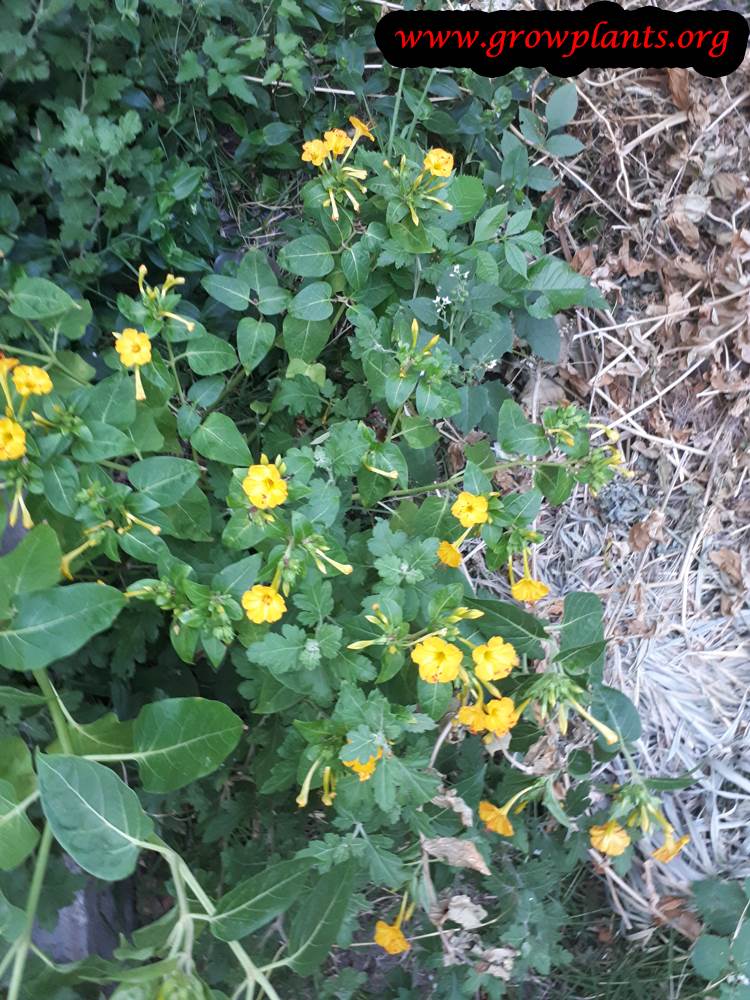
- Growth Habit & Form: Bushy, many-branched herbaceous plant.
- Lifespan & Maturity: Fast-growing, regrowing each year from its tuber; can self-seed aggressively and become invasive.
Anatomy & Physical Features
- Leaves & Foliage: Green heart-shaped leaves.
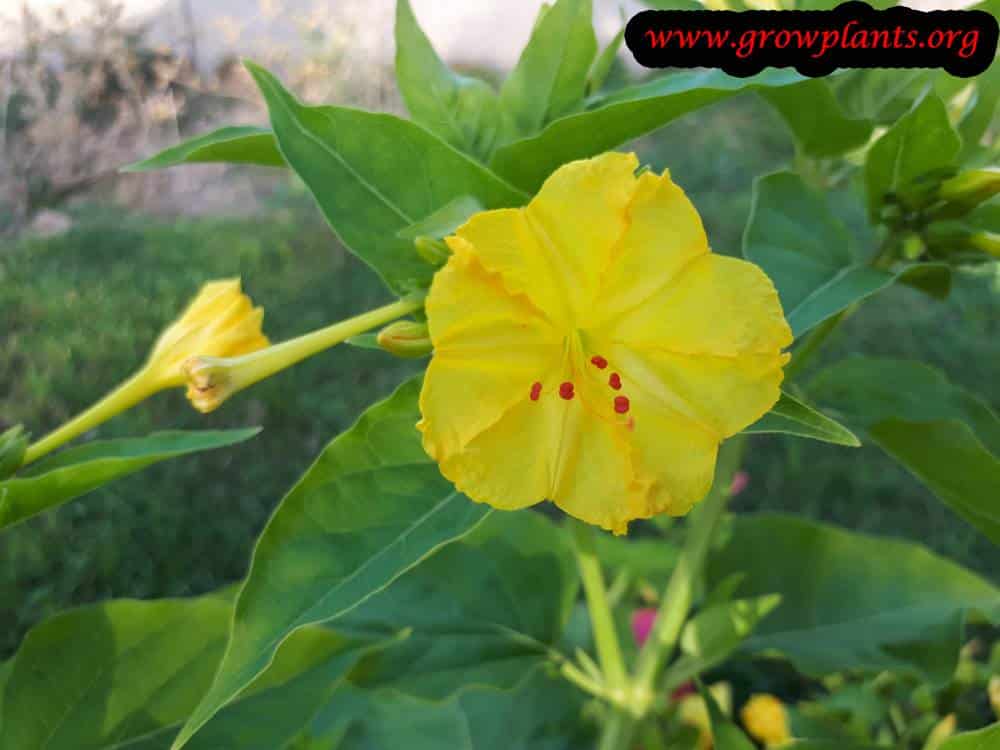
- Flower Characteristics: Fragrant trumpet-shaped flowers in purple, white, yellow, orange, pink or mixed patterns, opening in late afternoon.
Primary Uses & Landscape Value
- Functional & Ornamental Roles: Fragrant, evening-scented ornamental for borders and containers; attracts pollinators.
Care Guide: Planting, Soil & Watering
Overview: Mirabilis (Marvel of Peru) is an easy, fast-growing plant for full sun to part shade, grown as a tuberous perennial in mild areas (hardiness zone 9+) and as an annual in colder ones. It likes moist but well-draining, reasonably fertile soil and even, moderate moisture.
Quick Care Requirements
| Requirement | Ideal Condition |
|---|---|
| Planting Season | Spring, once the soil has warmed and frost has passed |
| Growth Rate | Fast |
| Soil Type | Moist but well-draining, average to fertile |
| Water Need | Moderate – keep evenly moist, drought-tolerant once established |
Planting & Establishment
- Best Planting Season: Plant or sow in spring after the last frost; in cold climates the tuberous roots can be lifted and stored over winter.
- How to Plant:
- Hole Preparation: Dig a hole a little wider than the root ball or tuber so the roots spread easily.
- Soil Amendments: Mix compost or well-rotted organic matter into average soil to hold moisture while still draining freely.
- Planting Depth: Set the crown of the tuber or root ball at soil level; do not bury the stem.
- Growth Speed & Expectations: Fast – plants bush out quickly and flower in their first season.
Soil, Watering & Drainage Care
- Soil Mix & Drainage Needs: Prefers moisture-retentive but well-drained soil; the fleshy tuber stores water, so avoid soggy ground that can rot it.
- Watering Schedule & Technique:
- Young / Newly Planted: Water regularly to keep the soil evenly moist while the young plant establishes.
- Established: Moderately drought-tolerant thanks to its tuber; water deeply when the top few centimetres dry out.
- Seasonal Adjustments: Water more in summer heat; reduce in cool weather, and keep stored tubers dry over winter.
Climate, Light & Hardiness
Mirabilis (Marvel of Peru) is a warm-season, tuberous herbaceous plant that loves heat and full sun to light shade, adapting to tropical, subtropical, Mediterranean, desert and (as a summer plant) temperate climates. It is perennial where winters are mild - roughly USDA zone 9 and warmer - and grown as a warm-season annual in colder zones, its top growth killed by frost while the tuber can persist underground in mild areas.
Quick Climate Specifications
| Climate Zones | Tropical, subtropical, desert, Mediterranean and (as an annual) temperate |
|---|---|
| USDA Hardiness Zones | About 9 and warmer as a perennial; roughly 3 and up grown as a summer annual |
| Optimal Temp Range | Approximately 20–30 °C (68–86 °F) |
| Cold Damage Begins | Top growth killed by frost near 0 °C (32 °F) |
| Approx. Survival Minimum | Foliage none; tuber overwinters underground in mild zones (roughly to −7 °C / 19 °F with mulch) |
| Frost Tolerance | Top growth: None; dormant tuber: Low to Moderate in mild zones |
| Light Conditions | Full sun to half shade |
| Wind Tolerance | Moderate |
| Salt / Coastal Tolerance | Moderate |
Sunlight & Light Exposure
Optimal Light Setup
Full sun gives the most compact, free-flowering plants; light half-shade is tolerated and useful in the hottest climates.
Direct Sun Requirement
A true sun-lover that flowers best with ample direct light; blooms open in late afternoon and evening.
Best Exposure / Orientation
Favour a warm, open, sunny aspect where it can enjoy the heat that stresses cool-season plants.
Temperature Extremes & Hardiness
USDA Hardiness & Regional Limits
Perennial where winters remain mild, roughly USDA zone 9 and warmer, and often self-seeding. In colder zones it is grown as a warm-season annual, or the tuber is lifted and stored over winter. Hardiness marks the outdoor cold limit; being grown as an annual in freezing regions reflects the killing frost, not an absence of climatic data.
Cold Damage & Winter Protection
Frost knocks back the top growth. In mild zones a mulch over the crown lets the tuber survive and resprout; in cold zones lift and store the tuber frost-free, or regrow from seed.
Frost Sensitivity
The soft foliage has no frost tolerance and blackens at the first freeze; only the tuber carries the plant over, and only where the ground does not freeze hard.
Extreme Heat Tolerance
Excellent heat tolerance - it performs in hot, sunny and desert-edge climates - a trait separate from watering needs (covered elsewhere).
Frost-Free Growing Season
Being warm-season, it needs a frost-free run of warm weather to grow, flower and set its tuber; start early under cover in short-summer areas and plant out after the last frost.
Wind, Humidity & Microclimate
Humidity Preferences
Adaptable to both humid tropical air and drier Mediterranean or desert conditions.
Dry-Air Tolerance
Tolerates hot, dry air well, which helps it succeed in desert-influenced gardens.
Wind Tolerance
The bushy habit handles moderate wind; strong gusts can snap the brittle stems, so light shelter helps.
Coastal / Salt Tolerance
Moderate tolerance of coastal conditions; common in mild seaside gardens away from the harshest salt.
Microclimate Recommendations
Choose a warm, sunny, open spot; because it self-seeds prolifically and can be aggressive, place it where its spread is welcome or controllable.
Growing in Pots, Balconies & Indoors
Four o’clock (Mirabilis) is a bushy, sun-loving flowering plant. The grower does not grow it as a houseplant, but it does very well in a large container on a sunny patio or balcony, and its tuber can be overwintered where winters are cold.
Quick Details
- Container Size: A large, sturdy container – it makes a substantial bush
- Indoor Suitability: Not a houseplant – needs full sun
- Best Spot: Full sun to half shade
- Soil & Drainage: Aerated, organic-rich, free-draining potting mix
- Watering in Pots: Water regularly in growth; it is fairly forgiving once established
Indoors & On the Windowsill
- Not a houseplant: The grower does not recommend it indoors – it needs full sun to bloom and turns leggy in low indoor light.
- Overwintering: It grows from a tuber; in cold climates you can bring the pot into a frost-free place to rest over winter, or lift and store the tuber, then restart it in spring.
- Keep away from pets & children: The seeds and roots are toxic if eaten – site it out of reach.
On a Balcony or Patio
- Light & wind: Give it the sunniest spot. Walls, railings and paving reflect heat, so pots dry fast – check moisture daily in warm weather, and shelter or stake tall growth from wind. A drip irrigation kit with a timer can take over that watering check automatically.
- Weight & runoff: A full pot of moist soil is heavy – check the balcony can take it, and stand pots so drainage water runs off cleanly without staining or flooding a neighbour below.
Choosing the Pot, Soil & Long-Term Care
- Pot & drainage: A pot with strong drainage holes and no standing-water saucer, so the roots never sit wet and rot. Terracotta breathes and dries faster (good against overwatering), while glazed or plastic holds moisture longer – match it to how often you water.
- Potting mix: A light, aerated, organic-rich mix – potting soil or peat/coir with perlite or vermiculite, blended with compost or well-rotted organic matter.
- Feeding: Nutrients leach out of pots with every watering, so potted plants need feeding more often than those in the ground – a balanced liquid feed through the growing season keeps them going.
- Repotting: Refresh the mix and pot up about every two years; for perennials, lightly trim the root ball and top growth at the same time to keep them vigorous.
Growing this plant in a greenhouse
A greenhouse can give mirabilis plant frost protection, cold protection, humidity control and extra warmth.
Greenhouse at a glance
| Greenhouse suitability | Conditional - depends on your climate |
|---|---|
| Main benefits | frost protection, cold protection, humidity control, extra warmth |
| Season extension | earlier spring & later autumn |
| Outdoor protection advisable below | about 0°C |
| Suitable types | unheated greenhouse, polycarbonate greenhouse |
| Heating | Heating is optional - useful mainly for winter growing in cold areas. |
Related greenhouse guides
- Greenhouses: How to Choose the Right Greenhouse
- Polycarbonate Greenhouses: What to Look for Before Buying
Fertilizing & Feeding
Marvel of Peru is a vigorous, moderate feeder with a long bloom season; keep feeding balanced through active growth to sustain repeated fragrant flushes.
Quick Fertilizing Specs
| Feeding Level | moderate |
|---|---|
| Main Nutrient Priority | Balanced feeding with steady nitrogen and adequate potassium |
| Best Feeding Period | Through the long spring-to-autumn flowering season |
| Soil pH | Tolerates a wide range; near neutral is fine |
| Organic Options | Compost and well-rotted organic matter |
| Micronutrients | Rarely needed unless a deficiency appears |
| Reduce/Stop Feeding | Taper off as growth slows in autumn and winter |
Feeding by Growth Stage
Spring growth flush
Support strong leafy and stem growth as the plant wakes up so it can carry plenty of flowers.
| Nutrient direction | Balanced, complete feeding with adequate nitrogen to drive healthy foliage and stems. |
|---|---|
| Timing | As new growth begins in spring. |
| Frequency | A few light feedings spaced through the flush of spring growth. |
| Fertilizer types | A balanced complete garden fertilizer, Compost or well-rotted organic matter worked into the soil |
| Precautions | Go easy on nitrogen; too much pushes soft leafy growth and delays or reduces flowering. |
Blooming period
Keep the plant well nourished through flowering for abundant, long-lasting blooms.
| Nutrient direction | Balanced feeding; adequate potassium and steady nitrogen support flowering better than a high-phosphorus ‘bloom’ product. |
|---|---|
| Timing | From the onset of budding through the main bloom. |
| Frequency | Light, regular feeding across the blooming period. |
| Fertilizer types | A balanced complete fertilizer, A balanced liquid feed for container plants |
| Precautions | Avoid high-phosphorus ‘bloom booster’ products; balanced nutrition and adequate nitrogen drive bloom. |
Repeat flushes and mid-season refresh
Sustain repeated flushes of bloom through the long flowering season and after any shearing.
| Nutrient direction | Balanced feeding to refuel growth and rebloom; keep nitrogen moderate. |
|---|---|
| Timing | Between flushes and after cutting back spent flowers, through the extended season. |
| Frequency | Light feeding to refresh growth after each flush. |
| Fertilizer types | A balanced complete fertilizer, A balanced liquid feed for containers |
| Precautions | Feed sparingly and keep it balanced; excess nitrogen favors leaves over the next flush of flowers. |
Dormancy / rest
Let the plant rest without pushing new growth when it is dormant or checked by cold or summer heat.
| Nutrient direction | None – withhold fertilizer while the plant is resting. |
|---|---|
| Timing | During winter dormancy, or the resting spell brought on by heat or cold. |
| Frequency | No feeding at this stage. |
| Fertilizer types | No feeding at this stage – the plant is dormant or resting and takes up little nutrient. |
| Precautions | Do not fertilize until active growth resumes; feeding a dormant plant wastes nutrients and can burn roots. |
Nutrient Deficiency Signs & Corrections
Older, lower leaves turn pale and yellow-green, growth is weak and blooming is sparse.
| Possible causes | low available nitrogen in the soil, nitrogen leached out by heavy watering or in sandy soil, cold or waterlogged soil limiting root uptake |
|---|---|
| Appears first on | older, lower leaves |
| What to check | whether yellowing starts on old versus new leaves, recent feeding history, drainage and how wet the soil stays |
| Possible correction | Apply a balanced complete fertilizer and build soil organic matter; correct drainage so roots can take up nutrients. |
Newest leaves yellow between the veins while the veins stay green (interveinal chlorosis).
| Possible causes | high (alkaline) soil pH locking up iron, waterlogged or cold soil impairing root function, genuinely low available iron |
|---|---|
| Appears first on | youngest leaves |
| What to check | soil pH, drainage and root health, whether new growth is most affected |
| Possible correction | Correct soil pH toward the plant’s preferred range and improve drainage; if it persists, apply a chelated iron product per its label. |
Leaf margins on older leaves scorch and brown, stems are weak and flowering is poor.
| Possible causes | low soil potassium, uneven watering or drought stress, excess nitrogen pushing leafy growth at the expense of flowers |
|---|---|
| Appears first on | margins of older leaves |
| What to check | watering consistency, whether feeding has been very nitrogen-heavy, soil test for potassium |
| Possible correction | Use a balanced fertilizer that supplies adequate potassium and keep watering even; avoid over-applying high-nitrogen feeds. |
Pruning, Training & Seasonal Maintenance
Mirabilis (marvel of Peru, four o’clock) is a genus of fast, bushy herbaceous plants that grow from fleshy tuberous roots and flower on their current-season growth, opening fragrant trumpets late in the day; the familiar garden plant is M. jalapa, alongside species such as the desert-native M. longiflora and M. multiflora. Across the genus the picture is the same for pruning: no woody framework, so the work is soft-stem grooming with two aims — pinching young plants to build a dense bush, and deadheading to curb the abundant self-seeding that makes several species naturalise aggressively in mild climates. Where hardy (broadly zone 9 and up) they are perennials that resprout from the tuber after being cut back; in colder zones they are grown as annuals or the tubers are lifted and stored. Because they bloom on new growth, cutting back never costs flowers — restraint is about seeding, not plant health.
Quick Pruning & Maintenance Specs
| Pruning Tolerance | High — vigorous soft-stemmed plants that resprout from the tuber after hard cut-back |
| Primary Pruning Window | Deadhead through the long spring–autumn bloom; cut top growth down after frost |
| Secondary Maintenance Window | Pinch in spring/early summer for bushiness; lift and store tubers before hard frost in cold zones |
| Typical Frequency | Ongoing deadheading where seeding must be checked; one autumn cut-down |
| Main Objective | Limit aggressive self-seeding and keep a dense, tidy bush |
| Young Plant Priority | Pinch growing tips to force low branching |
| Mature Plant Priority | Deadhead to control seeding; cut back leggy or frosted growth |
| Best Tool Type | Precision snips or bypass secateurs for the semi-succulent stems |
| Avoid Heavy Pruning During | Just before frost in borderline zones — protect or lift the tuber instead |
Pruning by Plant Age & Size
Newly Established
A young seedling or sprouting tuber needs only damaged growth removed as it establishes in moist soil in sun or part shade. These are quick growers that flower in their first season, so begin light pinching once a few leaf pairs have formed to steer the plant towards a full, branching shape.
Young / Formative
No structural framework is trained — formative care is pinching. Removing the growing tips of a young plant forces low branching, turning what would be a few tall, thin stems into a rounded, free-flowering bush. On such fast growers, one or two early pinches make a marked difference.
Mature / Established
A mature four o’clock’s main task is deadheading — removing spent flowers before they ripen the plentiful seed that germinates freely and gives the genus its weedy reputation in warm regions. Otherwise, shorten leggy stems to hold the shape, and in autumn cut frosted top growth to the ground over an over-wintering tuber, or lift the tuber in cold areas.
Seasonal Pruning Schedule
Spring / Early Summer (formative pinch)
Objective: a dense, branching bush. Remove: soft growing tips of young stems. Do NOT: cut into the tuber. Expected response: low branching and a fuller plant. Flowering impact: a brief delay, then more flowering shoots.
Spring–Autumn (deadheading)
Objective: control seeding and stay tidy. Remove: spent flower clusters before the seed ripens and sheds. Do NOT: allow seed to drop where the plant is naturalising unwanted. Expected response: continued bloom, far fewer volunteers. Flowering impact: blooming on new growth, it keeps flowering.
Autumn (cut-down / tuber lift)
Objective: tidy the frosted plant and protect the tuber. Remove: blackened top growth after the first hard frost. Do NOT: cut while green leaves are still feeding the tuber. Expected response: a dormant tuber that resprouts, or is lifted for storage. Flowering impact: none — growth restarts from the tuber.
Flowering & Fruiting Wood
Mirabilis species flower on current-season growth rather than on persistent wood, so pruning never removes next season’s flowers — cut a plant to the ground and it resprouts and blooms again from the tuber. The consequence runs the other way: nearly every flower can set viable seed and the plants self-sow heavily, so deadheading before seed-set is the main lever for controlling where they spread, while a mid-season cut-back simply stimulates fresh flowering shoots.
Structural Pruning & Training
There is no framework to select or train; these are soft bushes that renew from the tuber. ‘Structural’ work is shaping only — pinching for density when young, shortening over-long stems on a mature plant. Because flowering is on new growth, cutting a straggly plant back part-way through the season prompts a tidier, blooming flush rather than a setback.
Special Growth to Remove
The priority is spent flowers and forming seed, to check self-seeding; then frost-killed autumn growth and any leggy stems. There are no suckers or runners — the genus spreads by seed and by enlarging tubers, so seeding, not stems, is the growth to manage.
Container & Small-Space Pruning
In containers, four o’clocks make neat, fragrant patio plants: pinch early for shape, deadhead through the season to stop seed dropping into surrounding beds, and shorten leggy stems. The pot limits spread, and in cold areas the whole container can be over-wintered frost-free or the tuber lifted and stored dry. Tubers enlarge yearly, so potted plants may need potting-on.
Tools
Precision snips handle deadheading and pinching; bypass secateurs cut the thicker, semi-succulent lower stems cleanly at the autumn cut-down. Loppers, saws and shears are unnecessary on a wholly herbaceous plant, and shears would spoil the selective deadheading these plants reward.
Tool Hygiene & Disease Risk
Hygiene is Routine: clean, sharp snips suffice, since the usual pests are aphids and slugs rather than a tool-borne disease. Wiping the blade between plants is sound general practice, but no specific pathogen here calls for disinfecting between cuts.
Cut Placement & Technique
Pinch young tips just above a leaf pair to force branching, and deadhead by cutting the spent cluster back to the next bud or leaf so a fresh shoot takes over. At the autumn cut-down, cut the soft stems cleanly a few centimetres above the crown and let the tuber rest. Make clean cuts on the semi-succulent stems rather than crushing them.
Heavy Pruning & Rejuvenation
These plants tolerate hard pruning fully — cut right to the ground and they resprout strongly from the tuber and flower again on new growth — so rejuvenating a tired or leggy plant is simply a matter of cutting it down. The only caution is cold-zone timing: a cut-down tuber must be insulated or lifted, not left exposed to hard frost.
Post-Pruning Care
Deadheading and pinching need no special aftercare. After an autumn cut-down in a borderline zone, mulch over the crown to shield the tuber, or lift and store it dry and frost-free. A mid-season cut-back plant needs only its usual moisture to drive the new flush; heavy feeding is wasted on such vigorous growers.
Common Pruning Mistakes
- Skipping deadheading, so the plant sheds abundant seed and naturalises where it is not wanted.
- Cutting top growth down too early in autumn, before frost, while green leaves still feed the tuber.
- In cold zones, cutting back but leaving the tuber unprotected through hard frost instead of mulching or lifting it.
- Missing the early pinch, ending up with a tall, floppy, sparse plant instead of a dense bush.
When NOT to Prune
Do not cut the top growth down just before frost in a borderline climate — leave the protective dead growth until spring, or lift the tuber. Avoid removing green foliage while it still feeds the tuber. Beyond routine deadheading, there is no need to prune during the plant’s natural run of bloom.
Recommended Tools (by task)
- precision_snips — for pinching young tips and the ongoing deadheading that keeps these self-seeders in check.
- bypass_secateurs — for cutting the thicker, semi-succulent lower stems cleanly at the autumn cut-down.
Propagation Guide
Marvel of Peru is grown very easily from its large hard black seed and self-sows freely enough to become invasive. Seed of a mixed plant will not repeat the exact flower colour, so to fix a chosen colour the site recommends lifting and storing the tuberous root or taking cuttings.
Quick Propagation Specs
| Best Propagation Method | Seed |
| Alternative Methods | Tuberous root (lift and store); stem cuttings – for a chosen colour |
| Propagation Difficulty | Easy |
| Seed True-to-Type | Variable – colour mixes not true; single-colour plants often fairly true |
| Vegetative True-to-Type | Yes – use tubers or cuttings to fix a colour |
| Best Propagation Season | Sow spring to summer; lift tubers in autumn |
Growing from Seed
Seed Handling & Viability
Large, hard-coated seeds are easy to gather and store dry. The plant self-sows aggressively; deadhead to control spread.
Dormancy & Pre-Sowing Treatment
Soaking overnight or nicking the hard coat speeds and evens germination.
Sowing Season & Conditions
Sow spring to summer in warm, moist soil; direct-sow after frost for quick emergence.
Stem Cuttings
Softwood cuttings root in warm, humid conditions and keep a plant’s exact colour.
Rhizomes, Tubers, Bulbs & Corms
Tuber (Storage Root)
These plants form a large tuberous root. In cold climates lift it in autumn as top growth dies back, store dry and frost-free over winter, and replant in spring to preserve a chosen colour; large tubers can be split with a bud on each piece.
Bloom & Flower Guide
Quick Details
- Bloom Season: Spring, summer and autumn
- Time to First Bloom: In its first year from seed
- Flower Appearance: Fragrant, trumpet-shaped flowers in purple, white, yellow, orange, pink or a mix, often with more than one colour on the same plant
- Edibility: Not edible – the plant is toxic, with the seeds and roots being the most poisonous parts
Detailed Blooming Overview
Mirabilis, the Marvel of Peru or four o’clock flower, is grown for its fragrant, trumpet-shaped blooms that open in the late afternoon and through the evening, then close by morning. A single plant will often carry several colours at once – purple, white, yellow, orange and pink – sometimes streaked or flecked, over a long season from spring into autumn.
Flower Characteristics
- Trumpet-shaped, fragrant flowers in purple, white, yellow, orange, pink or mixed patterns.
- Often more than one colour on the same plant, sometimes streaked or speckled.
- Open in the late afternoon and evening rather than during the day.
Bloom Care & Thinning
- Managing the bloom: Plants flower freely with little help; trim to shape, and expect self-seeding if the seed is left to drop.
- Pollination: The evening fragrance attracts long-tongued moths, including hawk moths, which are the main pollinators.
- Safety: All parts are toxic if eaten, especially the seeds and roots – keep them away from children and pets.
Pests, Diseases & Troubleshooting
Overview: Four o’clocks are vigorous, largely pest-tolerant tuberous plants, but their lush soft foliage draws aphids, mites and night-feeding slugs, and the leaves can pick up fungal spots and rust in humid weather. The plant usually shrugs off minor damage, so cultural care and spot-treatment are almost always enough.
Quick Troubleshooting Overview
| Issue / Pest | Main Symptom | Primary Solution |
|---|---|---|
| Aphids | Curled tips, sticky honeydew, sooty mold | Rinse off, encourage beneficials, insecticidal soap |
| Slugs and snails | Ragged holes in leaves, slime trails at night | Trap, hand-pick, iron-phosphate bait |
| Spider mites | Stippling and webbing in hot, dry spells | Rinse foliage, soap or horticultural oil |
| Leaf spot / rust | Brown or rusty spots, yellowing leaves | Improve airflow, remove leaves, copper or sulfur |
| Self-seeding / spread | Seedlings and spreading tubers taking over | Deadhead, remove seed, lift tubers to contain |
Common Pests & Management
- Aphids (Aphis / Myzus spp.):
- Symptoms: Clusters of soft green or black insects on new shoots, buds and undersides, causing curled, distorted growth, honeydew and sooty mold.
- Prevention & Control: Blast off with water, encourage ladybugs and lacewings, and avoid excess nitrogen. Insecticidal soap or light oil clears heavy colonies; the plant tolerates a good deal of aphid pressure.
- Slugs and snails (Deroceras / Cornu spp.):
- Symptoms: Ragged holes in soft leaves and grazed seedlings, with silvery slime trails, worst after watering or rain.
- Prevention & Control: Hand-pick after dark, set beer traps, use grit or copper barriers, and clear hiding spots; iron-phosphate bait is a pet-safe option for seedlings.
- Spider mites (Tetranychus urticae):
- Symptoms: Fine stippling, dusty bronzing and light webbing on undersides in hot, dry, dusty conditions.
- Prevention & Control: Rinse foliage, raise humidity around plants, and treat with insecticidal soap or horticultural oil in the evening; predatory mites help in enclosed plantings.
- Leafhoppers (Empoasca spp.):
- Symptoms: Pale stippling and leaf-edge yellowing or ‘hopperburn’, with small wedge-shaped insects that dart sideways; they can spread plant pathogens.
- Prevention & Control: Encourage predators, use floating row cover on young plants, and treat hotspots with insecticidal soap; keep weeds down nearby.
- Japanese / flea beetles (Popillia / Epitrix spp.):
- Symptoms: Skeletonized or shot-holed leaves where beetles feed; note that four o’clock foliage is toxic and can poison Japanese beetles that feed on it.
- Prevention & Control: Hand-pick beetles in the morning, use row cover, and tolerate light damage; the plant is often used as a trap crop for Japanese beetles.
Diseases & Fungal Issues
- Leaf spot (Cercospora / Alternaria spp.):
- Symptoms: Round brown to tan spots, sometimes with yellow halos, that enlarge and cause leaves to yellow and drop in warm, humid weather.
- Treatment & Management: Remove affected leaves, water at the base and early in the day, and improve spacing and airflow. A copper fungicide can be used if spotting spreads; clear fallen debris.
- Rust (Puccinia spp.):
- Symptoms: Rusty orange to brown pustules on leaf undersides with yellow spotting above.
- Treatment & Management: Remove infected leaves, avoid overhead watering, and space plants; sulfur or copper fungicide checks bad outbreaks.
- Root and tuber rot (Pythium / Fusarium spp.):
- Symptoms: Wilting, yellowing and soft, discolored tubers in waterlogged soil.
- Treatment & Management: Plant in well-drained soil, avoid overwatering, and lift and store tubers dry in cold, wet climates; discard rotted tubers.
- Mosaic virus:
- Symptoms: Mottled, distorted leaves with mixed light and dark green patches; spread by aphids.
- Treatment & Management: There is no cure; control aphids, remove and destroy badly affected plants, and disinfect tools.
Growing Difficulties & Abiotic Problems
- Aggressive self-seeding and spread:
- Cause & Symptoms: Prolific seed and large storage tubers let it colonize beds and return where unwanted.
- Correction Strategy: Deadhead before seed sets, pull volunteers, and lift or contain tubers; grow in pots to limit spread.
- Frost dieback:
- Cause & Symptoms: Frost blackens the top growth, though established tubers survive underground in mild areas.
- Correction Strategy: Mulch heavily or lift and store tubers over winter in cold climates; regrowth comes from the tuber in spring.
- Legginess and flopping:
- Cause & Symptoms: Rich soil, shade or crowding produce tall, floppy, sparse-flowering plants.
- Correction Strategy: Grow in full sun, avoid over-feeding, and pinch young plants to keep them bushy.
What Helps — Products & Tools
Four o’clocks need little intervention. Keep insecticidal soap or light horticultural (neem) oil for aphids and mites, iron-phosphate bait or traps for slugs and snails, sticky traps and row cover for leafhoppers and beetles, and a copper or sulfur fungicide for leaf spot or rust. Deadheading tools help most of all, by controlling the plant’s vigorous self-seeding.