![Greenwood Nursery: Live Ground-Cover Plants - Purple Beauty Creeping/Moss Phlox + Subulata - [Qty: 2X Pint Pots] - (Click for Other Available Plants/Quantities)](https://m.media-amazon.com/images/I/41IT6pde-ML._SL160_.jpg)


Plant Profile & Key Characteristics
Overview: A tall herbaceous perennial 80-120 cm (2.8-4 ft) high, grown for its large domed heads of fragrant summer flowers. It is a classic ornamental border and cut-flower plant that dies back each winter and returns from the crown.
Quick Specifications
| Specification | Attribute |
|---|---|
| Plant Type / Life Cycle | Herbaceous perennial |
| Foliage Type | Herbaceous — dies back in winter |
| Mature Size | 80-120 cm (2.8-4 ft) tall |
| Growth Rate | Fast to moderate |
| Root System | Fibrous, clump-forming |
| Toxicity | Non-toxic |
| Hardiness | USDA zones 3-9 |
Growth Form & Structure
- Height & Spread: Upright clumps 80-120 cm (2.8-4 ft) tall for the middle-to-back of a border; also grown in large containers.
- Growth Habit & Form: Erect, clump-forming herbaceous perennial; a mass of leafy stems rises each season and is topped by broad flower heads.
- Lifespan & Maturity: A long-lived perennial that returns and widens each year, dying back to the crown over winter.
Anatomy & Physical Features
- Leaves & Foliage: Green lance-shaped leaves along upright stems.
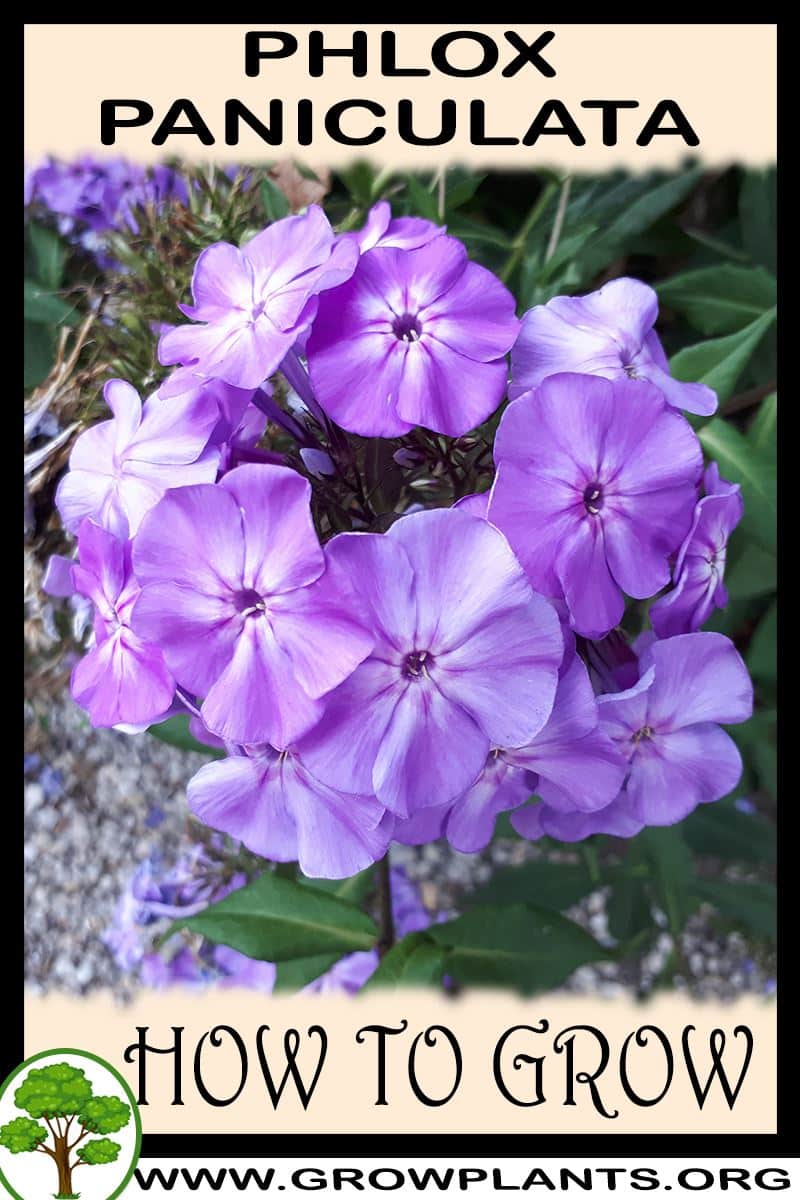
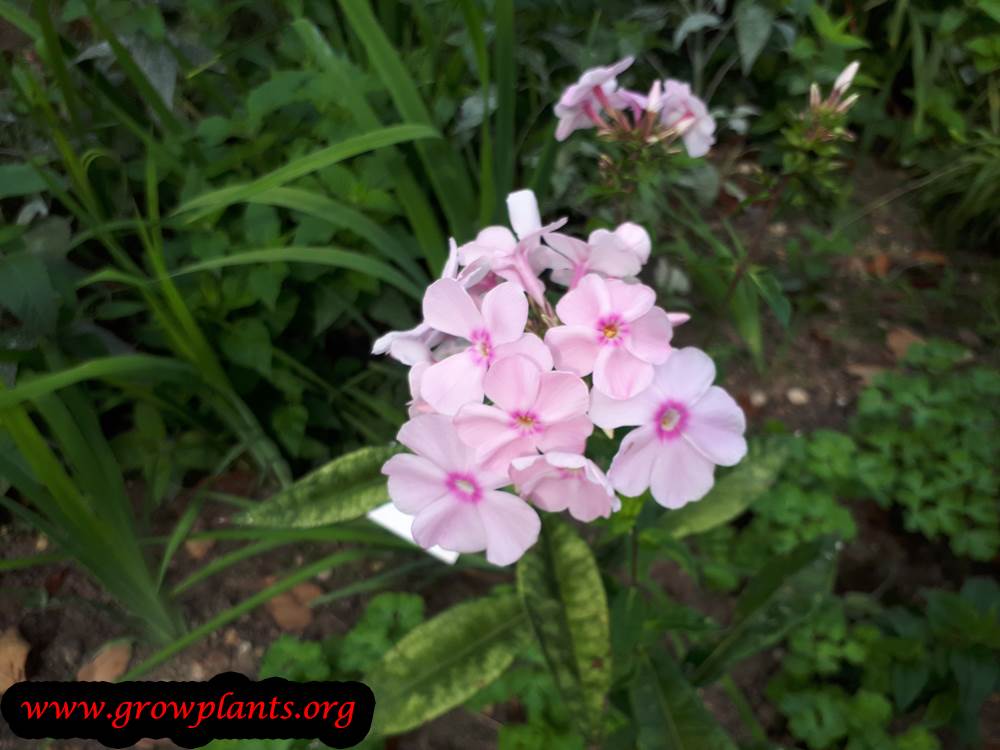
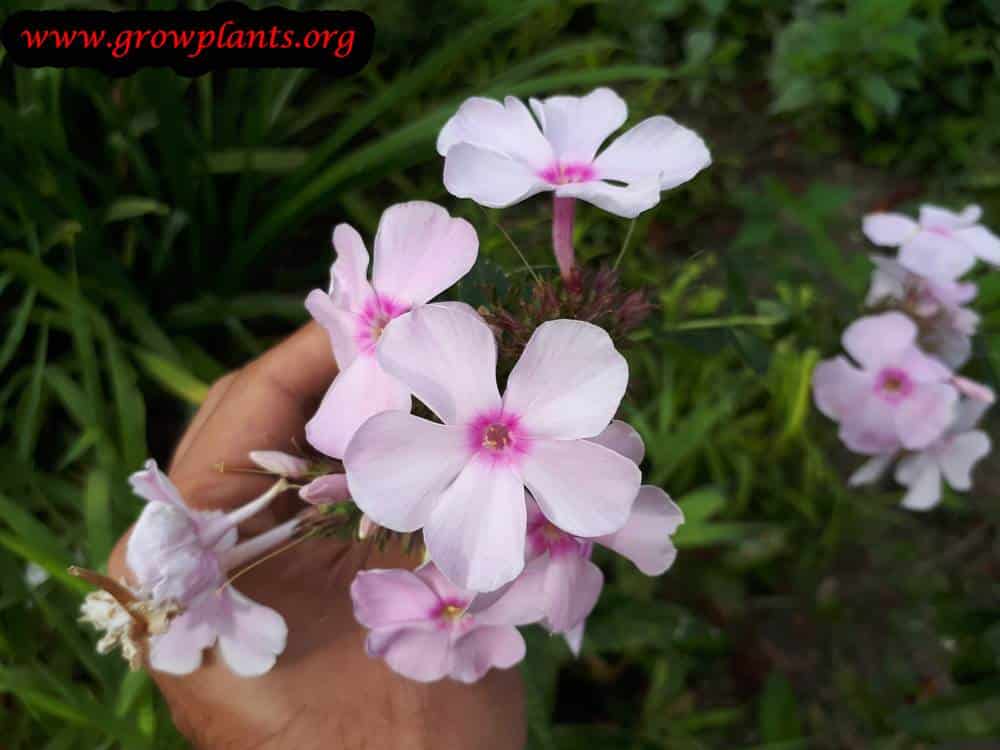
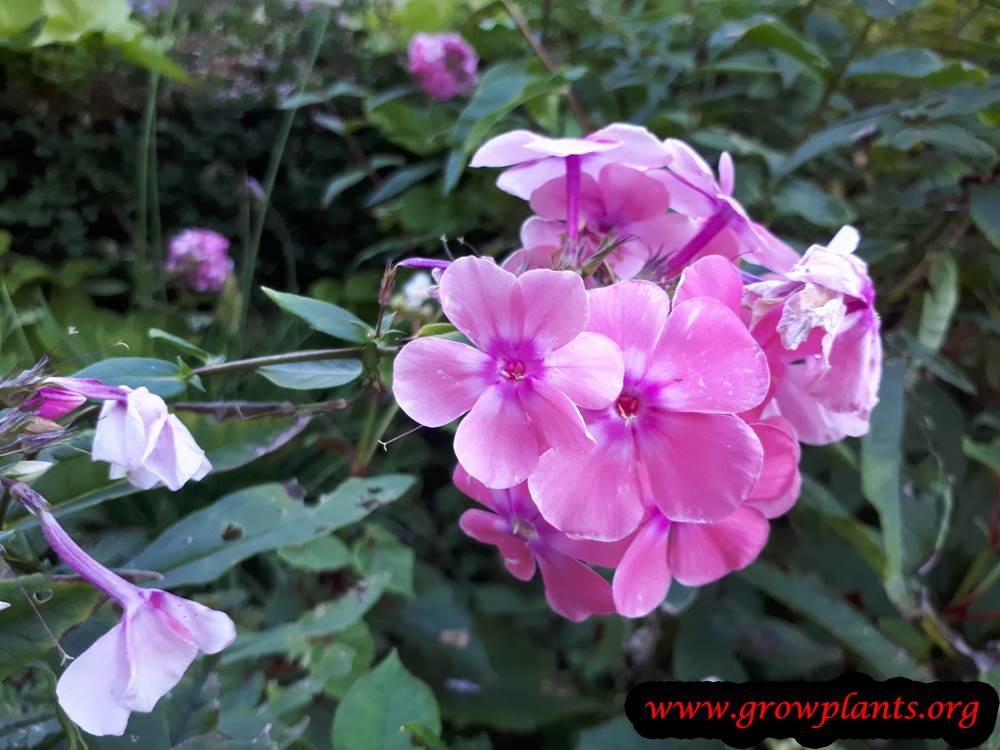
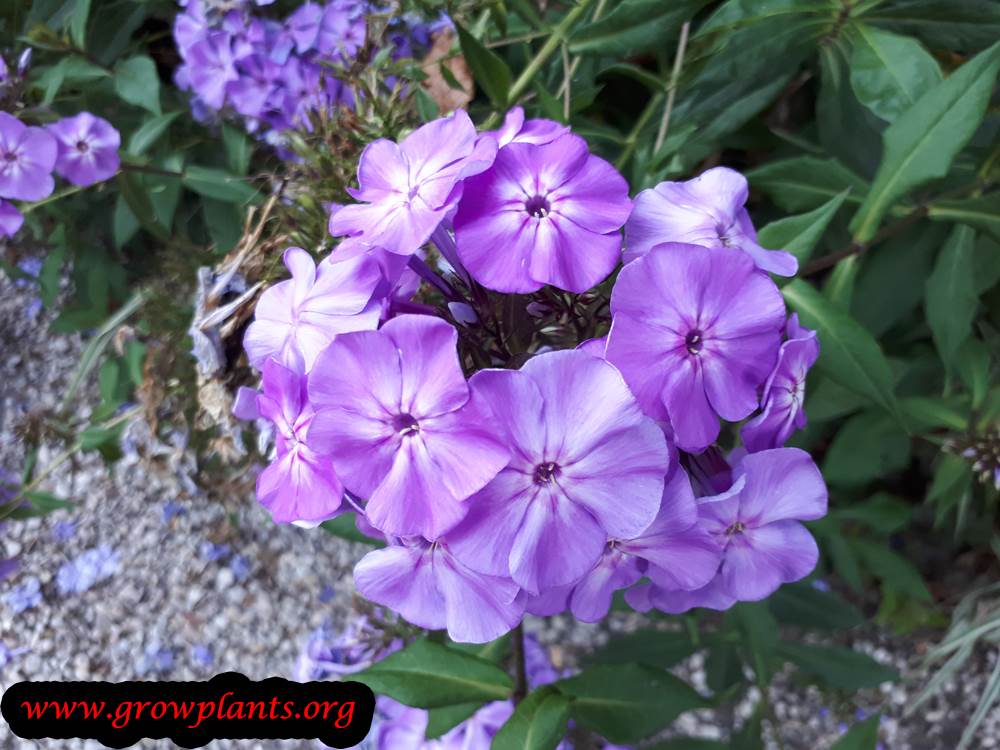
- Flower Characteristics: Five-petalled flowers in purple, pink, red, orange, white or mixes, massed in large domed clusters and often fragrant.
Primary Uses & Landscape Value
- Functional & Ornamental Roles: A staple of summer borders and cottage gardens, valued as a fragrant cut flower and a strong nectar source for butterflies and bees.
Care Guide: Planting, Soil & Watering
Overview: Garden phlox is a vigorous perennial that flowers best in full sun to part shade in rich, moist but well-drained soil. It likes steady moisture and good air circulation around the crown.
Quick Care Requirements
| Requirement | Ideal Condition |
|---|---|
| Planting Season | Spring to summer in the growing season |
| Growth Rate | Fast to moderate |
| Soil Type | Rich, moisture-retentive, well-drained |
| Water Need | Moderate to high — keep evenly moist, avoid drought stress |
Planting & Establishment
- Best Planting Season: Plant in spring or summer during the active growing season.
- How to Plant:
- Hole Preparation: Dig a hole as deep as and a little wider than the root ball, spacing plants for good airflow around the stems.
- Soil Amendments: Enrich with compost or well-rotted organic matter to build a fertile, moisture-retentive yet free-draining bed.
- Planting Depth: Set the crown at soil level with the root ball top flush to the surface; do not bury the stems.
- Growth Speed & Expectations: Expect fast-to-moderate growth to an upright clump 80–120 cm tall.
Soil, Watering & Drainage Care
- Soil Mix & Drainage Needs: Rich but well-drained soil is ideal; it dislikes both drought and waterlogging. In a container use a fertile, free-draining mix and water more often.
- Watering Schedule & Technique:
- Young / Newly Planted: Keep the soil consistently moist while young plants establish.
- Established: Water deeply and regularly to keep the root zone evenly moist, watering at the base to keep foliage dry.
- Seasonal Adjustments: Water more in summer heat and dry spells; reduce watering in autumn and winter as growth dies back.
Climate, Light & Hardiness
Garden phlox (Phlox paniculata) is a cold-hardy herbaceous perennial for temperate and subtropical borders, grown in full sun to half shade for its tall summer clusters of fragrant flowers. It dies back to a hardy crown in winter and returns each spring, thriving in climates with a distinct cool season and warm, but not baking, summers.
Quick Climate Specifications
| Climate Zones | Temperate and subtropical |
| USDA Hardiness Zones | Approx. 3–9 |
| Optimal Temp Range | approximately 18–26 °C (64–79 °F) |
| Cold Damage Begins | autumn frost knocks down the top growth as a normal die-back |
| Approx. Survival Minimum | dormant crown hardy to about −37 °C (−34 °F) (zone 3) |
| Frost Tolerance | High (dormant crown) |
| Light Conditions | Full Sun / Half Shade |
| Wind Tolerance | Moderate (tall stems) |
Sunlight & Light Exposure
Optimal Light Setup
Full sun gives the strongest stems and best flowering; the facts also allow half shade, which is useful in hot-summer regions to keep plants cooler.
Shade & Heat Management
In warm climates light afternoon shade eases heat stress and helps the flowers last, while too much shade weakens stems and reduces bloom.
Best Exposure & Orientation
An open, sunny, airy position suits it; good air movement around the clumps keeps the foliage healthier in humid summers.
Temperature Extremes & Hardiness
USDA Hardiness & Regional Limits
The site lists USDA 3–9, and as a herbaceous perennial it is very cold-hardy: the top growth dies away each autumn and the dormant crown withstands severe winter cold to around −37 °C (−34 °F) at the cold end. Its warm-end limit (about zone 9) reflects a need for some winter cool and dislike of hot, humid, airless summers.
Cold Damage & Winter Protection
Autumn frost simply triggers the normal die-back to ground level, and the dormant crown then needs little protection through winter. Actively growing spring shoots can be nipped by a hard late frost but generally recover.
Frost Sensitivity
Very low at the crown - a genuinely hardy perennial - with only soft new spring growth briefly vulnerable to late frosts.
Extreme Heat Tolerance
It grows in warm summers but dislikes prolonged intense, humid heat, which stresses the plant and shortens the display; some afternoon shade and good airflow help at the warm end of its range.
Wind, Humidity & Microclimate
Wind Tolerance
The tall flowering stems (80–120 cm / 32–47 in) can be rocked or bent by strong wind, so a sheltered spot or support keeps the display upright.
Rainfall & Seasonal Moisture
Adapted to temperate climates with reliable summer moisture and a cool, drier winter dormancy; it dislikes both drought stress and stagnant, humid air. This is a climate-adaptation note, separate from routine irrigation.
Microclimate Recommendations
An open, sunny, breezy position with good air circulation gives the healthiest foliage and best flowering; in hot regions a little afternoon shade is welcome.
Growing in Pots, Balconies & Indoors
Garden phlox (Phlox paniculata) is a tall, sun-loving border perennial – not a houseplant, but a fine large-container plant for a sunny patio or balcony, where its fragrant summer flower heads stand out. Indoors the light is far too weak for it.
Quick Details
- Container Size: A large, deep pot – a tall perennial (about 80-120 cm / 2.8-4 ft) needs the room and the moisture reserve.
- Indoor Suitability: Not a houseplant – it needs full outdoor sun.
- Best Spot: Full sun to half shade with good air circulation, which helps prevent mildew.
- Soil & Drainage: Rich, organic, moisture-retentive but free-draining mix.
- Watering in Pots: Water generously and evenly – it likes plenty of moisture and pots dry fast; avoid waterlogging.
Indoors & On the Windowsill
- Not for indoors: It will not thrive as a houseplant – indoor light is too weak, and it wants open-air sun and airflow.
On a Balcony or Patio
- Sun, air & support: Give it a sunny, open spot with good airflow to keep mildew down; on a windy balcony the tall stems may need staking, and reflected heat from walls dries pots quickly – check moisture daily in warm weather. A drip irrigation kit with a timer can take over that watering check automatically.
Choosing the Pot, Soil & Long-Term Care
- Pot & drainage: A large pot with strong drainage holes; skip a standing saucer of water to avoid root rot.
- Potting mix: Rich and organic but free-draining – it likes moisture without staying sodden.
- Feeding: Feed through the growing season, as potted plants leach nutrients faster than plants in the ground.
- Repotting & winter: Fully hardy (about zone 3-9), but in a pot the roots are more exposed, so shelter the container in hard frost; lift and divide the clump every couple of years and refresh the mix.
Fertilizing & Feeding
A moderate feeder: steady balanced feeding through the growing season supports both foliage and flowers, with feeding tapering off as the plant slows for its rest period.
Quick Fertilizing Specs
| Feeding Level | Moderate |
|---|---|
| Main Nutrient Priority | Balanced nutrition with adequate nitrogen; no high-phosphorus bloom boosters |
| Best Feeding Period | Through the active growing and blooming season |
| Organic Options | Compost, well-rotted manure, or a balanced organic fertilizer |
| Soil pH | Slightly acidic to near neutral |
| Reduce/Stop Feeding | Reduce and stop feeding as growth slows into dormancy |
Feeding by Growth Stage
Spring growth flush
Support strong new leaves and stems as the plant breaks into active growth.
| Nutrient direction | A balanced complete fertilizer with adequate nitrogen to fuel foliage and stems. |
|---|---|
| Timing | As new growth begins in spring. |
| Frequency | Feed steadily through the active growth period, easing back as blooming approaches. |
| Fertilizer types | Balanced complete garden fertilizer, Slow-release granular fertilizer, Compost or other organic matter worked into the soil |
| Precautions | Avoid heavy nitrogen, which can push soft leafy growth at the expense of flowers. |
Blooming period
Sustain flowering with steady, balanced nutrition without forcing excess foliage.
| Nutrient direction | A balanced complete fertilizer; adequate nitrogen alongside potassium supports continued bloom, and high-phosphorus bloom boosters are not needed. |
|---|---|
| Timing | Through the flowering season. |
| Frequency | Keep feeding light and steady while the plant is in bloom. |
| Fertilizer types | Balanced complete fertilizer, Liquid feed for garden and container plants |
| Precautions | Skip high-phosphorus bloom formulas; they do not increase flowering and can build up in the soil. |
Dormancy and winter rest
Let the plant rest through dormancy without pushing new growth.
| Nutrient direction | None – withhold fertilizer during dormancy. |
|---|---|
| Timing | Autumn into winter as growth stops. |
| Frequency | No feeding at this stage. |
| Fertilizer types | No feeding at this stage; do not fertilize while the plant is dormant. |
| Precautions | Do not fertilize until active growth resumes in spring. |
Nutrient Deficiency Signs & Corrections
Older, lower leaves turn pale green to yellow and overall growth slows.
| Possible causes | Low soil nitrogen or infrequent feeding, Nitrogen leached out by heavy watering or from sandy soil, Cold soil early in the season limiting uptake |
|---|---|
| Appears first on | Older, lower leaves |
| What to check | Recent feeding history, Soil drainage and watering habits, Soil temperature in early spring |
| Possible correction | Apply a balanced complete fertilizer at its labeled rate and make sure the soil is warm and evenly moist. |
New leaves yellow between the veins while the veins themselves stay green.
| Possible causes | High soil pH reducing iron availability, Poor drainage or waterlogged roots, Genuinely low iron in the soil |
|---|---|
| Appears first on | Youngest leaves |
| What to check | Soil pH, Drainage and root health, Signs of overwatering |
| Possible correction | Correct soil pH and improve drainage; apply a chelated iron product per its label if the problem persists. |
Leaf edges and tips brown and scorch, sometimes with a whitish crust on the soil surface.
| Possible causes | Over-application of fertilizer and salt buildup, Insufficient leaching, especially in containers, Underwatering that concentrates salts in the root zone |
|---|---|
| Appears first on | Leaf tips and margins |
| What to check | Recent fertilizer amounts, Salt crust on the soil or pot rim, Whether watering wets the whole root zone |
| Possible correction | Cut back on feeding and leach the root zone thoroughly with plain water to flush out the excess salts. |
The plant makes lush leafy growth but produces few flowers.
| Possible causes | Excess nitrogen from over-feeding, Too much shade or insufficient light, An immature or heavily pruned plant |
|---|---|
| Appears first on | Whole plant, where vegetative growth dominates |
| What to check | Nitrogen inputs and fertilizer type, Light exposure, Plant maturity and recent pruning |
| Possible correction | Ease off nitrogen, switch to a balanced fertilizer, and make sure the plant gets enough light. |
Pruning, Training & Seasonal Maintenance
Garden phlox (Phlox paniculata) is a clumping herbaceous perennial that dies to the ground each winter and flowers on the tips of the current season’s stems, so pruning is about density and bloom, not building woody structure. The two cuts that matter most are a spring thinning of the crowded new shoots to fight powdery mildew, and deadheading spent panicles through summer to prolong flowering and stop heavy self-seeding. Because it blooms on new growth, cutting the whole clump down after autumn frost never costs you next year’s flowers.
Quick Pruning & Maintenance Specs
| Pruning Tolerance | High — herbaceous, regrows fully from the crown |
| Primary Pruning Window | Autumn/winter cut-down after frost blackens the foliage |
| Secondary Maintenance Window | Spring stem-thinning; early-summer pinch; summer deadheading |
| Typical Frequency | Several light tasks per season |
| Main Objective | Airflow against mildew, staggered bloom, and self-seed control |
| Young Plant Priority | Let the clump bulk up; thin only lightly |
| Mature Plant Priority | Thin stems in spring, deadhead in summer, divide every few years |
| Best Tool Type | Precision snips and bypass secateurs |
| Avoid Heavy Pruning During | Peak bloom (beyond routine deadheading) |
Pruning by Plant Age & Size
Newly Established
Leave a first-year clump to build roots and shoots; remove only broken stems. Thinning a sparse young clump gains nothing.
Young / Formative
No structural training — there is no framework. The only shaping is optional: pinch out the growing tips of some stems in early summer to make them shorter, branch, and flower a little later, which staggers the display and reduces flopping.
Mature / Established
On a full clump, thin the emerging spring shoots to the five or six strongest stems — open spacing is the single most effective non-chemical defence against the powdery mildew this species is prone to. Through summer, deadhead finished panicles. Divide the clump every three to four years to keep it vigorous and airy.
Seasonal Pruning Schedule
Pre-Growth / Early Spring
Objective: reduce mildew and floppiness. Remove: the weakest one-third to one-half of new shoots at ground level, keeping the stoutest few. Do NOT remove: all the strong stems — you still want a full head of bloom. Response: better airflow, sturdier stems, cleaner foliage.
Summer Canopy / Bloom Management
Objective: prolong bloom and stop self-seeding. Remove: spent panicles, cutting back to a lower side bud or leaf pair. Impact: often triggers smaller secondary flower clusters from side shoots and prevents a flood of variable seedlings from this vigorous self-sower.
Autumn / Dormant Cut-Down
Objective: sanitation and tidiness. Remove: all top growth to near ground level once frost kills it — clearing mildew-infected foliage rather than composting it in place reduces next year’s spore load. Impact: none on bloom, which comes from new spring growth.
Flowering & Fruiting Wood
Garden phlox flowers on the terminals of the current season’s stems — there is no persistent flowering wood. This is why the hard autumn cut-down is harmless, why an early-summer pinch simply delays and multiplies bloom, and why deadheading to a lower bud can coax a second, lighter flush from side shoots the same year.
Structural Pruning & Training
The only “structural” work is spring stem-thinning for density and disease control, plus optional pinching to stagger height. Removing spent flower heads before they seed also curbs the invasive-leaning spread this plant is noted for.
Container & Small-Space Pruning
In a pot the same logic applies but crowding is worse, so thin to even fewer stems for airflow and pinch a portion for height control. Refresh and divide the root ball every couple of years; a congested container clump both mildews and flowers poorly.
Cut Placement & Technique
Thin unwanted shoots right at the base. Deadhead just above a leaf pair or side bud so the next shoot breaks cleanly. Pinch by removing only the soft growing tip. Cut the autumn clean-up low, at a few centimetres above the crown.
Post-Pruning Care
Keep the soil evenly moist — this is a thirsty plant, and drought stress worsens mildew. No feeding is needed simply because you thinned or deadheaded. After the autumn cut-down, a light mulch protects the crown over winter.
Common Pruning Mistakes
- Leaving every spring shoot in place, creating the dense, still, humid centre that powdery mildew thrives in.
- Letting spent heads set seed, which produces a thicket of seedlings that rarely match the parent’s colour.
- Shearing the whole plant back hard in summer instead of deadheading to a side bud — you lose the main display.
- Composting mildewed autumn foliage in the bed instead of clearing it away.
When NOT to Prune
Do not cut back hard during peak bloom (only deadhead). Avoid heavy summer cut-backs during drought stress, which invites disease. Leave the dead top growth on if you want winter seed for birds, but accept the self-seeding trade-off.
Recommended Tools (by task)
- precision_snips — deadheading spent panicles to a side bud and pinching soft growing tips.
- bypass_secateurs — thinning spring shoots at the base and taking the whole clump down in autumn.
Pruning Troubleshooting
| Problem | Possible Cause | What to Check | Corrective Action |
| White powdery film on leaves by mid-summer | Dense, un-thinned clump with poor airflow | Number of stems and spacing; moisture at the roots | Thin to five or six stems next spring, water at the base, clear infected foliage in autumn |
| Tall stems flopping over | Rich, shady site and no early pinch | Light levels and stem height | Pinch a portion of stems in early summer and give more sun, or support the clump |
| Seedlings in wrong colours crowding the clump | Spent heads left to self-seed | Whether panicles were deadheaded before seed set | Deadhead promptly after bloom and pull off-type seedlings |
Propagation Guide
Garden phlox is easiest divided in spring or autumn; it also grows well from root cuttings (a useful way to raise stock free of stem eelworm) and from basal softwood cuttings. Seed is used only for the species, since named cultivars do not come true, so overall it is an Easy plant to propagate.
Quick Propagation Specs
| Best Propagation Method | Division |
| Alternative Methods | Root cuttings; basal softwood stem cuttings; seed (species only) |
| Propagation Difficulty | Easy |
| Seed True-to-Type | Named cultivars are variable from seed; the species is mostly uniform |
| Vegetative True-to-Type | Yes — division and cuttings keep the cultivar |
| Best Propagation Season | Division and root cuttings in the dormant season; softwood cuttings in spring to early summer |
| Cutting Rooting Time | Softwood cuttings typically root within a few weeks |
Growing from Seed
Seed suits only the plain species — cultivars will not reproduce their colour. Species seed germinates more evenly after a period of cold, moist conditions, and emergence can still be uneven, so vegetative methods are preferred for named plants.
Stem Cuttings
Cutting Type & Timing
Take basal softwood cuttings from young shoots in spring to early summer.
Rooting Setup & Hormone
Root in a moist, free-draining mix under humidity; rooting hormone is optional as the soft shoots root readily. Roots usually form within a few weeks.
Leaf & Root Cuttings
Phlox paniculata roots readily from root cuttings, which is the classic way to obtain plants free of stem eelworm.
- In the dormant season, cut pencil-thick roots into short sections and lay them horizontally, lightly covered, in a tray of moist cutting mix.
- New shoots arise from the root pieces; grow them on before planting out.
Division, Offsets, Pups & Suckers
Lift a clump in spring or autumn and split it into pieces, each with healthy shoots and roots, then replant at the same depth.
Bloom & Edible Flower Guide
Quick Details
- Bloom Season: Summer (into early autumn)
- Time to First Bloom: Established clumps flower in mid to late summer; young plants usually bloom in their first full season
- Flower Appearance: Five-lobed flowers in domed clusters, in purple, pink, red, orange, white or mixes
- Edibility: Edible – garden phlox flowers are used as a mild, slightly sweet garnish
Detailed Blooming Overview
Garden phlox is a mainstay of the summer border, opening large, rounded heads of fragrant flowers on tall, upright stems. Each bloom is a slender tube that flares into five flat lobes, and the massed clusters draw butterflies and other pollinators over many weeks.
Flower Characteristics
- Flowers with five spreading lobes, in purple, pink, red, orange, white or bicolour mixes.
- Carried in large, domed clusters (panicles) at the stem tips.
- Often sweetly fragrant; the flowers are edible with a mild flavour.
Bloom Care & Thinning
- Prolonging the display: Deadhead faded heads to encourage more flowers and to limit self-seeding.
- Airflow: Thin crowded stems in spring so air moves freely through the clump – this keeps foliage healthy through the long bloom.
- Pollination: The tubular flowers are worked by butterflies, moths, long-tongued bees and hummingbirds.
Bloom Health & Protection
- Powdery mildew: The classic phlox problem, coating leaves in white during the bloom season; good spacing, thinning stems and a sulfur- or neem-based spray all help keep it in check.
Pests, Diseases & Troubleshooting
Overview: Tall border phlox is a classic perennial whose signature problem is powdery mildew, which whitens and defoliates plants in warm, humid, crowded conditions. It is also troubled by spider mite in dry heat, the sap-sucking phlox plant bug, and – more seriously – phlox stem eelworm, a nematode that distorts shoots. The winning strategy is mildew-resistant varieties, generous spacing, thinning of stems, and base watering.
Quick Troubleshooting Overview
| Issue / Pest | Main Symptom | Primary Solution |
|---|---|---|
| Powdery mildew | White coating whitening/defoliating leaves | Resistant varieties, thin stems, airflow, base water |
| Spider mite | Stippled bronzed leaves in dry heat | Keep watered, hose foliage, horticultural oil |
| Phlox plant bug | Pale spotting, distorted tips and flowers | Remove debris, insecticidal soap on nymphs |
| Stem eelworm (nematode) | Swollen, distorted, narrow-leaved shoots | Destroy infested plants, do not replant phlox there |
| Aphids | Sticky, curled shoot tips | Water jet, insecticidal soap, ladybirds |
Common Pests & Management
- Phlox plant bug (Lopidea davisi):
- Symptoms: Orange-and-black bugs and nymphs suck sap from shoots and buds, causing pale spots, distorted growth and dropped or spotted flowers.
- Prevention & Control: Clear plant debris in autumn to remove overwintering eggs, encourage predators, and knock nymphs off with water; insecticidal soap targets nymphs on heavy infestations.
- Two-spotted spider mite (Tetranychus urticae):
- Symptoms: Fine pale stippling on leaves, faint webbing on undersides and leaf axils, and a dusty bronzed look in warm dry conditions. Tiny moving specks visible with a hand lens.
- Prevention & Control: Raise humidity and hose foliage regularly, as mites thrive in hot dry air; introduce predatory mites (Phytoseiulus persimilis) under cover. Treat hotspots with insecticidal soap or horticultural oil, ensuring thorough coverage of leaf undersides.
- Aphids (Aphidoidea spp.):
- Symptoms: Small soft-bodied green, black or grey insects clustered on shoot tips and flower buds; causes curled, distorted foliage, sticky honeydew and sooty mould. Look-alikes: whitefly (which flies up when disturbed).
- Prevention & Control: Encourage ladybirds, lacewings and parasitic wasps; blast colonies off with a firm jet of water; remove badly infested tips. Persistent outbreaks respond to insecticidal soap or a light horticultural oil applied to leaf undersides in the cool of the evening to protect pollinators.
- Leaf-tier / leaf-mining caterpillars (Lepidoptera larvae):
- Symptoms: Young caterpillars tie or mine leaves and shoot tips, distorting growth.
- Prevention & Control: Hand-pick and squeeze tied leaves, remove affected tips, and encourage birds and parasitic wasps; Bt if severe.
Diseases & Fungal Issues
- Powdery mildew (Golovinomyces / Erysiphe cichoracearum):
- Symptoms: White powdery coating spreading over leaves and stems in warm humid weather, yellowing and killing foliage from the base up – phlox’s defining disease.
- Treatment & Management: Choose mildew-resistant cultivars, thin each clump to the strongest 4–6 stems for airflow, space plants widely, water at the base in the morning, and clear debris. Sulfur, potassium bicarbonate or a milk spray helps on susceptible plants.
- Phlox stem eelworm (Ditylenchus dipsaci):
- Symptoms: Swollen, brittle, distorted stems with narrow, crinkled, thread-like upper leaves; plants weaken and die out – a serious, soil- and stock-borne nematode.
- Treatment & Management: There is no cure – dig up and destroy affected plants (do not compost), and do not replant phlox in that spot for several years. Propagate only from clean root cuttings, which the nematode does not infest, and buy healthy stock.
- Leaf spots (Septoria / Cercospora spp.):
- Symptoms: Brown or purple-bordered spots on lower leaves in wet seasons.
- Treatment & Management: Remove affected leaves and debris, improve airflow and avoid overhead watering; rarely needs fungicide.
Growing Difficulties & Abiotic Problems
- Lower-leaf loss:
- Cause & Symptoms: A combination of mildew, dryness at the roots and poor airflow strips the lower leaves, leaving bare ‘leggy’ stems.
- Correction Strategy: Keep roots cool and evenly moist with mulch, thin and space plants, and grow resistant varieties to hold onto foliage.
- Flopping:
- Cause & Symptoms: Rich soil, shade or heavy flower heads make tall stems flop.
- Correction Strategy: Grow in full sun, avoid over-feeding with nitrogen, and support or pinch stems early for sturdier growth.
- Seedling reversion:
- Cause & Symptoms: Self-sown seedlings revert to a vigorous magenta form that can crowd out named varieties.
- Correction Strategy: Deadhead before seed sets and remove stray seedlings to keep your chosen cultivars.
What Helps – Products & Tools
The heart of phlox care is prevention: resistant varieties, stem-thinning and base watering to beat mildew. Where needed, use sulfur, potassium bicarbonate or a milk spray for mildew, insecticidal soap for aphids and plant bug nymphs, and horticultural oil for mites. There is no chemical fix for stem eelworm – clean stock and removal are the only answer.