




Plant Profile & Key Characteristics
Overview: A compact, aromatic herbaceous perennial reaching 20-50 cm (8-20 in), studded with small white daisy flowers with yellow centres. Best known as the medicinal herb feverfew, it also serves as an insect-repelling, drought-tolerant ornamental.
Quick Specifications
| Specification | Attribute |
|---|---|
| Plant Type / Life Cycle | Herbaceous perennial (short-lived, self-seeds freely) |
| Foliage Type | Semi-evergreen |
| Mature Size | 20-50 cm (8-20 in) tall |
| Growth Rate | Fast to moderate |
| Hardiness | USDA zones 4b-10 |
Growth Form & Structure
- Height and Spread: Bushy mounds of 20-50 cm (8-20 in) that self-seed to form drifts; grows well in containers, where its size stays naturally restrained.
- Growth Habit and Form: Rounded, much-branched herb with leafy stems and abundant flowers held above the foliage.
- Lifespan and Maturity: A short-lived perennial that reaches flowering size in its first season and perpetuates itself by prolific self-seeding.
Anatomy & Physical Features
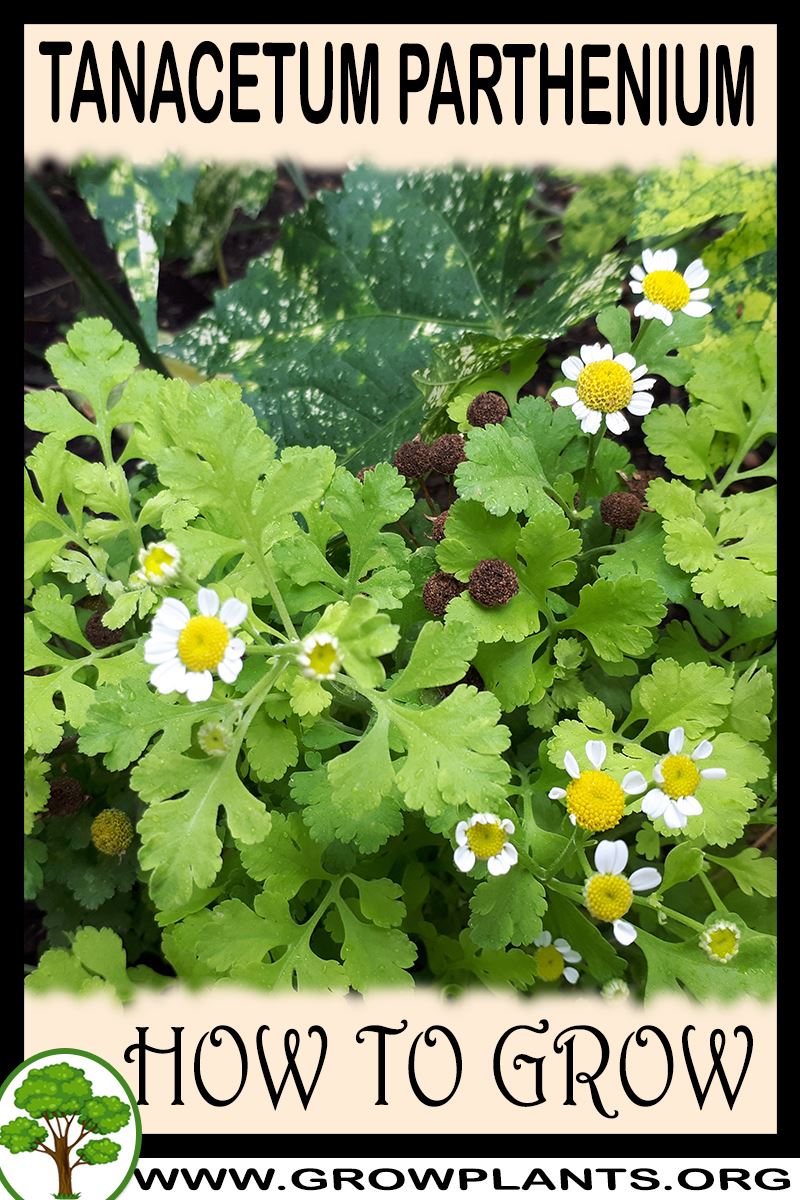
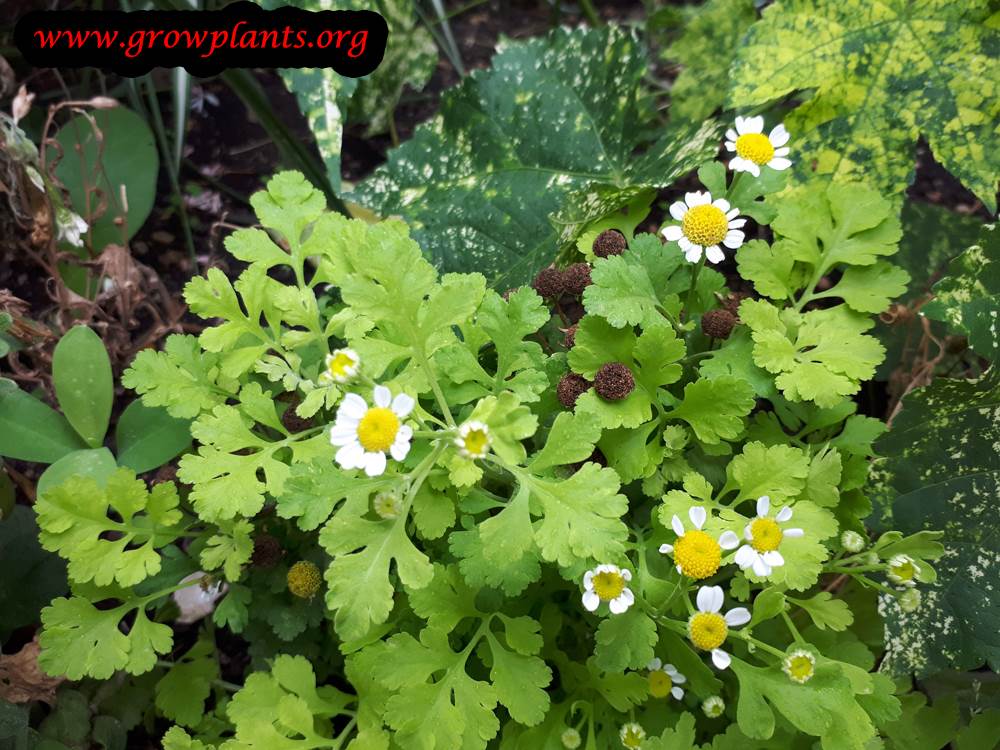
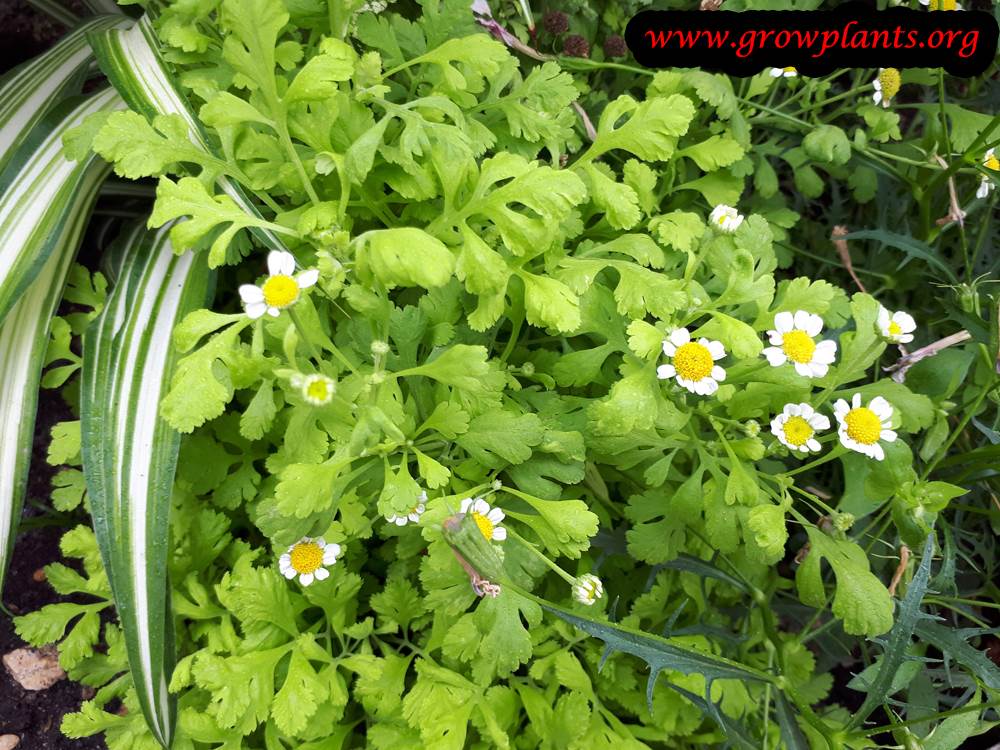
- Leaves and Foliage: Green, elliptic, toothed leaves in a pinnate arrangement; pungently aromatic (citrus-bitter) when crushed.
- Flower Characteristics: Many small daisy-like flowers, white ray petals around a yellow centre, carried in clusters at the stem tips.
Primary Uses & Landscape Value
- Functional and Ornamental Roles: Classic medicinal herb (feverfew), insect repellent, and a drought-tolerant ornamental for edging, borders and cottage gardens.
Care Guide: Planting, Soil & Watering
Overview: Feverfew (Tanacetum parthenium) is a hardy herbaceous perennial for full sun to part shade (hardiness zone 4b–10). It is drought-tolerant and easy-going, thriving in well-drained soil with only low to moderate water.
Quick Care Requirements
| Requirement | Ideal Condition |
|---|---|
| Planting Season | Spring to summer, once the soil warms |
| Growth Rate | Moderate to Fast |
| Soil Type | Well-drained soil |
| Water Need | Low to Moderate — water when the top few cm dry; drought-tolerant once established |
Planting & Establishment
- Best Planting Season: Plant in spring to summer once the soil has warmed, giving it time to establish before winter.
- How to Plant:
- Hole Preparation: Make a hole a little wider than the root ball in loosened, free-draining soil.
- Soil Amendments: It is not a hungry plant — a little compost in well-drained soil is enough; avoid rich, wet ground.
- Planting Depth: Set the crown at soil level, firm gently and water in; do not bury the stem base.
- Growth Speed & Expectations: Moderate to fast growth — it spreads readily and fills a border quickly in a sunny spot.
Soil, Watering & Drainage Care
- Soil Mix & Drainage Needs: Well-drained soil is the main requirement; it copes with poor, dry ground and dislikes waterlogging. Containers need free-draining mix and drainage holes.
- Watering Schedule & Technique:
- Young / Newly Planted: Keep the soil lightly moist while young plants establish.
- Established: Once established it is drought-tolerant — water only when the top few centimetres dry.
- Seasonal Adjustments: A little more in summer heat; little to none in cool, damp weather.
Climate, Light & Hardiness
Tanacetum parthenium (feverfew) is a hardy perennial for temperate and subtropical climates, growing well in full sun to half shade. It tolerates winter cold across a broad range, from USDA zone 4b through zone 10.
Quick Climate Specifications
| Climate Zones | Temperate, Subtropical |
|---|---|
| USDA Hardiness Zones | 4b–10 |
| Frost Tolerance | High |
| Light Conditions | Full Sun to Half Shade |
Sunlight & Light Exposure
Optimal Light Setup
Full sun to half shade both work well; full sun generally produces the most compact, floriferous plants.
Temperature Extremes & Hardiness
USDA Hardiness & Regional Limits
Reliably perennial across USDA zones 4b–10, a wide cold-hardy range that lets it overwinter outdoors in most temperate gardens.
Frost Sensitivity
Established plants tolerate ordinary garden frost well; foliage dies back in the coldest part of winter and regrows from the crown in spring.
Growing in Pots, Balconies & Indoors
Feverfew is a compact, aromatic daisy-like herb, easy in a pot on a sunny patio or windowsill. The grower does not class it as a houseplant, but this small, sun-loving herb will grow and flower on a bright, sunny sill. Handle it with care – the foliage can irritate skin and is not for casual eating.
Quick Details
- Container Size: 5-10 L (1.3-2.6 gal); it stays compact
- Indoor Suitability: Not a deep-room houseplant, but grows on a bright, sunny windowsill
- Best Spot: Full sun to half shade
- Soil & Drainage: Ordinary free-draining potting mix
- Watering in Pots: Small to average – let the top dry between waterings
Indoors & On the Windowsill
- Windowsill growing: Though the grower marks it as not a houseplant, this compact herb does fine on a bright, sunny sill with maximum direct light; in a dim room it grows leggy and shy to flower.
- Hardy outdoors too: It is a hardy perennial, so a potted plant is quite happy left outside year-round in most climates – the sill is just an option.
- Handle with care: The foliage can cause skin irritation and mouth ulcers in some people; site it away from small children and do not eat it casually.
On a Balcony or Patio
- Light & air: Give it a sunny, open spot; it self-seeds freely, so deadhead if you do not want seedlings everywhere. Undemanding about wind and heat.
- Practicalities: Light and easy to move; it needs little water once established.
Choosing the Pot, Soil & Long-Term Care
- Pot & drainage: A 5-10 L pot with strong drainage holes and never leave it standing in a saucer of water, or the roots rot. Terracotta breathes and dries faster; glazed or plastic holds moisture longer.
- Potting mix: A well-aerated, organic-rich mix – potting compost, or peat/coir with perlite or vermiculite. It is not fussy about soil.
- Feeding: A light feed in the growing season is ample; rich soil gives soft, floppy growth.
- Repotting: Short-lived but self-renewing from seed – refresh with young plants every year or two.
Fertilizing & Feeding
A light feeder typical of aromatic, drought-tolerant herbs: a modest feeding at establishment followed by occasional light feeding through active growth is enough to keep this feverfew healthy without pushing soft, less aromatic growth.
Quick Fertilizing Specs
| Feeding Level | Light feeder |
|---|---|
| Main Nutrient Priority | Balanced, low-nitrogen feeding that favors sturdy, aromatic growth over lush soft foliage |
| Best Feeding Period | Spring through the main growing season |
| Organic Options | Compost or organic matter worked into well-drained soil at planting |
| Reduce/Stop Feeding | Reduce feeding as growth slows toward the end of the growing season |
| Micronutrients | Usually met by a complete fertilizer and organic soil; correct only if a specific deficiency is diagnosed |
Feeding by Growth Stage
Establishment
Help newly planted or divided feverfew root in and put on steady early growth.
| Nutrient direction | A light, balanced feeding supports steady early growth without overwhelming a plant that prefers lean, well-drained soil. |
|---|---|
| Timing | Soon after planting or dividing, in spring or early summer. |
| Frequency | A single light feeding at establishment is usually enough. |
| Fertilizer types | A balanced complete fertilizer used at a light rate, Compost or organic matter worked into the soil |
| Precautions | Keep feeding light; well-drained, only moderately fertile soil suits this drought-tolerant herb best. |
Active growth and bloom
Maintain steady foliage and the daisy-like flower display through the growing season.
| Nutrient direction | Light, low-nitrogen feeding maintains healthy growth and bloom without diluting the plant’s aromatic, medicinal qualities. |
|---|---|
| Timing | Through the main spring-to-autumn growing and flowering period. |
| Frequency | Occasional light feeding is usually all this low-demand herb needs. |
| Fertilizer types | A balanced complete fertilizer used sparingly, Compost as an occasional top-dressing |
| Precautions | Avoid rich, heavily fertilized soil, which tends to produce lush, floppy growth and can weaken flavor and aroma. |
Nutrient Deficiency Signs & Corrections
Older leaves pale to yellow and overall growth is noticeably weaker than expected.
| Possible causes | low available soil nitrogen, very poor, depleted soil, root competition from surrounding plants |
|---|---|
| Appears first on | older, lower leaves |
| What to check | recent feeding history, soil organic matter level, overall vigor compared to normal |
| Possible correction | Apply a light, balanced fertilizer and work in organic matter; true deficiency is uncommon in this hardy herb. |
Leaves yellow and wilt, and growth stalls despite otherwise adequate care.
| Possible causes | poorly drained soil holding excess moisture, overwatering, root rot from prolonged wet conditions |
|---|---|
| Appears first on | lower leaves and stems |
| What to check | soil drainage and recent watering, root condition if the plant can be inspected, signs of rot at the base |
| Possible correction | Improve drainage and reduce watering before considering any fertilizer adjustment, since feeding will not fix a drainage problem. |
Leaf edges brown or scorch even with adequate watering.
| Possible causes | fertilizer salt buildup in the root zone, over-fertilizing a naturally low-demand herb, under-watering that concentrates salts |
|---|---|
| Appears first on | leaf margins and tips |
| What to check | recent fertilizer amounts, watering consistency, soil drainage |
| Possible correction | Ease off feeding and water thoroughly to help flush excess salts from the root zone. |
Pruning, Training & Seasonal Maintenance
Tanacetum parthenium (feverfew) is a fast-to-medium growing herbaceous perennial grown as an ornamental, medicinal and insect-repellent plant; it flowers on the current season’s growth over a long spring-to-autumn season, so it tolerates a tidy-up cutback in autumn/winter without sacrificing next year’s bloom, and regular deadheading through the season both prolongs flowering and helps control the self-seeding this species is noted for.
Quick Pruning & Maintenance Specs
| Pruning Tolerance | Moderate |
| Primary Pruning Window | Autumn to winter (post-bloom tidy-up) |
| Secondary Maintenance Window | Ongoing deadheading through spring-autumn bloom |
| Typical Frequency | Deadhead regularly; cut back once a year |
| Main Objective | Prolong bloom, control self-seeding, keep a compact habit |
| Young Plant Priority | Pinch young growth to encourage a bushier clump |
| Mature Plant Priority | Deadhead through the season; cut the clump back after flowering finishes |
| Best Tool Type | Precision snips |
Pruning by Plant Age & Size
Newly Established
Leave the plant to establish; remove only damaged growth.
Young / Formative
Pinch back young stems once established to encourage a fuller, less floppy clump – there is no woody framework to train, only a herbaceous mound.
Mature / Established
Deadhead spent flower clusters continuously through the long bloom season; in autumn/winter, cut the whole clump back close to the ground, tidying it for winter and clearing the way for fresh spring growth. Older plants can become a bit woody and sparse at the base over a few years and benefit from this yearly reset.
Seasonal Pruning Schedule
Dormant / Winter
Cut the spent clump back close to ground level once flowering has finished for the year; this is safe since flowers form on the following season’s new growth, not on the old stems left over winter.
Ongoing Sanitary
Deadhead spent flower clusters through spring, summer and autumn to keep the display going and reduce self-seeding.
Special Growth to Remove
- Spent flower stems – deadhead regularly, both to prolong bloom and to curb this species’ tendency to self-seed (it is flagged as invasive in some settings).
- Old, woody-based stems at the annual autumn/winter cutback.
Container & Small-Space Pruning
Pinch container-grown plants a little harder while young to keep a compact mound suited to a pot; the same annual autumn/winter cutback applies.
Tools
Precision snips – stems are soft and herbaceous throughout, even where the base becomes slightly woody with age; no larger cutting tool is ever needed.
Tool Hygiene & Disease Risk
Routine – clean, sharp snips are sufficient; the reported pest (a leaf beetle) is not tool-transmitted.
Cut Placement & Technique
Deadhead by cutting the flower stem back to the next leaf or side bud; at the annual cutback, cut the whole clump back to a low framework of leafy growth rather than bare ground, to give it a head start into spring.
Heavy Pruning & Rejuvenation
Tolerated as an annual reset rather than a rare rejuvenation – the full autumn/winter cutback each year effectively renews the plant, which regrows readily from the base given its fast-to-medium growth rate.
Post-Pruning Care
Water normally; this is a drought-tolerant plant so avoid overwatering after cutback; no extra feeding is needed.
Common Pruning Mistakes
- Leaving spent flowers unchecked all season, which increases self-seeding beyond what’s wanted.
- Skipping the annual cutback for several years, letting the base become sparse and woody.
When NOT to Prune
Avoid a hard cutback in the middle of the main spring-autumn bloom season if flowers are still wanted that year; wait until flowering has clearly finished before the seasonal reset cut.
Recommended Tools (by task)
- precision_snips – the only tool this soft-stemmed herbaceous perennial needs, for both deadheading and the annual cutback.
Propagation Guide
Feverfew is grown from seed, which the site confirms is sufficient on its own without needing vegetative propagation; established clumps can also be divided in spring as an easy alternative. It self-seeds freely (matching the site’s note that it can be invasive), so propagation from seed is easy.
Quick Propagation Specs
| Best Propagation Method | Seed |
| Alternative Methods | Division of established clumps |
| Propagation Difficulty | Easy |
| Seed True-to-Type | Usually true-to-type (species) |
| Vegetative True-to-Type | Yes |
| Best Propagation Season | Spring to summer, matching this plant’s planting season |
Growing from Seed
Sowing Depth & Orientation
Sow seed on or very near the surface and press in lightly rather than burying it, as feverfew’s fine seed is typically light-dependent for germination (not detailed on the site).
Germination Conditions
Moist, well-drained soil in a sunny to half-shaded spot suits germination.
Seedling Care
Keep young seedlings evenly moist until established; the plant self-seeds readily once established, which can make it spread more than intended.
Division, Offsets, Pups & Suckers
Established clumps can be lifted and divided in spring; replant divisions with roots attached and keep them moist until they re-establish.
Bloom & Flower Guide
Quick Details
- Bloom Season: Spring, summer and autumn
- Time to First Bloom: In its first year from an early sowing, then reliably each year after
- Flower Appearance: Small, white daisy flowers with a flat yellow centre, in clusters at the tops of the stems
- Edibility: Grown as a medicinal and ornamental herb, not a food; the bitter flowers can irritate the mouth and are not eaten casually
Detailed Blooming Overview
Feverfew blooms over a long season with masses of small, cheerful daisies – pure white petals around a flat yellow disc – clustered at the tops of the aromatic, ferny stems. It flowers freely and self-sows readily, and the strong-smelling foliage is a traditional insect repellent. The flowers are pretty enough for cutting but the plant is grown chiefly for its herbal use rather than the kitchen.
Flower Characteristics
- Small white daisies with a yellow central disc.
- Carried in generous clusters above finely cut, pungent foliage.
- Free-flowering and readily self-seeding.
Bloom Care & Thinning
- Managing the bloom: Deadhead to prolong flowering and to curb heavy self-seeding; shear over after the main flush for a fresh rebloom.
- A note of caution: Handling the plant can cause skin irritation in some people, and the flowers are bitter and can cause mouth irritation, so keep them out of food.
Fruit & Uses
Caution: feverfew is not a food crop – it is a bitter, traditionally medicinal herb, and this section covers historical leaf use only, not a culinary ingredient. Traditionally, one or two small fresh (or dried) leaves have been chewed or infused as a folk remedy; no health claims are made here.
Quick Edible Specs
| Edible Parts | Leaves (traditional/medicinal use only) |
|---|---|
| Main Use(s) | Medicinal-note only (traditional folk remedy); not culinary |
| Eaten Raw or Cooked | Raw (fresh leaf chewed) or as a dried-leaf infusion (tea) |
| Preparation Required | None for fresh use; dried leaves can be steeped as tea |
| Harvest Season | Leaves can be picked whenever the plant is in active growth (spring through autumn) |
| Time to First Harvest | Leaves are available once the plant is established and growing |
| Storage | Dry leaves for later use; store dried leaf in a sealed, airtight container out of light |
| Safety/Toxicity Caveat | Chewing fresh leaves can cause mouth soreness/ulcers or contact irritation in sensitive individuals; not recommended in pregnancy; avoid self-medicating – consult a professional before medicinal use |
Leaves & Greens
Only the leaves are used, and only in the traditional/medicinal sense rather than as a food green – feverfew is bitter and is not eaten as a salad or cooking herb. Fresh leaves have traditionally been chewed directly, or dried leaves infused as a tea. Because chewing the fresh leaf can irritate the mouth in some people, dried-leaf tea is considered a gentler alternative.
Preparation, Uses & Safety
Feverfew is used traditionally as a medicinal herb rather than a food; this note describes historical use only and makes no health claims. Fresh leaves are sometimes chewed, or dried leaves steeped as tea. Safety caution: fresh-leaf chewing can cause mouth ulcers, sore lips/tongue, or contact dermatitis in sensitive individuals, and the plant is generally advised against during pregnancy. As with any medicinal herb, professional guidance is recommended before use, and it should not be treated as a food ingredient.
Pests, Diseases & Troubleshooting
Overview: Feverfew is an aromatic, short-lived perennial in the same genus as tansy and shares its resilience – its pungent daisy foliage is largely pest-repellent, with only occasional aphids, mildew or aster yellows. Grow it in full sun with good drainage and airflow, and it will self-sow and thrive with little intervention.
Quick Troubleshooting Overview
| Issue / Pest | Main Symptom | Primary Solution |
|---|---|---|
| Aphids | Sticky, curled new tips | Water jet, insecticidal soap |
| Tansy leaf beetle | Holes chewed in foliage | Hand-pick |
| Powdery mildew | White coating in crowded, humid spots | Improve airflow, sulphur if needed |
| Aster yellows | Distorted, greenish flowers | Remove infected plants |
| Root rot | Collapse in wet soil | Improve drainage |
Common Pests & Management
- Aphids (Aphidoidea):
- Symptoms: Clusters of tiny soft-bodied green, black or grey insects on new shoots, flower buds and leaf undersides. Feeding causes puckered, curled or yellowing young growth, and a sticky honeydew that fosters sooty mould and attracts ants.
- Prevention & Control: Knock colonies off with a firm jet of water and pinch out badly infested tips. Encourage ladybirds, lacewings and hoverflies, and avoid excess nitrogen that pushes soft sappy growth. For persistent outbreaks apply insecticidal soap or a light horticultural/neem oil, coating leaf undersides and spraying in the cool of evening to protect pollinators.
- Tansy Leaf Beetle (Chrysolina graminis):
- Symptoms: Rounded, metallic green-bronze beetles and their grubs chew holes in the aromatic foliage; a genuine specialist feeder on tansy, though populations are usually local and rarely devastating.
- Prevention & Control: Hand-pick the conspicuous adults and grubs, which are easy to spot on the foliage, and tolerate light feeding on this vigorous plant. Encourage ground beetles and birds; sprays are seldom warranted for such a robust perennial.
- Thrips (Thysanoptera):
- Symptoms: Silvery-white flecking and stippling on leaves and petals, often with tiny black faecal specks; slender pale insects hide in buds and folds. Distorted new growth results, and some thrips spread viruses.
- Prevention & Control: Use blue or yellow sticky traps to monitor, and remove spent flowers and debris that shelter them. Encourage predatory mites and minute pirate bugs. Where needed, apply insecticidal soap or horticultural/neem oil, targeting buds and shoot tips and repeating at short intervals.
Diseases & Fungal Issues
- Powdery Mildew (Erysiphales):
- Symptoms: A white to greyish powdery coating on leaves and shoots, usually starting on the upper surface; affected leaves may yellow, distort and drop. Worst in crowded plantings with warm days, cool nights and poor airflow.
- Treatment & Management: Space and prune for good air movement and sun, and avoid wetting foliage late in the day. Remove affected leaves and clear fallen debris. Where needed, apply a sulphur or potassium-bicarbonate fungicide, or a horticultural oil, at first signs and repeat per label.
- Aster Yellows (Candidatus Phytoplasma):
- Symptoms: Distorted, stunted growth with greenish, deformed flowers and yellowing foliage, caused by a phytoplasma spread by leafhoppers; infected plants do not recover.
- Treatment & Management: There is no cure, so remove and destroy infected plants promptly to stop spread, and control leafhopper vectors and weedy reservoirs. Buy and plant clean stock and keep plantings vigorous.
- Rust (Pucciniales):
- Symptoms: Powdery orange, brown or rusty pustules on leaf undersides with yellow flecks above; heavy infection causes early leaf yellowing and drop.
- Treatment & Management: Remove and destroy infected leaves and avoid wetting foliage. Space plants for airflow and choose resistant types where available. Sulphur fungicides applied early can check spread when the disease is recurrent.
Growing Difficulties & Abiotic Problems
- Overwatering & Root Rot:
- Cause & Symptoms: Yellowing lower leaves, wilting despite wet soil, and a soft, foul-smelling root ball or stem base result from waterlogged, airless soil that suffocates and rots the roots.
- Correction Strategy: Let the soil dry appropriately between waterings, plant in free-draining media, and ensure pots have working drainage holes. Ease off water in cool or dormant periods and never leave the plant standing in a saucer of water.
- Woodiness & Legginess:
- Cause & Symptoms: Sprawling, bare-based stems with sparse leaves and fewer flowers as the plant ages, especially if left unpruned or grown in too much shade.
- Correction Strategy: Shear or prune lightly and regularly to keep growth dense and young, grow in full sun, and avoid over-rich feeding. Hard renovation pruning of old woody plants is best done cautiously, as some resent cutting into bare wood.
- Sunscald / Leaf Scorch:
- Cause & Symptoms: Bleached, tan or brown dead patches on the most exposed leaves or bark, appearing after a sudden move into strong sun, intense heat, or reflected heat, especially on soft or previously shaded growth.
- Correction Strategy: Acclimatise plants gradually to stronger light, provide light shade during fierce afternoon heat, and keep roots evenly moist so the plant can transpire. Site sensitive plants where they escape the harshest midday and reflected sun.
What Helps – Products & Tools
A strongly aromatic, insect-repellent herb that needs little chemical help; for the rare aphid flush use insecticidal soap or neem oil, and a sulphur fungicide only if mildew or rust becomes persistent. Hand-picking beetles and dividing clumps to keep them young are the main tools.