
Plant Profile & Key Characteristics
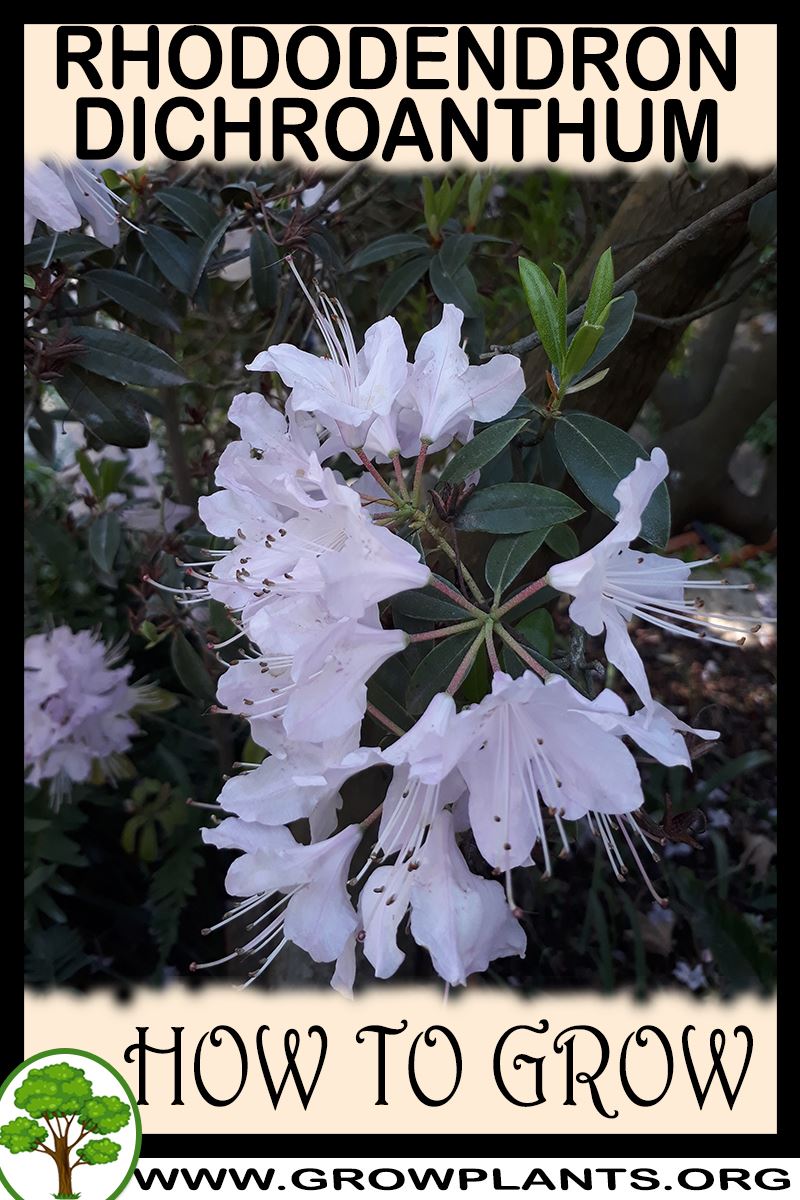
Overview: Rhododendron dichroanthum is a compact semi-evergreen shrub reaching 0.5-1.5 m, grown for its orange, peach and red trumpet flowers. Like all rhododendrons it needs acidic soil and all parts are toxic.
Quick Specifications
| Specification | Attribute |
|---|---|
| Plant Type / Life Cycle | Perennial |
| Foliage Type | Semi-evergreen (evergreen in mild climates) |
| Mature Size | 0.5-1.5 m (20-60 in) tall |
| Growth Rate | Moderate |
| Root System | Shallow, fibrous |
| Toxicity | Toxic – all parts contain grayanotoxins |
| Hardiness | USDA zones 6-10a |
Growth Form & Structure
- Height & Spread: 0.5-1.5 m (20-60 in); grows in containers using an acidic potting mix.
- Growth Habit & Form: Compact, bushy semi-evergreen shrub.
- Lifespan & Maturity: Perennial; blooms in spring and summer.
Anatomy & Physical Features
- Leaves & Foliage: Green, elliptic to ovate leaves.
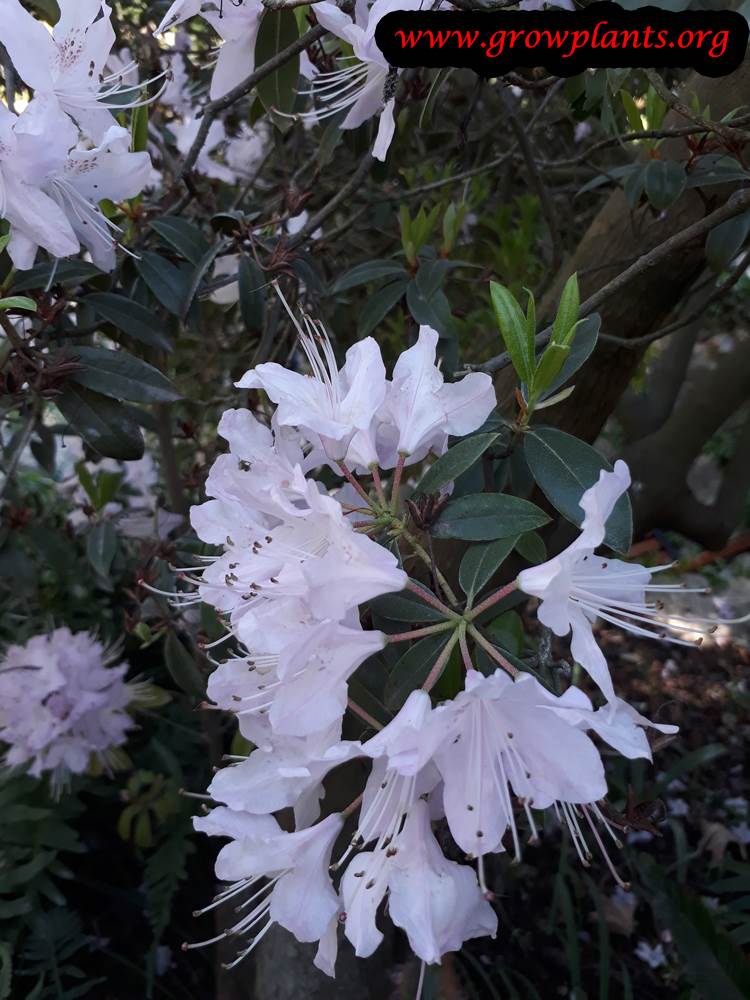
- Flower Characteristics: Orange, peach or red trumpet-shaped flowers.
Primary Uses & Landscape Value
- Functional & Ornamental Roles: Flowering ornamental shrub for woodland and acidic borders, and container growing.
Care Guide: Planting, Soil & Watering
Overview: This rhododendron is an acid-loving shrub that grows best in full sun to part shade in rich, moist but well-drained, distinctly acidic soil. Keep the shallow roots cool and evenly moist with mulch, avoid lime, and never let it dry out.
Quick Care Requirements
| Requirement | Ideal Condition |
|---|---|
| Planting Season | In winter, spring or summer, avoiding hard frost |
| Growth Rate | Moderate |
| Soil Type | Rich, moist, well-drained, humus-rich acidic soil |
| Soil pH | Acidic, about 4–6 |
| Water Need | Moderate to High — keep evenly moist, never waterlogged |
Planting & Establishment
- Best Planting Season: Plant in the cooler part of the year (winter to spring), or in summer where mild, so roots establish before heat or hard frost.
- How to Plant:
- Hole Preparation: Dig a wide but shallow hole to suit the fibrous, surface roots; loosen the sides for easy rooting.
- Soil Amendments: Blend in acidic organic matter such as leaf mould, composted bark or ericaceous compost; avoid lime.
- Planting Depth: Plant shallowly with the top of the root ball at or just above soil level — deep planting suffocates the shallow roots — then mulch.
- Growth Speed & Expectations: Moderate, forming a 0.5–1.5 m shrub that flowers in spring to early summer.
Soil, Watering & Drainage Care
- Soil Mix & Drainage Needs: Rich, humus-rich, acidic soil with sharp drainage is essential; the shallow roots need constant moisture yet rot in waterlogged ground, so mulch and never let them dry out.
- Watering Schedule & Technique:
- Young / Newly Planted: Keep the root zone consistently moist while establishing; use rainwater where tap water is hard.
- Established: Water regularly so the soil stays evenly moist, especially in dry spells; mulch to conserve moisture.
- Seasonal Adjustments: Water more in summer heat and drought; reduce in winter while keeping the roots from drying.
Climate, Light & Hardiness
Rhododendron dichroanthum is a moderately cold-hardy flowering shrub suited to temperate and subtropical climates, and can also be grown as a houseplant. It grows best in full sun to half shade with consistently moist, acidic soil.
Quick Climate Specifications
| Climate Zones | Temperate, subtropics; also grown as a houseplant |
|---|---|
| USDA Hardiness Zones | 6–10a |
| Light Conditions | Full sun to half shade |
| Frost Tolerance | Moderate within its hardiness range |
Sunlight & Light Exposure
Optimal Light Setup
Full sun to half shade both suit this shrub; some afternoon shade can help in hotter parts of its range.
Temperature Extremes & Hardiness
USDA Hardiness & Regional Limits
Hardy from zone 6 to 10a, tolerating winter cold typical of cool-temperate climates while also adapting to warmer subtropical conditions.
Cold Damage & Winter Protection
A sheltered site out of harsh, drying winter wind helps protect the foliage typical of the genus at the colder end of its range.
Frost Sensitivity
Open trumpet-shaped flowers in spring can be damaged by a late hard frost, even though the shrub itself tolerates winter cold within its hardiness zone.
Wind, Humidity & Microclimate
Wind Tolerance
Low to moderate – a site sheltered from strong, drying wind helps protect the foliage and spring blossom.
Microclimate Recommendations
Cool, humus-rich, consistently moist acidic soil in a site with some shelter from harsh sun and wind best supports this rhododendron.
Growing in Pots, Balconies & Indoors
This rhododendron is a hardy flowering shrub, excellent in a large patio pot but not a houseplant – it needs cool outdoor air, a winter chill and acid soil. Container growing is a good way to give it the ericaceous conditions it wants where garden soil is limy. Note that rhododendrons are toxic if eaten, so keep them away from children and pets.
Quick Details
- Container Size: 30-40 L (8-10 gal) for a shrub of this size; pot up as it grows
- Indoor Suitability: Not a houseplant – a hardy outdoor shrub needing acid soil and a cold season
- Best Spot: Full sun to half shade outdoors
- Soil & Drainage: Acidic, ericaceous mix that stays moist but never waterlogged
- Watering in Pots: Keep evenly moist with soft or rainwater; average to plentiful, never dry
Indoors & On the Windowsill
- Houseplant limits: Not a houseplant – it is a hardy shrub that needs a cold winter to flower well and cannot cope with warm, dry indoor air. Keep it outdoors year-round.
- Why a pot helps: Growing it in a pot of ericaceous mix is the neat solution where your ground is alkaline – it gets the acid root run it must have.
- Safety: All parts are toxic if eaten – site it away from where children or pets might nibble.
On a Balcony or Patio
- Light & shelter: A bright spot with shelter from cold drying wind and harsh midday sun suits it. Water with rain or soft water, as hard tap water pushes the mix alkaline over time.
- Practicalities: A filled pot is heavy once watered – check the balcony can take the load, and stand it where drainage runoff will not be a nuisance.
Choosing the Pot, Soil & Long-Term Care
- Pot & drainage: A 30-40 L pot with strong drainage holes and never leave it standing in a saucer of water, or the roots rot. Terracotta breathes and dries faster; glazed or plastic holds moisture longer.
- Potting mix: A lime-free ericaceous (acid) mix with added composted bark for aeration – ordinary potting soil will not do.
- Feeding: Feed with an ericaceous fertiliser through the growing season; potted plants leach nutrients faster and also need iron to stay green.
- Repotting: Refresh the mix and pot up every couple of years, keeping the shallow roots near the surface.
Fertilizing & Feeding
Rhododendrons are light feeders – over-fertilizing causes more harm through leaf burn and salt stress than under-fertilizing does, so err on the side of feeding less rather than more.
Quick Fertilizing Specs
| Feeding Level | Light – a sensitive, acid-loving woodland shrub that is easily over-fed. |
|---|---|
| Main Nutrient Priority | A balanced, acid-forming (ericaceous) fertilizer that keeps nitrogen steady for foliage and stem growth without pushing excess growth. |
| Best Feeding Period | Early spring as new growth begins, tapering off well before the growing season ends. |
| Soil pH | Acidic – a lime-free, humus-rich acidic soil is essential for nutrient uptake in this genus. |
| Reduce/Stop Feeding | Ease off and stop feeding once summer growth slows, so new shoots can harden off before cold weather. |
| Micronutrients | Watch iron and manganese availability closely – both drop sharply if soil pH drifts away from acidic. |
Feeding by Growth Stage
Spring Growth Flush
Support new leaf and stem growth as the shrub breaks dormancy in spring.
| Nutrient direction | A balanced, acid-forming fertilizer for acid-loving shrubs, gently nitrogen-forward to push healthy new growth. |
|---|---|
| Timing | As new growth begins in early spring, before flower buds open. |
| Frequency | A light feeding as growth resumes is usually enough; only add a further light feeding if new growth looks weak. |
| Fertilizer types | Balanced acid-forming (ericaceous) fertilizer for acid-loving shrubs, Controlled-release woody ornamental feed |
| Precautions | Keep fertilizer off stems and foliage and water it in well; avoid feeding a stressed or newly transplanted shrub until it is established. |
Flowering Period
Maintain steady nutrition through bud development and flowering without forcing excess vegetative growth.
| Nutrient direction | Continue with a balanced acid-forming feed; there is no need to shift toward a high-phosphorus ‘bloom booster’ product. |
|---|---|
| Timing | During bud swell through the trumpet-flower bloom period in spring and early summer. |
| Frequency | Minimal feeding is usually enough through bloom – the shrub is drawing mainly on nutrition already applied earlier in spring. |
| Fertilizer types | Balanced acid-forming fertilizer for acid-loving shrubs |
| Precautions | Avoid heavy feeding while in bloom; excess nitrogen late in this stage can delay flower finish and push soft growth instead. |
Post-Bloom Rest
Let the shrub harden off new growth and prepare for dormancy without pushing tender late-season shoots.
| Nutrient direction | None – the shrub is heading into its rest period and should not be pushed with fertilizer. |
|---|---|
| Timing | From late summer through winter, after flowering has finished. |
| Frequency | No feeding during this period. |
| Fertilizer types | No feeding at this stage – allow the shrub to rest until spring growth resumes. |
| Precautions | Do not fertilize again until active growth resumes in spring; keep the root zone mulched and evenly moist through the rest period. |
Nutrient Deficiency Signs & Corrections
Interveinal yellowing on the newest leaves while the veins stay distinctly green.
| Possible causes | High soil pH limiting iron availability, True iron deficiency in the root zone, Poor drainage or waterlogged roots reducing nutrient uptake |
|---|---|
| Appears first on | Newest leaves at the branch tips |
| What to check | Soil pH and drainage, Any recent lime application or alkaline irrigation water, Root health and any girdling or compaction |
| Possible correction | Work to lower soil pH toward acidic with an ericaceous soil amendment, improve drainage, and apply a chelated iron product per its label if the chlorosis persists. |
Overall pale green to yellow foliage with reduced new-growth vigor.
| Possible causes | Insufficient nitrogen in the root zone, Heavy woody mulch tying up nitrogen as it breaks down, Poor drainage limiting root uptake generally |
|---|---|
| Appears first on | Older leaves first, then spreading through the canopy |
| What to check | Overall leaf color trend and growth rate season to season, Mulch type and depth, Recent feeding history |
| Possible correction | Apply a balanced acid-forming fertilizer at the start of the growing season and reassess leaf color as new growth emerges. |
Interveinal chlorosis on older, lower leaves while the veins stay green.
| Possible causes | Magnesium deficiency, especially in sandy or heavily leached soil, Potassium excess interfering with magnesium uptake, General root stress from poor drainage |
|---|---|
| Appears first on | Older, lower leaves |
| What to check | Whether the pattern is on older vs newer leaves, Soil drainage and leaching history, Any recent heavy potassium feeding |
| Possible correction | Correct soil pH and drainage first, then apply a chelated magnesium product per its label if the pattern persists. |
Pruning, Training & Seasonal Maintenance
Rhododendron dichroanthum is a woody, evergreen flowering shrub from the Neriiflora group — naturally more compact and spreading than many rhododendrons, with leaves that carry a bristly, felted underside. Like other old-wood rhododendrons it blooms from buds set the previous summer at the branch tips, so pruning tolerance is moderate but strictly timing-dependent: cuts made after the current season’s growth has set next year’s buds will remove the following spring’s flowers.
Quick Pruning & Maintenance Specs
| Pruning Tolerance | Moderate (light shaping tolerated; naturally compact habit needs less correction than larger rhododendrons) |
| Primary Pruning Window | Immediately after flowering finishes, in spring |
| Typical Frequency | Light, once yearly at most |
| Main Objective | Deadhead spent trusses, remove dead/damaged wood, keep the naturally rounded form |
| Young Plant Priority | Minimal shaping only |
| Mature Plant Priority | Deadhead; occasional light thinning |
| Best Tool Type | Bypass secateurs |
| Avoid Heavy Pruning During | Mid-summer onward through winter, once flower buds have set |
Pruning by Plant Age & Size
Newly Established
Avoid pruning beyond removing damaged growth from transplanting; let the root system establish first.
Young / Formative
No formal training system applies; because this species is naturally compact and low-spreading, little corrective pruning is usually needed beyond removing an occasional awkward shoot right after bloom.
Mature / Established
Deadhead spent trusses annually, cutting just below the faded flower cluster and above the new growth buds; thin lightly only if growth has become congested, which is less common on this compact-habit species than on larger-growing rhododendrons.
Seasonal Pruning Schedule
| Post-Flowering (old-wood bloomer) | Objective: conserve energy for next year’s buds and tidy the plant. Remove: faded flower trusses and any dead or winter-damaged wood. Do not remove: healthy new growth just below the spent truss, since next year’s flower buds form there over summer. Response: a new growth flush from just below the cut. Flowering impact: deadheading now protects next year’s bloom; pruning any later removes it. |
Flowering & Fruiting Wood
Flowers form in terminal buds set on the current season’s new growth, opening the following spring/summer from what is by then one-year-old wood at the branch tips. Pruning after mid-summer removes wood already carrying next year’s buds.
Structural Pruning & Training
Remove any crossing or rubbing branches. Because this species keeps a naturally low, spreading, well-branched habit, canopy thinning is rarely needed except on an old, congested plant; height and spread control, if ever required, is best spread over two seasons rather than one hard cut.
Special Growth to Remove
- Spent flower trusses — deadhead promptly to stop seed-pod formation drawing energy from next year’s buds.
- Dead or winter-killed twigs — cut back to live wood.
Container & Small-Space Pruning
Tolerated in containers; its compact habit makes it well suited to pot culture, and pruning in a container should stay light, kept to the same after-flowering window, since the confined root system has less reserve to fund heavy regrowth.
Tools
- bypass_secateurs — for deadheading and light shoot removal; a plant of this compact size rarely needs loppers.
Tool Hygiene & Disease Risk
Increased: like other rhododendrons, this species is susceptible to Phytophthora dieback; disinfect blades between cuts and between plants when removing any dead or diseased wood, even though its own record lists only aphids as a pest.
Cut Placement & Technique
Deadhead by snapping or cutting the truss stem just above the ring of new growth buds directly below it; make any thinning cuts back to a healthy side branch rather than leaving stubs.
Heavy Pruning & Rejuvenation
Tolerates hard renewal cutting into old wood if it ever becomes leggy or damaged, since rhododendrons carry dormant buds beneath the bark; do this in late winter before growth starts, accepting a season or more without bloom while it recovers. Given its naturally compact habit, this is rarely needed compared with larger-growing rhododendrons.
Post-Pruning Care
Water well after any hard cut; avoid heavy feeding right after pruning; watch for aphids on the resulting flush of soft new growth.
Common Pruning Mistakes
- Pruning any time after mid-summer, removing next year’s flower buds.
- Shaping the naturally rounded, spreading habit into a tighter formal shape than the plant wants, which reduces flowering.
- Leaving spent trusses in place to seed, reducing vigor for the next flowering cycle.
When Not to Prune
From mid-summer through winter, once flower buds have set; on a plant under heat, drought or transplant stress.
Recommended Tools (by task)
- bypass_secateurs — for deadheading trusses and light shoot thinning.
- blade_disinfectant — for any cut into dead or diseased wood, given Rhododendron’s susceptibility to dieback pathogens.
Pruning Troubleshooting
| Problem | Possible Cause | What to Check | Corrective Action |
| No flowers the following spring/summer | Pruned after mid-summer, removing set flower buds | Whether any shaping or cutting was done after flowering finished last year | Resume pruning only in the after-flowering window; let this season’s buds develop undisturbed |
| Legginess despite the plant’s usually compact habit | Too much shade, or old wood never renewed | Light levels and the age of the oldest stems | Lightly renew a portion of old wood right after next bloom, spread over two seasons if needed |
| Dieback of a branch after cutting | Possible Phytophthora or canker infection spread by an unclean cut | The cut surface and surrounding bark for discoloration or sunken tissue | Cut back further into clean wood, disinfecting the blade between cuts, and remove prunings from the site |
Propagation Guide
The most practical way to propagate this species is by semi-hardwood stem cuttings taken in mid-to-late summer; growing from seed is also possible and does not require grafting, which this plant does not need. Seed from an isolated planting is usually fairly true to type, but rooting cuttings is more reliable and much faster to a flowering-size plant. Overall difficulty is moderate: rhododendrons can be slow and somewhat fussy to root, though no special technique such as grafting is required for this species.
Quick Propagation Specs
| Best Propagation Method | Semi-hardwood stem cuttings |
| Alternative Methods | Seed; ground or air layering |
| Propagation Difficulty | Moderate |
| Seed True-to-Type | Usually true-to-type when grown away from other Rhododendron species/hybrids (cross-pollination can occur in mixed collections) |
| Vegetative True-to-Type | Yes |
| Best Propagation Season | Cuttings: mid–late summer; Seed: as fresh seed becomes available |
| Seed Germination Time | Several weeks to a couple of months, often uneven |
| Cutting Rooting Time | Several weeks to a few months |
| Germination Temperature | Roughly 18–21°C (64–70°F) |
| Seed Sowing Depth | Surface-sow, do not cover |
Growing from Seed
Seed Handling & Viability
Seed is fine and dust-like; store it cool and dry and sow while reasonably fresh, as viability is best soon after collection.
Sowing Depth & Orientation
Surface-sow onto an acidic, moist, well-drained mix (this species needs acidic soil, pH 4–6) — press the seed lightly into the surface but do not bury it, since light aids germination.
Germination Conditions
Keep the sowing medium constantly moist (never waterlogged), warm, humid and in bright indirect light.
Germination Time
Typically several weeks to a couple of months, and germination is often gradual rather than all at once.
Seedling Care
Seedlings are slow and delicate at first; maintain high humidity, avoid letting the mix dry out, and pot on once a few true leaves have formed. Seedlings can take several years to reach flowering size.
Stem Cuttings
Cutting Type
Semi-hardwood tip cuttings.
Best Timing
Mid-to-late summer, once new growth has begun to firm at the base.
Cutting Preparation
Take cuttings roughly 7–10cm (3–4 inches) long, remove the lower leaves, and lightly wound the base of the stem.
Rooting Setup
An acidic, free-draining mix such as peat and perlite, with high humidity (misting or an enclosed propagator) and gentle bottom heat, gives the best results.
Rooting Hormone
Beneficial — rhododendrons often root slowly, and an IBA-based rooting hormone applied to the wounded base can improve and speed rooting.
Rooting Time
Several weeks to a few months; rooting can be slow and uneven.
Air & Ground Layering
A low, flexible branch can be ground-layered by wounding the underside where it touches the soil and pinning it down under a covering of moist, acidic soil; alternatively, air-layer an upright branch by wounding it and wrapping the wound in moist sphagnum moss under plastic. Keep the layer consistently moist — rooting is slow and may take a year or more before the new plant can be safely severed.
Bloom & Flower Guide
Quick Details
- Bloom Season: Spring into early summer
- Flower Appearance: Trumpet- to bell-shaped flowers in warm orange, peach and red tones
- Edibility: Not edible – all parts of rhododendron, including the flowers and nectar, contain grayanotoxins and are poisonous
Detailed Blooming Overview
This species is prized for its unusual warm colouring, the trumpet-shaped flowers glowing in shades of orange, peach and red that are uncommon among rhododendrons. The trusses open in spring for a rich, distinctive display.
Flower Characteristics
- Trumpet-shaped flowers in orange, peach or red, as the grower describes.
- Borne in clusters (trusses) across the shrub.
Bloom Care & Thinning
- Safety: Every part is toxic if eaten, and honey from the nectar can also be poisonous – keep it away from children and pets.
- Deadheading: Remove spent trusses carefully, as next year’s buds sit just beneath them.
- Soil: Acidic, moist but well-drained soil and dappled shade give the best flowering.
Bloom Health & Protection
- Bud blast: Flower buds may blacken and fail to open, a fungal problem spread by the rhododendron leafhopper. Removing and destroying affected buds, discouraging the leafhoppers, and keeping good airflow all help.
Pests, Diseases & Troubleshooting
Overview: Rhododendrons are acid-loving woodland shrubs whose troubles come mainly from sap-sucking pests in sun/dry sites and from root and shoot rots on badly drained ground. The best defence is the right position – dappled shade, an acidic, humus-rich, moisture-retentive but free-draining soil, and a permanent leaf-mould mulch – because a healthy, unstressed plant shrugs off most of the pests below.
Quick Troubleshooting Overview
| Issue / Pest | Main Symptom | Primary Solution |
|---|---|---|
| Rhododendron lace bug | Coarse yellow stippling above, rusty spots beneath leaves | Improve shade/moisture; oil or soap on leaf undersides at nymph stage |
| Vine weevil | Notched leaf edges; sudden wilt from grubs eating roots | Biological nematodes to soil; check pots; hand-pick night adults |
| Rhododendron leafhopper | Green/red hoppers on leaves; spreads bud blast | Tolerate light numbers; clear infected buds; sticky traps |
| Powdery mildew | White bloom or yellow blotches with brown undersides | Airflow, avoid drought; sulphur or bicarbonate on susceptible types |
| Bud blast | Buds turn brown/black, silvery, and fail to open | Pick off dead buds; control leafhopper vector |
| Phytophthora root rot | Wilting, sparse dull foliage, dieback, dark roots | Improve drainage; never plant deep; remove and replace soil if confirmed |
Common Pests & Management
- Rhododendron lace bug (Stephanitis rhododendri):
- Symptoms: Upper leaf surface develops a coarse, silvery-yellow mottling while the undersides carry shiny black tarry excrement spots and the tiny lacy-winged bugs. Damage is worst on plants in too much sun or dry soil and can make foliage look scorched.
- Prevention & Control: Move or nurse plants into cooler, moister, part-shaded positions, which greatly reduces attacks. Encourage predators and spray leaf undersides – where the nymphs feed – with insecticidal soap or a light horticultural oil in the evening; repeat as generations appear.
- Vine weevil (Otiorhynchus sulcatus):
- Symptoms: Adults chew characteristic notches from leaf margins at night, but the real damage is the fat white C-shaped larvae eating roots and bark at the collar, causing sudden wilting and collapse – especially in containers.
- Prevention & Control: Inspect pots and root zones; drench with parasitic nematodes (Steinernema/Heterorhabditis) when soil is warm and moist. Hand-pick adults at night, use sticky barriers on pots, and keep plants vigorous so light root grazing is tolerated.
- Rhododendron leafhopper (Graphocephala fennahi):
- Symptoms: Bright turquoise-and-red 3–4 mm hoppers rest on leaves and jump when disturbed. They cause little direct harm but lay eggs in flower buds and are strongly linked to spreading bud blast fungus.
- Prevention & Control: Tolerate modest populations. Because their main importance is disease spread, remove infected ‘blasted’ buds through the season and reduce shelter of overgrown, congested bushes. Yellow sticky traps help monitor numbers.
- Rhododendron whitefly (Dialeurodes chittendeni):
- Symptoms: Tiny white moth-like flies rise in clouds when foliage is disturbed; scale-like larvae on leaf undersides excrete honeydew that supports black sooty mould, dulling and weakening the plant.
- Prevention & Control: Conserve parasitic wasps and use yellow sticky traps to monitor. Spray leaf undersides with insecticidal soap or light oil targeting the immature scales; ensure good airflow and avoid soft, over-fed growth.
- Two-spotted spider mite (Tetranychus urticae):
- Symptoms: Fine pale speckling and bronzing of leaves in hot, dry, sheltered spots, sometimes with faint webbing and tiny mites on the undersides; heavy attacks cause leaf drop.
- Prevention & Control: Raise humidity and keep roots moist and mulched – mites thrive on drought-stressed plants. Hose down foliage, conserve predatory mites, and use a light oil or soap only if bronzing spreads.
- Aphids (Aphidoidea):
- Symptoms: Colonies of soft green or brown aphids on the softest new shoots and flower buds, causing sticky honeydew, sooty mould and some leaf distortion, mainly on tender spring growth.
- Prevention & Control: Squash or hose off early colonies and conserve ladybirds, lacewings and hoverflies. Insecticidal soap or a light oil on leaf undersides clears heavier outbreaks; avoid over-feeding with nitrogen, which fuels soft aphid-prone growth.
Diseases & Fungal Issues
- Powdery mildew (Erysiphe / Microsphaera spp.):
- Symptoms: Depending on species it appears either as a white powdery bloom on the leaves or, in many rhododendrons, as diffuse yellow blotches on top with buff-to-brown felty patches beneath; heavy attacks cause leaf drop.
- Treatment & Management: Improve air circulation by thinning congested growth and avoid drought stress, which predisposes plants. Remove and destroy fallen infected leaves. On susceptible cultivars a sulphur, bicarbonate or approved fungicide spray, repeated as needed, keeps it in check.
- Petal blight (Ovulinia azaleae):
- Symptoms: Flowers develop small watery, translucent spots that rapidly expand into a slimy brown collapse; blighted blooms cling to the plant and dry to a papery texture, carrying the fungus over in tiny sclerotia.
- Treatment & Management: Remove and bin spent and blighted flowers rather than letting them fall and rot beneath the plant, and clear old mulch that harbours sclerotia. Avoid overhead watering during bloom; protective fungicide at first-colour helps in wet springs.
- Bud blast (Seifertia (Pycnostysanus) azaleae):
- Symptoms: Flower buds turn brown to silvery-grey over winter, fail to open, and become covered in minute black bristly fungal pin-heads; affected buds persist on the bush.
- Treatment & Management: Pick off and destroy every blasted bud, ideally before the black spore heads mature. Because the fungus is linked to rhododendron leafhopper egg-laying wounds, reducing that pest and opening up congested bushes lowers infection.
- Phytophthora root rot & dieback (Phytophthora cinnamomi / P. spp.):
- Symptoms: Plants wilt despite moist soil, foliage becomes sparse, dull and off-colour, whole branches die back, and the roots and stem base show reddish-brown rotted tissue; usually fatal on wet ground.
- Treatment & Management: There is no cure once established – prevention is everything. Plant high in raised, sharply drained acidic beds, never bury the collar, and avoid waterlogging. Remove and destroy affected plants with surrounding soil and replant elsewhere or in fresh substrate.
- Azalea leaf & flower gall (Exobasidium vaccinii):
- Symptoms: Young leaves or flower parts swell into pale, fleshy, bladder-like galls that turn white with a bloom of spores, then brown and hard; most common in humid spring weather on azaleas.
- Treatment & Management: Hand-pick and destroy the fleshy galls before they turn white and shed spores – this alone controls it on small plants. Improve airflow; a copper spray at bud-break helps where the problem recurs badly.
- Rhododendron rust (Chrysomyxa spp.):
- Symptoms: Yellow spots on the upper leaf surface with matching cushions of orange-to-rusty spores beneath; heavy infection causes early leaf fall and weakens the shrub.
- Treatment & Management: Rake up and destroy fallen infected leaves and improve air movement. Remove badly affected leaves; on valued plants an approved fungicide can be used, and susceptible species sited with good airflow suffer far less.
Growing Difficulties & Abiotic Problems
- Lime-induced chlorosis:
- Cause & Symptoms: On neutral or alkaline soil (or where hard tap water is used) iron and manganese become unavailable and the youngest leaves yellow between green veins.
- Correction Strategy: Grow only in acidic soil (pH ~4.5–6); mulch with leaf-mould/composted bark, water with rain water, feed an ericaceous fertiliser, and correct quickly with chelated iron and manganese.
- Leaf scorch & bronzing:
- Cause & Symptoms: Too much sun, cold drying winds, frozen soil in winter or drought cause brown leaf margins, purple-bronze winter colour and desiccation because the shallow roots cannot resupply water.
- Correction Strategy: Site in dappled shade with wind shelter, keep the root zone permanently mulched and moist (especially before winter), and protect newly planted or exposed shrubs from harsh wind and late frosts.
- Waterlogging & root death:
- Cause & Symptoms: Rhododendrons have fine surface roots that suffocate and rot in compacted, poorly drained or overwatered soil, showing as wilting and dull foliage that mimics disease.
- Correction Strategy: Plant high in raised beds of open, humus-rich acidic soil, never deeper than the original root ball, and improve drainage rather than watering more when leaves wilt.
- Frost & bud damage:
- Cause & Symptoms: Late frosts brown the young growth and open flowers, and hard freezes can kill flower buds on early-flowering species, ruining the display.
- Correction Strategy: Choose later-flowering species in frost-prone gardens, avoid frost pockets and early-morning-sun positions that thaw frozen buds too fast, and fleece small plants on hard frost nights.
What Helps – Products & Tools
For rhododendrons keep an ericaceous (acidic) feed and chelated iron/manganese on hand for chlorosis, a light horticultural oil and insecticidal soap for lace bug, whitefly, mites and aphids on leaf undersides, and parasitic nematodes for vine weevil grubs. For disease, sulphur or bicarbonate handles powdery mildew and a copper or approved fungicide addresses petal blight, leaf gall and rust; the most valuable ‘tool’, though, is a deep acidic leaf-mould mulch and correct siting.