Plant Profile & Key Characteristics
Overview: A tender evergreen perennial almost always grown as a cool-season annual or gift pot-plant, reaching about 20-60 cm (8-24 in). It is prized for its dense domes of vivid daisy flowers and is also used as a cut flower.
Quick Specifications
| Specification | Attribute |
|---|---|
| Plant Type / Life Cycle | Tender perennial, usually grown as an annual |
| Foliage Type | Evergreen while in growth |
| Mature Size | 20-60 cm (8-24 in) tall |
| Growth Rate | Fast to moderate |
| Hardiness | USDA zones 9-11 |
Growth Form & Structure
- Height & Spread: Forms a rounded, leafy mound 20-60 cm (8-24 in) tall; almost always grown in pots, indoors or in shaded cool-season displays.
- Growth Habit & Form: A compact, bushy plant whose broad basal foliage is topped by a solid dome of flower heads.
- Lifespan & Maturity: Reaches flowering size quickly from seed and blooms once, spectacularly; usually discarded after flowering.
Anatomy & Physical Features
- Leaves & Foliage: Large, heart-shaped, slightly lobed green leaves with a soft texture.
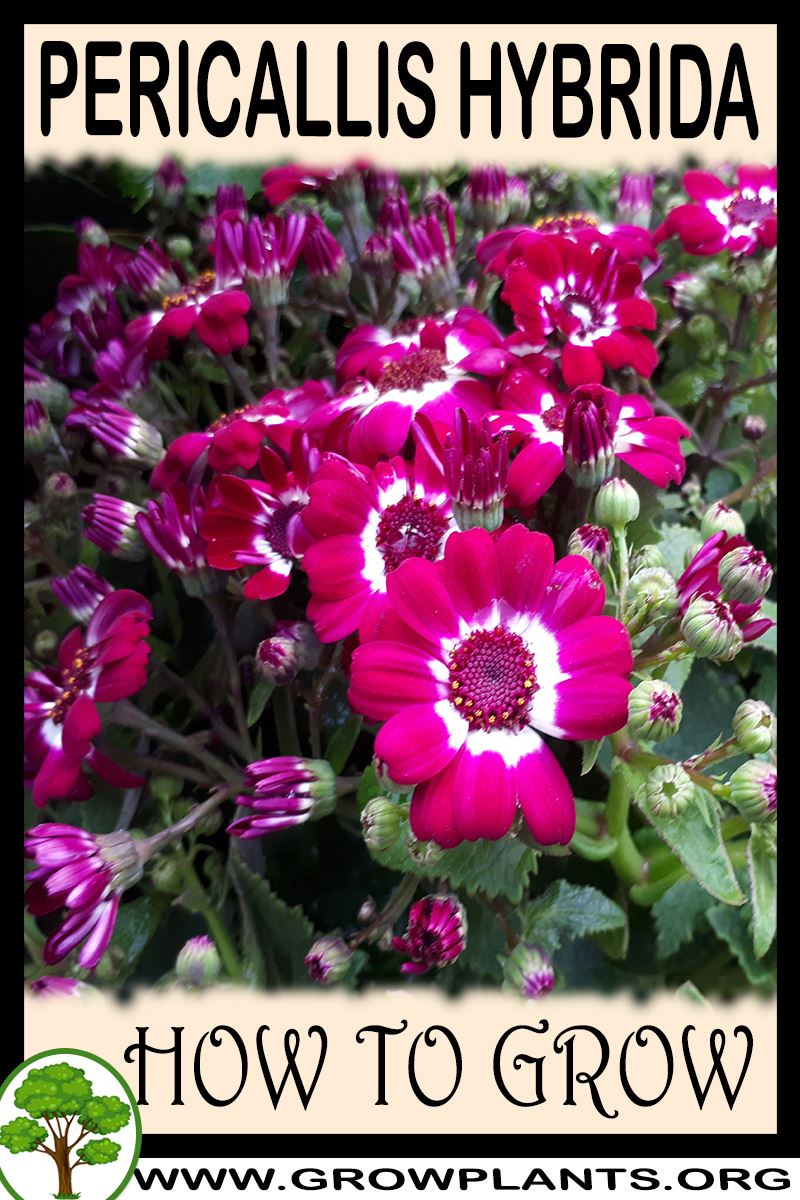
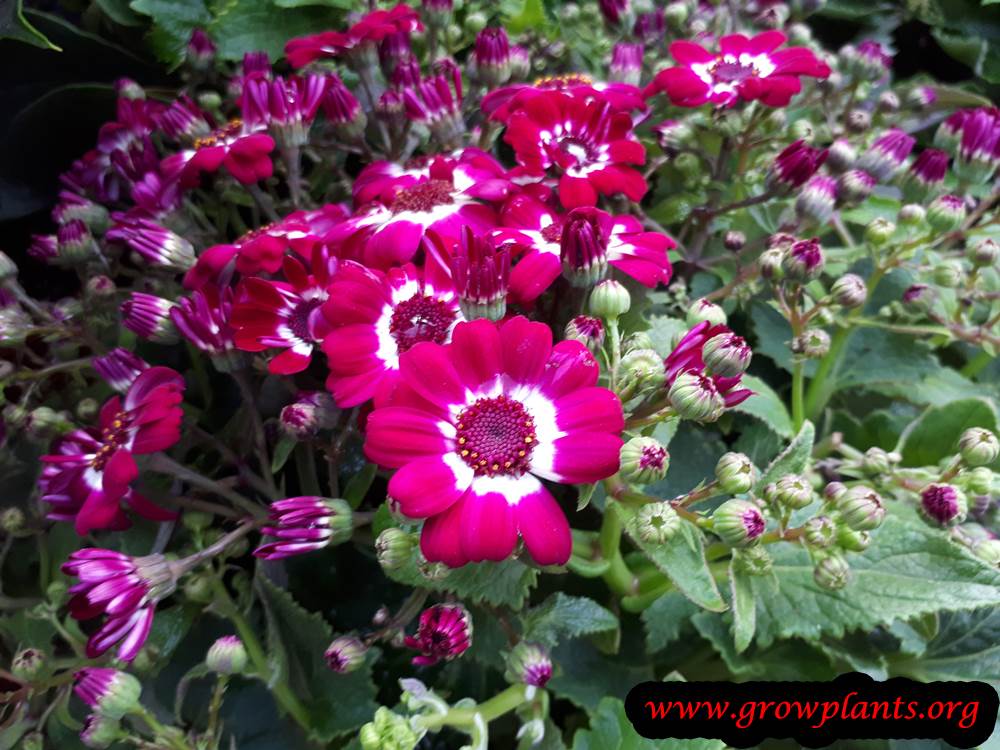
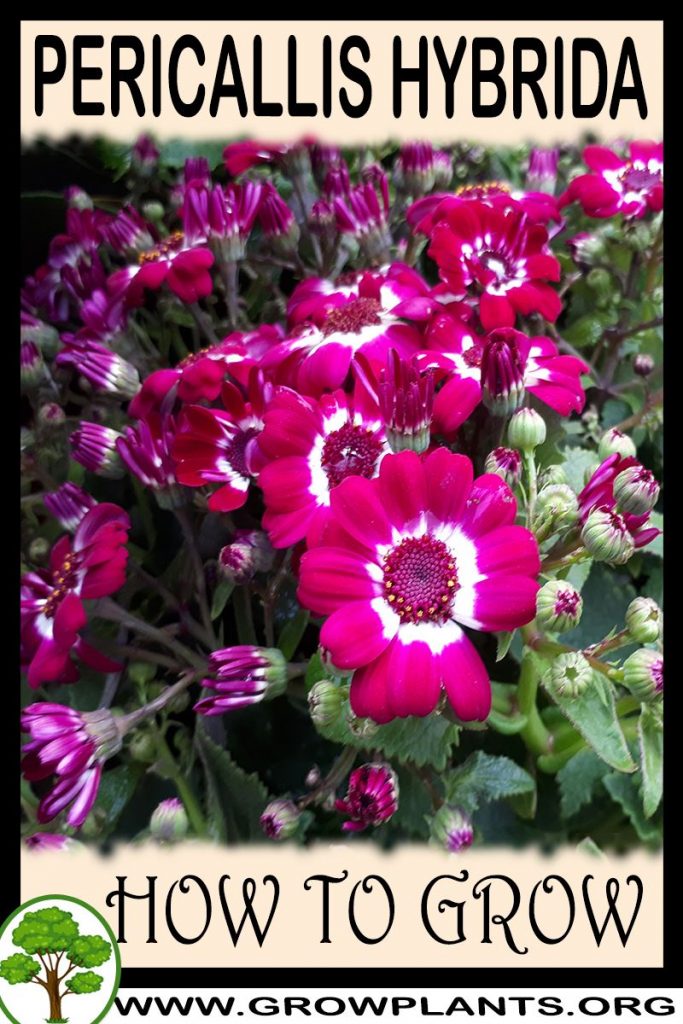
- Flower Characteristics: Daisy-like flowers in intense purple, blue or pink, often with a contrasting white eye, packed into showy clusters.
Primary Uses & Landscape Value
- Functional & Ornamental Roles: A popular flowering pot-plant and houseplant for cool, bright rooms and shaded cool-season bedding; also grown as a cut flower.
Care Guide: Planting, Soil & Watering
Overview: Pericallis hybrida (cineraria) is a fast-growing cool-season ornamental for mild Mediterranean and subtropical zones (9–11) and a popular potted houseplant. It performs best in partial to full shade in rich, moisture-retentive soil that is never allowed to dry out.
Quick Care Requirements
| Requirement | Ideal Condition |
|---|---|
| Planting Season | During the mild growing season, spring through autumn |
| Growth Rate | Moderate to Fast |
| Soil Type | Rich, moisture-retentive, well-draining |
| Water Need | Moderate – keep evenly moist, never let it dry out |
Planting & Establishment
- Best Planting Season: Plant during the mild growing season, from spring through autumn, avoiding hard frost.
- How to Plant:
- Hole Preparation: Dig a hole about twice the width of the root ball and no deeper than its height, loosening the sides so young roots can spread easily.
- Soil Amendments: Work compost or well-rotted organic matter into the backfill; on heavy ground add grit or coarse material to sharpen drainage.
- Planting Depth: Set the plant so the root collar sits level with the surrounding soil – never bury the stem – then firm gently and water in.
- Growth Speed & Expectations: A quick grower that fills out and comes into flower within a season.
Soil, Watering & Drainage Care
- Soil Mix & Drainage Needs: Give rich, moisture-retentive but well-drained soil and never let it dry out; add organic matter to hold moisture while keeping the roots from sitting in water. It is commonly grown in pots of good-quality potting mix.
- Watering Schedule & Technique:
- Young / Newly Planted: Keep the soil evenly moist from planting; check often, as this plant wilts quickly if it dries.
- Established: Water regularly and consistently so the soil never dries out – this is the key to healthy foliage and bloom.
- Seasonal Adjustments: Water more freely in warm weather and ease off in cool, damp conditions, but never allow the soil to dry.
Climate, Light & Hardiness
Pericallis hybrida (florist's cineraria) is a cool-growing plant best suited to mild Mediterranean and subtropical climates, or grown as a houseplant elsewhere. It prefers half to full shade and struggles with both hard frost and intense heat.
Quick Climate Specifications
| Climate Zones | Mediterranean, subtropical; also grown as a houseplant |
|---|---|
| USDA Hardiness Zones | 9–11 |
| Light Conditions | Half shade to full shade |
| Frost Tolerance | Low |
Sunlight & Light Exposure
Optimal Light Setup
Grows best in half to full shade; direct, intense sun is not needed and can stress the foliage and flowers.
Shade & Heat Management
Bright, filtered light or shade helps keep this cool-season plant comfortable, since it is sensitive to prolonged heat as well as cold.
Temperature Extremes & Hardiness
USDA Hardiness & Regional Limits
Suited to USDA zone 9–11 outdoors, or grown as a houseplant/seasonal pot plant in colder climates, since it has little tolerance for hard freezes.
Frost Sensitivity
Low frost tolerance – cold snaps can damage or kill foliage and flowers, so it is best moved under cover before frost in marginal zones.
Extreme Heat Tolerance
Prefers mild, cool growing conditions and can decline in prolonged intense heat, making it best suited to cooler seasons or shaded, sheltered positions in warm climates.
Wind, Humidity & Microclimate
Humidity Preferences
Appreciates moderate humidity and consistently moist (not waterlogged) soil.
Microclimate Recommendations
A shaded, sheltered spot protected from both frost and intense midday sun suits this plant best.
Growing in Pots, Balconies & Indoors
Florist’s cineraria is a cool-growing plant famous for its dense mounds of daisy flowers in vivid colours, and the grower confirms it as a houseplant. It is grown as a short-lived, seasonal flowering pot plant for bright, cool indoor rooms rather than a permanent outdoor container plant.
Quick Details
- Container Size: The pot it is sold in, or a slightly larger one – it is a short-season plant, not potted on long-term
- Indoor Suitability: A confirmed flowering houseplant; the grower does not recommend it for long-term outdoor containers
- Best Spot: Bright, indirect light in a cool room; it hates heat and hot sun
- Soil & Drainage: Aerated, organic-rich mix (peat or coir with perlite or vermiculite); must drain freely
- Watering in Pots: Keep the mix evenly moist – it wilts fast if it dries, but must not stay soggy
Indoors & On the Windowsill
- A confirmed houseplant: Grow it as a seasonal flowering pot plant in a bright, cool room away from radiators and hot sun; cool conditions keep the flowers fresh far longer.
- Care indoors: Keep it evenly moist and out of draughts; it is usually enjoyed for one long flowering flush and then replaced rather than kept for years.
- Safety: As a precaution keep it out of reach of pets and children, and wash hands after handling.
On a Balcony or Patio
- Not for long-term pots: The grower does not recommend it for lasting outdoor containers – it is short-lived and dislikes heat.
- Short seasonal display: In a cool, bright, sheltered spot it can give a temporary splash of colour, but it will not persist like a permanent container shrub.
Choosing the Pot, Soil & Long-Term Care
- Pot & drainage: Whatever pot it grows in must drain freely – never leave it standing in water, which quickly rots the roots.
- Potting mix: A moisture-retentive but free-draining potting mix.
- Feeding: A light feed while in bud and bloom is enough for its short season.
- Aftercare: Once the flowering flush fades it is normally composted rather than kept, as it rarely reflowers well.
Fertilizing & Feeding
Pericallis hybrida (florist’s cineraria) is a lush, daisy-flowered plant that blooms over a long season and does best with steady, moderate feeding while it is actively growing and flowering.
Quick Fertilizing Specs
| Feeding Level | moderate |
|---|---|
| Main Nutrient Priority | a balanced fertilizer that supports both leafy growth and its long daisy-flower display |
| Best Feeding Period | the active growing season while new leaves and flower buds are forming |
| Reduce/Stop Feeding | ease off feeding as flowering finishes and growth slows, especially for plants kept through a cooler rest period |
Feeding by Growth Stage
Spring Growth Flush
Build strong leafy growth as Pericallis hybrida establishes and pushes new foliage ahead of its main flowering display.
| Nutrient direction | A balanced, leaf-and-bud-supporting fertilizer suits this stage. |
|---|---|
| Timing | As new growth resumes in the cooler part of the growing season, typically ahead of the main bloom. |
| Frequency | Light, regular feeding through this growth phase supports steady foliage development. |
| Fertilizer types | A balanced, general-purpose fertilizer suited to leafy bedding and pot plants |
| Precautions | Keep feeding moderate; this plant favors rich, evenly moist soil, and excess fertilizer salts can build up quickly in a pot or bed that is also being watered generously. |
Daisy-Flower Bloom Support
Sustain the long, colorful daisy-flower display typical of this plant across multiple seasons of bloom.
| Nutrient direction | Continue balanced feeding without pushing extra nitrogen that favors leaves over flowers. |
|---|---|
| Timing | Through the extended flowering period across the warmer growing months. |
| Frequency | A light supplemental feeding during bloom keeps color coming without overfeeding. |
| Fertilizer types | A balanced fertilizer applied at a light, supplemental rate while in bloom |
| Precautions | Avoid wetting flowers and foliage when feeding, and keep soil evenly moist rather than letting it dry between applications. |
Cool-Season Rest
Allow the plant to rest once its main flowering push finishes or during any cooler slowdown period.
| Nutrient direction | None – withhold fertilizer while the plant rests. |
|---|---|
| Timing | After the main bloom finishes or during any cooler, slower-growing part of the year. |
| Frequency | No feeding at this stage. |
| Fertilizer types | No feeding at this stage; resume with the spring growth flush |
| Precautions | Do not fertilize while growth is slow; resume only once active new growth is visible. |
Nutrient Deficiency Signs & Corrections
Pale, light-green leaves and slower-than-expected leaf growth.
| Possible causes | Insufficient nitrogen for a leafy, fast-developing plant, Soil that has become depleted or was never enriched at planting, Waterlogged or poorly aerated roots limiting nutrient uptake |
|---|---|
| Appears first on | Older, lower leaves |
| What to check | Review recent feeding history, Check soil richness and drainage, Inspect roots for waterlogging or rot |
| Possible correction | Apply a balanced fertilizer during active growth and improve soil richness and drainage. |
New leaves show yellowing between the veins while the veins stay green.
| Possible causes | Soil or potting mix pH too high for good iron uptake, Overly wet, poorly drained soil stressing the roots, Cool soil temperatures slowing nutrient uptake |
|---|---|
| Appears first on | Newest leaves |
| What to check | Test soil pH, Check drainage and watering routine, Rule out root rot or pest damage |
| Possible correction | Improve drainage, address high soil pH, and apply a chelated iron product per its label if yellowing persists. |
Lush leafy growth but fewer daisy-like flowers than expected.
| Possible causes | Excess nitrogen favoring foliage over flower buds, Insufficient light, since this plant prefers shaded to half-shaded conditions but still needs enough light to bloom, Lack of spent-flower removal reducing further bud set |
|---|---|
| Appears first on | Overall reduced flower count across the plant |
| What to check | Review recent fertilizer nitrogen levels, Assess light exposure, Check whether spent flowers are being removed regularly |
| Possible correction | Moderate nitrogen, confirm adequate light for a shade-tolerant bloomer, and keep deadheading spent flowers. |
Pruning, Training & Seasonal Maintenance
Pericallis hybrida (cineraria) is a soft-stemmed, non-woody flowering plant grown as a bedding annual, short-lived perennial, or flowering houseplant. It tolerates frequent light maintenance well but has no woody framework to train — routine care is deadheading and tidying rather than structural cutting. Because it blooms over an extended spring-through-autumn window, maintenance is best done continuously through the growing season; light grooming does not affect overall plant size or shape, only bloom continuity and appearance.
Quick Pruning & Maintenance Specs
| Pruning Tolerance | High (soft tissue only, no structural cuts) |
| Primary Pruning Window | Ongoing through the spring, summer and autumn bloom period |
| Typical Frequency | Light grooming every 1–2 weeks while flowering |
| Main Objective | Prolong bloom, remove spent flowers/leaves, keep tidy |
| Young Plant Priority | Pinch the growing tip once to encourage branching |
| Mature Plant Priority | Deadhead continuously; remove yellowing leaves |
| Best Tool Type | Fingers or precision snips |
Pruning by Plant Age & Size
Newly Established
Leave young plants unpruned except to remove any damaged or yellowing leaves left from transplanting; no structural training is used.
Young / Formative
A single pinch of the growing tip once the plant has several leaf pairs encourages side branching and a fuller, more floriferous habit — there is no cane, leader or trellis system to train.
Mature / Established
Ongoing deadheading of spent flower heads and removal of yellowing lower leaves keeps the plant tidy and extends flowering; no framework maintenance is needed.
Seasonal Pruning Schedule
| Ongoing Sanitary (spring–autumn, while in bloom) | Objective: keep flowering going and prevent rot. Remove: spent flower heads and any yellowed or botrytis-prone leaves. Do not remove: healthy green foliage or unopened buds. Response: continued flower production. Flowering impact: deadheading redirects energy from seed-set into new blooms. |
Special Growth to Remove
- Spent flower stems — snap or snip off at the base of the flower stalk once blooms fade, before seed heads form.
- Yellowing or dying leaves — remove promptly, especially on plants grown as houseplants, since decaying foliage held against moist compost invites grey mould.
Container & Small-Space Pruning
Pericallis hybrida is most often grown as a potted flowering plant, indoors or in a shaded spot outdoors. In a pot, prompt deadheading and removal of fading leaves matters more than in open ground, since stagnant humid air around dying tissue in a container quickly leads to grey mould; keep the compost surface clear of dropped petals and leaves rather than pruning the plant any harder than an in-ground specimen would need.
Tools
- precision_snips or fingers — the only cuts needed are on soft flower stalks and leaf petioles.
Tool Hygiene & Disease Risk
Routine: Pericallis is prone to aphids but not to a significant tool-transmitted disease; wipe blades clean between plants as routine good practice, no special disinfection protocol is required.
Cut Placement & Technique
Deadhead by cutting or pinching the flower stalk back to just above the nearest leaf or side-bud, not by pulling, which can tear surrounding stem tissue.
Post-Pruning Care
After deadheading, water normally and check the crown and leaf axils for aphids, a common pest on this plant; avoid heavy watering onto the foliage after grooming, since damp, humid conditions around fresh cuts favour grey mould.
Common Pruning Mistakes
- Leaving spent flower heads in place to set seed, which shortens the overall bloom period.
- Leaving fallen petals and yellowed leaves sitting on the compost surface, encouraging botrytis in humid indoor conditions.
- Pinching or cutting hard once flower buds are already forming, which removes the coming flush instead of promoting a new one.
When Not to Prune
Avoid hard cutting back once the main flower flush is underway or about to open — since this is a short-lived flowering plant, there is little benefit to rejuvenation pruning; a plant that has finished flowering and is declining is generally better replaced than cut back hard.
Recommended Tools (by task)
- precision_snips — for deadheading soft flower stalks and removing individual leaves without disturbing neighbouring growth.
Propagation Guide
Pericallis hybrida (florist’s cineraria) is propagated almost exclusively from seed, which is the standard commercial and home method for this popular flowering pot plant; because named color strains are hybrids, seed-raised plants can vary in flower color and vigor rather than reproducing an exact parent. Vegetative propagation by cuttings is not required for normal cultivation but is a reliable way to duplicate a specific flower-color selection. Propagation is easy overall.
Quick Propagation Specs
| Best Propagation Method | Seed |
| Alternative Methods | Basal or stem cuttings (to duplicate a specific color form) |
| Propagation Difficulty | Easy |
| Seed True-to-Type | Hybrid offspring vary |
| Vegetative True-to-Type | Yes |
| Best Propagation Season | Seed sown in the warmer months (spring–summer) for flowering later the same or following season, matching the site’s spring/summer/autumn growing season |
| Seed Germination Time | Typically 1–3 weeks under warm, humid conditions |
| Cutting Rooting Time | Usually a few weeks |
| Germination Temperature | About 18–22°C (64–72°F) |
| Seed Sowing Depth | Surface-sow or barely cover; the fine seed benefits from light exposure |
Growing from Seed
Seed Handling & Viability
Seed is fine and dust-like; use fresh, good-quality hybrid seed for reliable germination and consistent flower color.
Sowing Depth & Orientation
Sow on the surface of a moist, free-draining seed mix and press in lightly rather than burying, since light aids germination.
Germination Conditions
Keep warm, evenly moist, and humid (a covered tray or propagator helps) in bright, indirect light.
Germination Time
Germination is typically seen within 1–3 weeks.
Seedling Care
Pot on once seedlings have their first true leaves; grow on cool and bright to keep growth compact, and protect from frost since the site notes hardiness only to zone 9–11.
Stem Cuttings
Cutting Type
Non-flowering basal shoots or stem tips.
Best Timing
During active growth in the warmer part of the growing season.
Cutting Preparation
Take short tip cuttings, remove lower leaves, and insert into a free-draining, moist cutting mix.
Rooting Setup
Keep humid and out of direct hot sun until rooted; the site’s care note to keep the plant from drying out applies equally to newly struck cuttings.
Rooting Hormone
Optional; not essential for this soft-wooded plant but can improve uniformity.
Rooting Time
Usually a few weeks.
Bloom & Flower Guide
Quick Details
- Bloom Season: Cool season – mainly late winter into spring, when it is grown as a winter and spring flowering pot plant
- Flower Appearance: Dense domes of daisy-like flower heads in vivid purple, blue, magenta or pink, usually with a white eye
- Edibility: Toxic – do NOT eat; as a relative of ragwort it contains pyrrolizidine alkaloids
Detailed Blooming Overview
Florist’s cineraria is grown for a short, brilliant burst of colour, smothering its heart-shaped foliage under a mound of daisy flowers in jewel-like purples, blues and pinks, each usually lit by a white centre. It performs best in cool, bright conditions, which is why it is such a popular late-winter and spring pot plant.
Flower Characteristics
- Daisy-like flower heads in purple, blue, magenta or pink, often with a white eye.
- Massed into a dense dome over the foliage.
Bloom Care & Thinning
- Safety: The plant is toxic if eaten – keep away from children and pets.
- Prolonging the display: Keep it cool and lightly shaded, and it will hold its flowers far longer than in a warm room.
Bloom Health & Protection
- Aphids: The classic cineraria pest – they cluster on buds and leaf undersides; insecticidal soap or neem oil clears them.
- Powdery mildew and whitefly: Common in warm, still air – better airflow helps the mildew, and neem oil deters whitefly.
Pests, Diseases & Troubleshooting
Florist’s cineraria is a soft, lush Asteraceae grown for a short, spectacular bloom, and its very softness makes it a magnet for sucking pests and fungal disease. Aphids are the classic problem, joined by whiteflies, leafminers, spider mites and thrips, while powdery mildew, botrytis and the thrips-borne tomato/impatiens spotted wilt viruses are its serious diseases. Cool, airy, evenly moist conditions and vigilant pest control are key.
Quick Troubleshooting Overview
| Issue / Pest | Main Symptom | Primary Solution |
|---|---|---|
| Aphids | Dense colonies on shoots and buds, honeydew, curling | Hose off; insecticidal soap; encourage beneficials |
| Whiteflies | Clouds of white flies, yellowing, sooty mould | Yellow sticky traps, insecticidal soap on undersides |
| Leafminers | Winding pale tunnels inside the leaves | Remove mined leaves, sticky traps, encourage parasitoids |
| Powdery mildew | White powdery film on leaves and stems | Improve airflow, avoid overhead water, sulfur fungicide |
| Spotted wilt virus | Ring spots, bronzing, distorted stunted growth | Control thrips; remove and destroy infected plants |
| Botrytis | Fuzzy grey mould on flowers and soft leaves | Deadhead, improve airflow, reduce humidity |
Common Pests & Management
- Aphids (Aphidoidea (incl. Aulacorthum solani)):
- Symptoms: Dense colonies of soft-bodied insects smothering new shoots, flower buds and leaf undersides, with heavy honeydew, sooty mould, curling and stunting; the signature cineraria pest.
- Prevention & Control: Inspect often and act early—hose off, support ladybirds, lacewings and parasitic wasps, and use insecticidal soap or light horticultural oil for heavy colonies, repeating to break the cycle.
- Whiteflies (Aleyrodidae (Trialeurodes vaporariorum)):
- Symptoms: Tiny white flies rising in clouds when disturbed, with honeydew, sooty mould and yellow-flecked, weakened leaves.
- Prevention & Control: Monitor with yellow sticky traps, release Encarsia parasitoids under glass, and spray insecticidal soap or horticultural oil to the leaf undersides.
- Leafminers (Agromyzidae (Liriomyza spp.)):
- Symptoms: Winding, pale serpentine tunnels mined within the leaves, and pale stippling from adult feeding; heavy mining browns leaves.
- Prevention & Control: Pick off and destroy mined leaves, use sticky traps, encourage parasitic wasps, and use spinosad or a translaminar product only for severe infestations.
- Spider mites (Tetranychidae (Tetranychus urticae)):
- Symptoms: Fine stippling, dull bronzed leaves and webbing in warm, dry conditions on stressed plants.
- Prevention & Control: Keep plants cool and evenly moist, hose foliage to raise humidity, and treat stubborn mites with insecticidal soap or horticultural oil.
- Thrips (Thysanoptera (Frankliniella occidentalis)):
- Symptoms: Silvery streaks, flecking and distorted growth—and, crucially, they transmit spotted wilt viruses.
- Prevention & Control: Use blue sticky traps, remove weeds, encourage predatory mites and lacewings, and use spinosad for outbreaks; controlling thrips is the key to preventing virus.
Diseases & Fungal Issues
- Powdery mildew (Erysiphaceae):
- Symptoms: White-to-grey powdery patches on leaves and stems, later yellowing and distorting foliage in crowded, humid air.
- Treatment & Management: Space plants, improve airflow, keep foliage dry, and apply sulfur, potassium bicarbonate or a horticultural-oil spray if it spreads.
- Botrytis (grey mould) (Botrytis cinerea):
- Symptoms: Soft brown rot and fuzzy grey mould on flowers, buds and the lush leaves in cool, damp, still air.
- Treatment & Management: Lower humidity, improve airflow, deadhead promptly, remove infected tissue, and avoid overhead watering.
- Spotted wilt viruses (Tomato/Impatiens spotted wilt virus (TSWV/INSV)):
- Symptoms: Concentric ring spots, bronzing, black streaks and distorted, stunted growth; thrips-transmitted and incurable—cineraria is a classic indicator host.
- Treatment & Management: There is no cure—rogue out and destroy infected plants immediately and control thrips rigorously to stop spread; sanitise tools and hands.
- Verticillium / root rot (Verticillium spp. / Pythium spp.):
- Symptoms: Wilting, yellowing and collapse—from vascular wilt or from root rot in cold, wet soil.
- Treatment & Management: Use clean mix and containers, avoid overwatering and cold-wet soil, and discard affected plants; provide good drainage.
Growing Difficulties & Abiotic Problems
- Heat and wilting:
- Cause & Symptoms: Cineraria is a cool-season plant; heat and drying out cause rapid, dramatic wilting and short bloom life.
- Correction Strategy: Keep cool and out of hot sun, maintain even moisture, and treat it as a short-lived seasonal display.
- Overwatering vs drying out:
- Cause & Symptoms: Both extremes fail it: soggy soil rots the roots, while a single dry-out wilts the soft foliage hard.
- Correction Strategy: Water consistently to keep the soil evenly moist but never waterlogged, in a free-draining mix.
What Helps – Products & Tools
Vigilance is everything with cineraria. Keep insecticidal soap and light horticultural oil for aphids, whitefly and mites, yellow and blue sticky traps plus spinosad for whitefly, leafminers and thrips, and sulfur or potassium bicarbonate for powdery mildew. Rigorous thrips control and prompt removal of any ring-spotted plants are the only defence against spotted wilt virus.