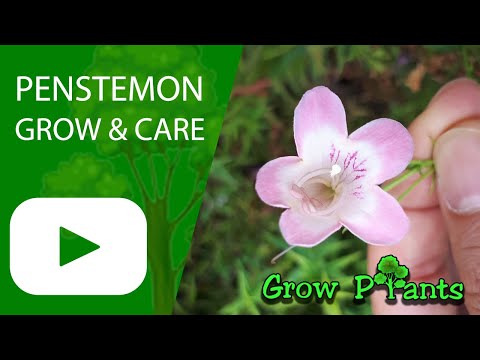

Plant Profile & Key Characteristics
Overview: A compact, semi-evergreen perennial reaching about 40-80 cm (16-32 in) tall, grown for its long display of tubular blue-to-purple flowers. Drought-tolerant and pollinator-friendly, it is used purely as a garden ornamental.
Quick Specifications
| Specification | Attribute |
|---|---|
| Plant Type / Life Cycle | Herbaceous perennial (short-lived) |
| Foliage Type | Evergreen to semi-evergreen (deciduous in cold winters) |
| Mature Size | 40-80 cm (16-32 in) tall |
| Growth Rate | Fast to moderate |
| Hardiness | USDA zones 7-10 |
Growth Form & Structure
- Height & Spread: Forms an upright clump 40-80 cm (16-32 in) tall in the ground; grows well in a container of moderate size where it stays neat.
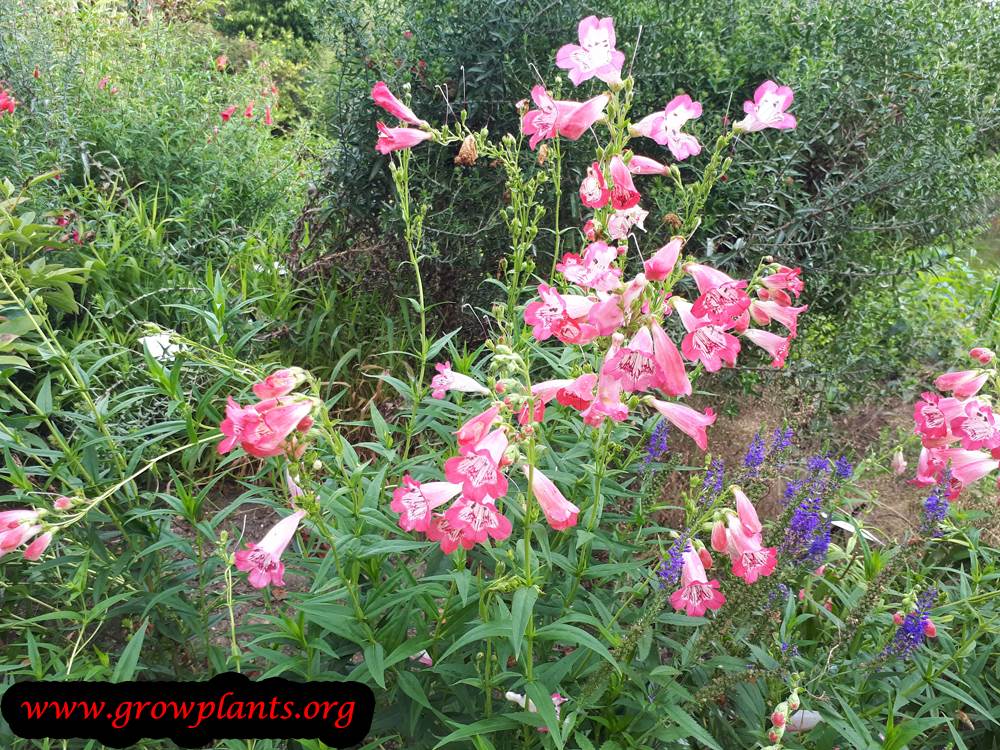
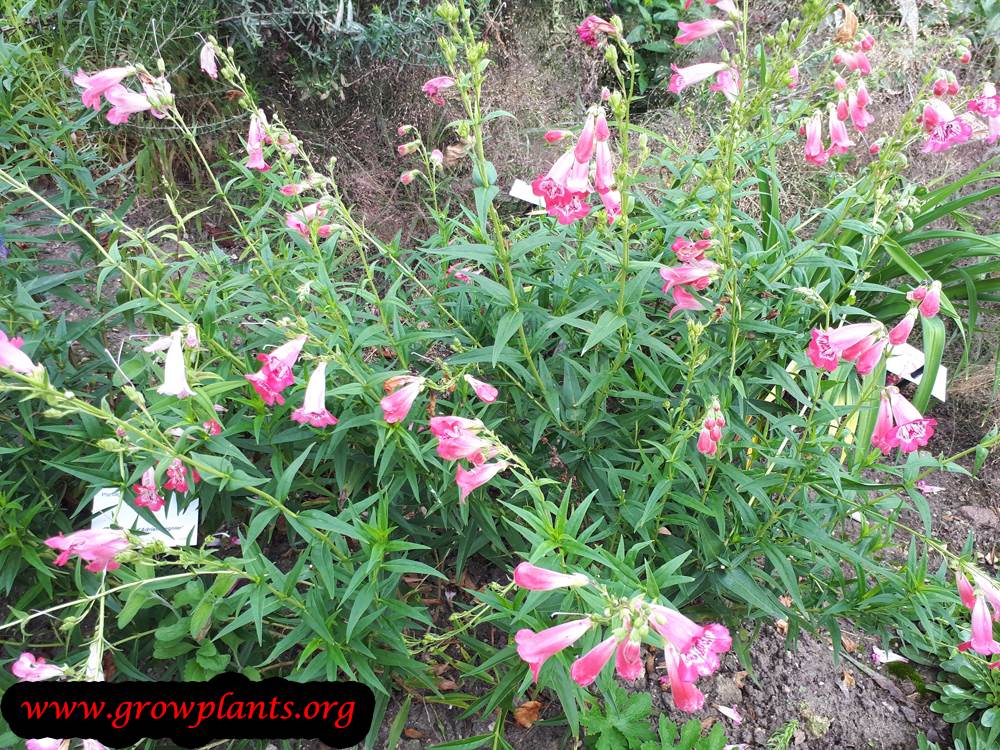
- Growth Habit & Form: A bushy, clump-forming perennial sending up numerous flowering spikes from a basal mound of foliage.
- Lifespan & Maturity: Reaches flowering size in its first or second season; a relatively short-lived perennial best refreshed periodically from cuttings.
Anatomy & Physical Features
- Leaves & Foliage: Narrow, linear green leaves, often taking on a blue-grey cast, arranged on the upright stems.
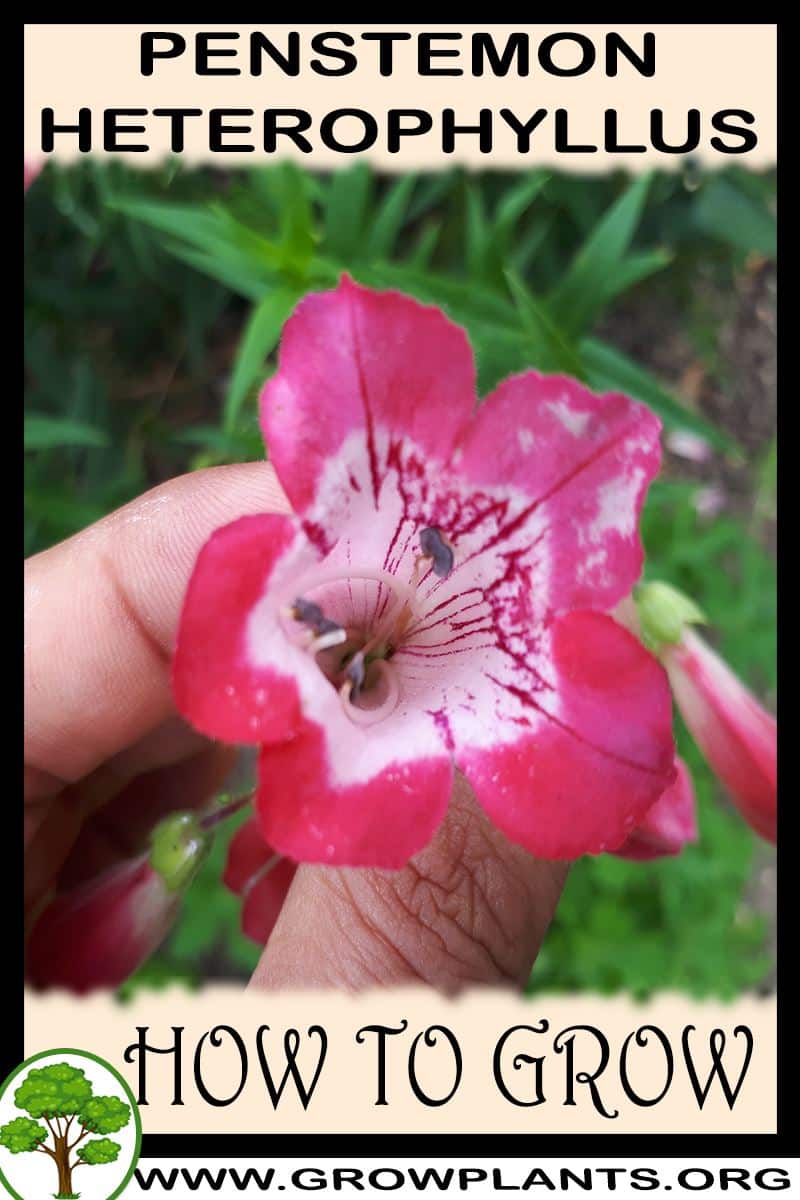
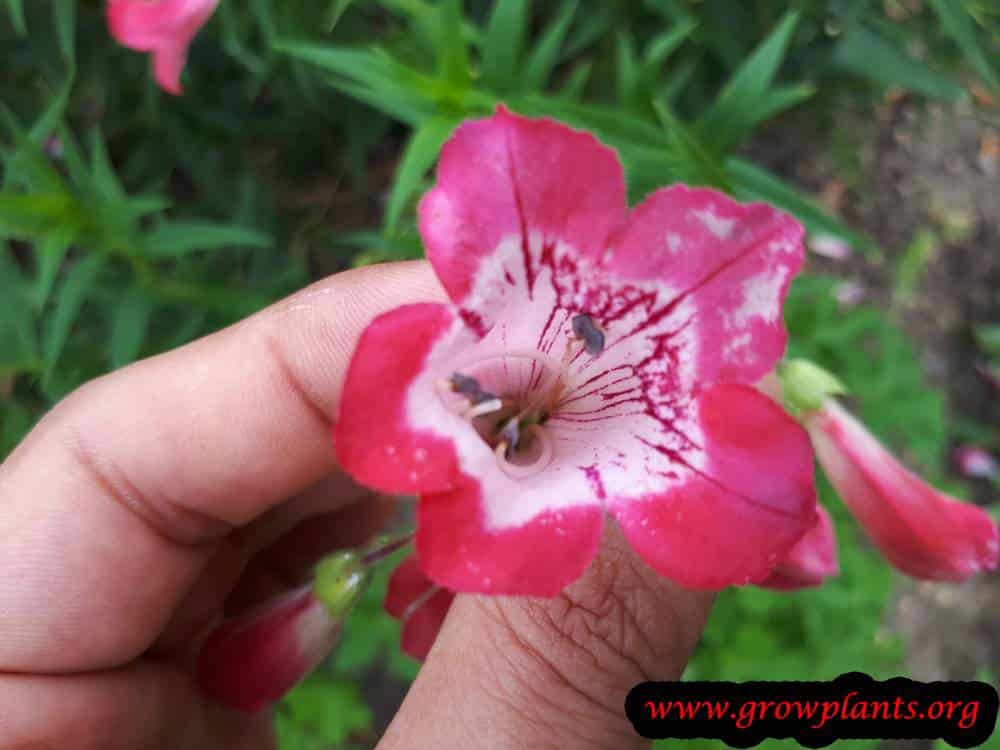
- Flower Characteristics: Tubular, two-lipped (mouth-shaped) flowers in vivid purple to blue, carried on slender upright spikes.
Primary Uses & Landscape Value
- Functional & Ornamental Roles: A drought-tolerant border and dry-garden ornamental that attracts bees and hummingbirds; well suited to gravel gardens, mixed beds and containers.
Care Guide: Planting, Soil & Watering
Overview: Bunchleaf penstemon grows best in full sun to light shade in a temperate to mild climate (hardiness zone 7-10), in lean, sharply draining soil. It is drought tolerant, needing only a low to moderate amount of water, and dislikes sitting in wet ground.
Quick Care Requirements
| Requirement | Ideal Condition |
|---|---|
| Planting Season | The warm season, from spring through autumn |
| Growth Rate | Fast to Moderate |
| Soil Type | Lean, sharply draining soil |
| Water Need | Low to Moderate – let the soil dry between waterings; avoid winter wet |
Planting & Establishment
- Best Planting Season: Plant in the warm season, from spring through autumn, giving it an open, sunny position with excellent drainage.
- How to Plant:
- Hole Preparation: Dig a hole about twice the width of the root ball and the same depth, loosening the surrounding soil so roots spread freely.
- Soil Amendments: Keep amendments light – a little compost is fine, but add grit or coarse sand on heavy soil, since this plant prefers lean, fast-draining ground.
- Planting Depth: Set the root collar level with the soil surface and avoid piling soil or mulch against the crown.
- Growth Speed & Expectations: Fast to moderate; it establishes quickly and settles into a tidy, free-flowering clump.
Soil, Watering & Drainage Care
- Soil Mix & Drainage Needs: Sharp drainage is the priority – gritty, free-draining soil; in pots use a free-draining mix and ensure the container never stays waterlogged, which causes root rot.
- Watering Schedule & Technique:
- Young / Newly Planted: Water regularly to keep the soil lightly moist while roots establish through the first season.
- Established: Once established it is drought tolerant – water deeply but infrequently, letting the soil dry between waterings.
- Seasonal Adjustments: Water more in prolonged heat and keep it on the dry side in cool, wet weather and winter.
Climate, Light & Hardiness
Bunchleaf penstemon is a drought-tolerant, evergreen-to-deciduous perennial suited to temperate, subtropical, and Mediterranean climates. It thrives in full sun to half shade and is reliably hardy through USDA zone 7.
Quick Climate Specifications
| Climate Zones | Temperate, subtropical, mediterranean |
|---|---|
| USDA Hardiness Zones | 7–10 |
| Light Conditions | Full sun to half shade |
| Frost Tolerance | Moderate to high within its hardiness range |
Sunlight & Light Exposure
Optimal Light Setup
Full sun gives the best flowering and compact habit; half shade is tolerated, especially in hotter climates.
Extreme Heat Tolerance
Being drought-tolerant, it copes well with hot, dry summer conditions typical of Mediterranean and subtropical zones.
Temperature Extremes & Hardiness
USDA Hardiness & Regional Limits
Hardy from zone 7 to 10, tolerating winter cold typical of mild-temperate and Mediterranean climates.
Cold Damage & Winter Protection
Sharp drainage is important through winter, since cold combined with wet soil is more likely to harm the plant than cold alone; no other winter protection is generally needed within its hardy range.
Wind, Humidity & Microclimate
Dry-Air Tolerance
Well suited to the drier air of Mediterranean and subtropical climates.
Microclimate Recommendations
A well-drained, sunny site with sharp winter drainage best replicates its native growing conditions.
Growing in Pots, Balconies & Indoors
This blue-flowered penstemon is a sun-loving perennial, not a houseplant, but it thrives in a free-draining container on a sunny patio or balcony.
Quick Details
- Container Size: A roomy pot sized to the plant, potting on as it grows
- Indoor Suitability: Not a true houseplant; grows best outdoors
- Best Spot: Full sun to half shade
- Soil & Drainage: Aerated, organic-rich mix (peat or coir with perlite or vermiculite); must drain freely
- Watering in Pots: Water sparingly to moderately; sharp drainage matters, as it hates wet feet
Indoors & On the Windowsill
- Houseplant limits: It needs full outdoor sun and gritty, sharp drainage to flower and overwinter well; rooms are too dark.
On a Balcony or Patio
- Light & wind: Give it full sun and lean, sharply drained mix; shelter the crown from prolonged winter wet. Walls and paving reflect heat, so pots dry quickly – check moisture often in hot weather.
- Practicalities: Set the pot where drainage runoff won’t stain, and remember a full, wet container is heavy to move.
Choosing the Pot, Soil & Long-Term Care
- Pot & drainage: A container with strong drainage holes and no standing-water saucer, to avoid root rot; terracotta breathes and dries faster, glazed or plastic holds moisture longer.
- Potting mix: A well-aerated, organic-rich mix – peat or coir with perlite or vermiculite.
- Feeding: Potted plants exhaust their soil quickly – feed a little more often, since watering leaches nutrients away.
- Repotting: Refresh the top of the mix each year and pot on every couple of years, trimming the root ball lightly.
Fertilizing & Feeding
A drought-tolerant native-type perennial, Penstemon Heterophyllus is a light feeder – it performs best in lean, well-drained soil, and heavy fertilizing mainly increases the risk of floppy growth, powdery mildew, and root problems.
Quick Fertilizing Specs
| Feeding Level | light |
|---|---|
| Main Nutrient Priority | Lean, light feeding; avoid pushing lush growth that invites powdery mildew |
| Best Feeding Period | Early spring as new growth resumes |
| Reduce/Stop Feeding | Cut back once established, and stop for winter dormancy |
| Soil pH | Tolerates a wide range in well-drained soil |
| Organic Options | Leaf mulch around the base |
Feeding by Growth Stage
Spring growth before bloom
Support fresh basal and stem growth as the plant breaks dormancy ahead of its spring-to-summer bloom.
| Nutrient direction | Light, balanced feeding – this drought-tolerant penstemon performs best in lean soil and doesn’t need rich fertilizing to grow well. |
|---|---|
| Timing | Early spring as new growth resumes. |
| Frequency | A single light feeding in spring is usually enough; established plants rarely need more. |
| Fertilizer types | A light, balanced fertilizer in early spring, Leaf mulch worked lightly around the base |
| Precautions | Avoid rich soil or heavy nitrogen, which produces lush, floppy growth more prone to powdery mildew. |
Spring-to-summer bloom period
Sustain the tubular purple-to-blue flower spikes that attract pollinators through the bloom season.
| Nutrient direction | Continue only light feeding if any; extra phosphorus is not needed to drive flowering. |
|---|---|
| Timing | Spring into summer while the plant is in bloom. |
| Frequency | Minimal feeding is usually enough during bloom; over-feeding tends to reduce flower quality. |
| Fertilizer types | A light, balanced feeding only if growth looks weak, Typically thrives without extra fertilizer during bloom |
| Precautions | Overfeeding and overwatering together raise the risk of root and crown problems in this drought-adapted plant. |
Dormancy or winter rest
Let growth pause through winter or the driest part of the year with no feeding demand.
| Nutrient direction | None – withhold fertilizer during dormancy or winter rest. |
|---|---|
| Timing | Winter, or the coldest and driest part of the year depending on climate. |
| Frequency | No feeding at this stage. |
| Fertilizer types | No feeding at this stage; do not fertilize while the plant rests. |
| Precautions | Do not fertilize during dormancy; a light feeding can resume only as new spring growth appears. |
Nutrient Deficiency Signs & Corrections
Wilting, yellowing, or collapse of the plant despite normal or high soil moisture.
| Possible causes | Overwatering in combination with fertilizing, Poor drainage, Root or crown rot from wet, rich soil |
|---|---|
| Appears first on | Lower stems and crown |
| What to check | Soil drainage, Watering frequency, Recent feeding |
| Possible correction | Improve drainage, reduce watering and feeding, and avoid rich, wet soil around the crown. |
White powdery coating on leaves, often on soft, overly lush growth.
| Possible causes | Excess nitrogen producing soft, susceptible growth, Poor air circulation, Humid conditions |
|---|---|
| Appears first on | Leaves and stems |
| What to check | Recent feeding history, Plant spacing and airflow, Humidity |
| Possible correction | Reduce nitrogen feeding, improve air circulation, and remove affected foliage. |
Pale, weak growth and sparse flower spikes.
| Possible causes | Nitrogen deficiency in very poor soil, Root competition, Poor drainage limiting nutrient uptake |
|---|---|
| Appears first on | Older leaves and overall vigor |
| What to check | Soil fertility, Competition from nearby plants, Drainage |
| Possible correction | Apply a light, balanced fertilizer if the soil is genuinely depleted, rather than routinely over-feeding. |
Pruning, Training & Seasonal Maintenance
Bunchleaf penstemon is a woody-based evergreen-to-deciduous perennial grown for its purple-blue spikes and drought tolerance. It tolerates a light-to-moderate annual cutback but not hard renewal into old wood, since new flowering growth comes from the semi-woody base rather than resprouting freely from bare stems. The safest window is autumn to winter, after bloom has finished and before spring growth resumes, which also matters here because the source flags powdery mildew and rust as pest pressures that benefit from better airflow.
Quick Pruning & Maintenance Specs
| Pruning Tolerance | Moderate (light cutback tolerated; avoid cutting into bare old wood) |
| Primary Pruning Window | Autumn to winter, after flowering finishes |
| Secondary Maintenance Window | Spring to summer, deadheading spent spikes |
| Typical Frequency | One shaping/cutback pass per year, plus ongoing deadheading |
| Main Objective | Keep a compact, floriferous habit and improve airflow against foliar disease |
| Young Plant Priority | Pinch young growth to encourage branching before the woody base forms |
| Mature Plant Priority | Light annual cutback just above the woody base; thin crowded stems for airflow |
| Best Tool Type | Bypass secateurs / precision snips |
| Avoid Heavy Pruning During | Active spring–summer bloom, and never cut back hard into leafless old wood |
Pruning by Plant Age & Size
Newly Established
No cutting beyond removing damaged growth; let the plant build its semi-woody base in the first season.
Young / Formative
Pinch stem tips once establishing to encourage a bushier, multi-stemmed base rather than a single leggy spike – this species has no central-leader or trained framework, so pinching is the only formative technique.
Mature / Established
Cut stems back by roughly a third to half each year, stopping just above the woody base rather than into bare wood, and thin out any crowded interior growth – airflow matters given the documented mildew/rust risk.
Seasonal Pruning Schedule
| Stage | Objective | Remove | Do Not Remove | Response / Impact |
| Dormant (autumn–winter, per source) | Shape and renew for next season’s bloom | Spent flower spikes; roughly a third to half of the top growth, cutting above the woody base | The woody base itself – bare old wood won’t reliably resprout | Bushier, more floriferous spring–summer regrowth |
| Ongoing Sanitary (spring–summer bloom) | Prolong bloom, reduce disease load | Spent individual flower spikes; any mildew/rust-affected foliage | Healthy current-season foliage | Extended flowering; lower disease carry-over |
Structural Pruning & Training
No formal training system; the relevant structural task is thinning crowded stems at the woody base to open the clump to airflow, which is the practical lever against the documented powdery mildew and rust pressure.
Special Growth to Remove
- Spent flower spikes – deadhead to tidy and to redirect energy from seed-set.
- Mildew- or rust-affected foliage, given the documented disease pressure.
Container & Small-Space Pruning
Container growing is supported by the source. In a pot, keep cutbacks slightly lighter and more frequent to maintain compactness, since a confined root run gives less reserve for the plant to rebuild top growth from a hard cut.
Tools
- Bypass secateurs for the annual cutback of semi-woody stems.
- Precision snips for deadheading individual spikes through the bloom season.
Tool Hygiene & Disease Risk
Increased – the source documents powdery mildew and rust as pest/disease pressures, both of which spread readily on cutting tools; wipe or disinfect blades after working on visibly affected foliage before moving to the next plant.
Cut Placement & Technique
Cut stems just above a leaf node or visible bud on the woody base, never flush into bare old wood; deadhead individual spikes just above the topmost healthy leaf pair.
Heavy Pruning & Rejuvenation
Not well tolerated – this species does not reliably resprout from hard cuts into leafless old wood. If a plant becomes overly woody and sparse, replacement from cuttings is generally more reliable than attempting a hard rejuvenation cut.
Post-Pruning Care
Water normally after cutback; watch for regrowth of mildew/rust on the fresh flush, since the source lists both as documented risks, and avoid overhead watering that keeps new foliage wet.
Common Pruning Mistakes
- Cutting hard into bare, leafless old wood expecting it to resprout.
- Leaving the clump dense and uncut, worsening the documented powdery mildew and rust pressure.
- Skipping the pinch on young plants, resulting in a leggy, single-stemmed habit.
When NOT to Prune
Avoid cutting during active spring–summer bloom, and avoid a hard cutback in cold, wet conditions when mildew/rust pressure and slow wound healing compound.
Recommended Tools (by task)
- bypass_secateurs – the annual shape/cutback of semi-woody stems above the base.
- precision_snips – deadheading spent spikes and removing disease-affected foliage through the season.
Pruning Troubleshooting
| Problem | Possible Cause | What to Check | Corrective Action |
| Powdery mildew / rust on foliage | Crowded growth limiting airflow | Density of the clump interior | Thin crowded stems; remove affected foliage and disinfect tools between cuts |
| Sparse regrowth after cutback | Cut into bare old wood instead of above the woody base | Where the previous season’s cuts were placed | Cut higher next time, leaving live buds on the woody base intact |
| Leggy, floppy habit | No early pinching on young growth | Whether tip pinching was done when young | Pinch new growth on replacement plants; cut established plants back by a third annually |
Propagation Guide
This Penstemon is easiest to raise from seed, which the site confirms is sufficient on its own since vegetative propagation isn’t necessary. Stem cuttings are a useful alternative when a specific flower-color form needs to be reproduced exactly, since garden Penstemons can cross with other species or selections growing nearby. Overall difficulty: Easy to Moderate.
Quick Propagation Specs
| Best Propagation Method | Seed |
| Alternative Methods | Softwood/semi-hardwood stem cuttings |
| Propagation Difficulty | Easy–Moderate |
| Seed True-to-Type | Usually true-to-type as the species, though it may hybridize if other Penstemon species or selections are grown nearby |
| Vegetative True-to-Type | Yes |
| Best Propagation Season | Spring, matching the plant’s spring–summer–autumn planting season |
| Seed Germination Time | Several weeks, and can be slow or uneven |
| Cutting Rooting Time | Usually a few weeks |
| Germination Temperature | Cool to moderate, roughly 15–21°C (59–70°F) |
| Seed Sowing Depth | Surface-sow or barely cover – many Penstemon species germinate better with light exposure |
Growing from Seed
Dormancy & Pre-Sowing Treatment
Many Penstemon species germinate more readily after a period of cold, moist stratification; this is worth trying if germination is otherwise slow.
Sowing Season
Spring.
Sowing Depth & Orientation
Surface-sow or barely cover, since light often aids germination in this genus.
Germination Conditions
Full sun; avoid overly wet conditions.
Germination Time
Several weeks, and can be slow or uneven.
Seedling Care
Keep airflow good and avoid excess moisture around young seedlings – this species is prone to powdery mildew and rust, which favor humid, stagnant conditions.
Stem Cuttings
Cutting Type
Softwood tip cuttings from non-flowering shoots.
Best Timing
Spring to summer.
Cutting Preparation
Take a cutting with a few leaf nodes, remove the lower leaves and any flower buds.
Rooting Setup
A gritty, free-draining mix; keep humid but avoid waterlogging, since stagnant humid conditions favor this plant’s known powdery mildew and rust problems.
Rooting Hormone
Optional – may speed rooting but isn’t required.
Rooting Time
Usually a few weeks.
Bloom & Flower Guide
Quick Details
- Bloom Season: Spring into summer
- Time to First Bloom: Nursery plants flower their first season; seed-raised plants often bloom from their second year
- Flower Appearance: Two-lipped, open-mouthed tubular flowers in vivid blue to purple, carried on upright spikes
- Edibility: Grown as an ornamental
Detailed Blooming Overview
Foothill penstemon is loved for the electric blue-purple of its flower spikes in late spring and early summer. The tubular blooms line the stems and draw bees and hummingbirds, and the plant shrugs off dry spells.
Flower Characteristics
- Mouth-shaped, two-lipped flowers in purple to blue, on upright stalks, as the grower describes.
- Tubular form well suited to long-tongued pollinators.
Bloom Care & Thinning
- Keep it flowering: Deadhead spent spikes to encourage further bloom.
- After the main flush: A light shear tidies the plant and can prompt a second showing.
- Drainage: Sharp drainage keeps it flowering freely and long-lived.
Pests, Diseases & Troubleshooting
Penstemons are generally healthy, pollinator-friendly perennials whose worst enemy is wet, heavy soil rather than insects. Their genuine problems are foliar fungal diseases in humid, crowded conditions—powdery mildew, rust and leaf spots—and, above all, crown and root rot on poorly drained ground. This blue-flowered western species is particularly drainage-demanding and dislikes summer irrigation. Grow them lean, sunny and sharply drained and most trouble disappears.
Quick Troubleshooting Overview
| Issue / Pest | Main Symptom | Primary Solution |
|---|---|---|
| Powdery mildew | White powdery coating on upper leaves and stems | Improve airflow, avoid overhead water, remove affected growth |
| Rust | Orange-brown pustules on leaf undersides | Thin plantings, remove infected leaves, water at the base |
| Crown / root rot | Base blackens, plant wilts and collapses | Plant in fast-draining soil; avoid winter wet and mulch off the crown |
| Aphids | Sticky new shoots, distorted tips, honeydew | Hose off, encourage beneficials, insecticidal soap if needed |
| Leaf spot | Dark or purplish spots that merge and brown leaves | Remove affected foliage, improve spacing |
Common Pests & Management
- Aphids (Aphidoidea):
- Symptoms: Clusters of small soft-bodied insects on tender shoot tips and flower stems, causing sticky honeydew, distorted growth and sooty mould.
- Prevention & Control: Blast off with water, support ladybirds and lacewings, and use insecticidal soap or a light horticultural oil only for stubborn colonies, spraying in the evening to protect pollinators.
- Spider mites (Tetranychidae):
- Symptoms: Fine pale stippling and dull, bronzed leaves with faint webbing in hot, dry conditions.
- Prevention & Control: Keep plants watered to reduce drought stress, hose foliage to raise humidity and knock mites off, and treat persistent outbreaks with insecticidal soap or horticultural oil.
- Thrips (Thysanoptera):
- Symptoms: Silvery streaks and flecking on leaves and petals, with distorted new growth; they can also spread viruses.
- Prevention & Control: Remove weeds that harbour them, use blue sticky traps to monitor, encourage predatory mites and lacewings, and spot-treat with insecticidal soap or spinosad if needed.
Diseases & Fungal Issues
- Powdery mildew (Erysiphaceae):
- Symptoms: A white-to-grey powdery film on upper leaf surfaces and stems, later causing yellowing, distortion and early leaf drop, worst in crowded, humid, shaded sites.
- Treatment & Management: Space plants for airflow, site in sun, water at the base and remove affected growth; if it persists, apply a sulfur-based fungicide, potassium bicarbonate or a horticultural-oil spray.
- Rust (Puccinia spp.):
- Symptoms: Powdery orange-to-brown pustules mainly on leaf undersides, with yellow flecking above; heavy rust yellows and drops foliage.
- Treatment & Management: Thin and space plants, avoid overhead watering, and remove and destroy infected leaves; a sulfur or copper-based fungicide can be used preventively in wet spells.
- Leaf spot (Cercospora / Septoria spp.):
- Symptoms: Small dark, sometimes purple-ringed spots that enlarge and coalesce, browning and killing leaves in wet weather.
- Treatment & Management: Improve air movement, keep foliage dry, and clear fallen debris; copper fungicide helps in persistent wet seasons.
Growing Difficulties & Abiotic Problems
- Crown and root rot:
- Cause & Symptoms: The number-one cause of penstemon death: wet, heavy or poorly drained soil (especially over winter) rots the crown and roots, so plants wilt, blacken at the base and collapse.
- Correction Strategy: Plant in gritty, fast-draining soil or a raised bed, keep mulch away from the crown, avoid winter wet, and divide or replace short-lived clumps every few years.
- Short-lived / winter loss:
- Cause & Symptoms: Many penstemons are naturally short-lived and can be lost in cold, wet winters even without disease.
- Correction Strategy: Grow lean and sunny, take cuttings or let plants self-seed for replacements, and provide sharp drainage to improve overwintering.
- Chlorosis / poor bloom:
- Cause & Symptoms: Overly rich, wet or alkaline soil causes yellowing, weak floppy growth and reduced flowering.
- Correction Strategy: Feed sparingly, grow in full sun on lean soil, and correct drainage; deadhead spent spikes to encourage rebloom.
What Helps – Products & Tools
Most penstemon care is cultural—sun, lean soil and drainage. Keep insecticidal soap or light horticultural oil for aphids, mites and thrips, and reach for a sulfur-based or potassium-bicarbonate fungicide for powdery mildew and a copper or sulfur fungicide for rust and leaf spot only when needed. Sharp drainage is the single best defence against rot.