Plant Profile & Key Characteristics
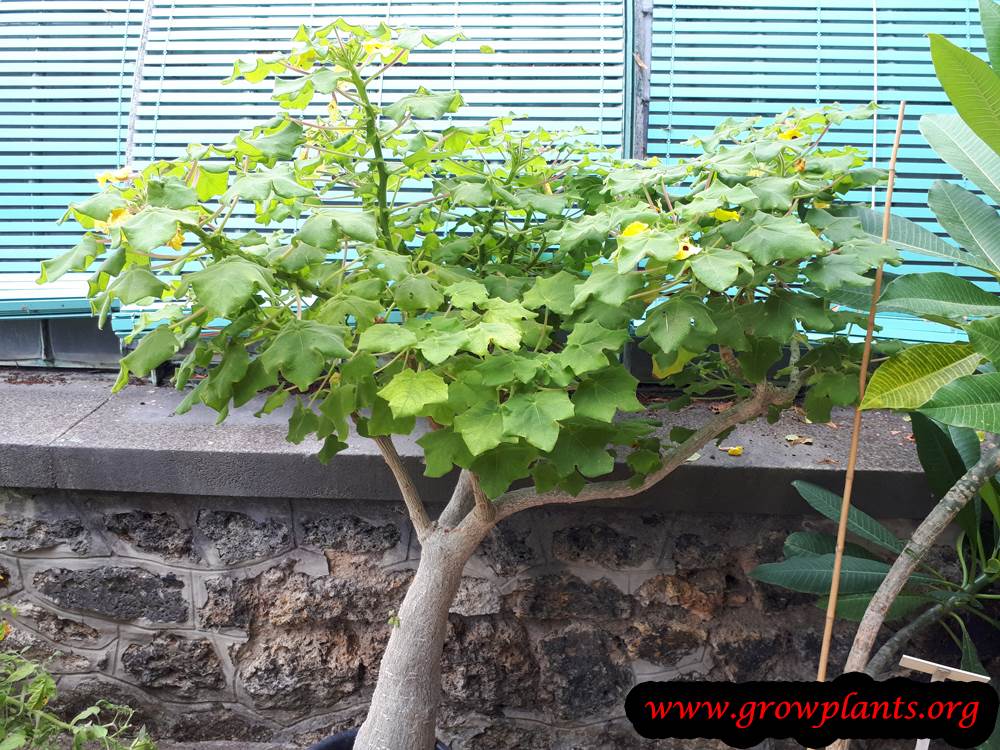
Overview: A caudiciform succulent shrub or small tree 1–4 m tall, grown as an ornamental, bonsai and caudex specimen. It is drought-tolerant and evergreen in warm, frost-free conditions.
Quick Specifications
| Specification | Attribute |
|---|---|
| Plant Type / Life Cycle | Perennial (evergreen succulent shrub/tree) |
| Foliage Type | Evergreen (drought-deciduous when dry) |
| Mature Size | 1–4 m H (3–13 ft) |
| Growth Rate | Slow to moderate |
| Root System | Caudiciform (swollen water-storing caudex) |
| Hardiness | USDA zone 10 and warmer |
Growth Form & Structure
- Height & Spread: 1–4 m tall in the ground; commonly kept much smaller in pots and as bonsai.
- Growth Habit & Form: Succulent shrub or small tree with a swollen caudex base; well suited to caudex and bonsai training.
- Lifespan & Maturity: Long-lived slow-to-moderate grower; the caudex thickens with age.
Anatomy & Physical Features
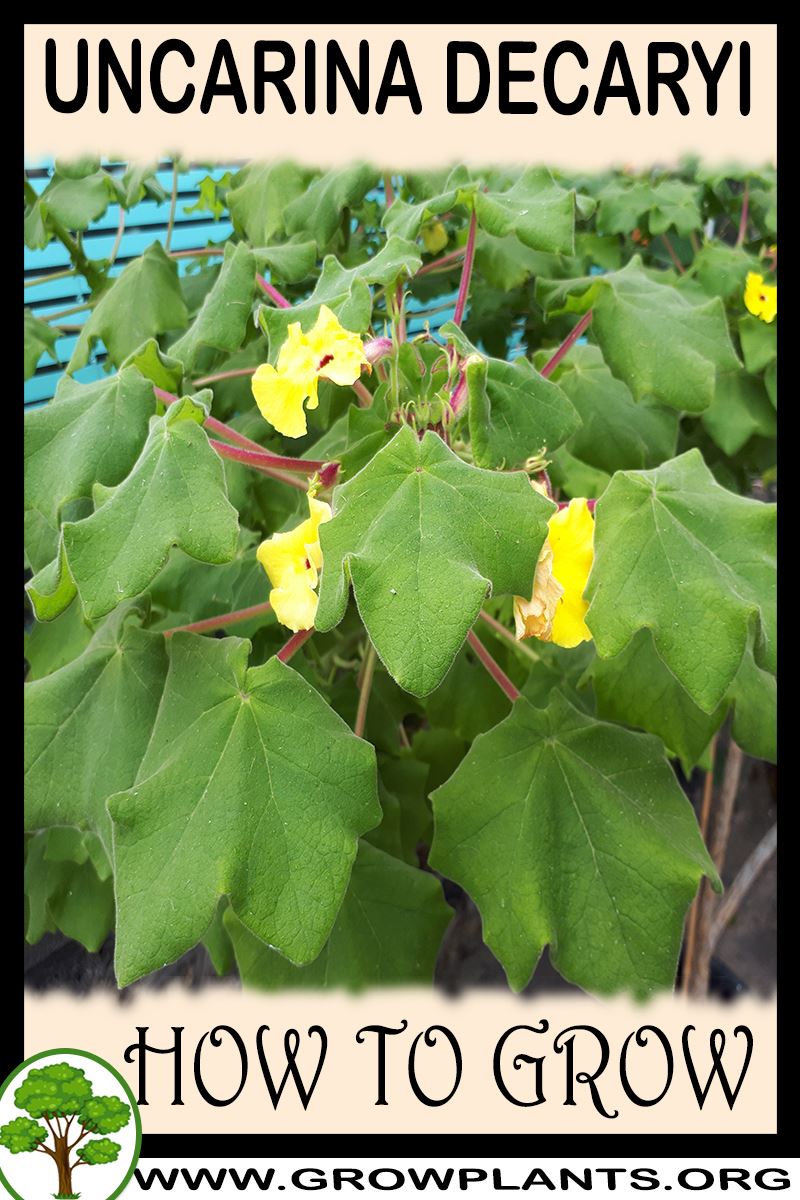
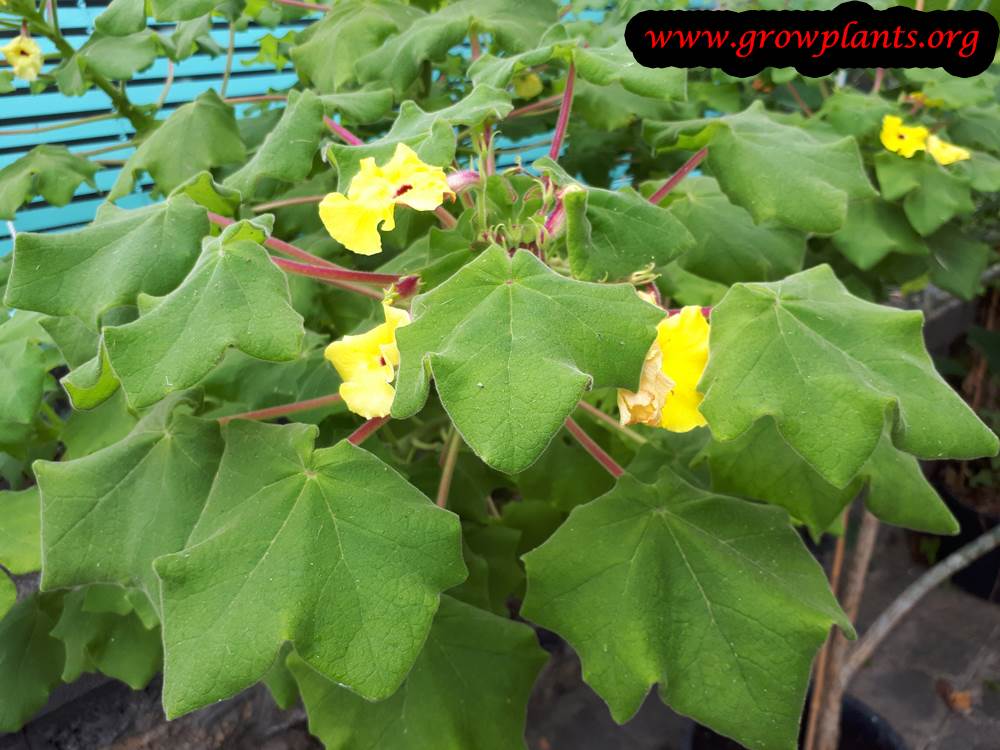
- Leaves & Foliage: Green, heart-shaped, lobed to deeply lobed leaves.
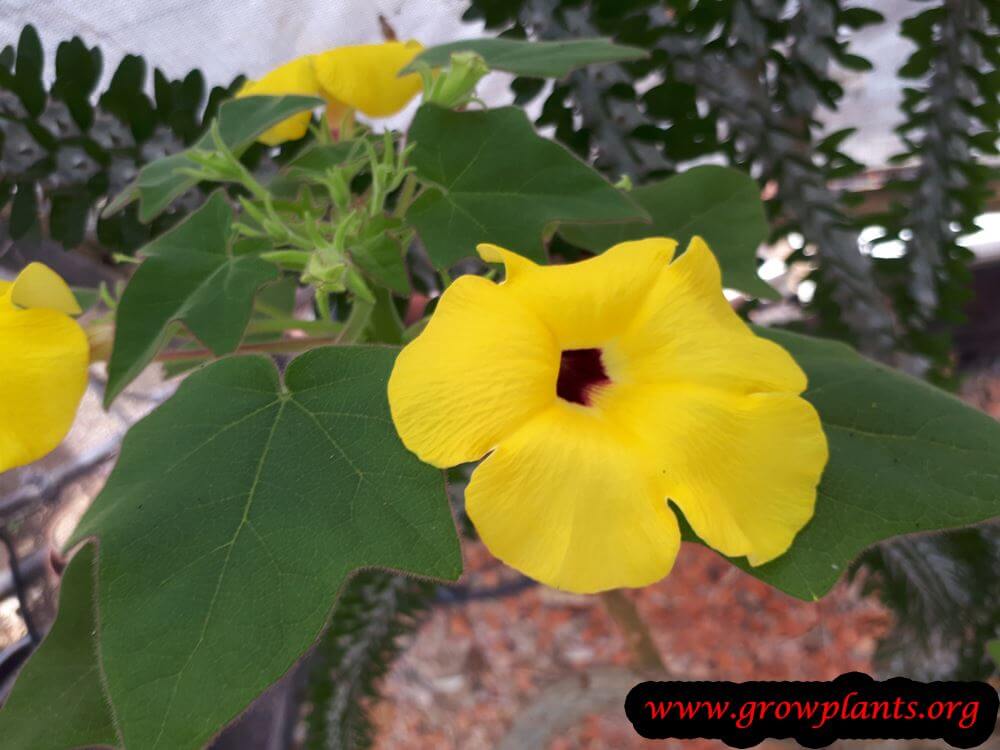
- Flower Characteristics: Round yellow flowers with five petals (full detail in the Bloom accordion).
Primary Uses & Landscape Value
- Functional & Ornamental Roles: Ornamental drought-tolerant specimen, caudex/succulent collector plant and bonsai subject for containers.
Care Guide: Planting, Soil & Watering
Overview: Uncarina decaryi is a drought-tolerant caudiciform succulent that grows in full sun and fast-draining, gritty soil. It stores water in a swollen base, so it needs a lean, mineral mix and only occasional watering.
Quick Care Requirements
| Requirement | Ideal Condition |
|---|---|
| Planting Season | Spring through autumn (the warm season) |
| Growth Rate | Slow to Moderate |
| Soil Type | Gritty, sandy, fast-draining |
| Water Need | Low to Moderate; let the soil dry out fully between waterings |
Planting & Establishment
- Best Planting Season: Plant during the warm season, from spring through autumn, when it is in active growth.
- How to Plant:
- Hole Preparation: Dig a hole just large enough for the roots and swollen base.
- Soil Amendments: Mix in coarse sand, grit or pumice for the sharp drainage this succulent needs.
- Planting Depth: Keep the caudex base at or just above soil level so it never sits wet and rots.
- Growth Speed & Expectations: A slow-to-moderate grower forming a shrub or small tree of 1-4 m (3-12 ft); it also takes well to training as a bonsai.
Soil, Watering & Drainage Care
- Soil Mix & Drainage Needs: Use a sharply draining mineral mix; in a container a pot with open drainage holes is essential so water passes straight through.
- Watering Schedule & Technique:
- Young / Newly Planted: Water sparingly while it establishes.
- Established: Water only once the soil has dried; it is drought-tolerant and rots in wet soil.
- Seasonal Adjustments: Keep nearly dry through cool-weather dormancy.
Climate, Light & Hardiness
Uncarina decaryi is a drought-tolerant succulent shrub or small tree suited to mediterranean, desert, subtropical, and tropical climates, hardy in USDA zone 10 and warmer. It grows best in full sun to half shade on well-drained soil with modest water needs.
Quick Climate Specifications
| Climate Zones | Mediterranean, desert, subtropical, tropical |
|---|---|
| USDA Hardiness Zones | 10+ |
| Frost Tolerance | Low |
| Light Conditions | Full sun to half shade |
Sunlight & Light Exposure
Optimal Light Setup
Full sun to half shade.
Direct Sun Requirement
Tolerates strong direct sun.
Best Exposure / Orientation
An open, sunny to lightly shaded, well-drained site; also suited to bonsai culture in bright light.
Temperature Extremes & Hardiness
USDA Hardiness & Regional Limits
Hardy only in zone 10 and warmer; frost-free conditions are needed for reliable outdoor growth.
Cold Damage & Winter Protection
Frost is likely to damage or kill the plant, particularly around the caudex and root area; in marginal zones, grow in a container that can be moved indoors for winter.
Frost Sensitivity
Low tolerance.
Extreme Heat Tolerance
Well suited to the heat of desert and tropical climates given its drought tolerance.
Wind, Humidity & Microclimate
Dry-Air Tolerance
High, consistent with its drought tolerance.
Rainfall & Seasonal Moisture
Adapted to a small to average amount of water; avoid overwatering or poorly drained, wet soils, especially around the swollen caudex typical of this genus.
Microclimate Recommendations
A warm, sunny, well-drained site; container culture allows the plant to be sheltered during cold snaps in marginal climates.
Growing in Pots, Balconies & Indoors
Uncarina decaryi is a caudex-forming Madagascar shrub with cheerful yellow flowers. The grower does not class it as a houseplant, but this tender succulent is a rewarding pot plant on a very sunny windowsill or in a bright sunroom, summered outdoors.
Quick Details
- Container Size: A snug pot with excellent drainage – it likes being fairly tight
- Indoor Suitability: Not a low-light houseplant, but thrives on a hot, sunny windowsill or in a bright conservatory
- Best Spot: The brightest, sunniest window; full sun outdoors in the warm season
- Soil & Drainage: Aerated, organic-rich mix (peat or coir with perlite or vermiculite); must drain freely
- Watering in Pots: Water sparingly, letting the mix dry well between drinks; keep nearly dry when dormant
Indoors & On the Windowsill
- On a bright windowsill: Give it your sunniest window – as a caudex succulent it needs maximum direct light or it stretches.
- Overwintering: Frost-tender, so bring it in before the cold; keep it warm and nearly dry during its leafless rest, then water again as growth resumes.
On a Balcony or Patio
- Light & heat: Full sun through the warm months suits it perfectly; it enjoys reflected wall heat and wants little water.
- Practicalities: Keep it in a gritty, fast-draining pot and move it under cover before the first cold nights.
Choosing the Pot, Soil & Long-Term Care
- Pot & drainage: A snug pot with strong drainage holes and no standing water; the caudex rots in soggy mix.
- Potting mix: A very gritty cactus/succulent mix with extra perlite, pumice, or grit. A ready-made cactus and succulent soil mix provides that structure without mixing it yourself.
- Feeding: Light feeding only in active growth; none when dormant.
- Repotting: Pot on only every few years; it is happiest slightly pot-bound.
Fertilizing & Feeding
A slow-to-medium growing, drought-tolerant caudex-forming succulent shrub or small tree, often trained as bonsai, that does best on light, infrequent feeding tied to its active growth.
Quick Fertilizing Specs
| Feeding Level | Light feeder |
|---|---|
| Main Nutrient Priority | A light, low-nitrogen feed that supports steady, compact growth rather than soft stretch |
| Best Feeding Period | During the warm, actively growing part of the year |
| Organic Options | A gritty, fast-draining succulent or bonsai mix rather than rich garden soil |
| Reduce/Stop Feeding | Withhold feeding once growth slows going into the plant’s less active period |
| Soil pH | Adaptable provided drainage is sharp; excess moisture is a bigger risk than pH for this drought-tolerant species |
Feeding by Growth Stage
Active growth
Support the lobed, heart-shaped leaves and yellow flowers during the active growing period without forcing lush, soft growth.
| Nutrient direction | A light, diluted low-nitrogen feed is enough to keep growth and flowering healthy without stretching the plant out of character. |
|---|---|
| Timing | Through the warm, actively growing season. |
| Frequency | Light, occasional feeding during clear active growth is sufficient for this slow to medium grower. |
| Fertilizer types | A diluted, low-nitrogen succulent or bonsai fertilizer applied sparingly, A gritty, fast-draining potting mix suited to caudex-forming succulents |
| Precautions | Avoid rich or frequent feeding, which can push soft growth that is out of proportion on a bonsai-trained or slow-growing specimen. |
Dormant or slow-growth rest
Let the plant rest through its slower period without encouraging tender new growth.
| Nutrient direction | None – withhold fertilizer while growth is slow or dormant. |
|---|---|
| Timing | During the cooler or drier part of the year. |
| Frequency | No feeding at this stage. |
| Fertilizer types | No feeding at this stage; do not fertilize until active growth resumes. |
| Precautions | Feeding while growth is slow or dormant risks weak growth and root stress in a fast-draining mix watered less at this time. |
Nutrient Deficiency Signs & Corrections
Dull or pale leaf color and unusually slow growth even for this naturally slow to medium grower.
| Possible causes | a very lean, long-unfed growing mix, root restriction in a container that has not been refreshed, underwatering limiting nutrient uptake during active growth |
|---|---|
| Appears first on | overall leaf color rather than a single leaf |
| What to check | time since the mix was last refreshed or the plant last fed, root crowding in the container, recent watering consistency |
| Possible correction | Apply a light, diluted feed during clear active growth rather than a strong dose. |
Soft or discolored tissue at the caudex or lower stem and wilting leaves despite adequate light.
| Possible causes | overly rich or frequent feeding encouraging soft tissue, a poorly drained mix holding excess moisture, overwatering compounded by fertilizer salts |
|---|---|
| Appears first on | the caudex or lower stem, then the leaves |
| What to check | drainage of the growing mix, recent feeding and watering frequency, firmness of the caudex when gently checked |
| Possible correction | Stop feeding, improve drainage, and let the mix dry appropriately before resuming any light feeding. |
New leaves emerging pale or yellowish while veins stay comparatively greener.
| Possible causes | high soil or water pH limiting iron availability, waterlogged roots restricting nutrient uptake, a very lean growing mix low in iron |
|---|---|
| Appears first on | newest leaves at the growing tips |
| What to check | soil or irrigation water pH, drainage and root condition, whether older leaves remain a normal color |
| Possible correction | Correct drainage first and apply a chelated iron product per its label only if the pattern persists. |
Pruning, Training & Seasonal Maintenance
Uncarina decaryi is a soft-stemmed, semi-succulent Madagascan shrub with deeply lobed, heart-shaped leaves, usually grown in a pot and often shaped as a bonsai-style specimen around its swollen basal caudex. It takes moderate shaping pruning well, but because its stems are succulent and sap-filled while actively growing, cuts made during the autumn/winter rest period heal far more cleanly than cuts made in full leaf. As it isn’t grafted, there is no rootstock-sucker concern – pruning here is entirely about canopy form and size, not flower production.
Quick Pruning & Maintenance Specs
| Pruning Tolerance | Moderate – shapes well, but succulent wounds need care |
| Primary Pruning Window | Autumn/Winter, during its natural rest period |
| Secondary Maintenance Window | Light removal of dead tips at any time |
| Typical Frequency | One structural session yearly, plus light touch-ups |
| Main Objective | Compact, well-branched bonsai-style or shrub form |
| Young Plant Priority | Build low branching; begin framework selection if trained as bonsai |
| Mature Plant Priority | Maintain size/shape; remove crowded or crossing stems |
| Best Tool Type | Bypass secateurs / precision snips |
| Avoid Heavy Pruning During | Active leafing/growth flush and humid or wet weather |
Pruning by Plant Age & Size
Newly Established
Limit to removing damaged growth; hold off on shaping cuts until the plant has completed at least one full growth cycle after establishment.
Young / Formative
No leader-type framework applies. Left informal, pinch tips to build a bushy multi-stem shape; if trained as bonsai, use dormant-season sessions to select the permanent branch framework around the caudex.
Mature / Established
Maintain the established form: remove crowded, crossing or overlong stems, and keep the leafy canopy in proportion to the caudex base.
Structural Pruning & Training
- Branch selection: keep well-spaced branches off the caudex; remove weak or crossing growth back to its point of origin.
- Canopy density: thinning a crowded centre improves airflow around the soft stems and lowers rot risk in humid spells.
- Height & spread: managed through pruning rather than pot restriction alone, since the species can range 1–4m if left unchecked.
Special Growth to Remove
- Dead or cold-damaged stem tips, cut back to firm green tissue once the rest period ends.
- Weak, spindly interior shoots that add clutter without contributing to the framework.
Container & Small-Space Pruning
Grown almost exclusively in containers or as bonsai. Avoid combining a hard top cutback with root work in the same session, since the succulent stems and caudex handle combined stress poorly. Allow large cuts to dry and callus before resuming full watering.
Tools
- Bypass secateurs – most shaping and stem-thinning cuts.
- Precision snips – fine tip and bonsai-style detail work.
No saw, loppers or hedge shears are appropriate – this stays a selectively shaped specimen, never a clipped hedge form.
Tool Hygiene & Disease Risk
Increased – larger cuts into sap-bearing succulent tissue are more vulnerable to fungal or bacterial entry than a dry woody cut, particularly in humid weather. Use clean, sharp blades and avoid cutting wet foliage.
Cut Placement & Technique
Cut just above a node or branch junction – avoid both flush cuts and long stubs. A slight downward angle helps water shed off the cut surface rather than pooling on the succulent stem.
Heavy Pruning & Rejuvenation
Moderate rejuvenation is workable on established plants: a hard dormant-season cutback can reset an overgrown or leggy specimen and is a normal part of bonsai-style upkeep. Don’t pair it with root pruning in the same session, and expect a slower recovery than a fully woody shrub.
Post-Pruning Care
Ease off watering right after a hard cut until the wound calluses, then return to normal watering as regrowth appears. Skip fertiliser immediately after pruning, and watch fresh soft growth for aphids.
Common Pruning Mistakes
- Cutting while the plant is actively growing, causing heavy sap loss and slow-healing wounds.
- Pruning during humid or wet weather, inviting rot into fresh succulent cuts.
- Doing a hard top cutback and root pruning at the same time.
When Not to Prune
Avoid pruning during the active leafing/growth flush, in humid or rainy weather, and right after transplanting or repotting.
Recommended Tools (by task)
- Shaping and stem-thinning cuts – bypass_secateurs: clean cuts on semi-succulent stems without crushing them.
- Fine bonsai-style detail work – precision_snips: precise control on small, soft-growth cuts.
- Larger structural cuts near the caudex – blade_disinfectant: lowers rot/disease entry into succulent wound tissue between cuts.
Propagation Guide
Uncarina decaryi is best grown from fresh seed, which lets the swollen caudex (thickened base) valued in bonsai and succulent collections develop naturally; stem cuttings root reasonably well but usually produce a plant with little or no caudex. Difficulty is moderate – fresh seed germinates fairly well, but developing a good caudex takes patience over several seasons.
Quick Propagation Specs
| Best Propagation Method | Seed (for caudex/bonsai development) |
| Alternative Methods | Semi-hardwood stem cuttings (root readily but rarely form a pronounced caudex) |
| Propagation Difficulty | Moderate |
| Seed True-to-Type | Usually true-to-type |
| Vegetative True-to-Type | True-to-type |
| Best Propagation Season | Warm months, within the plant’s Spring/Summer/Autumn planting window |
| Seed Germination Time | Generally a few weeks when seed is fresh; older seed may be slower or less reliable |
| Cutting Rooting Time | Typically several weeks under warm, humid conditions |
| Germination Temperature | Warm, roughly 24–30°C (75–86°F) |
| Seed Sowing Depth | Shallow – just covered |
Growing from Seed
Seed Handling & Viability
Freshness is the key factor – viability declines fairly quickly in storage, so sow as soon as practical after collection.
Sowing Season
Sow during the warm season, within the plant’s Spring/Summer/Autumn planting window.
Sowing Depth & Orientation
Cover lightly with a shallow layer of well-drained, gritty mix.
Germination Conditions
Warm temperatures, bright light, and a well-drained substrate (matching the plant’s well-drained soil preference) with moderate humidity give the most consistent results.
Germination Time
Usually a few weeks with fresh seed under warm conditions; slower and less even with older seed.
Seedling Care
Water sparingly between drying out once seedlings are established, in line with this drought-tolerant succulent’s general preference for small to average amounts of water.
Stem Cuttings
Cutting Type
Semi-hardwood stem cuttings.
Best Timing
Warm season, during active growth.
Cutting Preparation
Let the cut end callus for a day or two before inserting, as is typical for succulent-stemmed plants, to reduce rot risk.
Rooting Setup
A gritty, fast-draining mix kept only lightly moist, in bright light.
Rooting Hormone
Optional – may help but is not essential.
Rooting Time
Typically several weeks under warm, humid conditions.
Bloom & Flower Guide
Quick Details
- Bloom Season: Summer into autumn
- Time to First Bloom: Flowers in the warm growing season once the plant is well established
- Flower Appearance: Bright yellow, flat-faced trumpet flowers with five petals and a dark throat
- Edibility: Grown as an ornamental — the flowers are not eaten
Detailed Blooming Overview
Uncarina decaryi is a Madagascan caudex shrub grown for its bold form and its cheerful flowers. Through the warm months it opens bright yellow, flat-faced trumpet blooms with a striking dark maroon-purple throat, set off against the plant’s sculptural stems.
Flower Characteristics
- Five rounded petals forming a flat, open face over a funnel base.
- Vivid yellow with a contrasting dark central eye.
- Produced through the active growing season.
Bloom Care & Thinning
- Site for best flowering: Full sun and strong heat; a dry winter rest followed by moderate watering in growth encourages flowering.
- Managing the bloom: Little care is needed beyond good light and warmth.
- Pollination: Worked by insects.
Pests, Diseases & Troubleshooting
Overview: Uncarina are caudiciform, drought-adapted shrubs from Madagascar (Pedaliaceae) grown for their swollen stem base and yellow flowers. Like most caudex succulents their overwhelming risk is rot from overwatering, especially during their leafless dormancy; the pests that trouble them are the classic warm, dry-air sap-suckers – spider mites, mealybugs, scale and aphids – mainly on soft new growth indoors. Lean watering and a warm, bright position keep them healthy.
Quick Troubleshooting Overview
| Issue / Pest | Main Symptom | Primary Solution |
|---|---|---|
| Caudex / root rot | Soft, discoloured caudex; collapse | Very sharp drainage, dry dormancy, lean watering |
| Spider mites | Fine stippling and webbing on new leaves | Raise airflow, rinse, horticultural oil |
| Mealybugs | White cottony tufts in leaf axils | Alcohol dab, insecticidal soap, systemic if severe |
| Scale | Brown bumps on stems and leaves | Scrub off, horticultural oil |
| Leaf drop | Sudden leaf loss | Normal dormancy or check watering/cold |
Common Pests & Management
- Spider mites (Tetranychus urticae):
- Symptoms: Fine pale stippling and delicate webbing on the soft new leaves in hot, dry indoor air, with dull, bronzing foliage; the most common pest on Uncarina under glass.
- Prevention & Control: Raise humidity and airflow, rinse or wipe leaf undersides, and treat active mites with horticultural oil or insecticidal soap; avoid the hot, stagnant, dusty conditions that favour them.
- Mealybugs (Pseudococcidae):
- Symptoms: White cottony masses tucked into leaf axils, growing tips and around the caudex, with sticky honeydew and stunted, distorted growth.
- Prevention & Control: Dab colonies with alcohol, spray insecticidal soap or neem, and repeat to catch crawlers; for stubborn infestations a soil-applied systemic may be justified on a valued specimen. Inspect the caudex crevices where they hide.
- Scale insects (Coccidae / Diaspididae):
- Symptoms: Brown or tan limpet-like bumps on stems and leaf undersides, with honeydew and yellowing where numbers build.
- Prevention & Control: Scrub or scrape off with a soft brush, smother with horticultural oil, and repeat for crawlers; encourage natural predators outdoors.
- Aphids (Aphidoidea):
- Symptoms: Green aphids clustered on soft new shoots and flower buds, with honeydew and distortion, mainly on fresh growth in spring.
- Prevention & Control: Rinse off with water, use insecticidal soap or neem for persistent colonies, and encourage lady beetles and lacewings outdoors.
Diseases & Fungal Issues
- Caudex and root rot (Pythium / Phytophthora / Fusarium spp.):
- Symptoms: Soft, discoloured, sometimes foul-smelling tissue at the caudex or root, blackening and collapse; by far the leading cause of death, driven by overwatering and cold, wet soil, especially during dormancy.
- Treatment & Management: Prevention is everything: grow in very free-draining, mineral gritty mix, water sparingly only in active growth and keep nearly dry when leafless, and use a snug pot. If rot appears, cut back to firm clean tissue, dust with sulphur or fungicide, and allow to callus before careful re-rooting.
- Fungal leaf spot (Cercospora / Alternaria spp.):
- Symptoms: Brown spots on leaves in humid, poorly ventilated, overwatered conditions, usually minor.
- Treatment & Management: Improve airflow, avoid wetting foliage, remove affected leaves, and reduce watering; fungicide is rarely needed.
- Sooty mould (Capnodium spp.):
- Symptoms: Black sooty film on leaves growing on the honeydew left by mealybugs, scale or aphids, blocking light.
- Treatment & Management: Control the underlying sap-sucking pest, then wipe the mould from the leaves; it clears once the honeydew stops.
Growing Difficulties & Abiotic Problems
- Overwatering and cold rot:
- Cause & Symptoms: As a caudiciform succulent, Uncarina rots fast in wet or cold soil; overwatering, especially in cool dormancy, softens the caudex and kills the plant.
- Correction Strategy: Use a gritty, sharply drained mix, water only when the mix is dry during active growth, keep almost dry while leafless, and maintain warmth above about 10-12C.
- Dormancy leaf drop:
- Cause & Symptoms: Uncarina are drought-deciduous and naturally drop their leaves in the cool, dry season or under stress, which can alarm growers into overwatering.
- Correction Strategy: Recognise leaf drop as normal dormancy – reduce watering further and keep warm and bright; growth and leaves return when watering resumes in the warm season.
What Helps – Products & Tools
For Uncarina the priorities are a gritty free-draining mix and restraint with the watering can. Keep horticultural oil for spider mites and scale, insecticidal soap or neem for mealybugs and aphids, and a soil systemic in reserve for stubborn mealybugs on prized plants. Sulphur or a fungicide dust helps when cutting out any rot.