
Plant Profile & Key Characteristics
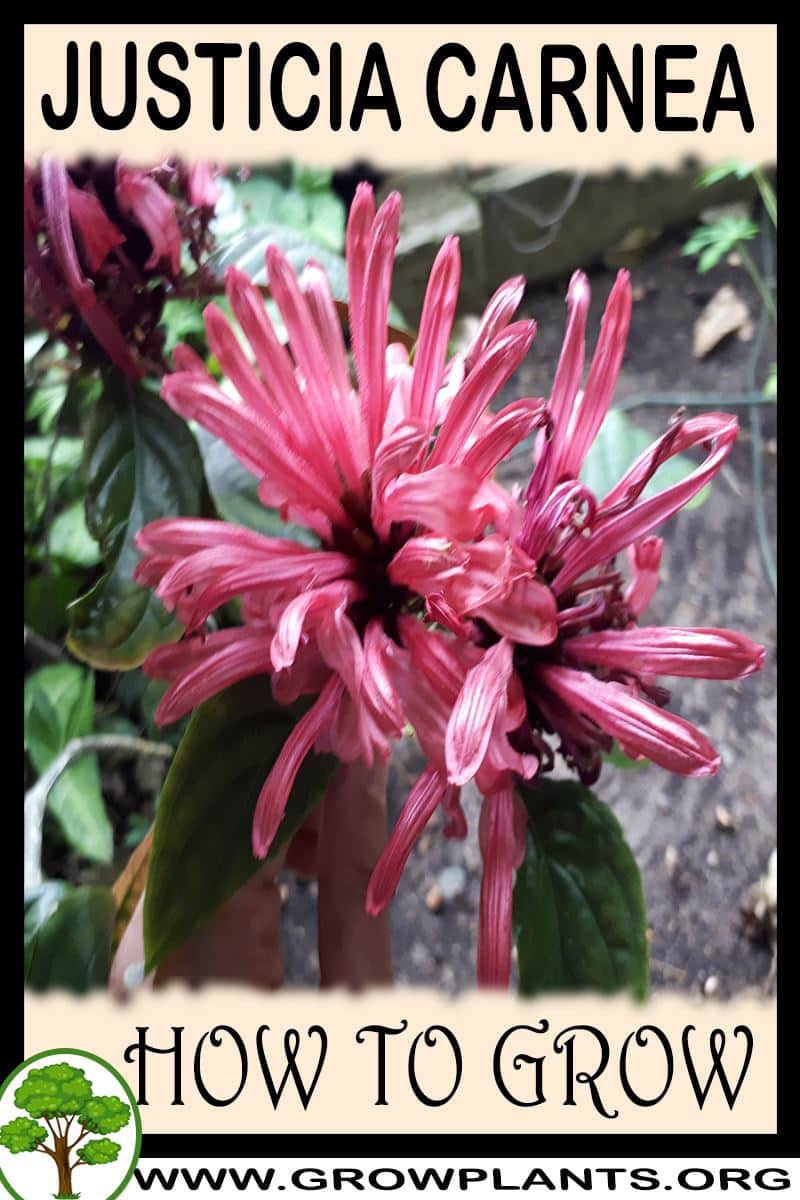
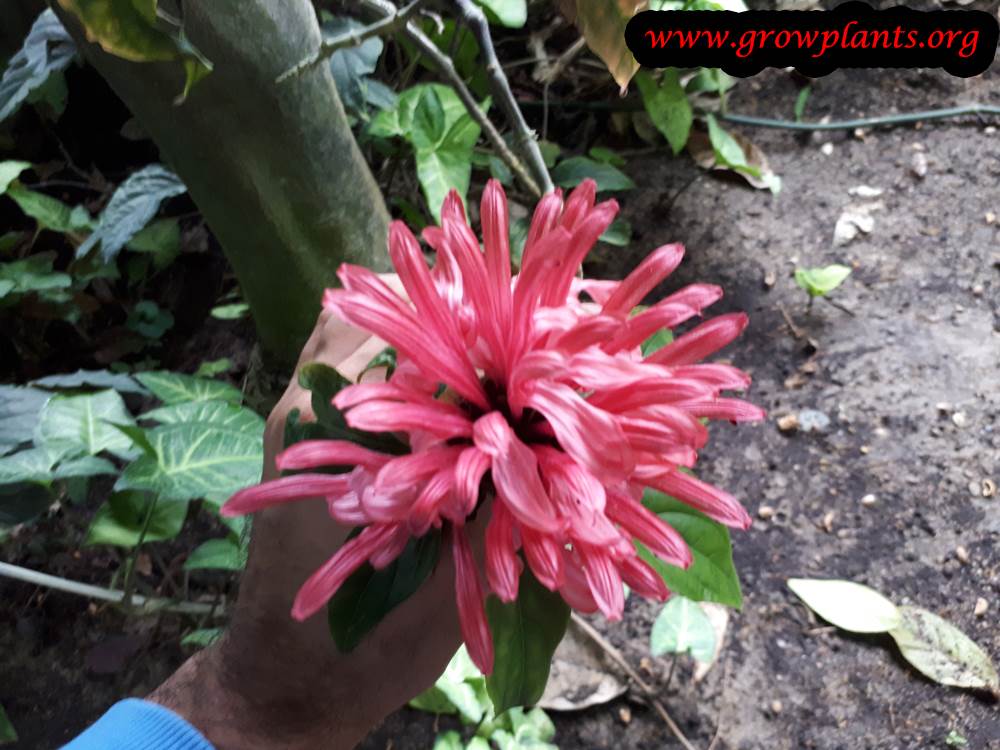
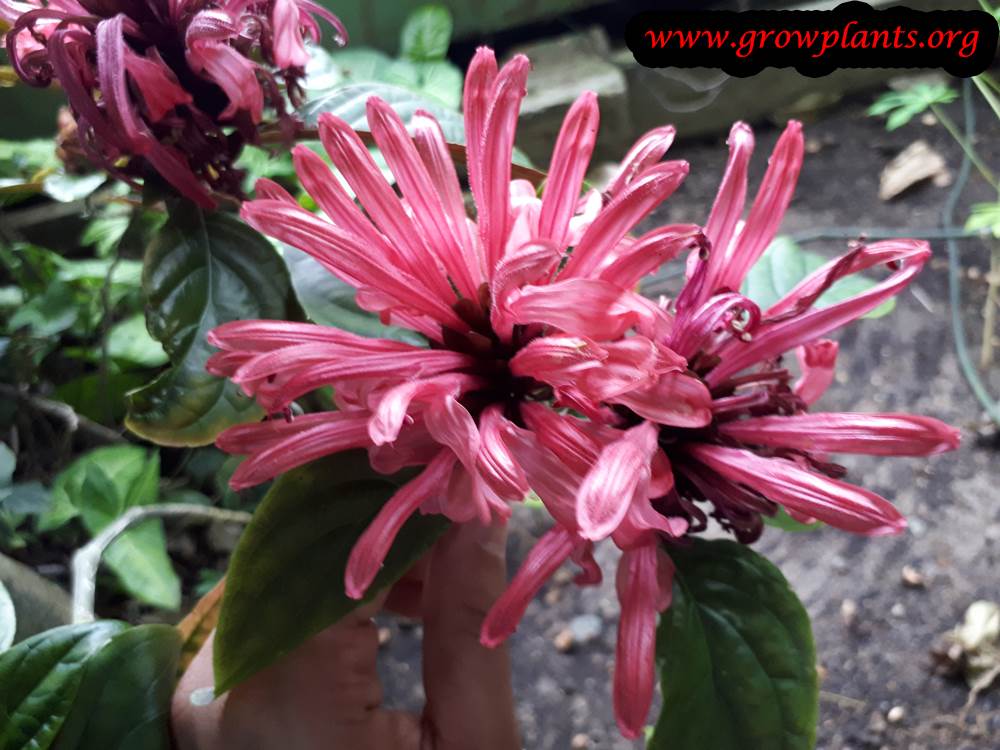
Overview: Justicia carnea (Brazilian plume flower) is an evergreen shrub 50–100 cm (20–40 in) tall, grown for its showy plume-like clusters of pink, red or white tubular flowers. It is a popular ornamental and houseplant that attracts pollinators.
Quick Specifications
| Specification | Attribute |
|---|---|
| Plant Type / Life Cycle | Perennial |
| Foliage Type | Evergreen |
| Mature Size | 50–100 cm tall (20–40 in) |
| Growth Rate | Moderate to fast |
| Toxicity | Non-toxic |
| Hardiness | USDA zones 8–11 |
Growth Form & Structure
- Height & Spread: A soft-wooded shrub 50–100 cm (20–40 in) tall; grows well in containers and indoors.
- Growth Habit & Form: Bushy, upright evergreen shrub.
- Lifespan & Maturity: Moderate-to-fast-growing tender perennial that blooms spring through autumn.
Anatomy & Physical Features
- Leaves & Foliage: Large, green, elliptic, deeply veined leaves, sometimes slightly twisted.
- Flower Characteristics: Red, white or pink tubular flowers borne in dense, plume- or hive-shaped bracted clusters.
Primary Uses & Landscape Value
- Functional & Ornamental Roles: Ornamental flowering shrub, shade-tolerant border plant, container and houseplant; attracts hummingbirds and other pollinators.
Care Guide: Planting, Soil & Watering
Overview: Brazilian plume flower is an evergreen shrub for subtropical to temperate climates (roughly zones 8 to 11) that grows in full sun to shade, preferring some shade where summers are very hot. It thrives in moist, rich, well-drained soil and appreciates moderate to generous, consistent watering.
Quick Care Requirements
| Requirement | Ideal Condition |
|---|---|
| Planting Season | In spring, summer or autumn during the warm season |
| Growth Rate | Moderate to fast |
| Soil Type | Moist, rich, well-draining soil |
| Water Need | Moderate to high – keep the soil consistently moist but not waterlogged |
Planting & Establishment
- Best Planting Season: Plant through the warm season, from spring to autumn, so it settles in before cold weather.
- How to Plant:
- Hole Preparation: Dig a hole about twice the width of the root ball and the same depth, loosening the surrounding soil.
- Soil Amendments: Work plenty of compost or organic matter into the backfill to hold moisture while still draining freely.
- Planting Depth: Set the top of the root ball level with the surrounding soil, keeping the stem base at grade.
- Growth Speed & Expectations: Moderate to fast, quickly making a lush, leafy shrub topped with plume-like flower clusters.
Soil, Watering & Drainage Care
- Soil Mix & Drainage Needs: It likes a rich, moisture-retentive yet well-drained soil; good drainage still matters to prevent root rot. In pots use a quality potting mix and water often enough to keep it from drying out.
- Watering Schedule & Technique:
- Young / Newly Planted: Keep newly planted specimens evenly moist, watering whenever the surface starts to dry.
- Established: Water regularly and deeply; this plant prefers not to dry out, so do not let it wilt between waterings.
- Seasonal Adjustments: Water more freely in summer heat, and reduce somewhat in the cooler months as growth slows.
Climate, Light & Hardiness
Justicia carnea (Brazilian plume flower) is suited to subtropical, mediterranean, and temperate climates, hardy in USDA zones 8–11. It grows in full sun to full shade, though full sun is only recommended where summers aren't very hot.
Quick Climate Specifications
| Climate Zones | Subtropical, mediterranean, temperate |
|---|---|
| USDA Hardiness Zones | 8–11 |
| Frost Tolerance | Low to Moderate |
| Light Conditions | Full sun (except in very hot summers) to full shade |
Sunlight & Light Exposure
Optimal Light Setup
Full sun in milder climates; half shade to full shade in hot-summer areas.
Direct Sun Requirement
Suitable only where summers aren't very hot; otherwise, direct sun can stress the plant.
Shade & Heat Management
Half to full shade protects the plant during intense heat.
Best Exposure / Orientation
Morning sun with afternoon shade in hot climates; more open sun where summers stay milder.
Temperature Extremes & Hardiness
USDA Hardiness & Regional Limits
Hardy in zones 8–11; at the cooler end of this range it may die back and resprout from the roots, typical of borderline-hardy subtropical shrubs.
Cold Damage & Winter Protection
Frost damages top growth; mulching the root zone in zone 8–9 helps protect the plant through winter.
Frost Sensitivity
Low to moderate.
Extreme Heat Tolerance
Sensitive to very hot summer sun; provide shade and consistent moisture in hot climates.
Wind, Humidity & Microclimate
Rainfall & Seasonal Moisture
Grown with an average to large amount of water in moist, rich, well-drained soil; not drought tolerant.
Microclimate Recommendations
Part shade with consistent moisture in hot climates; a warm, sheltered spot at the cooler edge of its hardiness range.
Growing in Pots, Balconies & Indoors
Justicia carnea (Brazilian plume flower) is a soft-stemmed tropical shrub the grower grows indoors. It tolerates shade, flowers in warmth and stays a manageable size, making it a fine houseplant and container plant; a pot also lets you overwinter it in cold climates.
Quick Details
- Container Size: Medium – a pot that suits a 50-100 cm (20-40 in) bushy shrub, kept in shape by pruning.
- Indoor Suitability: Yes – a good flowering houseplant.
- Best Spot: Full sun where summers are mild, otherwise part to full shade with bright light.
- Soil & Drainage: Rich, free-draining mix.
- Watering in Pots: Even, moderate to generous moisture – do not let it dry out.
Indoors & On the Windowsill
- Houseplant: Yes – the grower grows it inside; it is happy in bright, indirect light and tolerates shade better than many flowering plants.
- Light: Avoid fierce direct sun through glass in hot climates; bright filtered light keeps the foliage lush and the plumes coming.
- Overwintering: Tender to cold – a pot lets you bring it indoors for the cold season in frost-prone areas.
On a Balcony or Patio
- Shade and shelter: Give it a part-shaded, sheltered patio spot; in hot regions keep it out of scorching afternoon sun.
- Watering: Keep pots evenly moist – the soft foliage wilts quickly if it dries; a drip irrigation kit with a timer makes that easier to keep consistent.
Choosing the Pot, Soil & Long-Term Care
- Pot & drainage: Choose a pot with strong drainage holes and skip a standing-water saucer, which invites root rot; terracotta breathes and dries quickly, while glazed or plastic hold moisture longer.
- Potting mix: Fill with a well-aerated, organic-rich medium – a good potting mix, or peat/coir blended with perlite or vermiculite for drainage.
- Feeding: Container plants run through nutrients fast because watering washes them out, so feed a little more often through the growing season than you would in open ground.
- Repotting: Refresh the mix or pot up every couple of years, pruning the top and roots lightly to keep it bushy.
Fertilizing & Feeding
A moderate feeder: this shrub is grown chiefly for its showy tubular flower clusters, and steady balanced nutrition in moist, rich soil keeps both foliage and bloom production strong through the growing season.
Quick Fertilizing Specs
| Feeding Level | Moderate feeder |
|---|---|
| Main Nutrient Priority | Balanced feeding with adequate nitrogen to support lush foliage and flower bracts |
| Best Feeding Period | Spring through summer and into autumn while in active growth |
| Organic Options | Rich, moist, well-drained soil amended with compost or other organic matter |
| Reduce/Stop Feeding | Reduce and then withhold feeding as growth slows going into winter |
| Micronutrients | Usually met by a complete fertilizer in rich soil; correct only diagnosed issues |
| Soil pH | Prefers rich, moist soil; performs best in a slightly acidic to near-neutral range |
Feeding by Growth Stage
Spring growth flush
Build the soft, leafy growth that will carry this season’s flower bracts.
| Nutrient direction | A balanced, complete fertilizer with adequate nitrogen supports the lush foliage this shrub is known for. |
|---|---|
| Timing | As new growth resumes in spring. |
| Frequency | Regular light-to-moderate feedings suit this soft-wooded, fairly hungry shrub. |
| Fertilizer types | A balanced complete fertilizer for flowering shrubs, Compost or other organic matter worked into rich, moist soil |
| Precautions | Keep soil consistently moist when feeding; this species does not tolerate drying out, and stressed roots take up nutrients poorly. |
Plume flower bloom season
Sustain the red, white, or pink tubular flowers held on hive-shaped bracts through the main bloom period.
| Nutrient direction | Continue balanced feeding rather than switching to a high-phosphorus product; overall nutrition drives bloom. |
|---|---|
| Timing | Through spring, summer, and into autumn while flowering continues. |
| Frequency | Maintain a steady, moderate feeding rhythm through the bloom season. |
| Fertilizer types | A balanced complete fertilizer, A diluted liquid feed for container-grown plants |
| Precautions | Avoid letting soil dry between feedings; if grown as a houseplant, reduce feeding when light levels indoors are low. |
Winter rest
Let growth and flowering pause naturally through the coolest part of the year.
| Nutrient direction | None – withhold fertilizer while the plant is not actively growing. |
|---|---|
| Timing | During winter, particularly toward the cooler edge of its hardiness range. |
| Frequency | No feeding at this stage. |
| Fertilizer types | No feeding at this stage; do not fertilize until active growth resumes in spring. |
| Precautions | Do not fertilize during winter rest; feeding now can push tender growth that is easily damaged by cool temperatures. |
Nutrient Deficiency Signs & Corrections
Overall pale, thin-looking foliage and fewer new flowering shoots.
| Possible causes | low soil nitrogen, soil that has dried out and stalled root uptake, leaching from frequent watering in rich, moist soil |
|---|---|
| Appears first on | older, lower leaves and overall foliage color |
| What to check | recent feeding history, soil moisture consistency, soil organic matter |
| Possible correction | Apply a balanced complete fertilizer with nitrogen and maintain even soil moisture. |
Interveinal yellowing appears on older leaves while the veins stay green.
| Possible causes | low soil magnesium, heavy potassium feeding competing with magnesium uptake, leaching in light, fast-draining soil |
|---|---|
| Appears first on | older, lower leaves |
| What to check | soil magnesium status, recent feeding balance, soil texture and drainage |
| Possible correction | Apply a labeled magnesium source such as Epsom salt or a dolomitic amendment and rebalance feeding. |
Wilting or yellowing despite consistently moist soil, sometimes with darkened stem bases.
| Possible causes | waterlogged, poorly drained soil, root rot pathogens favored by excess moisture, container without adequate drainage |
|---|---|
| Appears first on | lower leaves and stem bases |
| What to check | soil drainage, container drainage holes, how long soil stays saturated after watering |
| Possible correction | Improve drainage, let soil dry slightly between waterings, and avoid feeding until the plant recovers active growth. |
Pruning, Training & Seasonal Maintenance
Justicia carnea is a soft-wooded, fast-growing subshrub that tolerates frequent light pruning and becomes leggy and top-heavy without it. Light shaping and pinching can happen through the year as the source notes, but the most effective renewal cut is late winter to early spring, just before the main growth flush, so the resulting new growth has a full season to produce flowering spikes. Because flowers form on new growth, cutting back never sacrifices next year’s bloom the way pruning a spur- or old-wood-bearing plant would.
Quick Pruning & Maintenance Specs
| Pruning Tolerance | High |
| Primary Pruning Window | Late Winter to Early Spring (renewal cutback before the main flush) |
| Secondary Maintenance Window | Light pinching and shaping through spring-summer-autumn growth and bloom |
| Typical Frequency | Pinch every few weeks while actively growing; one harder cutback per year |
| Main Objective | Control legginess and multiply flowering shoots |
| Young Plant Priority | Repeated tip pinching to build a bushy, multi-branched framework |
| Mature Plant Priority | Annual cutback of the oldest, leggiest stems by up to half |
| Best Tool Type | Precision snips or bypass secateurs (soft stems) |
| Avoid Heavy Pruning During | Active flowering flush |
Pruning by Plant Age & Size
Newly Established
Pinch growing tips once rooted in to force low branching; avoid hard cuts until the plant is established.
Young / Formative
No woody structural training system is needed – repeated soft pinching builds a dense, multi-stemmed shape.
Mature / Established
An annual (or twice-yearly in near-tropical, frost-free zones) cutback of the oldest, leggiest stems by about half renews flowering wood and keeps the clump compact.
Seasonal Pruning Schedule
Pre-Growth / Early-Spring: renew the framework before the main flush by cutting the oldest or leggiest stems back by about half, without removing all stems at once on a young plant; the vigorous new shoots that follow will carry the season’s flower spikes.
Ongoing Sanitary (through bloom season): remove spent flower spikes and damaged leaves to keep the plant tidy and encourage continued branching and flowering.
Flowering & Fruiting Wood
Flowers appear in dense terminal spikes on current-season growth, so the plant reliably reflowers on whatever new growth follows a cut. Because next season’s flowers are not tied to retained old wood, this species can be pruned hard without giving up an upcoming bloom cycle.
Structural Pruning & Training
Favor an open, evenly-spaced multi-stem shrub; remove crossing or overly upright competing stems; control height and spread by heading back the tallest or leggiest canes; renew a portion of the old stems each cycle to keep flowering wood coming.
Special Growth to Remove
- Spent flower spikes – deadhead to encourage the next flush
- Leggy, thin, weakly-branched stems reaching for light
- Winter-damaged tips near the cold edge of its zone 8-11 range
Container & Small-Space Pruning
As an indoor or container plant it stays naturally more compact with more frequent light pinching than an in-ground planting needs. Watch for one-sided, leggy growth stretching toward a light source and pinch or rotate to correct; repot and lightly root-prune when rootbound rather than letting the top outgrow the pot.
Tools
Precision snips for pinching tips and deadheading; bypass secateurs for the annual thicker-stem renewal cutback.
Tool Hygiene & Disease Risk
Routine – clean, sharp tools; no significant transmissible disease risk is noted for routine cuts on this species.
Cut Placement & Technique
Pinch or cut just above a leaf node to direct the next flush of branching. When cutting stems back by half, angle the cut just above an outward-facing node so regrowth fills outward rather than into the plant’s center.
Heavy Pruning & Rejuvenation
Tolerates being cut back hard, by half or more, to rejuvenate an overgrown, leggy plant. Being fast-growing, it recovers within a season, though flowering is delayed while the new framework develops – best done in late winter or early spring so the full growing season is available to rebuild and bloom.
Post-Pruning Care
Water normally; skip extra feeding right after a hard cutback since the plant is already pushing vigorous regrowth. Watch the newly opened center for scorch if the site gets the very hot, direct summer sun this species dislikes.
Common Pruning Mistakes
- Letting the plant go untouched until it is bare-legged at the base with flowers held out of reach at the top
- Skipping deadheading, which slows the next flush
- Hard-cutting during the peak flowering display and losing the current bloom for the season
When NOT to Prune
Avoid a hard renewal cut in the middle of a flowering flush if the current display is wanted, and hold off on major pruning of container or indoor plants right after a stressful move or repot.
Recommended Tools (by task)
| precision_snips | Pinching soft new tips and deadheading spent flower spikes |
| bypass_secateurs | The annual renewal cutback on thicker older stems |
Propagation Guide
Justicia carnea is most easily started from stem cuttings, which root readily and quickly – often even set directly in a glass of water – making this the practical default over seed. The site notes vegetative propagation isn’t required to keep the plant true, and seed-grown plants are usually true-to-type as well. Overall difficulty is easy.
Quick Propagation Specs
| Best Propagation Method | Stem cuttings |
| Alternative Methods | Division of an established clump; seed |
| Propagation Difficulty | Easy |
| Seed True-to-Type | Usually true-to-type |
| Vegetative True-to-Type | Yes |
| Best Propagation Season | Spring to summer, during active growth |
| Seed Germination Time | Typically a few weeks |
| Cutting Rooting Time | Roots quickly, often within 2–4 weeks |
| Germination Temperature | 21–27°C (70–80°F) |
| Seed Sowing Depth | Shallow, lightly covered |
Growing from Seed
Sowing Season
Spring to summer, within the site’s spring/summer/autumn planting window.
Sowing Depth
Shallow, lightly covered.
Germination Conditions & Time
Warm and bright; germination usually takes a few weeks.
Stem Cuttings
Cutting Type
Tip or node cuttings, roughly 10–15cm (4–6in).
Best Timing
Spring to summer, matching this plant’s fast to medium growth rate, though indoor cuttings can be taken nearly any time.
Cutting Preparation
Trim to just below a node and remove the lower leaves, leaving a couple of nodes bare for rooting.
Rooting Setup
Roots readily either in water or in a moist, free-draining mix that echoes this plant’s preference for moist, rich, well-drained soil; high humidity speeds things along.
Rooting Hormone
Optional – not essential, since this species roots easily on its own.
Rooting Time
Often just 2–4 weeks.
Division, Offsets, Pups & Suckers
Older, multi-stemmed plants can be divided at the base when repotting. Keep several stems with roots attached per division, replant promptly, and keep consistently moist until re-established.
Bloom & Flower Guide
Quick Details
- Bloom Season: Spring through autumn
- Time to First Bloom: Flowers young and repeats through the warm months
- Flower Appearance: Feathery, cone-shaped plumes of tubular flowers in pink, red or white
- Edibility: Grown as an ornamental — the flowers are not eaten
Detailed Blooming Overview
Brazilian plume flower is grown for its showy, feathery flower heads: tubular blooms emerge in succession from a dense, hive-like cluster of bracts at each shoot tip. It thrives in warm shade and is a favourite of hummingbirds where they occur.
Flower Characteristics
- Slim, two-lipped tubular flowers in pink, red or white.
- Packed onto upright, cone- or plume-shaped heads of bracts.
- Held above bold, deeply veined foliage.
Bloom Care & Thinning
- Site for best flowering: Warmth, part shade and moist, rich soil suit it best.
- Managing the bloom: Pinch or cut back after each flush to keep the plant bushy and to bring on more plumes.
- Pollination: Worked by hummingbirds and long-tongued insects.
Fruit & Uses
Justicia carnea is grown mainly as an ornamental flowering shrub, but its leaves are also a traditional leafy vegetable in parts of West Africa, where they are known as Ewe eje (Yoruba) or Ogwu obara (Igbo). The leaves can be eaten raw as a garnish or cooked into soups, stews and porridges, and are also brewed as a tea.
Quick Edible Specs
| Edible Parts | Leaves |
|---|---|
| Main Use(s) | Culinary leafy green/garnish; also brewed as a tea; traditionally valued as a tonic green |
| Eaten Raw or Cooked | Both – eaten raw as a garnish or cooked into soups/porridge |
| Preparation Required | None for raw use beyond washing; cooking (boiling/simmering into soup or tea) is the more common preparation |
| Harvest Season | Leaves can be picked whenever the plant is actively growing (spring–autumn; year-round in frost-free/tropical climates) |
| Storage | Best used fresh, picked as needed; not typically dried or stored long-term |
| Safety/Toxicity Caveat | Not documented as toxic to humans, but eating a large amount of raw leaf, especially by young children, has been noted to cause mild stomach upset – use in normal culinary quantities |
Leaves & Greens
The elliptic green leaves are picked by hand while tender. They are washed and either used fresh – chopped and added raw to dishes such as yam porridge, often alongside other greens – or cooked into soups and stews together with other leafy vegetables. The leaves are also simmered in water alone to make a tea. Picking leaves regularly encourages fresh new growth, similar to other cut-and-come-again greens; avoid stripping a plant bare at once so it can recover.
Preparation, Uses & Safety
No special detoxifying preparation is required – the leaves are simply washed before eating raw or added directly to cooking. Use ordinary culinary portions rather than large raw quantities, particularly for young children, since some sources note mild digestive upset from eating a lot of raw leaf. Beyond its use as a food green, the plant has a long-standing traditional reputation as a tonic, but no medical claims are made here – treat that reputation as folklore, not guidance.
Pests, Diseases & Troubleshooting
Overview: Brazilian plume (jacobinia) is a soft-stemmed tropical grown for its showy bracts and flowers, and like most tender flowering shrubs it mainly attracts sap-sucking insects – aphids, whiteflies, spider mites, mealybugs and scale – with fungal leaf spot and root rot in humid or overwet conditions. Bright light, steady moisture, airflow and regular inspection keep it looking its best.
Quick Troubleshooting Overview
| Issue / Pest | Main Symptom | Primary Solution |
|---|---|---|
| Aphids | Sticky, distorted new shoots and bracts | Water jet; insecticidal soap |
| Whiteflies | Clouds of white flies, yellowing leaves | Yellow sticky traps; insecticidal soap |
| Spider mites | Stippled, dull leaves, webbing in dry heat | Raise humidity; hose foliage; miticidal oil |
| Mealybugs & scale | White fluff / brown bumps, sticky leaves | Wipe off / prune; horticultural or neem oil |
| Leaf spot | Brown spots, leaf drop in humid stagnant air | Airflow, base watering; copper if persistent |
| Leaf drop / legginess | Dropped lower leaves, bare stems | Even moisture, bright light, pinch to bush out |
Common Pests & Management
- Aphids (Aphis spp.):
- Symptoms: Soft green or black insects massed on tender shoots, flower stalks and bracts, with sticky honeydew, curled new leaves and following sooty mold.
- Prevention & Control: Dislodge with a water jet, pinch heavily infested tips, and encourage ladybirds; use insecticidal soap for persistent colonies, coating the growing points.
- Whiteflies (Trialeurodes vaporariorum):
- Symptoms: Tiny white flies that rise in a cloud when the plant is disturbed; yellowing, sticky leaves and sooty mold, especially under cover.
- Prevention & Control: Hang yellow sticky traps, encourage parasitic wasps, and spray insecticidal soap on leaf undersides where the nymphs feed; repeat to catch new hatches.
- Spider mites (Tetranychus urticae):
- Symptoms: Fine pale stippling, a dull bronzed look and fine webbing under the leaves in warm, dry indoor air.
- Prevention & Control: Raise humidity and rinse the foliage; treat with insecticidal soap or a miticidal horticultural oil and keep the plant from drying out.
- Mealybugs (Planococcus citri):
- Symptoms: Cottony white tufts in leaf axils and along stems, sticky residue and stunted, distorted shoots.
- Prevention & Control: Dab with an alcohol swab, hose the plant, and treat lingering colonies with insecticidal soap or neem oil; ease off high-nitrogen feed.
- Scale insects (Coccus / Saissetia spp.):
- Symptoms: Fixed brown or black bumps on stems and leaf undersides, sticky foliage and sooty mold.
- Prevention & Control: Prune the worst wood, scrape off light infestations, and smother the rest with horticultural or neem oil applied in the evening.
Diseases & Fungal Issues
- Fungal leaf spot (Cercospora / Colletotrichum spp.):
- Symptoms: Brown or dark spots, sometimes with yellow halos, that spread and cause leaf drop in warm, humid, crowded, poorly ventilated conditions.
- Treatment & Management: Remove affected leaves, water at the base to keep foliage dry, improve spacing and airflow, and use a copper fungicide only if spotting keeps advancing.
- Powdery mildew (Erysiphe / Oidium spp.):
- Symptoms: White powdery patches on leaves and stems in stagnant, humid air with poor circulation.
- Treatment & Management: Increase airflow and light, avoid crowding, remove affected leaves, and treat with a sulfur or potassium-bicarbonate fungicide if it persists.
- Root & stem rot (Pythium / Phytophthora spp.):
- Symptoms: Wilting despite wet soil, blackening at the base and collapse, caused by waterlogged, poorly drained mix.
- Treatment & Management: Use a free-draining mix, let the surface dry between waterings, never leave it standing in water, and discard plants rotted at the base; take cuttings from healthy stems to renew.
Growing Difficulties & Abiotic Problems
- Leaf drop:
- Cause & Symptoms: Lower leaves yellow and fall after drying out, cold drafts, or a sudden change in position or temperature.
- Correction Strategy: Keep evenly moist (not wet), warm and out of drafts, and acclimate gradually after moving; the plant is frost-tender.
- Legginess & poor flowering:
- Cause & Symptoms: Stretched, bare stems and few bracts in low light or without pruning.
- Correction Strategy: Give bright, indirect to filtered light, pinch and prune regularly to force branching, and feed lightly during active growth for better bract color.
- Leaf-tip scorch / salt stress:
- Cause & Symptoms: Browning leaf margins from fertilizer salt build-up, hard water, or dry air.
- Correction Strategy: Flush the pot occasionally with clean water, feed at moderate strength, and raise humidity around the plant.
What Helps – Products & Tools
Keep Brazilian plume (jacobinia) healthy with cultural basics – bright light, even moisture, airflow and pinching – then use insecticidal soap, neem or horticultural oil for aphids, whiteflies, mites, mealybugs and scale, backed by yellow sticky traps for whitefly. Copper fungicide handles leaf spot, sulfur or potassium bicarbonate handles powdery mildew, and sharp drainage prevents root rot. Spray oils in the evening to protect pollinators.