Plant Profile & Key Characteristics
Overview: Isotoma axillaris (rock / showy isotome) is a compact evergreen perennial subshrub 10-40 cm tall, grown as an ornamental groundcover for its long display of blue, purple or white star-shaped flowers. It is perennial in warm climates and grown as an annual where winters are cold.
Quick Specifications
| Specification | Attribute |
|---|---|
| Plant Type / Life Cycle | Perennial (evergreen); grown as annual in cold climates |
| Foliage Type | Evergreen |
| Mature Size | 10-40 cm (4-16 in) |
| Growth Rate | Fast to moderate |
| Root System | Fibrous |
| Toxicity | Milky sap irritates skin and eyes – handle with care |
| Hardiness | USDA zone 9+ as perennial, 2+ as annual |
Growth Form & Structure
- Height & Spread: 10-40 cm (4-16 in) mound in ground; also grown in planters and containers.
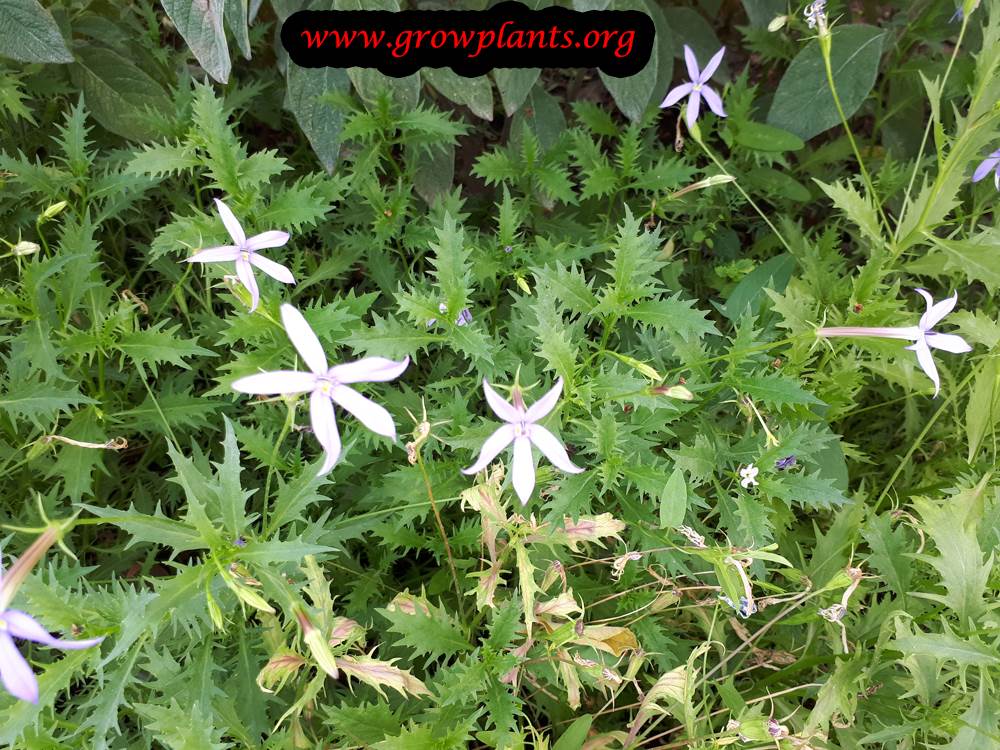
- Growth Habit & Form: Dense, mounding subshrub used as a groundcover or edging plant.
- Lifespan & Maturity: Fast to fill out and flower in its first season.
Anatomy & Physical Features
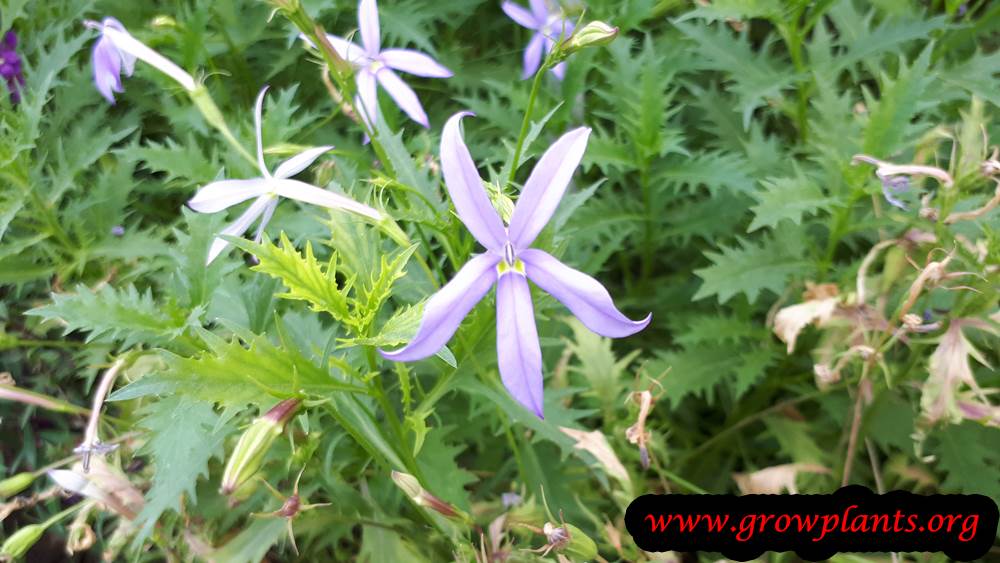
- Leaves & Foliage: Green, elliptic leaves with serrated margins.
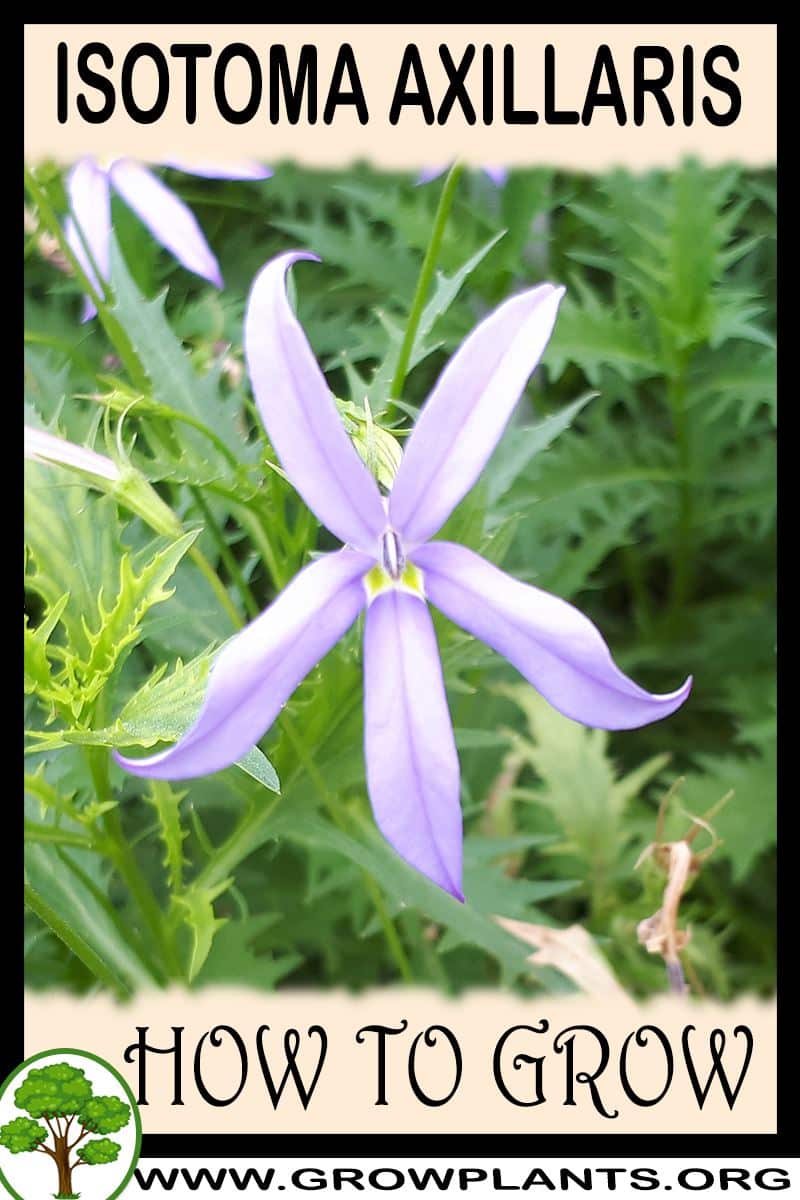
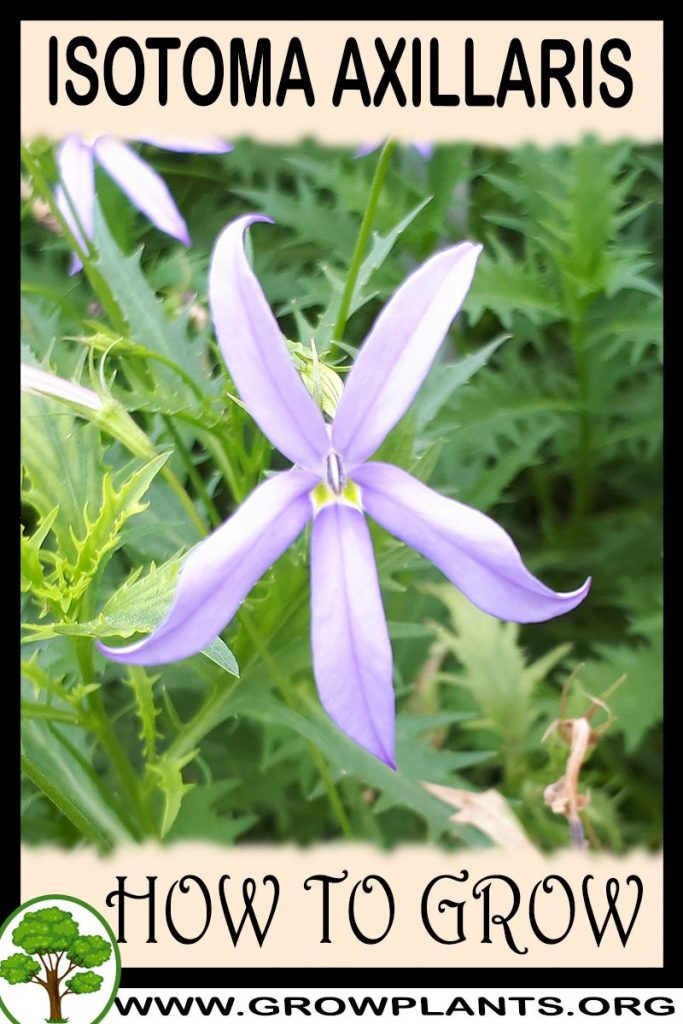
- Flower Characteristics: Star-shaped flowers in blue, purple or white borne spring to autumn (full detail in the Bloom guide).
Primary Uses & Landscape Value
- Functional & Ornamental Roles: Ornamental groundcover, bedding, edging and container/hanging-basket plant.
Care Guide: Planting, Soil & Watering
Overview: This mounding, star-flowered subshrub grows in full sun to part shade in ordinary, well-drained soil, blooming over a long warm season. It is easy and undemanding, spreading readily as a groundcover.
Quick Care Requirements
| Requirement | Ideal Condition |
|---|---|
| Planting Season | In spring, summer or autumn |
| Growth Rate | Moderate to fast |
| Soil Type | Ordinary and well-draining |
| Water Need | Moderate; let the surface dry between waterings |
Planting & Establishment
- Best Planting Season: Plant through the warm season, from spring to autumn.
- How to Plant:
- Hole Preparation: Loosen a hole a little wider than the root ball in well-drained soil.
- Soil Amendments: Mix in a little compost; it is not fussy about soil.
- Planting Depth: Set the root ball at the level it grew and firm gently.
- Growth Speed & Expectations: A moderate to fast grower reaching 10-40 cm and spreading freely, so give it room as a groundcover.
Soil, Watering & Drainage Care
- Soil Mix & Drainage Needs: Any free-draining soil suits it; use a standard free-draining potting mix in containers and avoid waterlogging.
- Watering Schedule & Technique:
- Young / Newly Planted: Keep evenly moist while establishing.
- Established: Water moderately, letting the surface dry between waterings.
- Seasonal Adjustments: More in summer heat, less in winter.
Climate, Light & Hardiness
Isotoma axillaris (rock isotome) is an adaptable subshrub grown across mediterranean, desert, subtropical, temperate, and tropical climates, thriving in full sun to half shade with average water. Its cold hardiness depends on how it's grown: it persists as a perennial only in zone 9 and warmer, while in zones 2–8 it is grown as a frost-killed annual.
Quick Climate Specifications
| Climate Zones | Mediterranean, desert, subtropical, temperate, tropical |
|---|---|
| USDA Hardiness Zones | 9+ as a perennial; grown as an annual in zones 2–8 |
| Frost Tolerance | Low (top growth killed by frost) |
| Light Conditions | Full sun to half shade |
Sunlight & Light Exposure
Optimal Light Setup
Full sun to half shade.
Direct Sun Requirement
Tolerates direct sun well.
Shade & Heat Management
Half shade is an option in hot climates.
Best Exposure / Orientation
Open beds or groundcover plantings in sun to part shade.
Temperature Extremes & Hardiness
USDA Hardiness & Regional Limits
Only reliably overwinters as a perennial in zone 9 and warmer. In zones 2–8, frost kills the plant back each year, so it is grown as a warm-season annual.
Cold Damage & Winter Protection
Frost kills top growth; where grown as a perennial near the cold edge of zone 9, a warm, sheltered spot improves survival.
Frost Sensitivity
Low.
Extreme Heat Tolerance
Suited to desert and subtropical heat, given its listed climate range.
Wind, Humidity & Microclimate
Rainfall & Seasonal Moisture
Grown with an average amount of water; not documented as needing special humidity or drought tolerance.
Microclimate Recommendations
An adaptable groundcover for sun-to-part-shade beds; in marginal zones, a warm, sheltered microclimate benefits perennial survival.
Growing in Pots, Balconies & Indoors
Isotoma axillaris (rock isotome) is a low, starry-flowered plant that is lovely in pots and baskets, but the grower confirms it is not a houseplant. Grow it outdoors in sun to light shade, and handle it with care, as the sap is an irritant.
Quick Details
- Container Size: Small – perfect for pots, edging and hanging baskets.
- Indoor Suitability: No – not a houseplant; a bright, sunny sill at most.
- Best Spot: Full sun to part shade.
- Soil & Drainage: Free-draining mix.
- Watering in Pots: Even, moderate moisture – do not let it dry out completely.
Indoors & On the Windowsill
- Not a houseplant: The grower says no – it wants strong outdoor light and does not thrive in a room.
- Sunny pot or basket: It is at its best mounded in a sunny balcony pot or spilling from a basket.
- Safety: The sap is toxic and irritates skin and eyes – handle with care and keep it away from children and pets.
On a Balcony or Patio
- Light, wind and heat: A sunny to lightly shaded spot suits it; reflected heat off walls and drying wind mean pots need checking often in warm weather, and tall stems may want staking.
- Long display: It flowers for months in a sunny spot; a light trim keeps it neat and blooming.
Choosing the Pot, Soil & Long-Term Care
- Pot & drainage: Choose a pot with strong drainage holes and skip a standing-water saucer, which invites root rot; terracotta breathes and dries quickly, while glazed or plastic hold moisture longer.
- Potting mix: Fill with a well-aerated, organic-rich medium – a good potting mix, or peat/coir blended with perlite or vermiculite for drainage.
- Feeding: Container plants run through nutrients fast because watering washes them out, so feed a little more often through the growing season than you would in open ground.
- Overwintering: Frost-tender – keep a plant in a bright, frost-free spot over the cold season, or grow it fresh each year.
Fertilizing & Feeding
A light feeder overall: this spreading subshrub thrives on modest, balanced feeding through its long bloom season and needs little else, with feeding held back during any cool-season or annual-cycle slowdown.
Quick Fertilizing Specs
| Feeding Level | Light feeder |
|---|---|
| Main Nutrient Priority | Balanced feeding with adequate nitrogen for foliage and flowers |
| Best Feeding Period | Spring through the extended bloom season |
| Organic Options | Compost or other organic matter worked into the bed |
| Reduce/Stop Feeding | Hold off feeding in cool weather or once the plant finishes its life cycle where grown as an annual |
| Micronutrients | Usually met by a complete fertilizer; correct only diagnosed issues |
| Soil pH | Tolerates a wide range, generally near neutral |
Feeding by Growth Stage
Spring growth flush
Support fresh new growth and branching as this evergreen subshrub breaks into active growth after cool weather.
| Nutrient direction | A balanced, complete fertilizer with adequate nitrogen to fuel leafy growth and new stems. |
|---|---|
| Timing | As new growth resumes in spring or with the return of warm weather. |
| Frequency | A light feeding at the start of active growth is enough for this modest grower. |
| Fertilizer types | A balanced complete fertilizer, Compost or other organic matter worked into the bed |
| Precautions | Keep feeding light; this groundcover spreads readily and heavy feeding can push it into overly vigorous, floppy growth. |
Star-flower bloom season
Sustain the extended blue, purple, or white star-shaped flower display through the warm months.
| Nutrient direction | Continue a balanced feeding program; overall nutrition supports prolonged flowering more than any single nutrient. |
|---|---|
| Timing | Through spring, summer, and into autumn while flowering continues. |
| Frequency | An occasional light feeding through the bloom season is usually sufficient. |
| Fertilizer types | A balanced complete fertilizer, A diluted liquid feed for container-grown plants |
| Precautions | Avoid heavy or frequent feeding, which can favor foliage over flowers and encourage this aggressive spreader to overrun neighboring plants. |
Cool-season rest
Let growth and flowering slow naturally through cool weather, or over winter where it is grown as an annual.
| Nutrient direction | None – withhold fertilizer while growth is slow or the plant is finishing its life cycle. |
|---|---|
| Timing | During cool weather or winter dormancy in marginal climates. |
| Frequency | No feeding at this stage. |
| Fertilizer types | No feeding at this stage; do not fertilize until active growth resumes. |
| Precautions | Do not fertilize a plant that is not actively growing; where it behaves as an annual in colder zones, feeding will not extend its life. |
Nutrient Deficiency Signs & Corrections
Overall leaf color pales and new growth stays small.
| Possible causes | low soil nitrogen, poor soil organic matter, leaching after heavy rain or watering |
|---|---|
| Appears first on | older leaves and new growth generally |
| What to check | recent feeding history, soil organic matter, watering pattern |
| Possible correction | Apply a balanced complete fertilizer with nitrogen and improve soil organic matter. |
New leaves turn yellow between veins that stay green.
| Possible causes | high soil pH limiting iron availability, waterlogged or compacted soil, root stress |
|---|---|
| Appears first on | youngest leaves |
| What to check | soil pH, drainage, root health |
| Possible correction | Correct soil pH where practical and apply a chelated iron product per its label. |
Leaf tips or margins brown and growth stalls.
| Possible causes | fertilizer salt buildup in the root zone, under-watering that concentrates salts, excessive or too-frequent feeding |
|---|---|
| Appears first on | leaf margins and tips |
| What to check | recent fertilizer amounts, watering consistency, drainage if container-grown |
| Possible correction | Ease off feeding and water thoroughly to flush accumulated salts. |
Pruning, Training & Seasonal Maintenance
Isotoma axillaris is a low, fast-growing subshrub used as a groundcover, and its only real ‘pruning’ is deadheading spent flowers and trimming back dead growth – it has no woody framework to shape. Because the species is noted to spread aggressively, regular deadheading before seed sets also does double duty as a way to keep it from self-sowing beyond where it’s wanted.
Quick Pruning & Maintenance Specs
| Pruning Tolerance | Moderate – tolerates deadheading and light shearing back well; no structural framework to preserve |
| Primary Pruning Window | Autumn/winter, plus ongoing deadheading through the bloom season |
| Typical Frequency | Frequent light deadheading; one tidy-up cutback in autumn/winter |
| Main Objective | Prolong bloom, keep the mat compact, and limit self-seeding spread |
| Best Tool Type | Precision snips |
| Avoid Heavy Pruning During | Peak flowering – deadhead lightly and often instead of cutting hard mid-bloom |
Special Growth to Remove
- Spent flowers – deadhead regularly, both to keep bloom coming and to reduce the seed-set that drives this plant’s aggressive self-spreading habit.
- Dead or straggly leaves and stems, especially after a growing flush.
Container & Small-Space Pruning
In containers, the plant’s aggressive spreading habit is naturally contained by the pot, but a light shear-back once or twice a season still keeps it compact and encourages denser rebloom rather than a sprawling, thin mat.
Tools
- Precision snips for deadheading and light trimming – this low subshrub has soft, thin stems that don’t need anything heavier.
Tool Hygiene & Disease Risk
Routine for tool cleanliness (aphids are the only pest noted, and they aren’t pruning-transmitted); note, however, that Isotoma species exude a milky sap that can irritate skin and eyes, so wear gloves when doing any heavier cutting and avoid touching your face until hands are washed.
Cut Placement & Technique
Deadhead just below the spent flower at a leaf node. For the seasonal tidy-up, shear the mat back lightly rather than cutting hard into bare stems, since this keeps the plant’s low, spreading form intact.
Common Pruning Mistakes
- Letting spent flowers go to seed unchecked, which speeds up this plant’s tendency to spread more aggressively than wanted.
- Handling cut stems bare-handed without care, risking skin or eye irritation from the sap.
When NOT to Prune
No strong restriction beyond avoiding a hard cutback in the middle of a bloom flush; routine deadheading can continue through the growing season.
Recommended Tools (by task)
- precision_snips – deadheading and the light seasonal tidy-up on this soft, low-growing subshrub.
Propagation Guide
Isotoma axillaris is most easily grown from seed, which it also produces and sheds freely in the garden – consistent with the site’s note that this plant can be aggressive. Softwood cuttings are a simple alternative when a particular flower color needs to be kept true, though the site notes vegetative propagation isn’t required to keep the plant true to type. Overall propagation difficulty is easy.
Quick Propagation Specs
| Best Propagation Method | Seed |
| Alternative Methods | Softwood stem cuttings |
| Propagation Difficulty | Easy |
| Seed True-to-Type | Usually true-to-type (cultivar-dependent for named flower-color selections) |
| Vegetative True-to-Type | Yes |
| Best Propagation Season | Spring |
| Seed Germination Time | Typically 2–3 weeks, can be uneven |
| Cutting Rooting Time | A few weeks |
| Germination Temperature | 18–24°C (64–75°F) |
| Seed Sowing Depth | Surface-sow, press in but do not cover – seed is very fine |
Growing from Seed
Seed Handling & Viability
Seed is dust-fine; fresher seed germinates more reliably.
Sowing Season
Sow in spring, within the site’s spring/summer/autumn planting window; in cooler climates start indoors ahead of the last frost.
Sowing Depth & Orientation
Surface-sow and press the seed into the mix rather than covering it – the fine seed needs light to germinate.
Germination Conditions
Keep warm, evenly moist, and in bright, indirect light.
Germination Time
Usually around 2–3 weeks, though germination can be irregular.
Seedling Care
Pot on once true leaves appear; plants self-seed readily once established, matching the site’s note that this species can be aggressive in the garden.
Stem Cuttings
Cutting Type
Softwood tip cuttings.
Best Timing
Spring to summer, during active growth – the site records this plant as fast to medium growing, so cuttings establish quickly.
Cutting Preparation
Take 5–8cm (2–3in) tips and strip the lower leaves; Isotoma’s milky sap can irritate skin and eyes, so handling cuttings with gloves is sensible.
Rooting Setup
Insert into a moist, free-draining mix and keep warm and humid.
Rooting Hormone
Optional – can improve evenness of rooting but isn’t essential given this plant’s naturally fast growth.
Rooting Time
A few weeks.
Bloom & Flower Guide
Quick Details
- Bloom Season: Spring through autumn
- Time to First Bloom: Flowers quickly and freely, often in its first season
- Flower Appearance: Five-pointed star flowers in blue, purple or white
- Edibility: Not edible — the milky sap can irritate skin and eyes
Detailed Blooming Overview
Rock isotome forms a neat mound studded with crisp, five-pointed star flowers over a long season from spring into autumn. It flowers almost continuously in warm conditions, making a tidy carpet of stars.
Flower Characteristics
- Five narrow, pointed lobes forming a clean star.
- Blue, purple or white.
- Held singly but in such numbers that the plant seems covered.
Bloom Care & Thinning
- Site for best flowering: Full sun and free-draining soil keep it flowering hardest.
- Managing the bloom: A light shear or deadhead through the season keeps fresh flowers coming; wear gloves when trimming.
- Safety: The milky sap is a skin and eye irritant — wash hands after cutting and keep away from young children.
Pests, Diseases & Troubleshooting
Overview: Isotoma (also sold as Laurentia/Solenopsis) is a low, star-flowered plant that is generally trouble-free; the main insect issues are sap-feeders under stress, while its worst enemy is wet, poorly drained soil that rots the roots. Note the milky sap can irritate skin and eyes, so handle with a little care.
Quick Troubleshooting Overview
| Issue / Pest | Main Symptom | Primary Solution |
|---|---|---|
| Aphids | Sticky, distorted new growth | Rinse off, insecticidal soap, predators |
| Spider mites | Fine stippling, webbing in hot dry spells | Raise humidity, hose foliage, oil |
| Whitefly | White flies, honeydew, sooty mold | Sticky traps, insecticidal soap |
| Root rot | Wilting, blackened base in wet soil | Improve drainage, ease watering |
| Leggy / poor bloom | Sparse, stretched, few flowers | More sun, trim to keep compact |
Common Pests & Management
- Aphids (Aphis / Myzus spp.):
- Symptoms: Soft green or dark insects on shoot tips and buds causing curling, honeydew and reduced flowering.
- Prevention & Control: Rinse off with water and encourage ladybirds and hoverflies. Insecticidal soap or neem clears colonies; avoid over-feeding with nitrogen, which favors soft, aphid-prone growth.
- Spider mites (Tetranychus urticae):
- Symptoms: Fine pale stippling and faint webbing on the small leaves in hot, dry, sheltered conditions; foliage dulls and browns.
- Prevention & Control: Raise humidity and hose the plant regularly. Horticultural oil or insecticidal soap controls heavy populations; predatory mites help under glass.
- Whiteflies (Trialeurodes vaporariorum):
- Symptoms: Tiny white flies that lift off when disturbed; nymphs on leaf undersides suck sap and drop honeydew that supports sooty mold, mainly a problem under glass or indoors.
- Prevention & Control: Hang yellow sticky traps, rinse foliage, and improve airflow. Insecticidal soap or light horticultural oil in the evening controls active infestations.
Diseases & Fungal Issues
- Root and crown rot (Pythium / Phytophthora / Rhizoctonia spp.):
- Symptoms: Wilting despite moist soil, blackened softened stem bases and collapse – the plant’s most common cause of death, driven by wet, heavy, poorly drained soil.
- Treatment & Management: Grow in free-draining soil or a gritty mix, water only when the surface dries, and never leave pots standing in water. Remove and discard collapsed plants and improve drainage before replanting.
- Botrytis (gray mold) (Botrytis cinerea):
- Symptoms: Fuzzy grey mold on faded flowers and soft tissue in cool, damp, crowded, still conditions.
- Treatment & Management: Deadhead spent flowers, thin crowded growth, and improve airflow and light; sanitation usually solves it without fungicide.
- Fungal leaf spot (Cercospora / Septoria spp.):
- Symptoms: Small brown or tan leaf spots in persistently wet, humid conditions.
- Treatment & Management: Remove affected leaves, avoid overhead watering, and improve air circulation; fungicide is rarely necessary.
Growing Difficulties & Abiotic Problems
- Root rot from soggy soil:
- Cause & Symptoms: Constantly wet or heavy soil is the plant’s chief killer, causing wilting and collapse.
- Correction Strategy: Plant in free-draining soil in a sunny, open spot, water moderately, and ensure containers drain freely.
- Leggy growth / few flowers:
- Cause & Symptoms: Too little light or a lack of trimming leaves the plant stretched, sparse and shy to bloom.
- Correction Strategy: Grow in full sun to light shade and shear lightly after the first flush to keep it compact and encourage repeat flowering.
- Skin and eye irritation from sap:
- Cause & Symptoms: The milky sap contains irritant compounds that can cause skin and, especially, eye irritation when the plant is cut or handled.
- Correction Strategy: Wear gloves when trimming, keep sap away from the eyes and mouth, and wash hands afterwards; site it away from where small children play.
What Helps – Products & Tools
Insecticidal soap and neem or light horticultural oil cover aphids, whitefly and mites; yellow sticky traps aid monitoring; and a free-draining mix plus careful watering prevents the root rot that is this plant’s real weakness. Gloves are worth keeping handy for the irritant sap. Follow labels and spray oils in the evening to protect pollinators.