

Plant Profile & Key Characteristics
Overview: A small herbaceous sub-shrub 10-20 cm (4-8 in) tall grown for its fragrant purple-to-white starry flowers. Grown as a short-lived perennial or annual, and popular as a flowering houseplant.
Quick Specifications
| Specification | Attribute |
|---|---|
| Plant Type / Life Cycle | Perennial (short-lived) or Annual |
| Foliage Type | Evergreen (glossy) |
| Mature Size | 10-20 cm tall (4-8 in) |
| Growth Rate | Moderate to Fast |
| Toxicity | Non-toxic |
| Hardiness | Perennial in USDA zones 10+; grown as an annual from zone 6+ |
Growth Form & Structure
- Height & Spread: Compact, 10-20 cm (4-8 in); well suited to pots and as a houseplant.
- Growth Habit & Form: Low, bushy herbaceous mound, also used as a groundcover.
- Lifespan & Maturity: Fast-growing but short-lived, often replaced each year.
Anatomy & Physical Features
- Leaves & Foliage: Small, glossy green oval leaves.
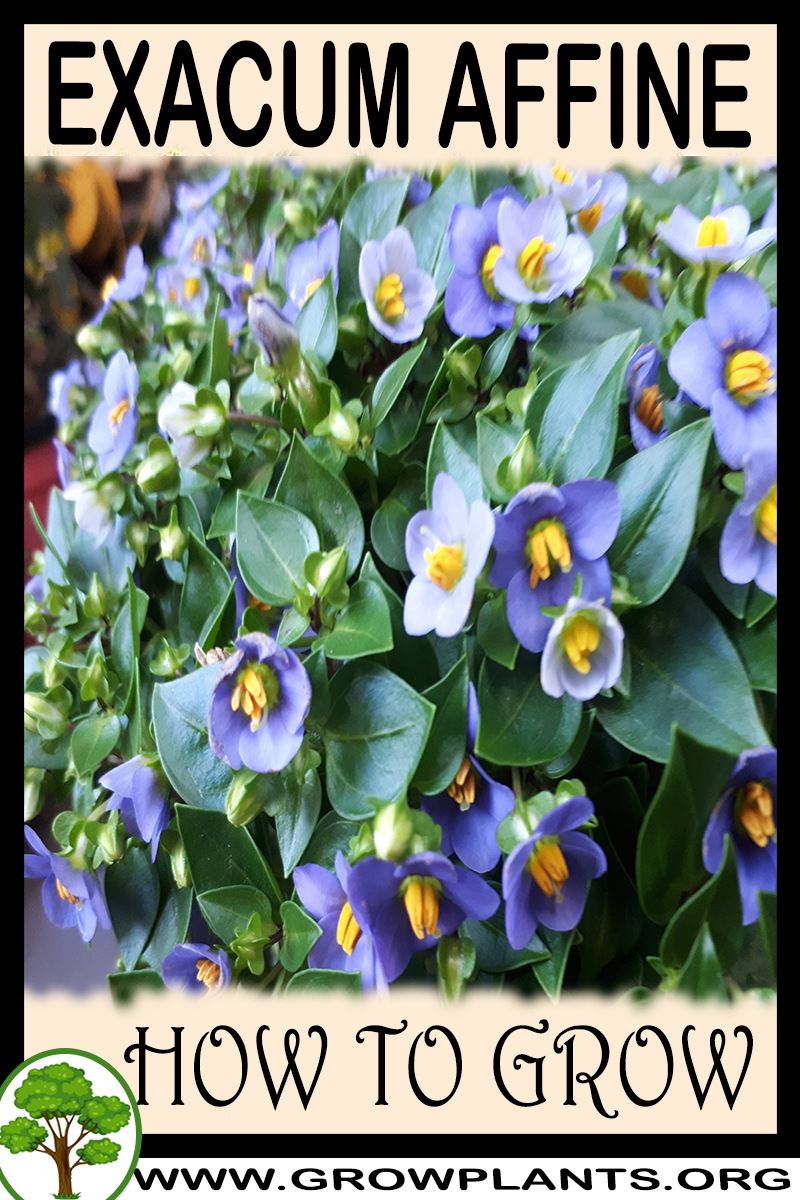
- Flower Characteristics: Fragrant purple, pink, blue or white flowers with yellow stamens and five petals (full detail in the Bloom guide).
Primary Uses & Landscape Value
- Functional & Ornamental Roles: Fragrant ornamental for containers, groundcover and indoor growing as a houseplant; tolerates shade.
Care Guide: Planting, Soil & Watering
Overview: Exacum affine (Persian violet) is a compact, fragrant-flowered perennial or annual for Mediterranean, desert, subtropical, temperate and tropical climates (hardiness zone 10+ as a short perennial, 6+ as an annual), also grown as a houseplant. It prefers moist, rich soil and thrives in half to full shade.
Quick Care Requirements
| Requirement | Ideal Condition |
|---|---|
| Planting Season | Spring as an annual; warm season as a perennial |
| Growth Rate | Moderate to Fast |
| Soil Type | Moist, rich soil |
| Water Need | Moderate to High – keep evenly moist |
Planting & Establishment
- Best Planting Season: Plant in spring when grown as an annual; as a perennial it can go in through the warm season, from spring to autumn.
- How to Plant:
- Hole Preparation: Dig a hole a little larger than the root ball in a shaded, sheltered spot.
- Soil Amendments: Enrich the soil with organic matter so it stays moist and fertile while still draining.
- Planting Depth: Set the root ball level with the soil surface, keeping the crown unburied.
- Growth Speed & Expectations: A moderate-to-fast grower forming a low mound about 10-20 cm (4-8 in) tall.
Soil, Watering & Drainage Care
- Soil Mix & Drainage Needs: Use rich, moisture-retentive soil that still drains; in pots choose a container with drainage holes so the mix stays evenly moist without becoming soggy.
- Watering Schedule & Technique:
- Young / Newly Planted: Keep the soil consistently moist while the plant establishes.
- Established: Water regularly to keep the soil moist to fairly wet – this plant likes plenty of moisture but not stagnant water.
- Seasonal Adjustments: Water more in warm weather and reduce in cool conditions to avoid sodden soil.
Climate, Light & Hardiness
Exacum affine (Persian violet) grows across mediterranean, desert, subtropical, temperate, and tropical climates, or as a houseplant, thriving in half shade to full shade with consistently moist, rich soil. It behaves as a short-lived perennial only in zone 10 and warmer; elsewhere, from zone 6 up, it is grown as a warm-season annual.
Quick Climate Specifications
| Climate Zones | Mediterranean, desert, subtropical, temperate, tropical (or houseplant) |
|---|---|
| USDA Hardiness Zones | 10+ as a short-lived perennial; grown as an annual from zone 6 up |
| Frost Tolerance | Low |
| Light Conditions | Half shade to full shade |
Sunlight & Light Exposure
Optimal Light Setup
Half shade to full shade; avoid strong direct sun.
Direct Sun Requirement
Not suited to intense direct sun, which can scorch foliage and flowers.
Shade & Heat Management
Performs well in fairly shaded spots - a good choice for shadier garden areas or indoor rooms without direct south-facing sun.
Best Exposure / Orientation
Bright, indirect light indoors, or a shaded-to-part-shade outdoor bed.
Temperature Extremes & Hardiness
USDA Hardiness & Regional Limits
Persists outdoors as a short-lived perennial only in zone 10 and warmer; elsewhere, from zone 6 up, it is grown as an annual since frost kills it.
Cold Damage & Winter Protection
Frost kills the plant; where marginally perennial, a warm, sheltered spot supports longer survival.
Frost Sensitivity
Low.
Extreme Heat Tolerance
No explicit heat-tolerance data is given; its use across desert, subtropical, and tropical climates suggests reasonable heat tolerance provided shade and moisture are maintained, but full sun combined with high heat is best avoided.
Wind, Humidity & Microclimate
Humidity Preferences
Benefits from humid, consistently moist conditions, in keeping with its preference for moist, rich soil.
Rainfall & Seasonal Moisture
Prefers consistent moisture; not documented as drought tolerant.
Microclimate Recommendations
A shaded, humid, sheltered spot suits it best - also a good indoor plant, kept away from hot, dry drafts.
Growing in Pots, Balconies & Indoors
Exacum affine, the Persian violet, is a compact, fragrant flowering plant the grower confirms as a good houseplant. Its small stature and preference for bright, indirect light make it an easy, cheerful indoor and container plant.
Quick Details
- Container Size: Small – a compact pot suits this neat, mounded plant.
- Indoor Suitability: Yes – a well-loved flowering houseplant.
- Best Spot: Bright, indirect light; part to full shade, out of harsh sun.
- Soil & Drainage: Rich, free-draining potting mix.
- Watering in Pots: Keep evenly moist – moderate to generous, never waterlogged.
Indoors & On the Windowsill
- Houseplant: Yes – a classic indoor flowering plant for a bright windowsill or table out of direct sun.
- Light: Bright, filtered light gives the most flowers; protect it from scorching midday sun through glass.
- Humidity: It likes a little humidity and dislikes the dry draught of a heater or air-conditioner.
On a Balcony or Patio
- Shade and shelter: Give it a bright, shaded, sheltered corner outdoors; avoid a hot, exposed wall.
- Watering: Small pots dry fast – check moisture often in warm weather.
Choosing the Pot, Soil & Long-Term Care
- Pot & drainage: Choose a pot with strong drainage holes and skip a standing-water saucer, which invites root rot; terracotta breathes and dries quickly, while glazed or plastic hold moisture longer.
- Potting mix: Fill with a well-aerated, organic-rich medium – a good potting mix, or peat/coir blended with perlite or vermiculite for drainage.
- Feeding: Container plants run through nutrients fast because watering washes them out, so feed a little more often through the growing season than you would in open ground.
- Note: Usually grown as a short-lived annual, so start with fresh mix each time for the best display.
Fertilizing & Feeding
A compact, delicate plant grown for its long flowering display: light, steady, balanced feeding through active growth and bloom is enough, without pushing extra phosphorus for flowers.
Quick Fertilizing Specs
| Feeding Level | Light feeder |
|---|---|
| Main Nutrient Priority | Balanced overall; no need to push extra phosphorus for bloom |
| Best Feeding Period | Through active growth and continuous flowering in the warm season |
| Organic Options | Compost or well-rotted organic matter worked into rich, moist soil |
| Micronutrients | Usually adequate from a complete fertilizer and rich soil; correct specific issues only when diagnosed |
| Soil pH | Tolerates a range of soil conditions when kept fertile and moisture-retentive |
Feeding by Growth Stage
Spring growth and establishment
Support steady vegetative growth and root development as the plant breaks into active growth or settles in after transplanting.
| Nutrient direction | A balanced, complete fertilizer with adequate nitrogen to build foliage ahead of flowering. |
|---|---|
| Timing | As new growth resumes in spring, or from planting for plants grown as annuals. |
| Frequency | Light, regular feeding as active growth gets underway. |
| Fertilizer types | A balanced complete fertilizer for flowering plants, Compost or well-rotted organic matter worked into the soil |
| Precautions | Keep feeding light on this compact plant, and avoid letting fertilizer sit on constantly moist soil where salts can concentrate around shallow roots. |
Continuous flowering through the warm season
Sustain the long spring-through-autumn bloom cycle typical of this plant.
| Nutrient direction | Keep nutrition balanced and adequate rather than favoring phosphorus; steady overall feeding supports repeat flowering. |
|---|---|
| Timing | Through the spring, summer, and autumn flowering period. |
| Frequency | Several light feedings spaced through the flowering season. |
| Fertilizer types | A balanced complete fertilizer for flowering plants, A diluted liquid feed for container-grown plants |
| Precautions | Rich, moist soil already supplies some nutrients, so feed sparingly to avoid a buildup of salts around the shallow root system. |
Cool-season or end-of-cycle rest
Let the plant rest when flowering slows in cooler, lower-light conditions, or as an annual planting reaches the end of its cycle.
| Nutrient direction | None – withhold fertilizer while growth and flowering are minimal. |
|---|---|
| Timing | Cooler months, or the natural decline at the end of an annual planting. |
| Frequency | No feeding at this stage. |
| Fertilizer types | No feeding at this stage – allow the plant to rest without fertilizer. |
| Precautions | Do not fertilize while growth is minimal; resume light feeding only once active growth and flowering restart. |
Nutrient Deficiency Signs & Corrections
Older leaves fade to pale green or yellow and overall growth and flowering slow.
| Possible causes | low available soil nitrogen, nutrients leaching away from frequent watering in rich, moist soil, insufficient feeding for a plant in active growth |
|---|---|
| Appears first on | older, lower leaves |
| What to check | recent feeding history, soil moisture and drainage, overall plant vigor and flowering |
| Possible correction | Resume a balanced complete fertilizer on a light schedule and check that watering isn’t washing nutrients away. |
New growth turns pale to yellow while the leaf veins stay green.
| Possible causes | high soil pH tying up available iron, waterlogged or poorly drained soil, root stress limiting nutrient uptake |
|---|---|
| Appears first on | newest leaves |
| What to check | soil drainage and moisture levels, soil pH if known, any recent root disturbance or repotting |
| Possible correction | Improve drainage and work toward a more favorable soil pH, then apply a chelated iron product per its label if the pattern persists. |
Leaf tips or margins brown and flowering declines despite regular watering.
| Possible causes | fertilizer salt buildup from frequent feeding, under-watering that concentrates salts in the root zone, poor drainage in containers or rich soil |
|---|---|
| Appears first on | leaf margins and tips |
| What to check | recent feeding frequency and amount, container or bed drainage, watering consistency |
| Possible correction | Ease off feeding, flush the soil thoroughly with water, then return to lighter feeding. |
Pruning, Training & Seasonal Maintenance
Exacum affine (Persian violet) is a small (10–20cm), soft-stemmed subshrub grown for its fragrant, 5-petaled flowers, commonly as a compact potted flowering houseplant or shady groundcover. It has no woody framework, and flowers form continuously on soft current-season growth through spring, summer and autumn, so its all-year pruning need is ongoing grooming – deadheading and removing dead parts – rather than a seasonal structural prune. As a short-lived plant (an annual in cooler climates, a short-lived perennial in warm or tropical ones), it is not managed with hard renovation pruning; consistent light grooming through the bloom period is what keeps it presentable.
Quick Pruning & Maintenance Specs
| Pruning Tolerance | Moderate (soft, small growth; fine trimming only) |
| Primary Pruning Window | All year, as an ongoing task |
| Typical Frequency | Frequent light grooming through the spring–autumn bloom |
| Main Objective | Remove dead parts and spent flowers; keep the plant compact |
| Young Plant Priority | Pinch tips once established to encourage branching |
| Mature Plant Priority | Ongoing deadheading and light tip trimming to prevent legginess |
| Best Tool Type | Precision snips |
Pruning by Plant Age & Size
Newly Established
Hold off on pruning until the young plant is rooted in; remove only any transplant-damaged growth.
Young / Formative
No formal training system applies; pinch the growing tips once the plant is established to build a bushier, more compact habit before the main bloom.
Mature / Established
Deadhead spent flowers and remove dead parts continually through its long bloom season. Because the plant is short-lived, a specimen that becomes leggy or sparse with age is usually better propagated from cuttings or replaced than pruned back hard.
Special Growth to Remove
- Spent flower stems – deadheading keeps the display tidy and can prolong flowering.
- Dead or yellowing leaves – remove promptly; in the shady, humid conditions this plant prefers, lingering dead material can invite slugs and rot.
Container & Small-Space Pruning
This species is grown almost entirely at container/houseplant scale. Regular light pinching keeps it compact in a small pot, and prompt removal of spent flowers and dead leaves matters even more indoors or in still, humid air, where debris can encourage rot or attract slugs and aphids.
Tools
- Precision snips – the only tool needed for pinching and deadheading this small, soft-stemmed plant.
Tool Hygiene & Disease Risk
Routine – clean, sharp tools are sufficient. Its documented pests (aphids, spider mites, slugs) are not spread via pruning cuts, so no special disinfection protocol is required.
Cut Placement & Technique
Pinch or snip just above a leaf node to direct branching; deadhead by removing the spent flower back to the stem base or nearest healthy leaf junction.
Heavy Pruning & Rejuvenation
Not standard practice – being small, soft-stemmed and short-lived, this plant is not managed with a hard rejuvenation cut. Once a plant declines with age, propagating fresh cuttings or replacing it is the more usual approach.
Post-Pruning Care
Water normally; avoid excessive foliage wetting in low-light, still-air settings, which favors the rot and pest issues (slugs, aphids) this plant is prone to. No extra feeding is needed after routine grooming.
Common Pruning Mistakes
- Leaving spent flowers and dead leaves in place, inviting slugs and rot in humid, shaded conditions.
- Infrequent pinching, resulting in a leggy, sparse plant.
- Attempting a hard cutback to renew an old, declined plant rather than propagating or replacing it.
When NOT to Prune
Avoid heavy handling during a flowering flush if the display is wanted (deadhead selectively instead), and avoid pruning a wilted or moisture-stressed plant.
Recommended Tools (by task)
- precision_snips – the single tool this small, soft-stemmed plant needs, for both pinching and deadheading.
Propagation Guide
Exacum affine is most commonly and most reliably started from seed, which reproduces the species true-to-type; stem cuttings are a useful alternative for holding a particular flower color true. Overall propagation is easy, though the seed is dust-fine and needs careful, light-dependent surface sowing.
Quick Propagation Specs
| Best Propagation Method | Seed |
| Alternative Methods | Stem tip cuttings |
| Propagation Difficulty | Easy |
| Seed True-to-Type | Usually true-to-type; cultivar-dependent for named color selections |
| Vegetative True-to-Type | Yes |
| Best Propagation Season | Spring, ahead of the plant’s spring (annual) or spring–autumn (perennial) planting season |
| Seed Germination Time | Typically 2–4 weeks |
| Cutting Rooting Time | Typically a few weeks under warm, humid conditions |
| Germination Temperature | About 21–24°C (70–75°F) |
| Seed Sowing Depth | Surface-sown; do not cover |
Growing from Seed
Seed Handling & Viability
Seed is very fine (dust-like); sow soon after acquiring it and keep any surplus cool and dry until sowing.
Sowing Season
Start indoors in spring, timed to set out plants for the site’s spring planting window (as an annual) or spring through autumn (as a short-lived perennial).
Sowing Depth & Orientation
Because the seed is so fine, sow it on the surface of a moist, well-draining mix and press in lightly without covering – it needs light to germinate.
Germination Conditions
Keep warm, around 21–24°C (70–75°F), evenly moist and in bright, indirect light.
Germination Time
Germination typically takes 2–4 weeks and can be uneven.
Seedling Care
Seedlings are tiny and delicate; thin or prick out carefully once large enough to handle, and avoid overwatering, which can lead to damping-off.
Stem Cuttings
Cutting Type
Softwood tip cuttings.
Best Timing
Spring to summer, during active growth.
Cutting Preparation
Take short, healthy tip cuttings and remove the lower leaves before inserting.
Rooting Setup
Insert into a moist, well-draining mix and keep in the half-shade to full-shade conditions this plant prefers, with steady warmth and humidity.
Rooting Hormone
Optional; may speed and even out rooting.
Rooting Time
Typically a few weeks.
Bloom & Flower Guide
Quick Details
- Bloom Season: Spring through autumn (and much of the year as a warm indoor plant)
- Time to First Bloom: Fast — usually grown and sold already in flower, blooming in its first season
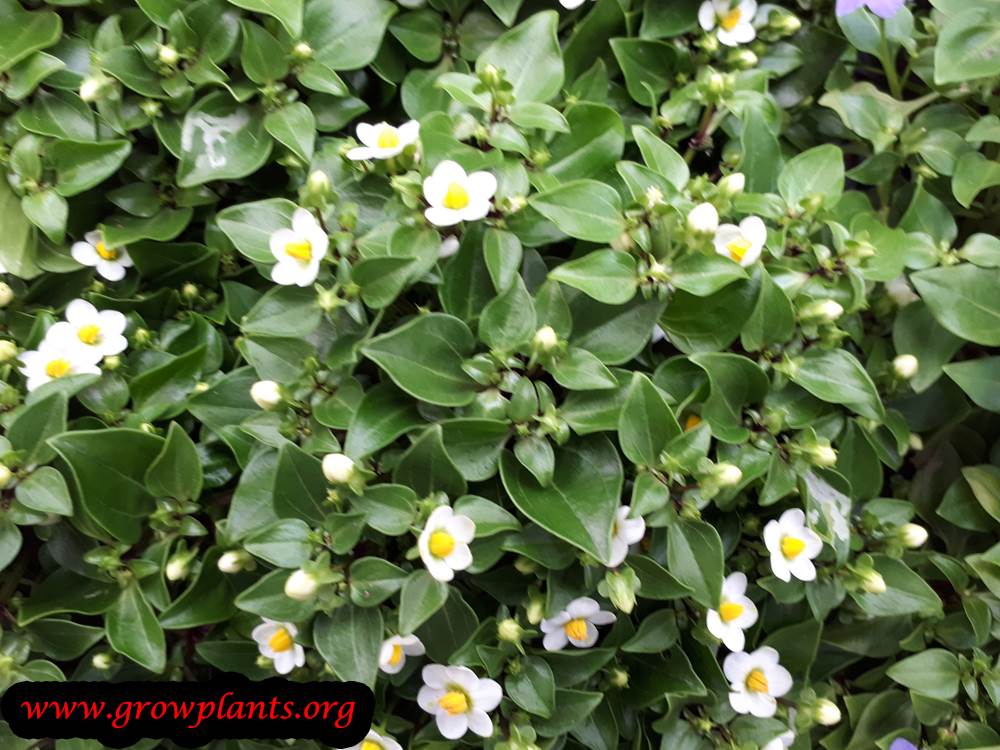
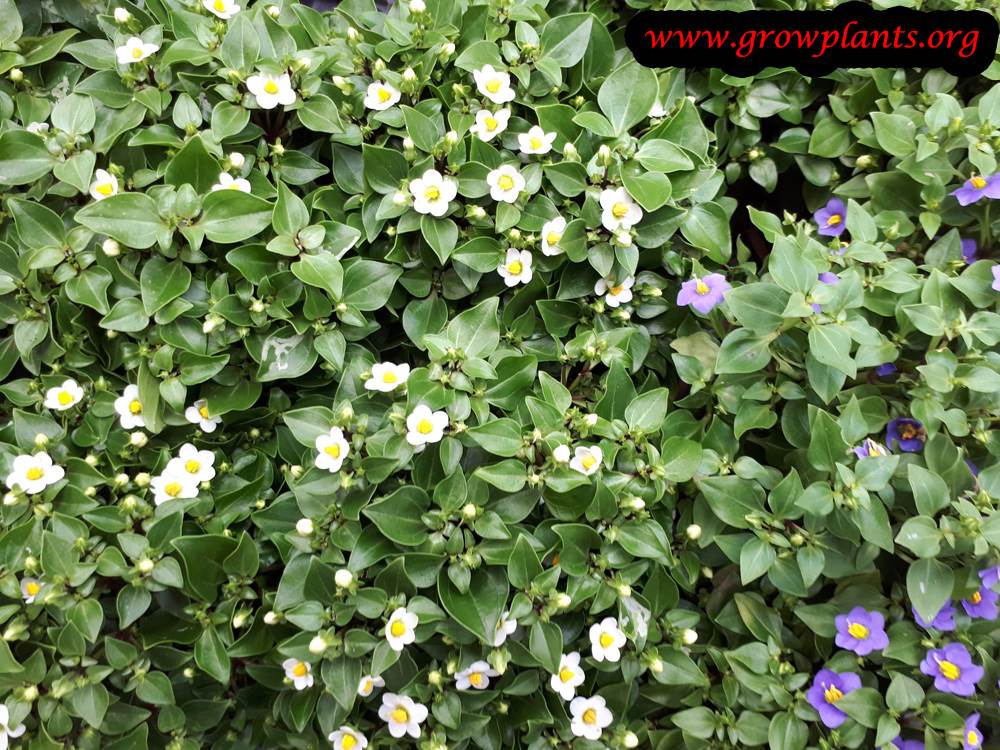
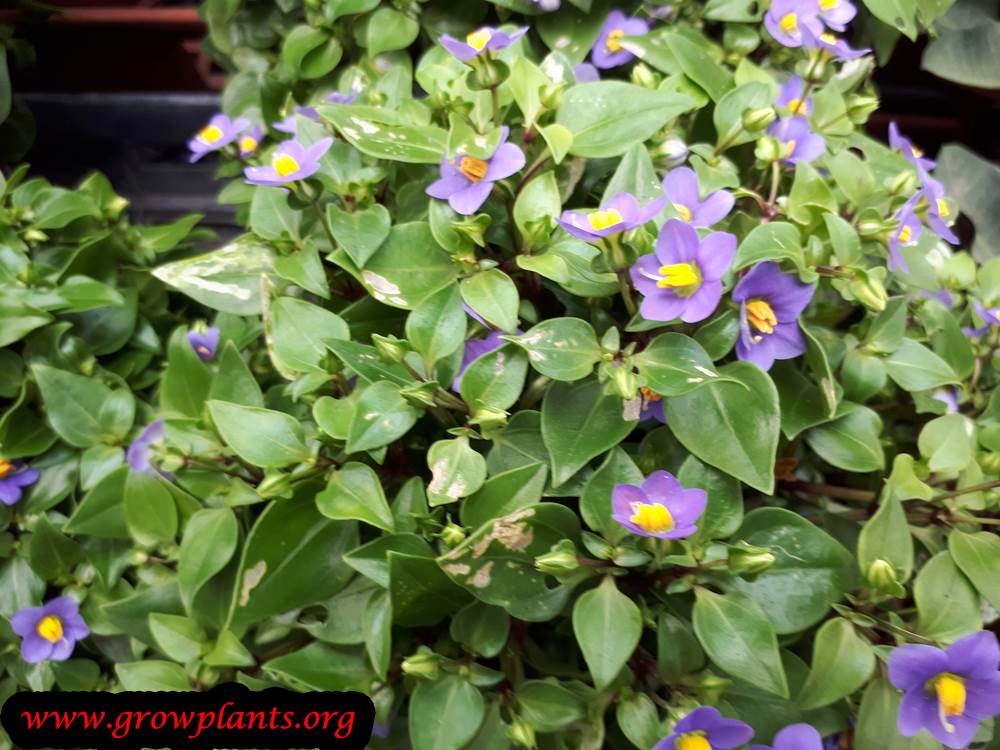
- Flower Appearance: Small five-petalled saucer flowers with a bright yellow centre, in purple, pink, blue or white
- Edibility: Grown as an ornamental — the flowers are not eaten
Detailed Blooming Overview
This is the classic Persian violet: a compact, glossy-leaved mound covered in small, sweetly fragrant flowers, each with five neat petals set off by a tuft of golden-yellow stamens. It blooms freely over a long season and is a popular house and gift plant.
Flower Characteristics
- Five rounded petals in a shallow saucer.
- Purple, pink, blue or white, with a vivid yellow eye of stamens.
- Lightly fragrant and produced in abundance.
Bloom Care & Thinning
- Site for best flowering: Bright, indirect light with warmth and even moisture.
- Managing the bloom: Deadhead regularly to keep the flowers coming.
- Pollination: Worked by bees and other insects outdoors.
Pests, Diseases & Troubleshooting
Overview: Persian violet (Exacum affine) is a compact, free-flowering pot plant troubled mainly by whitefly, aphids, spider mites and fungus gnats and by moisture-driven diseases – Botrytis grey mould and root or stem rot from overwatering. As a naturally short-lived plant it responds best to good airflow, careful watering and prompt sanitation.
Quick Troubleshooting Overview
| Issue / Pest | Main Symptom | Primary Solution |
|---|---|---|
| Whitefly | White flies rise when disturbed; honeydew | Sticky traps, oil/soap on undersides, Encarsia |
| Aphids | Sticky new shoots & buds, distortion | Rinse, beneficials, insecticidal soap |
| Spider mites | Stippling, bronzing, fine webbing | Raise humidity, rinse, oil / predatory mites |
| Fungus gnats | Black flies at soil; larvae in wet mix | Let media dry, BTI, sticky traps |
| Botrytis (grey mould) | Fuzzy grey mould on flowers/soft growth | Airflow, deadhead, avoid wet foliage |
| Root / stem rot | Wilting in wet mix, blackened base | Free-draining mix, water less |
Common Pests & Management
- Whitefly (Trialeurodes vaporariorum):
- Symptoms: Tiny white flies that rise in a cloud when the plant is disturbed and cluster on leaf undersides; they cause yellow flecking, honeydew and sooty mould and are the classic pest of this soft, leafy pot plant.
- Prevention & Control: Isolate new plants and monitor with yellow sticky traps. Encourage or release Encarsia parasitoids indoors/under glass. Rinse and treat leaf undersides with insecticidal soap or a light horticultural oil, repeating weekly until clear.
- Aphids (Myzus persicae / Aphis spp.):
- Symptoms: Soft green or black insects clustering on soft new shoots and flower buds, with honeydew, sooty mould and distorted growth.
- Prevention & Control: Knock off with a gentle water spray, encourage ladybirds and lacewings, and avoid overfeeding with nitrogen. Treat persistent colonies with insecticidal soap or horticultural oil.
- Spider mites (Tetranychus urticae):
- Symptoms: Fine pale stippling, bronzing and a dull look with fine webbing under leaves; worst in the hot, dry air of heated rooms.
- Prevention & Control: Raise humidity and airflow, rinse the foliage, and release predatory mites where practical. Spot-treat with horticultural oil or insecticidal soap and avoid letting the plant get hot and dry.
- Fungus gnats (Bradysia spp.):
- Symptoms: Small dark flies running over damp potting mix; their larvae feed on roots and organic matter in wet compost, weakening this small, soft-rooted plant and inviting rot.
- Prevention & Control: Let the top of the mix dry between waterings, improve drainage, and use yellow sticky traps for adults. Drench with BTI (Bacillus thuringiensis israelensis) or apply predatory mites/nematodes for the larvae.
- Mealybugs (Planococcus / Pseudococcus spp.):
- Symptoms: White cottony tufts in leaf axils and growth points with honeydew and sooty mould; occasional but disfiguring on indoor plants.
- Prevention & Control: Dab colonies with dilute alcohol on a cotton swab, wash off with a gentle spray, and treat with insecticidal soap or horticultural oil; inspect the root zone at repotting.
Diseases & Fungal Issues
- Grey mould (Botrytis) (Botrytis cinerea):
- Symptoms: Fuzzy grey-brown mould on faded flowers, buds and soft or damaged tissue, with rot spreading in cool, damp, still, crowded conditions; a leading problem on this flower-heavy pot plant.
- Treatment & Management: Deadhead spent flowers and remove dead tissue promptly, improve airflow and lower humidity, and avoid wetting the foliage and flowers. Space plants and water early in the day so surfaces dry.
- Root & stem rot (Pythium / Rhizoctonia / Phytophthora spp.):
- Symptoms: Wilting despite moist mix, blackening at the stem base and roots, and collapse; nearly always caused by overwatering or a soggy, poorly drained mix.
- Treatment & Management: Use a free-draining mix and a pot with drainage, water only when the surface is dry, and never leave the pot standing in water. Remove badly affected plants; a biofungicide drench can protect valued plants.
- Powdery mildew (Golovinomyces / Podosphaera spp.):
- Symptoms: White powdery patches on leaves and stems, later yellowing, in crowded, poorly ventilated conditions.
- Treatment & Management: Improve airflow and spacing, avoid crowding, and remove affected leaves. A sulfur or potassium-bicarbonate spray checks spread if needed.
- Leaf spot (Cercospora / Septoria spp.):
- Symptoms: Brown or black spots and blotches on leaves, sometimes with yellow halos, in humid conditions with wet foliage.
- Treatment & Management: Avoid overhead watering, improve airflow, and remove spotted leaves and debris; a copper fungicide can protect valued plants under sustained humidity.
Growing Difficulties & Abiotic Problems
- Overwatering & rot:
- Cause & Symptoms: Wilting in constantly wet mix, yellowing lower leaves and a blackening base – the commonest way this plant is killed.
- Correction Strategy: Water when the surface just dries, use a free-draining mix and a drained pot, empty saucers, and keep it a touch drier in cool, low-light spells.
- Short natural lifespan & decline:
- Cause & Symptoms: Even well grown, Persian violet is naturally short-lived and gradually declines and stops flowering after its long bloom period.
- Correction Strategy: Enjoy it as a seasonal flowering pot plant, deadhead to prolong bloom, and propagate fresh plants from seed or cuttings rather than expecting it to persist for years.
- Light & heat scorch:
- Cause & Symptoms: Bleached or browned leaves and wilting in hot, direct sun or beside hot glass; or leggy, non-flowering growth in too little light.
- Correction Strategy: Give bright, indirect light with protection from fierce direct sun, keep it out of hot draughts and off cold windowsills, and provide steady warmth for continuous bloom.
- Chlorosis:
- Cause & Symptoms: Pale, yellowing leaves from nutrient deficiency, cold wet roots, or hard alkaline water over time.
- Correction Strategy: Feed a balanced flowering-plant fertiliser at half strength during growth, keep the root zone healthy, and use softened or rainwater if tap water is very hard.
What Helps – Products & Tools
For Persian violet the useful tools are yellow sticky traps and Encarsia for whitefly; insecticidal soap and horticultural oil for whitefly, aphids, mites and mealybug; BTI drenches for fungus-gnat larvae; and, for disease, good airflow plus a sulfur or potassium-bicarbonate spray for powdery mildew and a biofungicide or copper for grey mould and leaf spot. Careful watering into a free-draining mix prevents most trouble. Treat in the cool of the day and keep spray off open flowers.