Plant Profile & Key Characteristics
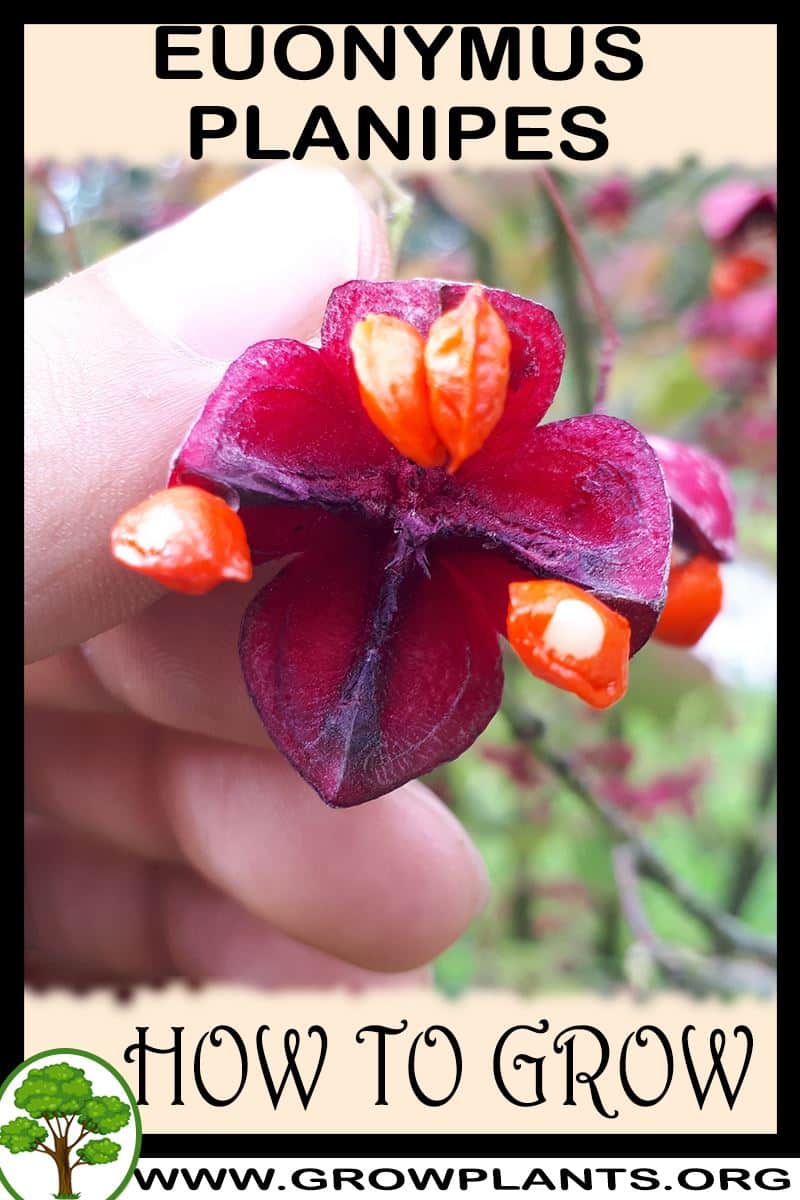
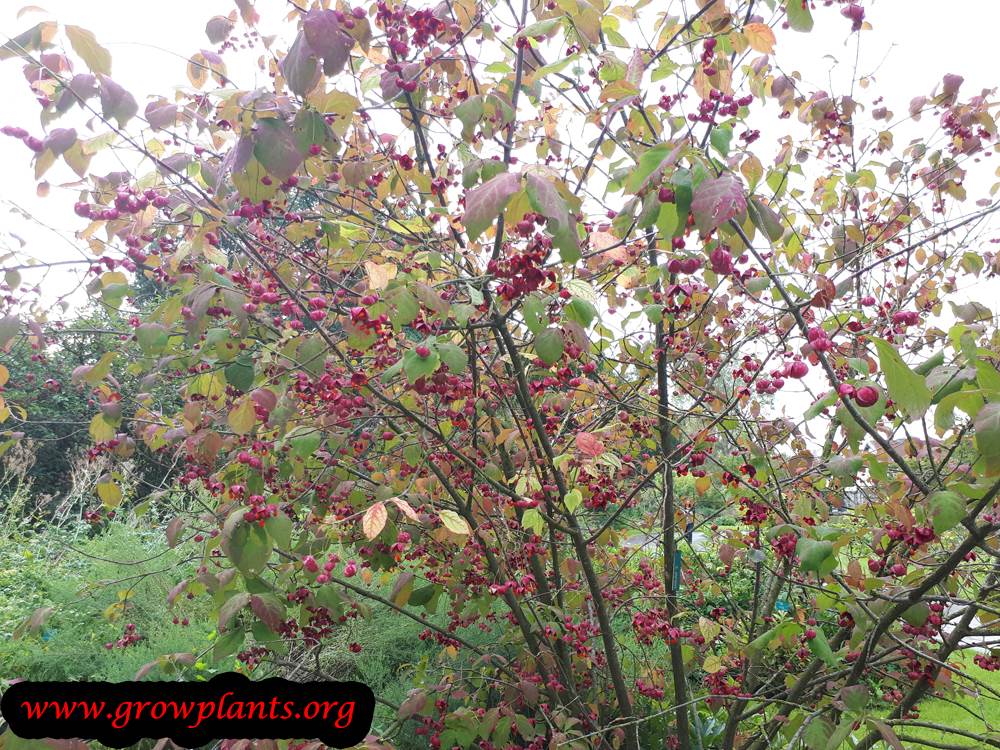
Overview: A deciduous shrub reaching 2-4 m, grown for its fiery red autumn foliage and showy pink-to-purple capsular fruits. Its greenish flowers are insignificant, the ornamental value coming from leaves and fruit.
Quick Specifications
| Specification | Attribute |
|---|---|
| Plant Type / Life Cycle | Perennial (shrub) |
| Foliage Type | Deciduous |
| Mature Size | 2-4 m (6.5-13 ft) tall |
| Growth Rate | Moderate |
| Toxicity | Toxic if ingested (all parts, including the fruit) |
| Hardiness | USDA zones 5-9 |
Growth Form & Structure
- Height & Spread: An upright shrub 2-4 m (6.5-13 ft) tall; container-friendly while young.
- Growth Habit & Form: Upright deciduous shrub.
- Lifespan & Maturity: Long-lived, with moderate growth to full size.
Anatomy & Physical Features
- Leaves & Foliage: Green elliptic leaves turning red in autumn.
- Flower Characteristics: Insignificant green-and-white cross-shaped flowers borne in clusters.
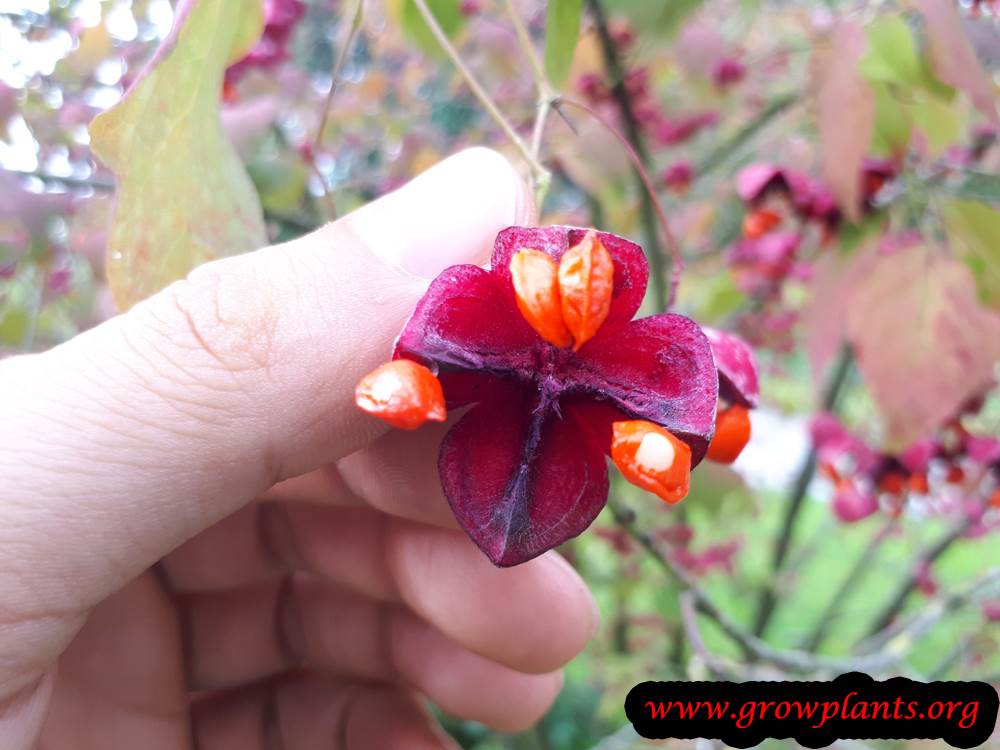
- Fruit Profile: Showy pink-to-purple capsules that split to reveal the seeds – ornamental, not edible, and toxic.
Primary Uses & Landscape Value
- Functional & Ornamental Roles: Ornamental shrub grown for autumn colour and showy fruit; a specimen or shrub-border plant.
Care Guide: Planting, Soil & Watering
Overview: Euonymus planipes (spindle tree) is a hardy deciduous shrub grown for autumn colour and showy fruits, thriving in well-drained soil in sun or partial shade. Once established it is drought-tolerant and needs little water.
Quick Care Requirements
| Requirement | Ideal Condition |
|---|---|
| Planting Season | Winter through summer (dormant-season planting works well) |
| Growth Rate | Moderate |
| Soil Type | Well-drained, adaptable |
| Water Need | Low to Moderate (less once established) |
Planting & Establishment
- Best Planting Season: Plant from winter through summer; bare-root or dormant planting in the cool months establishes readily.
- How to Plant:
- Hole Preparation: Dig a hole as deep as, and twice as wide as, the root ball.
- Soil Amendments: Improve heavy soil with compost and grit for drainage.
- Planting Depth: Set the root collar level with the surrounding soil.
- Growth Speed & Expectations: Moderate; forms an open shrub a few metres tall.
Soil, Watering & Drainage Care
- Soil Mix & Drainage Needs: Free-draining garden soil or a quality potting mix; drought-tolerant once rooted, so avoid soggy conditions.
- Watering Schedule & Technique:
- Young / Newly Planted: Water regularly through the first season to establish.
- Established: Reduce watering markedly – established plants need little, drying between waterings.
- Seasonal Adjustments: Minimal water in winter dormancy; an occasional deep soak in summer heat.
Climate, Light & Hardiness
Euonymus planipes is a deciduous, drought-tolerant shrub suited to temperate and subtropical climates, growing best in full sun to half shade on well-drained soil. It is a cold-hardy species reliable through USDA zones 5–9, with foliage that turns red before dropping in autumn.
Quick Climate Specifications
| Climate Zones | Temperate, subtropical |
|---|---|
| USDA Hardiness Zones | 5–9 |
| Approx. Survival Minimum | Established plants typically tolerate winter minimums consistent with zone 5 (roughly −29°C to −23°C / −20°F to −10°F) |
| Frost Tolerance | High |
| Light Conditions | Full sun to half shade |
Sunlight & Light Exposure
Optimal Light Setup
Full sun to half shade; full sun typically gives the strongest autumn leaf color.
Direct Sun Requirement
Tolerates full direct sun well.
Shade & Heat Management
Tolerates half shade; watering can be reduced once the plant is established, thanks to its drought tolerance.
Best Exposure / Orientation
Open, sunny to lightly shaded sites best showcase the autumn foliage and fruit display.
Temperature Extremes & Hardiness
USDA Hardiness & Regional Limits
Reliably hardy zone 5–9.
Cold Damage & Winter Protection
As a deciduous shrub it drops its leaves and goes dormant each autumn/winter; the dormant plant is very cold hardy and needs no special winter protection within its range.
Frost Sensitivity
Low - well adapted to hard winter freezes typical of zone 5 and up.
Extreme Heat Tolerance
Its drought tolerance supports good performance in the warmer, drier conditions found toward zone 9.
Wind, Humidity & Microclimate
Dry-Air Tolerance
Moderate to high, consistent with its drought-tolerant profile and reduced water needs once established.
Rainfall & Seasonal Moisture
Needs regular water while establishing, then tolerates drier conditions; avoid waterlogged sites given its preference for well-drained soil.
Microclimate Recommendations
Open, sunny to lightly shaded sites work well; good drainage matters more than shelter for this species.
Growing in Pots, Balconies & Indoors
Euonymus planipes is a large deciduous shrub or small tree grown for its autumn fruit and fiery leaf colour. The grower confirms it is not a houseplant, and at 2-4 m it is really a container plant only while young – long term it is happier in the ground.
Quick Details
- Container Size: Large – a big, heavy container while young; it soon outgrows pots and prefers open ground.
- Indoor Suitability: No – not a houseplant, and far too large for indoors.
- Best Spot: Full sun to part shade – best fruit and leaf colour in good light.
- Soil & Drainage: Ordinary, free-draining soil; it is not fussy but dislikes waterlogging.
- Watering in Pots: Moderate; water more in heat, less once established, and never leave it standing wet.
Indoors & On the Windowsill
- Not a houseplant: No on both counts – it is a hardy, deciduous woody plant that needs a cold-season rest outdoors, not a warm room.
- A young-plant container only: You can grow it in a large pot for its first years, but it will need moving to the ground or a very large tub as it reaches its 2-4 m size.
- Safety: All parts of Euonymus are toxic if eaten – keep the fruit and foliage away from children and pets.
On a Balcony or Patio
- Sun and room: While potted, give it a sunny, open spot with space for its spreading branches; use a heavy container so wind cannot topple it.
- Watering: Large leaves and a big frame mean it drinks freely in heat – check a potted plant often.
Choosing the Pot, Soil & Long-Term Care
- Pot up while young: Start in a large, stable pot and step it up as it grows; accept that it is a temporary home before the open ground.
- Potting mix: Fill with a well-aerated, organic-rich medium – a good potting mix, or peat/coir blended with perlite or vermiculite for drainage.
- Feeding: Container plants run through nutrients fast because watering washes them out, so feed a little more often through the growing season than you would in open ground.
- Repotting: Refresh the mix and root-prune each time you pot on, but plan to plant it out before it becomes root-bound.
Fertilizing & Feeding
A deciduous, drought-tolerant shrub grown for its autumn leaf color and showy ornamental seed capsules, this species is an undemanding landscape plant that thrives on light feeding, mainly to help it establish, rather than regular fertilizing once settled in.
Quick Fertilizing Specs
| Feeding Level | Light feeder, especially once established |
|---|---|
| Main Nutrient Priority | Balanced feeding to support healthy foliage, autumn color, and capsule production without forcing soft growth |
| Best Feeding Period | In spring as new growth begins, and at planting for young shrubs |
| Organic Options | Compost or well-rotted organic matter worked into the planting area |
| Reduce/Stop Feeding | Skip feeding on established, drought-tolerant plantings, and stop as leaves color and drop in autumn |
Feeding by Growth Stage
Establishment after planting
Help a newly planted shrub or small tree root into the surrounding soil before it must rely on its own drought tolerance.
| Nutrient direction | A balanced, complete fertilizer at planting supports root establishment. |
|---|---|
| Timing | At planting, from winter through summer depending on climate. |
| Frequency | A single starter feeding at planting is usually enough to help the shrub settle in. |
| Fertilizer types | A balanced, complete starter fertilizer, Compost worked into the planting hole |
| Precautions | Avoid heavy feeding at planting, which can push soft top growth before the root system has developed enough to support it, especially in a plant that will later need to tolerate dry conditions. |
Spring growth and capsule development
Support healthy spring foliage and the development of the showy seed capsules this species is grown for.
| Nutrient direction | A light, balanced feeding in spring supports foliage and capsule development without pushing excess soft growth. |
|---|---|
| Timing | In spring as new growth begins on established plantings. |
| Frequency | Once established, this drought-tolerant shrub rarely needs more than an occasional light feeding in years when growth looks weak. |
| Fertilizer types | A light, balanced, complete fertilizer |
| Precautions | Avoid heavy nitrogen feeding, which can push lush growth at the expense of good autumn leaf color and capsule display. |
Autumn color and winter dormancy
Let the shrub color up and drop its leaves naturally, then rest through winter dormancy.
| Nutrient direction | None – withhold fertilizer as the growing season ends. |
|---|---|
| Timing | From the start of autumn leaf color through winter dormancy. |
| Frequency | No feeding at this stage. |
| Fertilizer types | No feeding at this stage; the shrub is entering dormancy rather than actively growing. |
| Precautions | Do not fertilize in autumn or winter; late-season feeding can push tender growth that interferes with normal leaf coloring and cold hardiness. |
Nutrient Deficiency Signs & Corrections
Foliage looks pale green rather than its usual healthy green, and new growth is sparse during the growing season.
| Possible causes | low available soil nitrogen, compacted or poor soil limiting root development, root competition from nearby trees or shrubs |
|---|---|
| Appears first on | older leaves and overall foliage tone |
| What to check | recent feeding history, soil compaction and quality, root competition from nearby plants |
| Possible correction | Apply a light, balanced, complete fertilizer in spring and improve soil condition where compacted. |
Autumn leaf color is dull and few of the showy seed capsules form.
| Possible causes | too much shade for a plant that colors and fruits best in good light, overfeeding with a nitrogen-heavy fertilizer that favors leafy growth over capsule production and fall color, young plant age, since capsule display often improves as shrubs mature |
|---|---|
| Appears first on | whole-plant effect rather than a single branch |
| What to check | light exposure, recent fertilizer type and amount, age and maturity of the shrub |
| Possible correction | Improve light exposure and keep feeding light and balanced rather than nitrogen-heavy. |
Leaf edges brown or scorch and growth stalls despite adequate watering.
| Possible causes | fertilizer salt buildup in the root zone, under-watering that concentrates salts around the roots, excessive or too-frequent feeding |
|---|---|
| Appears first on | leaf margins and tips |
| What to check | recent fertilizer amounts, watering consistency, soil drainage |
| Possible correction | Ease off feeding, water thoroughly to flush accumulated salts, then return to lighter, less frequent feeding. |
Pruning, Training & Seasonal Maintenance
Euonymus planipes is a larger deciduous shrub (2–4m) valued for red autumn foliage and showy pink-to-purple capsule fruit, so unlike purely foliage forms of Euonymus, its fruit display is a direct reason to think about pruning timing. It flowers and fruits on the current season’s new growth, and its dormant pruning window (autumn/winter) falls conveniently after that fruit and fall-color display has finished and before the spring growth flush, so a routine structural prune in that window does not cost the display. Moderate pruning is tolerated for shaping and size control; heavier structural work is best approached gradually given its eventual size.
Quick Pruning & Maintenance Specs
| Pruning Tolerance | Moderate |
| Primary Pruning Window | Autumn/winter (dormant), after fruit and fall-color display |
| Typical Frequency | Annual structural tidy in dormancy |
| Main Objective | Open structure to display fruit and fall color, and control size |
| Young Plant Priority | Select well-spaced scaffold branches for a good framework |
| Mature Plant Priority | Thin crowded/crossing growth to showcase fruit; manage height |
| Best Tool Type | Bypass secateurs, loppers, or pruning saw depending on stem size |
| Avoid Heavy Pruning During | Spring flowering/fruit set |
Pruning by Plant Age & Size
Newly Established
Remove only damaged or crossing growth; if being trained with a central stem toward a small-tree form, avoid cutting the leader.
Young / Formative
Select a set of strong, well-spaced scaffold branches (open-center or modified-leader framework) to build a structure that will later show off the fruit and fall color well, whether grown as a multi-stem shrub or small tree.
Mature / Established
Thin crowded or crossing interior growth to let light in, which improves both the fall foliage color and visibility of the fruit clusters; remove weak or damaged wood and manage overall height within the 2–4m range.
Flowering & Fruiting Wood
Flowers and the ornamental capsule fruit form on the current season’s new growth. Because dormant-season pruning (after the fruit and fall-color display has finished) removes only older wood that will be replaced by fresh growth the following season, it does not sacrifice the coming year’s fruit set. However, heavy pruning during or after spring flowering removes the wood that would carry that year’s fruit crop, so structural work should stay in the dormant window.
Structural Pruning & Training
- Branch selection for a well-spaced scaffold, given its eventual tree-like size.
- Crossing/rubbing branch removal.
- Canopy density thinning to showcase the fruit display and fall color.
- Height & spread control to keep the 2–4m mature size in bounds for the space.
Special Growth to Remove
- Vigorous upright watersprouts – a common reaction on larger Euonymus after structural cuts; remove to keep the canopy open rather than dense and upright.
Container & Small-Space Pruning
Young specimens can be grown in large containers with combined root and top pruning to limit size, but given its eventual 2–4m size, this species is ultimately better suited to open ground than long-term container culture.
Tools
- Bypass secateurs – for young growth and small branches.
- Loppers – for the thicker stems typical of a shrub reaching 2–4m.
- Pruning saw – for larger structural cuts on mature specimens.
Tool Hygiene & Disease Risk
Increased – scale is a documented pest of this species; remove and dispose of scale-infested prunings rather than composting them, and clean tools between plants to avoid spreading it.
Cut Placement & Technique
Use thinning cuts back to a lateral branch or the branch collar rather than flush cuts; angle larger cuts to shed water and inspect for scale before cutting into infested wood.
Heavy Pruning & Rejuvenation
Tolerates moderate rejuvenation, but since the plant is grown for its fruit display, hard cutting back in one season will delay or reduce that year’s fruit set; renew gradually over two to three seasons rather than all at once for a plant valued for its ornamental fruit.
Post-Pruning Care
Monitor new growth for scale after pruning; this drought-tolerant species needs no special extra watering once established, but larger structural cuts benefit from a check on wound healing over the following season.
Common Pruning Mistakes
- Heavy pruning during or right after spring flowering, which removes that season’s fruit crop.
- Letting the canopy stay dense and uncut, hiding the showy capsule fruit that is one of the main reasons to grow the plant.
- Ignoring scale-infested wood instead of removing and disposing of it.
When NOT to Prune
Avoid pruning during spring flowering/fruit set, avoid heavy work during an active scale outbreak until the pest is addressed, and avoid pushing tender new growth with late-summer pruning that could be caught by early frost.
Pruning Troubleshooting
| Little or no fruit display | Pruned during or after spring flowering, removing the fruiting wood | Check timing of the last major cut against the flowering period | Move structural pruning to the dormant autumn/winter window |
| Dense canopy hiding the fruit and fall color | No thinning of interior growth | Look for congested, shaded interior branches | Thin crossing/crowded growth in the dormant season to open the canopy |
| Sticky residue or dieback on stems | Scale infestation | Inspect stems for small bump-like scale insects | Remove infested wood, disinfect tools, treat the pest issue |
Recommended Tools (by task)
- bypass_secateurs – young shoots and small-diameter branches.
- loppers – the thicker stems this shrub develops as it approaches its mature size.
- pruning_saw – larger structural cuts on well-established specimens.
Propagation Guide
Seed is a practical way to start Euonymus planipes since the site indicates vegetative propagation isn’t required for this species, but germination usually needs a period of pre-treatment because Euonymus seed typically has a hard coat and a dormant embryo. Semi-hardwood cuttings offer a reliable vegetative alternative when faster, uniform stock is wanted. Overall difficulty is moderate, mainly due to seed dormancy.
Quick Propagation Specs
| Best Propagation Method | Seed |
| Alternative Methods | Semi-hardwood stem cuttings |
| Propagation Difficulty | Moderate |
| Seed True-to-Type | Usually true-to-type |
| Vegetative True-to-Type | Yes |
| Best Propagation Season | Autumn sowing, or following stratification in late winter |
Growing from Seed
Dormancy & Pre-Sowing Treatment
Like other Euonymus species, seed of E. planipes typically has a hard coat and a dormant embryo, and often benefits from a period of warm stratification followed by cold stratification – or simply sowing outdoors in autumn and allowing it to overwinter – before it will germinate.
Sowing Season
Autumn, after the fruit and seed ripen, or in late winter following stratification.
Germination Conditions
Germination is often slow and irregular, sometimes not occurring until the following spring or later.
Stem Cuttings
Cutting Type
Semi-hardwood cuttings.
Best Timing
Summer.
Rooting Setup
A standard free-draining cutting mix.
Rooting Hormone
Optional, though it can help since this is a slower-to-establish species from cuttings than from vigorous growers.
Rooting Time
Typically several weeks to a couple of months.
Bloom & Flower Guide
Quick Details
- Bloom Season: Summer into autumn
- Time to First Bloom: A shrub that flowers once well established, after a few years
- Flower Appearance: Small, cross-shaped, green-and-white flowers in loose clusters — easy to overlook
- Edibility: Toxic — all parts of Euonymus are poisonous if eaten, and the flowers are not edible
Detailed Blooming Overview
The spindle tree is grown for its autumn leaf colour and showy seed capsules rather than its bloom, and the flowers themselves are genuinely modest. They open in loose clusters in summer, small and green flushed with white, and are easy to miss among the foliage.
Flower Characteristics
- Tiny four-part flowers arranged in a cross.
- Green with a white tint, carried in small clusters.
- Insignificant compared with the plant’s later ornamental interest.
Bloom Care & Thinning
- Site for flowering: Full sun to part shade; no special care is needed to bring on the modest bloom.
- Pollination: Worked by small flies and other insects.
- Safety: All parts of this shrub are poisonous if eaten — keep flowers, foliage and the later fruit away from children and pets.
Pests, Diseases & Troubleshooting
Overview: Spindle (dwarf/flat-stalked) (Euonymus planipes) is a deciduous spindle in the Celastraceae, and like all euonymus it is defined by two chronic problems – euonymus scale, which can encrust and kill stems, and its role as the winter host of the black bean aphid – while webbing ermine-moth caterpillars can defoliate it and powdery mildew spots the leaves. Management is prune-and-oil for scale, tolerance and biocontrol for caterpillars, and airflow for mildew. As a deciduous spindle it is a favourite of black bean aphid and webbing ermine-moth caterpillars, and is grown for autumn colour and pink capsules.
Quick Troubleshooting Overview
| Issue / Pest | Main Symptom | Primary Solution |
|---|---|---|
| Euonymus scale | White/brown specks encrusting stems and leaves, dieback | Prune out, dormant + summer horticultural oil, biocontrol |
| Powdery mildew | White floury coating on leaves | Airflow, sun, resistant types, sulfur/potassium bicarbonate |
| Black bean aphid | Black colonies on new growth, honeydew, ants | Hose off, insecticidal soap, encourage beneficials |
| Ermine-moth caterpillars | Silk webbing and defoliated shoots | Remove webs, Bt, tolerate on established plants |
| Vine weevil | Notched leaf edges, grubs eating roots in pots | Nematodes, check rootballs |
| Crown gall / dieback | Woody galls, dying branches | Prune out, disinfect tools, avoid wounds |
Common Pests & Management
- Euonymus scale (Unaspis euonymi):
- Symptoms: The signature euonymus pest: elongate white (male) and dark pear-shaped (female) scales encrust stems and leaf undersides, sometimes so densely they look whitewashed; heavy infestation yellows leaves, causes dieback and can kill plants, especially evergreen types against warm walls.
- Prevention & Control: Prune out and destroy heavily encrusted stems, then smother the crawlers with horticultural or dormant oil timed to their emergence (often two or more applications through the season); improve vigour, avoid dusty, sheltered stress spots, and conserve the parasitic wasps and ladybirds that attack it.
- Black bean aphid (Aphis fabae):
- Symptoms: Euonymus is the primary winter host of this aphid: dense black colonies coat new shoots and leaf undersides in spring, curling growth and fouling it with honeydew and sooty mould before winged forms fly off to beans and other summer hosts.
- Prevention & Control: Tolerate and encourage the ladybirds, hoverflies and parasitic wasps that build up on it, hose off or squash colonies, control ants, and use insecticidal soap on heavy infestations; the spring flush on euonymus is a key aphid reservoir, so early attention helps nearby crops too.
- Ermine-moth caterpillars (Yponomeuta cagnagella):
- Symptoms: Small caterpillars spin conspicuous silk webs over shoots and can defoliate whole branches or plants (especially deciduous spindle) inside their communal webbing; alarming but rarely fatal to established plants, which releaf.
- Prevention & Control: Pull off and destroy webbed shoots by hand where practical, tolerate the damage on established plants (they usually recover fully), and spray Bt on young caterpillars if control is wanted; encourage the parasitoids and birds that attack them.
- Spider mites (Tetranychus urticae):
- Symptoms: Fine pale stippling, bronzing and faint webbing on leaves in hot, dry, sheltered conditions, dulling evergreen types in particular.
- Prevention & Control: Rinse foliage and raise humidity, relieve drought stress, and use insecticidal soap or horticultural oil; mites often flare on dusty, stressed plants against walls, so improving conditions helps most.
- Vine weevil (Otiorhynchus sulcatus):
- Symptoms: Adults notch leaf margins at night, while white grubs eat the roots of container-grown plants, causing wilting and collapse.
- Prevention & Control: Check and repot suspect pots removing grubs, drench containers with entomopathogenic nematodes in warm soil, and keep growing areas clean; the grubs are the damaging stage on potted euonymus.
Diseases & Fungal Issues
- Powdery mildew (Erysiphe / Oidium spp.):
- Symptoms: A signature euonymus disease, especially on evergreen types: a white floury coating spreads over leaves and shoots, distorting and sometimes dropping badly affected foliage, worst in crowded, shaded, still conditions.
- Treatment & Management: Grow in good light with free air movement, avoid crowding and overhead watering, choose mildew-resistant varieties, remove affected leaves, and spray sulfur or potassium bicarbonate at the first sign; a badly mildew-prone plant in a stagnant spot is best moved.
- Crown gall (Agrobacterium tumefaciens):
- Symptoms: Rough, woody, tumour-like galls at the base, on roots or on stems, entering through wounds; heavily galled plants grow poorly.
- Treatment & Management: Avoid wounding the base and roots, remove and destroy severely galled plants, do not replant susceptible stock in the same spot, and disinfect pruning tools; there is no cure for an infected plant.
- Leaf spot & anthracnose (Colletotrichum / Cercospora):
- Symptoms: Brown or purple-bordered leaf spots and blotches, sometimes causing leaf drop in wet seasons.
- Treatment & Management: Rake up and remove fallen leaves, improve airflow, avoid overhead watering, and use copper only if it becomes severe; usually cosmetic on vigorous plants.
- Botryosphaeria dieback (Botryosphaeria spp.):
- Symptoms: Cankers and dying branches, often on stressed or drought-weakened plants, with discoloured wood beneath the bark.
- Treatment & Management: Prune out dead and cankered wood into healthy tissue, disinfecting tools, keep plants watered and unstressed, and avoid injuries that let the fungus in.
Growing Difficulties & Abiotic Problems
- Leaf scorch & drought stress:
- Cause & Symptoms: Marginal browning and early leaf drop in hot, dry, exposed positions, worsened by root competition or container drying.
- Correction Strategy: Mulch and water in dry spells, especially when young or in pots, and site out of the most exposed, baking positions; steady moisture keeps foliage clean and reduces mite and mildew pressure.
- Poor autumn colour / fruiting:
- Cause & Symptoms: Weak leaf colour or few of the prized pink capsules, usually from too much shade, over-feeding or a very young plant.
- Correction Strategy: Grow in good light for the best autumn colour and fruit set, avoid high-nitrogen feeding, and be patient while young plants establish and begin fruiting.
- Chlorosis on poor soil:
- Cause & Symptoms: Interveinal yellowing of leaves on very poor, thin or waterlogged soil.
- Correction Strategy: Improve soil with organic matter, ensure drainage, and correct with a balanced feed or chelated iron where the yellowing indicates deficiency.
What Helps – Products & Tools
Euonymus tools centre on horticultural / dormant oil (euonymus scale – the key treatment), sulfur or potassium bicarbonate (powdery mildew), insecticidal soap (black bean aphid, mites), Bt (ermine-moth caterpillars), and entomopathogenic nematodes (vine weevil in pots). Sharp, disinfected secateurs for cutting out scale-encrusted and cankered wood, plus good airflow and light, prevent most trouble. As a deciduous spindle it is a favourite of black bean aphid and webbing ermine-moth caterpillars, and is grown for autumn colour and pink capsules.