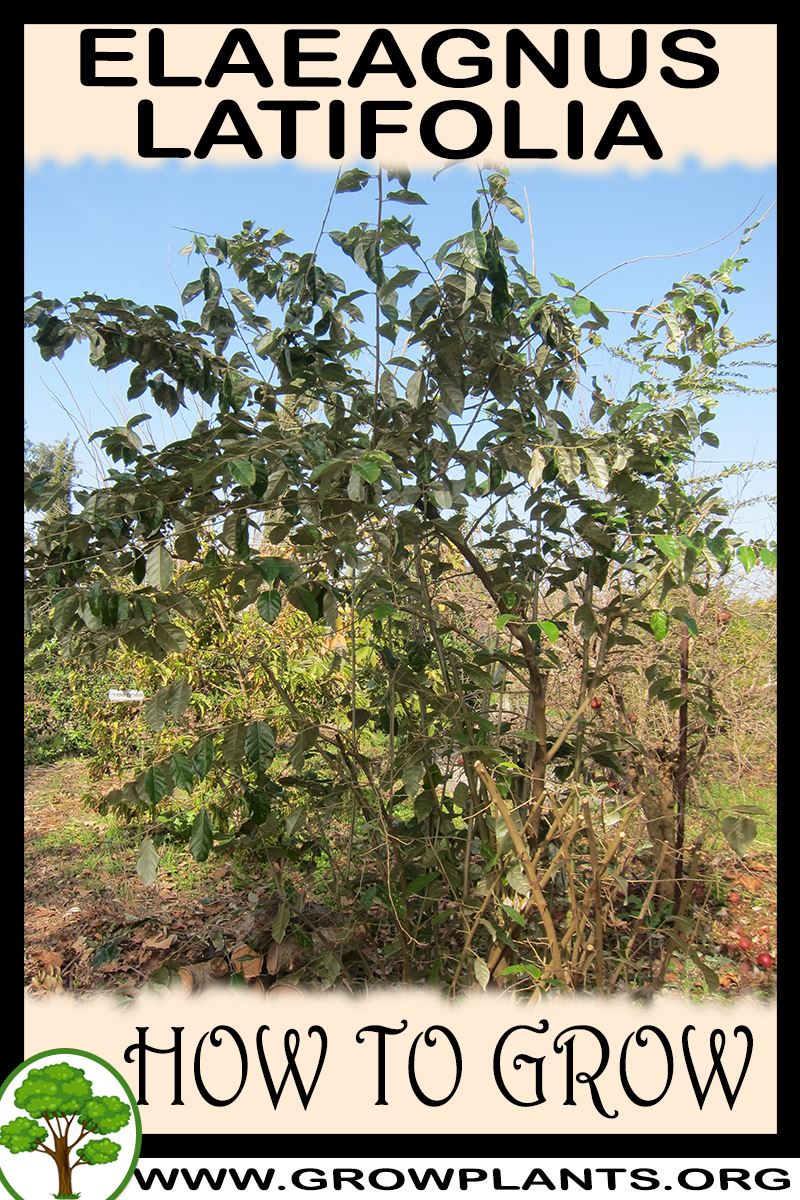
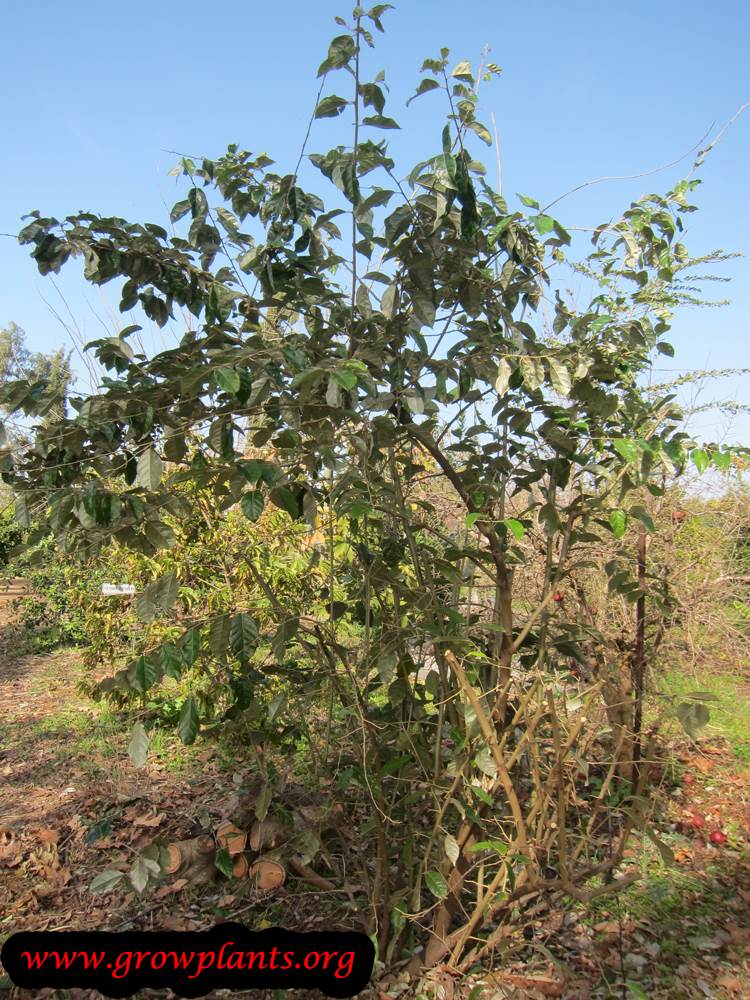
Plant Profile & Key Characteristics
Overview: A vigorous deciduous, nitrogen-fixing scrambling shrub (Elaeagnus latifolia, Bastard Oleaster) grown for its edible red-orange fruit and fragrant white flowers. It is used as a fruiting and ornamental shrub and improves poor soils.
Quick Specifications
| Specification | Attribute |
|---|---|
| Plant Type / Life Cycle | Perennial (deciduous shrub) |
| Foliage Type | Deciduous |
| Growth Rate | Moderate to fast |
| Root System | Spreading, with nitrogen-fixing root nodules |
| Toxicity | Non-toxic; the ripe fruit is edible |
| Hardiness | USDA 8-10b |
Growth Form & Structure
- Height & Spread: A large, spreading to scrambling shrub; also grown in a large container.
- Growth Habit & Form: Deciduous, spreading/scrambling shrub and a nitrogen fixer that enriches poor soils.
- Lifespan & Maturity: Vigorous, beginning to bear fruit within about 2-4 years.
Anatomy & Physical Features
- Leaves & Foliage: Green leaves (silvery-scaly beneath, as typical of Elaeagnus).
- Flower Characteristics: White, star-shaped flowers with four petals, borne in clusters.
- Fruit Profile: Oval red-orange fruit 2-4 cm long, flecked with white dots; astringent until fully ripe, then edible.
Primary Uses & Landscape Value
- Edible Uses: Ripe fruit eaten fresh or made into jams, fruit leather or dried (astringent if picked under-ripe).
- Functional & Ornamental Roles: Fruiting and ornamental shrub and soil-improving nitrogen fixer.
Care Guide: Planting, Soil & Watering
Overview: Elaeagnus latifolia (Bastard oleaster) is a hardy, fast-growing deciduous shrub that fixes its own nitrogen and tolerates poor soils, thriving in full sun. It needs winter chilling and regular moisture, and can be invasive, so site it with care.
Quick Care Requirements
| Requirement | Ideal Condition |
|---|---|
| Planting Season | In the dormant-to-warm season — from winter (in mild zones) through spring and into summer |
| Growth Rate | Moderate to Fast |
| Soil Type | Adaptable, well-draining; fixes its own nitrogen and tolerates poor soil |
| Water Need | Moderate to High — likes regular moisture, especially while fruiting |
Planting & Establishment
- Best Planting Season: Plant while dormant, from winter in mild zones through spring and into summer; bare-root stock goes in during the cool season.
- How to Plant:
- Hole Preparation: Dig a hole about twice the width of the root ball and no deeper, in a sunny spot.
- Soil Amendments: It isn’t fussy about soil and fixes its own nitrogen, so heavy feeding isn’t needed; just loosen the backfill and improve drainage if the ground is compacted.
- Planting Depth: Set the root collar level with the surrounding soil — don’t bury the stem.
- Growth Speed & Expectations: Fast to moderate; it establishes quickly and begins fruiting in about 2–4 years.
Soil, Watering & Drainage Care
- Soil Mix & Drainage Needs: Adaptable to most well-drained soils, including poor ground; avoid waterlogging.
- Watering Schedule & Technique:
- Young / Newly Planted: Water regularly to keep the soil moist while the shrub establishes.
- Established: Water moderately to generously, especially as fruit develops; it likes more water than many shrubs.
- Seasonal Adjustments: Reduce watering in winter dormancy and increase during dry summer and fruiting periods.
Climate, Light & Hardiness
This is a temperate, deciduous, nitrogen-fixing shrub that grows in full sun and needs a period of winter chill to flower and fruit well, consistent with a cold-climate Elaeagnus rather than a tropical one. It is hardy through USDA zone 8–10b.
Quick Climate Specifications
| Climate Zones | Temperate |
|---|---|
| USDA Hardiness Zones | Approximately 8–10b |
| Frost Tolerance | Moderate to high |
| Light Conditions | Full sun |
Sunlight & Light Exposure
Optimal Light Setup
Needs full sun for good flowering and fruit production.
Direct Sun Requirement
Grows and fruits best in a fully sunny position.
Temperature Extremes & Hardiness
USDA Hardiness & Regional Limits
Hardy through USDA zone 8–10b, a genuinely temperate range consistent with a deciduous shrub that needs winter cold as part of its normal cycle.
Cold Damage & Winter Protection
As a deciduous species it sheds its leaves and enters dormancy for winter, and generally needs no special protection within its hardy range.
Frost Sensitivity
Moderately to highly frost-tolerant once dormant; flowers and new spring growth are more vulnerable to a late frost.
Chilling Requirement
The site data specifically flags a winter chilling-hours requirement; inadequate winter chill in warmer parts of its range can reduce flowering and fruit set, as is typical for temperate deciduous fruiting shrubs.
Growing in Pots, Balconies & Indoors
Elaeagnus (here listed as E. latifolia / E. umbellata) is a large, vigorous fruiting shrub of 2-4 m, so it is really too big for a pot in the long term – and the grower does not rate it as a houseplant either. It can be container-grown while young or kept restrained by pruning on a sunny patio, where it produces its edible berries.
Quick Details
- Container Size: A large tub while young; it ultimately makes a 2-4 m shrub and will need root/top pruning to stay potted
- Indoor Suitability: Not a houseplant, and too large for a room long-term
- Best Spot: Full sun, outdoors
- Soil & Drainage: Free-draining potting mix; it is famously tough and unfussy
- Watering in Pots: Average to generous while establishing; it becomes quite drought-tolerant
Indoors & On the Windowsill
- Not a houseplant: The grower marks it unsuitable indoors, and at 2-4 m it is far too large for a room.
- Deciduous, hardy shrub: It rests over winter and is very cold-hardy – keep it outside rather than indoors.
On a Balcony or Patio
- A patio shrub while young: Grow it in a big tub in full sun; it works as a container plant mainly when young or kept pruned. It is vigorous and wind-tough, but a heavy tub needs a firm, well-drained standing spot.
- Edible berries: In full sun a container plant can still fruit – the small berries are edible when fully ripe.
Choosing the Pot, Soil & Long-Term Care
- Pot & drainage: The largest practical tub with strong drainage holes and no standing saucer.
- Use a well-aerated, organic-rich mix – potting compost or peat/coir with perlite or vermiculite for free drainage.
- Potted plants exhaust and leach nutrients faster than those in the ground, so feed more often – a balanced feed through the growing season.
- Repotting & pruning: Pot on while young and, once it fills its final tub, root-prune and hard-prune the top every year or two to hold it to size.
Fertilizing & Feeding
A nitrogen-fixing shrub that partners with root bacteria to supply much of its own nitrogen, so it typically needs lighter feeding than most fruiting shrubs, with attention shifting toward phosphorus, potassium, and micronutrients.
Quick Fertilizing Specs
| Feeding Level | Light feeder |
|---|---|
| Main Nutrient Priority | Low nitrogen emphasis due to natural nitrogen fixation; balanced and potassium-aware at fruiting |
| Best Feeding Period | At establishment and lightly again as fruit develops |
| Organic Options | Compost or well-rotted organic matter worked into the planting area |
| Micronutrients | Usually supplied by a complete fruiting-shrub fertilizer; correct specific issues only when diagnosed |
| Soil pH | Tolerates a wide range of well-drained soils |
Feeding by Growth Stage
Establishment after planting
Support root establishment and initial framework growth on a newly planted shrub.
| Nutrient direction | A balanced, modest feeding to settle the shrub in while its nitrogen-fixing root nodules develop. |
|---|---|
| Timing | At planting through the first growing season. |
| Frequency | A single light feeding at planting is usually enough to start the shrub off. |
| Fertilizer types | A balanced complete fertilizer used sparingly, Compost or well-rotted organic matter worked into the planting area |
| Precautions | Avoid heavy nitrogen at planting; this species partners with soil bacteria to fix its own nitrogen over time. |
Vegetative growth before bearing
Build a strong branch framework while relying mainly on the shrub’s own nitrogen fixation.
| Nutrient direction | Keep supplemental nitrogen low, since nitrogen-fixing root nodules supply much of the shrub’s needs; favor phosphorus and potassium for root and framework development instead. |
|---|---|
| Timing | The seasons of framework growth before the shrub reaches bearing age. |
| Frequency | Occasional light feeding is enough on an establishing shrub with active root nodules. |
| Fertilizer types | A low-nitrogen, phosphorus-and-potassium-aware fertilizer, Compost worked lightly into the root zone |
| Routine trace nutrients | iron, manganese, zinc |
| Precautions | Extra nitrogen fertilizer is rarely needed and can push soft growth instead of a sturdy framework. |
Flowering and fruit development
Support flowering, fruit set, and development of the astringent-to-sweet berries as they ripen.
| Nutrient direction | A balanced fertilizer with attention to potassium supports fruit development without overdoing nitrogen the shrub can largely supply itself. |
|---|---|
| Timing | From flowering through fruit development and harvest in summer. |
| Frequency | A light feeding as flowering begins is usually sufficient for the fruiting season. |
| Fertilizer types | A balanced or potassium-aware fruiting-shrub fertilizer applied lightly |
| Routine trace nutrients | iron, manganese, zinc |
| Precautions | Avoid nitrogen-heavy feeding during fruiting, which favors foliage over fruit set on a shrub that fixes its own nitrogen. |
Nutrient Deficiency Signs & Corrections
New leaves show yellowing between the veins while the veins themselves stay green.
| Possible causes | alkaline or high-pH soil limiting iron availability, compacted or waterlogged soil restricting root uptake, root stress in poorly drained planting sites |
|---|---|
| Appears first on | newest growth |
| What to check | soil pH, drainage and soil compaction, planting site conditions |
| Possible correction | Correct soil pH toward neutral and improve drainage; apply a chelated iron product per its label if the issue persists. |
Leaf margins turn yellow to brown and may look scorched, with fruit development affected.
| Possible causes | low soil potassium relative to fruiting demand, sandy soil prone to potassium leaching, uneven watering during fruit development |
|---|---|
| Appears first on | older leaf margins |
| What to check | soil potassium status, soil texture and drainage, watering consistency during fruiting |
| Possible correction | Apply a balanced or potassium-aware fertilizer during the fruiting season and keep watering consistent. |
Overall pale, slow growth despite this species’ usual vigor, without the interveinal pattern typical of iron deficiency.
| Possible causes | poorly developed nitrogen-fixing root nodules in very disturbed or waterlogged soil, genuinely low soil nitrogen not yet offset by nodule activity in a young planting, root stress from compaction or poor drainage limiting nodule function |
|---|---|
| Appears first on | whole-plant growth rate and leaf color |
| What to check | age of the planting and root nodule development, soil drainage and compaction, recent feeding history |
| Possible correction | Improve soil drainage and aeration to support nodule development before turning to a modest nitrogen feeding as a temporary measure. |
Pruning, Training & Seasonal Maintenance
This nitrogen-fixing deciduous shrub (grown here for its astringent-until-ripe edible fruit) grows fast and vigorously, reaching 2–4m, and is noted as capable of becoming invasive if left unchecked. It flowers in spring mainly on wood grown the previous season, then ripens fruit by summer, so major structural pruning in winter dormancy will remove some of that year’s flower buds; where a full crop matters more than shape, save major thinning for right after summer harvest instead. Because of its vigor, the recurring maintenance task is at least as much about controlling size, suckering and spread as about shaping for fruit access.
Quick Pruning & Maintenance Specs
| Pruning Tolerance | High (vigorous, resprouts readily even from hard cuts) |
| Primary Pruning Window | Winter dormancy (structural/access pruning; costs some flower buds) |
| Secondary Maintenance Window | Right after summer harvest (preserves the fullest next crop) |
| Typical Frequency | Annual thinning; sucker removal as needed through the growing season |
| Main Objective | Control size and spread, ease harvest access, manage vigorous suckering |
| Young Plant Priority | Establish 3–5 well-spaced main stems; remove competing basal shoots |
| Mature Plant Priority | Height/spread control for harvest access; renewal thinning of old wood; sucker removal |
| Best Tool Type | Bypass secateurs and loppers; pruning saw for old basal wood on older shrubs |
| Avoid Heavy Pruning During | Full bloom in spring, if preserving that year’s crop matters |
Pruning by Plant Age & Size
Newly Established
Remove only damaged growth in the first year or two; select 3–5 well-placed main stems as the framework rather than letting every basal shoot compete.
Young / Formative
Open-center-style light structural pruning – remove crossing or crowded stems to build an airy framework, since this species fruits over several years before it takes 2–4 years to bear (per facts), so early shaping pays off long-term.
Mature / Established
Thin annually to keep the naturally dense, vigorous growth open, control height and spread for easier harvesting, and remove root suckers regularly given the plant’s noted tendency to spread.
Seasonal Pruning Schedule
| Stage | Objective | Remove | Do Not Remove | Response / Fruiting Impact |
| Dormant/Winter | Structural shaping, access for harvest | Crossing/crowded branches, oversized growth | All one-year wood if a full crop is wanted (it carries this spring’s flowers) | Some flower buds on cut wood are lost; regrowth is vigorous |
| Post-Harvest (Summer) | Renew and thin without sacrificing the current crop | Oldest/crowded stems, root suckers | – | Preserves the season’s already-set fruit; sets up next year’s wood |
Flowering & Fruiting Wood
Flowers form in spring mainly in the leaf axils of the previous year’s (one-year-old) wood, with fruit ripening by summer. Heavy dormant-season pruning of that one-year wood removes some of the coming season’s flowers and fruit; gardeners prioritizing a full harvest should confine major cuts to right after harvest rather than winter.
Structural Pruning & Training
An open, thinned framework improves airflow and makes the summer fruit easier to reach on a shrub that can reach 2–4m. Renewal thinning of the oldest stems each year keeps replacing aging wood with vigorous new growth.
Special Growth to Remove
- Root suckers, removed at their point of origin as soon as noticed – this vigorous, nitrogen-fixing shrub suckers readily and is documented as capable of becoming invasive.
- Crowded, crossing, or old unproductive stems as part of annual thinning.
Tools
Bypass secateurs for most cuts; loppers for thicker branches; a pruning saw for old basal wood on a mature shrub approaching its full 2–4m size.
Tool Hygiene & Disease Risk
Routine – clean, sharp tools between cuts; the only documented pest issue (aphids) is not tool-transmissible.
Cut Placement & Technique
Use thinning cuts back to a main stem or the base rather than heading cuts, which would push even denser regrowth on an already vigorous shrub; cut suckers flush at their point of origin below or at the soil line.
Heavy Pruning & Rejuvenation
Tolerated very well – this species is known to resprout vigorously even from a hard cutback close to the ground, which is part of why it is considered invasive-prone where introduced. Because of that vigor, gardeners should weigh whether encouraging a flush of fresh regrowth (and the seed-bearing wood that follows) is desirable, and check local guidance on this species before doing a full rejuvenation cut.
Post-Pruning Care
Water normally after pruning; no extra feeding is needed on an already vigorous, nitrogen-fixing shrub. Watch fresh regrowth for aphids and stay ahead of resprouting suckers.
Common Pruning Mistakes
- Doing all structural pruning in winter and then being surprised by a lighter fruit set, from removing flower-bearing one-year wood.
- Ignoring root suckers, letting the shrub spread well beyond its planted footprint.
- Letting the naturally dense growth go unthinned for years, making harvest difficult and the interior unproductive.
When NOT to Prune
Avoid major structural cuts during full spring bloom if preserving that year’s crop is the priority; where local rules restrict this species as invasive, avoid rejuvenation pruning that encourages a large flush of new, potentially seed-bearing growth.
Recommended Tools (by task)
- bypass_secateurs – routine thinning cuts and sucker removal.
- loppers – medium branches beyond secateur capacity.
- pruning_saw – old basal wood on a mature shrub nearing its full size.
Pruning Troubleshooting
| Problem | Possible Cause | What to Check | Corrective Action |
| Little to no fruit despite vigorous growth | Major structural pruning was done in winter on one-year flowering wood | Check whether last pruning targeted one-year-old wood before spring bloom | Shift major structural cuts to right after summer harvest instead |
| Excessive suckering / spreading beyond the bed | Vigorous nitrogen-fixing root system, worsened after hard pruning | Check for shoots emerging away from the main stem | Remove root suckers at their point of origin regularly |
| Dense, twiggy, hard-to-harvest growth | No renewal thinning of this fast, vigorous shrub | Check stem density and age at the base | Thin oldest/crowded stems annually to open the canopy |
Bloom & Flower Guide
Quick Details
- Bloom Season: Spring
- Time to First Bloom: A few years from planting, as with most shrubby Elaeagnus
- Flower Appearance: Small, fragrant, creamy-white four-lobed star-shaped flowers borne in clusters
- Edibility: Grown as an ornamental (and later for its fruit) — the flowers themselves are not eaten
Detailed Blooming Overview
In spring the shoots are lined with masses of small, sweetly scented flowers. The fragrance is one of this shrub’s main attractions and pulls in bees from around the garden. Elaeagnus is also a nitrogen-fixing plant, which helps it flower and fruit freely even on poor ground.
Flower Characteristics
- White to creamy flowers with four petal-like lobes, opening into a small star.
- Carried in clusters along the previous season’s growth.
- Buds and flower backs often carry the fine silvery scales typical of Elaeagnus, and the blooms are noticeably fragrant.
Bloom Care & Thinning
- Site for best flowering: Full sun to light shade; the shrub is tough and undemanding once established.
- Pollination: Pollinated by bees, which are drawn in by the scent.
- Managing the bloom: No thinning is needed — simply enjoy the fragrant spring flush.
Fruit & Uses
Elaeagnus latifolia is grown for its small, edible berries, eaten fresh once fully colored and ripe, or processed into jams, fruit leather and dried fruit. Unripe fruit is notably astringent and puckers the mouth, so timing the harvest to full ripeness matters more than with most fruit.
Quick Edible Specs
| Edible Parts | Fruit |
| Main Use(s) | Culinary – fresh eating, jams, fruit leather, drying |
| Eaten Raw or Cooked | Raw when fully ripe; also cooked down for jam or dried into leather |
| Preparation Required | None once fully ripe; astringent and unpleasant if eaten underripe |
| Harvest Season | Summer |
| Time to First Harvest | Takes a few years of establishment before the shrub bears fruit – see Care/Propagation for the exact timeframe |
| Storage | Fresh fruit is best used soon after picking; processing into jam, fruit leather or dried fruit extends storage |
| Safety/Toxicity Caveat | Not toxic; underripe fruit is simply astringent and mouth-puckering, not unsafe – wait for full color before eating raw |
Fruit
The berries are red-orange with fine white speckling, oval, about 2-4cm, and become fully colored as they ripen. Fruit picked before it is fully ripe is markedly astringent and can leave the mouth feeling dry and puckered, so it is best to wait for full color and a slight softening before harvesting. Birds are drawn to the ripe fruit, so harvest can mean competing with them once the berries color up.
Harvesting
Harvest in summer as berries ripen, picking by hand once they have turned fully red-orange. Ripening is not perfectly even across the shrub, so plan on repeat picking passes over the fruiting season rather than a single harvest.
Preparation, Uses & Safety
Fully ripe fruit can be eaten straight off the shrub. Because the fresh berries are soft and don’t keep long, larger harvests are typically cooked down into jams or fruit leather, or dried for longer-term use. The main caution is culinary rather than toxic: eating fruit before it is fully ripe causes a strong astringent, mouth-puckering sensation, so let the fruit color fully before eating it raw.
Pests, Diseases & Troubleshooting
Overview: Elaeagnus are tough, nitrogen-fixing shrubs that shrug off most problems and rarely need feeding or spraying. Trouble, when it comes, is usually soil-borne wilt or a leaf-spot in humid weather, plus a few sap-suckers; lean on cultural methods – good drainage, airflow and sanitation – before reaching for any product.
Quick Troubleshooting Overview
| Issue / Pest | Main Symptom | Primary Solution |
|---|---|---|
| Aphids | Sticky honeydew, curled shoot tips, sooty mould | Blast off with water; insecticidal soap; encourage ladybirds |
| Scale insects | Brown/white bumps on stems, honeydew, dieback | Dormant/horticultural oil; prune out heavy infestations |
| Verticillium wilt | Sudden wilting of one branch, browning inside wood | No cure – prune out, improve drainage, avoid replanting host |
| Leaf spot | Brown/purple spots, some leaf drop in wet spells | Rake and destroy fallen leaves; improve airflow |
| Root rot | Wilt, yellowing, decline in soggy ground | Correct drainage; never plant in waterlogged sites |
Common Pests & Management
- Aphids (Capitophorus elaeagni / Aphis spp.):
- Symptoms: Clusters of soft green-to-brown insects on new shoots and leaf undersides; sticky honeydew, sooty mould and puckered young leaves. Most active on the flush of spring growth.
- Prevention & Control: Tolerate light numbers – natural enemies usually clear them. Dislodge colonies with a firm jet of water, encourage ladybirds, lacewings and hoverflies, and only if needed treat with insecticidal soap or a light horticultural oil, spraying in the cool of evening.
- Scale insects (Coccidae / Diaspididae):
- Symptoms: Immobile brown, waxy or white bumps along stems and leaf veins; honeydew and sooty mould; gradual twig dieback in heavy cases.
- Prevention & Control: Scrub off light infestations or prune out badly encrusted wood. A dormant-season horticultural oil smothers overwintering stages; a second summer oil catches mobile crawlers. Preserve parasitic wasps by avoiding broad-spectrum sprays.
- Japanese beetle (Popillia japonica):
- Symptoms: Adults skeletonise leaves between the veins, leaving a lacy appearance, mainly in warm-summer regions. Most damaging on Elaeagnus umbellata foliage.
- Prevention & Control: Hand-pick beetles into soapy water in the early morning when they are sluggish; avoid pheromone traps, which draw in more than they catch. Encourage healthy plants that outgrow cosmetic feeding; treat only outbreaks.
- Spider mites (Tetranychus urticae):
- Symptoms: Fine pale stippling on leaves, faint webbing beneath, and a dull bronzed look in hot, dry, dusty conditions.
- Prevention & Control: Raise humidity and hose down foliage; conserve predatory mites. For persistent cases use insecticidal soap or a horticultural oil, ensuring good undersurface coverage.
Diseases & Fungal Issues
- Verticillium wilt (Verticillium dahliae):
- Symptoms: One or more branches suddenly wilt and die back while the rest looks healthy; peeling the bark reveals dark streaking in the wood. Soil-borne and persistent.
- Treatment & Management: There is no chemical cure. Prune out affected limbs well below the streaking, sterilising tools between cuts, keep the plant vigorous with even watering, and avoid replanting Elaeagnus or other susceptible hosts on badly infected ground.
- Leaf spot (Cercospora / Septoria spp.):
- Symptoms: Small brown to purplish spots that may merge; some early leaf drop during prolonged wet weather. Largely cosmetic on a healthy shrub.
- Treatment & Management: Rake up and destroy fallen leaves, thin the canopy for airflow, and water at the base to keep foliage dry. Copper fungicide is rarely warranted and only for repeated severe outbreaks.
- Root and crown rot (Phytophthora spp.):
- Symptoms: Yellowing, wilting and general decline in wet or compacted soil; roots and collar turn dark and mushy.
- Treatment & Management: Prevention is everything: plant on well-drained ground or a raised mound, avoid overwatering, and never let the crown sit in standing water. Established rot cannot be reversed.
- Cankers and dieback (Phomopsis / Botryosphaeria spp.):
- Symptoms: Sunken, discoloured patches on stems, wilting shoots above the lesion, and scattered branch dieback, usually following stress or injury.
- Treatment & Management: Prune out cankered wood into healthy tissue, disinfecting tools, and keep plants unstressed with correct siting and watering; good vigour is the best defence.
Growing Difficulties & Abiotic Problems
- Invasiveness (Elaeagnus umbellata):
- Cause & Symptoms: Autumn olive is a prolific, bird-sown seeder and is classed as an invasive weed across much of eastern North America, forming dense thickets that crowd out natives.
- Correction Strategy: Check regional regulations before planting; where it is a concern, choose sterile cultivars or non-invasive alternatives, and remove volunteer seedlings promptly. Deadhead or harvest fruit to limit spread.
- Waterlogging decline:
- Cause & Symptoms: Although drought-tolerant once established, Elaeagnus resents constantly wet feet – soggy soil leads to yellowing, root suffocation and rot.
- Correction Strategy: Site in free-draining soil, water deeply but infrequently, and improve heavy ground with grit or organic matter before planting.
- Frost or transplant scorch:
- Cause & Symptoms: Young or newly moved plants may brown at the leaf margins after cold winds or a rough transplant.
- Correction Strategy: Shelter new plants from drying winds, water them in well, and allow the tough root system to establish – mature Elaeagnus is very hardy and self-corrects.
What Helps – Products & Tools
On a shrub this resilient, cultural care does most of the work. Keep a bar of insecticidal soap and a bottle of horticultural or dormant oil for occasional aphids, scale and mites; copper fungicide is a rarely needed backstop for persistent leaf spot. Good drainage and sharp pruning tools (cleaned between cuts) are your best tools against wilt and canker.