Plant Profile & Key Characteristics
Overview: A clump-forming evergreen geophyte (Natal lily / Bush lily / Kaffir lily) reaching 30-50 cm, with fans of broad strap leaves and clustered trumpet flowers. It is a prized shade and container ornamental and houseplant.
Quick Specifications
| Specification | Attribute |
|---|---|
| Plant Type / Life Cycle | Perennial (evergreen geophyte) |
| Foliage Type | Evergreen |
| Mature Size | 30-50 cm (12-20 in) |
| Growth Rate | Moderate |
| Root System | Fleshy rhizomatous roots |
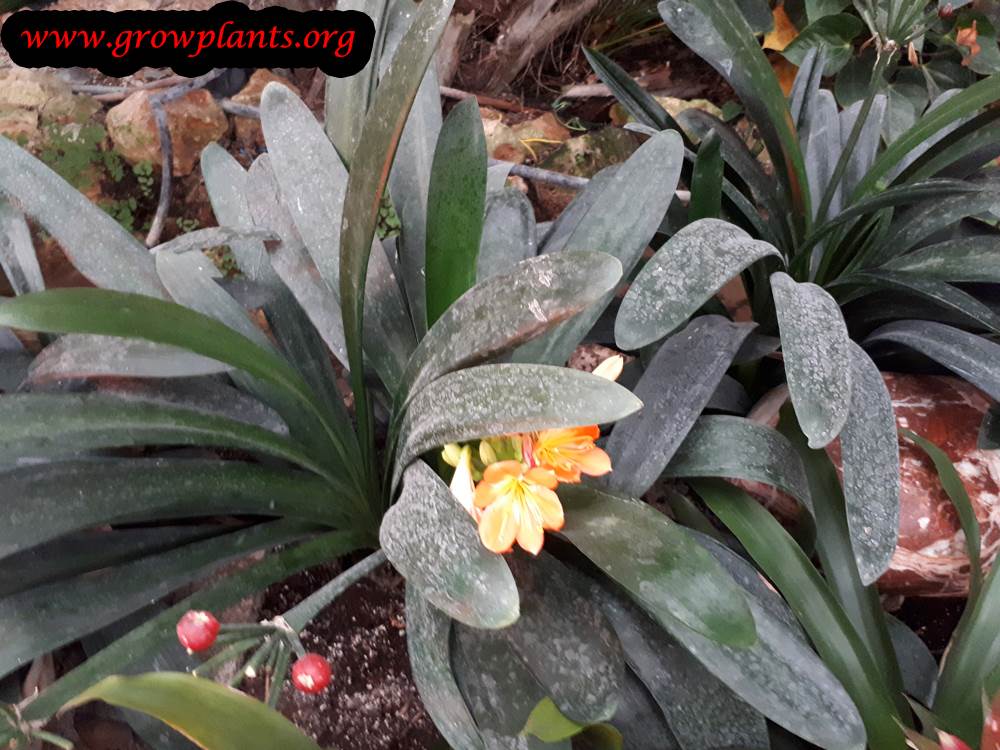
| Toxicity | Toxic — all parts, especially the berries, contain lycorine alkaloids (source notes the fruit is poisonous) |
| Hardiness | USDA zone 10b+ |
Growth Form & Structure
- Height & Spread: Clumps 30-50 cm (12-20 in); an excellent container and house plant
- Growth Habit & Form: Clump-forming evergreen with fans of strap leaves rising from a fleshy-rooted crown
- Lifespan & Maturity: Long-lived, slowly forming larger clumps
Anatomy & Physical Features
- Leaves & Foliage: Broad dark-green strap-shaped leaves arranged in a rosette or fan
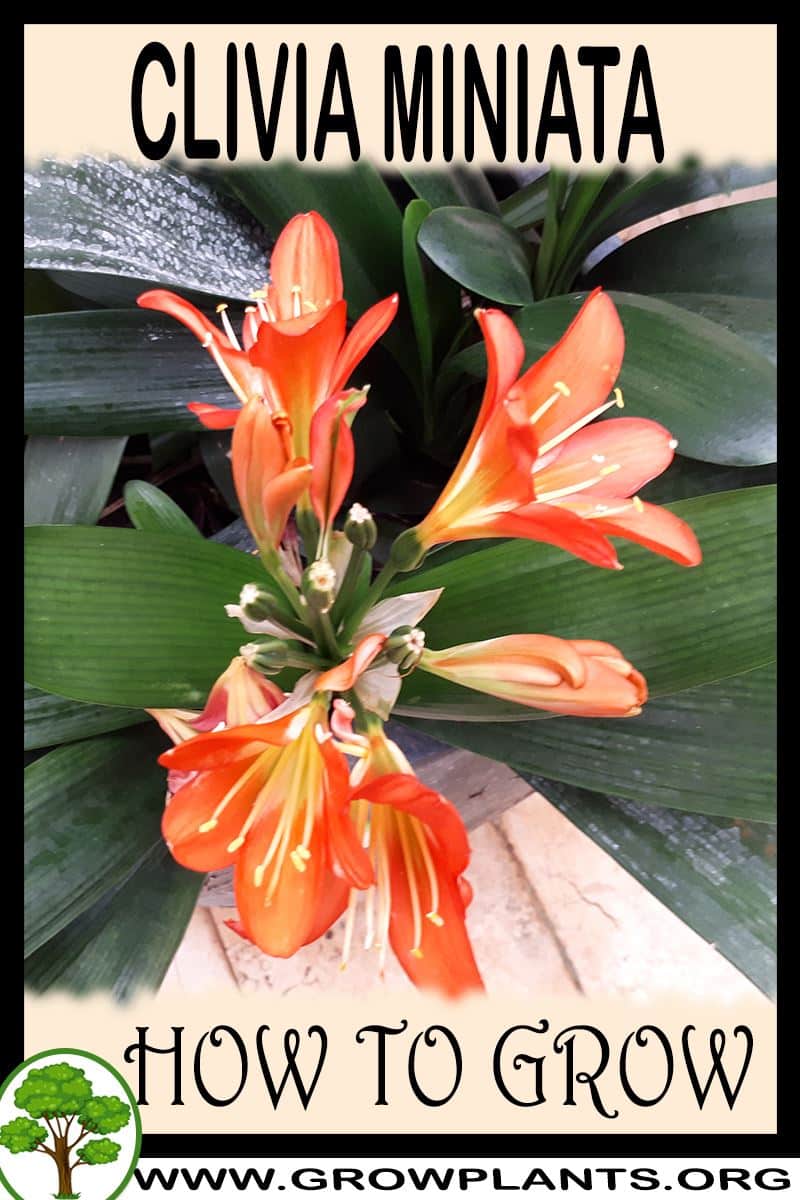
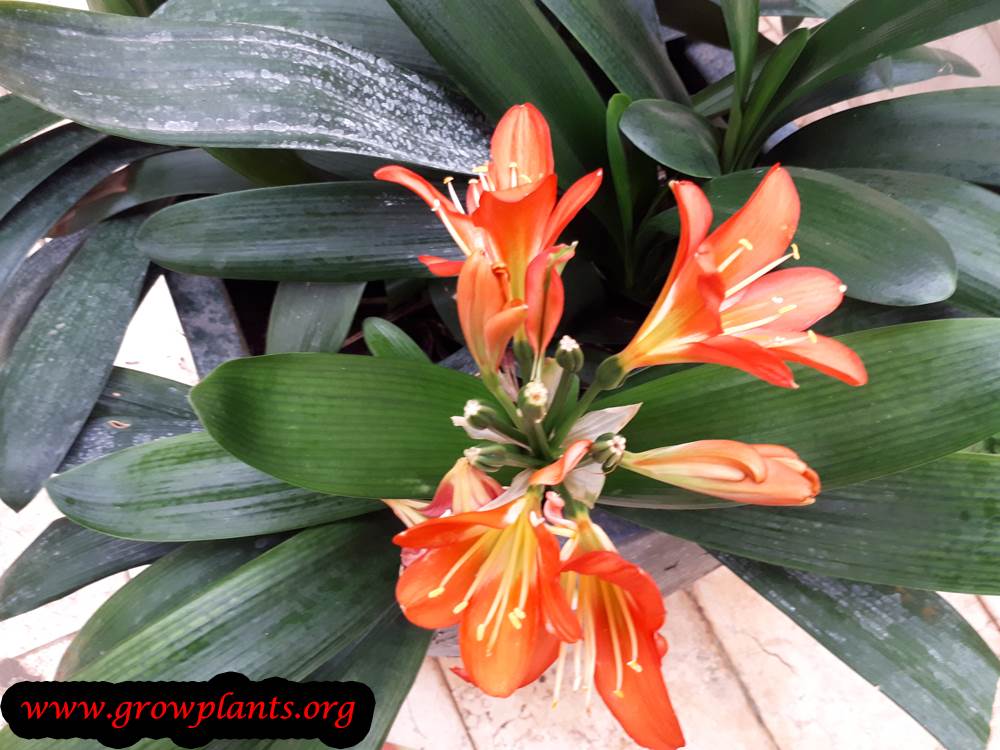
- Flower Characteristics: Clusters of trumpet-shaped flowers in red, orange or yellow atop a stout stem
Primary Uses & Landscape Value
- Functional & Ornamental Roles: Prized shade and container ornamental and houseplant; cut flower (note the berries are poisonous)
Care Guide: Planting, Soil & Watering
Overview: Clivia miniata is a shade-loving evergreen geophyte (hardy to about zone 10b, elsewhere a houseplant) that grows in rich, well-draining, humus-rich soil. It needs moderate, even moisture in the growing season and prefers to be slightly crowded at the roots.
Quick Care Requirements
| Requirement | Ideal Condition |
|---|---|
| Planting Season | Spring, summer or autumn in zone 10b+ (year-round as a houseplant) |
| Growth Rate | Moderate |
| Soil Type | Rich, humus-rich, well-draining |
| Water Need | Moderate – keep lightly moist, drier in winter |
Planting & Establishment
- Best Planting Season: Plant in spring, summer or autumn in warm zones; indoors it can be potted at any time of year.
- How to Plant:
- Hole Preparation: Dig or choose a hole only a little larger than the root mass — clivia flowers best when slightly pot-bound.
- Soil Amendments: Blend in plenty of compost and leaf mould for a rich, free-draining medium.
- Planting Depth: Set the crown at soil level, keeping the fleshy neck and roots from being buried too deep.
- Growth Speed & Expectations: A steady, moderate grower reaching 30–50 cm (12–20 in); keep it shaded, as full sun scorches the leaves.
Soil, Watering & Drainage Care
- Soil Mix & Drainage Needs: Use an open, humus-rich mix that drains freely; standing water rots the fleshy roots.
- Watering Schedule & Technique:
- Young / Newly Planted: Keep newly planted clivia evenly but lightly moist while it settles in.
- Established: Water when the top few cm dry out; the plant stores moisture and dislikes constant wetness.
- Seasonal Adjustments: Give a cool, drier winter rest with sparing water to trigger strong spring flowering, then resume regular watering as growth restarts.
Climate, Light & Hardiness
Clivia miniata is a shade-loving forest-floor plant from warm tropical, mediterranean, and subtropical climates, well suited to full shade and consistently moist soil. It is reliably hardy outdoors only from about USDA zone 10b upward, and the site data notes a comfortable minimum around 10°C (50°F), making it a popular cool-tolerant houseplant elsewhere.
Quick Climate Specifications
| Climate Zones | Tropic, Mediterranean, subtropical, or grown as a houseplant |
|---|---|
| USDA Hardiness Zones | Approximately 10b and warmer |
| Cold Damage Begins | Growth and flowering suffer as temperatures drop toward roughly 10°C (50°F) |
| Frost Tolerance | Very low |
| Light Conditions | Full shade |
Sunlight & Light Exposure
Optimal Light Setup
Prefers full shade, mimicking its native forest-understory habitat; too much direct sun scorches the strap-like leaves.
Shade & Heat Management
Thrives in shaded, sheltered spots outdoors, or bright indirect light indoors.
Temperature Extremes & Hardiness
USDA Hardiness & Regional Limits
Reliable outdoors only from about USDA zone 10b upward; elsewhere it is a well-known, relatively cool-tolerant houseplant.
Cold Damage & Winter Protection
The site data indicates the plant prefers conditions around 10°C (50°F) or warmer; below this, growth and flowering are compromised, though it tolerates cooler indoor winter temperatures better than many tropical houseplants, which can actually help trigger flowering.
Frost Sensitivity
Not frost tolerant; frost will damage or kill the plant.
Growing in Pots, Balconies & Indoors
Clivia is one of the classic shade houseplants – the grower confirms it grows well indoors and in containers. Its strap leaves and vivid flower heads thrive in bright shade, making it ideal for a spot away from direct sun.
Quick Details
- Container Size: A snug pot – Clivia flowers best slightly pot-bound, so do not over-pot
- Indoor Suitability: An excellent houseplant for bright, shaded rooms
- Best Spot: Full/bright shade – no direct sun, which scorches the leaves
- Soil & Drainage: Rich, free-draining potting mix
- Watering in Pots: Average and even in growth; keep drier and cool through the winter rest to trigger flowering
Indoors & On the Windowsill
- A classic houseplant: The grower grows it indoors – it is happiest in bright, indirect light and even copes with fairly shady rooms.
- Flowering trick: Give it a cool, drier rest in the low-light period; this dormancy is what brings on the big flower heads.
- Safety: All parts of Clivia are toxic if eaten (it contains lycorine) and the sap can irritate skin – keep it well away from children and pets.
On a Balcony or Patio
- Shaded shelter: Outdoors it wants a shaded, wind-sheltered spot with no direct sun; being frost-tender, a pot lets you move it under cover for winter.
Choosing the Pot, Soil & Long-Term Care
- Pot & drainage: A snug pot with strong drainage holes and no standing saucer; Clivia resents both waterlogging and over-potting.
- Potting mix: Rich but free-draining – potting compost with some bark or perlite.
- Potted plants exhaust and leach nutrients faster than those in the ground, so feed more often – a balanced feed through the growing season.
- Repotting: Only pot on every few years when the roots crowd the pot, ideally just after flowering; it divides readily then.
Growing this plant in a greenhouse
A greenhouse can give clivia miniata frost protection, cold protection, humidity control and extra warmth. In the right climate it may also be kept growing through winter, depending on how much warmth and light are provided.
Greenhouse at a glance
| Greenhouse suitability | Good - clearly useful |
|---|---|
| Main benefits | frost protection, cold protection, humidity control, extra warmth |
| Season extension | earlier spring & later autumn |
| Outdoor protection advisable below | about 10°C |
| Maintain greenhouse minimum | around 15°C for active growth |
| Suitable types | heated greenhouse, polycarbonate greenhouse, lean-to |
| Heating | Heating is recommended in cold climates for continuous growth. |
Related greenhouse guides
- Greenhouses: How to Choose the Right Greenhouse
- Best Greenhouse Heaters
- Greenhouse Climate Control: Temperature, Ventilation and Humidity
- Best Lean-To Greenhouses
Fertilizing & Feeding
A shade-loving, strappy-leaved perennial that grows steadily through the warm season and blooms best when given a distinct cool, drier rest beforehand; it is a light-to-moderate feeder rather than a heavy one.
Quick Fertilizing Specs
| Feeding Level | light |
|---|---|
| Main Nutrient Priority | A balanced, complete fertilizer through active growth; a high-phosphorus product is not needed to trigger bloom |
| Best Feeding Period | Warm-season active growth, from the resumption of growth after the cool rest through flowering |
| Organic Options | Compost or organic matter worked into the potting mix or bed at planting supports steady growth |
| Soil pH | Prefers rich, moisture-retentive soil that still drains well; tolerates a fairly wide pH range |
| Reduce/Stop Feeding | Reduce and then withhold feeding as the plant enters its cooler rest period ahead of the bloom cycle |
Feeding by Growth Stage
Spring / Warm-Season Growth
Support new leaf growth and build reserves after the cool rest period ends
| Nutrient direction | A balanced, complete fertilizer at a light rate as new growth resumes |
|---|---|
| Timing | As new growth resumes after the cool rest, continuing through the warm months |
| Frequency | Light feedings spaced through the active growing months are usually enough |
| Fertilizer types | Balanced, complete fertilizer at a gentle rate, Compost or organic matter worked into the potting mix |
| Routine trace nutrients | iron, manganese |
| Precautions | Keep feeding light; this plant rarely needs frequent or heavy feeding to grow well |
Bloom
Sustain the plant through its trumpet-shaped flower clusters
| Nutrient direction | Continue a balanced, complete fertilizer at a light rate; avoid pushing high-phosphorus products for bloom |
|---|---|
| Timing | During the flowering display, typically in the warmer part of the year |
| Frequency | Light feeding maintained through flowering, then eased off as bloom finishes |
| Fertilizer types | Balanced, complete fertilizer at a gentle rate |
| Routine trace nutrients | iron, manganese |
| Precautions | Ease off feeding once flowering finishes rather than continuing at the same pace |
Cool Rest Before Bloom
Give the plant the distinct cooler, drier rest that helps trigger the next flowering cycle
| Nutrient direction | None – withhold fertilizer during the cool rest period |
|---|---|
| Timing | The cooler part of the year when growth naturally slows ahead of the next bloom |
| Frequency | No feeding at this stage |
| Fertilizer types | No feeding at this stage – resume once new growth signals the rest period has ended |
| Precautions | Do not fertilize during the cool rest; feeding through this period can discourage the next bloom cycle |
Nutrient Deficiency Signs & Corrections
Overall pale green leaves and weaker leaf production, most noticeable on older leaves
| Possible causes | Nitrogen deficiency from light or infrequent feeding, Root crowding in a container that has not been refreshed, Compacted or waterlogged potting mix limiting root uptake |
|---|---|
| Appears first on | Older, outer leaves first |
| What to check | Recent feeding history, How long it has been since repotting or refreshing the mix, Drainage of the potting mix |
| Possible correction | Resume light, balanced feeding during active growth and refresh the potting mix or container if roots are crowded |
Yellowing between the veins of older, strap-shaped leaves while the veins stay green
| Possible causes | Magnesium deficiency from a nutrient-poor or heavily leached potting mix, Excess potassium feeding competing with magnesium uptake, General nutrient depletion in mix that has not been refreshed in years |
|---|---|
| Appears first on | Older, outer leaves first |
| What to check | Age of the potting mix and last repotting, Recent fertilizer balance used, Pattern of yellowing relative to the veins |
| Possible correction | Correct with a balanced feeding program and refresh old potting mix that may be depleted |
Browning or scorching at the leaf tips and margins, most visible on older leaves
| Possible causes | Fertilizer salt buildup from consistent feeding without occasional flushing, Underwatering concentrating salts in the mix, Tap water with a high mineral content |
|---|---|
| Appears first on | Tips and margins of older leaves |
| What to check | Feeding history and whether the mix is periodically flushed with plain water, Watering consistency, Mineral content of the water source |
| Possible correction | Periodically flush the potting mix with plain water to clear accumulated salts and keep feeding at a light rate |
Pruning, Training & Seasonal Maintenance
Clivia miniata is a clumping, strap-leaved rosette geophyte with no woody framework, so pruning is really grooming: removing dead leaves and spent flower stalks. It tolerates this light maintenance in any season, and it does not affect next year’s bloom the way woody-shrub pruning would – flower scapes emerge from the centre of the rosette on new growth each cycle, so old-leaf removal is purely cosmetic and cannot remove next season’s flower.
Quick Pruning & Maintenance Specs
| Pruning Tolerance | Low (grooming only – there is no structural wood to cut) |
| Primary Pruning Window | Any time of year, as leaves yellow or blooms finish |
| Typical Frequency | As needed – a light check every few weeks |
| Main Objective | Remove spent bloom stalks and dead/yellowing leaves |
| Young Plant Priority | Leave foliage intact to build up the rosette; remove only truly dead leaves |
| Mature Plant Priority | Deadhead after bloom; tidy outer leaves as the rosette renews from the centre |
| Best Tool Type | Precision snips |
| Avoid Heavy Pruning During | Not applicable – there is no heavy pruning for this plant |
Pruning by Plant Age & Size
Newly Established
Remove only leaves that are fully dead or damaged in transplanting; a young Clivia needs its full leaf area to build up the rosette and root system.
Young / Formative
No structural training applies – the rosette forms its own shape. Simply keep dead leaf tips and any rot-damaged tissue removed.
Mature / Established
Cut the flower stalk down to its base once bloom finishes, and remove outer leaves only once they have fully yellowed, since the rosette continually renews itself from the centre.
Special Growth to Remove
- Spent flower stalks (scapes) – cut down close to the base once flowering has finished, unless the ornamental (but poisonous) berries are wanted for display, in which case leave the stalk until the berries fade.
- Dead or fully yellowed outer leaves.
- Offsets (pups) at the base – these are not unwanted growth; leave them to build a multi-crown clump, or remove and pot up separately if a single specimen or new plants are wanted.
Container & Small-Space Pruning
Clivia is grown almost exclusively as a houseplant/container plant and is unusual in preferring to be somewhat pot-bound – it typically flowers better when its roots fill the pot than when freshly repotted into a much larger one. Favour refreshing the top layer of potting mix over frequent repotting or root pruning, and only divide/repot when the clump has become tight enough to crack the pot or bloom noticeably declines.
Tools
Precision snips (or a sharp, thin-bladed knife) for cutting flower stalks and dead leaves at the base – there is no woody growth to warrant secateurs, loppers or a saw.
Tool Hygiene & Disease Risk
Routine: keep tools clean and sharp. Take extra care not to cut into or leave a wound seeping into the crown, since the tightly packed leaf bases can hold moisture and are prone to basal/crown rot if cut tissue stays wet.
Cut Placement & Technique
Cut, do not pull, leaves and flower stalks free – tearing can injure the crown. Cut spent flower stalks close to their base but angled slightly away from the crown centre so water does not collect in the cut and encourage rot.
Post-Pruning Care
No special aftercare is needed beyond normal watering; avoid overwatering right after grooming since a fresh cut near the crown is a rot entry point until it dries slightly.
Common Pruning Mistakes
- Pulling or tearing dead leaves free instead of cutting them, which can injure the rosette base.
- Removing green, still-functional leaves for tidiness – the plant needs its leaf area to rebuild bloom reserves.
- Repotting and root-pruning too often, which actually reduces flowering in a plant that blooms best when slightly pot-bound.
When NOT to Prune
Avoid disturbing or cutting into the rosette during the cool, relatively dry winter rest period (around 10C) that helps trigger the next bloom cycle, and avoid pulling at leaf bases while a new flower scape is emerging and still hidden low in the crown.
Recommended Tools (by task)
- precision_snips – the only tool needed: cutting spent bloom stalks and dead leaves at the base without tearing the crown.
Propagation Guide
Clivia miniata is most reliably propagated by dividing the offsets (pups) that form around a mature clump, which reproduces the parent plant exactly; seed is possible but slower, and seedlings from open pollination may not match the parent’s flower color. Division from an established clump is easy, while seed propagation is a slower, moderate undertaking.
Quick Propagation Specs
| Best Propagation Method | Division of offsets (pups) |
| Alternative Methods | Seed |
| Propagation Difficulty | Easy by division; Moderate by seed |
| Seed True-to-Type | Variable — open-pollinated seed may not match a named parent’s flower color |
| Vegetative True-to-Type | Yes |
| Best Propagation Season | Spring, typically alongside repotting |
| Seed Germination Time | Often several weeks to a couple of months, and can be uneven |
| Germination Temperature | Warm, roughly 20–25°C (68–77°F) |
| Seed Sowing Depth | Shallow — press the large seed onto the surface or just barely cover it |
Growing from Seed
Seed Handling & Viability
Seed is contained in the berries, which the site notes are poisonous, so handle them with care when extracting seed. Clivia seed is best sown fresh, as viability can decline once it is allowed to dry out or is stored for long periods.
Sowing Depth & Orientation
The seed is large (pea-sized); sow it shallowly, pressed onto or just barely covered by the surface of the mix.
Germination Conditions
Warm conditions of roughly 20–25°C (68–77°F) with consistently moist, well-draining mix and some shade suit germination best.
Germination Time
Germination is often slow and can be uneven, typically taking several weeks up to a couple of months.
Seedling Care
Seedlings grow slowly at first; keep them in bright, indirect light with even moisture until they are large enough to pot on individually.
Division, Offsets, Pups & Suckers
Mature clumps produce offsets (pups) at the base. For best results wait until an offset has several of its own leaves and has developed its own roots before separating it from the parent clump — very small, rootless offsets are less likely to establish well. Division is best done in spring, often at the same time as repotting. After separation, pot the offset in a similarly free-draining mix and keep humidity moderate to help it settle in before resuming a normal watering routine.
Bloom & Flower Guide
Quick Details
- Bloom Season: Mainly late winter into spring, with a lighter summer-to-autumn show
- Flower Appearance: Trumpet-shaped flowers in red, orange or yellow, clustered atop a sturdy stalk
- Edibility: Not edible – the plant is toxic if eaten
Detailed Blooming Overview
Clivia miniata (bush lily, Natal lily) is an evergreen geophyte grown for its dramatic domes of trumpet flowers. It blooms in tropical, Mediterranean and subtropical gardens or as a houseplant, in roughly zone 10b and warmer, and is a superb, long-lasting cut flower.
Flower Characteristics
- Bold, trumpet-shaped flowers in warm red, orange or yellow.
- Held in rounded clusters on a strong upright stalk above strap-like leaves.
- Long-lasting both on the plant and in the vase.
Bloom Care & Thinning
- Triggering the bloom: A cool, dry rest through winter, with much less water, is the key to a strong flush of flowers.
- Position: Bright, indirect light suits it; it flowers well even when a little pot-bound.
- Safety: All parts contain toxic alkaloids and can cause illness if eaten – keep it away from children and pets, and never treat the flowers as edible.
Pests, Diseases & Troubleshooting
Overview: Clivia are tough, shade-loving evergreens whose thick roots and leathery leaves resist most trouble, but they have two signature enemies – mealybugs tucked deep into the leaf bases and the amaryllis (lily) borer caterpillar that tunnels stems and roots – plus a real risk of soft rot when the crown stays wet. Keep them slightly pot-bound, water carefully, and inspect the tight leaf fans regularly.
Quick Troubleshooting Overview
| Issue / Pest | Main Symptom | Primary Solution |
|---|---|---|
| Mealybugs | White cottony masses deep in the leaf bases | Dab with alcohol, insecticidal soap, oil |
| Amaryllis lily borer | Chewed leaves, banded caterpillars, tunneled crown/roots | Hand-pick, Bt, remove larvae, soil drench |
| Scale | Brown bumps on leaves; honeydew | Scrape off, horticultural oil |
| Snails & slugs | Grazed young leaves and flower stalks | Hand-pick, barriers, iron-phosphate bait |
| Soft/crown rot | Mushy, foul-smelling crown base | Cut out rot, dry off, improve drainage |
| Leaf spot | Brown or tan spots on leaves | Improve airflow, avoid wetting the crown |
Common Pests & Management
- Mealybugs (Pseudococcus / Planococcus spp.):
- Symptoms: Signature pest: white cottony masses wedged deep between the overlapping leaf bases and on roots, with honeydew, sooty mold and slow decline.
- Prevention & Control: Spot-treat with an alcohol-dipped cotton bud; insecticidal soap or horticultural/neem oil into the leaf bases; check roots at repotting and isolate new plants.
- Amaryllis (lily) borer (Brithys crini (syn. Brithys pancratii)):
- Symptoms: Distinctive banded black-and-yellow/red caterpillars chew leaves then tunnel down into the crown and roots, hollowing the plant and causing collapse.
- Prevention & Control: Hand-pick caterpillars and egg clusters, cut out and destroy infested tissue, apply Bt to young larvae, and drench the crown if tunneling is found.
- Soft/brown scale (Coccus hesperidum):
- Symptoms: Flat brown bumps along leaves and midribs with sticky honeydew and sooty mold.
- Prevention & Control: Scrape off, wipe leaves, and apply horticultural oil; prune out badly encrusted growth.
- Snails & slugs (Cornu / Deroceras spp.):
- Symptoms: Grazed notches in young leaves and chewed flower stalks, with slime trails, especially on young plants.
- Prevention & Control: Hand-pick after dark, use grit/copper barriers, and scatter iron-phosphate bait around the base.
Diseases & Fungal Issues
- Bacterial soft rot (Pectobacterium / Erwinia):
- Symptoms: Rapidly spreading mushy, foul-smelling rot at the crown and leaf bases, often after cold wet conditions or damage.
- Treatment & Management: Cut away all rotted tissue back to firm clean growth, dust with cinnamon or a suitable disinfectant, dry the crown, and improve drainage and airflow; avoid crown wetting.
- Fungal crown & root rot (Fusarium / Phytophthora / Pythium):
- Symptoms: Yellowing, wilting and dark, mushy roots from overwatering or waterlogged mix.
- Treatment & Management: Repot into free-draining medium, remove dead roots, water sparingly, and keep the crown dry; do not leave pots in standing water.
- Leaf spot / anthracnose (Colletotrichum):
- Symptoms: Brown to tan spots and blotches, sometimes with dark margins, on leaves in humid conditions.
- Treatment & Management: Remove affected leaves, improve airflow, keep water off foliage; copper fungicide only if persistent.
Growing Difficulties & Abiotic Problems
- Overwatering root rot:
- Cause & Symptoms: The most common killer – soggy, airless mix rots the fleshy roots, causing yellowing and collapse.
- Correction Strategy: Use a gritty, free-draining mix, let the top dry between waterings, keep slightly pot-bound, and reduce water in the cool rest period.
- Sunburn:
- Cause & Symptoms: As a shade plant, direct sun bleaches and scorches the leaves.
- Correction Strategy: Grow in bright shade or filtered light; acclimate gradually and shade from hot direct sun.
- Failure to bloom:
- Cause & Symptoms: Without a cool, drier winter rest, plants stay leafy and skip flowering.
- Correction Strategy: Give a 6–8 week cool, dry rest with reduced water before the growing season to trigger a flower spike.
- Leaf-tip browning:
- Cause & Symptoms: Salt or fluoride build-up and over-feeding brown the leaf tips.
- Correction Strategy: Flush pots occasionally with clean water, feed lightly, and use low-salt water where possible.
What Helps – Products & Tools
Cultural care does most of the work – sharp drainage, careful watering, a cool rest, and regular inspection of the leaf fans. When needed, insecticidal soap or neem/horticultural oil manages mealybugs and scale, Bt and hand-picking handle the borer, iron-phosphate bait deals with slugs/snails, and a copper fungicide or prompt surgery addresses rots and leaf spot.