Plant Profile & Key Characteristics
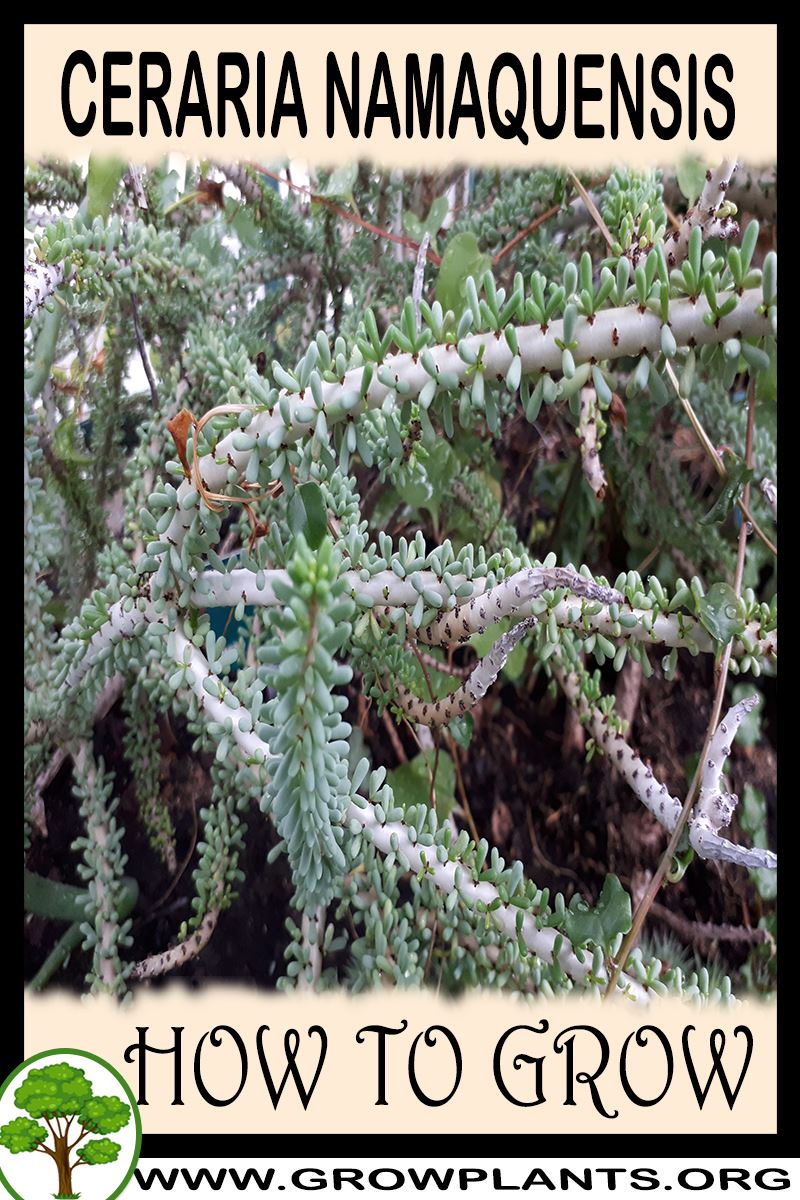
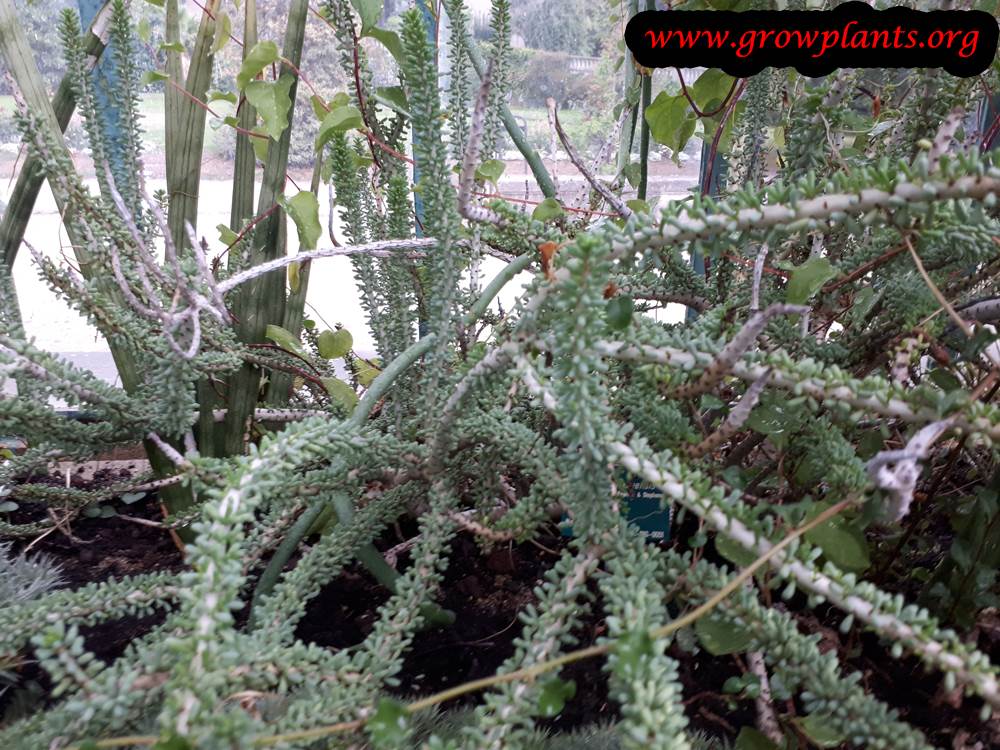
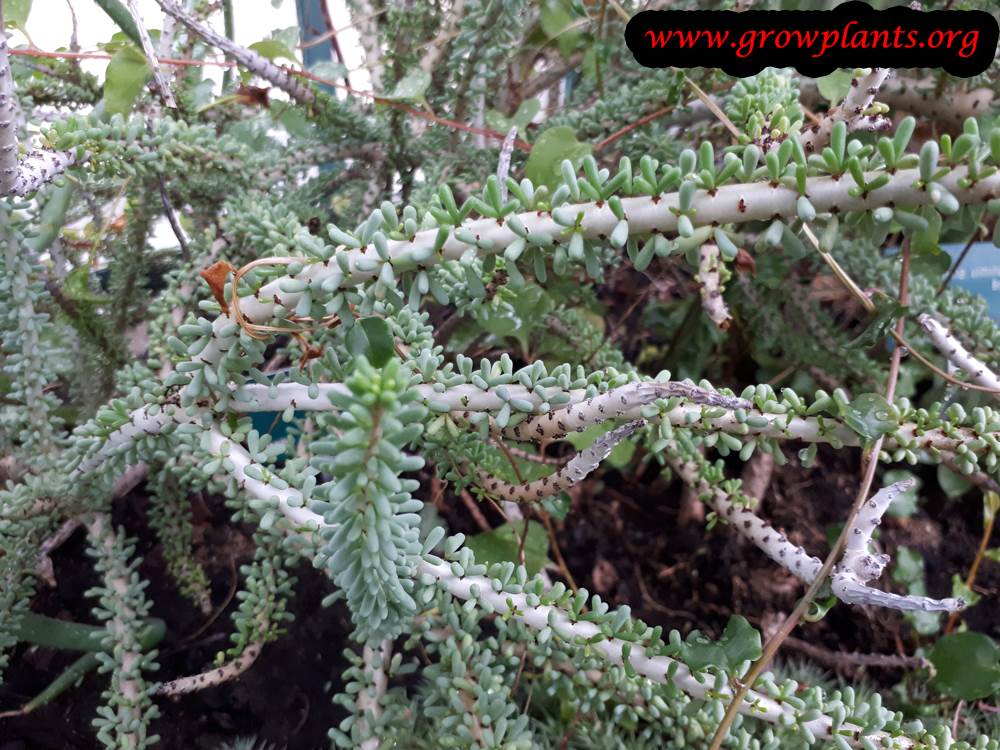
Overview: Ceraria namaquensis (Namaqua porkbush) is a slow-growing succulent shrub, 0.5-1.5 m (1.6-5 ft), with fleshy stems and tiny bottle-shaped leaves. This drought-tolerant, summer-deciduous perennial is grown as an ornamental and makes an unusual container and bonsai-style subject.
Quick Specifications
| Specification | Attribute |
|---|---|
| Plant Type / Life Cycle | Perennial (succulent shrub) |
| Foliage Type | Summer-deciduous succulent |
| Mature Size | 0.5-1.5 m tall (1.6-5 ft) |
| Growth Rate | Slow |
| Root System | Shallow root system. |
| Hardiness | USDA zones 10-12 |
Growth Form & Structure
- Height & Spread: 0.5-1.5 m (1.6-5 ft); grows well in a wide, shallow pot 20-50% larger than the root ball, as the roots are shallow.
- Growth Habit & Form: Succulent, well-branched shrub with thickened stems.
- Lifespan & Maturity: Slow-growing, long-lived succulent perennial.
Anatomy & Physical Features
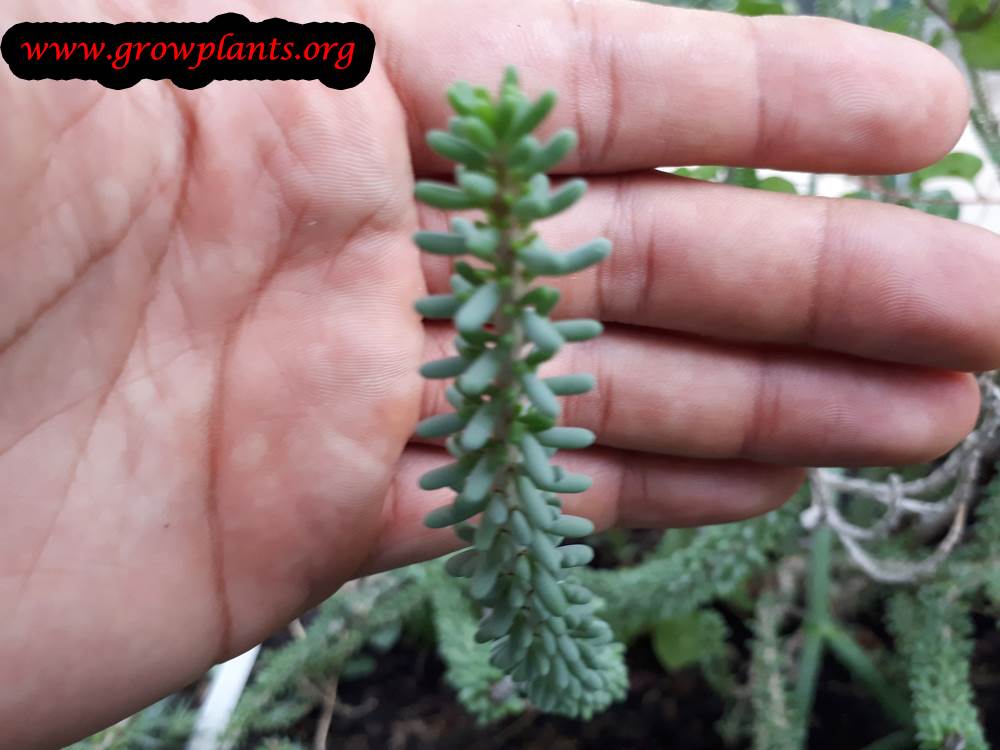
- Leaves & Foliage: Small green fleshy leaves of bottle-like shape, shed during summer dormancy.
- Flower Characteristics: Small round pink flowers borne beside the leaves in summer.
Primary Uses & Landscape Value
- Functional & Ornamental Roles: Drought-tolerant ornamental succulent for containers, rock gardens and bonsai-style display in desert and Mediterranean climates.
Care Guide: Planting, Soil & Watering
Overview: Namaqua porkbush is a slow-growing, drought-tolerant succulent shrub for hot, arid climates (hardiness zone 10-12), needing full sun to part shade. It requires a very free-draining, sandy or cactus-type soil and minimal water – overwatering readily kills it.
Quick Care Requirements
| Requirement | Ideal Condition |
|---|---|
| Planting Season | In the warm season, spring through autumn |
| Growth Rate | Slow |
| Soil Type | Sandy, gritty, very free-draining (cactus) mix |
| Water Need | Low – water sparingly and let the soil dry out; overwatering is fatal |
Planting & Establishment
- Best Planting Season: Plant in the warm season from spring to autumn (spring to summer in cooler zone 10a).
- How to Plant:
- Hole Preparation: Use a pot only 20-50% larger than the plant, and no deeper than needed as the roots are shallow; add a layer of gravel or lava rock at the base.
- Soil Amendments: Use a cactus potting mix or add plenty of grit and sand; ensure the container has ample drainage holes.
- Planting Depth: Set the base at the soil surface on a gritty top layer to keep the stem dry.
- Growth Speed & Expectations: A slow grower reaching 0.5-1.5 m (20-60 in) over many years.
Soil, Watering & Drainage Care
- Soil Mix & Drainage Needs: A sharply draining, sandy or cactus mix with gravel at the base is essential; the plant will not tolerate wet feet.
- Watering Schedule & Technique:
- Young / Newly Planted: After planting or rooting cuttings, water every few days, letting it dry but not bone dry, until established.
- Established: Water sparingly, letting the soil dry well between waterings; it stores water and rots if kept wet.
- Seasonal Adjustments: A little water in the warm growing months; keep nearly dry while dormant.
Climate, Light & Hardiness
Ceraria namaquensis is a drought-tolerant, summer-deciduous succulent shrub native to arid southern African conditions, and it grows best in full sun to half shade. It is suited to warm, dry desert, mediterranean, and subtropical climates and is broadly hardy through USDA zone 10–12, but is intolerant of overwatering and cold, wet conditions.
Quick Climate Specifications
| Climate Zones | Desert, Mediterranean, or subtropical |
|---|---|
| USDA Hardiness Zones | Approximately 10–12 |
| Frost Tolerance | Low |
| Light Conditions | Full sun to half shade |
Sunlight & Light Exposure
Optimal Light Setup
Full sun is ideal, matching its native open, arid habitat; half shade is also tolerated.
Direct Sun Requirement
Handles full direct sun well once established.
Temperature Extremes & Hardiness
USDA Hardiness & Regional Limits
Suited to USDA zone 10–12, a warm, largely frost-free range consistent with its desert origin.
Cold Damage & Winter Protection
As with many arid-climate succulents, cold combined with wet soil is more damaging than cold alone; keep it dry and sheltered during any cool spells.
Frost Sensitivity
Frost-sensitive; not suited to climates with regular freezes.
Extreme Heat Tolerance
Very heat tolerant, reflecting its native desert habitat; it goes summer-deciduous in some conditions as a natural drought-survival strategy.
Growing in Pots, Balconies & Indoors
Ceraria namaquensis is a slow, shrubby succulent (to about 1.5 m) that the grower does not rate as a houseplant – it wants strong sun. It can, however, be grown for years in a container and kept on the sunniest windowsill or a hot patio, making an attractive bonsai-like specimen.
Quick Details
- Container Size: A clay pot 20-50% larger than the root ball; depth is not important as the roots are shallow
- Indoor Suitability: Not a true houseplant – only a very sunny windowsill will do
- Best Spot: Full sun to light shade
- Soil & Drainage: Cactus mix over a layer of gravel/lava rock/pebbles; very sharp drainage
- Watering in Pots: Water sparingly – overwatering will kill it
Indoors & On the Windowsill
- Not a houseplant: The grower marks it unsuitable indoors; in a normal room the light is far too weak for this sun-lover.
- Sunniest sill only: A small plant can be kept on the brightest, sunniest windowsill, held quite dry – the more direct sun, the better.
On a Balcony or Patio
- Full sun: A hot, sunny, sheltered balcony or patio suits it well; its shallow roots dry quickly, which this drought-hardy succulent prefers.
Choosing the Pot, Soil & Long-Term Care
- Pot & drainage: Use a clay pot 20-50% larger than the root ball (shallow is fine); line the base with gravel, lava rock or pebbles and use a cactus mix on top.
- Watering: Keep it dry – err on the side of too little water.
- Feeding: Very light feeding, once or twice in growth at most.
Grower’s Container Tip
- Repotting technique (the grower’s method): Every few years, ease the plant out and lay it on paper (or wrap it in paper/plastic to guard against the spines while you handle it). Re-lay your drainage stones, add some cactus mix, set the plant in place, and work in more soil – use a spoon for small plants or a small trowel for larger ones, firming so the plant sits stable. If it wobbles, push in a stake to hold it upright until it settles.
Fertilizing & Feeding
A drought-tolerant succulent shrub that is naturally summer-deciduous – feeding should stay light and tied to its active leafy period, with none needed while it is bare or resting.
Quick Fertilizing Specs
| Feeding Level | Light |
|---|---|
| young_feeding | Very light or none while a young plant or rooted cutting is still establishing. |
| mature_feeding | Occasional light feeding while the plant is in leaf and actively growing. |
| Main Nutrient Priority | Low nitrogen with an overall restrained approach that favors sturdy, drought-hardy growth over fast, soft growth. |
| Best Feeding Period | The active leafy growing season. |
| Organic Options | A light top-dress of well-aged organic matter for ground-planted specimens. |
| Reduce/Stop Feeding | Stop feeding once the plant drops its leaves and enters its natural bare, resting phase. |
Feeding by Growth Stage
Active Leafy Growth
Support healthy new stem and leaf growth on this slow-growing succulent shrub without pushing soft, rot-prone tissue.
| Nutrient direction | Low-nitrogen, restrained feeding that favors firm, drought-hardy growth over fast, watery growth. |
|---|---|
| Timing | While the plant is in leaf and visibly producing new growth. |
| Frequency | Feed sparingly – an occasional light dose during the leafy growing period is plenty for this slow grower. |
| Fertilizer types | A heavily diluted low-nitrogen succulent or cactus fertilizer for container specimens, A light top-dress of organic matter for plants grown in well-drained open ground |
| Precautions | Avoid overwatering combined with feeding, since this plant is highly sensitive to excess moisture and can be killed by root rot. |
Leafless Dormant Rest
Let the plant rest through its natural leaf-drop period without encouraging growth it isn’t prepared to support.
| Nutrient direction | None – withhold fertilizer while the plant is bare and resting. |
|---|---|
| Timing | The period after the plant has shed its leaves for its natural summer-deciduous rest. |
| Frequency | No feeding at this stage – resume only once the plant leafs out and active growth clearly restarts. |
| Fertilizer types | No feeding at this stage – occasional light watering only, no fertilizer product needed. |
| Precautions | Do not fertilize a leafless, resting plant; added nutrients with no active growth to use them can build up as harmful salts. |
Nutrient Deficiency Signs & Corrections
Leaves drop earlier or more heavily than expected outside of the plant’s normal dormant period.
| Possible causes | Overwatering or waterlogged soil stressing the roots, Sudden environmental stress such as a temperature swing or relocation, General nutrient scarcity after a long stretch without any feeding |
|---|---|
| Appears first on | The lower or older leaves first |
| What to check | Check soil moisture and drainage before assuming a nutrient cause, Check for any recent change in light, temperature, or location |
| Possible correction | Correct watering and drainage first; only consider a light, low-nitrogen feeding once the plant is back in active growth. |
Stem segments turn soft, discolored, or begin dying back rather than staying firm.
| Possible causes | Root or stem rot from excess moisture, often worsened by feeding on top of already wet soil, Poor drainage in the growing medium, Cold stress on a plant grown outside its comfortable temperature range |
|---|---|
| Appears first on | The base of the stems or the roots |
| What to check | Check for mushy or discolored tissue at the soil line, Check how well the growing medium drains and how often the plant has been watered |
| Possible correction | Improve drainage, reduce watering, and withhold feeding entirely until the plant shows firm, healthy new growth. |
Pruning, Training & Seasonal Maintenance
Ceraria namaquensis is a slow-growing, woody-stemmed succulent shrub that is summer-deciduous, dropping its small fleshy leaves during the summer dry season and leafing out again afterward. This makes summer — while the plant is bare and dormant — the genuinely correct pruning window: the gnarled woody framework is fully visible for shaping, and cuts are not competing with active leaf and root growth. Its thickened, sculptural trunk makes it a popular candidate for succulent-bonsai-style training, so pruning here is as much about developing form over years as it is about removing damaged growth; light pink flowers appear at the leaf axils on current growth and are not affected by dormant-season cuts.
Quick Pruning & Maintenance Specs
| Pruning Tolerance | Moderate (tolerates shaping cuts into old wood, but recovery is slow) |
| Primary Pruning Window | Summer, during its natural leafless dormancy |
| Typical Frequency | Light, occasional shaping once a year plus dead-part removal as needed |
| Main Objective | Develop and maintain trunk/branch form; remove dead or damaged growth |
| Young Plant Priority | Select 1–2 leading stems and remove only weak or crossing shoots |
| Mature Plant Priority | Refine silhouette and trunk taper; remove dead wood |
| Best Tool Type | Bypass secateurs for thin stems, small loppers for older woody stems |
| Avoid Heavy Pruning During | The active leafed-out growth period, when the plant is drawing on stored energy for new leaves rather than wound recovery |
Pruning by Plant Age & Size
Newly Established
Do not prune a newly planted specimen; remove only clearly dead or damaged growth while the root system establishes.
Young / Formative
Select the strongest one or two stems to form the eventual trunk line and remove weak, thin, or crossing side-shoots, since this species is often grown for its gnarled trunk character rather than as a dense shrub.
Mature / Established
On established plants, prune mainly to refine the trunk and branch silhouette and to remove dead wood; because growth is slow, mature shaping cuts are made sparingly rather than on a fixed annual cycle.
Structural Pruning & Training
Branch selection is the main structural task — favor stems that build a thickened, tapering trunk line and remove ones that crowd or cross it. Because the species is slow-growing, canopy thinning is used lightly and only to reveal trunk form, not as a routine airflow measure.
Special Growth to Remove
- Dead or dried stem sections: cut back to firm, live wood at any time they appear.
- Weak or crossing shoots: remove during the summer dormant window while the framework is visible, to keep the trunk-and-branch structure clean.
Container & Small-Space Pruning
This species is grown outdoors in containers (it is not suited to indoor houseplant culture) with a shallow, well-drained cactus-mix planting; in a pot, prune a little more actively for compactness and proportion to the container, and avoid root disturbance at the same time as a heavy top prune, since the plant cannot recover from both stresses at once.
Tools
- Bypass secateurs: for thin to medium stems.
- Loppers: for thicker, older woody stems on a mature specimen.
Tool Hygiene & Disease Risk
Increased risk: cuts into the fleshy, water-storing wood of this species can allow rot organisms in, particularly if the plant is watered again before the wound has dried, so disinfect blades before structural cuts and let cuts callus in dry conditions before resuming watering.
Cut Placement & Technique
Make clean cuts just above a node or branch junction, favor thinning cuts (removing a stem back to its point of origin) over heading cuts to keep the natural branching pattern, and avoid leaving stubs, which are slow to callus on this slow-growing species.
Heavy Pruning & Rejuvenation
Tolerated but slow to recover: an overgrown or misshapen specimen can be cut back hard into old wood during the summer dormant window and will resprout, but given the plant’s naturally slow growth rate, expect the new framework to take multiple seasons to fill back in — spread any severe rejuvenation over more than one summer rather than removing most of the plant at once.
Post-Pruning Care
Withhold water for several days to a week after a structural cut so the wound can dry and callus, then resume the species’ normal minimal watering; watch new growth for slug damage, the main pest risk noted for this plant.
Common Pruning Mistakes
- Pruning during the leafed-out active growth period instead of the summer dormant window.
- Watering immediately after a cut, before the wound has callused.
- Removing too much of the framework at once on a plant that is inherently slow to regenerate.
When NOT to Prune
Avoid pruning right after transplanting, and avoid any heavy cut immediately before or during the plant’s leafed-out growth phase, when it should be putting energy into foliage rather than wound recovery.
Recommended Tools (by task)
- bypass_secateurs: clean cuts on thin-to-medium stems for formative shaping.
- loppers: for thicker old-wood stems on a mature, trunked specimen.
- blade_disinfectant: reduces the real rot risk this fleshy-wooded succulent carries at fresh cuts.
Propagation Guide
Ceraria namaquensis is most easily propagated from stem or leaf cuttings, which the site notes are much faster than growing from seed; seed itself is true-to-type for this species but slower to reach a usable plant. Cuttings root reliably with basic care, making this an Easy plant to propagate.
Quick Propagation Specs
| Best Propagation Method | Stem or leaf cuttings |
| Alternative Methods | Seed (slower) |
| Propagation Difficulty | Easy |
| Seed True-to-Type | Yes |
| Vegetative True-to-Type | Yes |
| Best Propagation Season | Late spring to early summer is best for cuttings, though they can also be started indoors depending on house temperature; for seed, spring is best (possible in autumn/winter in hot climates), varying by hardiness zone |
| Seed Germination Time | 2–4 weeks |
| Cutting Rooting Time | A few weeks to a month |
| Seed Sowing Depth | 0.5cm (0.25in) |
Growing from Seed
Seed Handling & Viability
Store seed in a dry, dark spot at room temperature until sowing.
Sowing Season
Best sown in spring, though sowing in autumn or winter is possible in hot climates (use full shade if sowing in summer). In hardiness zone 10a sow spring to summer, zone 10b spring to autumn, and zone 11 year-round.
Sowing Depth & Orientation
Sow about 0.5cm (0.25in) deep in full sun, in a sandy, well-ventilated soil such as a cactus potting mix with good drainage.
Germination Conditions
Keep the soil moist without overwatering, and don’t let it dry out.
Germination Time
Around 2–4 weeks.
Seedling Care
Grow seedlings on in light with moist, well-ventilated soil; space plants roughly 20–30cm (8–12in) apart as they develop.
Stem Cuttings
Cutting Type
Stem cuttings (leaf cuttings are also effective and are covered separately below).
Best Timing
Best started in late spring to early summer, though it can be done indoors at other times depending on the house’s temperature.
Cutting Preparation
Cut a stem section with a sharp tool and let the cut wound heal for a few days before planting.
Rooting Setup
Plant the cutting in well-drained soil and water every few days, letting it dry out somewhat between waterings but never fully dry.
Rooting Hormone
Not necessary — cuttings root without it.
Rooting Time
A few weeks to a month.
Leaf & Root Cuttings
Leaf cuttings work the same way as stem cuttings and root just as readily. Remove a leaf at its base, preferably by hand rather than with a sharp tool, and let the wound callus for at least 24 hours; if the leaf isn’t cleanly removed at the base and a sharp object has to be used, treat it like a stem cutting and allow several days for the tissue to heal instead. Once callused, plant it in well-drained soil and water every few days, letting the soil dry somewhat between waterings but not fully dry; rooting takes a few weeks to a month.
Bloom & Flower Guide
Quick Details
- Bloom Season: Summer
- Flower Appearance: Small round pink flowers borne beside the leaves along the stems
- Edibility: Not eaten – grown as an ornamental succulent
Detailed Blooming Overview
Ceraria namaquensis (Namaqua porkbush) is a slow, drought-tolerant succulent shrub grown for its sculptural form and small fleshy leaves. It flowers in summer in desert, Mediterranean and subtropical settings across roughly zones 10-12. Plants are either male or female, so both are needed if seed is wanted.
Flower Characteristics
- Tiny, rounded pink flowers.
- Carried close to the stems, next to each of the small bottle-shaped leaves.
- Dainty rather than showy, in keeping with the plant’s bonsai-like character.
Bloom Care & Thinning
- Position: Full sun, warmth and very sharp drainage bring on the summer flowers.
- Seed set: Because male and female flowers are on separate plants, both are needed for seed.
Pests, Diseases & Troubleshooting
Ceraria namaquensis is a slow, drought-adapted caudiciform succulent from arid southern Africa; like most such succulents it is essentially pest-free but very intolerant of wet, and its real risks are root and stem rot from overwatering (especially when dormant) plus the usual succulent sap-suckers. Management is about a very free-draining mineral mix, minimal watering and bright light rather than any pest programme.
Quick Troubleshooting Overview
| Issue / Pest | Main Symptom | Primary Solution |
|---|---|---|
| Root / stem rot | Soft, blackened, shrivelling stems or base; collapse | Gritty mix; minimal water; keep dry when dormant |
| Mealybugs | White cottony masses on stems, tips and roots | Alcohol swab, horticultural oil, check roots |
| Scale insects | Small brown/waxy bumps on stems | Scrape/wipe off; horticultural oil |
| Spider mites | Fine stippling/scarring in hot dry air | Rinse; horticultural oil; slight humidity |
| Etiolation | Thin, stretched, pale growth in low light | Bright light; more sun |
| Cold damage | Soft, blackened growth after chill | Keep frost-free and dry in cold |
Common Pests & Management
- Mealybugs (Pseudococcus / Planococcus spp.):
- Symptoms: White, cottony insects tucked into stem joints, growing tips and among the leaves, and on the roots, sucking sap, stunting growth and leaving honeydew; root mealybug hides unseen in the mix.
- Prevention & Control: Dab clusters with an alcohol swab; treat with horticultural oil or insecticidal soap and repeat; unpot to check the roots and repot into fresh dry mineral mix if root mealybug is present; isolate new plants and inspect at purchase.
- Scale insects (Diaspididae):
- Symptoms: Small brown, grey or waxy bumps fixed to the stems and older growth, sucking sap and causing yellowish blemishes and weak growth when numerous.
- Prevention & Control: Scrape or wipe off small numbers; smother with horticultural oil, repeating to catch crawlers; prune out badly infested sections; conserve natural enemies if grown outdoors in warm climates.
- Spider mites (Tetranychus spp.):
- Symptoms: Fine stippling and dull corky scarring on stems and small leaves in hot, dry, still air, with faint webbing on stressed plants.
- Prevention & Control: Rinse the plant periodically and raise humidity slightly; treat with horticultural oil or insecticidal soap; repeat; introduce predatory mites under cover; avoid drought and heat stress.
- Aphids (Aphididae):
- Symptoms: Soft aphids cluster on the softest new growth and any flowers, distorting tips and leaving honeydew; usually minor on this woody succulent.
- Prevention & Control: Rinse off with water; treat persistent numbers with insecticidal soap; encourage predators; remove badly affected soft tips.
Diseases & Fungal Issues
- Root and stem rot (Phytophthora / Fusarium / Pythium spp.):
- Symptoms: The main threat: stems or the caudex base turn soft, dark and shrivelled and the plant collapses, or roots rot unseen so it declines-almost always from overwatering, a moisture-retentive mix, or water while dormant or cold.
- Treatment & Management: Prevention is everything-use a gritty, extremely free-draining mineral mix, water sparingly only when bone-dry and growing, and keep dry through dormancy and cold. If caught early, cut back to firm clean tissue, dust with sulphur, dry and re-root; discard plants rotted through.
- Fungal leaf and stem spot (Colletotrichum / Alternaria spp.):
- Symptoms: Brown or black sunken spots on stems and leaves in damp, humid or splashed conditions.
- Treatment & Management: Keep the plant dry, bright and airy and avoid wetting the body; cut out affected tissue and dust with sulphur; improve ventilation; sulphur or copper fungicide only if spotting persists.
Growing Difficulties & Abiotic Problems
- Overwatering rot:
- Cause & Symptoms: The commonest cause of loss: too much water, a water-retentive mix, or watering while dormant keeps the roots and caudex wet, and they rot.
- Correction Strategy: Grow in a sharply draining mineral mix in a well-drained pot; water thoroughly but rarely and only in active growth when the mix is completely dry; keep nearly dry through the dormant season and in cold weather.
- Etiolation in low light:
- Cause & Symptoms: Insufficient light causes thin, stretched, pale growth and loss of the plant’s compact, silvery character.
- Correction Strategy: Provide the brightest possible position with ample direct sun; acclimatise gradually to strong sun to prevent scorch; rotate for even growth.
- Cold sensitivity:
- Cause & Symptoms: As an arid warm-climate succulent it is damaged by cold and frost, which blacken and soften growth, particularly if wet.
- Correction Strategy: Keep frost-free and dry through cold spells; grow under cover in cool climates; ensure it goes into cold dry rather than wet.
What Helps — Products & Tools
Care is almost entirely cultural: a gritty mineral mix, minimal watering and bright light. For sap-suckers, alcohol swabs and horticultural oil handle mealybugs, scale, mites and aphids; sulphur dust treats cut rot wounds and spotting. There is no substitute for restraint with water-drainage and dryness prevent the rot that is the plant’s main danger.