


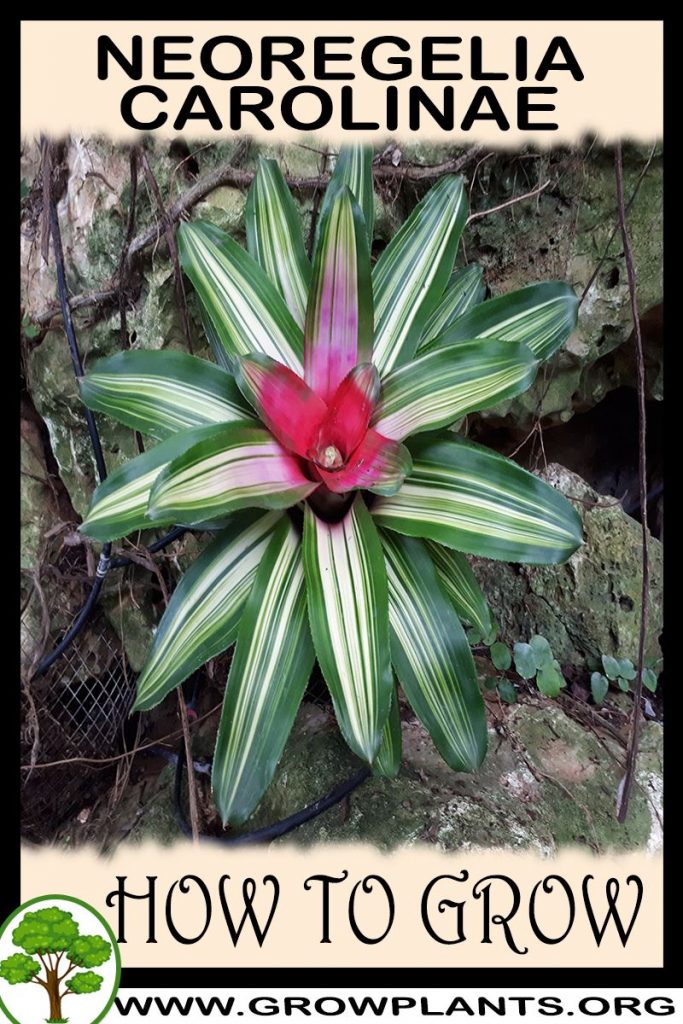
Plant Profile & Key Characteristics
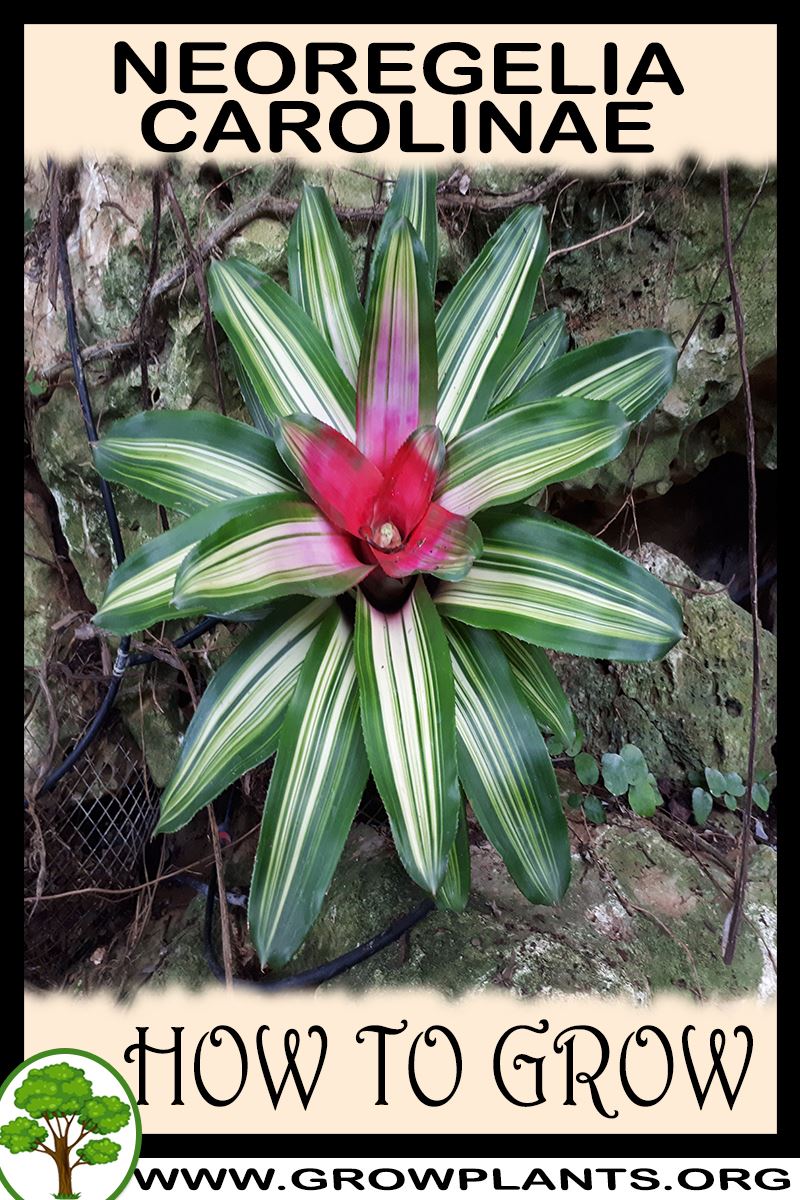
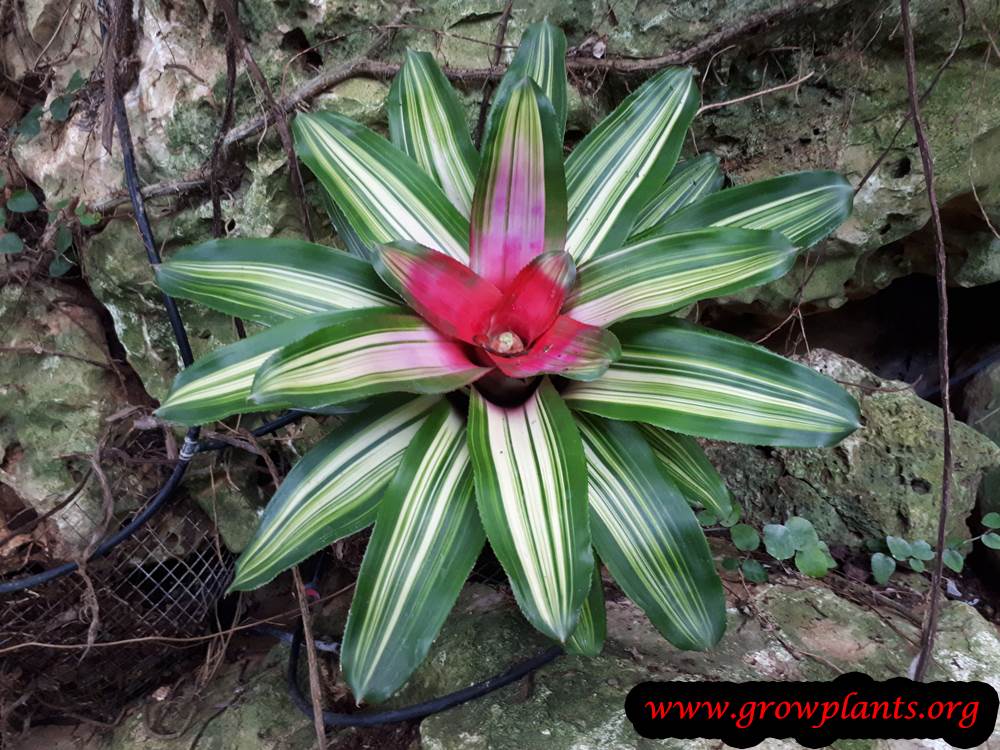
Overview: This Neoregelia is an evergreen, rosette-forming epiphytic bromeliad only 5-20 cm (2-8 in) tall, grown as an ornamental for its brilliantly coloured leaves. It suits subtropical, Mediterranean and tropical climates and makes an easy houseplant.
Quick Specifications
| Specification | Attribute |
|---|---|
| Plant Type / Life Cycle | Perennial (epiphytic bromeliad) |
| Foliage Type | Evergreen |
| Mature Size | 5-20 cm (2-8 in) tall |
| Growth Rate | Slow to Moderate |
| Root System | Epiphytic – roots act mainly as anchors rather than a feeding system |
| Toxicity | Non-toxic |
| Hardiness | USDA zones 11a-11b+ (with winter protection) |
Growth Form & Structure
- Height & Spread: Low rosette 5-20 cm (2-8 in) tall; grown in shallow pots or mounted on cork/bark, disconnected from soil.
- Growth Habit & Form: Flattened rosette of strappy leaves forming a central water-holding cup (‘tank’).
- Lifespan & Maturity: Each rosette flowers once then produces offsets (pups); slow to moderate growth.
Anatomy & Physical Features
- Leaves & Foliage: Strap-like, sharp-edged leaves in a flat rosette in green, pink, white, yellow and red, often several colours together; the centre flushes red at flowering (hence ‘blushing bromeliad’).
- Flower Characteristics: Small purple or pink flowers borne low in the central cup of the rosette.
Primary Uses & Landscape Value
- Functional & Ornamental Roles: Ornamental foliage houseplant; grown in pots, mounted on bark, or in bright frost-free gardens.
Care Guide: Planting, Soil & Watering
Overview: Neoregelia is an epiphytic bromeliad that grows in a light, airy, inert mix (or mounted on bark) rather than ordinary soil, and takes its water from the central leaf cup. It needs warmth, bright light without direct sun, and moderate water – letting the potting medium dry between waterings.
Quick Care Requirements
| Requirement | Ideal Condition |
|---|---|
| Planting Season | Warm season – spring to summer/autumn in warm zones; year-round in the tropics (zone 12+) |
| Growth Rate | Moderate to slow |
| Soil Type | Light, airy, inert mix (sphagnum / bark); often grown epiphytically |
| Water Need | Moderate – fill the central cup and let the mix dry between waterings |
Planting & Establishment
- Best Planting Season: Plant in the warm season (spring through summer or autumn depending on zone, year-round in zone 12+).
- How to Plant:
- Hole Preparation: Pot into a small container of loose bark or sphagnum, or mount the plant on cork or bark.
- Soil Amendments: Use an inert, free-draining medium – not rich soil; these plants are naturally epiphytes.
- Planting Depth: Set the base so the rosette sits just above the medium; never bury the crown, which rots easily.
- Growth Speed & Expectations: Moderate to slow; each rosette flowers once, then produces offsets.
Soil, Watering & Drainage Care
- Soil Mix & Drainage Needs: The medium must be very airy, sharp-draining and low in nutrients, and must never stay soggy at the roots.
- Watering Schedule & Technique:
- Young / Newly Planted: Keep the medium lightly moist and the central cup topped up.
- Established: Keep water in the central rosette cup and let the potting medium dry between waterings; use rainwater or purified water, as the plant is sensitive to hard water.
- Seasonal Adjustments: Keep warmer and a little drier in winter (above ~10–15°C); give more humidity and water in summer heat.
Climate, Light & Hardiness
Neoregelia carolinae is a warm-climate bromeliad for subtropical, mediterranean, and tropical gardens or as a houseplant, needing steady warmth and high humidity rather than direct sun. It has essentially no frost tolerance and should be kept well above freezing.
Quick Climate Specifications
| Climate Zones | Subtropics, mediterranean, tropics, or indoors as a houseplant |
|---|---|
| USDA Hardiness Zones | 11b+ outdoors year-round; can extend into zone 11a with attentive overwinter protection |
| Optimal Temp Range | Above approximately 15°C (59°F) |
| Cold Damage Begins | Below approximately 10°C (50°F) |
| Approx. Survival Minimum | Site data gives 10°C (50°F) as its minimum tolerated temperature; colder exposure risks lasting damage or death |
| Frost Tolerance | None |
| Light Conditions | Full Shade with bright ambient light – no direct sun |
Sunlight & Light Exposure
Optimal Light Setup
Bright, filtered light without direct sun mirrors its natural spot on tree bark or rock in a humid forest.
Direct Sun Requirement
Not applicable – direct sun burns the leaves and flowers, leaving permanent marks.
Shade & Heat Management
In hot summer weather the colorful leaf pattern can bleach; strong indirect light rather than harsh midday sun preserves color.
Best Exposure / Orientation
Bright shade outdoors under a canopy, or an indoor spot with ample ambient light but no direct sun through glass.
Temperature Extremes & Hardiness
USDA Hardiness & Regional Limits
Reliable year-round outdoors only in USDA zone 11b and warmer; zone 11a is workable with dedicated overwinter care, while colder regions should grow it as a protected houseplant.
Cold Damage & Winter Protection
Keep above roughly 10°C (50°F), and ideally above 15°C (59°F); bring container specimens indoors well ahead of any cold snap.
Frost Sensitivity
Highly frost-sensitive; even brief chilling below its minimum threshold can cause lasting harm.
Extreme Heat Tolerance
Tolerates warm-to-hot conditions typical of its native range, but combined heat and direct sun can bleach the leaf color.
Wind, Humidity & Microclimate
Humidity Preferences
Needs consistently high humidity, reflecting its epiphytic origin on trees in humid, high-rainfall forest.
Dry-Air Tolerance
Poor – dry indoor air stresses the plant, so misting or a humidity tray helps when grown inside.
Wind Tolerance
Best sheltered from wind; indoor culture avoids this issue entirely, which is part of why it is often easier to grow as a houseplant outside the tropics.
Microclimate Recommendations
Keep away from heater and air-conditioning vents, in a warm, humid, bright-shade spot – a bright bathroom is a favorable indoor microclimate, though watering should be reduced there given the ambient humidity.
Growing in Pots, Balconies & Indoors
Neoregelia carolinae (Neoregelia carolinae) is a small bromeliad of 5-20 cm (2-8 in). The grower confirms it makes an easy houseplant – as a natural epiphyte it is actually happier grown in a pot or on cork than in the open ground.
Quick Details
- Container Size: A small pot, or mount it on cork/bark – its roots are mainly for anchorage
- Indoor Suitability: A good, easy houseplant
- Best Spot: Bright light but no direct sun, which scorches the leaves and flowers
- Soil & Drainage: Very open, fast-draining bromeliad/epiphyte mix – or bark, no soil at all
- Watering in Pots: Average water poured into the central rosette; keep humid but well ventilated
Indoors & On the Windowsill
- An easy houseplant: The grower marks it as suitable indoors – away from wind, with steady humidity, it is simple to give it what it needs. It can even be grown in a bright bathroom, where the high humidity means it needs less watering; keep it well away from fans, heaters and air conditioners.
- Light & water: Bright, filtered light without direct sun; fill the central cup/rosette with water and keep the roots humid but never sodden.
On a Balcony or Patio
- Light & wind: Give it a shaded, sheltered spot out of direct sun and drying wind; the leaves burn easily and the mount or pot dries fast in a breeze.
Choosing the Pot, Soil & Long-Term Care
- Pot & drainage: Use a small, very free-draining pot and never leave it standing in water.
- Potting mix: An open, airy epiphyte/bromeliad mix, or grow it soil-free on bark.
- Feeding: A weak feed occasionally in the growing season is enough.
Grower’s Container Tip
- Grow it as an epiphyte: Because it is an epiphyte it does especially well mounted on cork or bark, disconnected from soil. If you mount it, keep the roots more humid and moist – cover them with a piece of bark or similar to hold moisture around the roots.
Growing this plant in a greenhouse
A greenhouse can give neoregelia carolinae frost protection, cold protection, humidity control and extra warmth. In the right climate it may also be kept growing through winter, depending on how much warmth and light are provided.
Greenhouse at a glance
| Greenhouse suitability | Good - clearly useful |
|---|---|
| Main benefits | frost protection, cold protection, humidity control, extra warmth |
| Season extension | earlier spring & later autumn |
| Outdoor protection advisable below | about 10°C |
| Maintain greenhouse minimum | around 15°C for active growth |
| Suitable types | heated greenhouse, polycarbonate greenhouse |
| Heating | Heating is recommended in cold climates for continuous growth. |
Related greenhouse guides
- Greenhouses: How to Choose the Right Greenhouse
- Best Greenhouse Heaters
- Greenhouse Climate Control: Temperature, Ventilation and Humidity
- Polycarbonate Greenhouses: What to Look for Before Buying
Fertilizing & Feeding
Light – like other blushing bromeliads, this epiphytic species takes up much of its water and nutrients through its foliage and central cup, so it thrives on sparing, infrequent feeding rather than a regular houseplant feeding routine.
Quick Fertilizing Specs
| Feeding Level | Light – a low-nutrient epiphyte that is easy to over-feed. |
|---|---|
| young_feeding | Hold off on fertilizer while newly potted offsets settle in. |
| mature_feeding | Light, infrequent feeding through the active growing season once established. |
| Main Nutrient Priority | A dilute, balanced feed applied lightly to the potting medium or misted onto the foliage. |
| Best Feeding Period | Through the warm, actively growing months. |
| Organic Options | Not typically used; grown in an inert, free-draining bark or moss mix rather than compost-rich soil. |
| Soil pH | Not a meaningful factor in typical bark, moss, or inert bromeliad mixes. |
| Reduce/Stop Feeding | Cut back or stop feeding when light and warmth drop and growth slows. |
| Micronutrients | Rarely needed; correct only if a deficiency shows. |
Feeding by Growth Stage
Establishment after potting or dividing offsets
Let a newly potted plant or separated offset (pup) settle in and root without added nutrient stress.
| Nutrient direction | None – hold off on fertilizer while the plant establishes. |
|---|---|
| Timing | For the first stretch after potting up or separating an offset from the parent rosette. |
| Frequency | No feeding at this stage. |
| Fertilizer types | No feeding at this stage – let roots establish in the new mix before adding nutrients. |
| Precautions | Do not fertilize a freshly potted or newly separated offset; focus on humidity and gentle watering instead. |
Active growth
Support steady leaf production and keep the banded leaf coloring this species is known for looking its best.
| Nutrient direction | A dilute, balanced feed; keep nitrogen restrained since heavy feeding softens growth and dulls leaf coloring on this foliage bromeliad. |
|---|---|
| Timing | Through the warm, actively growing months. |
| Frequency | Light, infrequent feeding is usually enough for this low-demand epiphyte. |
| Fertilizer types | Dilute balanced liquid fertilizer suited for bromeliads or foliage houseplants |
| Routine trace nutrients | iron, manganese |
| Precautions | Apply feed sparingly to the potting medium rather than letting it pool and build up salts in the central cup; rinse the cup periodically with plain water. |
Low-light slowdown
Match feeding to the plant’s reduced growth when light and warmth drop.
| Nutrient direction | None – withhold fertilizer while growth is slow under lower light or cooler conditions. |
|---|---|
| Timing | During shorter, dimmer, or cooler stretches of the year. |
| Frequency | No feeding at this stage. |
| Fertilizer types | No feeding at this stage – resume only once brighter conditions bring active growth back. |
| Precautions | Do not fertilize a slow-growing plant; unused nutrients simply build up as salts in the mix and cup. |
Nutrient Deficiency Signs & Corrections
Browning or crisping at the tips of the outer leaves.
| Possible causes | Fertilizer or mineral salt buildup from over-feeding or hard tap water, Low humidity around the plant, Underwatering or letting the central cup run dry |
|---|---|
| Appears first on | Tips of the older, outer leaves first. |
| What to check | Recent feeding amount and frequency, Water source – tap water high in dissolved minerals versus purified or rain water, Humidity and whether the central cup stays filled |
| Possible correction | Ease off feeding, flush the potting medium and rinse the cup with plain purified or rain water, and raise humidity around the plant. |
Pale or yellowing new leaves emerging from the center of the rosette while older leaves stay normally colored.
| Possible causes | High pH in the potting medium or irrigation water locking up iron or manganese, Cold or waterlogged roots reducing micronutrient uptake, Genuinely low available iron in the growing medium |
|---|---|
| Appears first on | The newest leaves at the center of the rosette. |
| What to check | Water source and mineral content, Drainage and moisture of the potting medium, Whether older leaves remain unaffected |
| Possible correction | Switch to purified or rain water if tap water is mineral-heavy, improve drainage, and if it persists apply a chelated iron or manganese product formulated for container plants per its label. |
Loss of the pink or red central blush and leaf banding this species is prized for.
| Possible causes | Too little light, the most common cause of fading in colored-leaf bromeliads, Long-term lack of any feeding leaving the plant nutrient-poor, Natural aging of older, lower leaves |
|---|---|
| Appears first on | The central cup area and newer leaves that emerge duller than expected. |
| What to check | Light levels and how long since the plant was moved or the season changed, How long since the last feeding, Whether only the oldest, lowest leaves are affected |
| Possible correction | Move to a brighter spot with plenty of indirect light and resume light seasonal feeding; do not compensate for low light by adding more fertilizer. |
Soft, mushy base or roots, and a rosette that pulls away easily from the potting medium.
| Possible causes | Overly wet, poorly drained potting medium, Salt or fertilizer buildup weakening roots already stressed by excess moisture, Insufficient drying between waterings |
|---|---|
| Appears first on | The base of the rosette and the root system. |
| What to check | Drainage and moisture of the potting mix, Recent feeding and watering frequency, Firmness of the base when gently pressed |
| Possible correction | Repot into a fresh, free-draining bromeliad mix, cut back watering and feeding until recovery, and remove any soft or rotted tissue. |
Pruning, Training & Seasonal Maintenance
Neoregelia carolinae needs essentially no structural pruning; maintenance is limited to removing dead or damaged leaves as they appear, any time of year. This species gives a helpful early signal for its own reproductive cycle: the central leaves blush bright red before the flowers appear in the cup, which is a useful cue to stop disturbing the centre of the rosette and let flowering (and, later, pupping) proceed undisturbed. Like all Neoregelia, each rosette flowers once and then declines as pups take over.
Quick Pruning & Maintenance Specs
| Pruning Tolerance | Low – leaf removal only, no structural or hard pruning |
| Primary Pruning Window | Any time (all year) as dead leaves appear |
| Typical Frequency | As needed, whenever a leaf browns or is damaged |
| Main Objective | Tidy foliage; protecting the rosette through its blush-to-bloom-to-pup cycle |
| Young Plant Priority | Leave freshly separated pups undisturbed while rooting |
| Mature Plant Priority | Avoid disturbing the centre once leaves start blushing; remove the mother rosette only after pups are established |
| Best Tool Type | Precision snips for leaf trims; a clean, sharp knife for pup separation |
| Avoid Heavy Pruning During | Always – and especially once central leaves begin blushing ahead of bloom |
Pruning by Plant Age & Size
Newly Established
Do not cut newly potted plants or fresh pups beyond removing leaves damaged in handling; let the root system establish first.
Young / Formative
No structural training applies. “Formative” care means protecting the developing pup, not shaping it – the rosette form is fixed by the plant’s genetics.
Mature / Established
Watch for the characteristic red blushing of the central leaves; once it appears, avoid working in the centre of the rosette. After flowering, leave the spent rosette in place until its pups have rooted, then remove it.
Special Growth to Remove
- Dead or browned leaves – trim at the base, avoiding the central cup and neighbouring healthy leaves.
- The spent mother rosette – once post-bloom decline is obvious and pups have their own roots, cut it away at the base to give the offsets light and space.
- Pups – separate only once they are roughly a third of the parent’s size with their own roots, using a clean blade at the attachment point.
Container & Small-Space Pruning
Almost always grown in pots or mounted, this species needs no canopy/height management; the key container task is separating and repotting pups promptly once rooted so they don’t overcrowd the small root zone shared with the declining mother rosette.
Tools
- Precision snips for individual dead-leaf trims.
- A sharp, clean grafting-style knife for pup separation.
Tool Hygiene & Disease Risk
Increased risk: mealybugs are the reported pest for this species and can be spread on tools or hands between plants; wipe blades between plants when mealybugs are visible, otherwise routine leaf trims need no special disinfection.
Cut Placement & Technique
Cut dead leaves close to their base without touching the central cup; separate pups with a single clean cut at their point of attachment, preserving as much of their own root initials as possible.
Heavy Pruning & Rejuvenation
Not tolerated: there is no structural cutback for this species – renewal happens naturally through pups once the mother rosette flowers and fades, not through pruning.
Post-Pruning Care
Keep the central cup of remaining rosettes filled with water after removing a spent mother plant; no feeding is required after routine leaf trims.
Common Pruning Mistakes
- Disturbing or cutting into the rosette centre once the leaves have started blushing, right when flowering is imminent.
- Removing the mother rosette before its pups have rooted and can stand alone.
- Trying to hard-prune or reshape the plant, which it does not tolerate.
When Not to Prune
Avoid any cutting near the centre once leaves begin blushing ahead of bloom, and do not remove the mother rosette while its pups are still small or rootless.
Recommended Tools (by task)
- Routine dead-leaf trimming – precision_snips: precise, small cuts that leave the rosette centre undisturbed.
- Separating an offset pup – grafting_knife: a sharp, sterile blade for a clean separation cut once the pup is rooted.
Propagation Guide
Neoregelia carolinae is propagated almost entirely by removing the offsets (“pups”) a mature rosette produces at its base, since the site’s own data confirms vegetative reproduction is needed to keep a plant identical to its parent cultivar — this species is the parent of well-known named color forms (such as ‘Tricolor’), which only stay true when grown from pups, not seed. As with other Neoregelia, each rosette flowers once and then declines, redirecting energy into pups, making offset division the standard, easy method.
Quick Propagation Specs
| Best Propagation Method | Offsets (pups) |
| Alternative Methods | Seed (species form only, slow) |
| Propagation Difficulty | Easy |
| Seed True-to-Type | No for named cultivars — hybrid/selected offspring vary; species seed may come true |
| Vegetative True-to-Type | Yes |
| Best Propagation Season | Spring through summer/autumn, following the site’s zone-specific planting season |
Growing from Seed
Seed Handling & Viability
Bromeliad seed is generally short-lived; sow fresh rather than storing it.
Germination Conditions
Sow on a sterile, moisture-retentive medium such as sphagnum moss (the substrate the site recommends for this plant), kept warm, humid and in bright but indirect light, since direct sun burns both seedlings and mature leaves.
Germination Time
Germination and early growth are slow, with seedlings taking a long time to reach a mature, colorful rosette.
Division, Offsets, Pups & Suckers
Pups form around the base of the mother rosette, usually once it has flowered.
- Timing: separate once a pup has reached roughly one-third to half the size of the parent rosette and has developed its own roots — pups taken too small or rootless establish poorly.
- Pot divisions into a light, well-drained, moisture-retentive mix such as sphagnum moss, per the site’s recommended growing medium.
- Establishment care: keep humid and out of direct sun while new roots establish, matching the parent plant’s normal light and moisture needs.
Bloom & Flower Guide
Quick Details
- Bloom Season: Summer to autumn
- Flower Appearance: Small purple or pink flowers nestled deep in the central cup of the rosette
- Edibility: Ornamental only – grown for its colourful foliage, not eaten
Detailed Blooming Overview
Like other neoregelias, this species keeps its flowers low and quiet, tucked into the water-holding well at the centre of the rosette rather than raised on a stalk. The signal that bloom is near is a dramatic one: the heart of the plant flushes brilliant red or pink, framing the modest purple-pink flowers within.
Flower Characteristics
- Small purple or pink flowers held in the central well.
- Announced by a vivid colour change in the inner leaves.
Bloom Care & Thinning
- Encourage colour: Bright, indirect light deepens the central blush around the flowers.
- Keep the cup fresh: Hold a little clean water in the central cup and refresh it now and then.
- After flowering: The flowered rosette slowly fades and is replaced by offsets (pups) at its base – keep these to continue the planting.
Pests, Diseases & Troubleshooting
Overview: Neoregelia carolinae are tank-forming bromeliads whose central water-holding cup makes them prone to sap-feeding pests hiding in the leaf axils and to crown rot if the cup stays foul or the plant sits cold and wet. In N. carolinae (the ‘blushing bromeliad’) the central leaves flush bright red as it flowers, so proper light and a clean cup are essential to the show. They are otherwise tough; good light, airflow and clean water in the cup prevent most trouble.
Quick Troubleshooting Overview
| Issue / Pest | Main Symptom | Primary Solution |
|---|---|---|
| Mealybugs | White cottony tufts in leaf axils | Alcohol wipe; neem/soap; predators |
| Scale insects | Brown/gray bumps on leaves | Scrape/wipe; horticultural oil |
| Aphids | Clusters on flower spike/soft growth | Rinse; soap if needed |
| Bromeliad crown/heart rot | Central rosette pulls out, foul cup | Flush cup; drier, warmer; fungicide drench |
| Fungal leaf spot | Brown ringed spots on leaves | Remove leaves; improve airflow |
Common Pests & Management
- Mealybugs (Pseudococcus / Planococcus spp.):
- Symptoms: White cottony tufts wedged deep in the leaf axils and around the base, with honeydew and sooty mold – the most common bromeliad pest.
- Prevention & Control: Wipe colonies out with a cotton bud dipped in 70% alcohol, flush the leaf axils, and treat with neem or insecticidal soap; encourage natural predators and avoid overcrowding.
- Scale insects (Diaspididae / Coccidae):
- Symptoms: Brown, gray or white limpet-like bumps along the leaves and undersides, with sticky honeydew.
- Prevention & Control: Scrape or wipe off, coat remaining scale with horticultural oil, and repeat as crawlers hatch; prune off heavily infested leaves.
- Aphids (Aphididae):
- Symptoms: Clusters on the emerging flower spike and any soft growth, distorting it and leaving honeydew.
- Prevention & Control: Rinse off with water, encourage ladybirds and lacewings, and use insecticidal soap only if they persist on the inflorescence.
- Flyspeck & thrips (Thysanoptera / minor):
- Symptoms: Silvery flecking or tiny dark specks on leaves and flowers; usually minor.
- Prevention & Control: Remove affected foliage, monitor with sticky cards, and treat only if damage builds.
Diseases & Fungal Issues
- Bromeliad crown / heart rot (Fusarium / Phytophthora / Erwinia):
- Symptoms: The central rosette loosens and pulls out easily, the cup smells foul, and the base browns and softens – from stagnant cup water, cold-wet conditions, or overwatering.
- Treatment & Management: Flush the central cup regularly with clean water, keep plants warmer and drier and well-ventilated, and empty the cup in cold spells; drench with a suitable fungicide and remove plants that are collapsing.
- Fungal leaf spot (Helminthosporium / Colletotrichum):
- Symptoms: Brown, sometimes water-soaked or ringed spots on the leaves in humid, still, crowded conditions.
- Treatment & Management: Remove spotted leaves, improve airflow and light, keep water off the foliage at night, and use a copper fungicide only if it spreads.
- Root rot (Pythium / Phytophthora):
- Symptoms: Poor anchorage and browning roots in a dense, soggy, airless mix.
- Treatment & Management: Grow in an open, fast-draining epiphytic mix, water the mix sparingly (the cup does most of the work), and never leave it waterlogged.
Growing Difficulties & Abiotic Problems
- Faded / bleached color:
- Cause & Symptoms: Too much harsh sun scorches leaves; too little light dulls the bright central coloring.
- Correction Strategy: Give bright, indirect light (some morning sun) to bring up color without scorching; give this species bright indirect light to bring out the red central ‘blush’.
- Cup / tip browning from water quality:
- Cause & Symptoms: Hard, salty or chlorinated water burns leaf tips and leaves deposits in the cup.
- Correction Strategy: Fill the cup with rainwater or filtered water, flush it periodically, and avoid softened water.
- Post-bloom decline:
- Cause & Symptoms: Each rosette naturally dies slowly after flowering, producing offsets (‘pups’).
- Correction Strategy: This is normal – leave the pups attached until they are about a third of the parent’s size, then separate and pot them on.
What Helps – Products & Tools
Simple organic care: 70% alcohol and neem or insecticidal soap for mealybugs, scale and aphids, horticultural oil for scale, copper fungicide only for stubborn leaf spot, and clean rain/filtered water flushed through the cup to prevent rot and tip burn.