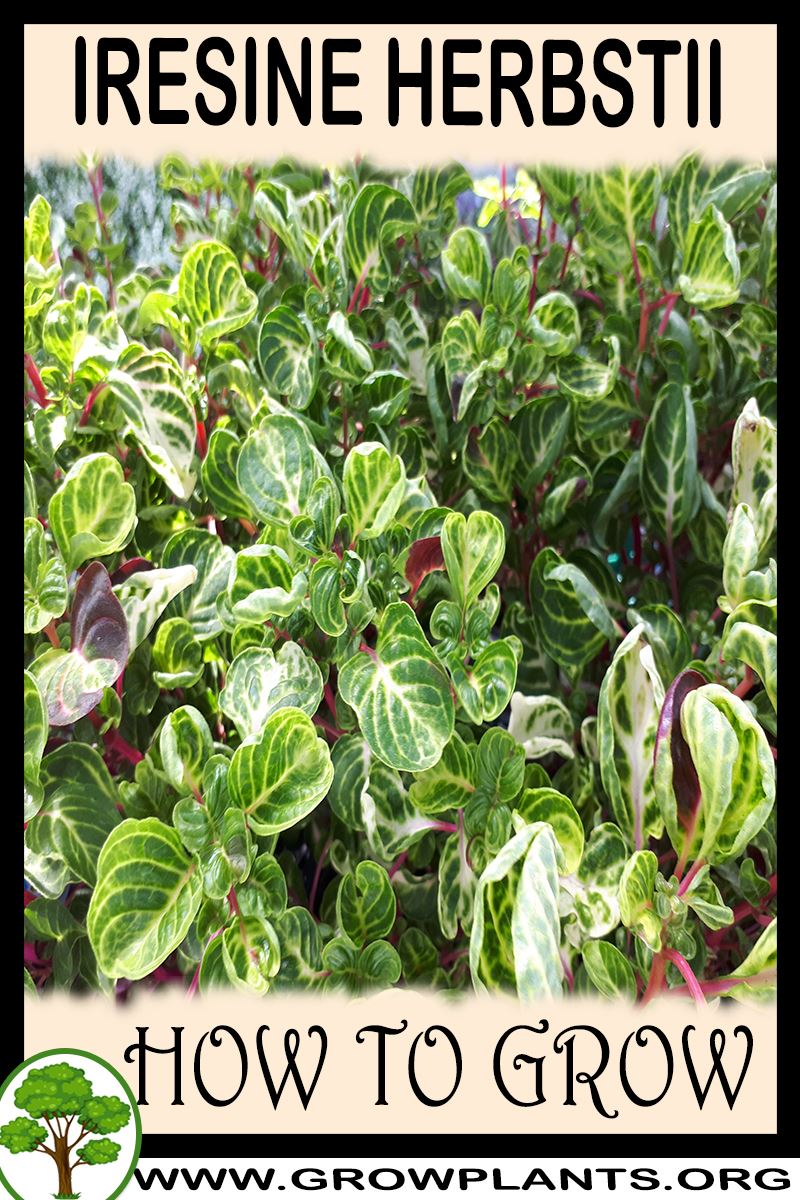


Plant Profile & Key Characteristics
Also known as: Iresine herbst
Overview: Iresine herbstii (Herbst bloodleaf) is an evergreen perennial subshrub 0.5-1 m tall, grown mainly for its striking red-and-burgundy foliage with contrasting veins. It is perennial in frost-free zones, grown as an annual or houseplant in cold climates.
Quick Specifications
| Specification | Attribute |
|---|---|
| Plant Type / Life Cycle | Perennial (evergreen); grown as annual in cold climates |
| Foliage Type | Evergreen |
| Mature Size | 0.5-1 m (20-40 in) |
| Growth Rate | Moderate to fast |
| Root System | Fibrous |
| Toxicity | Non-toxic (leaves are edible) |
| Hardiness | USDA zone 10b+ as perennial, 4+ as annual |
Growth Form & Structure
- Height & Spread: 0.5-1 m (20-40 in) in ground; in a container use 8-18 L (2-5 gal).
- Growth Habit & Form: Bushy, upright evergreen subshrub, easily pinched to a compact mound.
- Lifespan & Maturity: Fast to fill out; kept multiple years as a container or house plant.
Anatomy & Physical Features
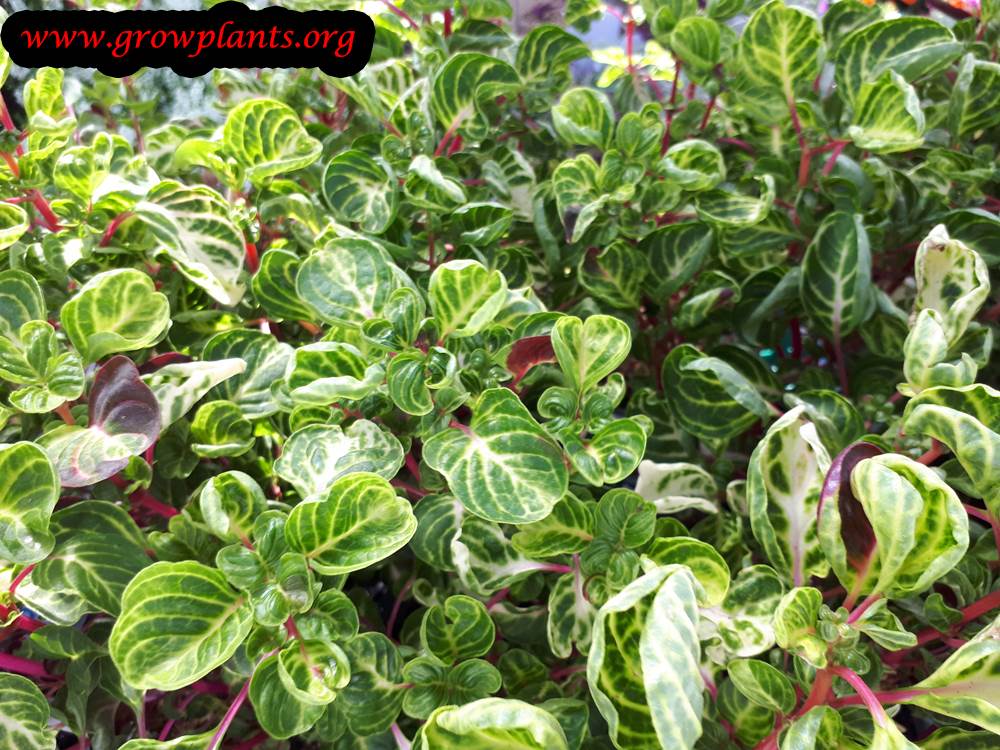
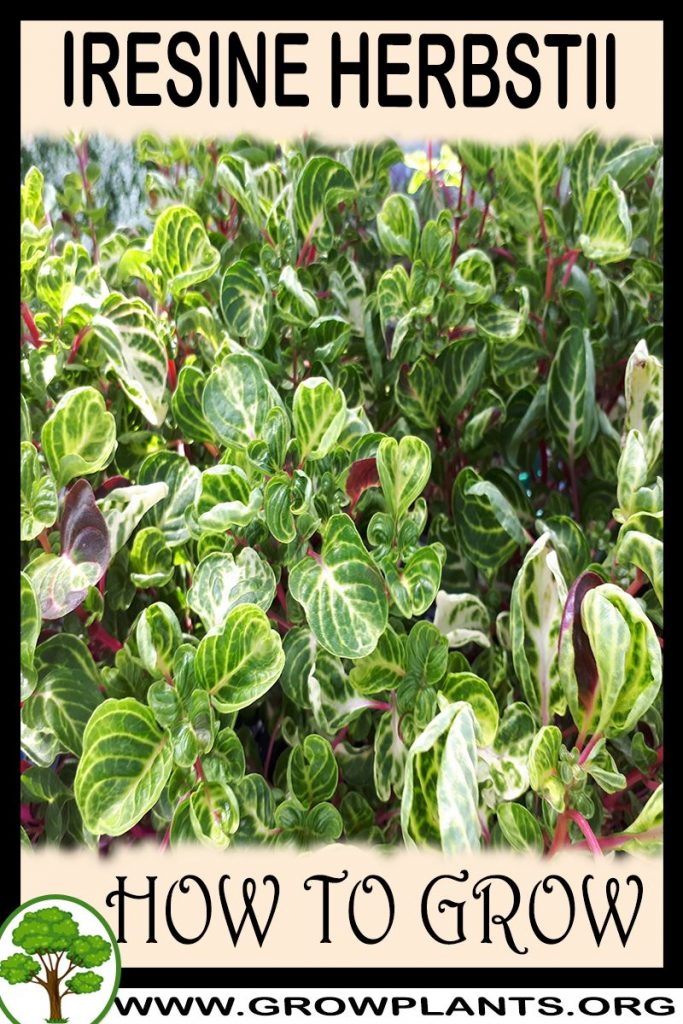
- Leaves & Foliage: Rounded, oval leaves in purple, red and burgundy, frequently with brightly coloured veins – the main ornamental feature.
- Flower Characteristics: Small white flowers on an inflorescence stalk in summer; insignificant and usually removed (full detail in the Bloom guide).
Primary Uses & Landscape Value
- Edible Uses: Young leaves eaten raw, in salad, stir-fried or cooked.
- Functional & Ornamental Roles: Foliage bedding, borders, containers and houseplant; a bold colour accent.
Care Guide: Planting, Soil & Watering
Overview: Grown for its vivid coloured foliage, Herbst bloodleaf thrives in warm, frost-free conditions in full sun to part shade, and bright light keeps the leaf colour strong. It likes rich, consistently moist, well-draining soil and dislikes cold, so protect it below freezing.
Quick Care Requirements
| Requirement | Ideal Condition |
|---|---|
| Planting Season | In spring after the last frost (year-round in frost-free zones) |
| Growth Rate | Moderate to fast |
| Soil Type | Rich, organic, moist and well-draining |
| Water Need | Moderate; keep the soil evenly moist |
Planting & Establishment
- Best Planting Season: Plant in spring after the last frost when grown as an annual; in warm zones it can go in from spring through summer, and year-round in frost-free zones.
- How to Plant:
- Hole Preparation: Loosen a hole a little wider than the root ball in rich, moisture-retentive soil.
- Soil Amendments: Work in plenty of organic matter and humus to feed the plant and hold moisture.
- Planting Depth: Set the root ball at the level it grew previously and firm gently.
- Growth Speed & Expectations: A quick, bushy grower reaching about 0.5-1 m; pinch or prune once a year to keep it dense and well-coloured.
Soil, Watering & Drainage Care
- Soil Mix & Drainage Needs: Needs a well-aerated, free-draining yet moisture-retentive mix; in containers use potting or peat soil with perlite or vermiculite, and mulch to slow evaporation.
- Watering Schedule & Technique:
- Young / Newly Planted: Keep the soil consistently moist while establishing, with good humidity.
- Established: Water regularly so the soil stays evenly moist, never bone-dry.
- Seasonal Adjustments: More in summer heat, less in winter; keep it above freezing.
Climate, Light & Hardiness
Iresine herbstii (Bloodleaf) is a tender evergreen perennial in warm climates, commonly grown as a colorful annual bedding plant where winters bring hard frost. It tolerates a wide range of light from full sun to full shade and needs protection once temperatures fall toward freezing.
Quick Climate Specifications
| Climate Zones | Tropical, Mediterranean, subtropical, and temperate climates, or indoors as a houseplant |
|---|---|
| USDA Hardiness Zones | Approximately zone 10b and warmer as a perennial; commonly grown as an annual from zone 4 up, with overwinter care possible in zone 10a |
| Optimal Temp Range | Warm growing-season conditions |
| Cold Damage Begins | Foliage color and quality decline as temperatures approach 0°C (32°F) |
| Approx. Survival Minimum | Site guidance describes hot-weather preference and being better kept above 0°C (32°F), indicating little tolerance for frost |
| Frost Tolerance | Low |
| Light Conditions | Full Sun (recommended in zone 10) to Full Shade (tolerated but with less color) |
Sunlight & Light Exposure
Optimal Light Setup
Full sun brings out the richest leaf color; half shade suits hot desert climates well, and full shade is tolerated though with reduced color intensity.
Direct Sun Requirement
In zone 10, full sun is specifically recommended for the best foliage display.
Shade & Heat Management
Half shade is a good compromise in very hot, dry climates to reduce stress while retaining reasonable color.
Best Exposure / Orientation
An open, sunny bed suits this plant in most climates, with part shade as an option where summers are extreme.
Temperature Extremes & Hardiness
USDA Hardiness & Regional Limits
In zone 10b and warmer, Iresine herbstii persists year-round as a perennial, with careful overwintering possible in zone 10a; in colder zones (from about zone 4 up) it is commonly grown as an annual because winter cold ends the growing season, not because the plant itself changes-this is a hardiness limit on outdoor culture, not a lifecycle rule.
Cold Damage & Winter Protection
Where grown as a marginal perennial, a sheltered site and protection from frost help it persist through winter.
Frost Sensitivity
Frost sensitivity is fairly high; site guidance favors keeping the plant above freezing, and hard frost is likely to kill it outright.
Extreme Heat Tolerance
Tolerates heat well, consistent with its tropical and subtropical range, provided adequate moisture is available.
Wind, Humidity & Microclimate
Microclimate Recommendations
A warm, sheltered, sunny to lightly shaded spot extends the growing season in marginal climates and helps perennial specimens survive light frosts.
Growing in Pots, Balconies & Indoors
Iresine herbstii (bloodleaf) is grown for its vivid red-and-pink foliage and the grower confirms it makes a good houseplant – provided you give it plenty of light, which keeps the leaf colour strong. It is equally at home in a patio container, and its bright leaves brighten a sunny windowsill.
Quick Details
- Container Size: 8-18 L (2-5 gal)
- Indoor Suitability: A good houseplant, but it needs plenty of light
- Best Spot: Full sun brings the best colour; half shade suits hot-summer/desert areas; too little light dulls it, and a grow light can help provide the brightness it needs indoors
- Soil & Drainage: Well-aerated, organic-rich, free-draining mix; mulch to slow evaporation
- Watering in Pots: Average – keep the soil lightly moist; never waterlogged
Indoors & On the Windowsill
- A true houseplant: It grows well indoors, but light is everything – a dim spot fades the colour and makes it leggy.
- Windowsill: A bright, sunny sill gives the richest leaf colour; pinch the tips to keep it bushy.
- Care: Keep it out of cold draughts; being soft-stemmed it is not hardy, so it lives indoors in cold climates.
On a Balcony or Patio
- Light & warmth: Give it the sunniest spot for strongest colour; in very hot, dry regions a little afternoon shade prevents scorch. Pots dry fast in sun, so check moisture often.
Choosing the Pot, Soil & Long-Term Care
- Pot & drainage: An 8-18 L (2-5 gal) pot with strong drainage holes; skip a standing water saucer. Terracotta breathes and dries faster, glazed or plastic hold moisture longer.
- Potting mix: Well-aerated and organic-rich – a potting mix, or peat with perlite or vermiculite; a mulch helps hold moisture.
- Feeding: Feed regularly but lightly through the growing season, as pot watering leaches nutrients away.
- Repotting: Grown on as a perennial, refresh the soil every few years – once it no longer absorbs water well, it is time to change it.
Growing this plant in a greenhouse
A greenhouse can give iresine herbstii frost protection and cold protection. In the right climate it may also be kept growing through winter, depending on how much warmth and light are provided.
Greenhouse at a glance
| Greenhouse suitability | Good - clearly useful |
|---|---|
| Main benefits | frost protection, cold protection |
| Season extension | earlier spring & later autumn |
| Outdoor protection advisable below | about 5°C |
| Maintain greenhouse minimum | around 5°C for active growth |
| Suitable types | unheated greenhouse, polycarbonate greenhouse, lean-to |
| Heating | Heating is optional - useful mainly for winter growing in cold areas. |
Related greenhouse guides
- Greenhouses: How to Choose the Right Greenhouse
- Best Lean-To Greenhouses
- Polycarbonate Greenhouses: What to Look for Before Buying
Fertilizing & Feeding
Iresine herbstii is a fast-growing foliage plant grown for its colored leaves, and it benefits from steady, moderate feeding paired with rich, organic soil to keep its color vivid.
Quick Fertilizing Specs
| Feeding Level | moderate |
|---|---|
| Main Nutrient Priority | a balanced fertilizer with adequate nitrogen to support fast leaf growth and vivid coloring |
| Best Feeding Period | throughout the warm active growing season |
| Organic Options | working compost or humus into the soil suits this plant’s preference for rich, moist ground |
| Reduce/Stop Feeding | ease off feeding as growth slows in cooler weather or low light |
Feeding by Growth Stage
Settling In After Planting or Repotting
Let roots establish in fresh soil before adding fertilizer.
| Nutrient direction | None – hold off on fertilizer until new growth confirms the plant has rooted in. |
|---|---|
| Timing | The first few weeks after planting, transplanting, or repotting. |
| Frequency | No feeding at this stage. |
| Fertilizer types | No feeding at this stage; begin feeding once new growth appears |
| Precautions | Keep soil evenly moist and skip fertilizer until roots are established. |
Active Growth and Color Display
Support fast leaf growth and keep the plant’s signature leaf color vivid.
| Nutrient direction | Favor a balanced fertilizer with adequate nitrogen, paired with organic matter worked into the soil. |
|---|---|
| Timing | Warm months of active growth. |
| Frequency | Regular, moderate feeding through the growing season suits this fast grower. |
| Fertilizer types | A balanced liquid or granular fertilizer applied through the growing season, Compost or humus worked into the soil to enrich it |
| Routine trace nutrients | iron, manganese |
| Precautions | Keep soil consistently moist when feeding and avoid letting fertilizer sit dry on the surface. |
Cool-Season or Low-Light Slowdown
Match feeding to the plant’s slower growth in cooler weather or reduced light.
| Nutrient direction | None – pause fertilizing while growth is minimal in cool or low-light conditions. |
|---|---|
| Timing | Cooler months or periods of reduced light, especially where grown as a perennial. |
| Frequency | No feeding at this stage. |
| Fertilizer types | No feeding at this stage; resume once active growth clearly resumes |
| Precautions | Do not fertilize while growth has stalled; resume only alongside a clear new flush of leaves. |
Nutrient Deficiency Signs & Corrections
Leaf color fades and looks washed out, with slower-than-expected growth.
| Possible causes | Insufficient nitrogen for this fast-growing plant’s needs, Soil that has become depleted of organic matter, Root stress from a pot that has become too tight |
|---|---|
| Appears first on | Older leaves lower on the stem |
| What to check | Review feeding frequency relative to the plant’s fast growth, Check soil organic matter levels, Inspect roots and pot size |
| Possible correction | Resume balanced feeding with adequate nitrogen and refresh the soil with organic matter. |
Leaf coloring looks duller or more green than the plant’s typical vivid color.
| Possible causes | Insufficient light, which affects leaf pigmentation independent of nutrition, Nutrient shortfall limiting overall plant vigor and color intensity, Old, depleted potting mix or garden soil |
|---|---|
| Appears first on | New leaves as they emerge |
| What to check | Check light exposure against the plant’s needs, Review recent feeding history, Assess soil richness and organic matter |
| Possible correction | Improve light exposure and maintain balanced feeding with organic matter to support strong leaf coloring. |
New leaves emerge pale or blotchy rather than showing the plant’s normal vivid coloring.
| Possible causes | High soil pH limiting iron or manganese availability, Waterlogged or poorly drained soil stressing roots, Consistently mineral-heavy irrigation water |
|---|---|
| Appears first on | Newest leaves at the growing tips |
| What to check | Test soil and water pH, Check drainage and root health, Rule out pest damage as an alternate cause |
| Possible correction | Improve drainage, moderate soil pH if it is consistently high, and apply a chelated iron or manganese product per its label if pale new growth persists. |
Pruning, Training & Seasonal Maintenance
Iresine herbstii is grown almost entirely for its coloured foliage; its small white flower spikes are inconspicuous and not ornamentally valued. As a fast-growing, soft-stemmed subshrub (tender perennial, sometimes grown as an annual in cold climates), it tolerates frequent cutting well. Pruning here is about bushiness and colour display – regular pinching to build a dense, multi-stemmed habit, deadheading the insignificant flower spikes so the plant's energy stays with its leaves, and an occasional harder cutback to renew a plant that has become leggy or woody at the base.
Quick Pruning & Maintenance Specs
| Pruning Tolerance | High – fast regrowth supports frequent cutting |
| Primary Pruning Window | Light pinching through the growing season; in borderline-hardy zones (10a–11a) concentrate the main tidy-up in autumn to winter |
| Typical Frequency | Pinch regularly through the growing season, plus one harder annual shape prune |
| Main Objective | Bushiness and foliage colour display; remove insignificant flower spikes |
| Young Plant Priority | Pinch tips early and often to build a multi-branched framework |
| Mature Plant Priority | Cut back leggy or bare stems; deadhead flower spikes as they appear |
| Best Tool Type | Precision snips for pinching; bypass secateurs for the harder annual cutback |
| Avoid Heavy Pruning During | The first weeks after transplanting, or in the coldest part of winter at the cool edge of its range (zone 10a) when growth has stalled |
Pruning by Plant Age & Size
Newly Established
Once the young plant is established and actively growing, pinch the growing tip to begin forcing branching.
Young / Formative
Repeated pinching builds a dense, mounded, multi-stemmed shape; there is no leader or vase system to train, as this is a soft multi-stem subshrub.
Mature / Established
Periodic harder cutback of leggy or sparse stems renews a compact form, since the plant becomes woody and thin at the base as it ages, and colour is typically best on newer growth.
Seasonal Pruning Schedule
Ongoing Sanitary
Pinch and deadhead through the active growing season to maintain a compact, colourful habit.
Autumn / Winter (in borderline-hardy zones 10a–11a)
A tidy-up and, if needed, a cutback before cold stress sets in, consistent with growing this species at the cooler edge of its perennial range.
Special Growth to Remove
- Flower spikes – not ornamentally significant on this plant; remove as they appear so the plant channels energy into leaf colour rather than seed production.
- Leggy or bare stems – cut back to encourage fresh, more vividly coloured new growth.
Container & Small-Space Pruning
Frequently grown indoors as a houseplant. Regular pinching is especially important in containers, since indoor light levels often push the plant to stretch and become leggy; more frequent, lighter pinching compensates for lower light rather than trying to fix legginess with one large cut later.
Tools
- Precision snips – for pinching tips and deadheading flower spikes.
- Bypass secateurs – for the harder annual renewal cutback of leggy stems.
Tool Hygiene & Disease Risk
Routine – clean, sharp tools are sufficient. Aphids and mealybugs are noted pests, but they are not primarily spread via pruning cuts, so ordinary pest monitoring after pruning is more relevant than tool sterilising between cuts.
Cut Placement & Technique
Pinch just above a leaf node or pair to encourage two new shoots to branch from that point. For the harder renewal cutback, cut just above a lower node that still shows good leaf colour or visible buds.
Heavy Pruning & Rejuvenation
Tolerated well given the plant's fast growth – it can be cut back by up to half during the growing season to fix a leggy plant, with quick regrowth expected in warm conditions. Avoid this in poor light or cool weather, when regrowth would be very slow.
Post-Pruning Care
Keep the plant evenly moist and in bright light to support the flush of new coloured growth; no extra feeding is needed beyond its normal annual fertilising.
Common Pruning Mistakes
- Letting flower spikes persist instead of removing them, which fades the foliage display as the plant diverts energy to flowering and seed.
- Not pinching young plants early enough, leading to a permanently leggy, single-stemmed habit.
- Cutting back hard in low light or cold conditions when the plant cannot recover quickly.
When NOT to Prune
Avoid a hard cutback immediately after transplanting – let the plant establish first. Avoid heavy pruning in cold, short-day conditions in marginal zones (around 10a), when regrowth stalls.
Recommended Tools (by task)
- precision_snips – frequent pinching and deadheading of insignificant flower spikes.
- bypass_secateurs – the harder annual renewal cutback of leggy or bare stems.
Propagation Guide
Stem cuttings rooted in water or soil are the quickest and most reliable way to propagate Iresine herbstii and are the surest way to keep a particular leaf color, since seed-raised plants can vary. Seed is also a workable option and the site provides a full sowing protocol, making this an easy plant to propagate by either route.
Quick Propagation Specs
| Best Propagation Method | Stem cuttings (water or soil) |
| Alternative Methods | Seed |
| Propagation Difficulty | Easy |
| Seed True-to-Type | Variable – leaf color is not guaranteed, though the site notes vegetative propagation isn’t strictly necessary |
| Vegetative True-to-Type | Yes |
| Best Propagation Season | Spring, extending through summer or all year depending on hardiness zone, matching this species’ planting season |
| Seed Germination Time | 2–6 weeks |
| Cutting Rooting Time | Not stated precisely; roots typically form within a few weeks under the high humidity this method needs |
| Germination Temperature | ~25°C (77°F) |
| Seed Sowing Depth | 0.5–1cm (0.25–0.5 inch) |
Vermiculite (or another soil that holds and releases moisture) works well for sowing.
Growing from Seed
Seed Handling & Viability
Store seed in a dark, dry location until sowing.
Sowing Season
Spring, extending to summer or all year depending on hardiness zone, matching the planting-season guidance.
Sowing Depth & Orientation
0.5–1cm (0.25–0.5 inch) deep.
Germination Conditions
Moist soil with high humidity and morning sun, at around 25°C (77°F). For transplanting, space seedlings roughly 20x30cm (8×12 inches) apart.
Germination Time
2–6 weeks.
Seedling Care
Keep the soil moist – mulch helps retain moisture – and maintain high humidity around the seedlings.
Stem Cuttings
Cutting Type
Stem cuttings.
Best Timing
Matches the planting-season guidance: spring, extending to summer or all year in warmer hardiness zones.
Cutting Preparation
Not detailed beyond the humidity requirement below; take a healthy stem section for rooting.
Rooting Setup
Root in either water or soil; both routes need high humidity to succeed.
Rooting Hormone
Not mentioned by the source data; optional.
Rooting Time
Not stated precisely; expect roots to form within a few weeks under the required high humidity.
Note: named variegated forms such as Iresine aureoreticulata (green leaves with pale yellow veins) need to be propagated vegetatively to keep their variegation pattern true, since this trait is not guaranteed from seed.
Bloom & Flower Guide
Quick Details
- Bloom Season: Summer
- Flower Appearance: Small, insignificant white flowers on a slender inflorescence stalk
- Edibility: Flowers not eaten – the plant is grown for its colourful foliage
Detailed Blooming Overview
Iresine herbstii (Bloodleaf) is all about the vivid red-purple foliage; the flowers are minor. In summer it may push up slender stalks of tiny white flowers. Because flowering can pull energy away from the leaf colour, many growers – as recommended here – pinch the flower stalks out to keep the plant bushy and richly coloured.
Flower Characteristics
- Small white flowers
- Held in a thin inflorescence on an upright stalk
- Insignificant beside the foliage
Bloom Care & Thinning
- Thinning / deadheading: Recommended – pinch out flower stalks to keep the foliage lush and the plant compact.
- Pollination: The small flowers are worked by bees.
Fruit & Uses
Iresine herbstii (bloodleaf) is grown mainly for its brightly coloured foliage, but the site lists the leaves as edible, used both raw and cooked. Young leaves can reportedly be eaten fresh in salads or cooked briefly, such as in a stir-fry.
Quick Edible Specs
| Edible Parts | Leaves |
|---|---|
| Main Use(s) | Culinary (leafy green) — a reported, minor use rather than a well-known food crop |
| Eaten Raw or Cooked | Both — raw in salad, or cooked (e.g. stir-fried) |
| Preparation Required | None for raw use; brief cooking for stir-fry |
| Harvest Season | Year-round in frost-free/tropical climates; spring through autumn where grown as an annual or in cooler climates |
| Time to First Harvest | Leaves can be trimmed once the plant is established and actively growing |
| Storage | Best used fresh; harvest as needed rather than stockpiling |
| Safety/Toxicity Caveat | Not a mainstream, well-documented food plant — positively confirm the plant’s identity, use only leaves grown without pesticides, and start with a small amount |
Leaves & Greens
Leaves are oval, in shades of orange, yellow, red, purple, blue or pink depending on the plant and cultivar. To harvest, cut whole stems or pick individual leaves from the base; light, regular trimming for edible use also helps keep the plant compact. Per the site, leaves can be eaten raw in salads or cooked, including stir-fried.
Harvesting
Leaves can be trimmed all year in tropical or frost-free climates, and from spring through autumn where the plant is grown as an annual in cooler climates. Because harvest doubles as routine trimming, take a few leaves or stems at a time rather than stripping the plant, so it keeps producing fresh colourful growth (see Pruning for general trimming guidance).
Preparation, Uses & Safety
The site lists the leaves as edible raw or cooked (salad, stir-fry), but Iresine herbstii is not a widely documented food crop, so treat this as a minor, unverified use rather than an established vegetable green. If trying it, positively confirm the plant’s identity, use only leaves grown without pesticides or other chemical treatments, and start with a small amount.
Pests, Diseases & Troubleshooting
Overview: Bloodleaf is a tender foliage plant grown for its vivid leaves; it is largely trouble-free outdoors in warm conditions but attracts sap-feeding insects under protected or humid indoor growth, and dislikes soggy soil. Good light, airflow and careful watering prevent nearly all problems.
Quick Troubleshooting Overview
| Issue / Pest | Main Symptom | Primary Solution |
|---|---|---|
| Aphids | Sticky, distorted new growth on shoot tips | Rinse off, insecticidal soap, encourage ladybirds |
| Mealybugs | White cottony tufts in leaf axils | Dab with alcohol, insecticidal soap or neem |
| Whitefly / scale | Honeydew, sooty mold, weak growth | Sticky traps, horticultural oil |
| Spider mites | Fine stippling and webbing in dry indoor air | Raise humidity, hose foliage, oil |
| Root rot | Wilting, blackened stem base in wet soil | Ease watering, improve drainage |
Common Pests & Management
- Aphids (Aphis / Myzus spp.):
- Symptoms: Soft-bodied green or dark insects clustering on tender tips and new leaves, causing curling and honeydew.
- Prevention & Control: Rinse with water, pinch heavily infested tips, and encourage ladybirds. Insecticidal soap or neem clears persistent colonies; avoid over-feeding with nitrogen.
- Mealybugs (Pseudococcus / Planococcus spp.):
- Symptoms: White, cottony, waxy tufts nestled in leaf axils and along stems; they suck sap, weaken the plant and drop honeydew that fuels sooty mold.
- Prevention & Control: Dab clusters with an alcohol-dipped swab, wipe leaves clean, and isolate affected plants. Repeated insecticidal soap or neem sprays, covering hidden crevices, break the cycle.
- Whiteflies (Trialeurodes / Bemisia spp.):
- Symptoms: Tiny white flies rising in a cloud when foliage is touched; nymphs on leaf undersides sap the plant and leave sticky residue and sooty mold.
- Prevention & Control: Hang yellow sticky traps, rinse leaf undersides, and improve airflow. Insecticidal soap or light horticultural oil in the evening controls active infestations.
- Spider mites (Tetranychus urticae):
- Symptoms: Fine pale stippling and faint webbing under leaves in dry, warm indoor air; foliage dulls and colour fades.
- Prevention & Control: Raise humidity and mist or hose the plant, keeping it away from heating vents. Horticultural oil or insecticidal soap knock back heavy populations; predatory mites help under glass.
- Scale insects (Coccus / Saissetia spp.):
- Symptoms: Small brown or tan immobile bumps along stems and leaf veins, with honeydew and sooty mold on heavier infestations.
- Prevention & Control: Scrape off light clusters and prune badly infested stems. Horticultural oil smothers crawlers; repeat applications catch successive generations.
Diseases & Fungal Issues
- Root and stem rot (Pythium / Rhizoctonia spp.):
- Symptoms: Wilting despite moist soil, softened blackened stem bases and mushy roots – almost always from overwatering or heavy, poorly drained mix.
- Treatment & Management: Remove affected plants, let the soil dry, and repot into a free-draining medium in a pot with drainage holes. Water only when the surface has dried; never leave the plant standing in water.
- Fungal leaf spot (Cercospora / Alternaria spp.):
- Symptoms: Brown or tan spots, sometimes ringed with yellow, spreading in stagnant, humid, wet conditions.
- Treatment & Management: Remove spotted leaves, avoid wetting foliage, and improve air circulation. Copper fungicide helps only if spotting is persistent and severe.
- Gray mold (Botrytis cinerea):
- Symptoms: Fuzzy grey mold on soft or damaged tissue and crowded growth in cool, damp, still air.
- Treatment & Management: Remove affected parts, thin crowded growth, lower humidity and increase airflow. Sanitation usually solves it without fungicide.
Growing Difficulties & Abiotic Problems
- Faded colour / leggy growth:
- Cause & Symptoms: Too little light dulls the signature red or bronze foliage and stretches the stems.
- Correction Strategy: Give bright light (some direct sun deepens colour), turn the plant for even exposure, and pinch tips regularly to keep growth dense and bushy.
- Root rot from soggy soil:
- Cause & Symptoms: Constantly wet, heavy soil is the plant’s main killer, causing sudden wilting and collapse.
- Correction Strategy: Use a light, free-draining mix, water only when the top of the soil dries, and ensure pots drain freely.
- Cold / draught leaf drop:
- Cause & Symptoms: Bloodleaf is frost-tender; cold draughts, sudden chills or temperatures near freezing cause leaf drop and dieback.
- Correction Strategy: Keep it warm and away from cold windows and doors; overwinter indoors or under cover where frost occurs, and take cuttings as insurance.
What Helps – Products & Tools
Reach for insecticidal soap and neem or light horticultural oil for aphids, mealybugs, whitefly, scale and mites; rubbing alcohol on a swab for spot-treating mealybugs; yellow sticky traps for monitoring; and, only if leaf spotting persists, a copper fungicide. Cultural care – bright light, airflow and careful watering – prevents most issues.
Varieties & Cultivars
- Iresine aureoreticulata: Green variegated leaves with pale yellow veins; grows 30-60cm (12-24in) tall; flowers white or green.