Plant Profile & Key Characteristics
Overview: Fast-growing annual legume reaching 15-80 cm, grown chiefly as a nitrogen-fixing green-manure crop and for its edible seeds (lupini beans). Bears white, purple-flushed pea flowers on upright spikes.
Quick Specifications
| Specification | Attribute |
|---|---|
| Plant Type / Life Cycle | Annual (legume) |
| Mature Size | 15-80 cm (6-32 in) |
| Growth Rate | Fast |
| Root System | Taproot with nitrogen-fixing nodules |
| Toxicity | Seeds contain bitter quinolizidine alkaloids – edible only after soaking and cooking to debitter |
| Hardiness | USDA zones 2-10a (spring) or 10b-11 (autumn sowing) |
Growth Form & Structure
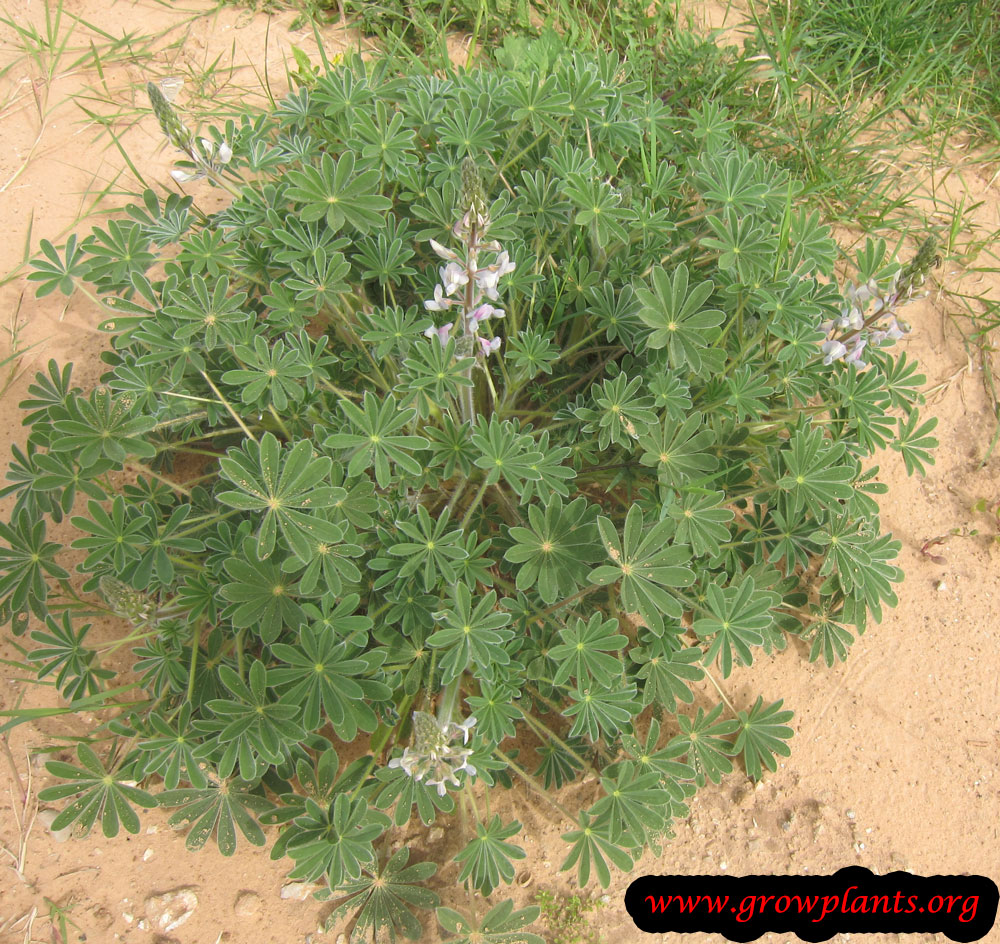
- Height & Spread: 15-80 cm tall, upright; can be grown in containers.
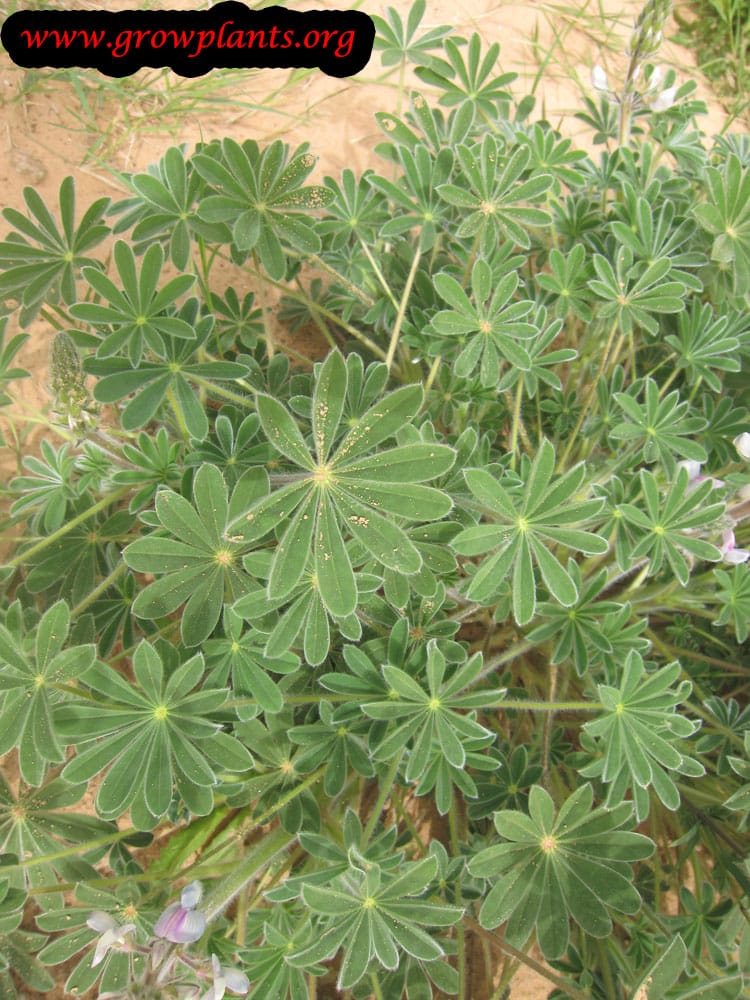
- Growth Habit & Form: Erect, branching annual with palmate (digitate) leaves.
- Lifespan & Maturity: Single-season annual; pods mature in about 80-120 days.
Anatomy & Physical Features
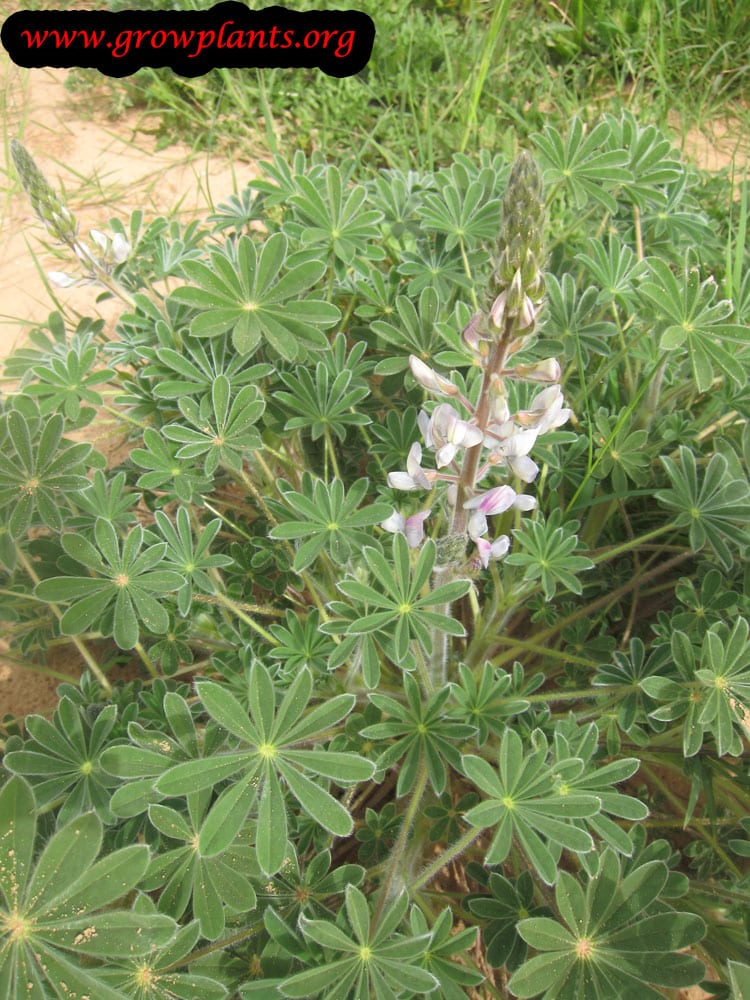
- Leaves & Foliage: Green, hairy, palmately compound leaves with elliptic leaflets.
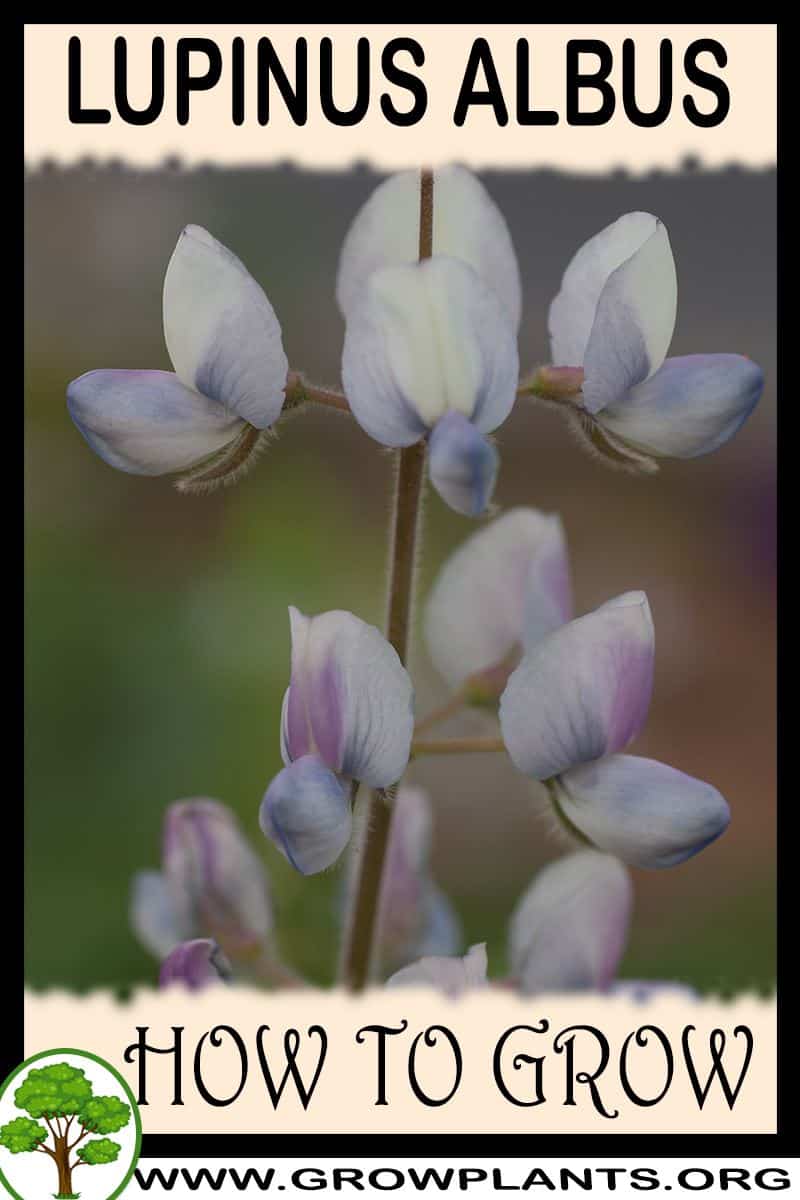
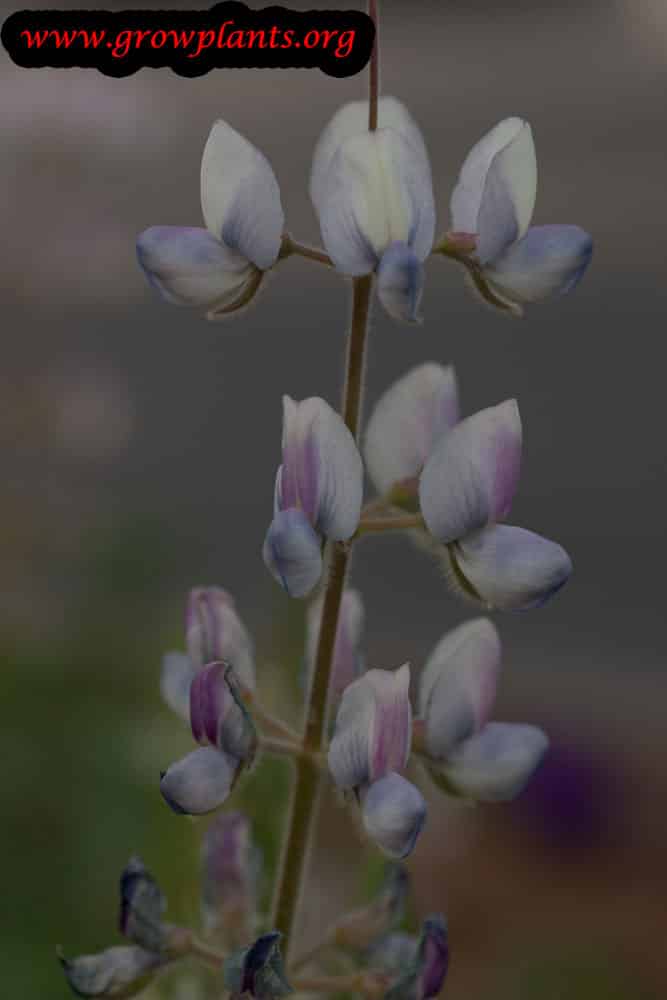
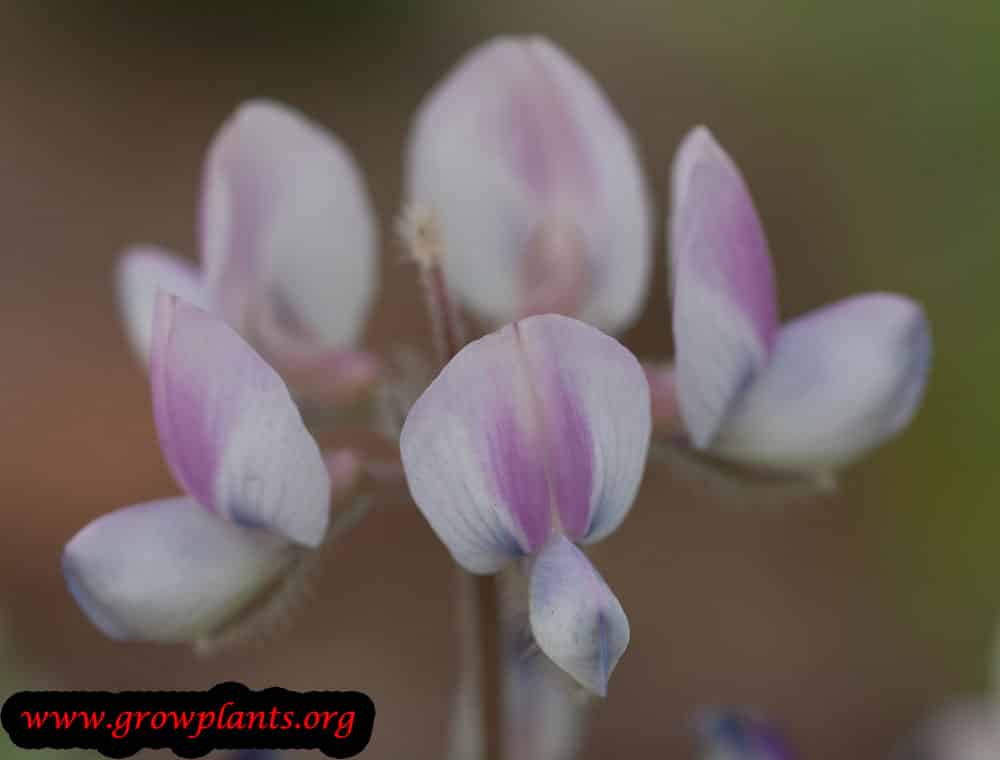
- Flower Characteristics: White, purple-flushed pea flowers borne on upright spikes.
- Fruit Profile: Green pods ripening to brown, each holding 2-7 round, off-white seeds.
Primary Uses & Landscape Value
- Edible Uses: Seeds (lupini) eaten after cooking and debittering.
- Functional & Ornamental Roles: Nitrogen-fixing green-manure and cover crop.
Care Guide: Planting, Soil & Watering
Overview: White lupin (Lupinus albus) is a fast-growing annual legume that enjoys full sun and warm summer weather, and as a nitrogen-fixer it does not need rich ground. Give it well-drained soil and modest, moderate watering — it tolerates leaner, drier conditions than most crops.
Quick Care Requirements
| Requirement | Ideal Condition |
|---|---|
| Planting Season | Spring (cool zones) or autumn (warm zones) |
| Growth Rate | Fast |
| Soil Type | Well-drained; tolerates poorer soils (fixes its own nitrogen) |
| Water Need | Low to moderate |
Planting & Establishment
- Best Planting Season: In spring in cooler areas (up to hardiness zone 10a), or as an autumn planting in warm zones (10b–11).
- How to Plant:
- Hole Preparation: Sow or set seedlings into loosened, free-draining soil; because it resents root disturbance, plant while young and firm gently around the roots.
- Soil Amendments: Improve drainage on heavy ground with grit or compost, but avoid heavy feeding — as a legume it makes its own nitrogen and over-rich soil favours leaf over pods.
- Planting Depth: Set the root collar level with the soil surface; do not bury the stem.
- Growth Speed & Expectations: A fast grower that reaches flowering size within a single season under warm conditions.
Soil, Watering & Drainage Care
- Soil Mix & Drainage Needs: Light, well-drained soil is ideal; on heavy or wet ground it is prone to root rot, so raise beds or add grit. It also grows well in a deep container with free-draining mix and drainage holes.
- Watering Schedule & Technique:
- Young / Newly Planted: Water regularly while seedlings establish so the soil stays lightly moist but not soggy.
- Established: Once established it is fairly drought-tolerant — water moderately and let the soil dry between waterings.
- Seasonal Adjustments: Water more during dry summer heat while pods fill; ease off in cool, wet weather.
Climate, Light & Hardiness
White lupin is a fast, cool-season annual legume grown in full sun for its nitrogen-fixing green matter and edible seeds. Its hardiness spans a wide planting range - the site data gives roughly USDA zone 2–10a for spring sowing and zone 10b–11 for autumn sowing - because sowing season is shifted to keep the crop in cool weather; frost and heat, not a fixed zone, set the practical limits.
Quick Climate Specifications
| Climate Zones | Mediterranean, temperate, subtropical, desert (cool-season crop) |
|---|---|
| USDA Hardiness Zones | Approximately 2–10a (spring-sown) or 10b–11 (autumn-sown) - site data |
| Optimal Temp Range | Approximately 15–25°C (59–77°F) |
| Cold Damage Begins | Established seedlings take light frost; hard freeze damages growth |
| Frost Tolerance | Moderate (young plants take light frost) |
| Light Conditions | Full sun |
| Wind Tolerance | Moderate |
Sunlight & Light Exposure
Optimal Light Setup
Grow in full sun for sturdy, productive plants and good seed set.
Direct Sun Requirement
It is a full-sun crop; shade thins the plants and cuts yield.
Temperature Extremes & Hardiness
USDA Hardiness & Regional Limits
The site data retains a hardiness range even though it is grown as an annual: in cold-winter regions (down toward zone 2) it is spring-sown for a summer crop, while in frost-free zone 10b–11 it is autumn-sown to grow through the cool season. This is a shift in planting window, not a change in cold tolerance.
Cold Damage & Winter Protection
Young plants tolerate light frost, which is why autumn sowing works in mild-winter climates; a hard or prolonged freeze damages foliage and can kill the crop.
Frost Sensitivity
Moderately frost-tolerant as a seedling but not fully cold-hardy - time sowing so the vulnerable flowering and pod-fill stages avoid both hard frost and peak summer heat.
Extreme Heat Tolerance
Limited - as a cool-season legume it dislikes prolonged heat, which shortens the crop and stresses flowering and pod set; in warm regions this is the main reason it is grown over the cool part of the year.
Wind, Humidity & Microclimate
Dry-Air Tolerance
Good - it grows in mediterranean and even desert climates given a cool-season slot and adequate moisture.
Wind Tolerance
Fairly sturdy; taller stands in exposed sites may lean and benefit from a little shelter.
Microclimate Recommendations
Choose the season and site so the crop matures in cool, bright weather - cool spring in cold regions, autumn-to-spring in mild ones.
Growing in Pots, Balconies & Indoors
White lupin is a sun-loving annual legume – not a houseplant – but the grower says it grows in containers. On a sunny balcony or patio it makes a fine flowering (and nitrogen-fixing) pot plant.
Quick Details
- Container Size: A deep pot for the long taproot; suits a 15-80 cm (6-32 in) plant
- Indoor Suitability: No – it needs full sun
- Best Spot: Full sun
- Soil & Drainage: Free-draining, not too rich, slightly acid
- Watering in Pots: Small to average – it dislikes waterlogging
Indoors & On the Windowsill
- Not a houseplant: It needs full sun and resents root disturbance – indoors it grows pale and leggy. Grow it in outdoor pots instead.
- Sowing note: Best sown where it is to grow because of the deep taproot; a windowsill start is only to raise young plants for planting out.
On a Balcony or Patio
- Full sun: Give it the sunniest spot; a deep pot suits the long taproot. Water steadily but never waterlogged.
- Safety: Lupin seeds contain bitter alkaloids and can be toxic if eaten – keep the pods away from children and pets.
Choosing the Pot, Soil & Long-Term Care
- Deep pot & drainage: Use a deep pot for the taproot, a free-draining and not over-rich mix, and strong drainage.
- Feeding: As a legume it fixes its own nitrogen – go easy on feed, or you get leaf at the expense of flower.
- Short-lived: An annual – grow it fresh from seed rather than trying to repot it.
Fertilizing & Feeding
A light feeder. As a nitrogen-fixing legume it makes much of its own nitrogen once its roots nodulate, so it needs little fertilizer beyond a light balanced start on poor soil.
Quick Fertilizing Specs
| Feeding Level | Light |
|---|---|
| Main Nutrient Priority | Low nitrogen; modest phosphorus and potassium |
| Best Feeding Period | A light start after emergence, only on poor soil |
| Organic Options | Compost or well-rotted organic matter worked into the bed |
| Soil pH | Adapts to a wide range; needs well-drained soil |
| Reduce/Stop Feeding | Little feeding needed; ease off toward pod fill |
Feeding by Growth Stage
Seedling establishment
Get seedlings off to a steady start.
| Nutrient direction | Little is needed on decent soil; a light balanced feed or compost is enough, since as a nitrogen-fixing legume it makes its own nitrogen once nodulated. |
|---|---|
| Timing | After seedlings emerge and settle in. |
| Frequency | A light feed at most on poor soil; often nothing is needed on good soil. |
| Fertilizer types | A light balanced fertilizer only on poor soil, Compost or organic matter worked into the bed |
| Precautions | Skip heavy nitrogen fertilizer; it suppresses the nitrogen-fixing nodules and pushes leaves over pods. |
Vegetative growth
Support leafy growth ahead of flowering.
| Nutrient direction | Keep nitrogen low and rely on the plant’s own fixation; modest phosphorus and potassium support roots and later pod set. |
|---|---|
| Timing | During active vegetative growth before flowering. |
| Frequency | Minimal feeding; correct only a clear soil shortage. |
| Fertilizer types | A low-nitrogen fertilizer where a soil test shows a need, Compost or organic matter |
| Precautions | Avoid nitrogen-rich fertilizer, which pushes soft foliage and reduces pod set on legumes. |
Flowering and pod fill
Support flowering and the filling of pods and seeds.
| Nutrient direction | Adequate potassium helps pods and seeds fill; nitrogen stays low on this self-supplying legume. |
|---|---|
| Timing | From flowering through pod fill. |
| Frequency | Light feeding only where the soil is poor. |
| Fertilizer types | A balanced-to-potassium fertilizer only where soil is poor, Compost or organic matter |
| Precautions | Do not push nitrogen late; it delays maturity and favours leaves over seed. |
Nutrient Deficiency Signs & Corrections
The whole plant is pale and stunted with weak, slow growth.
| Possible causes | Poor root-nodule formation so little nitrogen is fixed, Waterlogged or compacted soil, Low general soil fertility |
|---|---|
| Appears first on | Older, lower leaves first, then the whole plant |
| What to check | Whether the roots carry healthy pink nodules, Soil drainage and compaction, Overall soil fertility and structure |
| Possible correction | Improve soil drainage and structure, make sure seed was inoculated where nodulating bacteria are absent, and add only a light balanced feed. |
New leaves are pale between green veins on alkaline or waterlogged soil.
| Possible causes | Alkaline soil pH locking up iron or manganese, Cold, wet soil slowing root uptake, A genuine micronutrient shortage |
|---|---|
| Appears first on | Youngest leaves |
| What to check | Soil pH and whether the ground is chalky, Soil drainage and temperature |
| Possible correction | Correct soil pH where possible and apply a chelated micronutrient product according to its label. |
Pruning, Training & Seasonal Maintenance
White lupin is an annual grain legume, so it is never pruned in a structural sense — the plant completes its life cycle in a single season and there is no woody framework to build. “Maintenance” here means only removing damaged growth, optionally pinching the young tip to encourage branching, and deadheading spent flower spikes if you are not saving seed. When the crop is the seed, the terminal racemes are left to set pods.
Pruning & the Edible Harvest
White lupin is grown for its edible seeds, and because it is an annual grain legume there is no structural pruning that improves the crop. The seeds depend on leaving the terminal racemes to flower, set and fill their pods, so ‘maintenance’ is limited to tidying — and any deadheading must spare the pods you intend to harvest.
Quick Pruning & Maintenance Specs
| Pruning Tolerance | Low — annual, no structural pruning |
| Primary Pruning Window | None; sanitary and deadheading through the growing season |
| Typical Frequency | Minimal — as needed for tidying |
| Main Objective | Remove damaged leaves; deadhead if not saving seed |
| Best Tool Type | Precision snips only |
| Avoid Cutting During | Wet foliage (anthracnose spreads on moisture) |
Pruning by Plant Age & Size
Newly Established / Seedling
Nothing beyond removing damaged growth. If a bushier plant with more spikes is wanted for ornamental use, the growing tip can be pinched once young; for a seed crop, leave the main stem to carry the terminal raceme.
Mature
Remove yellowing or diseased lower leaves for airflow. Deadhead spent flower spikes to keep the plant tidy and to limit self-seeding — but if you want the seed, leave the pods to mature and dry on the plant.
Special Growth to Remove
The only routine removal is spent flower spikes (unless saving seed). There are no suckers, watersprouts or woody stems to manage on this herbaceous annual.
Container & Small-Space Pruning
White lupin can be grown in a large container. The same rules apply — deadhead and tidy only, with no structural cutting; it will simply run through its annual cycle.
Tools
Precision snips are all that is needed for soft herbaceous stems and spent spikes. Loppers, saws and shears have no place on this plant.
Tool Hygiene & Disease Risk
Increased where lupin anthracnose (Colletotrichum) is present: this is a serious disease of lupins that spreads on wet foliage and infected debris. Do not cut or handle plants when wet, remove and destroy (do not compost) any blighted tops, and clean snips after working affected plants.
Cut Placement & Technique
Snip a spent flower spike just above a leaf or a side-shoot; pinch the soft growing tip between finger and thumb or with snips when encouraging branching.
Heavy Pruning & Rejuvenation
Not applicable. As an annual, white lupin does not regenerate from hard cutting the way a shrub does; cutting the main stem will not renew the plant.
Post-Pruning Care
Little needed. Keep even moisture and full sun; as a nitrogen-fixer it needs little or no nitrogen feeding.
Common Pruning Mistakes
- Cutting back the main spike expecting vigorous regrowth — this annual has limited capacity to rebuild.
- Deadheading off the pods you actually wanted for a seed harvest.
- Handling or trimming plants when the foliage is wet, spreading anthracnose.
When NOT to Prune
Do not shear a stand grown as a green-manure/nitrogen-fixing cover until you are ready to terminate and incorporate it; leave pods in place if saving seed; and avoid any cutting during prolonged wet, disease-prone weather.
Recommended Tools (by task)
- precision_snips — deadheading spent spikes and removing damaged leaves on soft herbaceous stems; the only tool this annual needs.
Propagation Guide
White lupin is an annual grown only from seed, which comes true to type and is best sown directly where it is to grow because its deep taproot resents transplanting. Fresh seed needs no special treatment and germinates quickly, making it easy to raise.
Quick Propagation Specs
| Best Propagation Method | Seed (direct-sown) |
| Propagation Difficulty | Easy |
| Seed True-to-Type | Yes |
| Best Propagation Season | Spring in cold zones; autumn in mild (zone 10b–11) areas (site) |
Growing from Seed
Seed Handling & Viability
Collect mature seed from pods that have turned brown (site).
Dormancy & Pre-Sowing Treatment
Fresh seed needs none; hard or older seed germinates faster if lightly nicked or given a short soak.
Sowing Season
Spring in cold zones; the site also notes autumn sowing in mild areas.
Sowing Depth & Spacing
Sow a few centimetres deep (roughly 2–3 cm / 1 in) directly in place; it needs generous room to crop (site). Direct-sow rather than transplant — lupins form a deep taproot.
Germination Conditions
Warm soil; germination is usually rapid.
Seedling Care
As a nitrogen fixer it thrives in poor soil; an appropriate rhizobium inoculant can help on ground new to lupins.
Bloom & Flower Guide
Quick Details
- Bloom Season: Late winter into spring
- Time to First Bloom: In its first season – an annual
- Flower Appearance: White to pale bluish-purple pea-shaped flowers arranged on upright spikes
- Edibility: The flowers are not eaten – lupins contain bitter alkaloids (the seeds are edible only after thorough soaking to remove the bitterness)
Detailed Blooming Overview
White lupin is an annual, nitrogen-fixing legume. Upright spikes of white-and-bluish pea flowers open from late winter into spring, followed by seed pods.
Flower Characteristics
- White to purplish pea-shaped flowers.
- Held on upright spikes.
Bloom Care & Thinning
- Pollination: Largely self-pollinating, though bees visit.
- As green manure: Often cut down at or just after flowering to return nitrogen to the soil.
Bloom Health & Protection
- Lupin aphids: Large grey aphids that mass on the flower spikes; a strong spray of water or an insecticidal soap or neem oil helps.
- Powdery mildew: A white coating can appear on spikes in humid, still conditions – improve airflow, and a sulfur-based fungicide is an option.
Fruit & Uses
Important safety note: white-lupin (lupini) seeds are edible only after thorough preparation. The raw dry seeds contain bitter, toxic alkaloids and must be soaked and leached over several days, and cooked, before eating. The site records the seeds as edible after cooking.
Quick Edible Specs
| Edible Parts | Seeds (the round off-white beans inside the pods). |
|---|---|
| Main Use(s) | Culinary — cooked as lupini beans after debittering. |
| Eaten Raw or Cooked | Cooked only. Never eaten raw. |
| Preparation Required | Soak / leach to remove the bitter alkaloids, then cook. This step is essential, not optional. |
| Harvest Season | Spring / summer. |
| Time to First Harvest | Within a single growing season from sowing (see the growing notes). |
| Storage | Dried seeds store well; debittered/cooked seeds are kept refrigerated in brine. |
| Safety/Toxicity Caveat | Bitter alkaloids make raw or inadequately soaked seeds toxic — debittering is mandatory. |
Seeds, Pods & Nuts
The pods are green, turning brown as they ripen, each with about 2–7 round off-white seeds. Let the pods dry, then collect the seeds. The seeds are the only part used, and only after processing.
Preparation, Uses & Safety
Prepare lupini in the traditional way: soak the seeds, then leach them in repeatedly changed water over several days until the bitterness is gone, and cook them. This removes the toxic quinolizidine alkaloids that make raw seeds dangerous. Do not shortcut the soaking — inadequately debittered lupini can cause poisoning. Once properly prepared, the seeds are eaten as a cooked snack bean.
Pests, Diseases & Troubleshooting
Overview: Lupins are legumes prized for their spires, but they are magnets for the lupin aphid and are seriously troubled by anthracnose and brown-spot fungi, plus root and crown rots in heavy wet soil. Because they fix their own nitrogen, keeping them lean, airy and well drained – and staying ahead of aphids and anthracnose – is the whole game.
Quick Troubleshooting Overview
| Issue / Pest | Main Symptom | Primary Solution |
|---|---|---|
| Lupin aphid | Huge grey aphid colonies collapsing flower spikes | Blast off early; encourage predators; insecticidal soap |
| Slugs & snails | Young shoots and seedlings grazed away | Handpick at night; barriers; iron-phosphate bait |
| Anthracnose | Twisted stems, sunken lesions, dieback | Clean seed; remove debris; copper; resistant lines |
| Brown leaf spot | Dark spots, defoliation from base up | Rotate; avoid wet foliage; remove old leaves |
| Powdery mildew | White coating on leaves late season | Airflow; base watering; sulfur if needed |
| Root/crown rot | Wilting, blackened crown in wet soil | Improve drainage; never waterlog; rotate |
Common Pests & Management
- Lupin aphid (Macrosiphum albifrons):
- Symptoms: Large greyish-white aphids form dense, fast-building colonies on flower spikes and shoot tips, causing wilting, honeydew, sooty mould and collapse of the bloom stalks; they also spread viruses.
- Prevention & Control: Catch them early – inspect spikes often and blast colonies off with water or wipe them away, encourage ladybirds, lacewings and parasitic wasps, and remove badly infested spikes. Insecticidal soap or neem for heavy attacks; avoid feeding excess nitrogen that fuels soft growth.
- Aphids (other legume species) (Aphis craccivora / Acyrthosiphon pisum):
- Symptoms: Green or dark clusters on new growth causing curling and honeydew, and acting as virus vectors.
- Prevention & Control: Hose off, support natural enemies, and use insecticidal soap for persistent colonies; controlling aphids limits virus spread.
- Slugs & snails (Gastropoda):
- Symptoms: Young shoots and seedlings are grazed to stumps overnight, with slime trails and ragged holes on lower leaves.
- Prevention & Control: Handpick after dark, keep the crown area clear of debris, use grit or copper barriers, and scatter iron-phosphate bait sparingly. Protect emerging spring growth especially.
- Thrips (Frankliniella / Thrips spp.):
- Symptoms: Silvery streaking and flecking on leaves and petals with tiny black frass; distorted new growth in hot dry spells.
- Prevention & Control: Keep plants unstressed, use blue sticky traps to monitor, hose foliage, and apply insecticidal soap or neem if numbers build.
Diseases & Fungal Issues
- Anthracnose (Colletotrichum lupini):
- Symptoms: The most damaging lupin disease: twisted, bent stems and leaf stalks with sunken tan-to-brown lesions bearing pink spore masses, causing dieback and pod loss, spread by rain-splash from infected seed.
- Treatment & Management: Start with clean, certified or hot-water-treated seed, remove and destroy infected plants and debris, avoid overhead watering, space for airflow, rotate, and choose resistant varieties; protectant copper sprays help in wet seasons.
- Brown leaf spot (Pleiochaeta setosa):
- Symptoms: Dark brown angular spots on leaves that yellow and drop from the base upward, plus root and hypocotyl lesions on seedlings, worst after rain-splash from soil.
- Treatment & Management: Rotate away from lupins for several years, remove old crop residue, mulch to reduce soil splash, avoid wetting foliage, and use clean seed; a protectant fungicide in high-pressure seasons.
- Powdery mildew (Erysiphe spp.):
- Symptoms: White powdery coating on leaves and stems in warm, dry, crowded conditions, causing yellowing and early leaf loss.
- Treatment & Management: Improve airflow by spacing and thinning, water at the base, remove affected growth, and apply sulfur or potassium-bicarbonate if it spreads.
- Sclerotinia stem rot / grey mould (Sclerotinia sclerotiorum, Botrytis cinerea):
- Symptoms: Soft, watery stem rot with white or grey fluffy mould (and hard black sclerotia inside stems for Sclerotinia), collapsing plants in cool damp weather.
- Treatment & Management: Improve airflow and drainage, avoid dense plantings and overhead watering, remove and destroy infected material, and rotate away from other susceptible crops.
- Cucumber mosaic & bean yellow mosaic viruses:
- Symptoms: Mottled, distorted, stunted foliage and poor flowering; not curable and spread by aphids.
- Treatment & Management: Control aphids, use clean seed and resistant stock, and remove and destroy infected plants promptly.
Growing Difficulties & Abiotic Problems
- Root & crown rot from wet soil:
- Cause & Symptoms: Wilting, yellowing and collapse from a blackened crown where lupins sit in heavy, poorly drained or waterlogged ground; their long taproot resents wet feet.
- Correction Strategy: Plant in deep, free-draining, slightly acid soil, avoid heavy clay or improve it with grit, never overwater, and grow on a slight rise where drainage is poor.
- Lime-induced chlorosis:
- Cause & Symptoms: Interveinal yellowing of young leaves on alkaline soils, since lupins prefer neutral to acid ground.
- Correction Strategy: Test the soil, add organic matter and elemental sulfur to lower pH, and use chelated iron as a short-term fix; choose acid-tolerant species for chalky gardens.
- Transplant shock / taproot disturbance:
- Cause & Symptoms: Sudden wilting and poor establishment after transplanting because the deep taproot dislikes root disturbance.
- Correction Strategy: Sow in situ or in deep pots and plant out while young, handle the rootball gently, and water in well; avoid moving established plants.
- Excess nitrogen & floppy growth:
- Cause & Symptoms: Lush, weak, over-tall stems that flop and attract aphids when fed nitrogen, which these self-fixing legumes do not need.
- Correction Strategy: Do not add nitrogen fertiliser; a light potassium feed and lean soil give sturdier spikes. Stake tall cultivars in exposed spots.
What Helps – Products & Tools
Prioritise vigilance and culture: early water blasts and insecticidal soap or neem for the lupin aphid, iron-phosphate bait for slugs, and clean seed plus copper protectant sprays and rotation for anthracnose and brown spot. Sulfur handles mildew, and sharp drainage prevents the rots.