

Plant Profile & Key Characteristics
Overview: Garden lupine (Lupinus polyphyllus) is a herbaceous perennial reaching 1-1.5 m (40-60 in), grown as an ornamental for its tall spires of pea flowers and as a nitrogen-fixing plant that improves soil. It grows from a deep taproot and can become invasive; its seeds are toxic.
Quick Specifications
| Specification | Attribute |
|---|---|
| Plant Type / Life Cycle | Perennial (herbaceous, legume) |
| Foliage Type | Deciduous or evergreen (climate-dependent) |
| Mature Size | 1-1.5 m tall (40-60 in) |
| Growth Rate | Fast |
| Root System | Deep taproot with nitrogen-fixing nodules |
| Toxicity | Toxic (seeds and foliage contain quinolizidine alkaloids) |
| Hardiness | USDA zones 4-9 |
Growth Form & Structure
- Height & Spread: Reaches 1-1.5 m (40-60 in) in the ground and can also be grown in planters.
- Growth Habit & Form: Upright clump of palmate foliage topped by tall flower spikes, rising from a woody taproot.
- Lifespan & Maturity: Short-lived but fast-growing perennial that self-seeds and can naturalise.
Anatomy & Physical Features
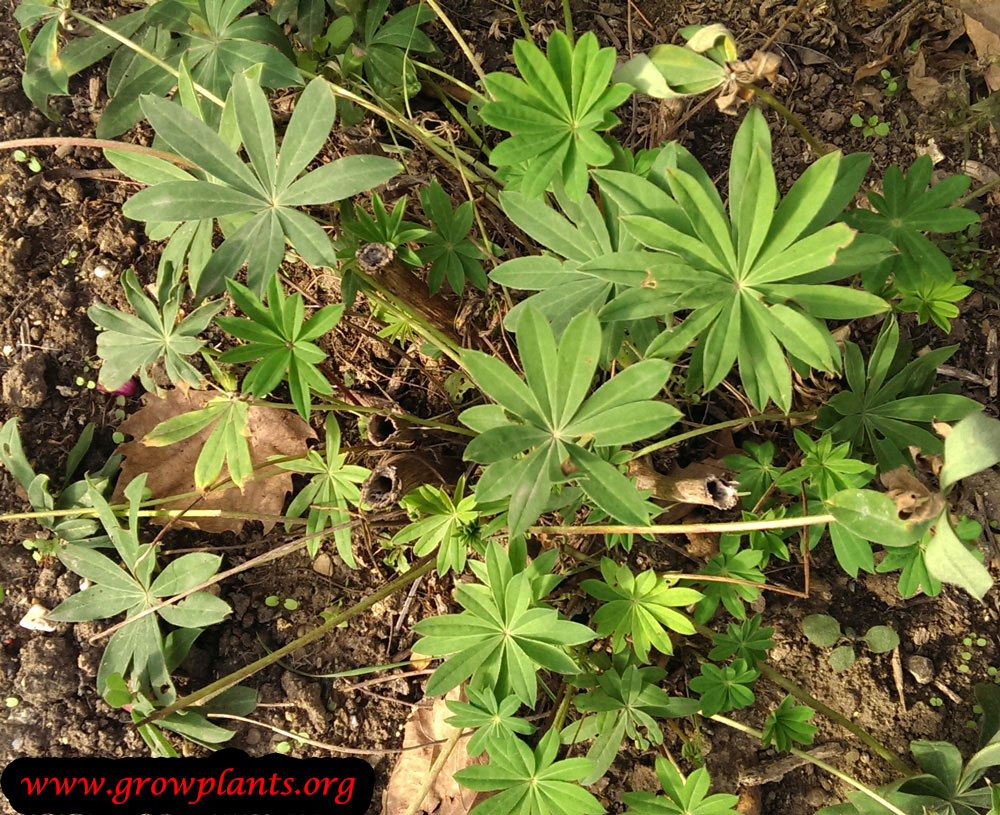
- Leaves & Foliage: Green, softly hairy leaves divided into radiating (digitate) leaflets.
- Flower Characteristics: Dense upright spires of pea-shaped flowers in white, purple, blue, yellow, red, pink or orange.
Primary Uses & Landscape Value
- Functional & Ornamental Roles: Ornamental border and cottage-garden plant and soil-improving nitrogen-fixer; manage self-seeding as it can be invasive.
Care Guide: Planting, Soil & Watering
Overview: Garden lupine is a fast-growing perennial that thrives in full sun to part shade in moist, well-drained soil, and as a legume it fixes its own nitrogen. It likes steady, moderate moisture and dislikes limy ground.
Quick Care Requirements
| Requirement | Ideal Condition |
|---|---|
| Planting Season | Spring |
| Growth Rate | Fast |
| Soil Type | Moist, well-drained soil |
| Soil pH | Slightly acidic to neutral; dislikes limy/alkaline soil |
| Water Need | Moderate – keep evenly moist |
Planting & Establishment
- Best Planting Season: Sow or plant in spring; it grows readily from seed (hardy zone 4-9).
- How to Plant:
- Hole Preparation: For transplants dig a hole matching the deep root; lupines resent root disturbance, so plant them young, and sow seed where it is to grow.
- Soil Amendments: Prefers moist, free-draining soil and avoids heavy lime; little feeding is needed since it fixes nitrogen.
- Planting Depth: Set transplants at their original soil level and sow seed shallowly (nick or soak hard seed first to aid germination).
- Growth Speed & Expectations: A fast grower reaching 1-1.5 m, flowering in spring to summer and returning each year.
Soil, Watering & Drainage Care
- Soil Mix & Drainage Needs: Wants moisture-retentive but well-drained soil; grows in deep containers. Avoid soggy or strongly alkaline ground.
- Watering Schedule & Technique:
- Young / Newly Planted: Keep the soil evenly moist while seedlings establish.
- Established: Water regularly and moderately; it prefers not to dry out fully.
- Seasonal Adjustments: More in summer, less in cool dormancy.
Climate, Light & Hardiness
This large perennial lupine is a cool-climate, temperate plant that grows in full sun to half shade in moist, well-drained soil and prefers cool summers. It is genuinely cold-hardy - the site data places it at roughly USDA zone 4–9 - with summer heat and humidity, rather than winter cold, being its main limitation.
Quick Climate Specifications
| Climate Zones | Temperate, cool-summer |
|---|---|
| USDA Hardiness Zones | Approximately 4–9 (site data) |
| Optimal Temp Range | Approximately 15–24°C (59–75°F) |
| Cold Damage Begins | Top growth dies back with hard frost; the crown is winter-hardy well below freezing |
| Frost Tolerance | High (root/crown); herbaceous top dies back |
| Light Conditions | Full sun to half shade |
| Wind Tolerance | Low to moderate (tall flower spikes) |
Sunlight & Light Exposure
Optimal Light Setup
Full sun suits it in cooler climates; in hotter areas some afternoon shade helps it through the heat.
Shade & Heat Management
Light afternoon shade and a cool root run reduce heat stress where summers are warm.
Temperature Extremes & Hardiness
USDA Hardiness & Regional Limits
The site places it around zone 4–9. As a herbaceous perennial the top dies down and the crown overwinters, so it returns each spring even after cold winters; it is best in temperate regions with distinct, cool seasons.
Cold Damage & Winter Protection
Hard frost cuts back the foliage but the crown is reliably winter-hardy through its zone range; a mulch helps at the cold edge.
Frost Sensitivity
The soft top growth is frost-tender and dies back, but the plant itself is not - it regrows from the crown.
Extreme Heat Tolerance
Poor - prolonged heat and muggy summers are its main enemy, shortening its life and performance, which is why it does not thrive in hot, humid or lower zones.
Wind, Humidity & Microclimate
Humidity Preferences
Prefers cool, moderate humidity; hot, humid air encourages disease and decline.
Wind Tolerance
The tall flower spikes can be flattened by wind - a sheltered spot or support keeps them upright.
Microclimate Recommendations
A cool, bright, sheltered position with a moist but well-drained root zone gives the best, longest-lived plants.
Growing in Pots, Balconies & Indoors
The garden lupin is a tall perennial – not a houseplant, but the grower rates it for containers. In a large, deep pot it gives spectacular flower spikes on a sunny balcony or patio.
Quick Details
- Container Size: A large, deep pot for a 1-1.5 m (40-60 in) plant and its tall spikes
- Indoor Suitability: No – it needs full sun and a cool winter
- Best Spot: Full sun to half shade
- Soil & Drainage: Humus-rich but free-draining
- Watering in Pots: Average – keep evenly moist, never waterlogged
Indoors & On the Windowsill
- Not a houseplant: It needs sun and a cold winter dormancy to thrive – grow it in outdoor pots.
- Overwintering: A hardy perennial; the pot can stay outside, but protect the more exposed potted roots from a hard freeze.
On a Balcony or Patio
- Full sun & staking: Give it full sun to part shade; the tall spikes catch wind, so stake them and use a big, stable pot.
- Safety: The seeds and pods contain toxic alkaloids – keep them away from children and pets.
Choosing the Pot, Soil & Long-Term Care
- Deep pot & mix: A large, deep pot with a humus-rich but free-draining mix and strong drainage.
- Feeding: A legume – feed modestly; too rich and you get leaf, not flower.
- Renewal: Short-lived – divide or refresh every two to three years, or simply grow fresh from seed.
Fertilizing & Feeding
A light to moderate feeder. As a nitrogen-fixing legume it supplies much of its own nitrogen, so it needs only modest, balanced feeding through spring and the flowering season; heavy nitrogen produces leaves at the expense of flowers.
Quick Fertilizing Specs
| Feeding Level | Light to moderate |
|---|---|
| Main Nutrient Priority | Balanced nutrition; go easy on nitrogen |
| Best Feeding Period | Spring through the flowering season |
| Organic Options | Compost, aged manure or leaf mulch |
| Soil pH | Adapts to a wide range; needs well-drained soil |
| Reduce/Stop Feeding | Ease off as growth slows into dormancy |
Feeding by Growth Stage
Spring flush and canopy growth
Support the new season’s shoot and leaf growth so the plant enters bloom in good health.
| Nutrient direction | A balanced complete fertilizer; because this is a nitrogen-fixing legume it needs only gentle nitrogen, so favour a light balanced feed over a heavy nitrogen push. |
|---|---|
| Timing | As growth resumes in spring. |
| Frequency | A few light feedings spread through the active growing season. |
| Fertilizer types | A balanced granular or slow-release complete fertilizer, Compost or other organic matter worked into the surface |
| Precautions | Keep fertilizer off the trunk and avoid overfeeding nitrogen, which pushes foliage at the expense of flowers. |
Flowering
Sustain flowering without forcing excessive leafy growth.
| Nutrient direction | Continue a balanced complete fertilizer; adequate overall nutrition, not high phosphorus, drives good bloom. |
|---|---|
| Timing | Through the flowering period. |
| Frequency | Light, steady feeding during bloom. |
| Fertilizer types | A balanced complete fertilizer |
| Precautions | Avoid high-phosphorus bloom-booster products; balanced, light nutrition suits this plant better. |
Dormancy or winter rest
Let the plant rest as growth and nutrient demand fall away in the cool season.
| Nutrient direction | None – withhold fertilizer while the plant is dormant. |
|---|---|
| Timing | Autumn into winter, as growth slows. |
| Frequency | No feeding at this stage. |
| Fertilizer types | No feeding at this stage while the plant is dormant. |
| Precautions | Do not fertilize until active growth resumes in spring. |
Nutrient Deficiency Signs & Corrections
Older, lower leaves turn uniformly pale or yellow and overall growth is weak.
| Possible causes | Low soil nitrogen or poor root-nodule activity on this legume, Waterlogged or compacted roots limiting uptake, Very sandy, low-fertility soil |
|---|---|
| Appears first on | Older, lower leaves |
| What to check | How wet the root zone stays and whether the soil drains freely, Whether the plant has been fed at all this season, General soil fertility and organic matter |
| Possible correction | Improve drainage, work in organic matter, and apply a balanced complete fertilizer at a modest rate. |
New leaves are pale or yellow between green veins while the veins stay green.
| Possible causes | High (alkaline) soil pH locking up iron, Waterlogged or cold soil reducing root uptake, A genuine iron shortage in the soil |
|---|---|
| Appears first on | Youngest leaves at the shoot tips |
| What to check | Soil pH and whether the soil is chalky or alkaline, How well the soil drains and whether symptoms follow wet spells, Whether only the new growth is affected |
| Possible correction | Correct soil pH where possible and apply a chelated iron product according to its label; improve drainage. |
Older leaves develop browning, scorched margins.
| Possible causes | Potassium shortage in the soil, Fertilizer or soil salt build-up in the root zone, Drought stress between waterings |
|---|---|
| Appears first on | Margins of older leaves |
| What to check | Recent fertilizer use and any salt crust on the soil surface, Soil moisture and the watering pattern, Whether only leaf edges, not whole leaves, are affected |
| Possible correction | Water thoroughly to rinse excess salts through, even out watering, and use a balanced fertilizer with adequate potassium at a modest rate. |
Pruning, Training & Seasonal Maintenance
The perennial lupin is a herbaceous border plant grown for its bold flower spikes, so it has no woody pruning — instead it is managed by deadheading and seasonal cutting back. Removing spent racemes promptly does two useful things: it can coax a lighter second flush from side-shoots, and it curbs the plant’s prolific self-seeding, which is important because it seeds around aggressively. After the display fades and foliage dies down, the clump is cut back near the base.
Quick Pruning & Maintenance Specs
| Pruning Tolerance | Moderate as a herbaceous crown; not a woody-pruning plant |
| Primary Pruning Window | Through flowering (deadhead) and at end of season (cut back) |
| Typical Frequency | Deadhead as spikes fade; one autumn/dormant cutback |
| Main Objective | Prolong bloom and prevent aggressive self-seeding |
| Young Plant Priority | Let the crown establish; deadhead only |
| Mature Plant Priority | Deadhead to side buds; basal cutback after decline |
| Best Tool Type | Precision snips; bypass secateurs for tougher stems |
| Avoid Cutting During | While healthy green foliage is still feeding the crown |
Pruning by Plant Age & Size
Newly Established
Let the crown build. Deadhead spent spikes, but do not cut the plant hard while it is still forming a root system.
Young / Mature
As the main raceme fades, cut it back to a strong lower side bud to encourage a second, smaller flush. When flowering is finished and foliage begins to yellow, cut the spent stems down; in autumn or after the first frosts, cut the clump back near the base for winter.
Seasonal Pruning Schedule
Through Flowering (Post-bloom deadheading)
Objective: extend the display and stop seed set. Remove faded racemes down to a side bud. Do NOT strip healthy green foliage — it feeds next year’s crown. Expected response is renewed side-shoot flowering; timely deadheading also sharply reduces unwanted seedlings.
End of Season (Basal cutback)
Once foliage has died down, cut spent stems back near the base to tidy the crown for winter and reduce disease-harbouring debris.
Structural Pruning & Training
There is no woody structure to train. “Renewal” on this short-lived perennial is basal cutback and, over time, division of the crown rather than hard woody pruning.
Special Growth to Remove
Remove spent racemes before they set seed — this is the single most important task, because the plant is invasive and self-sows heavily. There are no suckers or watersprouts to manage.
Container & Small-Space Pruning
Grows in a large pot. Deadhead and cut back as in the ground; the plant is relatively short-lived, so do not treat it as a shrub to be hard-pruned — refresh instead by division or reseeding.
Tools
Precision snips for deadheading soft spikes; bypass secateurs for the tougher basal cutback. No saws, loppers or shears are needed.
Tool Hygiene & Disease Risk
Routine. Aphids and powdery mildew are the usual issues rather than a pruning-borne pathogen; remove badly affected foliage and keep snips clean.
Cut Placement & Technique
Deadhead just above a leaf or side-bud; make the seasonal cutback low, near the crown, leaving no long dead stubs.
Heavy Pruning & Rejuvenation
Not a hard-pruning plant. It does not rejuvenate from cutting old wood (it has none); refresh a tired clump by dividing it or by allowing controlled reseeding.
Post-Pruning Care
After the seasonal cutback, mulch the crown; keep the soil moist but well drained. Little feeding is needed on this nitrogen-fixer.
Common Pruning Mistakes
- Letting spent spikes set seed, so it colonises the whole bed (and beyond).
- Cutting off healthy green foliage too early and starving next year’s crown.
- Expecting a shrub-like rebloom from hard cutting — it is a short-lived herbaceous perennial, refreshed by division.
When NOT to Prune
Do not cut back healthy, still-green foliage prematurely; do not delay deadheading if you want to prevent self-seeding.
Recommended Tools (by task)
- precision_snips — deadheading faded racemes to side buds on soft flower stems.
- bypass_secateurs — the tougher end-of-season basal cutback of the clump.
Propagation Guide
The species comes reasonably true from seed and that is the usual method, but garden hybrids (Russell-type) are variable and must be increased vegetatively — by basal cuttings or careful division — to keep a named colour. The hard seed coat germinates better after soaking or scarifying. Easy to moderate.
Quick Propagation Specs
| Best Propagation Method | Seed (species); basal cuttings (named cultivars) |
| Alternative Methods | Division of the crown (difficult) |
| Propagation Difficulty | Easy to Moderate |
| Seed True-to-Type | Mostly uniform for the species; Variable for hybrids |
| Vegetative True-to-Type | Yes |
| Best Propagation Season | Spring (site) |
Growing from Seed
Dormancy & Pre-Sowing Treatment
Hard coat — nick or soak the seed (some growers add a short cool-moist chill) to even up germination.
Sowing Season
Spring (site).
Sowing Depth & Spacing
Sow shallowly; direct-sow or use deep cells, as lupins form a taproot and dislike root disturbance.
Germination Conditions
Warm, moist soil; usually within a couple of weeks, though emergence can be uneven.
Division & Basal Cuttings
Because the plant makes a woody crown over a taproot it does not divide easily; the reliable vegetative method for a named cultivar is a basal cutting — a young spring shoot taken with a sliver of the crown — rooted in a gritty, humid medium.
Bloom & Flower Guide
Quick Details
- Bloom Season: Late spring to summer
- Time to First Bloom: Usually its second year from seed (a perennial)
- Flower Appearance: Dense, tall spikes of pea flowers in white, purple, blue, yellow, red, pink or orange
- Edibility: Not eaten – this species is notably toxic (alkaloids), especially the seeds
Detailed Blooming Overview
The classic garden lupine, with tall, dense flower spikes in a wide range of colors from late spring into summer. The blooms are a bumblebee favorite.
Flower Characteristics
- Tall, dense spikes of pea-shaped flowers.
- Colors span white, purple, blue, yellow, red, pink and orange.
Bloom Care & Thinning
- Pollination: Mainly by bumblebees.
- Managing the bloom: Deadhead spent spikes for a possible second flush and to limit self-seeding.
- Safety: All parts, especially the seeds, are toxic if eaten.
Bloom Health & Protection
- Lupin aphids: Large aphids that mass on the flower spikes; a strong spray of water or an insecticidal soap or neem oil helps.
- Powdery mildew: A white film can develop on spikes in humid conditions – improve airflow, and a sulfur-based fungicide is an option.
Pests, Diseases & Troubleshooting
Overview: Garden lupin (Lupinus polyphyllus) is a short-lived Fabaceae perennial whose signature pests are the large grey lupin aphid that mobs the flower spikes, and slugs and snails that devastate the soft young growth. Its key diseases are powdery and downy mildew and, most seriously, lupin anthracnose, which bends and blights stems and spikes. It also flops and rots in heavy or alkaline soil.
Quick Troubleshooting Overview
| Issue / Pest | Main Symptom | Primary Solution |
|---|---|---|
| Lupin aphid | Big grey aphid colonies smothering flower spikes | Hose off / wipe early, insecticidal soap, beneficials |
| Slugs & snails | Seedlings and new shoots shredded, slime | Night hand-pick, grit/copper, iron-phosphate bait |
| Anthracnose | Twisted, blackened stems and spikes; leaf lesions | Clean seed, remove infected plants, copper, resistant strains |
| Powdery mildew | White powder on leaves, yellowing | Airflow, base watering, sulfur/bicarbonate |
| Crown / root rot | Base blackens and collapses in wet soil | Free-draining acidic soil, don’t overwater |
| Thrips / caterpillars | Streaked buds or chewed leaves | Sticky traps, hand-pick, Bt |
Common Pests & Management
- Lupin Aphid (Macrosiphum albifrons):
- Symptoms: The defining lupin pest: large (up to ~5 mm) grey-green aphids in dense, mealy colonies smothering flower spikes and shoot tips; rapid build-up wilts spikes, drops flowers and spreads viruses.
- Prevention & Control: Catch it early – knock colonies off with a firm water jet or wipe them off by hand, and encourage ladybirds, lacewings and parasitic wasps. Insecticidal soap or horticultural oil for heavy colonies, applied to protect pollinators on the spikes.
- Slugs & Snails (Gastropoda):
- Symptoms: Young plants, seedlings and emerging spring shoots are shredded overnight, with slime trails; among the biggest killers of lupins.
- Prevention & Control: Protect emerging crowns and seedlings with grit or copper rings, hand-pick after dark, and remove hiding places; iron-phosphate bait where pressure is high.
- Thrips (Frankliniella spp.):
- Symptoms: Silvery streaking and flecking on leaves and buds and distorted, discoloured flowers; a virus risk.
- Prevention & Control: Monitor with sticky traps, remove weeds, and encourage predators; insecticidal soap or spinosad in the evening for damaging numbers.
- Caterpillars (Lepidoptera larvae):
- Symptoms: Chewed leaves and holed buds with frass; assorted moth and butterfly larvae.
- Prevention & Control: Hand-pick and encourage birds and parasitic wasps; Bt on young caterpillars for selective control.
Diseases & Fungal Issues
- Lupin Anthracnose (Colletotrichum lupini):
- Symptoms: The most serious lupin disease: brown, sunken lesions on stems, leaves and flower stalks that cause the classic twisting, bending and collapse of stems and spikes; spreads fast by splashing water in warm, wet weather.
- Treatment & Management: Start with clean, treated seed and resistant strains, avoid overhead watering, space for airflow, and promptly remove and destroy infected plants and debris. A copper or labelled fungicide protects new growth under pressure.
- Powdery Mildew (Erysiphe, Golovinomyces spp.):
- Symptoms: White powdery patches spreading over leaves and stems, usually in the second half of the season; leaves yellow and die.
- Treatment & Management: Space plants and cut back congested growth for airflow, water at the base, and remove affected leaves; sulfur or potassium bicarbonate checks spread. Cutting plants back after first bloom refreshes clean growth.
- Downy Mildew (Peronospora spp.):
- Symptoms: Pale, distorted young leaves with a greyish mould on the undersides in cool, humid conditions.
- Treatment & Management: Improve airflow, avoid wet foliage, and remove infected leaves; copper helps under prolonged damp.
- Crown & Root Rot (Phytophthora, Rhizoctonia, Sclerotinia):
- Symptoms: Wilting, yellowing and blackening collapse at the base, especially in heavy, wet, poorly drained soil – a common cause of sudden lupin death.
- Treatment & Management: Plant in free-draining, ideally slightly acidic soil, avoid waterlogging and overwatering, and do not mulch heavily against the crown; remove and destroy rotted plants.
- Bean Yellow Mosaic / Cucumber Mosaic Virus (BYMV / CMV (aphid-vectored)):
- Symptoms: Mottled, streaked and distorted leaves and poor, broken-coloured flowers; incurable and spread by aphids.
- Treatment & Management: Control aphids promptly, remove and destroy symptomatic plants, and do not propagate from them; buy clean stock.
Growing Difficulties & Abiotic Problems
- Crown Rot in Heavy / Wet Soil:
- Cause & Symptoms: Lupins have deep roots and resent heavy, wet or waterlogged ground, rotting at the crown – one of the commonest reasons they are short-lived.
- Correction Strategy: Grow in deep, free-draining soil, improve heavy ground with grit and organic matter, avoid winter wet, and site where water never stands.
- Chlorosis in Alkaline Soil:
- Cause & Symptoms: On limy, alkaline soils the leaves yellow between the veins as iron becomes unavailable; lupins prefer neutral-to-acidic soil.
- Correction Strategy: Grow in neutral to slightly acidic soil, add organic matter, and use chelated iron as a short-term correction on alkaline sites.
- Flopping & Short Life:
- Cause & Symptoms: Tall flower spikes flop in wind or rain, and clumps decline after a few years, especially if seed is allowed to set.
- Correction Strategy: Stake tall spikes, shelter from strong wind, deadhead spent spikes to prolong life and prevent excessive self-seeding, and plan to replace clumps every few years.
What Helps – Products & Tools
A lupin kit: insecticidal soap or horticultural oil for the lupin aphid, iron-phosphate bait and copper/grit barriers for slugs and snails, a copper or labelled fungicide for anthracnose, sulfur or potassium bicarbonate for powdery mildew, and chelated iron for chlorosis on limy soil. Clean seed, sharp drainage and airflow are the real safeguards.