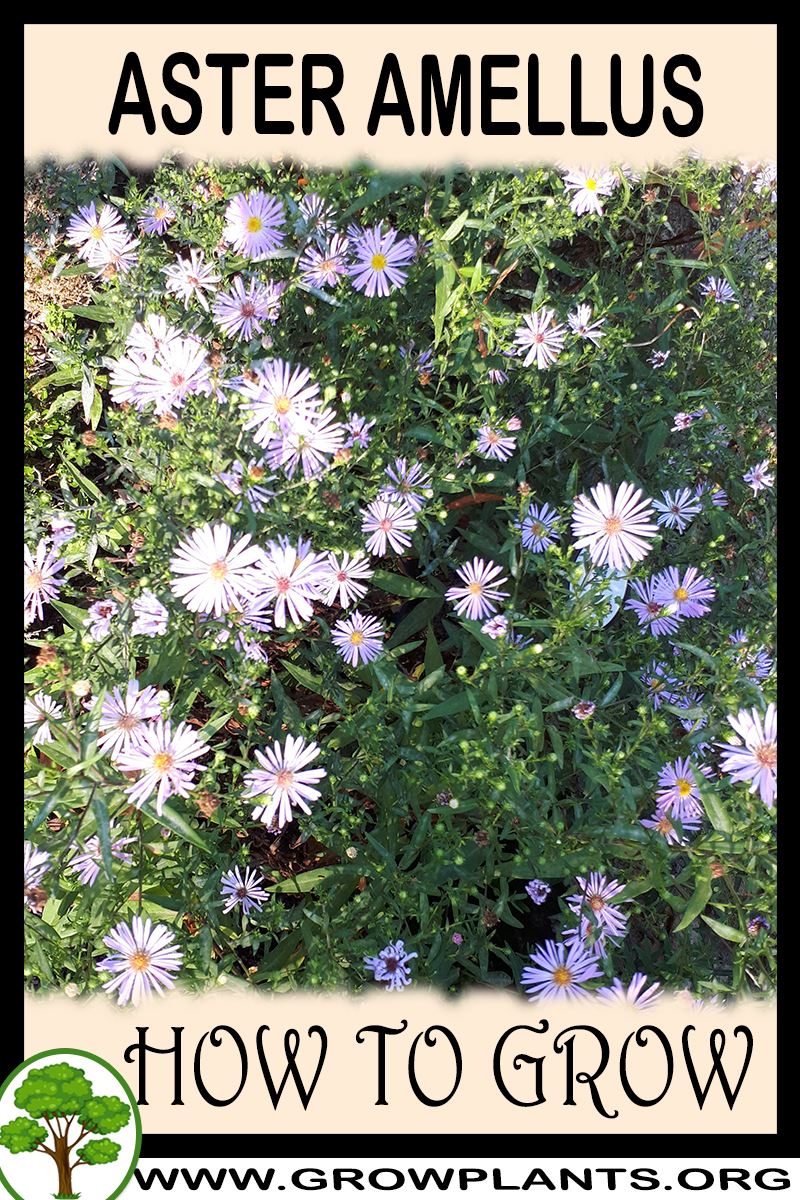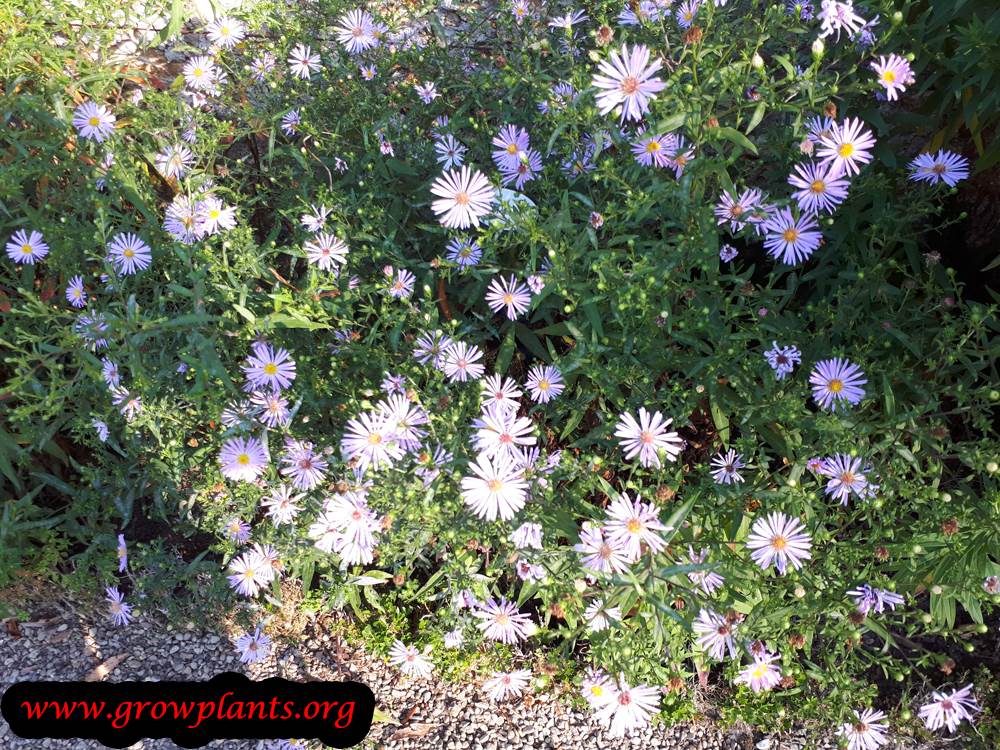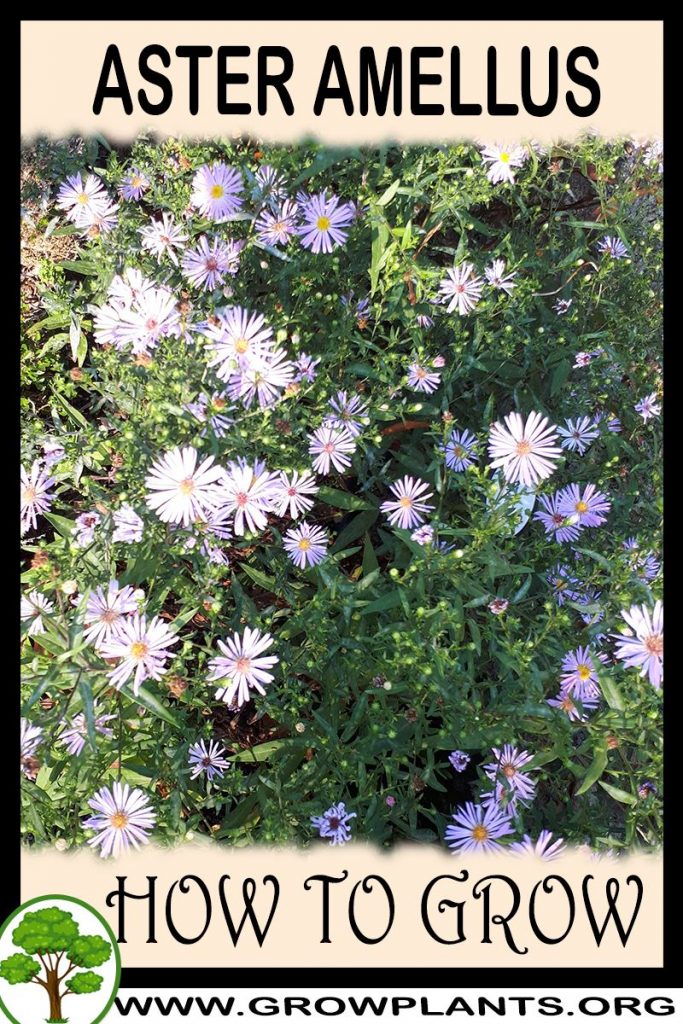
Plant Profile & Key Characteristics
Also known as: Aster elegans, European Michaelmas-daisy
Overview: Aster amellus (European Michaelmas-daisy) is a herbaceous perennial or annual forming clumps 0.6-1.2 m (24-48 in) tall. This drought-tolerant plant is grown as an ornamental and cut flower that attracts pollinators.
Quick Specifications
| Specification | Attribute |
|---|---|
| Plant Type / Life Cycle | Perennial or annual (herbaceous) |
| Foliage Type | Semi-evergreen (dies back in cold winters) |
| Mature Size | 0.6-1.2 m tall (24-48 in) |
| Growth Rate | Fast to moderate |
| Root System | Fibrous, spreading by rhizomes |
| Toxicity | Non-toxic (safe around pets) |
| Hardiness | USDA zones 3-10a (10b with care) |
Growth Form & Structure
- Height & Spread: 0.6-1.2 m (24-48 in) tall, forming a spreading clump; grows well in large containers.
- Growth Habit & Form: Upright clump-forming herbaceous perennial that spreads by rhizomes and can become invasive.
- Lifespan & Maturity: Long-lived perennial, best divided every few years.
Anatomy & Physical Features
- Leaves & Foliage: Green linear leaves on upright stems.
- Flower Characteristics: Dense daisy-form flowers in purple, pink or white with yellow, orange or pink centres (see Bloom guide).
Primary Uses & Landscape Value
- Functional & Ornamental Roles: Ornamental border perennial, cut flower and pollinator plant; drought tolerant.
Care Guide: Planting, Soil & Watering
Overview: Aster amellus is a hardy, drought-tolerant herbaceous perennial (hardiness zone 3–10a, or 10b with care) for full sun to part shade. It grows in moist, well-drained soil and tolerates dry spells.
Quick Care Requirements
| Requirement | Ideal Condition |
|---|---|
| Planting Season | Spring–summer in zone 3–10a; spring or autumn in zone 10b |
| Growth Rate | Moderate to fast |
| Soil Type | Moist, well-drained |
| Water Need | Low to moderate – drought tolerant but prefers regular water |
Planting & Establishment
- Best Planting Season: Plant spring to summer in zone 3–10a, and in spring or autumn in zone 10b.
- How to Plant:
- Hole Preparation: Dig a hole about the width of the root ball and loosen the surrounding soil.
- Soil Amendments: Work in organic matter and feed a few times a year – once in spring for growth and again toward flowering.
- Planting Depth: Set the crown at soil level.
- Growth Speed & Expectations: Growth is moderate to fast, forming a 0.6–1.2 m clump.
Soil, Watering & Drainage Care
- Soil Mix & Drainage Needs: Moist but well-drained soil is ideal; good drainage prevents rot. In containers use potting or peat soil with perlite and humus, mulch to hold moisture, and provide ample drainage holes.
- Watering Schedule & Technique:
- Young / Newly Planted: Keep newly planted clumps moist while establishing.
- Established: Once established it tolerates drought but flowers best with regular, moderate watering.
- Seasonal Adjustments: Water more in summer heat and during flowering, less in winter.
Climate, Light & Hardiness
Aster amellus (European Michaelmas-daisy) is a drought-tolerant perennial suited to temperate, Mediterranean, and subtropical climates. It flowers best in full sun, though in its hottest hardy zone it needs afternoon shade to cope with heat.
Quick Climate Specifications
| Climate Zones | Temperate, Mediterranean, subtropical |
|---|---|
| USDA Hardiness Zones | 3–10a, and zone 10b with attentive care |
| Light Conditions | Full sun to half shade (half shade only in zone 10b) |
Sunlight & Light Exposure
Optimal Light Setup
Full sun gives the best flowering in most of its range.
Shade & Heat Management
In its warmest hardy zone (10b), grow in half shade rather than full sun to reduce heat stress.
Temperature Extremes & Hardiness
USDA Hardiness & Regional Limits
Hardy as a perennial across USDA zones 3–10a, extending into 10b with good care and some afternoon shade.
Cold Damage & Winter Protection
Dies back to the crown in cold winters and regrows in spring; foliage may persist longer in milder climates.
Wind, Humidity & Microclimate
Dry-Air Tolerance
Drought tolerant once established, though it prefers a regular water supply for the best display.
Growing in Pots, Balconies & Indoors
Aster amellus (Italian aster) is a sun-loving perennial and, as the grower notes, not a houseplant – indoor light is far too weak for it. It does, however, grow well in a container on a sunny balcony or patio, where it flowers freely.
Quick Details
- Container Size: A pot at least 200% bigger than the plant to start (grower’s guidance); it reaches 0.6-1.2 m (24-48 in)
- Indoor Suitability: Not a houseplant – it needs full sun
- Best Spot: Full sun to half shade (in the hottest climates, half shade)
- Soil & Drainage: Potting mix or peat with perlite, enriched with humus and organic matter; good drainage with enough holes
- Watering in Pots: Moderate – keep lightly moist with mulch; it tolerates some drought but prefers regular water
Indoors & On the Windowsill
- Not a houseplant: The grower is clear it will not grow indoors – it needs full sun that a room cannot provide.
- Windowsill: Even a sunny sill is generally too weak for a full flowering display; grow it outdoors instead.
- Overwintering: As a hardy perennial it can stay outside in most climates; a potted plant can be sheltered in the worst cold.
On a Balcony or Patio
- Light & wind: Give it the sunniest spot; on exposed balconies the tall stems may need support and shelter from wind.
- Watering: Walls and paving reflect heat and pots dry fast – mulch the surface and let the saucer fill when you water, but empty it the same day.
Choosing the Pot, Soil & Long-Term Care
- Pot & drainage: Start in a pot at least twice the size of the plant, with enough holes for good drainage; if using a saucer, let it dry out the same day.
- Potting mix: Potting mix or peat with perlite, mixed with humus and organic matter; a chopped mulch on top helps keep the soil moist.
- Feeding: Feed through the growing season, as watering leaches nutrients from the pot.
- Repotting: Divide and refresh the mix every couple of years as the clump grows.
Fertilizing & Feeding
This drought-tolerant perennial daisy is a moderate feeder: balanced feeding as spring growth resumes and again as flowering approaches carries it through the season, with feeding held off once it dies back for its winter rest.
Quick Fertilizing Specs
| Feeding Level | Moderate feeder |
|---|---|
| Main Nutrient Priority | Balanced feeding with adequate nitrogen to support spring growth and the summer-to-autumn flower display |
| Best Feeding Period | Spring growth through the approach of bloom in late spring to early summer, with a light follow-up feeding possible in autumn in mild climates |
| Organic Options | Compost or well-rotted organic matter worked into moist, well-drained soil |
| Reduce/Stop Feeding | Stop feeding as the plant dies back for its winter rest |
| Micronutrients | Usually met by a complete fertilizer and organic-matter soil; correct only a diagnosed problem |
| Soil pH | Grows well in ordinary moist, well-drained garden soil without needing a particular pH |
Feeding by Growth Stage
Spring growth
Support fresh foliage and stem growth as the perennial breaks dormancy in spring.
| Nutrient direction | A balanced, complete fertilizer with adequate nitrogen fuels vigorous spring growth. |
|---|---|
| Timing | As new growth emerges in spring. |
| Frequency | A feeding at the start of spring growth is the main feeding of the season. |
| Fertilizer types | A balanced, complete fertilizer, Compost or organic matter worked into the soil |
| Precautions | Avoid overfeeding, which can produce floppy, weak stems that need extra support once the plant flowers. |
Approach to bloom and flowering
Support the purple, pink, or white daisy flowers from late spring into summer, and any repeat flowering into autumn in mild climates.
| Nutrient direction | A follow-up balanced feeding as flowering approaches supports strong bloom without favoring one nutrient over another. |
|---|---|
| Timing | As flower buds begin to form in late spring to early summer, with a light optional feeding in autumn where the plant reblooms. |
| Frequency | A follow-up feeding around bud formation is usually enough to carry the plant through its bloom period. |
| Fertilizer types | A balanced, complete fertilizer |
| Precautions | Do not switch to a high-phosphorus “bloom booster”; balanced feeding with adequate nitrogen supports flowering better in this species. |
Winter dormancy
Let the plant rest through winter after it dies back to the ground.
| Nutrient direction | None – withhold fertilizer once the plant has died back for winter. |
|---|---|
| Timing | From autumn dieback through winter, until new growth resumes the following spring. |
| Frequency | No feeding at this stage. |
| Fertilizer types | No feeding at this stage; hold off fertilizing until spring growth resumes. |
| Precautions | Do not fertilize dormant, dormant-season soil; the plant cannot use the nutrients while it is not in active growth. |
Nutrient Deficiency Signs & Corrections
Lower leaves fade to pale green or yellow and overall growth looks stunted.
| Possible causes | low available soil nitrogen, nitrogen leaching from heavy rain or watering, thin, low-organic-matter soil |
|---|---|
| Appears first on | older, lower leaves |
| What to check | recent feeding history, soil organic matter, watering and drainage |
| Possible correction | Apply a balanced, nitrogen-containing complete fertilizer and build soil organic matter. |
Plants grow full foliage but produce few flowers.
| Possible causes | too much shade for a plant that flowers best in fuller sun, overfeeding with a nitrogen-heavy fertilizer that favors leafy growth over flowers, overcrowded, invasive spread reducing the vigor of individual plants |
|---|---|
| Appears first on | whole-planting effect rather than a single stem |
| What to check | light exposure, recent fertilizer type and amount, how crowded the planting has become |
| Possible correction | Improve light exposure, moderate feeding to a balanced fertilizer, and divide overcrowded clumps. |
Leaf margins brown or scorch and growth stalls despite adequate watering.
| Possible causes | fertilizer salt buildup in the root zone, under-watering that concentrates salts, excessive or too-frequent feeding |
|---|---|
| Appears first on | leaf margins and tips |
| What to check | recent fertilizer amounts, watering consistency, soil drainage |
| Possible correction | Ease off feeding, water thoroughly to flush accumulated salts, then return to lighter balanced feeding. |
Pruning, Training & Seasonal Maintenance
Aster amellus is a herbaceous, clump-forming perennial with no woody framework, so pruning here means deadheading and end-of-season cutback rather than shaping branches. It tolerates cutting well: removing spent and fading flowers through summer into autumn genuinely extends the bloom by encouraging another flush, while the main structural task is cutting the whole clump back once it dies down in autumn/winter. Pruning has essentially no impact on plant form (it regrows from the crown each year) but a direct impact on how long and how fully the plant flowers.
Quick Pruning & Maintenance Specs
| Pruning Tolerance | High |
| Primary Pruning Window | Through bloom (summer–early autumn) for deadheading |
| Secondary Maintenance Window | Autumn/winter for full cutback of dead top growth |
| Typical Frequency | Ongoing deadheading, one annual cutback |
| Main Objective | Prolong flowering by deadheading; tidy the clump for winter |
| Young Plant Priority | Let the crown establish; deadhead but don’t cut back hard in year one |
| Mature Plant Priority | Regular deadheading through bloom, full cutback after die-back |
| Best Tool Type | Precision snips |
| Avoid Heavy Pruning During | Active bloom (cutting back the whole clump mid-flower sacrifices the display) |
Pruning by Plant Age & Size
Newly Established
Remove only damaged or dead foliage while the crown roots in; hold off on a full cutback until the plant has had at least one full growing season.
Young / Formative
No structural training is needed – the plant naturally forms a mounding clump. Light pinching of very early growth can encourage a bushier, more floriferous habit but is optional.
Mature / Established
Deadhead spent and mature flowers through the bloom period, and cut the whole clump back to near ground level once it has died down for winter.
Seasonal Pruning Schedule
Ongoing Sanitary
Objective: extend flowering. Remove: individual spent or over-mature flowerheads, cut back to just above a leaf node or side bud. Do not remove: unopened buds or fresh flowers. Expected response: the plant channels energy into producing another wave of blooms rather than seed. Flowering impact: positive – this is the main lever for a longer bloom season.
Dormant/Winter
Objective: tidy the clump and remove dead top growth before spring. Remove: all dead/collapsed stems and foliage once the plant has fully died back for the season. Do not remove: live basal foliage or crown tissue. Expected response: clean regrowth from the crown in spring; leaving dead stems standing over winter is a matter of preference (some gardeners leave them for habitat/frost protection) rather than a plant-health requirement. Flowering impact: none – this season’s flowers are already finished.
Special Growth to Remove
- Spent flower stems – deadhead individual daisy flowers as they fade to encourage repeat blooming.
- Fully dead top growth – cut to the ground once the clump has finished for the season.
Container & Small-Space Pruning
Grown well in containers with a generously sized pot. In a pot, deadheading matters even more for a tidy display since there’s no larger bed to visually dilute spent flowers, and the end-of-season cutback should go a little lower (closer to the crown) since potted plants have less insulation over winter.
Tools
Precision snips for deadheading individual blooms; the same snips or light hand shears are enough for the annual cutback since stems are soft and herbaceous.
Tool Hygiene & Disease Risk
Routine – clean, sharp tools are sufficient; no significant tool-transmitted disease risk is noted for this species beyond general aphid activity, which is not spread by pruning cuts.
Cut Placement & Technique
Deadhead just above a leaf node or side bud so the plant has a point to branch and rebloom from; for the winter cutback, cut stems down close to the crown without damaging the emerging basal foliage.
Post-Pruning Care
No special aftercare is needed beyond normal watering; avoid feeding purely in response to a cutback since fertilizing is already scheduled around spring growth and bloom periods.
Common Pruning Mistakes
- Skipping deadheading and letting the plant set seed early, which shortens the bloom season.
- Cutting the whole clump back hard while it is still actively flowering.
- Removing live basal foliage along with dead stems during the winter cutback.
When NOT to Prune
Avoid a full cutback while the plant is still green and actively flowering – wait for natural die-back in autumn/winter. Avoid heavy cutting immediately after transplanting or dividing, until the clump has re-established.
Recommended Tools (by task)
- precision_snips – for deadheading individual flowers and the light annual cutback of soft herbaceous stems.
Propagation Guide
Stem cuttings are the best method for Aster amellus, especially when you want to guarantee a specific flower color, since seed-grown plants can vary; dividing an established clump is also a straightforward option. Vegetative propagation is not strictly required but is easy and dependable, making this an Easy plant to propagate.
Quick Propagation Specs
| Best Propagation Method | Stem cuttings |
| Alternative Methods | Division of established clumps; seed |
| Propagation Difficulty | Easy |
| Seed True-to-Type | Variable – flower color may not match the parent plant |
| Vegetative True-to-Type | Yes, including exact flower color |
| Best Propagation Season | Best in spring; cuttings can also be taken anytime the temperature is above 25°C (77°F) |
| Cutting Rooting Time | Typically a few weeks under warm, humid conditions |
Growing from Seed
Plants can be grown from seed, but since the site notes that cuttings are used specifically to guarantee flower color, seed-raised plants may not match a particular parent’s color. Seed is best suited to general mixed plantings rather than reproducing a specific plant. No further site-specific sowing data is available.
Stem Cuttings
Cutting Type
Softwood stem cuttings, typically taken just below a node as is standard for soft-stemmed perennials.
Best Timing
Best started in spring, but can be done anytime the temperature stays above about 25°C (77°F).
Rooting Setup
Peat-based soil is preferred, though other mixes such as potting soil also work. Keep the soil moist and maintain high humidity around the cutting.
Rooting Hormone
Not stated by the site; generally not required for a soft-stemmed perennial like this, though a rooting hormone may speed and even out rooting.
Rooting Time
Typically a few weeks under warm, humid conditions.
Division, Offsets, Pups & Suckers
As with many clump-forming garden asters, mature clumps can also be lifted and divided in spring, splitting the clump into rooted sections that each carry shoots and roots, then replanted promptly. This is common general practice for the genus, though not detailed in the site’s own data for this species.
Bloom & Flower Guide
Quick Details
- Bloom Season: Summer to autumn
- Flower Appearance: Daisy-shaped flowers in purple, pink or white with a yellow, orange or pink centre, often in dense sprays
- Edibility: Ornamental / cut flower – grown for the display, not for eating
Detailed Blooming Overview
The European Michaelmas daisy carries masses of classic daisy flowers from summer into autumn, in cool purples, pinks and whites around a warm central eye. It is drought tolerant, blooms when many other plants are fading, and is one of the best late-season nectar sources for butterflies and bees. It also makes a lovely cut flower.
Flower Characteristics
- Daisy-shaped flowers in purple, pink or white.
- Central disc in yellow, orange or pink.
- Often borne in high density, excellent for cutting and for pollinators.
Bloom Care & Thinning
- Prolong the show: Deadhead spent flowers to extend the display.
- Keep it vigorous: Divide the clumps every few years so they keep flowering freely.
Bloom Health & Protection
- Powdery mildew: A common problem on asters in crowded or dry-rooted plants – better spacing and morning watering help, and a sulphur-based fungicide can be used if it takes hold.
- Aster yellows: This disease greens and distorts the flowers and has no cure – remove affected plants promptly and keep leafhoppers, which spread it, in check.
Pests, Diseases & Troubleshooting
Overview: Italian aster (Aster amellus) is a compact, sun-loving species that tends to be more mildew-resistant than many asters, but still shares the genus’s powdery mildew, aster yellows and sap-sucker profile. Asters (Michaelmas daisies and their relatives) are cheerful, easy perennials whose two defining problems are fungal – powdery mildew on crowded, dry-rooted plants – and aster yellows, a leafhopper-borne disease that greens and deforms the flowers. Sap-suckers like aphids and mites round out the pest list. Manage them culturally: give plenty of air and space, keep the roots evenly moist, divide clumps regularly, and remove any plant showing the tell-tale green, distorted flowers of aster yellows.
Quick Troubleshooting Overview
| Issue / Pest | Main Symptom | Primary Solution |
|---|---|---|
| Powdery mildew | White powdery coating on leaves, esp. lower/inner | Space & divide plants, improve airflow, resistant varieties, fungicide |
| Aster yellows | Green, deformed flowers and yellow, distorted growth | Remove and destroy infected plants; control leafhoppers/weeds |
| Aphids | Sticky, distorted new shoots and buds | Hose off, encourage predators, insecticidal soap |
| Spider mites | Stippled, dull, bronzed leaves in hot dry spells | Keep roots moist, rinse foliage, horticultural oil |
| Rust / leaf spot | Orange pustules or brown spots on leaves | Remove affected leaves, improve airflow, avoid wetting foliage |
Common Pests & Management
- Aphids (Macrosiphoniella / Aphis spp.):
- Symptoms: Clusters of soft green, grey or black insects on new shoots, buds and flower stems, with sticky honeydew, sooty mould, curling and distortion; they can also spread aster yellows.
- Prevention & Control: Dislodge with a water jet, encourage ladybirds, lacewings and hoverflies, control ants, and treat persistent clusters with insecticidal soap or neem, focusing on buds and tips.
- Two-spotted spider mite (Tetranychus urticae):
- Symptoms: Fine pale stippling, a dull bronzed cast and fine webbing on leaves in hot, dry conditions, especially on drought-stressed plants.
- Prevention & Control: Keep roots evenly moist (drought stress invites mites), rinse foliage, encourage predatory mites, and apply horticultural oil or insecticidal soap to leaf undersides for persistent cases.
- Thrips (Frankliniella / Thrips spp.):
- Symptoms: Silvery streaking and tiny black frass on leaves and petals, with distorted buds and flecked flowers.
- Prevention & Control: Monitor with blue sticky traps, remove spent flowers, and treat with insecticidal soap, spinosad or neem, repeating to break the cycle.
- Leafhoppers (Macrosteles / Cicadellidae):
- Symptoms: Small wedge-shaped insects that hop when disturbed, causing light stippling – but their real importance is transmitting the aster yellows phytoplasma between plants.
- Prevention & Control: Control nearby weeds that host them, encourage predators, use row cover on valued plantings, and manage populations with insecticidal soap where aster yellows is a concern.
- Tarnished plant bug (Lygus lineolaris):
- Symptoms: Feeding on buds and shoots causes distorted, dimpled or aborted flowers and blackened growing tips.
- Prevention & Control: Keep the area weed-free, encourage natural enemies, remove damaged buds, and treat heavy infestations with insecticidal soap or neem.
- Slugs & snails (Gastropoda):
- Symptoms: Ragged holes in new spring growth and lower leaves, with slime trails, worst in damp shaded plantings.
- Prevention & Control: Handpick at night, clear debris, and use copper barriers, traps or iron-phosphate bait around emerging clumps.
Diseases & Fungal Issues
- Powdery mildew (Golovinomyces / Erysiphe cichoracearum):
- Symptoms: A white powdery coating on leaves and stems, worst on crowded, shaded, or dry-rooted plants in late season, causing yellowing and leaf drop – the signature aster disease.
- Treatment & Management: Space and divide plants for airflow, choose mildew-resistant varieties (many New York/New England asters are bred for this), keep roots evenly moist, avoid overhead watering, and apply sulphur, potassium bicarbonate or a horticultural-oil fungicide if needed.
- Aster yellows (phytoplasma):
- Symptoms: Yellow, stunted, witches’-broom growth and flowers that turn green, leafy and deformed instead of opening normally; spread by leafhoppers and incurable.
- Treatment & Management: There is no cure – promptly dig and destroy infected plants to stop spread, control leafhopper vectors and weedy reservoirs, and do not compost affected plants.
- Rust (Coleosporium spp.):
- Symptoms: Orange to rusty-brown pustules on leaf undersides with yellow spotting above, in humid conditions.
- Treatment & Management: Remove and destroy affected leaves, improve air movement and spacing, avoid overhead watering, and apply a sulphur fungicide if severe.
- Septoria / leaf spot (Septoria / Ramularia spp.):
- Symptoms: Brown to purple-edged spots on leaves that enlarge and merge, causing lower-leaf yellowing and drop in wet weather.
- Treatment & Management: Remove affected leaves and fallen debris, improve airflow, avoid wetting foliage, and apply a copper fungicide only if it spreads.
Growing Difficulties & Abiotic Problems
- Flopping & legginess:
- Cause & Symptoms: Tall stems splay open and flower poorly, from too much shade, rich soil, or lack of pinching/division.
- Correction Strategy: Grow in full sun, pinch or cut back by half in early growth for bushier stems, divide clumps every couple of years, and stake tall types.
- Drought stress & leaf scorch:
- Cause & Symptoms: Lower-leaf browning, wilting and mite flare-ups when roots dry out, since asters like steady moisture.
- Correction Strategy: Keep the root zone evenly moist with mulch and regular watering, especially in summer heat, to prevent both scorch and spider-mite outbreaks.
- Poor bloom:
- Cause & Symptoms: Sparse flowering from insufficient light or an over-mature, congested clump.
- Correction Strategy: Site in full sun and divide congested clumps regularly to rejuvenate flowering.
What Helps – Products & Tools
Airflow and division prevent most aster trouble. For disease, useful products are sulphur, potassium-bicarbonate or horticultural-oil fungicides for powdery mildew and rust, and copper for leaf spot; mildew-resistant varieties are the best long-term fix. For pests, insecticidal soap and neem cover aphids, mites, thrips and plant bugs; sticky traps and row cover help against leafhoppers; and iron-phosphate bait handles slugs. There is no treatment for aster yellows – remove affected plants.