
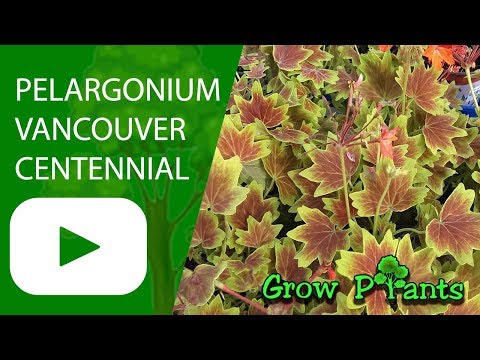

Plant Profile & Key Characteristics
Overview: ‘Vancouver Centennial’ is a fragrant-leaved zonal pelargonium 0.3-1.2 m, a stellar cultivar prized for its bronze-and-gold star-shaped foliage as well as its flower clusters. It is grown as an ornamental for beds and containers.
Quick Specifications
| Specification | Attribute |
|---|---|
| Plant Type / Life Cycle | Perennial (or annual in cold climates) |
| Foliage Type | Evergreen |
| Mature Size | 0.3-1.2 m (1-4 ft) |
| Growth Rate | Fast to moderate |
| Toxicity | Mildly toxic to pets (cats and dogs) if ingested |
| Hardiness | USDA zones 9+ (perennial), 2+ (as annual) |
Growth Form & Structure
- Height & Spread: 0.3-1.2 m; excellent in containers.
- Growth Habit & Form: Bushy, soft-wooded shrub; propagated by cuttings to keep the cultivar true.
- Lifespan & Maturity: Perennial in warm zones, grown as an annual in cold climates.
Anatomy & Physical Features
- Leaves & Foliage: Colourful, aromatic leaves (green, red, yellow and white markings), rounded to lobed with varied margins; this cultivar has distinctive star-shaped bronze-and-gold foliage.
- Flower Characteristics: Five-petalled flowers in red, white, purple or pink, borne in umbel-like clusters.
Primary Uses & Landscape Value
- Functional & Ornamental Roles: Ornamental foliage and flower plant for bedding and containers.
Care Guide: Planting, Soil & Watering
Overview: This zonal pelargonium is a fast-growing, fragrant ornamental for warm climates (zone 9+), grown as a perennial or annual and flowering best in full sun to half shade. It wants well-drained soil and moderate water, and can scorch in extreme heat.
Quick Care Requirements
| Requirement | Ideal Condition |
|---|---|
| Planting Season | Spring |
| Growth Rate | Moderate to fast |
| Soil Type | Well-draining |
| Water Need | Moderate; let the soil dry between waterings |
Planting & Establishment
- Best Planting Season: Plant in spring; grow as a perennial in frost-free zones (9+) or as an annual where winters are cold.
- How to Plant:
- Hole Preparation: Dig a hole a little wider than the root ball in free-draining soil.
- Soil Amendments: Add some compost, but avoid over-rich, soggy ground; sharp drainage keeps it healthy.
- Planting Depth: Set the root ball level with the surface and firm gently.
- Growth Speed & Expectations: A fast, bushy grower to about 0.3-1.2 m, prized for its colourful foliage; pinch to keep it compact.
Soil, Watering & Drainage Care
- Soil Mix & Drainage Needs: Needs free-draining soil and is ideal for containers with a good potting mix; soggy soil causes rot.
- Watering Schedule & Technique:
- Young / Newly Planted: Water regularly but moderately while establishing, letting the surface dry between waterings.
- Established: Water when the top few centimetres dry – it is sensitive to overwatering; light shade helps in very hot climates.
- Seasonal Adjustments: More water in summer heat, much less in winter.
Climate, Light & Hardiness
Pelargonium 'Vancouver Centennial' is a tender, Mediterranean-type evergreen sub-shrub that grows best in full sun to light shade under warm, mild conditions. It is frost-sensitive - reliably perennial only in nearly frost-free gardens (about USDA zone 9 and warmer per the site data) and widely grown as a warm-season annual (from roughly zone 2 up) where winters are cold.
Quick Climate Specifications
| Climate Zones | Subtropical, Mediterranean, tropical, warm-temperate |
| USDA Hardiness Zones | Approximately zone 9 and warmer as a perennial; grown as an annual in far colder zones |
| Optimal Temp Range | Approximately 15–24 °C (59–75 °F) |
| Cold Damage Begins | Around light frost, near 0 °C (32 °F) |
| Frost Tolerance | Low |
| Light Conditions | Full sun to half shade |
| Wind Tolerance | Moderate |
| Salt / Coastal Tolerance | Moderate |
Sunlight & Light Exposure
Optimal Light Setup
The site data lists full sun to half shade as optimal. Good light drives compact growth and free flowering; in cooler, milder-summer climates give it as much sun as possible.
Direct Sun Requirement
In hot, high-light regions full midday sun can scorch the foliage - the site data notes it may burn in hot climates - so give afternoon shade there while keeping bright light elsewhere.
Shade & Heat Management
Tolerates light shade, though too much shade reduces flowering and softens growth. In heatwaves light shade and steady (not soggy) moisture reduce stress.
Best Exposure / Orientation
A bright, warm, sheltered position - sunny in mild-summer areas, with afternoon protection in hot ones - suits it well.
Temperature Extremes & Hardiness
USDA Hardiness & Regional Limits
The site data places it at about USDA zone 9 and warmer, a winter-cold survival limit rather than a heat rating. Where winters are colder it is overwintered frost-free (indoors, a cold frame or greenhouse) or grown afresh each season.
Cold Damage & Winter Protection
Foliage is damaged by frost and the plant tolerates no more than light, brief frost; a hard freeze kills it. Move container plants to a frost-free spot before freezing weather. Cold tolerance varies somewhat with plant age, exposure and conditions.
Frost Sensitivity
Frost is the main limit - even a light freeze blackens soft growth. Commonly grown as an annual where winters freeze, but capable of longer-term growth in frost-free conditions.
Extreme Heat Tolerance
Reasonable, but intense sun and heat can scorch the leaves and fade the flowers, so afternoon shade and airflow help in hot regions.
Frost-Free Growing Season
Where grown as an annual it needs a frost-free stretch to perform; set out after the last spring frost, and expect the first autumn frost to end the display.
Wind, Humidity & Microclimate
Humidity Preferences
Adaptable, and content in the average to moderately dry air typical of Mediterranean climates; damp, stagnant air encourages fungal problems, so it prefers airy conditions.
Dry-Air Tolerance
Good - it handles dry air well, which is why it suits Mediterranean and container culture. The aromatic foliage is a bonus in warm, dry air.
Wind Tolerance
Moderate; the somewhat brittle, fast-growing stems can break in strong wind, so a sheltered spot keeps the bushy form intact.
Coastal / Salt Tolerance
Moderately tolerant of coastal conditions and salt-laden air, which differs from tolerance of saline soil or irrigation water.
Microclimate Recommendations
A warm, bright, sheltered corner - or a container that can be moved to frost-free shelter for winter - gives the most reliable results; container roots heat and dry faster and are more frost-exposed.
Growing in Pots, Balconies & Indoors
Pelargonium Vancouver Centennial (Pelargonium ‘Vancouver Centennial’) is a classic patio and balcony container plant rather than a true houseplant – the grower does not rate it as an indoor plant, because deep in a room the light is simply too weak. In a free-draining pot in full sun it flowers freely, and being a tender perennial it is well worth potting so it can be overwintered indoors in cold climates.
Quick Details
- Container Size: A medium pot, about 5-10 L (1.3-2.6 gal), with free drainage.
- Indoor Suitability: Not a deep-indoor houseplant; it can sit on a bright, sunny windowsill and is best brought indoors mainly to overwinter.
- Best Spot: Full sun – a south-facing balcony or patio is ideal (a little afternoon shade only in the hottest climates).
- Soil & Drainage: Aerated, free-draining mix – potting mix or peat/coir with perlite or vermiculite.
- Watering in Pots: Water when the top of the mix dries – pots dry fast in sun; average watering, and never waterlogged.
Indoors & On the Windowsill
- Houseplant limits: The grower does not treat it as a houseplant – away from a window the light is too weak for good growth and flowering.
- Windowsill growing: The sunniest windowsill you have, with direct sun, is where it will do best indoors; turn the pot now and then so it grows evenly.
- Overwintering: This is the main reason to pot it. Where winters are cold, lift or move the pot to a cool, bright, frost-free windowsill or porch, water sparingly, and set it back outside once nights warm up.
On a Balcony or Patio
- Light & wind: Give it the sunniest spot. Walls and railings reflect heat, so pots dry quickly – check moisture daily in hot weather; shelter tall, brittle stems from strong wind.
- Practicalities: Make sure runoff drains away freely; deadhead spent blooms to keep it flowering through the season.
Choosing the Pot, Soil & Long-Term Care
- Pot & drainage: 5-10 L (1.3-2.6 gal) with strong drainage holes; skip a standing saucer of water to avoid root rot. Terracotta breathes and dries fast (good, as this plant hates wet feet); glazed or plastic holds moisture longer.
- Potting mix: Well-aerated and free-draining – potting mix or peat/coir with perlite or vermiculite.
- Feeding: Potted plants need feeding more often as nutrients wash out; a regular dilute feed through the growing season keeps flowering strong.
- Repotting: Refresh the mix or pot up about every couple of years, with a light prune of top and roots to keep the plant bushy.
Safety
- Toxic to pets: Pelargoniums are toxic to cats and dogs – if kept on an indoor sill, place it out of reach of pets and children. Not for eating.
Growing this plant in a greenhouse
A greenhouse can give pelargonium vancouver centennial frost protection and cold protection. In the right climate it may also be kept growing through winter, depending on how much warmth and light are provided.
Greenhouse at a glance
| Greenhouse suitability | Conditional - depends on your climate |
|---|---|
| Main benefits | frost protection, cold protection |
| Season extension | earlier spring & later autumn |
| Outdoor protection advisable below | about 5°C |
| Maintain greenhouse minimum | around 5°C for active growth |
| Suitable types | unheated greenhouse, polycarbonate greenhouse, lean-to |
| Heating | Heating is optional - useful mainly for winter growing in cold areas. |
Related greenhouse guides
- Greenhouses: How to Choose the Right Greenhouse
- Best Lean-To Greenhouses
- Polycarbonate Greenhouses: What to Look for Before Buying
Fertilizing & Feeding
A moderate feeder that blooms best on steady, balanced nutrition. Adequate nitrogen and a complete fertilizer drive both healthy foliage and repeat flowering; high-phosphorus bloom-booster products are not needed.
Quick Fertilizing Specs
| Feeding Level | moderate |
|---|---|
| Main Nutrient Priority | A balanced complete fertilizer; steady nitrogen supports leaves and repeat bloom |
| Best Feeding Period | Through the spring-to-autumn growing and blooming season |
| Organic Options | Compost plus a balanced liquid feed |
| Soil pH | Slightly acidic to near-neutral, well-drained soil |
| Reduce/Stop Feeding | Taper feeding as growth and flowering slow in the cool season |
Feeding by Growth Stage
Spring growth
Build a strong leafy framework going into the blooming season
| Nutrient direction | A balanced complete fertilizer with steady nitrogen to establish healthy foliage |
|---|---|
| Timing | Early in the growing season as new growth resumes |
| Frequency | Begin light, regular feeding as active growth starts |
| Fertilizer types | A balanced complete fertilizer, Compost worked into beds or containers |
| Precautions | Do not rely on high-phosphorus bloom products; balanced feeding drives growth |
Blooming season
Sustain continuous flowering and colorful foliage
| Nutrient direction | Continue balanced, complete feeding; steady nitrogen supports repeat bloom rather than extra phosphorus |
|---|---|
| Timing | Through the main spring-to-autumn flowering period |
| Frequency | Regular light feeding across the blooming season, a little steadier for container plants |
| Fertilizer types | A balanced complete fertilizer, A diluted balanced liquid feed for container plants |
| Precautions | Container plants lose nutrients as water drains and need steadier feeding; rinse pots occasionally to keep fertilizer salts from collecting |
Cool-season rest
Rest through the cool, low-light season
| Nutrient direction | None – withhold fertilizer while growth and bloom pause |
|---|---|
| Timing | During the cool, short-day dormant period |
| Frequency | No feeding at this stage |
| Fertilizer types | No feeding at this stage while the plant rests; resume once active growth returns |
| Precautions | Do not fertilize until warmth and active growth resume |
Nutrient Deficiency Signs & Corrections
Lower leaves pale and yellow, weak growth and few flowers
| Possible causes | Nitrogen shortfall, common in containers flushed by frequent watering, Leached or exhausted potting mix, Roots too cold or too wet to take up nutrients |
|---|---|
| Appears first on | Older, lower leaves |
| What to check | Feeding history and mix age, Drainage and watering, Season and temperature |
| Possible correction | Resume regular balanced feeding and refresh tired potting mix; correct watering first |
Newest leaves yellow between the veins
| Possible causes | Iron shortage in alkaline or waterlogged mix, High pH tying up micronutrients, Overwatering damaging roots |
|---|---|
| Appears first on | New, upper leaves |
| What to check | Soil pH, Drainage, Whether only newest leaves are affected |
| Possible correction | Correct pH and drainage; if needed, apply a chelated iron product per its label |
Lots of soft leafy growth but few flowers
| Possible causes | Excess nitrogen from over-feeding, Too little light for flowering, Crowded growth needing deadheading and airflow |
|---|---|
| Appears first on | Whole plant |
| What to check | Nitrogen level and feed type, Light exposure, Deadheading and spacing |
| Possible correction | Cut back nitrogen, increase light, and deadhead spent blooms; balanced feeding restores flowering |
Pruning, Training & Seasonal Maintenance
Pelargonium vancouver centennial (a Zonal Pelargonium, Pelargonium x hortorum) needs a lighter pruning touch than its scented-leaf relatives: maintenance here is mainly deadheading, removing dead leaves, and light shaping cuts “for design,” carried out year-round, rather than a periodic hard renewal cut. This species is noted as sensitive, so pruning is kept modest and steady rather than infrequent-and-severe.
Quick Pruning & Maintenance Specs
| Pruning Tolerance | Moderate |
| Primary Pruning Window | Year-round (light, ongoing) |
| Typical Frequency | Continuous light deadheading and tidying, not a periodic hard cut |
| Main Objective | Remove dead/spent material; shape for a tidy bedding/container form |
| Young Plant Priority | Pinch tips after planting out in spring to encourage branching |
| Mature Plant Priority | Ongoing deadheading and removal of dead leaves; light shaping cuts |
| Best Tool Type | Precision snips/bypass secateurs |
| Avoid Heavy Pruning During | Peak heat (foliage can scorch in full sun/hot climates) and just before a cold snap |
Pruning by Plant Age & Size
Newly Established
Pinch growing tips shortly after spring planting to encourage a bushier habit from the start; this species is propagated vegetatively to keep the cultivar true, so cuttings taken for propagation double as early shaping cuts.
Young / Formative
No formal training system is used — light, repeated tip pinching over the first season builds a full, well-branched 0.3–1.2 m plant suited to beds or containers.
Mature / Established
On an established plant, maintenance stays light: remove dead leaves and spent flower stems as they appear, and make occasional shaping cuts for design rather than a scheduled hard renewal cut.
Structural Pruning & Training
Because this cultivar is noted as sensitive rather than aggressive, structural work is limited to light shaping; there is no source support for a hard renewal regime here, unlike the more vigorous scented-leaf Pelargonium species.
Special Growth to Remove
Remove dead leaves and spent flower stems on an ongoing basis to keep the plant tidy and to reduce material that can harbor pests like aphids or whiteflies (both noted pests for this cultivar).
Container & Small-Space Pruning
Grown in beds or containers, keep deadheading and light shaping frequent since this is how the plant is maintained rather than through occasional hard cuts; in hot climates, avoid heavy pruning during peak sun since the foliage can scorch even at the best of times.
Tools
- Precision snips — deadheading and dead-leaf removal.
- Bypass secateurs — light shaping cuts for design.
Tool Hygiene & Disease Risk
Routine: clean, sharp tools are sufficient; aphids and whiteflies (both noted pests) can be spread on unclean blades between plants, so wipe tools if pest activity is visible.
Cut Placement & Technique
Deadhead spent flower stems back to the nearest healthy node or leaf; remove dead leaves at their base rather than tearing them off, which can damage adjacent healthy tissue.
Post-Pruning Care
Water normally after light trims; no special aftercare is needed beyond routine watering, since this species is not subjected to hard rejuvenation cuts.
Common Pruning Mistakes
Treating this cultivar like its more vigorous scented-leaf relatives and applying a hard 30% renewal cut it does not need; letting spent blooms and dead leaves accumulate, which invites pest and disease pressure on a sensitive plant.
When NOT to Prune
Avoid pruning during the hottest part of summer in hot climates, since the foliage is prone to sun scorch, and avoid cutting right before a cold snap.
Recommended Tools (by task)
- precision_snips — routine deadheading and dead-leaf removal.
- bypass_secateurs — occasional light shaping cuts.
Propagation Guide
Pelargonium vancouver centennial (fancy-leaf zonal pelargonium) is a named pelargonium cultivar and is propagated only by stem cuttings, which reproduce it exactly. Take cuttings from shoots showing the best bronze-and-gold fancy-leaf colouring, which is lost from seed. It roots quickly and easily — overall an Easy plant to propagate by cuttings.
Quick Propagation Specs
| Best Propagation Method | Stem (tip) cuttings |
| Alternative Methods | Division of a large old plant |
| Propagation Difficulty | Easy |
| Seed True-to-Type | No — seed will not reproduce this cultivar, so it is grown only from cuttings |
| Vegetative True-to-Type | Yes — a cutting reproduces the parent |
| Best Propagation Season | Spring through autumn, while warm and frost-free |
| Cutting Rooting Time | About 2–4 weeks |
Stem Cuttings
Cutting Type
Take a tip or short semi-ripe cutting from a healthy non-flowering shoot with a few nodes, and strip the lower leaves. Take cuttings from shoots showing the best bronze-and-gold fancy-leaf colouring, which is lost from seed.
Best Timing
Root cuttings from spring through autumn while the weather is warm.
Cutting Preparation
Cut cleanly just below a node. Letting the cut base dry for a few hours firms it and reduces rot, as pelargoniums are prone to stem-base rot (blackleg).
Rooting Setup
Insert the cutting into a gritty, free-draining mix, keep it bright and only lightly moist — a wet mix rots the cuttings rather than rooting them.
Rooting Hormone
Unnecessary — pelargoniums root readily without it, though a light dip does no harm.
Rooting Time
Roots usually form in about 2–4 weeks.
Division, Offsets, Pups & Suckers
A large, old, multi-stemmed plant can be lifted and split in spring, keeping roots on each piece, as an alternative to cuttings.
Bloom & Edible Flower Guide
Quick Details
- Bloom Season: Spring through autumn
- Time to First Bloom: Usually within the first year from a young plant or cutting
- Flower Appearance: Small five-petalled flowers carried in rounded, umbel-like clusters; colours range through red, pink, purple and white, sometimes more than one on a head
- Edibility: Edible – the petals are edible and make a colourful garnish (note: the plant is mildly toxic to cats and dogs)
Detailed Blooming Overview
Vancouver Centennial is a fancy-leaf zonal pelargonium, grown for its striking foliage but also for the bright little flowers it carries from spring right through autumn. The blooms are held in rounded, umbel-like heads above the leaves and draw in pollinators.
Flower Characteristics
- Small five-petalled flowers gathered into rounded, umbel-like clusters.
- Colours range through red, pink, purple and white, sometimes with more than one colour on a head.
Bloom Care & Thinning
- Deadheading: Remove spent flower heads regularly to keep the plant tidy and encourage repeat flowering.
- Light: Bright light brings out both the leaf colour and the best flowering.
Bloom Health & Protection
- Botrytis (grey mould): Rots petals in damp, still air – airflow and removing faded blooms help, with a suitable fungicide if it takes hold.
- Geranium (tobacco) budworm: Caterpillars bore into buds – hand-picking and, where needed, a Bt (Bacillus thuringiensis) spray are the usual gentle fixes.
Fruit & Uses
This is an ornamental fancy-leaf zonal (Zonal Pelargonium) pelargonium, grown for display rather than as a food plant; the site data records no culinary use. Only the flowers have a recognised edible use — as a mild, decorative garnish — and the leaves of this type are not used as a culinary herb.
Quick Edible Specs
| Edible Parts | Flowers only (as a garnish). Leaves are not used culinarily for this ornamental type. |
|---|---|
| Main Use(s) | Decorative edible garnish on salads, desserts and drinks |
| Eaten Raw or Cooked | Raw, as a garnish |
| Preparation Required | Rinse; use only clean, freshly opened flowers |
| Harvest Season | During the flowering period |
| Safety/Toxicity Caveat | Use only if you are certain of the plant’s identity and that it is unsprayed; flowers are eaten in small amounts as a garnish, not as a food. Note: pelargoniums are toxic to cats and dogs. |
Flowers & Flower Buds
The five-petalled flowers are the only part with a recognised edible use, as a small, mildly flavoured garnish for salads, desserts and drinks. Pick freshly opened blooms from clean, unsprayed plants and use them decoratively rather than as a substantial food. Because this cultivar is grown as an ornamental, do not treat its leaves as an edible herb.
Preparation, Uses & Safety
Rinse the flowers and use only material you have positively identified and know to be free of pesticides. Keep to small garnish amounts. Keep the plant and its trimmings away from cats and dogs, for which pelargoniums are toxic. If in any doubt about identity or treatment, do not eat.
Pests, Diseases & Troubleshooting
This fancy-leaf zonal pelargonium gets the standard geranium pest set – aphids, whitefly, spider mites, mealybugs and, notably, the geranium budworm that eats holes in buds and flowers. Its most important diseases are Botrytis grey mould, bacterial blight and geranium rust, while the classic physiological fault of the whole group is oedema (corky bumps from overwatering). Airy, not-too-wet growing and vigilance for budworm keep it looking good.
Quick Troubleshooting Overview
| Issue / Pest | Main Symptom | Primary Solution |
|---|---|---|
| Geranium budworm | Holed, frass-filled buds and flowers | Hand-pick at dusk, Bt/spinosad on young larvae |
| Whitefly / aphids | White clouds or colonies, honeydew | Sticky traps, soap/oil on undersides |
| Botrytis | Grey mould on flowers and leaves | Deadhead, airflow, remove affected parts |
| Bacterial blight | Wilting, V-shaped leaf lesions, stem black-rot | Destroy plants, clean cuttings, avoid wet leaves |
| Oedema | Corky bumps/blisters under leaves | Reduce watering, improve light and airflow |
Common Pests & Management
- Geranium (tobacco) budworm (Chloridea (Helicoverpa) virescens):
- Symptoms: Small caterpillars that bore into flower buds and eat the petals, leaving neat holes, frass and buds that fail to open; feed at night and hide by day, so damage appears before the culprit is seen.
- Prevention & Control: Inspect buds at dusk and hand-pick the caterpillars, remove and destroy holed buds, and encourage birds and parasitic wasps. Spray Bacillus thuringiensis (Bt) or spinosad onto young larvae before they enter the buds.
- Glasshouse whitefly (Trialeurodes vaporariorum):
- Symptoms: Tiny white moth-like insects that rise in a cloud when foliage is disturbed; scale-like nymphs on leaf undersides suck sap and excrete honeydew, leading to sooty mould and weak, yellowing growth.
- Prevention & Control: Hang yellow sticky traps to monitor and thin the adults; encourage the parasitic wasp Encarsia formosa under cover and keep plants unstressed. Spray insecticidal soap or horticultural oil onto leaf undersides, repeating every few days to break the life cycle.
- Aphids (Aphis / Myzus / Macrosiphum spp.):
- Symptoms: Small soft-bodied insects (green, black or grey) clustering on soft new growth and buds; they suck sap, causing curled, distorted and yellowing growth plus a sticky honeydew that blackens with sooty mould and draws ants. Winged forms spread them plant to plant and can carry viruses.
- Prevention & Control: Blast colonies off with a firm jet of water and pinch out badly infested tips; encourage and protect ladybirds, lacewings and hoverflies, and grow flowering companions to feed them. For persistent outbreaks use insecticidal soap or a light horticultural/neem oil, wetting leaf undersides in the cool of the evening to spare pollinators.
- Two-spotted spider mite (Tetranychus urticae):
- Symptoms: Fine pale stippling that bronzes whole leaves, with delicate webbing on the undersides and growing tips in hot, dry, dusty spells; heavily fed leaves dry and drop. Look for the moving specks with a hand lens.
- Prevention & Control: Raise humidity and hose foliage down regularly, and never let plants suffer dust or drought stress. Introduce predatory mites (Phytoseiulus persimilis) under cover. Treat hot-spots with insecticidal soap or horticultural oil, repeating at 5-7 day intervals to catch newly hatched mites.
- Mealybugs (Planococcus / Pseudococcus spp.):
- Symptoms: White cottony clusters in leaf axils and stems, with honeydew and sooty mould; common on container and overwintered plants.
- Prevention & Control: Dab with alcohol or wash off, then treat with insecticidal soap or horticultural oil, and check the roots of potted plants when repotting.
Diseases & Fungal Issues
- Botrytis (grey mould) (Botrytis cinerea):
- Symptoms: Grey fuzzy mould on flowers, buds and leaves in cool, damp, crowded conditions – the commonest disease of pelargoniums, especially under cover and over winter.
- Treatment & Management: Deadhead promptly, remove faded leaves and flowers, space and ventilate plants, and water in the morning so foliage dries; avoid wetting the flowers. Reduce humidity under cover.
- Bacterial blight (Xanthomonas hortorum pv. pelargonii):
- Symptoms: Wilting (often one side first), small water-soaked or V-shaped brown leaf lesions, and a blackening stem rot; systemic, incurable and spread by handling, water-splash and cuttings.
- Treatment & Management: Buy or take cuttings only from clean, healthy stock, remove and destroy affected plants, avoid overhead watering and working among wet plants, and disinfect tools; there is no cure once a plant is infected.
- Geranium rust (Puccinia pelargonii-zonalis):
- Symptoms: Rings of reddish-brown powdery pustules on leaf undersides with yellow spots above, chiefly on zonal pelargoniums, causing yellowing and leaf drop.
- Treatment & Management: Remove affected leaves at first sign, space for airflow, avoid wetting the foliage, and use clean stock; a sulphur or appropriate fungicide checks heavy infections.
- Black leg / root rot (Pythium spp.):
- Symptoms: Blackening, soft rot spreading up from the stem base, especially on overwatered cuttings and plants; they collapse and die.
- Treatment & Management: Use clean, free-draining compost and containers, water sparingly, and take cuttings into gritty mix; discard affected plants and avoid reusing contaminated soil.
Growing Difficulties & Abiotic Problems
- Oedema:
- Cause & Symptoms: Corky, blister-like bumps on the undersides of leaves form when the roots take up more water than the leaves can transpire – typically from overwatering in cool, dull, humid conditions; it is physiological, not infectious.
- Correction Strategy: Reduce watering, especially in cool dull weather, improve light and air circulation, and space plants; damaged leaves do not recover but new growth will be clean.
- Legginess / poor flowering:
- Cause & Symptoms: In low light or with too much nitrogen the plant grows leggy and flowers sparsely, and old plants become woody.
- Correction Strategy: Grow in full sun, feed with a bloom-oriented (higher-potassium) fertiliser, pinch to keep it bushy, deadhead regularly, and renew from cuttings periodically.
What Helps – Products & Tools
Bacillus thuringiensis (Bt) or spinosad is the key tool against geranium budworm; insecticidal soap and neem or horticultural oil cover aphids, whitefly, mites and mealybug, with sticky traps to monitor. For disease, airflow, clean cuttings and careful watering do most of the work, with a sulphur/rust fungicide for stubborn geranium rust.


