




Plant Profile & Key Characteristics
Overview: Nananthus aloides is a low, ground-hugging succulent perennial only 5-15 cm (2-6 in) tall that spreads in a creeping mat. Grown as an ornamental rockery and container plant, it is evergreen and thrives in hot, dry subtropical, Mediterranean and desert climates.
Quick Specifications
| Specification | Attribute |
|---|---|
| Plant Type / Life Cycle | Perennial (evergreen succulent) |
| Foliage Type | Evergreen |
| Mature Size | 5-15 cm (2-6 in) tall, low creeping habit |
| Growth Rate | Slow |
| Root System | Thick, swollen tuberous taproot (caudiciform) |
| Hardiness | USDA zones 10-11 |
Growth Form & Structure
- Height & Spread: Stays 5-15 cm (2-6 in) high, creeping flat on the ground; well suited to shallow succulent bowls and rock-garden pockets.
- Growth Habit & Form: Low, mat-forming clumping succulent that grows from a fat underground tuberous root.
- Lifespan & Maturity: Slow-growing, long-lived perennial that thickens its caudex over many years.
Anatomy & Physical Features
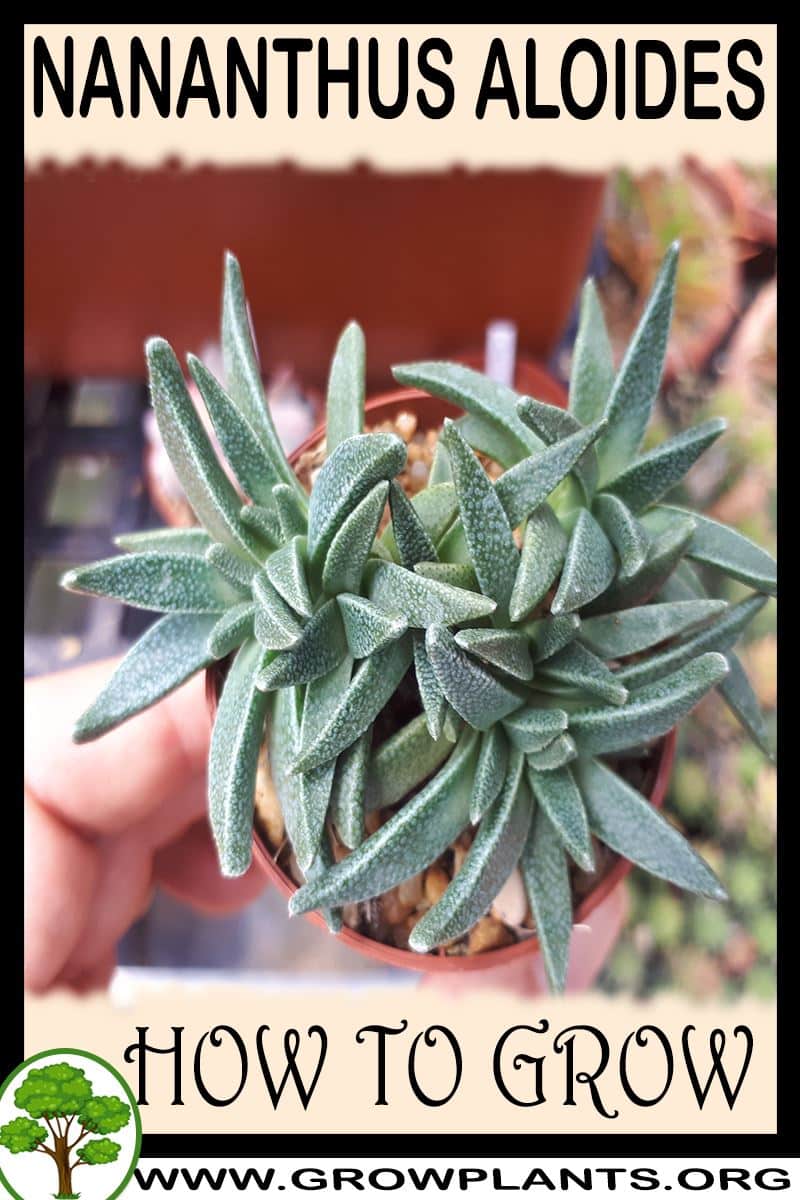
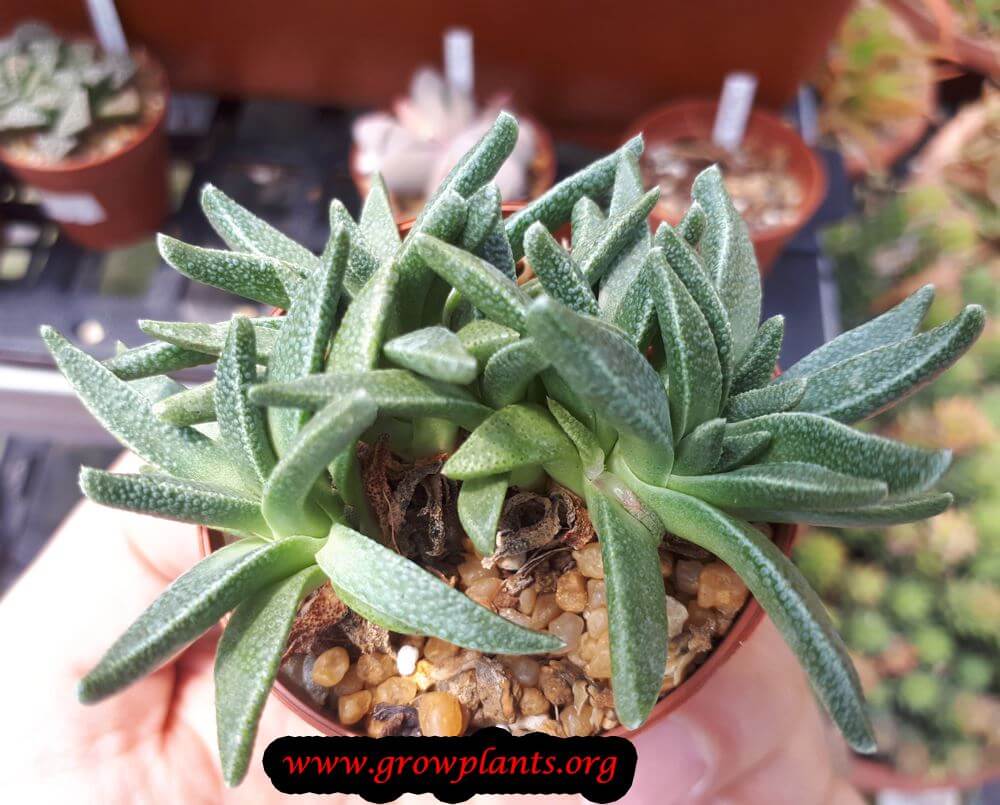
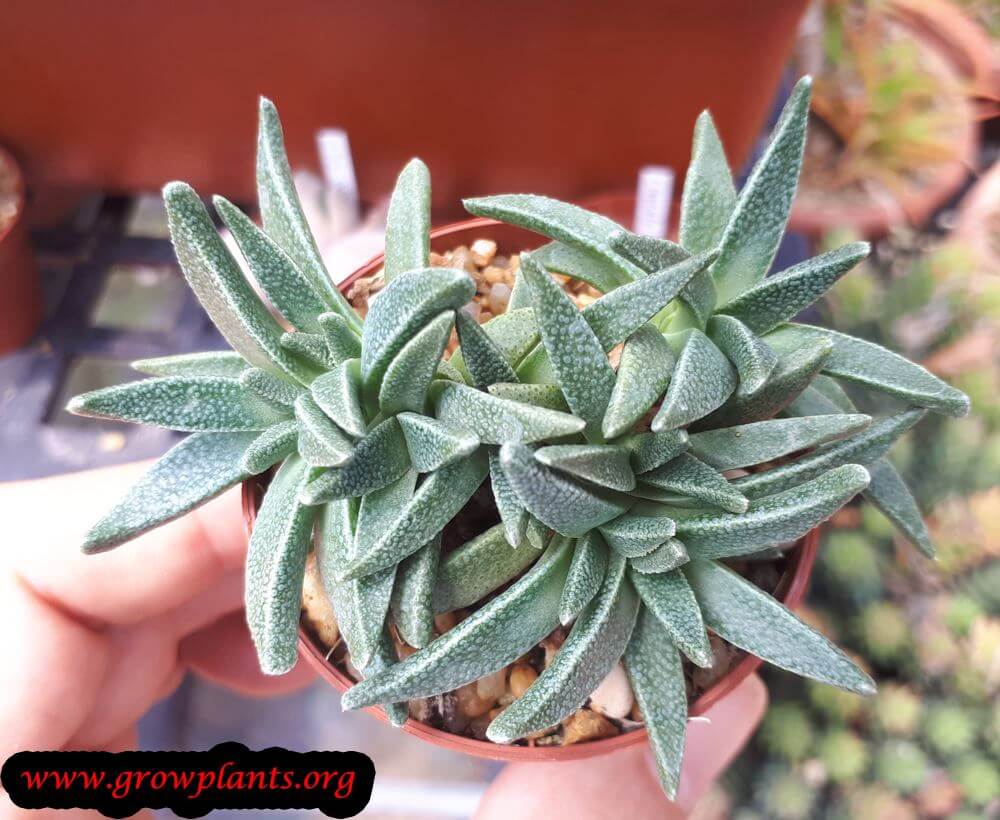
- Leaves & Foliage: Triangular, thick, waxy and fleshy leaves in green, with red or purple tints in some cultivars.
- Flower Characteristics: Yellow, many-petalled daisy-like flowers, often with a darker centre, opening in summer.
Primary Uses & Landscape Value
- Functional & Ornamental Roles: Ornamental succulent for rock gardens, troughs, containers and bright indoor windowsills.
Care Guide: Planting, Soil & Watering
Overview: Nananthus aloides is a small, slow-growing succulent that needs sharp drainage and plenty of light, in full sun to part shade. It stores water in its fleshy leaves, so it wants gritty soil and only occasional watering.
Quick Care Requirements
| Requirement | Ideal Condition |
|---|---|
| Planting Season | In spring, summer or autumn during warm weather |
| Growth Rate | Slow |
| Soil Type | Gritty, very free-draining mineral/succulent mix |
| Water Need | Low – water sparingly and let the soil dry out fully between waterings |
Planting & Establishment
- Best Planting Season: Plant during the warm months – spring through autumn – while the plant is in active growth; avoid cold, wet conditions at planting.
- How to Plant:
- Hole Preparation: Make a shallow hole in gritty, fast-draining ground or a raised bed; these are compact plants with modest root systems.
- Soil Amendments: Blend plenty of coarse sand, grit or perlite into the soil so water drains away almost immediately.
- Planting Depth: Set the plant so the base of the leaves sits at soil level; keep the neck free of damp soil to prevent rot.
- Growth Speed & Expectations: Growth is slow – expect a small, tidy plant that thickens its rootstock over years rather than spreading fast.
Soil, Watering & Drainage Care
- Soil Mix & Drainage Needs: Use a mineral, cactus-and-succulent mix with lots of grit; standing moisture is the main threat, so drainage must be excellent in beds and pots alike.
- Watering Schedule & Technique:
- Young / Newly Planted: Water lightly to settle new plants, then allow the soil to dry before watering again.
- Established: Water sparingly and deeply, letting the mix dry out completely between drinks; overwatering causes rot.
- Seasonal Adjustments: Give a little more in the active growing season and keep it nearly dry during its cool, dormant rest.
Climate, Light & Hardiness
Nananthus aloides is a low, creeping succulent from arid and semi-arid climates, well suited to anywhere from full sun to full shade, and per site data it tolerates brief cold down to about −2°C (28°F) within USDA zones 10–11.
Quick Climate Specifications
| Climate Zones | Subtropical, Mediterranean, desert; also grown as a houseplant |
|---|---|
| USDA Hardiness Zones | 10–11 (site data) |
| Approx. Survival Minimum | Approximately −2°C (28°F) for an established plant, briefly (site data) |
| Frost Tolerance | Low (tolerates light, brief frost per site data; not sustained freezing) |
| Light Conditions | Full Sun / Half Shade / Full Shade (adaptable) |
| Wind Tolerance | Moderate (general knowledge for this ground-hugging succulent) |
Sunlight & Light Exposure
Optimal Light Setup
Very adaptable, from full sun to full shade per site data; as with most mesembs, more sun generally produces the most compact growth and best flowering.
Direct Sun Requirement
Tolerates full direct sun well in arid climates provided drainage is sharp.
Shade & Heat Management
In the hottest desert conditions, light shade can ease stress, though this species is naturally heat- and drought-adapted and rarely needs it.
Best Exposure / Orientation
An open, sunny rockery or succulent bed outdoors, or a bright windowsill indoors.
Temperature Extremes & Hardiness
USDA Hardiness & Regional Limits
Site data places this species in zones 10–11, a mild-winter range that is essentially frost-free to only very lightly frosty.
Cold Damage & Winter Protection
Keep essentially frost-free where possible; well-drained soil is important so that winter cold doesn't combine with wet soil around the roots, which is more damaging than cold alone.
Frost Sensitivity
Tolerates only light, brief frost per site data (down to about −2°C/28°F); harder or prolonged freezes are likely to cause damage.
Extreme Heat Tolerance
Good; well adapted to hot, dry desert and Mediterranean summers provided drainage is sharp.
Wind, Humidity & Microclimate
Humidity Preferences
Prefers dry-to-moderate air typical of arid and Mediterranean climates.
Dry-Air Tolerance
High.
Wind Tolerance
Its low, ground-hugging creeping habit likely gives it reasonable tolerance of open, windy sites, based on general growth-habit knowledge rather than site-specific data.
Rainfall & Seasonal Moisture
Adapted to low, seasonal rainfall with a defined dry period; well-drained soil is essential in wetter climates.
Microclimate Recommendations
Raised beds, rockeries, or containers with a fast-draining succulent mix; avoid low, damp spots that stay wet after rain or irrigation.
Growing in Pots, Balconies & Indoors
This is a tough little mat-forming succulent that the grower confirms grows both indoors and in containers. Its tiny size (5-15 cm (2-6 in)) makes it a natural pot and windowsill plant; give it the brightest light you can and a gritty, free-draining mix, and go easy on water.
Quick Details
- Container Size: A small, shallow pot – only a little larger than the plant; these succulents like tight quarters
- Indoor Suitability: A good houseplant for the brightest windowsill you have; weak light makes it stretch and soften
- Best Spot: As much bright light as possible – full sun to light shade; a sunny sill indoors
- Soil & Drainage: A very free-draining gritty succulent mix – A free-draining cactus/succulent mix – potting mix or sandy soil opened up with coarse sand, perlite, or fine gravel; a layer of gravel, pebbles, or lava rock at the base helps drainage. A bagged cactus and succulent soil saves mixing your own.
- Watering in Pots: Water sparingly and let it dry between waterings; the grower calls for only a small amount of water, and wet feet rot it
Indoors & On the Windowsill
- A real houseplant: The grower confirms indoor growing. It thrives on a bright sill in a gritty mix, watered lightly – an easy, drought-tolerant little houseplant.
- Give it strong light: The brighter the better – a sunny window keeps the rosettes tight and coloured; in dim light it etiolates and loses its form. A grow light can prevent that when natural light falls short.
- Go dry in winter: Keep it cool and nearly dry over the low-light season to prevent rot and keep it compact.
On a Balcony or Patio
- Light & heat: It loves a hot, sunny, sheltered spot on a balcony or patio and shrugs off reflected wall heat; just ensure the pot drains instantly after rain.
- Practicalities: Shelter it from prolonged wet and cold; a small pot in the open can waterlog in downpours, so keep it under cover in wet spells.
Choosing the Pot, Soil & Long-Term Care
- Pot & drainage: A shallow pot with strong drainage holes and no standing-water saucer; a gravel or grit layer at the base keeps roots dry.
- Potting mix: A free-draining cactus/succulent mix – potting mix or sandy soil opened up with coarse sand, perlite, or fine gravel; a layer of gravel, pebbles, or lava rock at the base helps drainage.
- Feeding: Feed only lightly and occasionally in the growing season – these lean-living succulents need very little.
- Repotting: Repot only every few years when it outgrows the pot or the mix breaks down; let it settle before watering.
Fertilizing & Feeding
A low, mat-forming mesemb-family succulent grown for its waxy, fleshy leaves and yellow daisy-like flowers; it is naturally adapted to lean, fast-draining ground and needs only minimal feeding to stay compact and flower well.
Quick Fertilizing Specs
| Feeding Level | Light |
|---|---|
| Main Nutrient Priority | Low-nitrogen feed that supports compact, waxy growth and flowering rather than lush, sprawling leaves |
| Best Feeding Period | Warm months while the creeping mat is actively producing new growth |
| Organic Options | Not usually needed; this species is adapted to lean, well-drained soil |
| Soil pH | Tolerates a wide range in sharply drained soil |
| Reduce/Stop Feeding | Stop feeding as growth slows heading into cooler weather |
Feeding by Growth Stage
Warm-Season Active Growth
Support the creeping mat’s new leaf growth and summer flowering without encouraging soft, stretched growth
| Nutrient direction | A light, low-nitrogen succulent-formulated feed |
|---|---|
| Timing | During the warm months while the plant is actively spreading and producing new leaves |
| Frequency | Occasional light feedings through the active season are enough for this low-demand ground cover |
| Fertilizer types | A diluted, low-nitrogen cactus or succulent fertilizer suited to gritty, well-drained mixes |
| Precautions | Avoid feeding at full label strength, and keep fertilizer off the waxy foliage to prevent marking |
Cool-Season Dormant Rest
Let the mat rest through cooler, slow-growth weather without pushing tender new growth
| Nutrient direction | None – withhold fertilizer during the cool rest period |
|---|---|
| Timing | Through the coolest months when visible growth has stopped |
| Frequency | No feeding at this stage |
| Fertilizer types | No feeding at this stage; the resting plant does not need nutrient input |
| Precautions | Do not fertilize until active growth is clearly visible again in the warm season |
Nutrient Deficiency Signs & Corrections
Yellowing between the veins on new leaves while the rest of the mat stays green
| Possible causes | High pH or alkaline planting mix, Waterlogged soil limiting root function, Old, nutrient-poor potting mix, Root stress from overwatering |
|---|---|
| Appears first on | Newest leaves at the growing tips |
| What to check | Drainage and moisture of the current soil, Age of the potting mix, Overall watering routine relative to this plant’s low water needs |
| Possible correction | Correct drainage and watering first, then apply a chelated iron product per its label if the yellowing persists |
Pale, thin mat with weak, sparse new growth for the season
| Possible causes | Nutrient-depleted planting mix, Insufficient light reducing overall vigor, Waterlogged roots limiting nutrient uptake, No feeding for an extended stretch in a container setting |
|---|---|
| Appears first on | New growth at the spreading edges of the mat |
| What to check | Overall color and density of the mat compared to prior seasons, Light exposure, Time since any feeding or soil refresh |
| Possible correction | Apply a light, diluted low-nitrogen feed during the next active growth period and refresh old potting mix if needed |
Sparse or absent yellow, daisy-like blooms despite otherwise healthy-looking foliage
| Possible causes | Insufficient direct light for this sun-loving species, Lack of a clear cool dormant rest period beforehand, General nutrient deficiency limiting energy reserves for bloom, A young or recently divided plant not yet mature enough to flower |
|---|---|
| Appears first on | Whole plant, at the point flowering would normally occur in summer |
| What to check | Hours of direct sun the plant receives, Whether the plant had a clear cool rest period beforehand, Plant age and time since propagation |
| Possible correction | Ensure full sun exposure and a genuine cool, dry rest period, and avoid excess nitrogen that favors leaves over flowers |
Pruning, Training & Seasonal Maintenance
Nananthus aloides is a low, creeping mat succulent, so its pruning needs are minor and purely maintenance-driven: removing dead leaves as they occur, and occasionally trimming a trailing stem that has outgrown the mat to keep the ground-cover habit compact. It tolerates this kind of light trimming at any time of year, but since it survives down to only around -2C, fresh wounds are best avoided right around a cold snap near that limit.
Quick Pruning & Maintenance Specs
| Pruning Tolerance | Low to Moderate – tolerates light trims of trailing stems; not a candidate for structural or heavy pruning |
| Primary Pruning Window | Any time (all-year); lightest cuts heal fastest during active growth |
| Typical Frequency | Occasional spot grooming |
| Main Objective | Remove dead/shriveled leaves; keep the mat compact and prevent legginess |
| Young Plant Priority | None – let the mat establish |
| Mature Plant Priority | Trim trailing stems that have outgrown their space; remove spent flower stems |
| Best Tool Type | Precision snips |
| Avoid Heavy Pruning During | Cold snaps near its roughly -2C hardiness limit, when wounds heal slowly |
Pruning by Plant Age & Size
Newly Established
No pruning task; let the young plant root in and begin spreading.
Young / Formative
No training system applies to this creeping succulent; it spreads on its own as a groundcover.
Mature / Established
Trim back individual trailing stems once they outgrow the mat’s shape, and remove dead leaves and spent flower stems as they appear.
Special Growth to Remove
- Dead or shriveled leaves.
- Leggy trailing stems that have outgrown the mat – trimmed back to keep the ground-cover habit.
- Spent flower stems after the summer bloom.
Container & Small-Space Pruning
Commonly pot-grown; the same light grooming applies, though container plants in more shade can go leggy sooner and may need trailing stems trimmed a little more often than in-ground plants in full sun.
Tools
- Precision snips for leaf and stem trims.
Tool Hygiene & Disease Risk
Routine – a clean blade is sufficient; no significant transmissible disease risk is documented.
Cut Placement & Technique
Trim trailing stems back to just above a healthy leaf pair or node rather than mid-stem; remove dead leaves at their point of attachment.
Heavy Pruning & Rejuvenation
Not applicable – this creeping succulent is not renewed by hard or structural pruning. If a section of the mat declines, it is better replaced by propagating cuttings or divisions than by cutting the existing growth back hard.
Post-Pruning Care
Let cut ends dry briefly given the succulent tissue, and avoid heavy watering right after trimming to reduce rot risk at the wound.
Common Pruning Mistakes
- Letting trailing stems go bare and leggy without trimming.
- Cutting living tissue instead of waiting for leaves to die back naturally.
- Pruning during a cold snap near the plant’s hardiness limit, when it is already stressed.
When NOT to Prune
Avoid trimming during or just before a cold snap near its roughly -2C minimum, and avoid removing all the trailing growth from one area at once.
Recommended Tools (by task)
- Precision snips – sufficient for all dead-leaf removal and trailing-stem trims on this small succulent.
Propagation Guide
Nananthus aloides is a low, creeping mat-forming succulent that roots readily from its trailing stems, making stem cuttings or division of the mat the most practical way to propagate it, though the site notes vegetative propagation is not strictly necessary and seed is also workable. Propagation is easy either way for this small, tough succulent.
Quick Propagation Specs
| Best Propagation Method | Stem cuttings / division of the mat |
| Alternative Methods | Seed |
| Propagation Difficulty | Easy |
| Vegetative True-to-Type | Yes |
| Best Propagation Season | Spring, summer, autumn |
Growing from Seed
Not detailed in the site’s own data. As with most small-seeded plants in this succulent family, sow on the surface of a very free-draining, gritty mix without deep burial, and keep only lightly moist – this plant’s own preference for well-drained soil and a small amount of water makes overwatering the main risk at this stage. Germination timing is not specified and can be slow to establish.
Stem Cuttings
Not detailed in the site’s own data, added as a practical supplementary method suited to this plant’s creeping growth habit.
Cutting Type
A short section of a trailing stem.
Cutting Preparation
Let the cut end dry and callus for a day or two in a shaded, dry spot before planting, as is standard for succulent cuttings.
Rooting Setup
Set the callused cutting on or lightly into a very free-draining, gritty mix, matching the well-drained soil this plant needs. Keep only barely moist until roots form.
Rooting Hormone
Not necessary.
Division, Offsets, Pups & Suckers
Established mats can also be lifted and divided into rooted sections, each kept with some roots attached, then replanted into well-drained soil.
Bloom & Flower Guide
Quick Details
- Bloom Season: Summer
- Flower Appearance: Yellow, many-petalled daisy-like flowers, the petals often darker toward the centre
- Edibility: Ornamental only – grown for its flowers, not for eating
Detailed Blooming Overview
Nananthus aloides is a small, tuberous-rooted succulent of the ice-plant family that flowers in summer. The bright yellow, many-petalled blooms open daisy-like from among the low rosette of thick leaves, often with a slightly darker stripe or centre. As with other mesembs, the flowers open in strong sunshine and close again as the light fades.
Flower Characteristics
- Yellow and many-petalled, in a daisy-like outline.
- Often darker toward the centre of each petal.
- Open in bright sun and close in dull light or evening.
Bloom Care & Thinning
- Encouraging bloom: Full sun is essential for the flowers to open well.
- Watering: A little water through the summer growing season supports the buds; keep dry in winter.
Pests, Diseases & Troubleshooting
Overview: Like most mesembs (Aizoaceae), Nananthus aloides is a tough small succulent whose real enemy is excess water, not insects. Keep it in fast-draining mineral soil and its short list of pests (mealybugs, mites) stays easy to manage with cultural care and light organic sprays.
Quick Troubleshooting Overview
| Issue / Pest | Main Symptom | Primary Solution |
|---|---|---|
| Root mealybug | Stalled growth, white waxy specks in root ball | Bare-root, rinse, repot in fresh dry mix |
| Mealybugs | White cottony tufts in leaf axils | Dab with alcohol; neem/soap in evening |
| Spider mites | Fine stippling, faint webbing in hot dry air | Raise airflow; miticidal soap or oil |
| Root/stem rot | Soft, translucent, collapsing base | Cut off water; behead and re-root healthy tissue |
| Slugs & snails | Night grazing scars on leaves | Handpick at night; iron-phosphate bait, grit barrier |
Common Pests & Management
- Mealybugs (Pseudococcus / Planococcus spp.):
- Symptoms: White cottony tufts tucked into leaf axils and the growing point; sticky honeydew and sooty mold follow heavy infestations.
- Prevention & Control: Inspect axils regularly; dab spots with a cotton bud dipped in 70% isopropyl alcohol. For wider outbreaks use insecticidal soap or neem oil in the cool of evening, repeating every 7-10 days.
- Root mealybugs (Rhizoecus spp.):
- Symptoms: Hidden white waxy deposits over roots and inner pot wall; plant sulks, fails to plump up despite watering.
- Prevention & Control: Unpot and inspect roots yearly. Wash the root ball clean, trim damaged roots, and repot into fresh dry mineral mix; a soil drench of diluted neem or a systemic can follow in bad cases.
- Spider mites (Tetranychus urticae):
- Symptoms: Fine pale stippling and a dusty, faded look on the tubercled leaves, with fine webbing in hot, dry, still air.
- Prevention & Control: Improve ventilation and avoid baking-hot stagnant spots. Rinse plants and apply insecticidal soap or a light horticultural oil; repeat to break the cycle.
- Aphids (Aphis / Myzus spp.):
- Symptoms: Clustering on soft flower stalks and buds, distorting them and dropping honeydew.
- Prevention & Control: Knock off with a gentle water jet, encourage ladybirds and lacewings, and spot-treat with insecticidal soap if they persist.
- Slugs & snails (Gastropoda):
- Symptoms: Ragged night-time grazing on the fleshy leaves, with slime trails.
- Prevention & Control: Handpick after dark, keep the surface gritty and dry, and use iron-phosphate bait sparingly around vulnerable plants.
Diseases & Fungal Issues
- Root & crown rot (Fusarium / Pythium spp.):
- Symptoms: Base turns soft, brown and translucent, often after cool wet spells; the plant collapses from the roots up.
- Treatment & Management: Prevention is everything: gritty mineral mix, shallow pots, and water only when the tuber and soil are dry. Salvage by cutting back to firm tissue, dusting with sulfur, and re-rooting dry.
- Sooty mold (complex):
- Symptoms: Black sooty film over leaves wherever mealybugs or aphids have left honeydew.
- Treatment & Management: Cosmetic only – control the underlying sap-feeders and wipe leaves clean; it clears once the honeydew stops.
Growing Difficulties & Abiotic Problems
- Overwatering rot:
- Cause & Symptoms: Too-frequent watering or dense water-holding soil suffocates the tuber; leaves go soft and translucent.
- Correction Strategy: Switch to a sharply drained pumice/grit mix, water sparingly and never leave it sitting wet; give a strong winter/dormant rest.
- Etiolation:
- Cause & Symptoms: Too little light stretches the compact rosette and pales the leaves.
- Correction Strategy: Move to bright light with some direct sun; a stretched plant will not re-compact but new growth stays tight.
- Corky scarring / edema:
- Cause & Symptoms: Erratic watering swings cause cells to burst, leaving corky patches on leaves.
- Correction Strategy: Water evenly and modestly; the scars are permanent but harmless and stop with steadier care.
What Helps – Products & Tools
Mostly cultural care plus gentle organics: 70% isopropyl alcohol for mealybug spot-treatment, insecticidal soap and neem or light horticultural oil for mites and scale-type pests, sulfur or a mild fungicide for rot prevention, and iron-phosphate slug bait.