


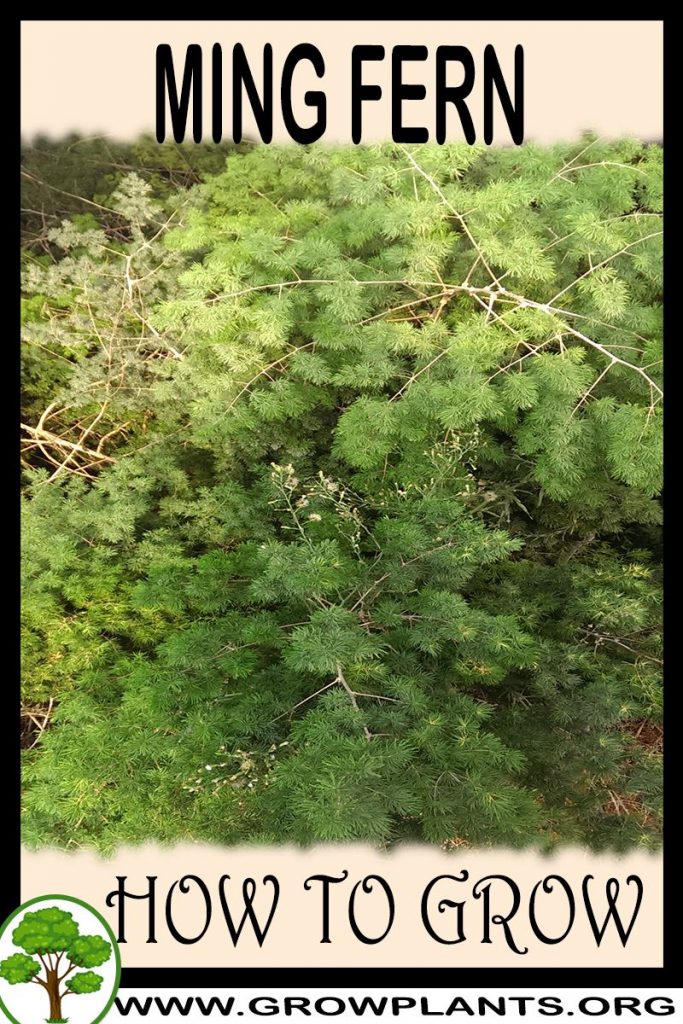
Plant Profile & Key Characteristics
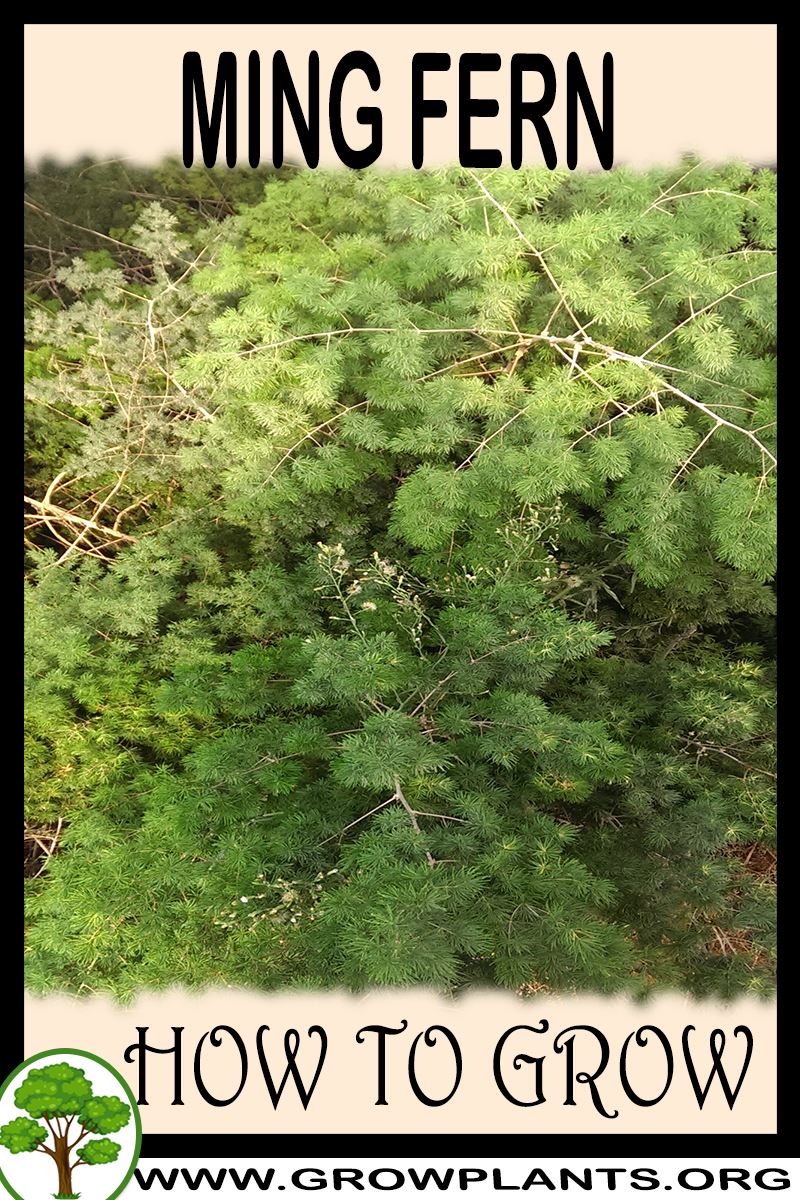
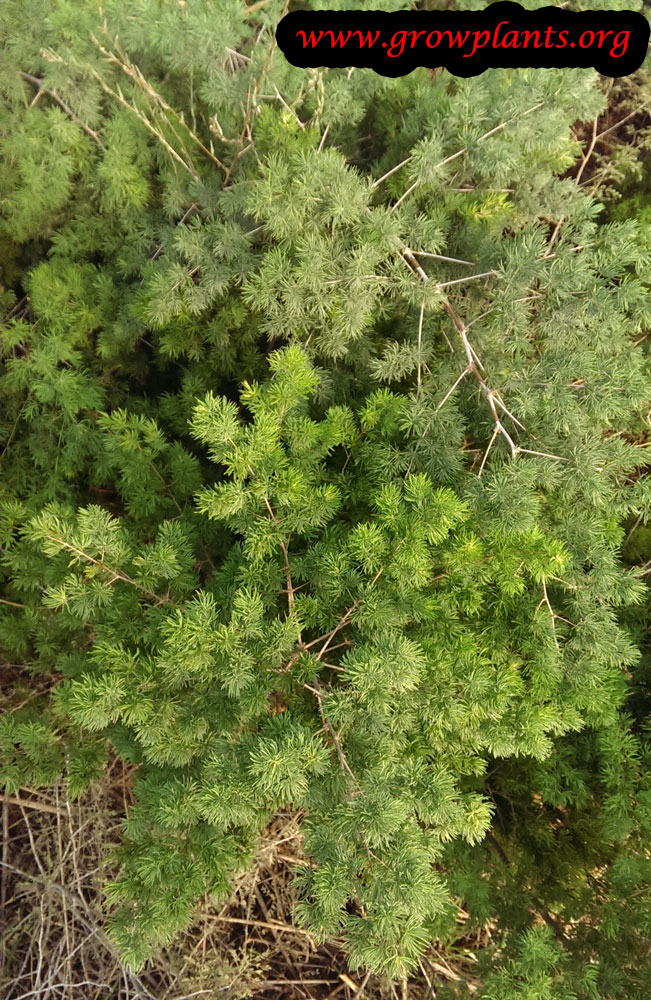
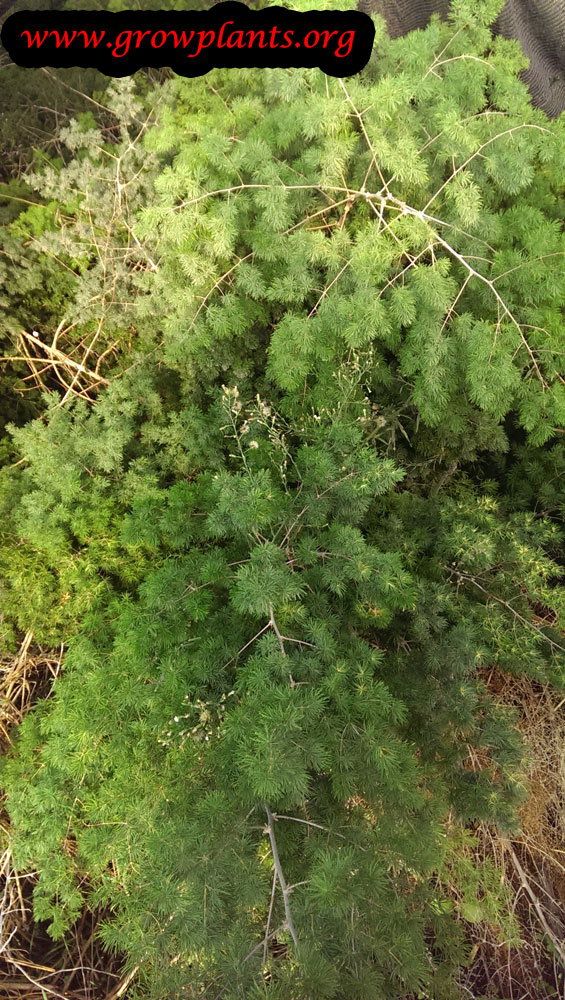
Overview: Ming fern is an evergreen shrub in the asparagus family, growing 1-1.6 m (40-64 in) tall with airy, feathery foliage. This drought-tolerant perennial is grown as an ornamental, hedge, houseplant and fragrant cut foliage.
Quick Specifications
| Specification | Attribute |
|---|---|
| Plant Type / Life Cycle | Perennial (evergreen shrub) |
| Foliage Type | Evergreen |
| Mature Size | 1-1.6 m tall (40-64 in) |
| Growth Rate | Fast in warm climates, moderate in cool |
| Root System | Fibrous with water-storing tuberous roots |
| Toxicity | Berries poisonous if eaten |
| Hardiness | USDA zone 9+ |
Growth Form & Structure
- Height & Spread: 1-1.6 m (40-64 in / 3-7 ft) tall; grows as a houseplant or in containers, repotted every 2-3 years with the old roots trimmed.
- Growth Habit & Form: Upright shrubby plant with fine feathery fern-like foliage; can go dormant in cold winters.
- Lifespan & Maturity: Long-lived evergreen perennial.
Anatomy & Physical Features
- Leaves & Foliage: Fine green needle-like cladodes in a soft fern-like structure.
- Flower Characteristics: Small fragrant white flowers with six petals and yellow stamens at the stem tips (see Bloom guide).
- Fruit Profile: Small round red berries about 0.5 cm – poisonous, not edible (see Fruit guide).
Primary Uses & Landscape Value
- Functional & Ornamental Roles: Ornamental foliage, hedge, container and house plant, and fragrant cut greenery; drought tolerant.
Care Guide: Planting, Soil & Watering
Overview: Ming fern is a drought-tolerant evergreen shrub (hardiness zone 9+) for sun or shade, indoors or out. It prefers rich, moist, well-drained soil with organic matter but tolerates dry conditions once established.
Quick Care Requirements
| Requirement | Ideal Condition |
|---|---|
| Planting Season | Spring–summer in zone 9–10a; spring–autumn in zone 10b–11; year-round in zone 12+ |
| Growth Rate | Moderate to fast (fast in warm climates) |
| Soil Type | Rich, organic, moist and well-drained |
| Water Need | Low and drought tolerant, but grows lusher with regular water |
Planting & Establishment
- Best Planting Season: Plant spring to summer in zone 9–10a, spring to autumn in zone 10b–11, and year-round in zone 12+.
- How to Plant:
- Hole Preparation: Dig a hole about the width of the root ball and loosen the soil around it for the tuberous roots.
- Soil Amendments: Enrich the backfill with organic matter; the plant responds well to rich soil while still needing good drainage.
- Planting Depth: Set it at its original depth with the crown at the surface.
- Growth Speed & Expectations: Growth is fast in warm climates and moderate where winters are cool (it may go dormant), reaching about 1–1.6 m; the fruit is poisonous, so site it accordingly.
Soil, Watering & Drainage Care
- Soil Mix & Drainage Needs: Well-drained, organic-rich soil is ideal; in containers use potting soil, optionally with lava grit or perlite, and make sure there are ample drainage holes. Repot every 2–3 years, trimming old roots.
- Watering Schedule & Technique:
- Young / Newly Planted: Keep newly planted or newly rooted plants moist while establishing.
- Established: Once established it tolerates drought and needs only a small amount of water, though it grows better with more.
- Seasonal Adjustments: Water more in warm active growth and less in cool winter dormancy.
Climate, Light & Hardiness
Ming fern (Asparagus retrofractus) is a warm-climate evergreen grown for its fine, feathery foliage, favouring frost-free subtropical, tropical and mild-Mediterranean conditions. It is drought- and heat-tolerant but frost-sensitive, rated for roughly USDA zone 9 and warmer, and is widely kept as a houseplant where winters are cold.
Quick Climate Specifications
| Climate Zones | Subtropical, tropical and warm Mediterranean; indoors in cooler regions |
|---|---|
| USDA Hardiness Zones | Approximately 9 and warmer (9–11) |
| Optimal Temp Range | Approximately 18–27 °C (64–81 °F) |
| Cold Damage Begins | Foliage yellows and browns with light frost near 0 °C (32 °F) |
| Approx. Survival Minimum | Established plants generally survive brief dips to about −5 °C (23 °F) |
| Frost Tolerance | Low |
| Light Conditions | Full sun (most flowers and fruit) to full shade |
| Wind Tolerance | Moderate |
| Salt / Coastal Tolerance | Moderate |
Sunlight & Light Exposure
Optimal Light Setup
It grows across a wide light range, from full sun to fairly deep shade. Bright light - including some direct sun - produces the densest, most compact growth and the most flowers and berries, while in hot climates a little afternoon shade prevents bleaching.
Shade & Heat Management
In the hottest regions harsh, reflected afternoon sun can scorch the fine foliage; part shade there keeps it fresh and green. Indoors, give it the brightest spot available.
Best Exposure / Orientation
An east- or lightly shaded south-facing aspect outdoors, or a bright window indoors, gives good colour without scorching.
Temperature Extremes & Hardiness
USDA Hardiness & Regional Limits
Rated for roughly USDA zone 9 and warmer, it is a frost-free-climate plant. In cooler regions it is grown in containers moved under cover for winter or kept permanently as a houseplant, since sustained freezing is beyond its tolerance.
Cold Damage & Winter Protection
Light frost browns the foliage; a hard freeze can cut the plant to the ground. In cold-winter parts of its range it can go dormant and regrow, but it is not a hardy plant. In marginal zone 9 areas, a sheltered wall, overhead cover and heavy mulch help it through cold snaps, and container plants - whose roots freeze faster - are best moved to shelter.
Frost Sensitivity
Frost sensitivity is the main climatic limit: exposure to freezing air damages top growth, and young plants are more easily killed outright than established clumps with a strong tuberous root system.
Extreme Heat Tolerance
Heat is tolerated well - this is a warm-climate plant - provided the roots are not left bone-dry for long stretches; note that its heat tolerance and its separate tolerance of dry air do not extend to tolerating frost.
Wind, Humidity & Microclimate
Humidity Preferences
It is easy-going about humidity and grows well in both humid subtropical air and drier indoor rooms, unlike many fine-leaved foliage plants.
Dry-Air Tolerance
Dry-air tolerance is high: its fleshy, water-storing roots let it cope with low humidity and dry spells, which is a climate-adaptation trait separate from its watering needs.
Wind Tolerance
The arching stems handle moderate wind but can be tattered and dried by strong, persistent gusts; a somewhat sheltered position keeps the foliage looking its best.
Coastal / Salt Tolerance
It shows moderate tolerance of coastal salt spray and is often used in mild seaside gardens, though it is not a front-line dune plant.
Rainfall & Seasonal Moisture
Adapted to climates with a warm growing season and periodic dry spells, it accepts variable rainfall far better than sustained winter cold or waterlogging.
Microclimate Recommendations
In marginal-cold areas, plant against a warm, sheltered, sunny wall or grow in a movable container; elsewhere a bright, frost-free spot with free-draining soil is all it asks.
Growing in Pots, Balconies & Indoors
Ming fern (Asparagus retrofractus) is an airy, drought-tolerant shrub the grower grows well both indoors and in containers. Its fine, needle-like foliage makes an elegant, easy houseplant and a tough patio pot plant.
Quick Details
- Container Size: A well-drained pot; move up a size as it fills out
- Indoor Suitability: Genuine houseplant in bright, indirect light
- Best Spot: Bright, indirect light; tolerates shade (fewer fruits)
- Soil & Drainage: Ordinary potting soil, optionally with lava grit or perlite for extra drainage; plenty of holes
- Watering in Pots: Water sparingly – let the top of the mix dry between waterings; it is drought-tolerant and dislikes wet feet
Indoors & On the Windowsill
- Genuine houseplant: The grower confirms Ming fern grows well indoors. Its airy, needle-like foliage and tolerance of lower light and some neglect make it an easy, forgiving houseplant.
- Light: Bright, indirect light keeps it fullest; it copes with shade but stays denser and fruits more with good light.
- Keep away from pets & children: The berries are toxic if eaten and the sap can irritate skin – site it out of reach.
On a Balcony or Patio
- Light & wind: Choose a cooler, shadier corner out of harsh midday sun. Reflected heat from walls and railings dries pots quickly and can scorch shade-lovers, so check moisture often and shelter from drying wind.
- Weight & runoff: A full pot of moist soil is heavy – check the balcony can take it, and stand pots so drainage water runs off cleanly without staining or flooding a neighbour below.
Choosing the Pot, Soil & Long-Term Care
- Pot & drainage: A pot with strong drainage holes and no standing-water saucer, so the roots never sit wet and rot. Terracotta breathes and dries faster (good against overwatering), while glazed or plastic holds moisture longer – match it to how often you water.
- Potting mix: A light, aerated, organic-rich mix – potting soil or peat/coir with perlite or vermiculite, blended with compost or well-rotted organic matter.
- Feeding: Nutrients leach out of pots with every watering, so potted plants need feeding more often than those in the ground – a balanced liquid feed through the growing season keeps them going.
- Repotting: Refresh the mix and pot up about every two years; for perennials, lightly trim the root ball and top growth at the same time to keep them vigorous.
Grower’s Container Tip
- The grower’s method: Potting soil is enough – lava grit or perlite can be added for drainage but are not essential; just make sure the container has plenty of holes. Every 2-3 years, move it to a fresh pot and cut back the old roots.
Growing this plant in a greenhouse
A greenhouse can give ming fern frost protection and cold protection. In the right climate it may also be kept growing through winter, depending on how much warmth and light are provided.
Greenhouse at a glance
| Greenhouse suitability | Good - clearly useful |
|---|---|
| Main benefits | frost protection, cold protection |
| Season extension | earlier spring & later autumn |
| Outdoor protection advisable below | about 0°C |
| Suitable types | unheated greenhouse, polycarbonate greenhouse, lean-to |
| Heating | Heating is optional - useful mainly for winter growing in cold areas. |
Related greenhouse guides
- Greenhouses: How to Choose the Right Greenhouse
- Best Lean-To Greenhouses
- Polycarbonate Greenhouses: What to Look for Before Buying
Fertilizing & Feeding
A light feeder grown for foliage: feed lightly during active growth and hold off after repotting and through the low-light winter slowdown.
Quick Fertilizing Specs
| Feeding Level | Light feeder |
|---|---|
| Main Nutrient Priority | Balanced nutrition with adequate nitrogen for foliage |
| Best Feeding Period | Spring through summer during active growth |
| Organic Options | Diluted balanced organic liquid feed |
| Soil pH | Slightly acidic to near neutral |
| Reduce/Stop Feeding | Stop feeding in low light and over winter |
Feeding by Growth Stage
After repotting / settling in
Let roots settle into fresh potting mix after repotting before any feeding.
| Nutrient direction | None – hold off on fertilizer while the plant re-establishes. |
|---|---|
| Timing | For the first weeks after repotting or bringing a new plant home. |
| Frequency | No feeding at this stage. |
| Fertilizer types | No feeding at this stage; wait until new growth appears. |
| Precautions | Do not fertilize fresh transplants; fresh mix already holds nutrients. |
Active growth
Support lush, feathery foliage during the active growing season.
| Nutrient direction | A balanced houseplant fertilizer with adequate nitrogen keeps the foliage green and full. |
|---|---|
| Timing | Spring through summer when the plant is actively growing. |
| Frequency | Feed lightly and regularly through the growing season. |
| Fertilizer types | Balanced water-soluble houseplant fertilizer |
| Routine trace nutrients | iron, manganese |
| Precautions | These are light feeders; over-application can scorch the fine foliage and build up salts. |
Low-light slowdown
Growth slows in low winter light and the plant needs little.
| Nutrient direction | None – withhold fertilizer while growth is slow in low light. |
|---|---|
| Timing | Autumn and winter, or whenever light is low and growth stalls. |
| Frequency | No feeding at this stage. |
| Fertilizer types | No feeding at this stage while growth is slow. |
| Precautions | Do not fertilize during the low-light rest period. |
Nutrient Deficiency Signs & Corrections
Older leaves yellow and drop, and growth is thin and pale.
| Possible causes | Low nitrogen, Too little light, Overwatering or poor root health |
|---|---|
| Appears first on | Older, inner foliage |
| What to check | Feeding history, Light level, Watering and drainage |
| Possible correction | Feed lightly with a balanced houseplant fertilizer, improve light, and check watering. |
Needle-like leaves brown at the tips and the plant sheds foliage; a white crust forms on the pot.
| Possible causes | Fertilizer salt buildup, Underwatering or low humidity, Poor drainage |
|---|---|
| Appears first on | Leaf tips and older fronds |
| What to check | Recent fertilizer amounts, Soil surface crust, Drainage |
| Possible correction | Leach the pot with plain water and feed more sparingly. |
New foliage is pale or yellow between the veins.
| Possible causes | High pH tap water or mix, Cold, soggy roots, Low micronutrient supply |
|---|---|
| Appears first on | Newest growth |
| What to check | Water and mix pH, Drainage, Root health |
| Possible correction | Correct pH and drainage; apply a chelated iron or manganese product following its label if it persists. |
Pruning, Training & Seasonal Maintenance
Ming fern (Asparagus retrofractus) is the genuinely shrubby member of its group — an upright, evergreen plant to about 1–1.6 m with woody, zig-zagging stems clothed in soft, needle-like foliage, grown as a specimen, an informal hedge and as long-lasting cut foliage. Unlike its low, clumping relatives it has a real woody framework you can shape, and it takes cutting well: thin the oldest woody canes at the base to renew the plant, tip-prune to build density, and cut freely for arrangements. Pruning is done for design in autumn and winter, when it slows or goes dormant in the cold. It flowers on current growth and sets red berries that are poisonous, so where children or pets are a concern remove the fruit. It does not flower or fruit on persistent, prunable wood in a way worth timing around, so pruning is about form, renewal and containment rather than protecting a bloom.
Quick Pruning & Maintenance Specs
| Pruning Tolerance | Moderate to high — tolerates shaping, tip-pruning and cane renewal |
| Primary Pruning Window | Autumn to winter (dormant/slow), for shaping and renewal |
| Secondary Maintenance Window | Growing season: tip-pinch for density and cut stems for the vase |
| Typical Frequency | Light shaping through the year; a renewal thin annually or every second year |
| Main Objective | Keep a dense, well-formed shrub or hedge; renew old woody canes |
| Young Plant Priority | Tip-pinch to encourage branching and a bushy, multi-stemmed base |
| Mature Plant Priority | Thin oldest canes at the base; control height and spread; remove berries where needed |
| Best Tool Type | Bypass secateurs for canes; hedge shears only where grown as a clipped hedge |
| Avoid Heavy Pruning During | Cold snaps in a hard winter, when regrowth is slow and frost may follow |
Pruning by Plant Age & Size
Newly Established
On a young plant, pinch the growing tips to encourage branching so it builds a full, multi-stemmed framework rather than a few bare canes. Remove only damaged growth otherwise; the plant needs its foliage to establish.
Young / Formative
This is where its shrubby nature counts: choose and keep several strong stems from the base and tip-prune them repeatedly to build density and the outline you want — a rounded specimen, or a fuller informal hedge. Encourage low branching now so the mature plant is clothed to the base rather than leggy.
Mature / Established
Maintain the shape by tip-pruning and by thinning the oldest, woodiest or bare canes right out at the base each year or two, which prompts fresh shoots and keeps the plant dense. Control height and spread with selective cuts back to a side branch, and cut stems for arrangements as a natural part of upkeep. Remove berried growth where the poisonous fruit is a concern.
Seasonal Pruning Schedule
Autumn to Winter (shaping and renewal)
Objective: reshape and renew while growth is slow. Remove: the oldest woody canes at the base, plus over-long or wayward stems cut back to a fork. Do NOT: shear off all the young growth if you want a natural, feathery outline. Impact: stimulates fresh basal shoots and a denser plant for spring.
Growing Season (density and cut foliage)
Objective: build and keep density. Remove: soft tips by pinching, and stems taken for the vase. Impact: more branching and a fuller shrub; cutting foliage is effectively light pruning.
Ongoing Sanitary
Objective: health and safety. Remove: yellowed or pest-marked fronds (this species attracts scale, mealybug, spider mite and gall) and, where needed, the poisonous red berries. Impact: a cleaner plant and less pest carry-over.
Structural Pruning & Training
Because it has woody stems, real structure applies: select a framework of strong basal canes, remove weak, crossing or inward stems, and renew the plant over time by taking the oldest canes out at the base so younger ones replace them. Height and spread are held by cutting leaders back to a lower side branch rather than shearing the top flat. As an informal hedge it can be clipped, but light selective cutting keeps its soft, plumy character better than hard shearing.
Special Growth to Remove
The growths to watch are the poisonous red berries — remove them where children or pets might reach them and to limit self-sowing — and the oldest bare, woody canes, which are cut out at the base as renewal. There are no grafts or suckers to manage; vigorous new basal shoots are wanted and should be retained to replace old wood.
Container & Small-Space Pruning
In a container the same shrub logic applies but with tighter control: tip-prune to keep it compact and well-clothed, thin old canes to prevent a bare, leggy base, and cut back overall size to suit the pot. Every 2–3 years lift it, trim the old roots and repot into fresh soil; that root refresh, paired with a shape-back of the top, keeps a potted plant vigorous rather than starved and thin.
Tools
Match the tool to the cut: bypass secateurs for the woody canes and renewal cuts, precision snips for tipping soft growth and removing fine fronds or berries, and hedge shears only if the plant is genuinely maintained as a clipped hedge. Loppers may occasionally help on the thickest old basal canes of a large specimen; a saw is not needed.
Tool Hygiene & Disease Risk
Hygiene is routine to slightly increased. The plant’s main troubles are sap-sucking pests (scale, mealybug, spider mite) and gall rather than blade-spread disease, so clean, sharp tools suffice for ordinary shaping; step up to wiping blades when you have been cutting out heavily scale- or gall-infested stems, so you are not smearing pests onto clean growth or a neighbouring hedge plant.
Cut Placement & Technique
Take renewal canes right down at the base, leaving no stub, and make height-reduction cuts back to a strong side branch or fork so the plant rebuilds naturally rather than showing shorn stem ends. Tip-pinch just above a node to force branching. When clipping a hedge, cut with a slightly tapered top so light reaches the base and the plant stays clothed low down.
Heavy Pruning & Rejuvenation
A tired, leggy or bare-based plant tolerates hard renewal: cut the oldest canes hard back to the base in autumn or winter and it resprouts, especially in warm climates where it grows fast. Spread a very hard rejuvenation over a couple of seasons on a large specimen so it is never left entirely bare, and keep the plant watered as it re-flushes.
Post-Pruning Care
After renewal or hard shaping, water steadily to support the new flush and mulch to keep the roots cool and moist; a light feed in the growing season helps a hard-cut plant rebuild, but routine tipping needs no feeding. Watch the fresh soft growth for the scale and mite this species attracts, and keep it out of hard frost while tender shoots harden.
Common Pruning Mistakes
- Treating it like the low clumping asparagus ferns and never renewing the woody canes, so it grows bare-based and leggy.
- Hard-shearing it into a tight box, which spoils its soft, feathery character — light selective cuts suit it better.
- Leaving the poisonous berries within reach of children or pets.
- Cutting hard in the depth of a cold winter, when slow regrowth leaves it bare and exposed to frost.
When NOT to Prune
Avoid hard cutting during a hard winter cold spell, when this slow, cold-checked plant will not regrow to cover the wounds and frost may follow. Do not shear off all new growth if you value the plumy look, and hold heavy pruning on a drought-stressed plant until it has been watered. Otherwise it is forgiving and can be shaped through much of the year.
Recommended Tools (by task)
- bypass_secateurs — for cane renewal at the base and for cutting woody stems back to a side branch.
- precision_snips — for tip-pinching soft growth to build density and for removing fine fronds and poisonous berries.
- hedge_shears — only where it is genuinely grown as a clipped informal hedge, for even surface trimming.
Pruning Troubleshooting
| Problem | Possible Cause | What to Check | Corrective Action |
| Leggy, bare-based plant with growth only at the top | Old woody canes never renewed; no basal thinning | Proportion of old bare canes to young shoots | Thin the oldest canes out at the base in autumn/winter to force fresh basal growth |
| Sparse, feathery look lost after trimming | Hard shearing instead of selective cuts | Whether it was clipped flat like a formal hedge | Switch to selective cuts back to side branches and light tip-pinching |
| Slow or no regrowth after a hard cut | Cut made during cold-checked winter dormancy | Season and temperature when pruned | Time hard renewal for milder autumn or the warm growing period; keep watered |
| New shoots quickly infested and sticky | Scale/mealybug/mite carried onto fresh growth | Undersides of stems and forks for pests | Cut out badly infested stems, wipe blades, and treat the pests as regrowth appears |
Propagation Guide
Ming fern is raised from seed sown in spring or by rooting cuttings under high humidity, and an established clump can also be divided. The site favours cuttings; because cuttings of this group can be slow and uneven, division and fresh seed are dependable alternatives. Handle the poisonous red berries with care.
Quick Propagation Specs
| Best Propagation Method | Division or stem cuttings |
| Alternative Methods | Seed (from ripe berries) |
| Propagation Difficulty | Moderate |
| Seed True-to-Type | Mostly uniform (species) |
| Vegetative True-to-Type | Yes |
| Best Propagation Season | Spring |
Growing from Seed
Seed Handling & Viability
Seed comes from the round red berries, which are poisonous – clean off the pulp and keep them away from children and pets. Sterilise reused mix (the site suggests a spell in the microwave) to reduce damping-off.
Sowing Season
Sow in spring; summer sowing is possible while the mix stays moist and warm, but excessive heat prevents germination.
Germination Conditions
Warm, moist soil kept from drying; germination can be slow and staggered.
Stem Cuttings
Best Timing
Start cuttings in spring.
Rooting Setup
Root in moist mix – potting mix works, peat is better – under high humidity, in good light but out of strong sun. Do not let the medium dry: mist at least once and preferably twice a day, and if the cuttings are under a clear plastic cover, open it twice a day for air. Sterilise the mix first if it is not clean.
Rooting Hormone
Beneficial – the site reports rooting hormone raises the success rate. Expect rooting to be slow and somewhat variable.
Division, Offsets, Pups & Suckers
Crown Division
Lift an established clump in spring and split the crown into sections, each with roots and several stems; pot up and keep moist and lightly shaded until they take.
Bloom & Flower Guide
Quick Details
- Bloom Season: Spring
- Time to First Bloom: On established, mature plants
- Flower Appearance: Small, white flowers with six petals and yellow stamens, borne at the stem tips
- Edibility: Not edible – this is an ornamental plant, and the berries that follow the flowers are toxic if eaten
Detailed Blooming Overview
Ming fern is grown mainly for its fine, feathery evergreen foliage, but in spring it carries small, often fragrant white flowers at the stem tips. These are followed by small berries that ripen to red.
Flower Characteristics
- Small white flowers with six petals and yellow stamens.
- Borne at the ends of the upright, branching stems.
Bloom Care & Thinning
- Managing the bloom: No special work is needed; the flowers come naturally on mature plants, and stems can be trimmed to shape the plant or hedge.
- Pollination: Insect-pollinated, mainly by bees.
- Safety: The plant is considered toxic – the red berries can cause stomach upset if eaten, and the sap may irritate skin, so wear gloves when trimming.
Pests, Diseases & Troubleshooting
Overview: Ming fern (Asparagus retrofractus) is a woody ornamental asparagus whose fine cladodes attract spider mites, mealybugs and scale, and drop ‘needles’ under stress. These are ornamental asparagus ‘ferns’ (they are not true ferns, and not the edible vegetable), tough foliage plants whose fine cladodes hide sap-sucking pests and shed ‘needles’ at the first sign of stress. Their most common troubles are spider mites and scale in warm dry indoor air, plus yellowing and leaf drop from watering and light problems; manage them with good humidity, inspection of the fine foliage, and restrained watering into a free-draining mix.
Quick Troubleshooting Overview
| Issue / Pest | Main Symptom | Primary Solution |
|---|---|---|
| Spider mites | Fine stippling, dull foliage and webbing, heavy needle drop | Raise humidity, rinse foliage, horticultural oil/miticide |
| Scale & mealybugs | Waxy bumps or cottony tufts on stems, honeydew, sooty mould | Wipe/pick off, treat with horticultural oil |
| Aphids | Sticky, distorted new shoot tips | Rinse off, insecticidal soap if persistent |
| Yellowing & needle drop | Foliage yellows and sheds ‘needles’ everywhere | Fix light/water/humidity; usually a stress signal, not a pest |
| Root rot | Wilting, mushy tubers/roots in soggy soil | Reduce watering, improve drainage, repot into open mix |
Common Pests & Management
- Two-spotted spider mite (Tetranychus urticae):
- Symptoms: Fine pale stippling and a dull, greyish cast over the fine foliage, fine webbing between cladodes, and rapid needle drop in hot, dry air – the classic indoor problem for these plants.
- Prevention & Control: Raise humidity and rinse the foliage regularly in the shower; isolate affected plants; apply horticultural oil or insecticidal soap thoroughly (they hide in the fine growth), repeating to catch newly hatched mites.
- Mealybugs (Pseudococcus / Planococcus spp.):
- Symptoms: White cottony tufts tucked into stem junctions and the crown, with sticky honeydew and sooty mould, and slow decline where heavy.
- Prevention & Control: Dab colonies with an alcohol-dipped swab, isolate new plants, control ants, and treat lingering infestations with horticultural or neem oil into all the crevices.
- Scale insects (Pinnaspis aspidistrae (fern scale), soft scale):
- Symptoms: Small brown, tan or white waxy bumps clinging to stems and cladodes; honeydew and sooty mould with soft scale, and yellowing/thinning where numerous.
- Prevention & Control: Wipe or scrape off with a soft cloth or old toothbrush, then smother remaining crawlers with horticultural oil; repeat every couple of weeks until clear.
- Aphids (Aphididae):
- Symptoms: Clusters of soft green or brown insects on tender new shoots, causing sticky, curled, distorted growth.
- Prevention & Control: Rinse off with water, encourage ladybirds and lacewings, and treat persistent groups with insecticidal soap, focusing on the growing tips.
- Thrips (Thysanoptera):
- Symptoms: Silvery streaking and tiny black frass specks on foliage, with fine distortion of new growth in warm dry conditions.
- Prevention & Control: Monitor with blue sticky traps, remove badly affected growth, and treat with insecticidal soap, neem or spinosad, repeating to break the cycle.
Diseases & Fungal Issues
- Root & crown rot (Phytophthora / Pythium / Fusarium spp.):
- Symptoms: Overall wilting and yellowing with soft, dark, decayed roots and tubers, from soggy, poorly drained soil or chronic overwatering.
- Treatment & Management: Water only when the top of the mix begins to dry, use a free-draining medium and pots with drainage, remove rotted material, and repot into fresh open mix if roots are badly affected.
- Fungal leaf spot (various fungi):
- Symptoms: Brown or blackish spots on cladodes and stems, mostly on crowded, chronically wet or poorly ventilated plants.
- Treatment & Management: Improve airflow and spacing, avoid wetting the foliage late in the day, remove affected growth, and keep plants uncrowded; fungicides are rarely needed.
Growing Difficulties & Abiotic Problems
- Yellowing & needle drop:
- Cause & Symptoms: Foliage yellows and sheds its fine ‘needles’ wholesale – the plant’s universal stress response to too little light, drafts, dry air, or erratic (over/under) watering.
- Correction Strategy: Give bright indirect light, keep away from heat vents and cold drafts, maintain humidity, and water consistently so the mix stays lightly moist but never soggy.
- Leaf/tip browning & salt burn:
- Cause & Symptoms: Browning tips and edges from dry air, fluoride/salts in tap water, or fertiliser build-up.
- Correction Strategy: Raise humidity, flush the pot periodically with clean water to leach salts, use low-mineral water where possible, and feed lightly.
- Sunburn:
- Cause & Symptoms: Bleached, scorched foliage when a shade-adapted plant is moved abruptly into strong direct sun.
- Correction Strategy: Keep in bright indirect light, and acclimatise gradually if moving to a brighter spot; avoid harsh midday sun.
- Pot-bound / tuber crowding:
- Cause & Symptoms: Declining vigour, rapid drying and foliage loss as fleshy tubers fill and lift out of the pot.
- Correction Strategy: Repot or divide every year or two into fresh free-draining mix, easing the crowded tuberous roots; note the red berries are toxic if eaten.
What Helps – Products & Tools
These plants respond best to environment control: humidity, bright indirect light, and consistent watering into an open mix. For pests, horticultural/neem oil and insecticidal soap cover spider mites, scale, mealybugs, aphids and thrips (spray thoroughly into the fine foliage); blue sticky traps help monitor thrips. Fungal issues are managed culturally rather than with fungicide. Treat in the cool of the day and rinse foliage as a first line of defence.