

Plant Profile & Key Characteristics
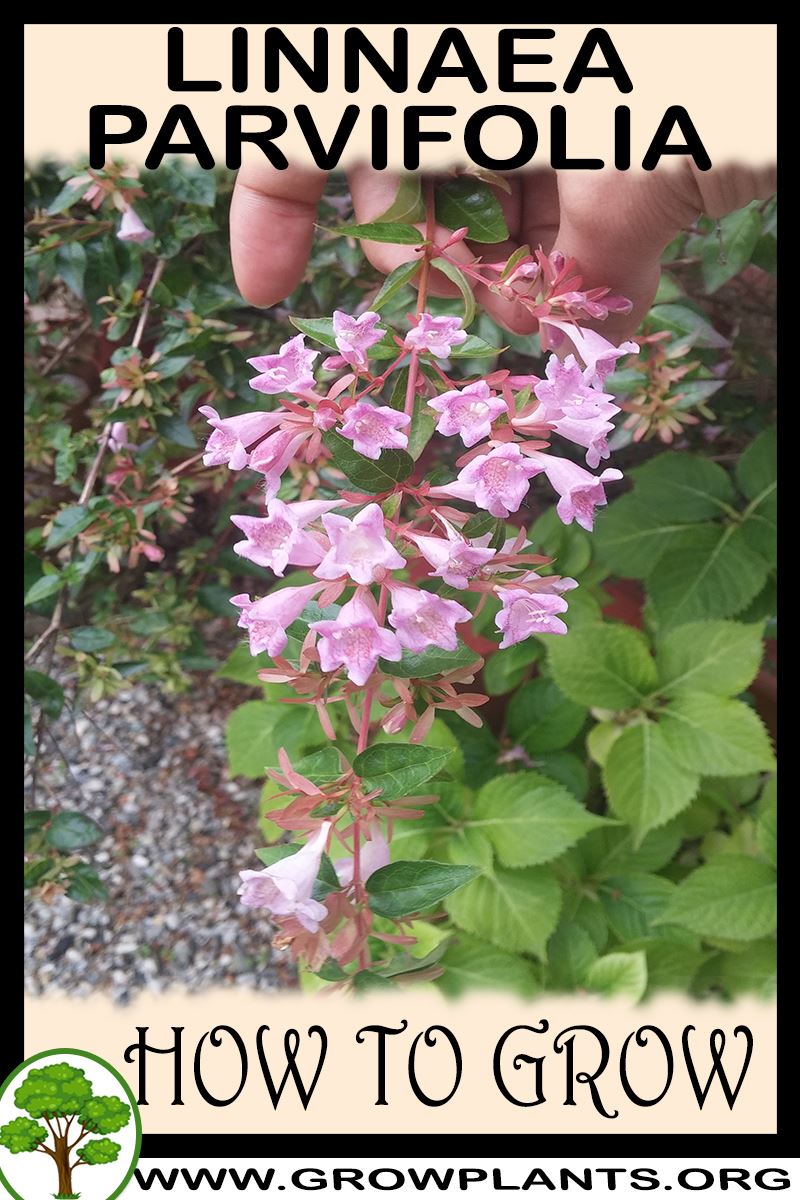
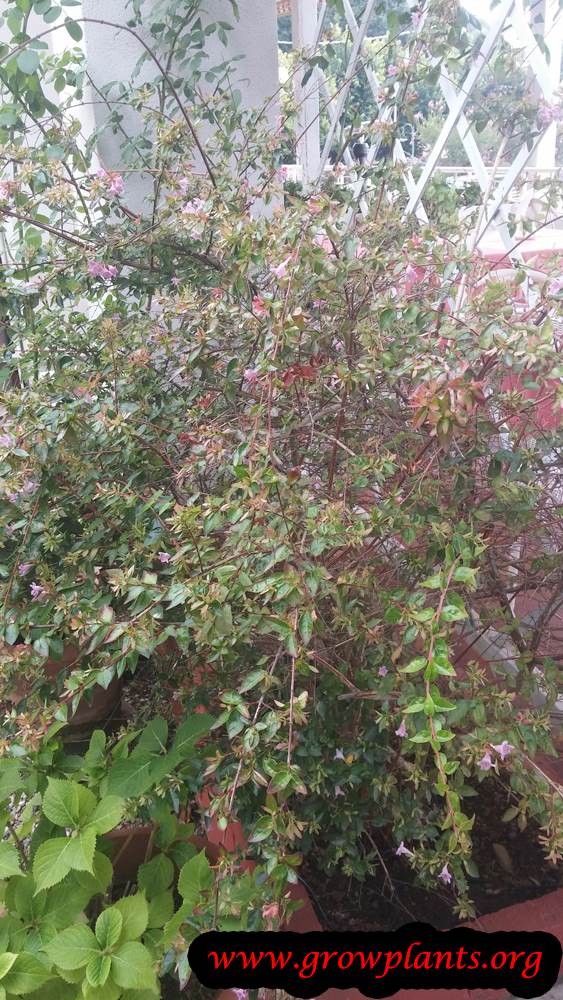
Overview: Linnaea (Abelia) parvifolia is an evergreen ornamental shrub reaching 1-3 m, valued as a fragrant flowering hedge. It carries clusters of small trumpet-shaped pink to purple flowers.
Quick Specifications
| Specification | Attribute |
|---|---|
| Plant Type / Life Cycle | Perennial (woody shrub) |
| Foliage Type | Evergreen |
| Mature Size | 1-3 m tall and wide (roughly 3-10 ft) |
| Growth Rate | Moderate to Fast |
| Hardiness | USDA zones 6-10 |
Growth Form & Structure
- Height & Spread: Reaches 1-3 m in the ground with an arching, bushy outline; can be container-grown when kept pruned.
- Growth Habit & Form: Multi-stemmed, arching evergreen shrub with dense twiggy growth, suited to informal hedging.
- Lifespan & Maturity: Long-lived woody perennial that fills out over a few seasons.
Anatomy & Physical Features
- Leaves & Foliage: Green, elliptic to ovate leaves with a pointed tip.
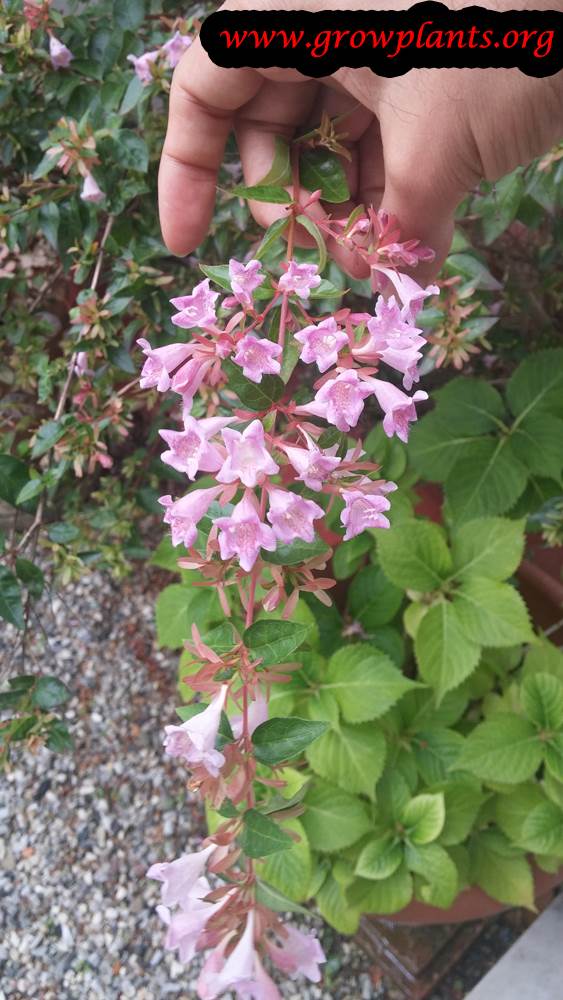
- Flower Characteristics: Fragrant, small trumpet-shaped pink to purple flowers carried in umbel-like clusters.
Primary Uses & Landscape Value
- Functional & Ornamental Roles: Fragrant flowering hedge, screen and ornamental shrub for borders.
Care Guide: Planting, Soil & Watering
Overview: This Abelia-type shrub grows well in full sun to half shade in well-drained soil that is kept lightly moist while young. It needs only low to moderate watering once established, and an early mulch helps it settle in.
Quick Care Requirements
| Requirement | Ideal Condition |
|---|---|
| Planting Season | In the cool season — winter to spring, or autumn in hot climates |
| Growth Rate | Moderate to Fast |
| Soil Type | Well-draining soil, kept lightly moist while establishing |
| Water Need | Low to moderate — let the top of the soil dry between waterings; tolerates short dry spells |
Planting & Establishment
- Best Planting Season: Plant in the cooler part of the year, from winter to spring, and in autumn in hot climates, so roots establish before summer heat.
- How to Plant:
- Hole Preparation: Dig a hole about twice the width of the root ball and the same depth, loosening the sides and base.
- Soil Amendments: Work in compost or well-rotted organic matter to enrich the bed and improve both fertility and drainage.
- Planting Depth: Set the plant at the same level it grew in its pot, with the root collar at the soil surface — do not bury the stem.
- Growth Speed & Expectations: Expect moderate to fast growth in optimal conditions, filling out quickly through the warm season.
Soil, Watering & Drainage Care
- Soil Mix & Drainage Needs: Provide well-draining soil and apply a mulch when the shrub is newly planted to conserve moisture; ensure water drains freely to protect the roots.
- Watering Schedule & Technique:
- Young / Newly Planted: Keep the soil lightly moist while young plants establish, watering whenever the surface begins to dry.
- Established: Once established, water deeply but let the top few centimetres dry before watering again; the plant tolerates short dry spells.
- Seasonal Adjustments: Increase watering in hot, dry weather and reduce it in winter or during rainy spells.
Climate, Light & Hardiness
This fragrant evergreen shrub thrives in temperate, Mediterranean, and subtropical climates with mild-to-warm growing seasons. It performs best in full sun to half shade and tolerates the moderate winter cold typical of USDA zones 6–10.
Quick Climate Specifications
| Climate Zones | Temperate, Mediterranean, Subtropical |
|---|---|
| USDA Hardiness Zones | 6–10 |
| Frost Tolerance | Moderate |
| Light Conditions | Full Sun / Half Shade |
Sunlight & Light Exposure
Optimal Light Setup
Grows best in full sun for the densest flowering and foliage, and tolerates half shade, especially where summers are hot.
Shade & Heat Management
In the warmer, subtropical part of its range, some afternoon shade helps reduce heat stress and prolongs flowering.
Best Exposure / Orientation
A south- or west-facing spot suits cooler zone 6–7 gardens; in hot subtropical gardens an east-facing position with afternoon relief is preferable.
Temperature Extremes & Hardiness
USDA Hardiness & Regional Limits
Hardy outdoors through USDA zones 6–10, tolerating winter cold typical of temperate gardens as well as the mild winters of Mediterranean and subtropical regions.
Cold Damage & Winter Protection
At the cold end of its range, tender new growth and flower buds can be damaged by hard freezes; a sheltered site and root-zone mulch help protect marginal plantings through winter.
Frost Sensitivity
Established wood tolerates light-to-moderate frost, but young plants and fresh spring growth are more frost-sensitive.
Wind, Humidity & Microclimate
Microclimate Recommendations
A reliably moist, well-drained site with some shelter from harsh winter wind improves cold survival at the cooler end of its hardiness range.
Growing in Pots, Balconies & Indoors
This small-leaved abelia is a fragrant, drought-tolerant ornamental shrub the grower confirms is not a houseplant but grows well in containers. It makes a good patio or balcony pot plant in sun or part shade rather than an indoor plant.
Quick Details
- Container Size: A roomy pot, 15-40 L, for a 1-3 m shrub kept trimmed
- Indoor Suitability: Not an indoor plant – an outdoor flowering shrub
- Best Spot: Full sun to part shade, outdoors
- Soil & Drainage: Free-draining mix; it is fairly drought-tolerant
- Watering in Pots: Low to average water; let the top dry between waterings
Indoors & On the Windowsill
- Not a houseplant: A sun-loving shrub that won’t thrive in a room; grow it outside.
- Windowsill: Too little light indoors for good growth and flowering.
On a Balcony or Patio
- Light & wind: Give it a sunny to lightly shaded spot; pots dry faster than open ground, so water when the surface dries, and shelter it on an exposed balcony.
- Fragrance: Set it where you will enjoy the scent – beside a seat or doorway.
Choosing the Pot, Soil & Long-Term Care
- Pot & drainage: A well-drained pot with strong drainage holes and no standing-water saucer to avoid root rot; terracotta breathes and dries faster, glazed or plastic holds moisture longer.
- Potting mix: A well-aerated, organic-rich potting mix – peat or coir blended with perlite or vermiculite, leaning free-draining.
- Feeding: Potted plants are fed more often than those in the ground, as watering steadily leaches nutrients from the mix – feed lightly in the growing season.
- Repotting: Refresh the top of the mix and pot up about every couple of years, lightly trimming the root ball and top growth every couple of years; prune to shape.
Fertilizing & Feeding
A fast-to-medium growing fragrant flowering hedge shrub that performs well in average garden soil; it needs only light, occasional feeding, particularly at planting, and mature hedges generally sustain themselves with organic mulch and minimal supplemental fertilizer.
Quick Fertilizing Specs
| Feeding Level | Light feeder – average garden soil with light feeding is usually enough |
|---|---|
| Main Nutrient Priority | Balanced feeding to support foliage and the long summer-to-autumn bloom |
| Best Feeding Period | Spring as active growth resumes |
| Soil pH | Tolerates a wide soil pH range in well-drained soil |
| Reduce/Stop Feeding | Ease off on established hedges once well settled into the site |
Feeding by Growth Stage
Establishment
Help a newly planted abelia build roots and settle in, especially when used as a hedge
| Nutrient direction | A light, balanced feeding along with organic matter at planting supports steady root establishment |
|---|---|
| Timing | At planting and through the first growing season |
| Frequency | A light feeding is usually enough while the shrub establishes |
| Fertilizer types | A balanced general-purpose fertilizer applied at a light rate, Organic matter or well-rotted compost worked into the planting hole, plus mulch while establishing |
| Precautions | Avoid heavy nitrogen feeding right after planting, which can stress newly disturbed roots |
Bloom Period
Sustain the fragrant pink-to-purple summer and autumn bloom display
| Nutrient direction | Balanced feeding with adequate nitrogen supports flowering better than a phosphorus-heavy product |
|---|---|
| Timing | Through summer into autumn during the bloom window |
| Frequency | Minimal feeding is usually enough once the shrub is established and flowering |
| Fertilizer types | A balanced general-purpose fertilizer applied sparingly |
| Precautions | Overfeeding tends to push leafy growth at the expense of flowers on this shrub |
Dormant / Rest Period
Allow the shrub to rest through the cooler part of the year after blooming
| Nutrient direction | None – withhold fertilizer while growth is slow or dormant |
|---|---|
| Timing | Winter, after the bloom season ends |
| Frequency | No feeding at this stage |
| Fertilizer types | No feeding at this stage – allow the shrub to rest |
| Precautions | Do not fertilize during dormancy; resume once active growth returns in spring |
Nutrient Deficiency Signs & Corrections
Overall pale green leaf color and thinner-than-expected foliage density
| Possible causes | Nitrogen deficiency in poor soil, Overly shaded planting site, Waterlogged or compacted soil limiting root uptake |
|---|---|
| Appears first on | Whole-shrub foliage color and density |
| What to check | Soil fertility and feeding history, Light exposure, Soil drainage |
| Possible correction | Apply a light balanced feeding and confirm the site has adequate light and drainage |
Yellowing between the veins of younger leaves while veins remain green
| Possible causes | Iron chlorosis from alkaline soil, Root stress from overly wet soil, General nutrient imbalance |
|---|---|
| Appears first on | New growth at branch tips |
| What to check | Soil pH, Drainage, Recent feeding history |
| Possible correction | Correct soil pH if alkaline and apply a chelated iron product per its label |
Fewer flowers than expected during the normal summer-to-autumn bloom window
| Possible causes | Excess nitrogen favoring foliage over bloom, Insufficient sunlight, Overdue pruning leaving old, unproductive wood |
|---|---|
| Appears first on | Whole shrub during bloom season |
| What to check | Recent feeding rate, Light exposure, Pruning history |
| Possible correction | Reduce nitrogen-heavy feeding, confirm adequate sun exposure, and prune to remove old unproductive growth |
Pruning, Training & Seasonal Maintenance
Linnaea (Abelia) parvifolia is a fast-to-medium growing evergreen shrub that tolerates moderate to fairly hard pruning well, since it flowers on new growth produced after cutting. The main objective is shaping & density control for its use as a fragrant hedge or specimen shrub – it is grown ‘for design’ rather than for a fruit or seasonal-wood crop. Winter, while the plant is semi-dormant, is the safest window: cutting then does not remove the coming summer/autumn flower flush, which forms on the new season’s shoots.
Quick Pruning & Maintenance Specs
| Pruning Tolerance | Moderate to High |
| Primary Pruning Window | Winter |
| Typical Frequency | Once a year, plus light tidying through the growing season |
| Main Objective | Shape, density and hedge-line control |
| Young Plant Priority | Establish a full, well-branched framework |
| Mature Plant Priority | Maintain size/shape and refresh flowering wood |
| Best Tool Type | Bypass secateurs / hedge shears (formal hedge use) |
| Avoid Heavy Pruning During | Active summer/autumn bloom |
Pruning by Plant Age & Size
Newly Established
Limit cuts to damaged or straggly shoots; pinch tips lightly to encourage branching low down rather than hard-cutting a young plant.
Young / Formative
No formal leader system needed – this is a multi-stemmed shrub. Tip-prune and selectively head shoots in the first winter or two to build a dense, well-furnished framework, especially if it is being grown as a hedge.
Mature / Established
Annual winter shaping to control size and keep the hedge line or shrub outline tidy; thin congested interior growth occasionally to keep the center from going bare.
Seasonal Pruning Schedule
| Dormant/Winter | Objective: shape and size control. Remove: dead, damaged or crossing stems and cut back to the desired outline. Do not remove: all of the previous season’s wood at once on an old, bare plant – stage it. Response: vigorous new growth from spring. Flowering impact: none – flowers form on the new growth that follows. |
| Ongoing Sanitary | Objective: tidiness. Remove: any dead or broken twigs found through the growing season. Response: minimal, low-impact. |
Structural Pruning & Training
Remove crossing or inward-rubbing stems to keep the hedge/shrub open enough for light and airflow. Control height and spread by cutting back to a healthy outward-facing shoot rather than shearing indiscriminately if a more natural form (versus a formal hedge) is wanted.
Container & Small-Space Pruning
In a container, prune a little harder and more often to keep the plant in proportion to the pot, and expect to root-prune or pot up periodically since restricted roots limit how much top growth the plant can support after a hard cut.
Tools
- Bypass secateurs for individual stems and framework shaping
- Hedge shears only if it is being kept as a clipped formal hedge
Tool Hygiene & Disease Risk
Routine: this shrub has no major transmissible disease flagged in its facts (aphids and spider mites are the noted pests, not pathogens) – clean, sharp tools are sufficient between plants.
Cut Placement & Technique
Use thinning cuts back to a healthy bud or side-shoot rather than leaving long stubs; for hedge shaping, cut just above outward-facing buds to keep growth open rather than dense and twiggy at the surface only.
Heavy Pruning & Rejuvenation
An overgrown or leggy plant tolerates a hard winter cut-back into older wood to rejuvenate it; expect a flush of vigorous regrowth by spring and a lighter bloom the following summer while the plant rebuilds flowering wood.
Post-Pruning Care
Water normally through the regrowth flush; avoid feeding immediately after a hard cut since the plant will already push vigorous new growth on its own. Watch new growth for aphids/spider mites, the pests already noted for this species.
Common Pruning Mistakes
- Shearing the whole hedge face in summer, which removes developing flower buds
- Letting the shrub go several years unpruned, leading to a bare, leggy base that then needs a hard renewal cut
When NOT to Prune
Avoid heavy cutting during the summer/autumn bloom period, since this removes the current flower display; also avoid hard pruning right before a hard frost in the colder end of its zone 6-10 range, as fresh cuts and new growth are more frost-tender.
Recommended Tools (by task)
- bypass_secateurs – precise shaping cuts and framework thinning on a multi-stemmed shrub
- hedge_shears – only where it is maintained as a clipped formal hedge
- blade_disinfectant – general good practice when moving between different shrubs in a hedge row
Propagation Guide
This shrub (also known as Abelia) is best propagated from semi-hardwood stem cuttings, which the site notes is necessary to keep a specific cultivar true to type. Seed is possible for the plain species but will not reproduce a named cultivar’s leaf or flower characteristics, so overall difficulty is moderate, mainly because it is a woody shrub rather than a fast, easy softwood rooter.
Quick Propagation Specs
| Best Propagation Method | Semi-hardwood stem cuttings |
| Alternative Methods | Softwood cuttings; seed (species only) |
| Propagation Difficulty | Moderate |
| Seed True-to-Type | Usually true-to-type for the species; cultivar-dependent for named selections |
| Vegetative True-to-Type | Yes |
| Best Propagation Season | Late spring through summer for cuttings; winter to spring for seed/planting, per the site’s planting season |
| Cutting Rooting Time | Several weeks to a couple of months |
| Germination Temperature | Around 18–22°C (64–72°F) |
Growing from Seed
Sowing Season
Winter to spring, matching the site’s planting season (also autumn in hot climates).
Germination Conditions & Time
Keep the sowing medium consistently moist and at room-warm temperature; expect several weeks and some unevenness, and remember seedlings will only resemble the straight species, not a named cultivar.
Stem Cuttings
Cutting Type
Semi-hardwood tip cuttings; softwood cuttings taken earlier in the season can also work.
Best Timing
Late spring through summer, once new growth has begun to firm.
Cutting Preparation
Take cuttings with a few leaf nodes and remove the lower leaves.
Rooting Setup
Use a well-drained propagating mix and keep humidity up without letting it become waterlogged.
Rooting Hormone
Beneficial for improving rooting consistency in this woody shrub, though not strictly required.
Rooting Time
Generally several weeks to a couple of months.
Bloom & Flower Guide
Quick Details
- Bloom Season: Summer into autumn
- Flower Appearance: Small trumpet-shaped flowers in pink or purple, carried in loose rounded (umbel-like) clusters
- Edibility: Grown as a fragrant ornamental hedge, not as an edible flower
Detailed Blooming Overview
This abelia flowers over a long summer-to-autumn season, carrying dainty, fragrant trumpet-shaped blooms in soft pink to purple. The flowers cluster along the arching stems, and the persistent rosy sepals often keep the plant looking colourful even after the petals drop. It is a dependable hedge and border shrub that draws bees and butterflies.
Flower Characteristics
- Small, tubular trumpet-shaped flowers in pink or purple shades.
- Borne in loose, rounded clusters along the stems.
- Lightly fragrant and long-blooming.
Bloom Care & Thinning
- Pollination: Attracts bees and butterflies to the nectar.
- Managing the bloom: Prune to shape after the main flush; flowers form on new growth, so avoid removing the current season’s shoots.
Pests, Diseases & Troubleshooting
Overview: This plant is listed as ‘Linnaea parvifolia’, a name that under recent reclassification corresponds to the small-leaved abelia (formerly Abelia parvifolia) in the honeysuckle family (Caprifoliaceae). Like other abelias it is a tough, largely pest-resistant flowering shrub; its occasional problems are aphids, spider mites, scale and whitefly, plus powdery mildew, leaf spot and root rot in wet soil. Because the botanical name is ambiguous, the profile below is given at genus/family level – verify the exact identity before acting.
Quick Troubleshooting Overview
| Issue / Pest | Main Symptom | Primary Solution |
|---|---|---|
| Aphids | Sticky, curled new shoots | Water jet, insecticidal soap |
| Spider mites | Fine stippling, webbing in heat/drought | Rinse foliage, horticultural oil |
| Scale | Bumps on stems, sticky honeydew, sooty mould | Prune out, horticultural oil |
| Powdery mildew | White film on leaves in humid shade | Prune for airflow, sulphur spray |
| Root rot | Wilting, dieback in wet soil | Improve drainage, ease watering |
Common Pests & Management
- Aphids (Aphis spp.):
- Symptoms: Colonies on soft new shoots and flower buds with honeydew, sooty mould and curled growth.
- Prevention & Control: Hose off, apply insecticidal soap or neem, and conserve ladybirds and lacewings; control ants.
- Spider mites (Tetranychus urticae):
- Symptoms: Fine pale stippling, dull bronzed leaves and fine webbing on shoot tips in hot, dry, dusty spells.
- Prevention & Control: Rinse foliage, raise humidity, avoid drought stress, and treat with horticultural oil or insecticidal soap on the undersides.
- Scale insects (Coccidae & Diaspididae):
- Symptoms: Immobile brown or white bumps along stems and leaf undersides, sticky honeydew and sooty mould, with weak, yellowing growth.
- Prevention & Control: Scrape off light infestations, prune heavily infested wood, and apply horticultural oil to smother crawlers; encourage parasitoid wasps.
- Whiteflies (Trialeurodes vaporariorum):
- Symptoms: Small white flying insects that rise in clouds when disturbed, with honeydew and sooty mould below.
- Prevention & Control: Use yellow sticky traps, encourage natural enemies, and spray insecticidal soap or neem repeatedly.
Diseases & Fungal Issues
- Powdery mildew (Erysiphe / Podosphaera spp.):
- Symptoms: White powdery coating on leaves and shoots in humid, shaded, crowded conditions, with some distortion.
- Treatment & Management: Prune for light and airflow, avoid overhead watering and excess nitrogen, and spray sulphur or potassium bicarbonate if needed.
- Leaf spot (Cercospora / Colletotrichum spp.):
- Symptoms: Brown or purplish spots that enlarge and may cause leaf drop in wet weather.
- Treatment & Management: Remove and destroy affected leaves and fallen debris, water at the base, and use a copper fungicide only if it spreads.
- Root rot (Phytophthora / Rhizoctonia spp.):
- Symptoms: Wilting, yellowing and branch dieback despite moist soil, with dark decayed roots – a wet-soil problem.
- Treatment & Management: Plant in well-drained soil, avoid overwatering and mulch piled against the stem, and remove severely affected plants.
Growing Difficulties & Abiotic Problems
- Root rot from wet soil:
- Cause & Symptoms: Poorly drained, waterlogged ground suffocates and rots the roots, showing as wilt and dieback.
- Correction Strategy: Plant high in free-draining soil, water deeply but infrequently once established, and keep mulch off the stem base.
- Leaf scorch / chlorosis:
- Cause & Symptoms: Harsh reflected heat scorches leaf margins, while very alkaline soil can yellow the foliage between veins.
- Correction Strategy: Site with some afternoon shade in hot climates, mulch to steady moisture, and correct alkalinity with acidifying feeds or iron chelate if needed.
- Winter cold damage:
- Cause & Symptoms: Hard frost can brown and kill soft young growth on this borderline-hardy shrub.
- Correction Strategy: Plant in a sheltered spot, avoid late feeding that pushes tender growth, and prune out frost-damaged wood after the risk passes.
What Helps – Products & Tools
A general shrub kit suffices: insecticidal soap or neem oil for aphids and whitefly, horticultural oil for spider mites and scale, sulphur or potassium-bicarbonate spray for powdery mildew, and a copper fungicide for persistent leaf spot. Most of the time good drainage, airflow and light pruning are all that is needed. Spray in the evening to protect pollinators and follow the label.