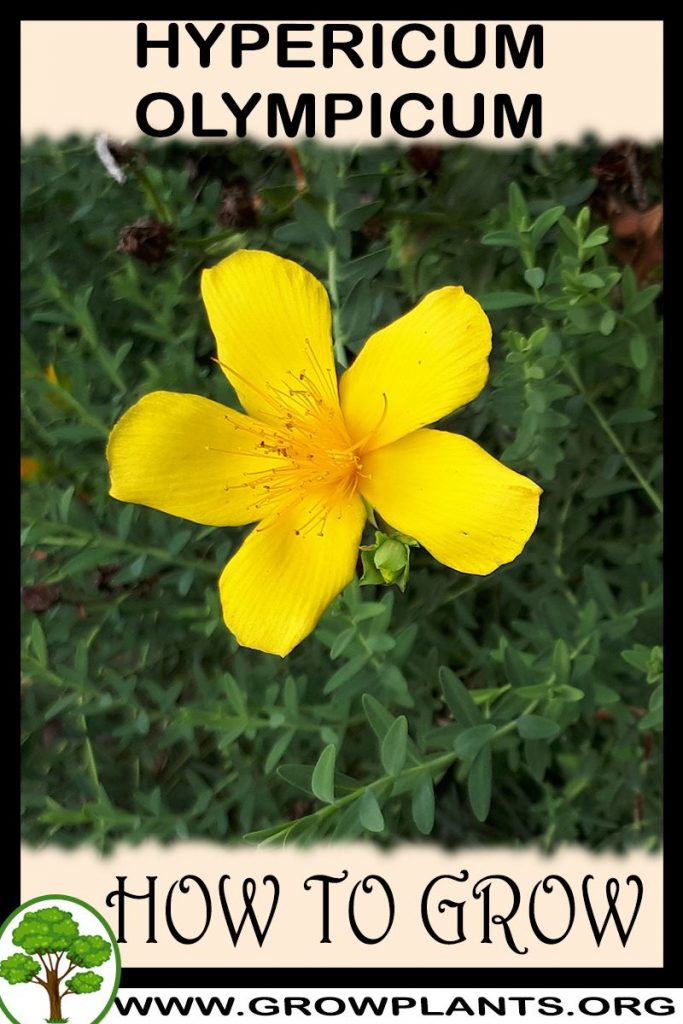
Plant Profile & Key Characteristics
Overview: A compact, mound-forming evergreen subshrub of 30-60 cm (1-2 ft) grown as a drought-tolerant ornamental groundcover. Carries large golden star-shaped flowers over summer.
Quick Specifications
| Specification | Attribute |
|---|---|
| Plant Type / Life Cycle | Perennial (evergreen subshrub) |
| Foliage Type | Evergreen |
| Mature Size | 30-60 cm tall (1-2 ft) |
| Growth Rate | Moderate to Fast |
| Toxicity | Contains hypericin – can cause photosensitivity; toxic to grazing livestock |
| Hardiness | USDA zones 5-10 |
Growth Form & Structure
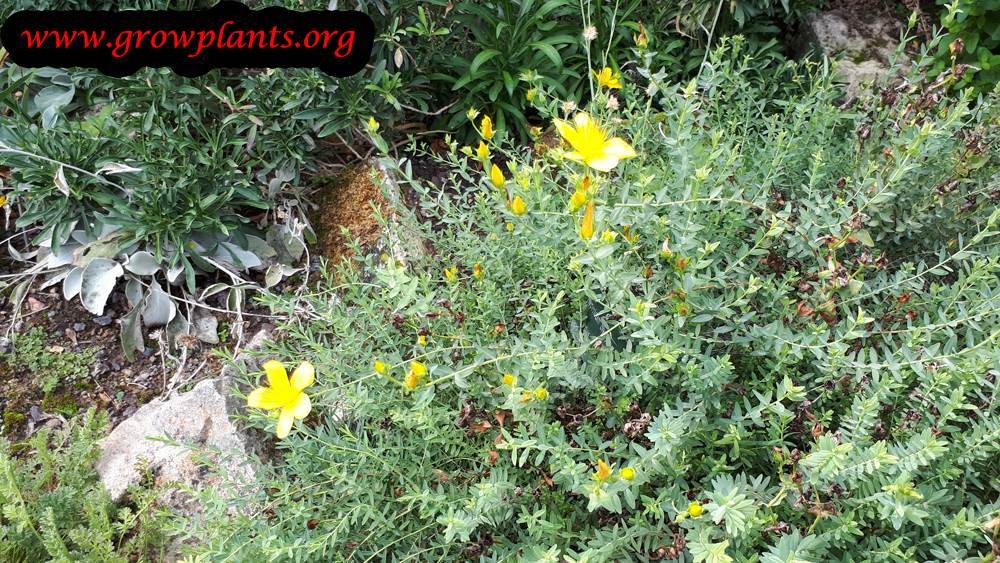
- Height & Spread: Forms low mounds 30-60 cm (1-2 ft) tall in the ground; also well suited to containers and rock gardens.
- Growth Habit & Form: Compact, clump-forming evergreen subshrub with slender stems.
- Lifespan & Maturity: Long-lived perennial reaching flowering size within a season or two.
Anatomy & Physical Features
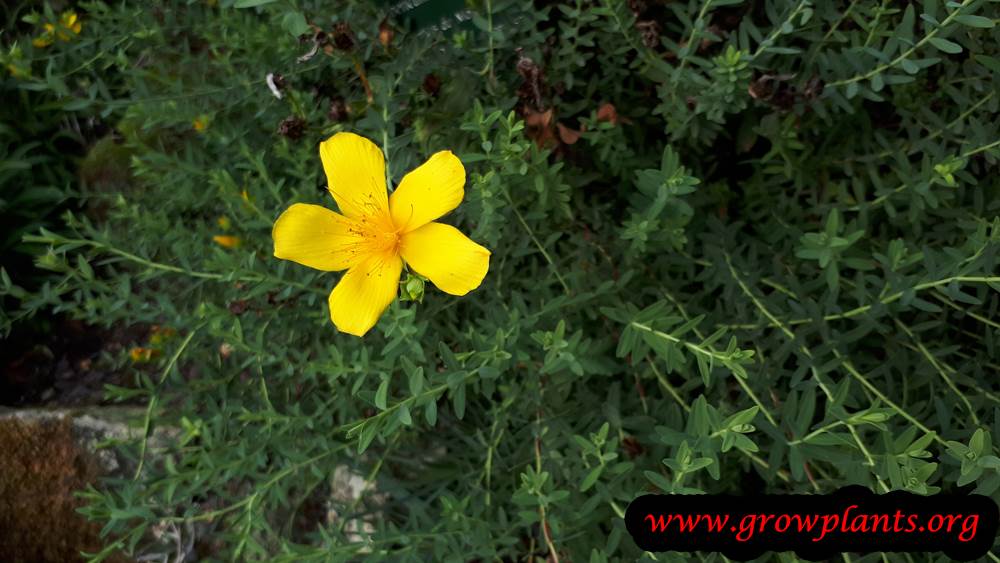
- Leaves & Foliage: Small green, elliptic evergreen leaves, often blue-green.
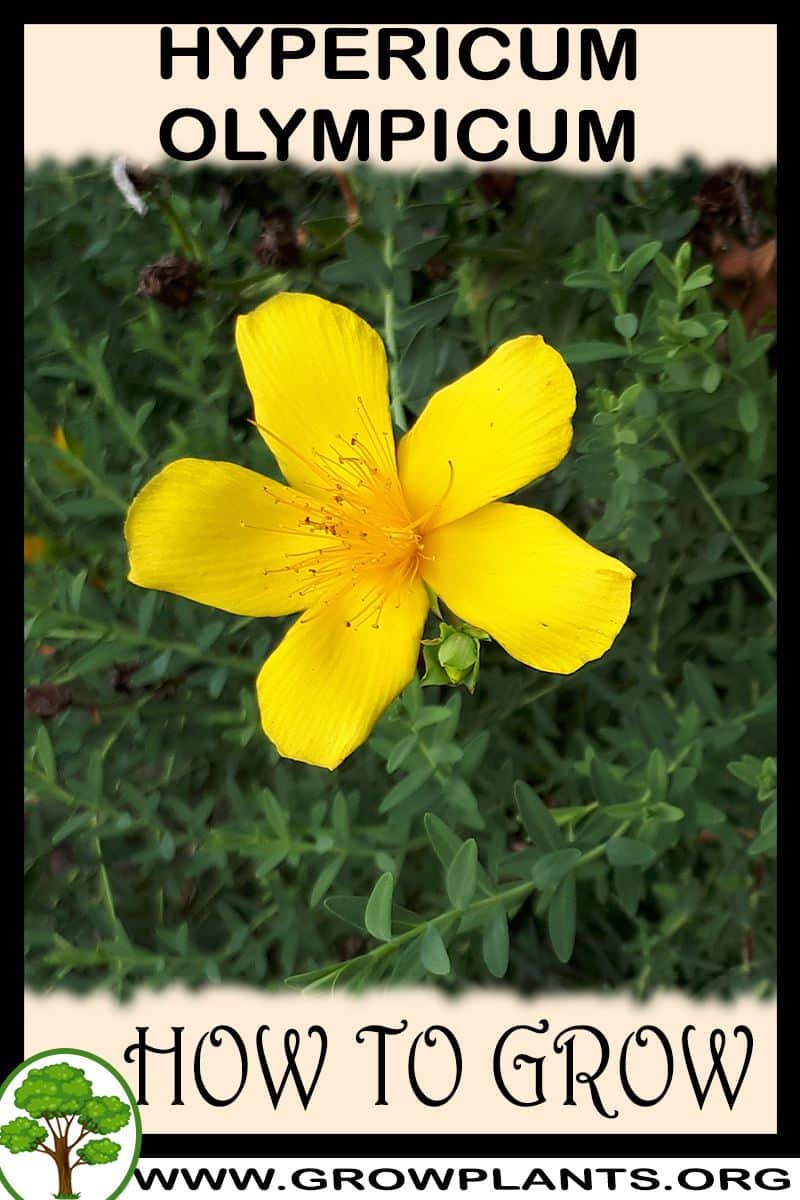
- Flower Characteristics: Large golden-yellow star-shaped flowers with showy stamens over summer (see the Bloom guide).
Primary Uses & Landscape Value
- Functional & Ornamental Roles: Drought-tolerant ornamental for rockeries, edging, gravel gardens and containers in sun or part shade.
Care Guide: Planting, Soil & Watering
Overview: Mount Olympus St. John’s wort is a low, drought-tolerant evergreen groundcover shrub for full sun to half shade in temperate to Mediterranean climates. It is easy-going about soil provided drainage is reasonable.
Quick Care Requirements
| Requirement | Ideal Condition |
|---|---|
| Planting Season | Spring, summer or autumn |
| Growth Rate | Moderate to Fast |
| Soil Type | Well-draining soil; adaptable and drought tolerant once established |
| Water Need | Moderate – drought tolerant once established |
Planting & Establishment
- Best Planting Season: Plant during the growing season, in spring, summer or autumn.
- How to Plant:
- Hole Preparation: Dig a hole slightly wider than the root ball; this undemanding plant needs no special preparation.
- Soil Amendments: A little compost aids establishment, but ordinary soil is fine.
- Planting Depth: Set the crown level with the soil surface.
- Growth Speed & Expectations: A moderate to fast grower that spreads into a low mat.
Soil, Watering & Drainage Care
- Soil Mix & Drainage Needs: Any reasonably drained soil suits it, and it grows well in containers too; avoid waterlogged ground.
- Watering Schedule & Technique:
- Young / Newly Planted: Water regularly after planting while roots establish.
- Established: Once established it is drought tolerant – water moderately and let the surface dry between waterings.
- Seasonal Adjustments: Water more in summer heat and much less in winter.
Climate, Light & Hardiness
Hypericum olympicum (Mount Olympus St. John’s Wort) is a cold-hardy, drought-tolerant ground cover suited to Mediterranean, subtropical, and temperate climates, thriving in full sun to half shade. It tolerates winter cold well across its stated zone range while also handling dry, sunny conditions with ease.
Quick Climate Specifications
| Climate Zones | Mediterranean, subtropical, and temperate climates |
|---|---|
| USDA Hardiness Zones | Approximately zone 5–10 |
| Optimal Temp Range | Mild growing-season conditions typical of sunny Mediterranean and temperate climates |
| Cold Damage Begins | Foliage can die back with hard freezes at the colder end of its range |
| Approx. Survival Minimum | Established plants tolerate the winter cold typical of zone 5 |
| Frost Tolerance | Moderate to High |
| Light Conditions | Full Sun to Half Shade |
Sunlight & Light Exposure
Optimal Light Setup
Full sun to half shade suits this ground cover well, with the best flowering in sunnier spots.
Direct Sun Requirement
Several hours of direct sun daily encourage the fullest bloom.
Best Exposure / Orientation
An open, sunny bank or bed with reasonable drainage suits this low shrub well.
Temperature Extremes & Hardiness
USDA Hardiness & Regional Limits
Site data places this plant at zone 5–10, reflecting solid winter cold tolerance for a Mediterranean-region shrub.
Cold Damage & Winter Protection
Established plants generally handle typical winter cold within their range without special protection; some dieback of top growth can occur in the coldest winters, with regrowth from the base.
Frost Sensitivity
Moderately to highly frost tolerant once established.
Extreme Heat Tolerance
Tolerates heat and drought well, consistent with its Mediterranean and subtropical range.
Wind, Humidity & Microclimate
Dry-Air Tolerance
Tolerates dry air well, in keeping with its drought-tolerant nature.
Rainfall & Seasonal Moisture
Prefers a moderate, well-drained rainfall pattern typical of Mediterranean climates.
Microclimate Recommendations
An open, sunny site with reasonable drainage suits this tough ground cover across its full climate range.
Growing in Pots, Balconies & Indoors
Hypericum olympicum is a low, sun-loving St John’s wort (30-60 cm / 1-2 ft), not a houseplant – the grower confirms it is unsuited to indoor growing. It is a fine, drought-tolerant container plant for a sunny balcony, patio, or rock-garden trough, smothering itself in bright yellow flowers.
Quick Details
- Container Size: Small to moderate – a compact, spreading sub-shrub
- Indoor Suitability: Not a houseplant; grow outdoors
- Best Spot: Full sun to half shade
- Soil & Drainage: Free-draining, not-too-rich mix
- Watering in Pots: Average – drought-tolerant once established; avoid waterlogging
Indoors & On the Windowsill
- Not for indoors: The grower marks it as unsuitable as a houseplant; it needs outdoor sun and a winter rest.
- Overwintering: Hardy – leave the pot outside; cut back old growth at the end of the season and it re-sprouts.
On a Balcony or Patio
- Light & heat: Give it a sunny, airy spot; it copes well with heat and reflected warmth from walls. Pots dry faster than open ground, so check moisture in hot spells.
Choosing the Pot, Soil & Long-Term Care
- Pot & drainage: Choose a pot a size or two larger than the root ball, with strong drainage holes; skip a standing water saucer to avoid root rot. Terracotta breathes and dries faster, while glazed or plastic pots hold moisture longer.
- Potting mix: A well-aerated, organic-rich mix – a quality potting mix, or peat/coir blended with perlite or vermiculite.
- Feeding: Potted plants need feeding more often than those in open ground, as frequent watering leaches nutrients away – feed lightly through the growing season.
- Repotting: Refresh the mix or pot up about every two years; for perennials, lightly trim the root ball and top growth at the same time.
Fertilizing & Feeding
Hypericum olympicum is an easy-care, drought-tolerant groundcover that thrives on minimal feeding rather than a rich fertilizing routine.
Quick Fertilizing Specs
| Feeding Level | light |
|---|---|
| Main Nutrient Priority | a balanced, general-purpose fertilizer used sparingly |
| Best Feeding Period | spring as new growth begins |
| Soil pH | tolerates a wide range of well-drained soils |
| Reduce/Stop Feeding | taper off feeding as the season’s bloom finishes and growth slows toward autumn |
Feeding by Growth Stage
Spring Growth Flush
Support the new season’s growth as the plant breaks from winter dormancy.
| Nutrient direction | A light, balanced fertilizer application is usually all that’s needed to start the season. |
|---|---|
| Timing | Early spring, as new growth begins. |
| Frequency | A single light feeding at the start of the growing season is typically enough for this easy-care groundcover. |
| Fertilizer types | A balanced, general-purpose fertilizer applied lightly |
| Precautions | Avoid heavy feeding, which can push lax, floppy growth on this naturally low-maintenance plant. |
Bloom Support
Maintain the plant’s star-shaped yellow flower display through the bloom period.
| Nutrient direction | Continue light, balanced nutrition; extra nitrogen is not needed to encourage more flowers. |
|---|---|
| Timing | Spring into summer bloom period. |
| Frequency | Feeding needs are minimal during bloom beyond the initial spring application. |
| Fertilizer types | A light supplemental feed is optional only for plants in poor soil; otherwise the spring feeding is enough |
| Precautions | Keep feeding minimal through bloom to avoid excess soft growth at the expense of flowers. |
Autumn-Winter Dormancy
Let the plant harden off and rest through the cool season.
| Nutrient direction | None – withhold fertilizer so the plant can rest through the dormant season. |
|---|---|
| Timing | Autumn through winter. |
| Frequency | No feeding at this stage. |
| Fertilizer types | No feeding at this stage; resume only with the spring growth flush |
| Precautions | Do not fertilize dormant or resting plants; late feeding can push tender growth vulnerable to cold. |
Nutrient Deficiency Signs & Corrections
Overall pale green foliage and reduced flowering.
| Possible causes | Very lean or depleted soil lacking basic nutrients, Heavy competition from nearby plants for available nutrients, Poor root establishment limiting uptake |
|---|---|
| Appears first on | Older growth and overall plant vigor |
| What to check | Review soil fertility and organic matter, Check for competing roots nearby, Confirm normal establishment and root health |
| Possible correction | Apply a light, balanced fertilizer at the start of the growing season. |
New leaves show yellowing between green veins.
| Possible causes | Soil pH too high, limiting iron availability, Poor drainage stressing roots and reducing uptake, Overly alkaline irrigation water over time |
|---|---|
| Appears first on | Newest leaves |
| What to check | Test soil and water pH, Check drainage, Rule out other stress like drought or pests |
| Possible correction | Improve drainage, address soil pH if consistently high, and apply a chelated iron product per its label if the pattern persists. |
Stems become floppy, overly lush, and flop open, with fewer flowers than expected.
| Possible causes | Fertilizer applied too heavily or too often for this low-demand plant, Excess nitrogen favoring leafy growth over flowering, Overly rich soil combined with regular feeding |
|---|---|
| Appears first on | New stem growth throughout the plant |
| What to check | Review recent feeding rate and frequency, Assess soil richness and organic matter levels, Compare growth habit to the plant’s normally compact form |
| Possible correction | Cut back to a single light spring feeding and let the plant’s naturally lean needs guide future applications. |
Pruning, Training & Seasonal Maintenance
Hypericum olympicum is a low, spreading, semi-woody groundcover subshrub. Because it flowers on the current season's new growth in spring and summer, it tolerates – and benefits from – being cut back hard to the ground each dormant season without losing any bloom. The main objective of pruning is to keep the mound dense and compact and prevent the centre from becoming bare and woody, which happens if old stems are left uncut for multiple years.
Quick Pruning & Maintenance Specs
| Pruning Tolerance | High for a subshrub – tolerates being cut nearly to the ground |
| Primary Pruning Window | Autumn to winter (dormant) |
| Typical Frequency | Annual |
| Main Objective | Rejuvenation and compactness – remove old woody stems |
| Young Plant Priority | None – allow one season of establishment before the first cutback |
| Mature Plant Priority | Cut old stems to the ground annually to prevent a bare, leggy centre |
| Best Tool Type | Bypass secateurs for single specimens; hedge shears for mass groundcover plantings |
| Avoid Heavy Pruning During | Active summer flowering or hot, drought-stressed periods |
Pruning by Plant Age & Size
Newly Established
No pruning in the first season beyond deadheading if it happens to flower; let the plant build its root system first.
Young / Formative
Light shaping only, if needed, to encourage an even mound.
Mature / Established
Annual hard cutback of old stems to near ground level each autumn or winter; since flowers form on the following season's new growth, this does not sacrifice bloom.
Seasonal Pruning Schedule
Dormant / Winter
Objective: rejuvenation. Remove old, woody, or leggy stems by cutting them back to near ground level, leaving a short framework rather than bare old wood. Do not disturb the living crown or roots. Expected response is a vigorous flush of new growth the following spring. Flowering impact: none, or positive – since bloom occurs on the new growth this stimulates.
Flowering & Fruiting Wood
Flowers form on the current season's new growth, not on older wood. This is why a hard dormant-season cutback does not remove flower buds – unlike old-wood-blooming shrubs, there is no wood being sacrificed by cutting back before growth resumes.
Structural Pruning & Training
The entire structural strategy for this subshrub is renewal: an annual (or at most every-other-year) cutback to the base prevents the woodiness and legginess that this semi-woody groundcover is prone to if left unpruned. The same cutback also controls height and spread.
Special Growth to Remove
- Old, unproductive woody stems – cut to the ground as part of the annual renewal.
- Stems that have rooted where they touch the soil – remove if spread beyond the desired area is not wanted, since this is a spreading groundcover habit.
Container & Small-Space Pruning
The same annual cutback logic applies in a container, scaled to the pot; watch that a small container does not overheat or dry out excessively right after the cutback, which could slow the expected vigorous regrowth.
Tools
- Bypass secateurs – for renewal cuts on individual specimens.
- Hedge shears – appropriate here specifically because mass groundcover plantings are typically cut back uniformly to the ground in one pass, unlike shrubs that need selective cuts.
Tool Hygiene & Disease Risk
Routine – clean, sharp tools are sufficient; no specific transmissible disease risk is noted for this species beyond general aphid activity, which is not spread via pruning cuts.
Cut Placement & Technique
Cut old stems close to, but not into, the woody crown at the base – leave a short framework of a few centimetres rather than cutting into old bare wood that may not resprout reliably.
Heavy Pruning & Rejuvenation
Well tolerated and, in fact, the standard maintenance method: cutting the whole plant back to near ground level each dormant season is how this groundcover is kept compact and productive. Full regrowth and flowering are expected within the same growing season.
Post-Pruning Care
No extra feeding is needed after the cutback – regrowth is vigorous on its own. Watch for weeds establishing in the open ground while the area is cut back and bare; water normally.
Common Pruning Mistakes
- Leaving old growth uncut for several years, which leads to a bare, woody, gappy centre that is then much harder to renew.
- Pruning during summer while the plant is actively flowering, which interrupts the current bloom for no benefit – wait for dormancy instead.
When NOT to Prune
Avoid pruning during active summer flowering, and avoid pruning during drought stress – wait for cooler, moister dormant-season conditions.
Recommended Tools (by task)
- bypass_secateurs – individual-plant renewal cuts at the base.
- hedge_shears – efficient uniform cutback of mass groundcover plantings, genuinely suited to this plant's all-at-once dormant renewal.
Pruning Troubleshooting
| Problem | Possible Cause | What to Check | Corrective Action |
| Bare, leggy centre | Irregular or missing annual cutback | Age of stems; accumulated old wood at the base | Resume an annual autumn/winter cutback to near ground level |
| Reduced flowering | Pruned too late, after new growth or buds had already formed, or pruned in summer | Timing of the last prune relative to the bloom cycle | Shift pruning to the dormant season, before spring growth starts |
Propagation Guide
Hypericum olympicum is easy to raise either from seed or from cuttings, and vegetative propagation is not needed to keep the species true, so seed is a perfectly practical starting point for a home grower. Semi-ripe cuttings taken in the warmer months, or division of an established clump, are the quickest ways to bulk up an existing plant.
Quick Propagation Specs
| Best Propagation Method | Seed, or semi-ripe stem cuttings |
| Alternative Methods | Division of established clumps |
| Propagation Difficulty | Easy |
| Seed True-to-Type | Yes |
| Vegetative True-to-Type | Yes |
| Best Propagation Season | Spring to summer, matching this species’ spring/summer/autumn planting season |
Growing from Seed
Sowing specifics are not given in the source data. Hypericum seed is generally fine and is usually surface-sown or barely covered, without needing any special pre-treatment, and germinates in a warm spot with consistent moisture.
Stem Cuttings
Softwood to semi-ripe cuttings taken in the warmer months root readily for this genus; keep the medium consistently moist until roots form. A rooting hormone is not required but can speed things along.
Division, Offsets, Pups & Suckers
Established clumps can also be lifted and divided, ideally in spring or autumn, replanting sections promptly and keeping them watered while they re-establish. Cutting old stems back to the ground – as the site recommends for general pruning – also helps keep divided plants compact and vigorous as they settle in.
Bloom & Flower Guide
Quick Details
- Bloom Season: Spring to summer
- Flower Appearance: Bright yellow star/bowl-shaped flowers with a prominent central boss of stamens
- Edibility: Not a food flower – Hypericum contains hypericin and can cause photosensitivity
Detailed Blooming Overview
Hypericum olympicum (Mount Olympus St John’s wort) is a low shrub smothered in bright yellow, star- to shallow-bowl-shaped flowers, each lit up by a dense central tuft of long stamens. It flowers freely through late spring and summer and is very attractive to bees. As with the genus generally, the plant contains hypericin, so the flowers are ornamental rather than culinary.
Flower Characteristics
- Bright yellow, star to shallow-bowl shape
- Showy central boss of many long stamens
- Borne freely all over the bush
Bloom Care & Thinning
- Deadheading: Shearing spent flowers keeps the plant tidy and can lengthen the display.
- Pollination: A strong bee draw while in flower.
Pests, Diseases & Troubleshooting
Overview: St John’s wort is generally tough and low-maintenance, but its signature problems are fungal — Hypericum rust and anthracnose dieback — more than insects. Airflow, sanitation, and resistant selections matter more here than spraying, with only light sap-sucker pressure from aphids and thrips.
Quick Troubleshooting Overview
| Issue / Pest | Main Symptom | Primary Solution |
|---|---|---|
| Hypericum rust | Orange pustules under leaves, yellow spots above, defoliation | Remove leaves, airflow, resistant types, rust fungicide |
| Anthracnose / dieback | Cankers, blackened stems, dieback of shoots | Prune out, sanitize, copper fungicide |
| Aphids | Sticky curled new shoots, sooty mold | Water jet, insecticidal soap |
| Thrips | Silvery flecking and distorted new growth | Sticky traps, encourage predators, spinosad if severe |
| Powdery mildew | White film on leaves in crowded shade | Space, airflow, sulfur |
| Root rot | Wilt/yellowing in wet, heavy soil | Improve drainage, ease watering |
Common Pests & Management
- Aphids (Aphis spp.):
- Symptoms: Soft green or dark insects clustering on shoot tips and buds, causing sticky, curled new growth and sooty mold.
- Prevention & Control: Support ladybirds and lacewings, dislodge with water, and use insecticidal soap or neem only on stubborn colonies in the evening.
- Thrips (Thysanoptera):
- Symptoms: Silvery-white flecking and stippling on leaves and petals with distorted new growth and tiny dark frass specks.
- Prevention & Control: Hang sticky traps to monitor, keep plants unstressed, encourage predatory mites, and use spinosap or insecticidal soap for heavy infestations.
- Scale insects (Coccoidea):
- Symptoms: Immobile brown or waxy bumps on stems and leaf undersides with honeydew and yellowing on neglected plants.
- Prevention & Control: Prune out badly infested wood, scrub light cases, and apply horticultural oil to smother crawlers.
- Hypericum leaf beetle / capsid bugs (Chrysolina / Miridae (minor)):
- Symptoms: Chewed or distorted leaves and small ragged holes from occasional beetle or capsid feeding, rarely serious.
- Prevention & Control: Tolerate light damage, hand-pick beetles, and only treat if defoliation becomes significant.
Diseases & Fungal Issues
- Hypericum rust (Melampsora hypericorum):
- Symptoms: Yellow to orange spots on the upper leaf surface with bright orange powdery pustules underneath; heavy infection causes leaf yellowing and early defoliation, and can persist in stems.
- Treatment & Management: Pick off and destroy affected leaves, cut back and remove infected stems in bad cases, ensure good airflow, avoid overhead watering, choose resistant cultivars, and use a labelled rust fungicide under pressure.
- Anthracnose / stem dieback (Colletotrichum / Diplocarpon spp.):
- Symptoms: Reddish-brown to black cankers and lesions on stems, blackened dieback of shoots, and leaf spotting; a major problem on shrubby Hypericum in wet years.
- Treatment & Management: Prune out and destroy cankered, dead wood well below the lesion, disinfect tools, clear fallen litter, improve airflow, and apply a copper or labelled fungicide preventively in wet weather.
- Powdery mildew (Erysiphe spp.):
- Symptoms: White powdery film on leaves and shoots, worst in crowded, shaded, humid plantings.
- Treatment & Management: Space plants, prune for airflow, avoid excess nitrogen, and use sulfur or potassium bicarbonate if needed.
- Root & crown rot (Phytophthora, Rhizoctonia):
- Symptoms: Wilting, yellowing, and dieback despite moisture, with dark decayed roots in heavy or waterlogged soil.
- Treatment & Management: Plant in well-drained soil, avoid overwatering, and remove badly affected plants; correct drainage before replanting.
Growing Difficulties & Abiotic Problems
- Leaf scorch / drought stress:
- Cause & Symptoms: Browning leaf margins and thin growth in hot, dry, exposed sites, especially on groundcover plantings.
- Correction Strategy: Mulch to conserve moisture, water deeply during establishment and heat, and site with some relief from the most intense sun in hot climates.
- Chlorosis:
- Cause & Symptoms: Yellowing between veins on new leaves in alkaline or waterlogged soil.
- Correction Strategy: Improve drainage and organic matter and apply chelated iron; correct soil pH over time.
- Legginess / bare centers:
- Cause & Symptoms: Groundcover types (esp. H. calycinum) grow open and woody with bare middles over time.
- Correction Strategy: Shear or mow hard in early growth every few years to rejuvenate dense, even cover. A compact alpine type; keep it in sharp drainage and full sun to avoid rot.
What Helps — Products & Tools
The key tools here are cultural: sanitation, airflow, and resistant selections against rust and anthracnose, which matter more than insects. Keep a copper fungicide for anthracnose/dieback and a labelled rust fungicide for severe rust, sulfur for powdery mildew, and insecticidal soap or neem for the occasional aphid or thrips. Chelated iron corrects chlorosis.