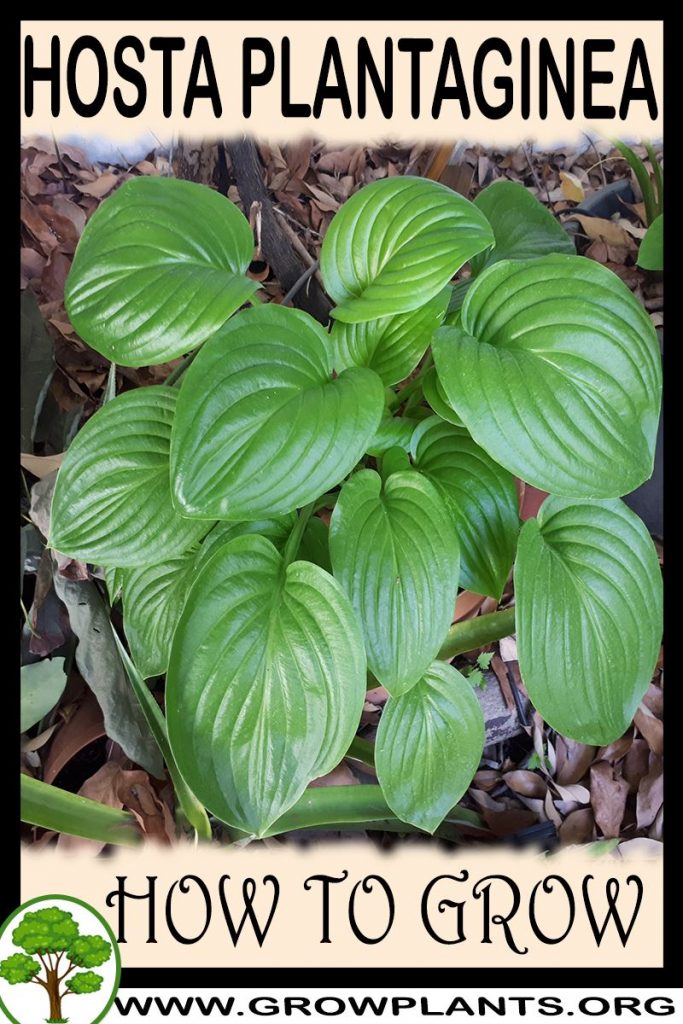
Plant Profile & Key Characteristics
Overview: A clump-forming herbaceous perennial reaching about 50-150 cm (20-60 in), grown chiefly as a shade ornamental for its bold heart-shaped green foliage. It also produces edible young leaves and summer flower spikes.
Quick Specifications
| Specification | Attribute |
|---|---|
| Plant Type / Life Cycle | Perennial (herbaceous) |
| Foliage Type | Deciduous (dies back in winter, re-shoots in spring) |
| Mature Size | 50-150 cm (20-60 in) tall |
| Growth Rate | Moderate |
| Root System | Rhizomatous, clump-forming with fibrous roots |
| Toxicity | Young leaves edible for humans; toxic to dogs and cats (saponins) |
| Hardiness | USDA zone 3-10a |
Growth Form & Structure
- Height & Spread: 50-150 cm (20-60 in) tall in the ground; also grows well in shaded containers and as a houseplant.
- Growth Habit & Form: Low, mounding clump of overlapping basal leaves with flower stems rising above the foliage.
- Lifespan & Maturity: Long-lived perennial; clumps bulk up over a few seasons and can be divided.
Anatomy & Physical Features
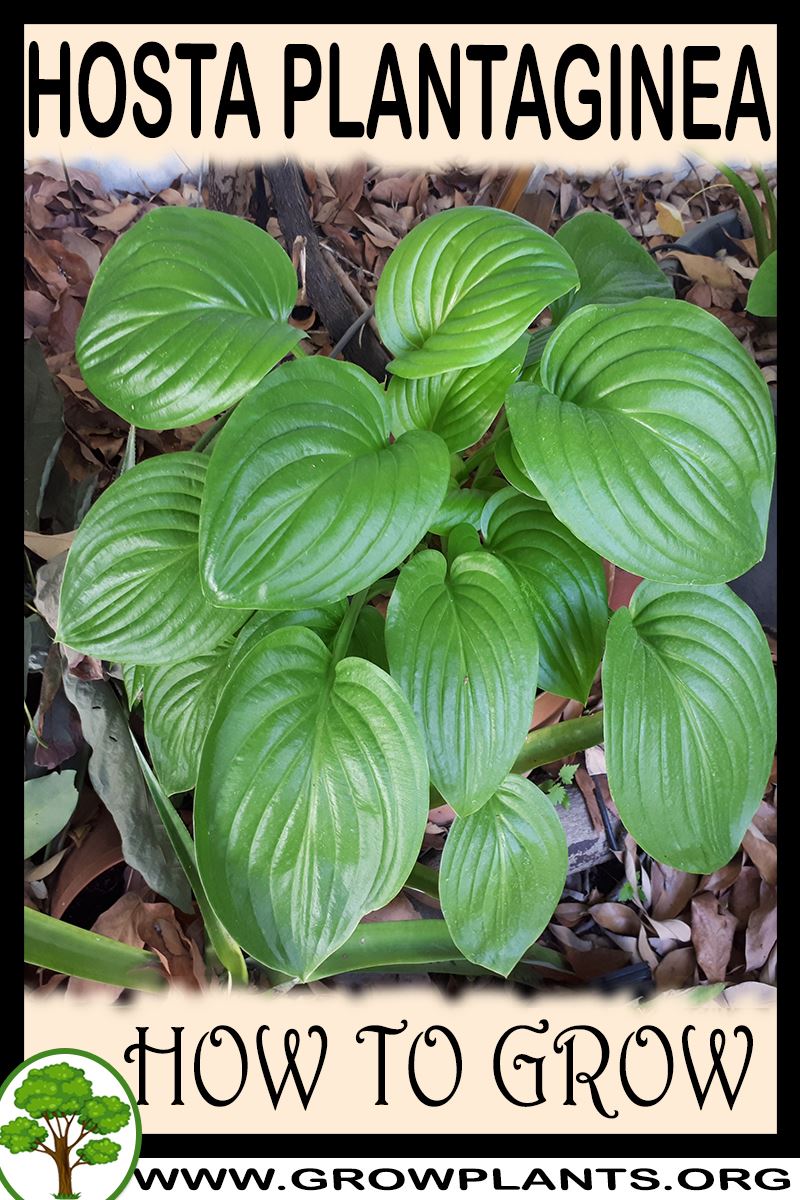
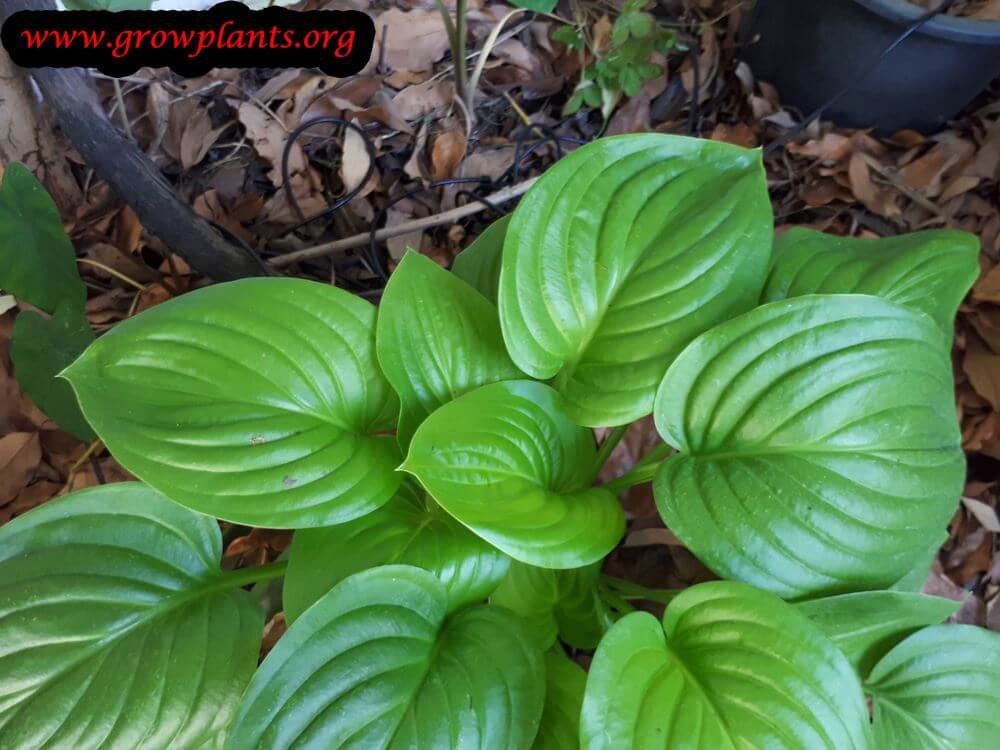
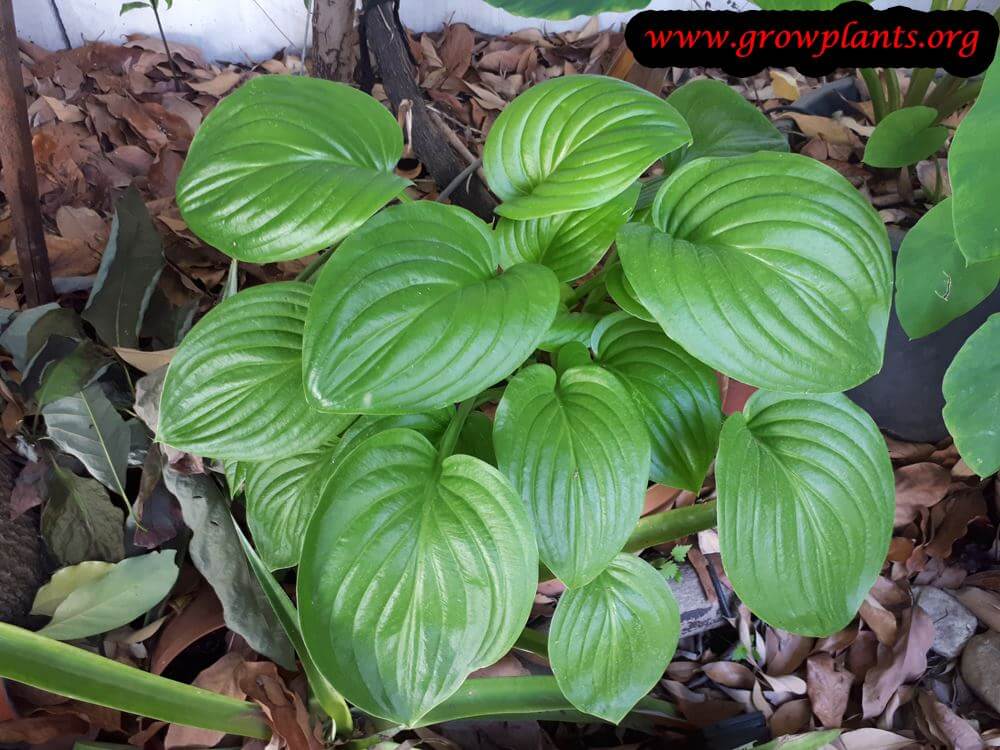
- Leaves & Foliage: Heart-shaped, glossy light-to-dark green leaves with prominent linear veining.
- Flower Characteristics: Trumpet-shaped flowers on tall racemes in summer (full detail in the Bloom section).
Primary Uses & Landscape Value
- Edible Uses: Young, unfurling leaves eaten cooked, raw, in stews or rolled.
- Functional & Ornamental Roles: Prized shade and woodland ornamental, ground-level foliage plant, container and houseplant.
Care Guide: Planting, Soil & Watering
Overview: Hostas are shade-loving foliage perennials that prefer partial to full shade and rich, moist, well-drained soil high in organic matter. They like consistent moisture and thrive in climates with cold winters and warm summers.
Quick Care Requirements
| Requirement | Ideal Condition |
|---|---|
| Planting Season | Spring through autumn |
| Growth Rate | Moderate |
| Soil Type | Rich, moist, humus-rich, well-drained soil |
| Water Need | Moderate to high – keep consistently moist, never bone dry |
Planting & Establishment
- Best Planting Season: Plant from spring through autumn during the growing season, once frost has passed.
- How to Plant:
- Hole Preparation: Dig a hole a little wider than the root ball to loosen the surrounding soil.
- Soil Amendments: Blend plenty of compost or leaf mould into the backfill and mulch to conserve moisture.
- Planting Depth: Set the crown at the soil surface – planting too deep can cause rot, and shallow so the growing eyes sit just at soil level.
- Growth Speed & Expectations: Moderate – clumps expand steadily each year, taking a few seasons to reach full size.
Soil, Watering & Drainage Care
- Soil Mix & Drainage Needs: Rich, humus-rich soil that stays moist yet still drains; add organic matter to hold moisture, and use a moisture-retentive but free-draining mix in pots.
- Watering Schedule & Technique:
- Young / Newly Planted: Keep the soil consistently moist while the crown establishes.
- Established: Water regularly so the soil never dries out fully, especially in summer heat; the large leaves lose a lot of moisture.
- Seasonal Adjustments: More water through warm, dry summer weather; much less once the plant dies back for winter dormancy.
Climate, Light & Hardiness
Hosta plantaginea is a cold-hardy, deciduous shade perennial best known for its fragrant white summer flowers, and it needs a genuinely cold winter dormancy followed by a warm (not scorching) growing season. Half to full shade with soft, ample light is ideal, since direct sun scorches its broad leaves.
Quick Climate Specifications
| Climate Zones | Temperate, subtropical, Mediterranean |
|---|---|
| USDA Hardiness Zones | 3–10a (site data) |
| Frost Tolerance | High (crown and roots; foliage is frost-tender and dies back naturally each autumn) |
| Light Conditions | Half Shade to Full Shade (with ample ambient light); leaves burn in strong sun |
Sunlight & Light Exposure
Optimal Light Setup
Filtered or dappled shade is best; more open shade is fine as long as the light stays soft rather than harsh and direct.
Direct Sun Requirement
Very limited; per site data the leaves burn under strong sun, so protect from prolonged midday exposure.
Shade & Heat Management
In hot-summer regions, give deeper shade and keep the rich soil consistently moist to avoid leaf scorch; cooler climates tolerate a bit more sun.
Best Exposure / Orientation
Shaded borders on the north or east side of structures, or beneath deciduous trees that block the harshest afternoon sun.
Temperature Extremes & Hardiness
USDA Hardiness & Regional Limits
Site data spans zones 3–10a; this species requires a real winter chill to go dormant and perform well the following season, so at the very mild end of its range it may lack the cold rest it prefers even though it can still survive there.
Cold Damage & Winter Protection
Top growth dies back with the first hard frost each autumn as normal dormancy; mulching the crown in the coldest zones protects the roots through winter.
Frost Sensitivity
Emerging spring shoots can be damaged by a late hard frost, though the dormant below-ground crown is very cold-hardy.
Extreme Heat Tolerance
Moderate; the site data's “hot summer” pairing with rich, moist soil indicates good heat tolerance only when moisture is kept consistent.
Wind, Humidity & Microclimate
Humidity Preferences
Prefers moderately humid garden or woodland-edge air.
Dry-Air Tolerance
Poor; hot, dry air combined with sun exposure increases the risk of leaf scorch.
Rainfall & Seasonal Moisture
Adapted to climates with reliable moisture through the growing season; site data calls for consistently moist, rich soil rather than a dry summer period.
Microclimate Recommendations
Shaded beds under deciduous canopy provide summer protection while allowing enough winter light and cold for proper dormancy.
Growing in Pots, Balconies & Indoors
Hostas are handsome, shade-loving foliage plants that the grower confirms can be grown as houseplants, and they take very well to pots on a shaded balcony, porch, or in a bright, sun-free spot indoors. Remember they burn in strong sun and, like most hardy perennials, appreciate a cool winter rest.
Quick Details
- Container Size: A roomy pot to suit the clump – a 5-10 L (1.5-3 gal) container for a young plant, larger as it fills out
- Indoor Suitability: A genuine indoor foliage plant in a bright but sun-free spot; keep out of direct midday sun, which scorches the leaves
- Best Spot: Bright, indirect light indoors; half to full shade outdoors – never hot direct sun
- Soil & Drainage: Rich, moisture-retentive but free-draining mix – Well-aerated, organic-rich potting mix – peat or coir with perlite or vermiculite, enriched with a little compost or humus.
- Watering in Pots: Keep evenly moist through the growing season; pots dry faster than open ground, so check often and never let it bake dry
Indoors & On the Windowsill
- A real houseplant: The grower confirms hostas grow indoors. Give a bright spot away from direct sun, keep the mix moist, and it will unfurl its foliage happily.
- Windowsill growing: A north or east sill or any bright, sun-free window suits it best; strong direct sun through glass will scorch the leaves.
- Winter rest: Hostas are hardy perennials that benefit from a cool dormant period – let the foliage die back and keep them cool and barely moist over winter, then growth returns in spring.
- Keep it safe: Hosta foliage is toxic to cats, dogs and horses, so set pots where pets and small children cannot nibble them.
On a Balcony or Patio
- Light & shelter: A shaded or part-shaded balcony or patio is ideal – morning light with afternoon shade keeps the leaves crisp. Walls and paving reflect heat, so shield it from hot, dry exposure.
- Practicalities: A full pot is heavy once watered – stand it on a saucer-free base with free runoff, and check moisture daily in warm, breezy weather.
Choosing the Pot, Soil & Long-Term Care
- Pot & drainage: Use a pot with strong drainage holes and skip a standing-water saucer, which invites root rot; glazed or plastic pots hold the moisture hostas like better than fast-drying terracotta.
- Potting mix: Well-aerated, organic-rich potting mix – peat or coir with perlite or vermiculite, enriched with a little compost or humus.
- Feeding: Potted plants exhaust their soil faster because nutrients leach out with each watering, so feed a little more often than plants in open ground – a balanced liquid feed through the growing season.
- Repotting: Divide and refresh the mix every couple of years as the clump grows – lift, split, and replant into fresh soil.
Fertilizing & Feeding
This hosta is grown as much for its fragrant white summer flowers as for its glossy deep-green foliage, so feeding aims to support both strong leaf cover and a good bloom without forcing excess soft growth.
Quick Fertilizing Specs
| Feeding Level | Light |
|---|---|
| Main Nutrient Priority | Balanced feed during spring leaf flush; steady balanced feeding continuing toward the summer bloom |
| Best Feeding Period | Spring through the run-up to summer flowering |
| Organic Options | Compost or well-rotted organic matter mixed into the rich, moisture-retentive bed soil this species prefers |
| Soil pH | Tolerates a wide range; performs best in rich, evenly moist garden soil |
| Reduce/Stop Feeding | Ease off once flowering finishes and stop entirely as foliage begins to decline in autumn |
Feeding by Growth Stage
Spring Leaf Flush
Build a full canopy of glossy, deep-green leaves as new growth emerges from the crown
| Nutrient direction | A balanced feed with a nitrogen lean to drive early leaf expansion |
|---|---|
| Timing | As new shoots emerge and unfurl in spring |
| Frequency | A light feeding at emergence, with a possible second light feeding as leaves continue to expand |
| Fertilizer types | A balanced, granular or slow-release perennial fertilizer worked lightly into the soil around the crown |
| Precautions | Keep fertilizer off the crown and foliage, and away from spots where pets forage, since the leaves are toxic to dogs |
Pre-Bloom Buildup and Summer Flowering
Support the energy-intensive production of tall flower scapes and fragrant white blooms without overdoing vegetative growth
| Nutrient direction | A balanced feed, not weighted toward any single nutrient, applied at a lighter rate than the spring feeding |
|---|---|
| Timing | From late spring into summer as flower scapes rise above the foliage |
| Frequency | At most one light feeding through this stage; well-established clumps often need none |
| Fertilizer types | A balanced general-purpose garden fertilizer, or a top-dressing of compost |
| Precautions | Avoid heavy feeding while scapes are elongating, which can encourage floppy growth; water in any application well |
Post-Bloom Decline and Winter Dormancy
Allow the crown to wind down and prepare for dormancy after flowering finishes and foliage begins to fade
| Nutrient direction | None – withhold fertilizer once flowering ends and leaves start to decline |
|---|---|
| Timing | From the end of the bloom period through leaf dieback and winter dormancy |
| Frequency | No feeding at this stage |
| Fertilizer types | No feeding at this stage; the plant is winding down toward dormancy and does not need nutrient input |
| Precautions | Do not fertilize after flowering ends; late-season feeding can push soft growth that is easily damaged by cold |
Nutrient Deficiency Signs & Corrections
Undersized, pale-green leaves and weak shoot growth; because the foliage is normally a deep glossy green, pale new growth is especially noticeable on this species
| Possible causes | Nutrient-poor or exhausted bed soil, Root competition from nearby trees and shrubs, Compacted or waterlogged soil restricting root function, Low organic matter in the planting bed |
|---|---|
| Appears first on | New leaves as they emerge in spring |
| What to check | Leaf color and size compared with prior seasons, Soil drainage and compaction near the crown, Nearby large-tree root competition |
| Possible correction | Work organic matter into the bed and apply a balanced feed during the spring growth flush; address drainage or root competition if present |
Few or no fragrant flower scapes despite healthy-looking foliage
| Possible causes | Insufficient light for a species that still needs some sun to flower well, Nutrient deficiency limiting energy reserves for bloom, Plant still immature or recently divided, Excess nitrogen pushing leaf growth at the expense of flowering |
|---|---|
| Appears first on | Whole clump at the point scapes would normally appear in summer |
| What to check | Hours of direct or filtered sun the bed receives, Age of the clump and time since last division, Recent fertilizer history and nitrogen balance |
| Possible correction | Ensure adequate light, favor a balanced rather than high-nitrogen feed, and allow a divided clump a season to re-establish before expecting a full bloom |
Browning, crisp leaf margins and tips on otherwise adequately watered plants
| Possible causes | Over-application of granular fertilizer placed too close to the crown, Drought stress concentrating salts in the root zone, Poor drainage allowing fertilizer salts to build up, Deicing salt runoff near beds close to walkways |
|---|---|
| Appears first on | Leaf margins, especially on older, outer leaves |
| What to check | Fertilizer placement and rate against label guidance, Recent watering history and soil moisture, Bed proximity to salted walkways or driveways |
| Possible correction | Flush the root zone with water, reduce the fertilizer rate, and shield or relocate beds affected by salt runoff |
Pruning, Training & Seasonal Maintenance
Hosta plantaginea tolerates only light, sanitary pruning — there is no woody framework to shape or renew. The main jobs are removing spent flower stems once the fragrant white blooms fade in summer, and cutting the whole clump of foliage back once it collapses with autumn frost. Neither task affects next year’s flowering, since new shoots emerge from the crown each spring; pruning here is about tidiness and reducing overwintering pest and disease sites, not shaping growth.
Quick Pruning & Maintenance Specs
| Pruning Tolerance | Low – little tissue to remove |
| Primary Pruning Window | Autumn/Winter, after frost collapses the foliage |
| Secondary Maintenance Window | Summer, deadheading spent flower scapes |
| Typical Frequency | 1–2 times a year |
| Main Objective | Sanitary cleanup and deadheading |
| Young Plant Priority | None – let the clump establish |
| Mature Plant Priority | Annual foliage cutback; remove spent flower stems |
| Best Tool Type | Precision snips / bypass secateurs |
| Avoid Heavy Pruning During | Active spring–summer leaf growth |
Pruning by Plant Age & Size
Newly Established
No pruning; remove only torn or damaged leaves while the plant settles in.
Young / Formative
No structural training applies — Hosta has no framework to train. The only task is removing spent flower stalks after bloom.
Mature / Established
Annual autumn cutback of collapsed foliage to near ground level; deadhead flower scapes through summer as blooms finish.
Seasonal Pruning Schedule
Post-Flowering (Summer)
Objective: tidiness and preventing self-seeding. Remove the spent flower scape at its base; leave all foliage. This does not affect next year’s flowering, since new scapes arise from the crown.
Dormant/Winter (after frost)
Objective: sanitary cleanup. Cut all foliage to near ground level once frost has fully collapsed the leaves — this removes overwintering slug and snail habitat and any Hosta Virus X-affected tissue. Do not cut back foliage that is still green and upright; premature removal robs the crown of stored energy for next spring’s growth.
Special Growth to Remove
- Spent flower scapes, cut at the base once blooms finish
- Dead or yellowing leaves, any time
- Fully collapsed foliage after the first hard frost
Container & Small-Space Pruning
Hosta plantaginea grows well in containers. The same cutback and deadheading logic applies; root-bound clumps are renewed by division rather than by pruning. If leaves are being harvested for eating, take only a few young outer leaves at a time instead of shearing the whole plant.
Tools
- Precision snips — deadheading individual flower scapes, removing single damaged leaves
- Bypass secateurs — full autumn cutback of the whole clump’s foliage
Tool Hygiene & Disease Risk
Increased. Hosta Virus X, listed among this plant’s known pest and disease pressures, spreads through sap on cutting tools. Wipe or disinfect blades between plants, and especially between cuts if any leaf shows mottling or streaking.
Cut Placement & Technique
Cut flower scapes close to the base near the crown. Cut collapsed foliage close to ground level without nicking the crown or any emerging spring shoots.
Heavy Pruning & Rejuvenation
Hosta does not need or tolerate hard pruning in the woody sense. A tired-looking clump is rejuvenated by division, not by cutting back live tissue mid-season.
Post-Pruning Care
After the autumn cutback, a light winter mulch is beneficial. After summer deadheading, no special care is needed. Watch new spring growth for slug and snail damage.
Common Pruning Mistakes
- Cutting back green, still-photosynthesizing foliage before frost
- Leaving spent flower stems to self-seed unwanted volunteers
- Skipping tool disinfection when Hosta Virus X symptoms are visible
When NOT to Prune
Do not cut back foliage while it is still green and upright in summer, and avoid cutting during active spring leaf emergence. If harvesting leaves to eat, take only a few young outer leaves rather than removing whole-plant foliage outside the autumn cutback.
Recommended Tools (by task)
- precision_snips — deadheading single flower scapes and removing individual damaged leaves; clean small cuts near the crown
- bypass_secateurs — full autumn foliage cutback of the clump; efficient for many stems at once
- blade_disinfectant — wiping blades between plants, given Hosta Virus X’s sap-transmissible spread
Propagation Guide
Hosta plantaginea is a true species, so seed can reproduce it reasonably well, but only if the parent has not cross-pollinated with other Hosta cultivars growing nearby – a common risk in mixed gardens. Because of that, division is the more dependable method for guaranteeing an identical plant, while seed offers an easy, if less certain, alternative.
Quick Propagation Specs
| Best Propagation Method | Clump/crown division |
| Alternative Methods | Seed |
| Propagation Difficulty | Easy |
| Seed True-to-Type | Usually true-to-type if grown isolated from other Hosta cultivars; variable if cross-pollination with other hostas has occurred |
| Vegetative True-to-Type | Yes |
| Best Propagation Season | Spring, summer, autumn |
Growing from Seed
Seed Handling & Viability
Sow seed as fresh as practical, since viability declines the longer it is stored.
Sowing Season
Spring, summer, or autumn, matching this plant’s own planting season.
Germination Conditions
Cool, consistently moist conditions with bright but indirect light suit germination; avoid hot, drying conditions.
Seedling Care
Grow seedlings on in the half-shade to full-shade this plant prefers, and expect some variation among seedlings if other hostas have been grown and flowering nearby.
Division, Offsets, Pups & Suckers
Divide established clumps in spring as new growth emerges. Lift the clump and use a clean, sharp knife or spade to cut through the crown so each division keeps several growth eyes (shoots) and a good portion of roots – very small single-eye pieces are slower to establish and less reliable. Replant divisions promptly at their original depth in rich, consistently moist soil, and water them in well until new growth confirms they have taken.
Bloom & Edible Flower Guide
Quick Details
- Bloom Season: Summer
- Flower Appearance: Large, fragrant, white trumpet-shaped flowers along an upright stem (raceme)
- Edibility: The flowers are edible – used in East Asian cooking – though note that hostas are toxic to cats and dogs
Detailed Blooming Overview
Among hostas, Hosta plantaginea is special for its flowers: large, pure white trumpets that open toward evening and carry a strong, sweet fragrance – unusual in a group grown mostly for foliage. The flowers and young shoots are traditional food in parts of East Asia, though the plant is toxic to cats and dogs.
Flower Characteristics
- Large white trumpet-shaped flowers, sweetly fragrant, opening toward evening
- Carried in a loose upright cluster (raceme) above the heart-shaped leaves
Bloom Care & Thinning
- After flowering: Cut the spent flower stem down to the base to keep the clump tidy.
- Pollination: The evening fragrance and white color suit night-flying moths, and bees visit by day.
- In the kitchen: The unopened buds and flowers are used in cooking; note the plant is toxic to dogs and cats.
Fruit & Uses
The young leaves of Hosta plantaginea are the edible part of this plant, harvested and eaten as a leaf vegetable. They can be eaten raw while young and tender, or cooked — rolled, stewed, or added to other dishes — as the heart-shaped leaves mature.
Quick Edible Specs
| Edible Parts | Young leaves, harvested from the base of the plant |
|---|---|
| Main Use(s) | Culinary — leaf vegetable |
| Eaten Raw or Cooked | Both — raw when young and tender, cooked (stewed) as leaves mature |
| Preparation Required | None for young leaves eaten raw; cooking softens older leaves |
| Harvest Season | Most of the year, once the plant is established |
| Time to First Harvest | Once the plant is established and producing new growth (qualitative) |
| Storage | Best used fresh, as with other leafy greens |
| Safety/Toxicity Caveat | Reported toxic to dogs — keep pets from grazing on the leaves; this is an animal-safety note, not a human edibility concern |
Leaves & Greens
The leaves are heart-shaped, green, with a linear vein pattern ranging from light to dark green. Once the plant is established, young leaves can be harvested from the base; take them while still tender, since older leaves toughen with age. In the kitchen the leaves are used rolled, cooked, eaten raw, or added to stews, and harvest can continue through most of the growing season.
Preparation, Uses & Safety
Young, tender leaves need no special preparation and can be eaten raw; older leaves are best cooked (stewed or rolled and cooked) to soften their texture. The plant is noted as toxic to dogs, so keep pets away from it — this caution applies to animals, not to the prepared leaves eaten by people.
Pests, Diseases & Troubleshooting
Overview: Hostas are shade-loving foliage perennials whose lush, tender leaves make them the classic target of slugs and snails – by far the signature pest. They are otherwise durable, but a few soil and root pests, browsing mammals, and one incurable virus warrant attention. The fragrant plantain lily has large, glossy, comparatively sun-tolerant leaves, but its late, tender flower buds and lush foliage still draw slugs and browsers. Management is cultural and organic first: night patrols, barriers, good hygiene and strict tool sanitation.
Quick Troubleshooting Overview
| Issue / Pest | Main Symptom | Primary Solution |
|---|---|---|
| Slugs & snails | Irregular holes and shredded, ragged leaves with slime trails, worst on new growth | Hand-pick after dark, remove hiding places, ring with grit/copper, use iron-phosphate bait |
| Hosta Virus X (HVX) | Mottled blue/green ink-bleed patterns, lumpy or puckered tissue | No cure – dig and destroy the plant; disinfect tools between plants |
| Vine weevil | Notched leaf margins (adults) with sudden wilt/collapse from root-eating grubs | Check rootball, apply beneficial nematodes, remove adults at night |
| Crown / petiole rot | Base of petioles turns brown and mushy; white fungal threads and mustard-seed bodies | Improve drainage, thin crowns, remove infected tissue and surrounding soil |
| Deer & rabbits | Whole leaves or shoots grazed off cleanly overnight | Fencing, scent/repellents, rotate deterrents |
| Foliar nematode | Brown wedges between leaf veins, spreading upward in wet conditions | Remove affected leaves, avoid overhead watering, discard heavily infested clumps |
Common Pests & Management
- Slugs & snails (Deroceras reticulatum, Cornu aspersum):
- Symptoms: The defining hosta pest: rasped holes and torn, tattered leaves, silvery slime trails, damage heaviest on emerging spring shoots and thin-leaved cultivars. Damage looks like chewing but without the clean cuts of caterpillars.
- Prevention & Control: Patrol at night with a torch and hand-pick; clear mulch, boards and debris where they shelter; surround crowns with sharp grit, crushed shell or copper tape; encourage ground beetles, frogs and birds; use iron-phosphate pellets (pet-safe) rather than metaldehyde; beer traps help monitor. Thick, heavily textured or blue cultivars resist better.
- Vine weevil (Otiorhynchus sulcatus):
- Symptoms: Adults chew characteristic notches from leaf edges at night; the real damage is from creamy C-shaped grubs that devour roots and crown, causing sudden wilting and easy lifting of the plant – especially in containers.
- Prevention & Control: Inspect and drench the rootball with entomopathogenic nematodes (Steinernema/Heterorhabditis) in warm soil; hand-collect flightless adults at night; refresh container compost; avoid peaty mixes that favour grubs.
- Cutworms (Noctuidae (Agrotis spp.)):
- Symptoms: Night-feeding caterpillars sever young shoots at ground level and chew ragged holes; plants may topple or emerge stunted in spring.
- Prevention & Control: Search the top few centimetres of soil around damaged shoots and remove larvae; keep beds weed-free; cardboard collars protect emerging crowns; Bacillus thuringiensis or nematodes for persistent pressure.
- Foliar (leaf) nematode (Aphelenchoides fragariae):
- Symptoms: Microscopic worms move in water films and feed inside leaves, producing brown to black wedge-shaped bands trapped between the veins, progressing up the plant in wet weather.
- Prevention & Control: Remove and bin affected leaves promptly; water at the base only and avoid wetting foliage; space plants for airflow; discard and do not divide badly infested clumps; there is no effective home chemical cure.
- Deer & rabbits:
- Symptoms: Hostas are highly palatable to deer and rabbits, which graze whole leaves and shoots, often overnight, sometimes clearing a clump to the ground.
- Prevention & Control: Physical fencing is the only reliable defence; rotate scent-based repellents, motion deterrents and interplanting with less palatable species; container growing near the house reduces access.
Diseases & Fungal Issues
- Hosta Virus X (HVX) (Potexvirus):
- Symptoms: The most important hosta disease: mottled, blotchy blue-on-green ‘ink-bleed’ patterns following the veins, lumpy or collapsed tissue, and stunting. Symptoms are often mistaken for attractive variegation, which spreads it in the trade.
- Treatment & Management: Incurable – dig up and destroy affected plants (do not compost). The virus spreads in sap on knives, dividing tools and hands, so disinfect blades between every plant and buy from clean stock; do not propagate suspect plants.
- Crown / petiole rot (Sclerotium rolfsii (Athelia rolfsii)):
- Symptoms: Petiole bases turn brown, soft and slimy and outer leaves yellow and topple; a white fungal web and tan, mustard-seed-sized sclerotia appear at the soil line, especially in warm, wet, mulched conditions.
- Treatment & Management: Remove and destroy affected crowns plus a margin of surrounding soil; improve drainage and airflow; keep mulch off the crown; avoid overhead watering; do not replant hostas in the same spot without renewing soil.
- Anthracnose (Colletotrichum spp.):
- Symptoms: Large, irregular tan spots with darker margins that later tear and drop out, giving a shot-hole look, worst in warm humid weather and on stressed plants.
- Treatment & Management: Remove infected leaves and autumn debris; water at the base and keep foliage dry; improve spacing and airflow; a copper-based fungicide can protect valued plants under persistent pressure.
- Grey mould (Botrytis cinerea):
- Symptoms: Brown flecks and fuzzy grey mould on leaves and flower stalks in cool, damp, crowded conditions or on frost-damaged tissue.
- Treatment & Management: Remove dead and dying material promptly, thin for airflow, avoid wetting foliage in the evening; rarely needs more than good hygiene.
Growing Difficulties & Abiotic Problems
- Leaf scorch & sun stress:
- Cause & Symptoms: Bleached, brown, crispy leaf edges and faded colour where hostas get too much direct sun or dry out – variegated and blue types burn most.
- Correction Strategy: Site in dappled to full shade, keep soil evenly moist with an organic mulch, and water deeply in heat; morning sun is tolerated better than harsh afternoon sun.
- Spring frost damage:
- Cause & Symptoms: Newly emerged shoots and unfurling leaves blacken and collapse after a late frost.
- Correction Strategy: Site away from frost pockets, delay removing winter mulch, and cover emerging crowns with fleece when late frosts threaten.
- Drought & establishment stress:
- Cause & Symptoms: Wilting, browning margins and reduced size where roots are dry or competing with tree roots.
- Correction Strategy: Mulch to conserve moisture, water deeply during dry spells, and improve soil with compost; divide congested clumps to restore vigour.
What Helps – Products & Tools
Reach for cultural tools first: iron-phosphate slug pellets, copper tape and sharp grit barriers, beer traps for monitoring, and beneficial nematodes for vine weevil and cutworm grubs. For foliar and rot diseases, sanitation and airflow do most of the work, backed by a copper-based fungicide on valued plants. Keep a bottle of tool disinfectant beside your knives to stop HVX spread, and use diatomaceous earth or wildlife-safe repellents for browsers.