Plant Profile & Key Characteristics
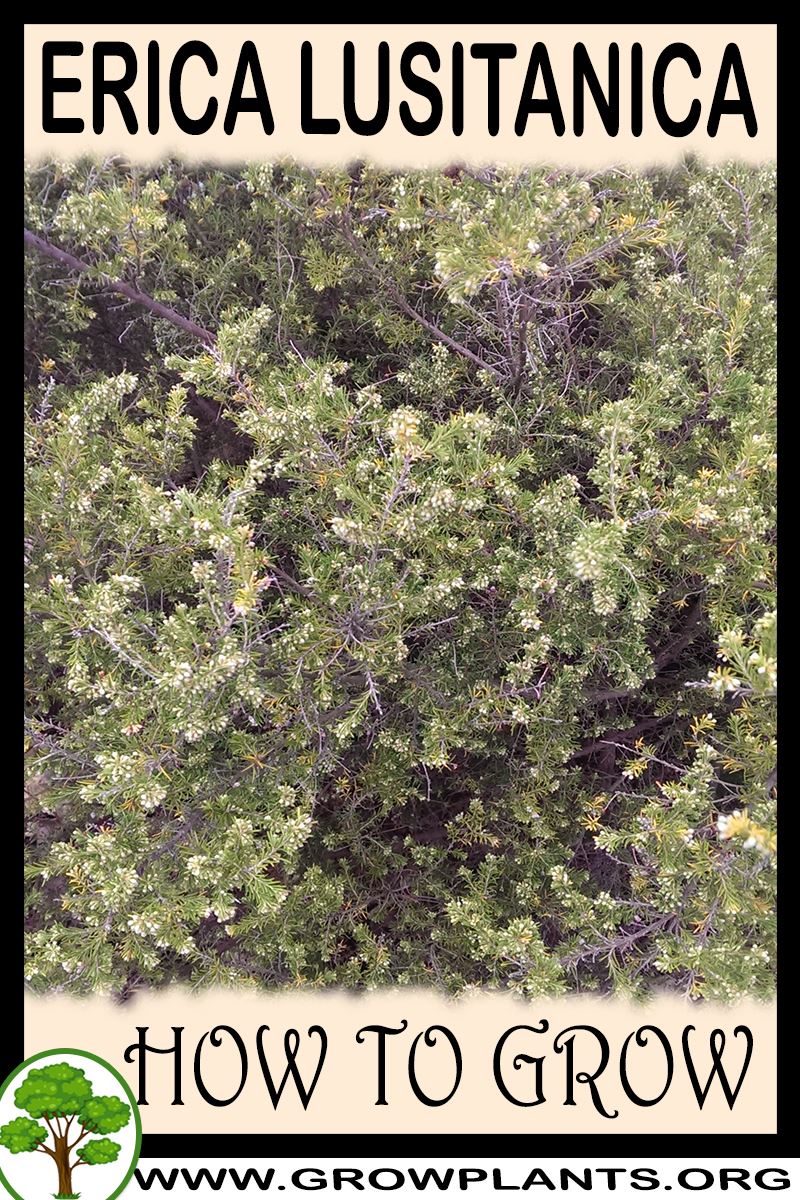
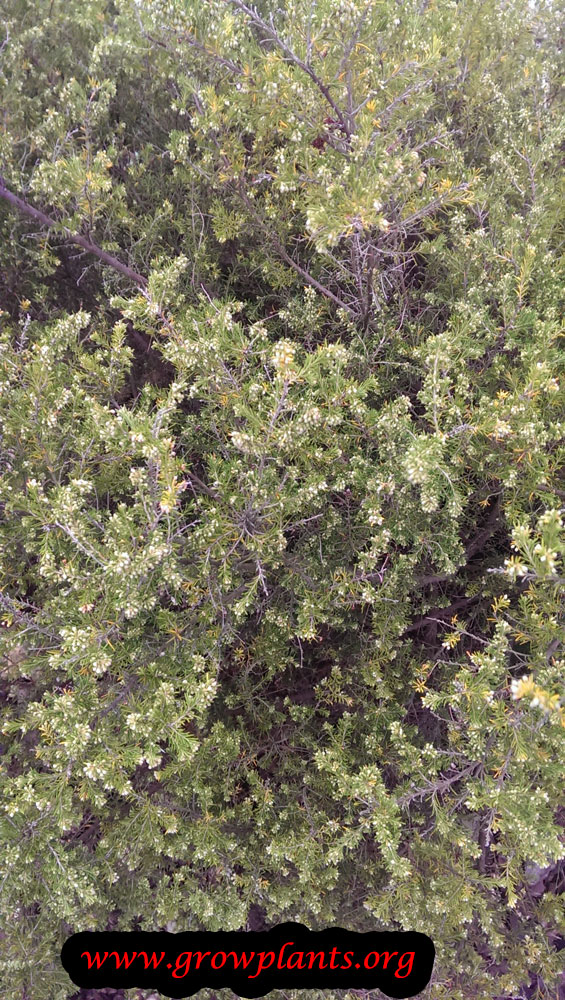
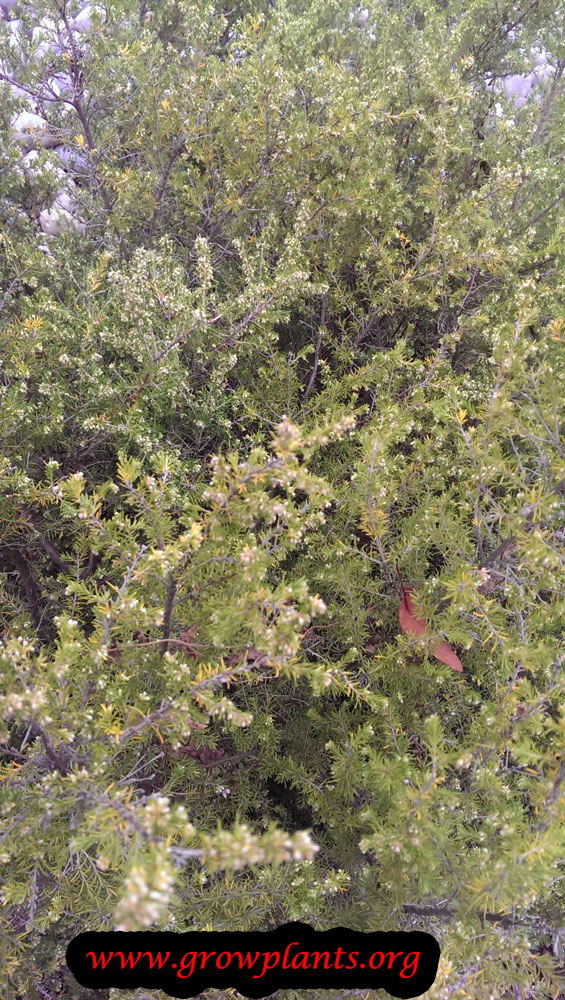
Overview: Erica lusitanica (Spanish heath) is a tall evergreen shrub reaching 0.5-5 m (2-15 ft), with fine needle-like foliage and white-to-cream bell-shaped flowers. It is grown as an ornamental, with some cultivars suited to pots.
Quick Specifications
| Specification | Attribute |
|---|---|
| Plant Type / Life Cycle | Perennial (shrub) |
| Foliage Type | Evergreen |
| Mature Size | 0.5-5 m (2-15 ft) tall |
| Growth Rate | Moderate to fast |
| Root System | Fine, fibrous and shallow (needs acid soil) |
| Toxicity | Non-toxic |
| Hardiness | USDA zone 8-10 |
Growth Form & Structure
- Height & Spread: 0.5-5 m (2-15 ft) tall as a large upright shrub or tree-heath; also grown in containers.
- Growth Habit & Form: Upright, densely branched evergreen shrub with fine needle-like foliage.
- Lifespan & Maturity: Long-lived perennial.
Anatomy & Physical Features
- Leaves & Foliage: Tiny (1-2 mm) needle-like green leaves along the stems.
- Flower Characteristics: Massed small bell- to trumpet-shaped flowers in white to cream, sometimes pink-tinged, at the stem tips (full detail in the Bloom guide).
Primary Uses & Landscape Value
- Functional & Ornamental Roles: Grown as an ornamental flowering and screening shrub; some cultivars grown in containers.
Care Guide: Planting, Soil & Watering
Overview: Erica lusitanica (Spanish heath) is a compact, acid-loving evergreen shrub that thrives in cool climates, full sun to part shade, and moist but sharply drained, lime-free soil. It dislikes both drying out and alkaline ground, so an open, organic, acidic mix keeps it healthy.
Quick Care Requirements
| Requirement | Ideal Condition |
|---|---|
| Planting Season | Year-round in mild climates |
| Growth Rate | Moderate to fast |
| Soil Type | Moist but well-drained, acidic, organic (lime-free) |
| Soil pH | Acidic – the source specifies acid, well-drained soil |
| Water Need | Moderate to high – keep evenly moist, not waterlogged |
Planting & Establishment
- Best Planting Season: Plant year-round in mild climates, or in spring where winters are cold.
- How to Plant:
- Hole Preparation: Dig a hole about twice the width of the root ball and no deeper; heathers are shallow-rooted and like their roots near the surface.
- Soil Amendments: Work in plenty of acidic organic matter such as composted bark or ericaceous compost to keep the soil open, moist and lime-free.
- Planting Depth: Plant slightly deep so the lowest foliage almost meets the soil, but keep the crown clear; firm gently and mulch.
- Growth Speed & Expectations: Growth is moderate to fairly fast; plants knit together into dense, weed-suppressing cover.
Soil, Watering & Drainage Care
- Soil Mix & Drainage Needs: The soil must be acidic and free-draining yet moisture-retentive; in pots use ericaceous (lime-free) potting mix with added grit or perlite.
- Watering Schedule & Technique:
- Young / Newly Planted: Keep the root zone consistently moist through the first year, ideally with rainwater, since heathers dislike hard, limey water.
- Established: Water regularly so the soil never fully dries; a mulch helps hold moisture around the shallow roots.
- Seasonal Adjustments: Water more in summer heat and less in cool, damp winters.
Climate, Light & Hardiness
Erica lusitanica (Spanish heath) suits temperate, Mediterranean, and mild subtropical climates, growing best in full sun to half shade with cool, humid conditions and acid, well-drained soil. It is noticeably less cold-hardy than many heaths, needing a milder winter than Erica carnea.
Quick Climate Specifications
| Climate Zones | Temperate, Mediterranean, mild subtropical |
| USDA Hardiness Zones | Approximately 8–10 |
| Approx. Survival Minimum | Established plants typically tolerate briefly down to roughly −7 to −12°C (10 to 20°F) at the cold edge of their range |
| Frost Tolerance | Moderate |
| Light Conditions | Full sun to half shade |
| Wind Tolerance | Moderate |
Sunlight & Light Exposure
Optimal Light Setup
Full sun to half shade gives the best flowering and compact growth.
Shade & Heat Management
Half shade is useful in hotter parts of its range; consistent humidity matters more than shading from heat.
Best Exposure / Orientation
Open, well-drained sites with good air movement suit this shrub; a small number of cultivars can also be grown as houseplants, but most culture is outdoors.
Temperature Extremes & Hardiness
USDA Hardiness & Regional Limits
Reliable outdoors in zones 8–10; needs a milder winter than cold-climate heaths such as Erica carnea.
Cold Damage & Winter Protection
Care notes specifically flag "cold winter" as a stress factor for this species - in the colder part of its range, siting against a warm wall or other wind-sheltered spot reduces winter stress.
Frost Sensitivity
Moderately frost-sensitive; less hardy than many other heaths, so plant only where winters stay comparatively mild.
Extreme Heat Tolerance
Good in Mediterranean and mild-subtropical summer heat provided humidity and drainage needs are met.
Wind, Humidity & Microclimate
Humidity Preferences
Prefers consistent humidity, as reflected in its care notes (cold winter, humidity, acid soil).
Wind Tolerance
Moderate; benefits from some shelter in exposed, windy sites.
Rainfall & Seasonal Moisture
Suited to climates with reasonably even year-round moisture rather than prolonged drought.
Microclimate Recommendations
A sheltered, well-drained site with acid soil moderates its two main stresses - hard winter cold and drying conditions.
Growing in Pots, Balconies & Indoors
Portuguese heath (Erica lusitanica) is a tall, tree-like heath that can reach several metres. The grower does not rate it as a houseplant; it grows well in a large container while young, but in time it wants a big tub or a spot in the ground. It makes a striking patio or courtyard plant.
Quick Details
- Container Size: A large, deep container while young; pot up as it grows – long term it needs a big tub or open ground
- Indoor Suitability: Not a houseplant; it is an outdoor shrub
- Best Spot: Full sun to half shade
- Soil & Drainage: Acidic, free-draining ericaceous mix – potting mix or peat with perlite; avoid lime
- Watering in Pots: Keep evenly moist – a large plant in a pot drinks quickly in warm weather; never waterlogged
Indoors & On the Windowsill
- Houseplant limits: The grower marks it as not an indoor plant – it is a large, light-hungry shrub.
- Container only while young: Enjoy it in a big pot for a few years, then plant it out or move it to a large tub as it gains size.
- Cold-climate note: Pot roots are more exposed than in the ground – shelter the container in a hard freeze.
On a Balcony or Patio
- Light & wind: Give it an open, bright spot; walls, railings and paving throw back heat and wind, so pots dry out fast – check moisture often in warm weather.
- Practicalities: Stand pots where drainage water can escape, and shelter taller stems from strong gusts.
Choosing the Pot, Soil & Long-Term Care
- Pot & drainage: A large pot with strong drainage holes; skip a standing-water saucer to avoid root rot.
- Potting mix: Aerated, acidic ericaceous mix – peat or coir with perlite.
- Feeding: A light acid/ericaceous feed through the growing season, as pots leach nutrients faster than open ground.
- Repotting: Pot up or refresh the mix every couple of years and prune to keep the size in check.
Fertilizing & Feeding
Spanish heath is a vigorous, fast-growing shrub that can become weedy in favorable sites, so feeding is geared toward getting it established rather than pushing ongoing growth.
Quick Fertilizing Specs
| Feeding Level | Moderate while establishing, then light |
|---|---|
| Main Nutrient Priority | Balanced to nitrogen-leaning feeding while establishing; ease back once the shrub is vigorous and spreading well on its own |
| Best Feeding Period | Spring into summer, ahead of and during the main bloom period |
| Soil pH | Acidic soil is preferred; avoid alkaline sites |
| Organic Options | Acidic compost or leaf mold worked into the root zone |
| Micronutrients | Iron, common in acid-loving shrub feeds, supports deep green foliage in marginal soils |
| Reduce/Stop Feeding | Taper feeding back once the shrub is well established, since vigorous growth can spread beyond its intended area in favorable sites |
Feeding by Growth Stage
Establishment & Spring–Summer Growth
Get a newly planted shrub rooted in and build the framework of stems and foliage.
| Nutrient direction | Balanced feeding with a nitrogen lean while the shrub is establishing and building new growth |
|---|---|
| Timing | Spring into summer, from planting through the first couple of growing seasons |
| Frequency | Light, regular feeding through the growing season while establishing; reduce once the shrub is filling out on its own |
| Fertilizer types | A balanced, acid-forming shrub fertilizer with a nitrogen lean during establishment, Acidic compost or leaf mold worked into the planting area |
| Routine trace nutrients | iron, manganese |
| Precautions | Avoid overfeeding once established – this species grows fast and can become invasive in favorable, well-fed conditions |
Extended Summer-Through-Winter Bloom
Support flowering across the shrub’s long summer-into-winter bloom season without encouraging further spread.
| Nutrient direction | Light, balanced feeding, tapering off as the shrub matures and self-sustains |
|---|---|
| Timing | Summer through autumn and into winter, across the extended bloom period |
| Frequency | Established plants generally need little to no additional feeding once they are flowering well on their own |
| Fertilizer types | A light, balanced acid-forming feed only if growth or flowering looks weak; mature plants often need none |
| Routine trace nutrients | iron |
| Precautions | Rarely needs feeding once mature; extra fertility mainly encourages more vigorous, potentially weedy growth rather than better bloom |
Nutrient Deficiency Signs & Corrections
Yellowing between the leaf veins on newer growth while veins stay green
| Possible causes | High or neutral soil pH reducing iron availability, Poor drainage or waterlogged roots limiting nutrient uptake, Naturally alkaline or over-limed soil |
|---|---|
| Appears first on | Newest growth at branch tips |
| What to check | Soil pH and drainage, Recent liming or alkaline irrigation water, Root health and signs of waterlogging |
| Possible correction | Correct soil pH toward acidic conditions and apply a chelated iron product per its label |
Pale, yellow-green foliage and unusually slow growth for this normally vigorous species
| Possible causes | Low soil nitrogen or nutrient-poor sandy soil, Root competition from surrounding vegetation, Compacted or waterlogged roots limiting uptake |
|---|---|
| Appears first on | Older, lower foliage first, spreading to the whole plant |
| What to check | Overall soil fertility and organic matter content, Root competition around the planting area, Drainage and root condition |
| Possible correction | Apply a balanced acid-forming fertilizer during active growth and improve soil organic matter |
Wilting, dieback, or dropped foliage despite regular watering
| Possible causes | Waterlogged, poorly drained soil promoting root rot, Fungal root disease unrelated to nutrition, Excess fertilizer salts stressing roots |
|---|---|
| Appears first on | Individual branches or whole plant sections |
| What to check | Soil drainage and compaction, Watering frequency relative to soil dry-down, Fertilizer application history |
| Possible correction | Improve drainage, avoid overwatering, and avoid fertilizing stressed or waterlogged plants until they recover |
Pruning, Training & Seasonal Maintenance
Erica lusitanica (Spanish heath) grows far larger than most heaths – 0.5–5m – so unlike a low ground-hugging heather it behaves more like a proper shrub and benefits from real size control, not just a cosmetic shear. Pruning tolerance is moderate; the safest window is spring/summer, after the summer-autumn-winter flowering run has finished and before it sets buds for the next cycle.
Quick Pruning & Maintenance Specs
| Pruning Tolerance | Moderate (live growth only, not old wood) |
| Primary Pruning Window | Spring/Summer, after the winter-into-spring end of flowering |
| Typical Frequency | Once a year, more often for size control on vigorous specimens |
| Main Objective | Size & shape control; remove dead wood |
| Young Plant Priority | Light shaping as it develops its multi-stemmed form |
| Mature Plant Priority | Annual post-bloom size-control cut to prevent an oversized, leggy base |
| Best Tool Type | Bypass secateurs for shaping; loppers for thicker older stems |
| Avoid Heavy Pruning During | The active summer-autumn-winter flowering run; cutting into old bare wood at any time |
Pruning by Plant Age & Size
Newly Established
Remove only damaged growth while the plant establishes.
Young / Formative
Because it can grow into a substantial multi-stemmed shrub, light structural shaping in youth is worthwhile here – unlike the smaller ground-hugging heaths in this group, there is a real framework decision to make as it develops multiple leaders.
Mature / Established
Annual post-bloom shear plus size control keeps a mature 1–5m specimen from becoming leggy or outgrowing its space; remove dead wood at the same time.
Seasonal Pruning Schedule
Post-Flowering: Objective: control size and renew flowering wood. Remove: spent flower wood and up to about a third of the past season’s growth, cutting into live tissue. Do not remove: old bare wood, which won’t reshoot. Expected response: renewed flowering growth ahead of the next summer-to-winter bloom. Flowering impact: pruning right after the winter-end of bloom, before new flowering growth starts, avoids cutting off the coming season’s flowers.
Flowering & Fruiting Wood
Flowers form on the past season’s growth and open across summer into winter. Pruning after that full cycle ends in spring, and before new flowering growth is made, avoids removing the coming season’s buds.
Structural Pruning & Training
Height & spread control is a real, recurring task on this larger species – cut back the past season’s growth by up to a third annually to prevent a bare, woody base, but never cut into fully bare old wood.
Special Growth to Remove
Dead stems, and – because this species is flagged as invasive in parts of its introduced range – spent flowers/seed heads are worth removing promptly where self-seeding into wild margins is a concern; bag and dispose of prunings and flowering material rather than leaving them to root or seed nearby.
Container & Small-Space Pruning
Container growing is possible, but because of its larger ultimate size, potted specimens need more frequent size-control pruning than the low heaths in this group to stay in scale, paired with a regular repotting cycle.
Tools
Bypass secateurs for routine shaping cuts; loppers for the thicker stems found on a mature 1–5m specimen – a genuinely bigger cut than the smaller heaths in this batch ever need.
Tool Hygiene & Disease Risk
Routine – no specific pathogen is flagged for this species; ordinary clean tools are adequate.
Cut Placement & Technique
Make thinning/heading cuts into live green-to-lightly-woody growth just above a healthy bud; avoid cutting into fully bare gray/brown wood, which won’t reshoot.
Heavy Pruning & Rejuvenation
Limited tolerance: light-to-moderate annual size control is fine, but a single hard cutback into old bare wood is not reliably successful on this genus. Where a specimen has become very leggy, renew it gradually over two seasons – cutting back by around a third each time, always into live wood – rather than one hard cut.
Post-Pruning Care
No extra feeding needed; water normally. Because this species can be locally invasive, dispose of prunings away from waterways or wild margins rather than composting them where seed viability is a concern.
Common Pruning Mistakes
Cutting into old bare wood on a leggy specimen expecting full regrowth; treating it like a low ground-hugging heath and skipping size control until it outgrows its space; composting or dumping prunings where the species is a recognized weed risk.
When NOT to Prune
During the active summer-autumn-winter flowering run if the display is wanted; avoid hard cuts right before the next flowering flush begins.
Recommended Tools (by task)
- bypass_secateurs – routine shaping cuts on younger growth.
- loppers – thicker stems on mature 1–5m specimens.
Pruning Troubleshooting
| Problem | Possible Cause | What to Check | Corrective Action |
| Leggy, bare-based shrub | No size control over the years, or cuts into old wood | Foliage only at stem tips, gappy below on a plant up to 5m tall | Begin gradual seasonal size-control cuts into live wood; avoid a single hard cutback into old wood |
| Unwanted seedlings nearby | Self-seeding from an uncontrolled, invasive-prone specimen | Volunteer seedlings in adjacent beds or wild margins | Remove spent flower wood promptly and dispose of cuttings away from open ground |
Propagation Guide
Erica lusitanica (Spanish heath) roots readily from semi-ripe stem cuttings, the easiest and most controllable way to increase it. The site notes this species can be invasive, and it seeds itself freely in mild climates, so in regions where it is considered a weed risk, growers should favor cuttings and avoid letting seed heads mature and disperse; overall difficulty is easy.
Quick Propagation Specs
| Best Propagation Method | Semi-ripe stem cuttings |
| Alternative Methods | Seed – self-sows readily; use with caution where the species is considered invasive |
| Propagation Difficulty | Easy |
| Seed True-to-Type | Usually true-to-type for the species |
| Vegetative True-to-Type | Yes |
| Best Propagation Season | Late spring to summer for cuttings; site notes planting is possible all year |
| Cutting Rooting Time | Typically several weeks under warm, humid conditions |
Growing from Seed
Seed Handling & Viability
Erica seed is very fine and dust-like; store cool and dry.
Sowing Depth & Orientation
Surface-sow and press in lightly rather than burying.
Germination Time
Typically slow and can be uneven. Because this species self-seeds freely and the site flags it as invasive, avoid sowing near wild or natural areas in mild climates.
Stem Cuttings
Cutting Type
Short semi-ripe (partially hardened, non-flowering) stem tips.
Best Timing
Late spring into summer, as new growth firms up.
Rooting Setup
A free-draining, moisture-retentive medium (peat or peat-substitute with sand or perlite), kept humid.
Rooting Hormone
Optional; can help consistency but isn’t required.
Rooting Time
Typically several weeks under warm, humid conditions.
Bloom & Flower Guide
Quick Details
- Bloom Season: Summer, autumn and winter
- Flower Appearance: Tiny 1-3 mm bell- to trumpet-shaped flowers, white to cream sometimes tinged pink, clustered at the stem tips
- Edibility: Grown as an ornamental and a nectar plant for bees, not as a food plant
Detailed Blooming Overview
Spanish heath is valued for its very long, pale flowering season, often opening its buds from late in the year and carrying white to cream bells over a long spell into and through winter. As with other heaths, the flowers are tiny but produced in great numbers all along the fine stems, giving a soft, feathery mass of bloom that bees appreciate.
Flower Characteristics
- Very small flowers, 1-3 mm, from a closed bell to a little trumpet.
- White to cream, sometimes with a pinkish tinge, borne at the stem tips.
Bloom Care & Thinning
- After flowering: Shear over lightly once the blooms fade to keep the plant compact, avoiding cuts into bare old wood.
- Soil for good bloom: Flowers best in an open, acidic, free-draining soil.
Bloom Health & Protection
- Grey mould (Botrytis): Spent flowers can turn mouldy in humid, still air; improving airflow and shearing off faded blooms keeps it in check.
Pests, Diseases & Troubleshooting
Overview: Heathers (Erica) are wiry, acid-loving heathland shrublets that are generally quite pest-free; their real vulnerabilities are cultural and pathological – deadly Phytophthora root rot, lime-induced chlorosis, grey mould in dense damp growth, and drought or waterlogging – with only occasional mites, scale or vine weevil. Acidic, sharply drained soil and airflow are the whole secret.
Quick Troubleshooting Overview
| Issue / Pest | Main Symptom | Primary Solution |
|---|---|---|
| Phytophthora root rot | Greying/browning patches, wilting, plant death | Sharp drainage; acidic mix; remove and destroy plant |
| Lime-induced chlorosis | Yellow leaves, green veins, weak growth | Ericaceous soil; iron chelate; rainwater |
| Grey mould (Botrytis) | Fuzzy grey mould on dense, damp foliage/flowers | Improve airflow; remove affected growth |
| Spider mites | Stippling/bronzing in hot, dry, sheltered spots | Rinse; raise humidity; insecticidal soap |
| Vine weevil (containers) | Notched leaves; grubs eat roots; sudden collapse | Nematodes; check root ball |
Common Pests & Management
- Spider mites (Tetranychus urticae / Oligonychus spp.):
- Symptoms: Fine stippling, dull bronzing and faint webbing on the tiny leaves, worst on plants grown too hot, dry or sheltered, or indoors.
- Prevention & Control: Keep plants cool and the root zone moist, hose the foliage, and improve airflow; treat persistent mites with insecticidal soap or a light horticultural oil.
- Vine weevil (Otiorhynchus sulcatus):
- Symptoms: Chiefly a container problem: adults notch leaf edges at night while C-shaped grubs eat the roots, causing sudden wilting and collapse of an apparently healthy plant.
- Prevention & Control: Check the root ball of pot-grown heathers, drench with parasitic nematodes in warm, moist compost to kill grubs, and hand-pick or trap adults at night.
- Scale & mealybugs (Coccidae / Pseudococcus spp.):
- Symptoms: Small brown scales or white cottony mealybugs on stems, with honeydew and sooty mould; occasional, mainly on stressed or indoor plants.
- Prevention & Control: Wipe or scrape off, and apply horticultural oil or insecticidal soap; keep plants healthy and uncrowded.
Diseases & Fungal Issues
- Phytophthora root rot / heather wilt (Phytophthora cinnamomi):
- Symptoms: The most serious heather disease and a common killer: foliage suddenly greys, browns or wilts in patches and the plant dies, as the soil-borne fungus rots the roots in wet or poorly drained ground. Whole plantings can be lost.
- Treatment & Management: There is no cure once a plant is infected – remove and destroy it with the surrounding soil. Prevent it by planting only in sharply drained, acidic soil, never overwatering or waterlogging, avoiding infected nursery stock, and not replanting heathers on ground where they have died.
- Grey mould (Botrytis blight) (Botrytis cinerea):
- Symptoms: Fuzzy grey-brown mould on dense foliage, dying flowers and shaded inner growth in cool, damp, still conditions, causing browning and dieback.
- Treatment & Management: Improve air movement, avoid overhead watering and overcrowding, shear off spent flowers and affected growth, and clear debris; a fungicide is rarely needed with good airflow.
- Downy mildew / rust (Peronospora / Pucciniastrum spp.):
- Symptoms: Yellowing with greyish growth beneath (downy mildew) or orange pustules (rust) on foliage in prolonged damp, crowded conditions.
- Treatment & Management: Increase spacing and airflow, remove affected growth, avoid wetting the foliage, and clear fallen debris; fungicide only for persistent outbreaks.
Growing Difficulties & Abiotic Problems
- Lime-induced chlorosis:
- Cause & Symptoms: As strict calcifuges, most heathers cannot take up iron in neutral or alkaline soil, so foliage yellows between the veins and growth weakens (winter-flowering Erica carnea and its hybrids tolerate a little more lime than most).
- Correction Strategy: Grow in acidic, humus-rich, free-draining soil; use ericaceous compost in pots, mulch with pine needles or composted bark, water with rainwater rather than hard tap water, and apply iron chelate (sequestered iron) to correct a flare-up.
- Waterlogging & drought:
- Cause & Symptoms: Heathers need moisture but sharp drainage; waterlogged soil brings Phytophthora and root death, while drought scorches and browns the fine foliage.
- Correction Strategy: Plant in well-drained acidic soil improved with grit and organic matter, mulch to hold even moisture, water in dry spells (especially newly planted heathers), and never let them sit waterlogged.
- Legginess & winter damage:
- Cause & Symptoms: Unpruned heathers grow open and woody with fewer flowers, and cold winds or frost can scorch exposed foliage.
- Correction Strategy: Shear lightly after flowering, cutting back into the previous season’s growth (not into bare old wood), to keep plants dense and floriferous; shelter from harsh drying winds.
What Helps – Products & Tools
Heather care is mostly cultural: ericaceous compost and iron chelate for chlorosis, sharp drainage against Phytophthora, and shears for the after-flowering trim. Keep insecticidal soap and horticultural oil for the occasional mite, scale, whitefly or mealybug, and parasitic nematodes for vine weevil in pots. Root rot cannot be sprayed away – it is prevented by soil and water management.