Plant Profile & Key Characteristics
Overview: Boronia heterophylla (red boronia) is a compact evergreen shrub reaching about 1-3 m, native to a mediterranean-type climate. It is grown as an ornamental for its bell-shaped flowers and its aromatic, fragrant foliage.
Quick Specifications
| Specification | Attribute |
|---|---|
| Plant Type / Life Cycle | Perennial (evergreen shrub) |
| Foliage Type | Evergreen |
| Mature Size | 1-3 m tall (3-10 ft) |
| Growth Rate | Moderate |
| Hardiness | USDA zones 8-11 |
Growth Form & Structure
- Height & Spread: 1-3 m (3-10 ft) in the ground; stays smaller and denser when grown in a container.
- Growth Habit & Form: Upright, bushy evergreen shrub with fine, wiry stems.
- Lifespan & Maturity: A perennial shrub; reaches flowering size within a few seasons but is often relatively short-lived in cultivation.
Anatomy & Physical Features
- Leaves & Foliage: Green, narrow linear leaves that are strongly aromatic (fragrant when brushed).
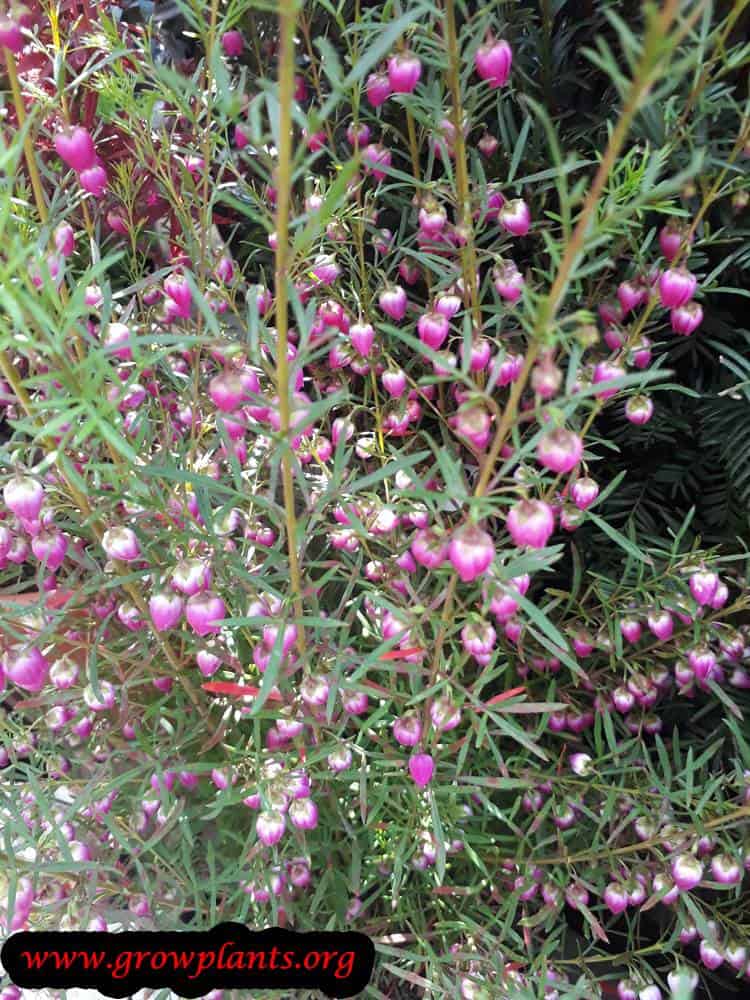
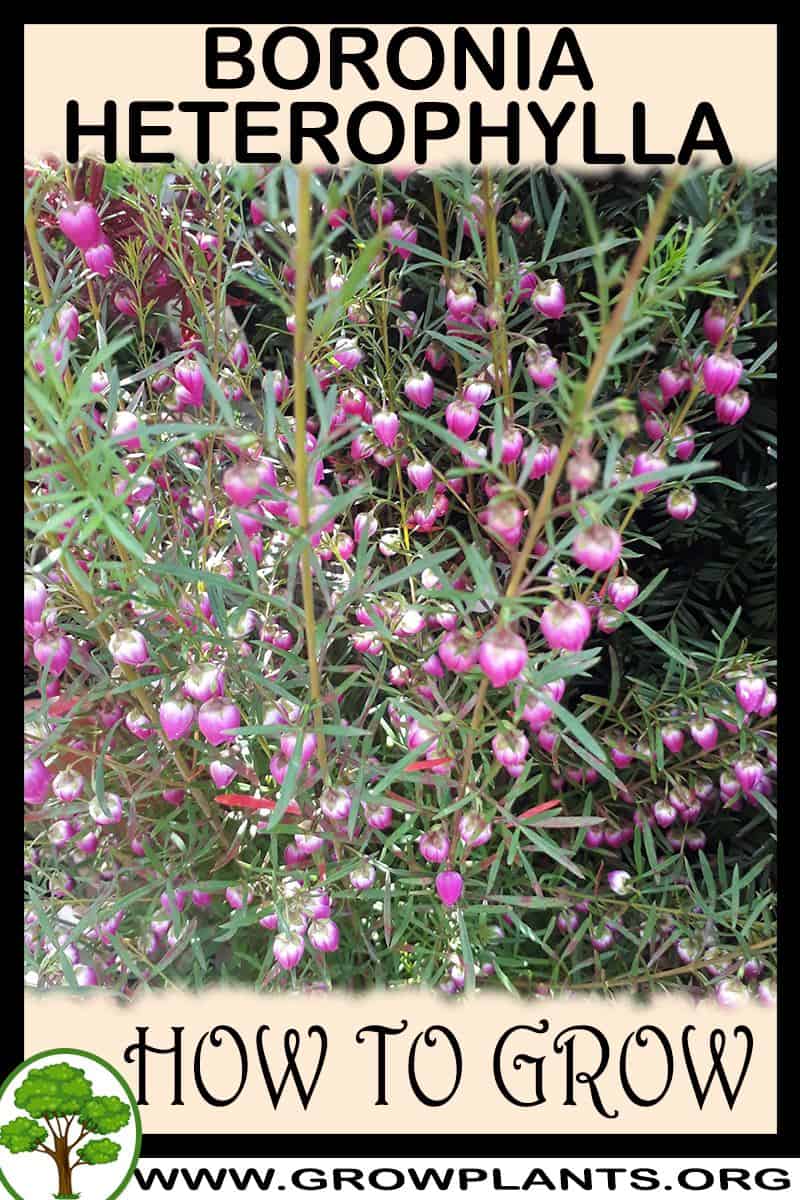
- Flower Characteristics: Bell-shaped flowers with five petals that open out to a bowl shape, in pink, purple or white; borne in spring to early summer (summary only – see the Bloom guide).
Primary Uses & Landscape Value
- Functional & Ornamental Roles: Ornamental flowering shrub for beds, borders and containers; valued for its scented flowers and fragrant foliage.
Care Guide: Planting, Soil & Watering
Overview: Boronia heterophylla is an evergreen shrub for mild subtropical and Mediterranean gardens, growing best in an open spot with full sun to light shade and cool, humid air. It demands sharply drained yet moisture-retentive soil on the acidic side and steady, even moisture, resenting both drought and waterlogging.
Quick Care Requirements
| Requirement | Ideal Condition |
|---|---|
| Planting Season | Spring through autumn, in frost-free warmth |
| Growth Rate | Moderate |
| Soil Type | Light, humus-rich, well-drained soil |
| Soil pH | Acidic; sensitive to lime |
| Water Need | Moderate – keep evenly moist, never waterlogged |
Planting & Establishment
- Best Planting Season: Plant in spring once frost has passed, and on through summer and autumn while the soil is warm.
- How to Plant:
- Hole Preparation: Dig a hole as wide as the rootball and no deeper, loosening the sides so the fine roots can spread.
- Soil Amendments: Work in plenty of leaf mould or acidic organic matter plus coarse grit to keep drainage sharp; avoid lime and fresh manure.
- Planting Depth: Set the root collar level with the surface – burying the stem invites collar rot.
- Growth Speed & Expectations: Moderate pace, forming a rounded shrub of about 1-3 m.
Soil, Watering & Drainage Care
- Soil Mix & Drainage Needs: Needs an open, aerated, acidic mix that drains freely yet holds some moisture; add grit or perlite in containers and never let it stand in a water-filled saucer.
- Watering Schedule & Technique:
- Young / Newly Planted: Water regularly to keep the rootzone consistently moist while roots establish.
- Established: Water deeply and evenly, letting only the very top of the soil dry before watering again – Boronia collapses quickly if it dries out.
- Seasonal Adjustments: Ease off in cool, wet winters and increase during warm, dry spells; mulch to conserve moisture.
Climate, Light & Hardiness
Red boronia is an Australian subtropical-to-Mediterranean shrub grown for its fragrant flowers and foliage, preferring full sun to half shade with moderate cold tolerance.
Quick Climate Specifications
| Climate Zones | Subtropical, Mediterranean |
|---|---|
| USDA Hardiness Zones | 8–11 |
| Frost Tolerance | Moderate |
| Light Conditions | Full Sun to Half Shade |
Sunlight & Light Exposure
Optimal Light Setup
Full sun to half shade; in hot climates light afternoon shade can help prevent stress.
Direct Sun Requirement
Needs a reasonable amount of direct sun for good flowering.
Shade & Heat Management
Some afternoon shade in the hottest Mediterranean summers helps protect roots and reduce heat stress, since boronias are known to be sensitive to root-zone conditions.
Best Exposure / Orientation
A site with cool, moist roots but sun on the top growth suits it best.
Temperature Extremes & Hardiness
USDA Hardiness & Regional Limits
Hardy in zones 8–11; not reliable in regions with hard, prolonged freezes.
Cold Damage & Winter Protection
Protect from hard frost, particularly on young plants; mulch the root zone in the coolest parts of its range.
Frost Sensitivity
Moderately frost sensitive; light frost may cause minor damage.
Extreme Heat Tolerance
Moderate; benefits from afternoon shade and consistent moisture in very hot climates.
Wind, Humidity & Microclimate
Humidity Preferences
Adaptable, though native Australian boronias generally prefer moderate humidity with good air movement.
Dry-Air Tolerance
Moderate.
Rainfall & Seasonal Moisture
Prefers reasonably consistent moisture; avoid letting the root zone dry out completely or stay waterlogged.
Microclimate Recommendations
A site with a cool, well-mulched root run and good air circulation around the foliage suits it best.
Growing in Pots, Balconies & Indoors
Red boronia is a fragrant Australian shrub prized for its scented flowers. It is not a houseplant, but it grows well in a container on a bright patio or balcony given an acidic, sharply drained mix.
Quick Details
- Container Size: A medium-large pot for a 1-3 m (3-10 ft) shrub
- Indoor Suitability: Not a houseplant – it needs bright outdoor light and cool roots
- Best Spot: Full sun to half shade
- Soil & Drainage: Acidic, very free-draining mix; it hates lime and wet feet
- Watering in Pots: Average – keep evenly, lightly moist; never let it dry out completely or sit soggy
Indoors & On the Windowsill
- Houseplant limits: Not an indoor plant; it is fussy about light, drainage and cool roots that rooms rarely provide.
- Overwintering: Where winters are cold, a potted plant can shelter in a bright, cool, frost-free spot.
On a Balcony or Patio
- Light & roots: Give it bright light but keep the pot cool – shade the container itself and mulch the surface, as boronias resent hot, dry roots. Check moisture often but avoid waterlogging.
- Practicalities: A pale or shaded pot helps keep roots cool on a hot, reflective balcony.
Choosing the Pot, Soil & Long-Term Care
- Pot & drainage: A pot with strong drainage holes and no saucer; keep roots cool and evenly moist.
- Potting mix: Acidic (ericaceous), very free-draining mix with plenty of perlite or grit; never lime-based compost.
- Feeding: Feed lightly with a low-phosphorus, acid-loving fertiliser; boronias are sensitive to overfeeding.
- Repotting: Refresh the top of the mix each year and pot up about every two years; for perennials, lightly prune the root ball and top growth when you do.
Fertilizing & Feeding
A light feeder: this Australian native shrub is sensitive to heavy or phosphorus-rich feeding, so it does best with modest, balanced nutrition rather than a strong feeding program.
Quick Fertilizing Specs
| Feeding Level | Light |
|---|---|
| young_feeding | A light, balanced feeding to establish |
| mature_feeding | Light, balanced feeding through bloom |
| Main Nutrient Priority | Modest, balanced nutrition; go easy on phosphorus |
| Best Feeding Period | Spring through the bloom period |
| Organic Options | A light mulch of compost rather than heavy manure |
| Soil pH | Prefers well-drained soil |
| Reduce/Stop Feeding | Ease off after flowering and avoid feeding a stressed or wilting plant |
Feeding by Growth Stage
Spring growth
Support fresh growth of the fragrant foliage that precedes flowering.
| Nutrient direction | A light, balanced fertilizer formulated for native or phosphorus-sensitive shrubs suits this plant best. |
|---|---|
| Timing | Early in the growing season as new growth begins. |
| Frequency | Light feeding as growth resumes, without a heavy feeding program. |
| Fertilizer types | Low-phosphorus balanced fertilizer suited to native or sensitive shrubs, A light top-dressing of compost |
| Precautions | This shrub is sensitive to phosphorus-heavy feeding, so avoid general-purpose high-phosphorus ‘bloom booster’ products and keep feeding light overall. |
Bloom
Support the bell-shaped flowers through the bloom period without stressing the plant.
| Nutrient direction | Keep any feeding light and balanced; this native shrub flowers well on modest nutrition rather than a rich or phosphorus-heavy feed. |
|---|---|
| Timing | From bud formation through the spring-to-early-summer bloom period. |
| Frequency | Light feeding is usually enough while the shrub is in bloom. |
| Fertilizer types | Low-phosphorus balanced fertilizer, Light compost top-dressing |
| Precautions | Do not rely on high-phosphorus ‘bloom booster’ products; this species tolerates them poorly. |
Dormancy or rest
Let the shrub rest after flowering without pushing new growth it cannot support.
| Nutrient direction | None – withhold fertilizer once flowering ends and growth slows. |
|---|---|
| Timing | After the bloom period, through the cooler rest period. |
| Frequency | No feeding at this stage. |
| Fertilizer types | No feeding at this stage; do not fertilize until active spring growth resumes. |
| Precautions | Do not fertilize a resting or stressed plant; resume only once vigorous new growth restarts. |
Nutrient Deficiency Signs & Corrections
Leaf tips and margins burn or blacken and the plant declines despite regular feeding.
| Possible causes | Excess phosphorus from a general-purpose fertilizer, Heavy feeding of a native, sensitive shrub, Poor drainage compounding root stress |
|---|---|
| Appears first on | Older leaf tips and margins |
| What to check | Fertilizer type and phosphorus content, Recent feeding history, Soil drainage |
| Possible correction | Switch to a low-phosphorus fertilizer formulated for native or sensitive shrubs and flush the soil with water. |
Older, lower leaves fade to pale green or yellow and growth is weak.
| Possible causes | Low soil nitrogen, Poor, leached or sandy soil, Waterlogged soil limiting root uptake |
|---|---|
| Appears first on | Older, lower leaves |
| What to check | Recent feeding history, Soil organic matter and drainage |
| Possible correction | Apply a light, balanced fertilizer during active growth and improve soil organic matter. |
Young leaves yellow between still-green veins.
| Possible causes | High soil pH limiting iron availability, Waterlogged or compacted soil, A genuine iron shortage |
|---|---|
| Appears first on | Youngest leaves at the shoot tips |
| What to check | Soil pH, Drainage, Whether only new growth is affected |
| Possible correction | Correct soil pH where possible and apply a chelated iron product per its label. |
Pruning, Training & Seasonal Maintenance
Boronia heterophylla (Red Boronia) tolerates only light-to-moderate pruning; the main objective is keeping the shrub compact, since this genus is notorious for becoming bare and woody at the base if left untrimmed. It flowers in spring into early summer on growth made the previous season, so the safest and most effective time to shape it is immediately after that bloom finishes – not a dormant winter cutback, which would remove wood already carrying next year’s buds. Crucially, boronias generally do not reshoot reliably from bare, leafless stems, so every cut should leave some live foliage behind.
Quick Pruning & Maintenance Specs
| Pruning Tolerance | Low–Moderate |
| Primary Pruning Window | Immediately after flowering (early–mid summer) |
| Secondary Maintenance Window | Light tidy of dead/frost-damaged tips in autumn–winter |
| Typical Frequency | 1–2 light trims per year |
| Main Objective | Prevent bare legginess; maintain compact flowering habit |
| Young Plant Priority | Regular soft tip-pinching from planting |
| Mature Plant Priority | Light post-bloom shape trim, always staying in leafy wood |
| Best Tool Type | Precision snips / bypass secateurs |
| Avoid Heavy Pruning During | Any cut into bare, leafless old wood; hot or dry stress periods |
Pruning by Plant Age & Size
Newly Established
Tip-pinch soft new growth only, to encourage branching from the start; do not cut into any older wood on a young plant.
Young / Formative
No formal structural training – repeated light pinching through the first year or two builds the naturally rounded, bushy habit.
Mature / Established
Annual light trim right after flowering, removing roughly the top third of each flowering shoot while always leaving green foliage on the stem.
Seasonal Pruning Schedule
Post-Flowering
Objective: shape and renew without sacrificing next year’s flowers. Remove: spent flower tips, up to a third of each stem’s leafy growth. Do not remove: any growth down to bare wood – boronias rarely resprout from leafless stems. Response: denser new growth that matures into next season’s flowering wood. Flowering impact: pruning now protects next year’s bloom; delaying into winter risks removing already-forming buds.
Ongoing Sanitary
Remove dead or frost-damaged tips as they appear, any time of year.
Flowering & Fruiting Wood
Boronia heterophylla sets its spring-to-early-summer flowers on the previous season’s growth. Prune promptly after flowering so new shoots have a full growing season to mature and form next year’s buds; a late-winter or pre-bloom hard prune removes the coming flower display instead.
Structural Pruning & Training
The only real structural task is preventing bare-based legginess: trim lightly and regularly from a young age rather than letting the shrub grow tall and woody before its first cut, since a late corrective hard prune into bare wood is unlikely to reshoot.
Special Growth to Remove
Deadhead spent flower clusters after bloom; remove dead or frost-nipped tips promptly to keep the fine, fragrant foliage tidy.
Container & Small-Space Pruning
Boronias grow well in pots with sharp drainage; container specimens benefit from slightly more frequent light tipping to stay compact, but the same rule applies – never cut back into bare stem, and avoid disturbing the sensitive root system when repotting.
Tools
Precision snips or bypass secateurs for tip-pinching and post-bloom shaping. No loppers, saw or hedge shears – this is a small, fine-textured shrub that needs selective cuts, not shearing, which would scalp it into unreliable bare wood.
Tool Hygiene & Disease Risk
Routine care is enough – clean, sharp tools. No specific disease-transmission risk is noted for this species.
Cut Placement & Technique
Pinch or cut just above a leaf node within live, leafy growth; never leave a cut stub in bare wood, since regrowth from that point is unreliable.
Heavy Pruning & Rejuvenation
NOT tolerated. Boronias generally fail to reshoot from a hard cutback into bare, leafless wood, so there is no reliable rejuvenation technique for an overgrown, woody specimen – light, regular trims from a young age are the only real prevention. A badly leggy, bare-based plant is usually better replaced than hard-pruned.
Post-Pruning Care
Water normally through the resulting light regrowth flush; no extra feeding is needed for this light annual trim.
Common Pruning Mistakes
Cutting into bare wood expecting it to reshoot; shearing into a formal shape instead of selective tip trims; waiting until the plant is already tall and woody before the first prune.
When NOT to Prune
Avoid any cut into bare, leafless wood at any time of year; avoid pruning while in bud or bloom if the flower display is wanted; avoid pruning during heat or drought stress.
Recommended Tools (by task)
- precision_snips – tip-pinching soft new growth and deadheading.
- bypass_secateurs – light post-bloom shaping cuts on slightly firmer stems.
Pruning Troubleshooting
| Problem | Possible Cause | What to Check | Corrective Action |
| No regrowth after cutting back hard | Cut made into bare, leafless old wood | Whether any green tissue remains on the cut stems | Avoid hard cutback; always prune within live leafy growth |
| Bare, woody base with sparse flowering | No light trimming from a young age | Age of plant vs. first prune date | Begin regular light tip-pinching early; replace very old, bare specimens |
Propagation Guide
Boronia heterophylla (red boronia) is most reliably propagated from semi-hardwood tip cuttings struck in a sharply free-draining mix, the standard nursery approach for this genus since seed can be slow and uneven to germinate. Seed remains an option — as a true species it should come true to type, and grafting or vegetative propagation is not required — but this genus is notably sensitive to overwatering and root rot, so overall difficulty is best rated Moderate.
Quick Propagation Specs
| Best Propagation Method | Semi-hardwood tip cuttings |
| Alternative Methods | Seed |
| Propagation Difficulty | Moderate |
| Seed True-to-Type | Yes (true species, not a cultivar) |
| Vegetative True-to-Type | Yes |
| Best Propagation Season | Late spring to summer for cuttings; spring for seed |
| Cutting Rooting Time | Typically several weeks |
| Germination Temperature | 18–22°C (64–72°F) |
| Seed Sowing Depth | Barely cover; seed is small |
Growing from Seed
Seed Handling & Viability
Seed is small and can be slow or uneven to germinate; fresher seed generally performs better.
Sowing Season
Sow in spring, under cover.
Sowing Depth & Orientation
Barely cover the seed.
Germination Conditions
Use a bright, well-drained propagating mix kept evenly moist, never wet — boronias are prone to root rot when waterlogged.
Germination Time
Often slow and irregular; allow several weeks to a few months.
Seedling Care
Keep sharply drained and avoid overwatering; seedlings, like mature plants, are susceptible to root rot in heavy or soggy mixes.
Stem Cuttings
Cutting Type
Semi-hardwood tip cuttings.
Best Timing
Late spring to summer, after spring flowering, ahead of the autumn/winter pruning window.
Cutting Preparation
Take non-flowering tip cuttings and use a very free-draining, low-phosphorus propagating mix — this genus is sensitive to both high phosphorus and wet, heavy media.
Rooting Setup
Bright, humid, well-ventilated conditions (mist or a covered tray); avoid waterlogging.
Rooting Hormone
Often beneficial for this genus to improve and speed strike rate.
Rooting Time
Typically several weeks.
Bloom & Flower Guide
Quick Details
- Bloom Season: Spring into early summer
- Flower Appearance: Bell-shaped flowers with five petals that open out to a bowl shape, in pink, purple, or white
- Edibility: Ornamental – grown for its flowers and fragrant leaves, not eaten
Detailed Blooming Overview
Red boronia puts on a fine spring show, hanging its waxy bell-shaped flowers along the fine, aromatic foliage. As each bud opens, the bell flares into a shallow bowl, and the massed blooms in pink, purple, or white make this a favorite garden and cut-flower shrub. Both the flowers and the leaves carry a distinctive fragrance.
Flower Characteristics
- Five-petaled flowers that start bell-shaped and open to a bowl.
- Colors range across pink, purple, and white, set against narrow fragrant leaves.
Bloom Care & Thinning
- After flowering: A light trim once the bloom fades keeps the shrub compact and encourages next season’s flowering wood.
- Pollination: The scented flowers attract bees and other insects.
Pests, Diseases & Troubleshooting
Overview: Red boronia (Boronia heterophylla) is a beautiful but notoriously fussy, short-lived Australian shrub in the citrus family. Its defining problem is not really pests but sudden collapse from root rot – it is extremely sensitive to Phytophthora, waterlogging, drying out and root disturbance. Sap-suckers (aphids, scale, mealybug, spider mites) are secondary. Success comes from cool, moist-but-free-draining acidic soil, mulch, shaded roots and steady moisture, and accepting that even well-grown plants are often short-lived.
Quick Troubleshooting Overview
| Issue / Pest | Main Symptom | Primary Solution |
|---|---|---|
| Root rot / sudden death | Healthy-looking plant wilts and dies quickly | Sharp drainage + steady moisture; never waterlog or dry out |
| Aphids | Colonies on soft new growth and buds; distortion | Hose off; insecticidal soap |
| Scale insects | Bumps on stems; honeydew and sooty mould | Horticultural oil; prune infested wood |
| Spider mites | Fine stippling and webbing in hot, dry air | Raise humidity, hose; miticidal oil |
| Mealybugs | White cottony tufts in leaf axils | Insecticidal soap / oil |
| Chlorosis / decline | Yellowing, poor vigour in wrong soil | Acidic, low-phosphorus feeding; mulch, cool roots |
Common Pests & Management
- Aphids (Aphis / Myzus spp.):
- Symptoms: Clusters of soft green or black aphids on the fine new shoots, flower buds and tips, causing curling, distortion and honeydew. The soft new growth is the main target.
- Prevention & Control: Dislodge with a gentle jet of water (taking care with the brittle stems) and encourage ladybirds and lacewings. Treat persistent colonies with insecticidal soap on the affected tips. Avoid high-nitrogen and high-phosphorus feeds, which this phosphorus-sensitive native dislikes anyway.
- Scale insects (Coccidae / Diaspididae):
- Symptoms: Brown or white immobile bumps on the woody stems and leaf undersides, with honeydew and sooty mould from soft scales. Can build up on stressed or sheltered plants.
- Prevention & Control: Prune out heavily infested twigs and conserve natural enemies. Apply horticultural oil carefully to smother scale and crawlers; keep the plant healthy and unstressed, as vigorous boronias resist scale better.
- Spider mites (Tetranychus urticae):
- Symptoms: Fine stippling, bronzing and light webbing on the needle-like foliage in hot, dry, stressed conditions – and drought stress is doubly dangerous for this rot- and dryness-sensitive shrub.
- Prevention & Control: Keep roots cool and evenly moist and hose the foliage in hot spells to deter mites. For outbreaks use a miticidal horticultural oil or insecticidal soap, but never let the plant dry out or sit wet in the process.
- Mealybugs (Pseudococcus / Planococcus spp.):
- Symptoms: White cottony tufts in the leaf axils and among the fine foliage, with honeydew and sooty mould; more common on container plants.
- Prevention & Control: Dab with an alcohol swab and hose off, then spray insecticidal soap or horticultural oil into the crevices, repeating until clear. Isolate infested container plants.
Diseases & Fungal Issues
- Root rot & sudden death (Phytophthora cinnamomi):
- Symptoms: The classic boronia killer. Plants that looked perfectly healthy wilt, brown and die within days, often after a spell of wet, warm soil, poor drainage, or conversely after drying out and being heavily rewatered. Roots are dark and rotted. Boronias are among the most Phytophthora-susceptible garden plants.
- Treatment & Management: This is prevented, not cured. Plant in cool, acidic, free-draining but moisture-retentive soil, ideally raised or mounded, and keep roots shaded and mulched. Water to maintain steady, even moisture – never waterlogged and never bone dry. Use clean stock and avoid moving soil from infected areas; a phosphonate (phosphorous-acid) treatment can boost resistance in valued plants. Accept that boronias are often short-lived even when well grown.
- Collar / stem rot (Phytophthora / Pythium spp.):
- Symptoms: Darkening, softening and girdling at the base of the stem near soil level, causing wilting and collapse – closely related to root rot and driven by wet, poorly aerated soil around the crown.
- Treatment & Management: Keep mulch and soil off the immediate stem base, ensure the crown is planted at the right height in sharply drained soil, and avoid overhead watering that keeps the collar wet. As with root rot, prevention through drainage and careful watering is the only reliable approach.
- Fungal leaf spot / dieback (various fungi):
- Symptoms: Spotting, browning and twig dieback of foliage in humid or stressed conditions, often following pest damage or stress.
- Treatment & Management: Prune out affected wood with clean tools, improve airflow, and address the underlying stress. Keeping the plant vigorous in its ideal conditions is the best defence; fungicides are a minor secondary measure.
Growing Difficulties & Abiotic Problems
- Sudden death from waterlogging OR drying out:
- Cause & Symptoms: Boronia has an unusually narrow comfort zone: it collapses if the roots stay wet and suffocate, and equally if it dries out even once, especially in heat. Many plants die suddenly for exactly these reasons, with or without Phytophthora.
- Correction Strategy: Provide free-draining yet moisture-retentive acidic soil, a thick cool mulch, and shaded roots; water little and often to keep even moisture, and never let the plant wilt from dryness or sit in soggy soil. Container plants need particular vigilance.
- Phosphorus toxicity / chlorosis:
- Cause & Symptoms: Like many Australian natives, boronia is sensitive to phosphorus; standard fertilisers can cause yellowing, blackening leaf tips, decline and death. Alkaline soil also causes chlorosis.
- Correction Strategy: Feed only with low-phosphorus, native-safe fertiliser at light rates, and grow in acidic soil. Correct chlorosis with acidifying, iron-containing native feeds rather than general-purpose products.
- Transplant shock & root disturbance:
- Cause & Symptoms: Boronias resent having their roots disturbed and often sulk or die after transplanting, potting-on or root damage.
- Correction Strategy: Plant carefully without teasing out or damaging the root ball, water in gently, mulch, and shelter from heat and wind while establishing. Choose the position well, as they dislike being moved.
- Short natural lifespan:
- Cause & Symptoms: Even in ideal conditions, red boronia is naturally short-lived (often only a few years), and growers should not assume every decline is a fixable pest or disease.
- Correction Strategy: Enjoy them as relatively short-term plants, keep a few coming on as replacements, and give them their ideal cool-root, sharp-drainage conditions to maximise their time. Light tip-pruning after flowering helps vigour.
What Helps – Products & Tools
Boronia is managed far more by cultural care – acidic free-draining soil, cool mulched roots, even moisture and low-phosphorus native feeding – than by products. For pests, keep insecticidal soap and horticultural / neem oil for aphids, scale, mealybug and mites. For its defining root-rot risk, a phosphonate (phosphorous-acid) treatment can raise resistance in valued plants, and a low-phosphorus native fertiliser with iron prevents nutrient decline. Spray oils in the evening to protect pollinators.