

Plant Profile & Key Characteristics
Also known as: Common heather, ling, Simply heather, Scotch heather, Firefly scotch heather, Calluna heather
Overview: A low, spreading evergreen shrub or subshrub 20-50 cm (8-20 in) tall, grown as a perennial for its long-lasting flowers. It is a classic acid-soil groundcover, also used for bonsai and occasionally medicinally.
Quick Specifications
| Specification | Attribute |
|---|---|
| Plant Type / Life Cycle | Perennial |
| Foliage Type | Evergreen |
| Mature Size | 20-50 cm (8-20 in) tall |
| Growth Rate | Fast to moderate |
| Root System | Fibrous, shallow |
| Toxicity | Non-toxic |
| Hardiness | USDA zone 4-10 |
Growth Form & Structure
- Height & Spread: 20-50 cm (8-20 in) tall, spreading into low hummocks; grows in the ground or in containers (pot up 50-70% larger than the root ball).
- Growth Habit & Form: Dense, low, spreading evergreen shrub with fine wiry stems, forming a carpet in heath and rockery plantings.
- Lifespan & Maturity: Long-lived perennial; many named varieties reach full height only after 5-10 years.
Anatomy & Physical Features
- Leaves & Foliage: Tiny scale-like green leaves just 1-2 mm long, densely clothing the stems; colour varies (green, grey, bronze) between varieties.
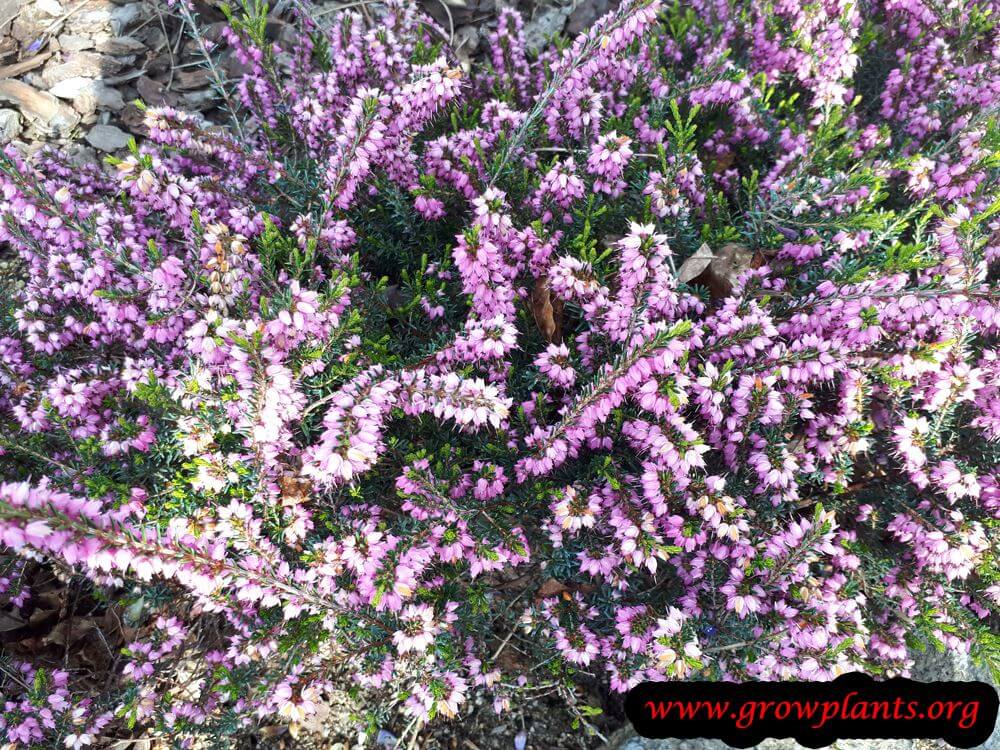
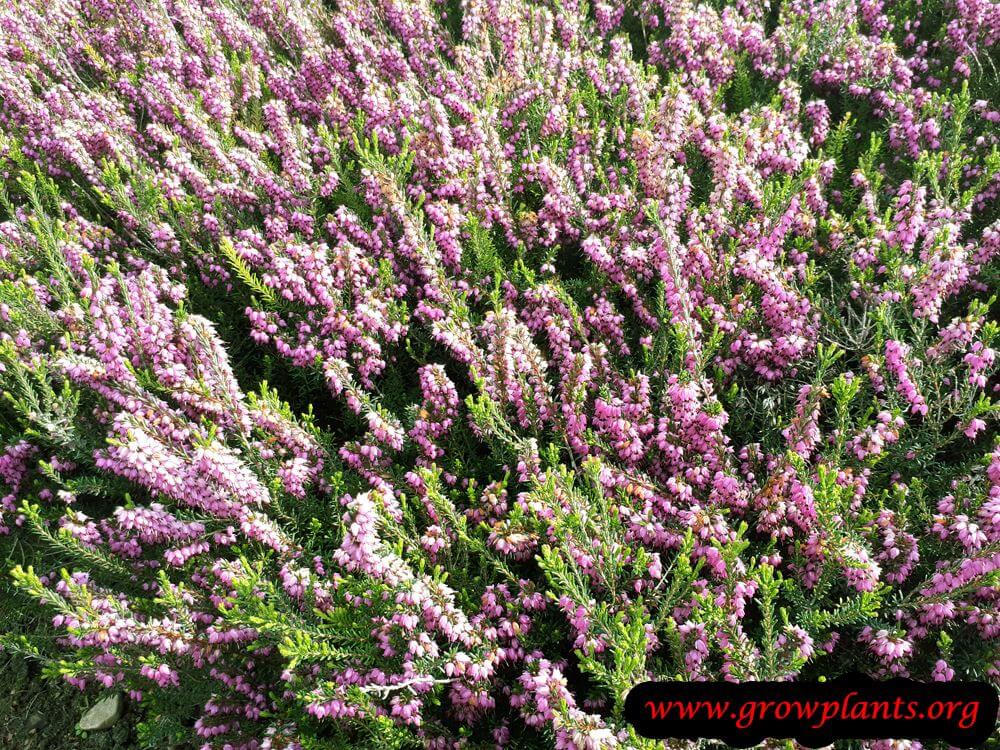
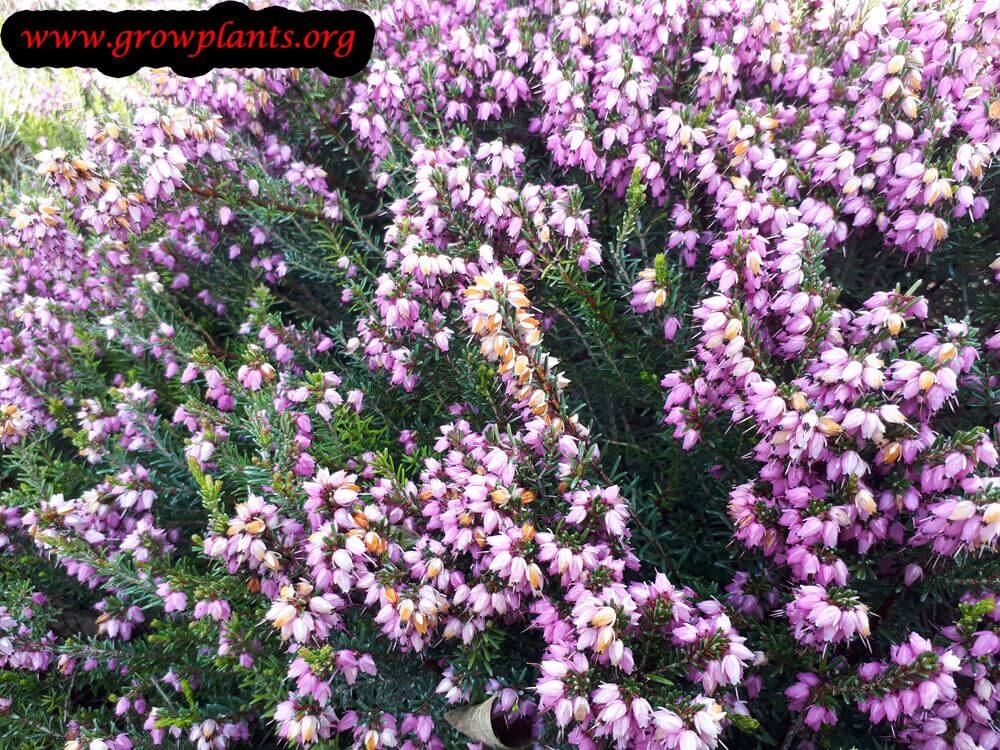
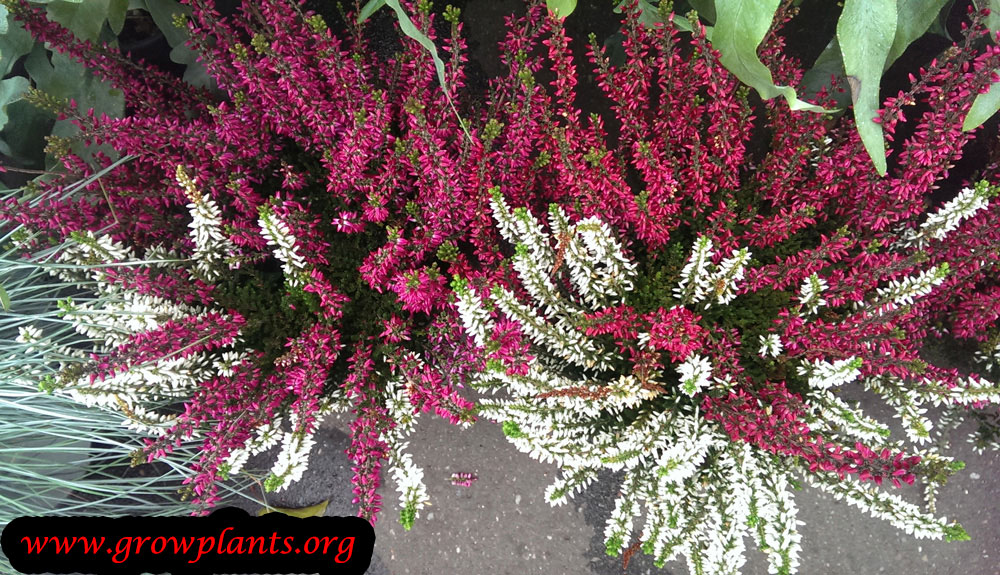
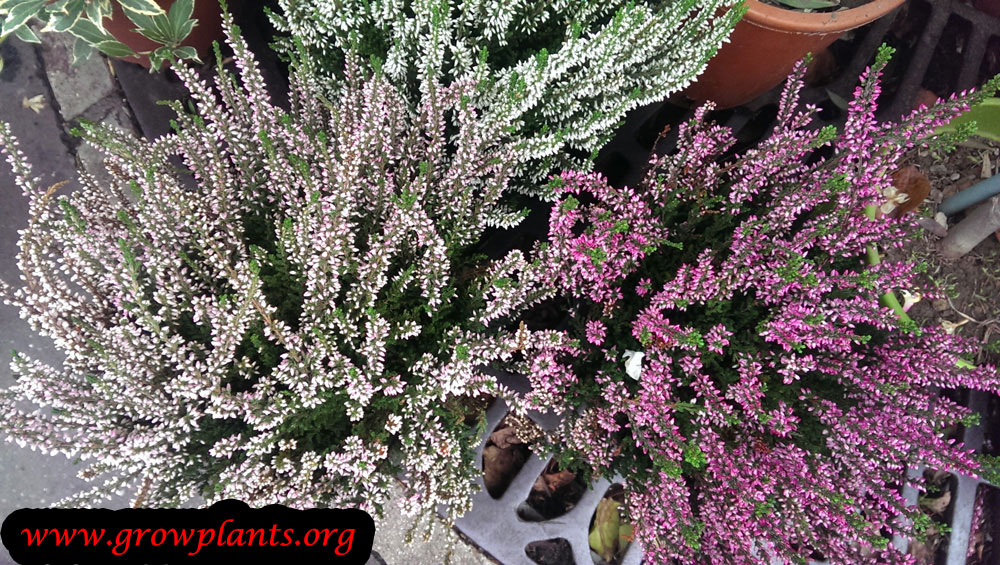
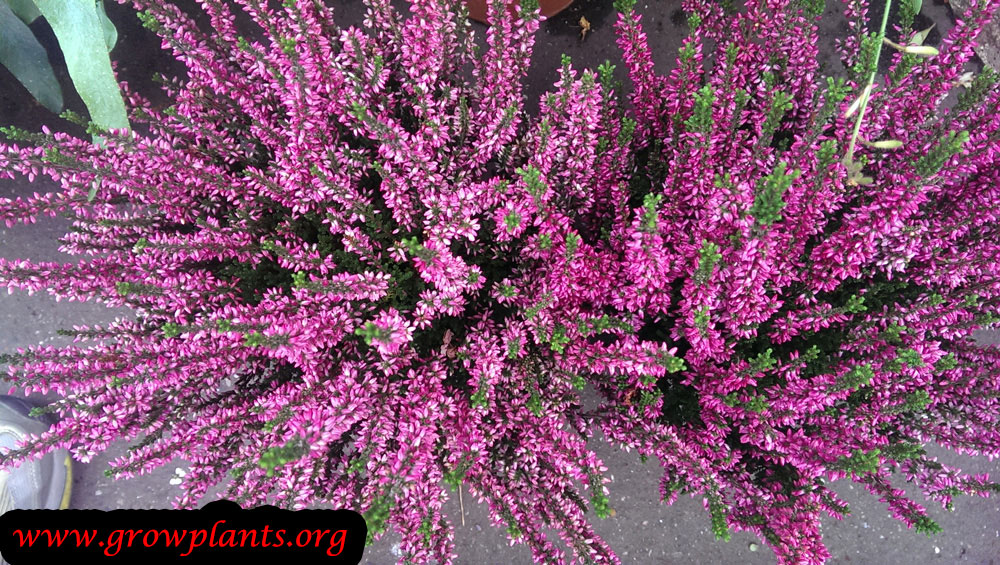
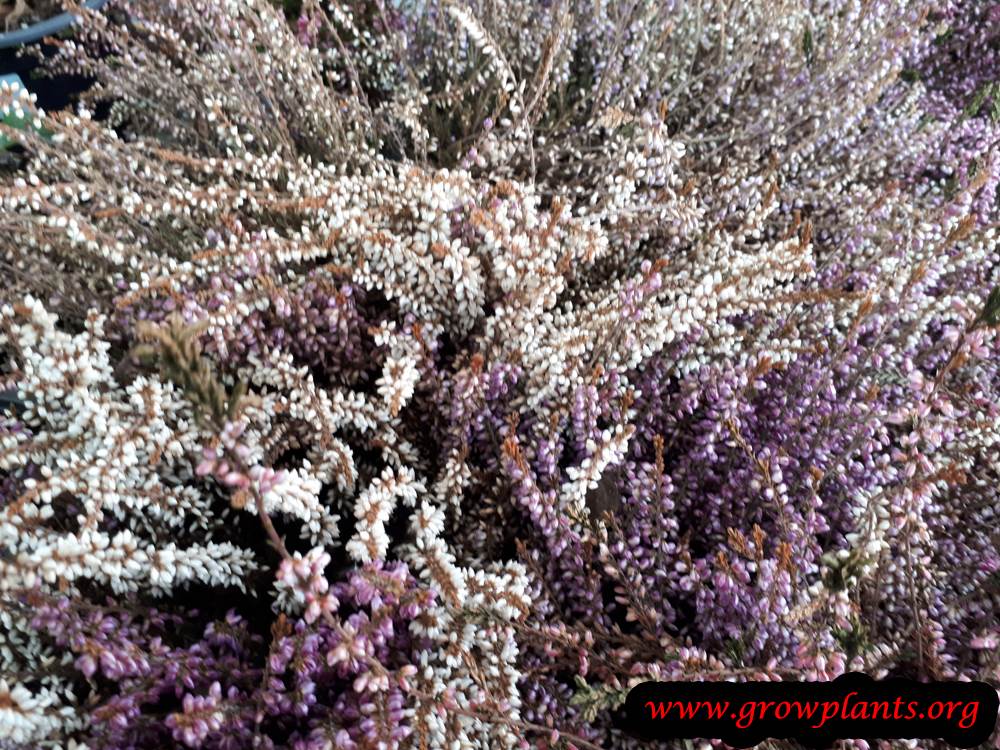
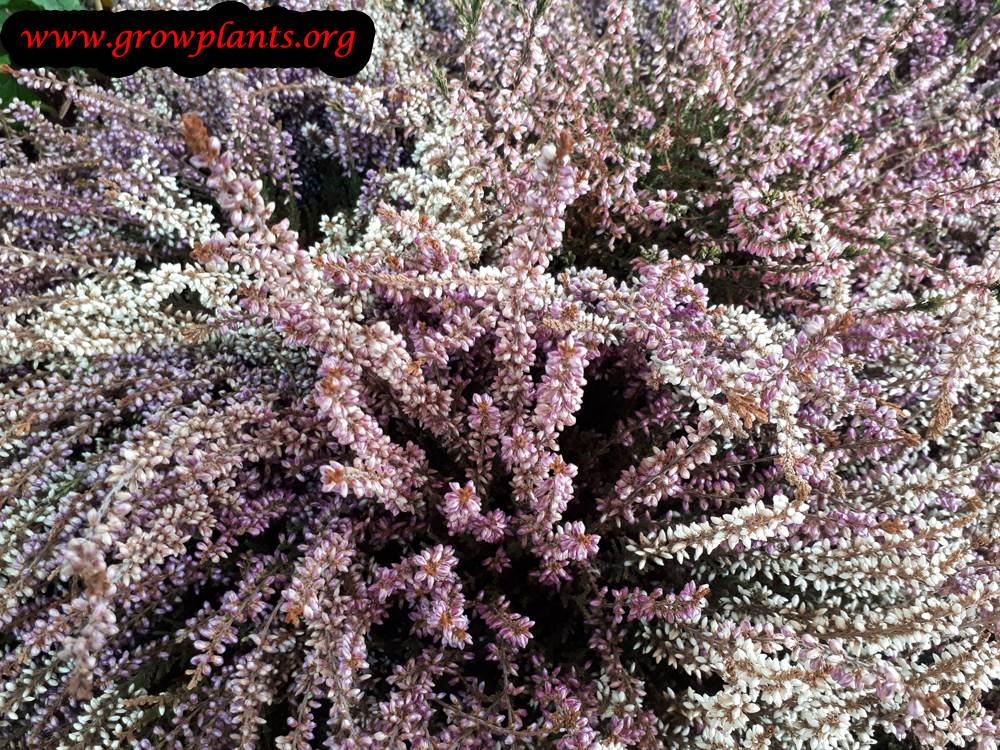
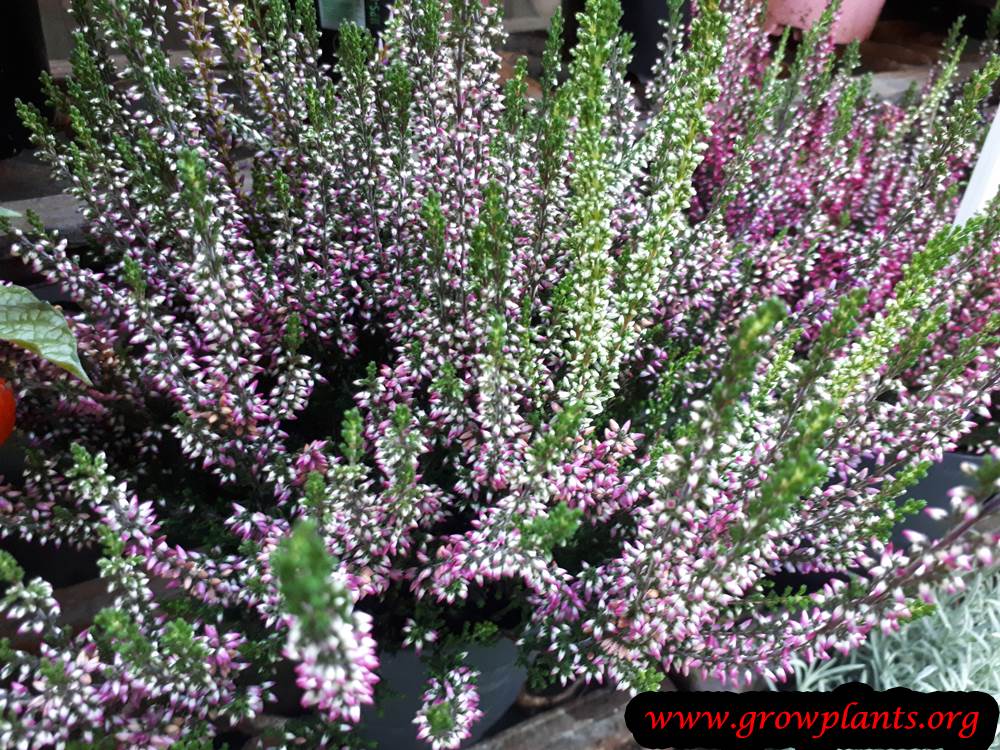
- Flower Characteristics: Massed tiny bell- to trumpet-shaped flowers in pink, purple, red, blue or white at the stem tips (full detail in the Bloom section).
Primary Uses & Landscape Value
- Functional & Ornamental Roles: Evergreen groundcover for heath and rock gardens, low ornamental hedging and containers; also trained as bonsai and a bee/pollinator plant.
Care Guide: Planting, Soil & Watering
Overview: An acid-loving evergreen shrub that needs a rich, moist but sharply drained acidic soil. It dislikes drying out and can scorch in hot full sun, so even moisture and mulch keep it thriving.
Quick Care Requirements
| Requirement | Ideal Condition |
|---|---|
| Planting Season | Spring in cool zones (4-6); spring to summer in zone 7-9; spring to autumn in 10a; autumn to winter in 10b |
| Growth Rate | Moderate to Fast |
| Soil Type | Acidic, rich, humus-rich and well-draining (peaty) |
| Soil pH | Acidic (approximately 4.5-6.0) |
| Water Need | Moderate to High – keep evenly moist, do not let it dry out |
Planting & Establishment
- Best Planting Season: In cool zones plant in spring; zone 7-9 spring to summer; zone 10a spring to autumn; warm zone 10b in autumn to winter to avoid summer heat stress.
- How to Plant:
- Hole Preparation: Dig a hole wider than the root ball.
- Soil Amendments: Plant in peat or acidic soil with vermiculite worked into the hole; mulch and feed once a year.
- Planting Depth: Set the root collar at soil level, without burying the stems.
- Growth Speed & Expectations: Moderate to fast once established, forming a low 20-50 cm (8-20 in) mound.
Soil, Watering & Drainage Care
- Soil Mix & Drainage Needs: Acidic, humus-rich, free-draining soil; in containers use an ericaceous/peat mix with perlite, and a saucer that drains the same day to prevent root rot.
- Watering Schedule & Technique:
- Young / Newly Planted: Water regularly to settle new plants and keep the soil moist.
- Established: Keep evenly moist, never bone dry; water deeply during dry spells.
- Seasonal Adjustments: More water in summer heat (especially full sun); less in winter.
Climate, Light & Hardiness
Calluna vulgaris (common heather) is a plant of cool, humid temperate and moorland-type climates, growing best in full sun to half shade with good air movement. It is reliably cold-hardy through most of its range but is far more sensitive to intense summer heat and direct sun than to winter cold.
Quick Climate Specifications
| Climate Zones | Temperate, cool-summer subtropical; native to moorland and heath habitats |
| USDA Hardiness Zones | Approximately 4–9, extending to zone 10 with attentive siting and care in hot-summer areas |
| Approx. Survival Minimum | Established plants typically tolerate briefly down to roughly −29 to −34°C (−20 to −30°F) at the cold edge of their range |
| Frost Tolerance | High |
| Light Conditions | Full sun to half shade; tolerates full shade with some warm-season light, though flowering is reduced |
| Wind Tolerance | Moderate to High (low, wiry, ground-hugging growth) |
| Salt / Coastal Tolerance | Moderate (native heath and moorland habitats include some coastal exposure) |
Sunlight & Light Exposure
Optimal Light Setup
Full sun gives the densest habit and best flowering, especially in cooler climates.
Direct Sun Requirement
Several hours of direct sun daily are needed for strong flowering; in hot-summer regions some midday or afternoon shade prevents stress.
Shade & Heat Management
Full sun combined with intense summer heat will scorch foliage - this plant "will burn in hot summer in full sun," so filtered or afternoon shade is safer in warm climates. It also tolerates fairly deep shade, with some light in warm weather, but blooms less.
Best Exposure / Orientation
Open, airy, well-ventilated sites are best; avoid deep, still shade under overhanging trees, which reduces flowering and can encourage fungal problems.
Temperature Extremes & Hardiness
USDA Hardiness & Regional Limits
Reliable outdoors in zones 4–9; gardeners in hot-summer zone 10 areas can succeed with siting that moderates heat, such as afternoon shade.
Cold Damage & Winter Protection
Established plants handle ordinary winter cold within their hardy range without protection; cold is rarely the limiting factor for this species.
Frost Sensitivity
Frost-hardy; not considered frost-sensitive.
Extreme Heat Tolerance
Poor to moderate - hot, intense summer sun is the main climate stress and can scorch foliage; afternoon shade helps considerably in warm climates.
Wind, Humidity & Microclimate
Humidity Preferences
Prefers the humid, cool-summer conditions typical of its native moorland and heath habitat.
Wind Tolerance
Good - its low, dense, wiry growth handles open, breezy sites well.
Coastal / Salt Tolerance
Reasonably tolerant of coastal exposure consistent with its native heath and moorland range, though not as salt-spray tolerant as true dune or cliff specialists.
Rainfall & Seasonal Moisture
Adapted to climates with reliable, evenly distributed moisture rather than prolonged heat and drought.
Microclimate Recommendations
Choose open sites with good airflow; in hot regions, afternoon shade and cooler microclimates (away from reflected heat off paving or walls) reduce sun and heat stress.
Growing in Pots, Balconies & Indoors
Heather (Calluna vulgaris) is a compact, acid-loving evergreen that makes a rewarding container and balcony plant, and the grower notes it can even be kept indoors provided it gets plenty of light and is kept well away from heaters – otherwise the leaves suffer and it will not bloom. In a pot it also takes well to bonsai training. The real indoor challenge is light and dry heat, so a bright, cool position is essential.
Quick Details
- Container Size: Start with a pot about 50-70% larger than the root ball, then pot up gradually as the roots fill it (bigger plants need a smaller percentage)
- Indoor Suitability: Possible in a very bright, cool spot away from radiators; needs strong light to flower
- Best Spot: Full sun to light shade outdoors; the brightest window indoors
- Soil & Drainage: Acidic, free-draining ericaceous mix – potting mix or peat with perlite; heathers dislike lime
- Watering in Pots: Keep evenly moist at all times – never let the root ball dry out, and never leave it waterlogged
Indoors & On the Windowsill
- Houseplant potential: The grower says yes – it can be grown indoors, but only with plenty of light and kept clear of heaters, or the foliage is damaged and it will not bloom.
- Windowsill growing: Give it your brightest, coolest sill; heather resents warm, dry room air.
- Cold-climate note: Roots in a pot are more exposed than in the ground, so in a hard freeze move containers to a sheltered spot.
On a Balcony or Patio
- Light & wind: Give it an open, bright spot; walls, railings and paving throw back heat and wind, so pots dry out fast – check moisture often in warm weather.
- Practicalities: Stand pots where drainage water can escape, and shelter taller stems from strong gusts.
Choosing the Pot, Soil & Long-Term Care
- Pot & drainage: Use strong drainage holes; if you stand it in a saucer, water until it runs through but make sure the pot dries out the same day – standing water rots the roots.
- Potting mix: An aerated, acidic ericaceous mix – peat or coir with perlite.
- Feeding: Feed lightly with an acid/ericaceous fertiliser, as potted plants lose nutrients to leaching faster than plants in the ground.
- Repotting: Refresh the mix every couple of years – the grower notes the soil loses its structure over time; swap all or part of it and lightly prune the roots and top growth.
Grower’s Container Tip
- Gradual pot-up: Start in a pot 50-70% bigger than the root ball and step up to a larger one each time the roots fill it, until it reaches the size you want – it can also be trained as a bonsai.
Fertilizing & Feeding
Heather is a light feeder overall. Established plants growing in reasonably fertile, acidic soil often need only minimal supplemental feeding to stay healthy and floriferous.
Quick Fertilizing Specs
| Feeding Level | Light |
|---|---|
| Main Nutrient Priority | Balanced feeding using an acid-forming (ericaceous) formulation suited to acid-loving shrubs |
| Best Feeding Period | Early spring, as active growth resumes ahead of the bloom season |
| Soil pH | Acidic; heather thrives in acid soil and struggles in alkaline conditions |
| Organic Options | Acidic organic mulch such as pine bark, leaf mold, or peat-based compost worked lightly into the soil surface |
| Micronutrients | Complete acid-loving shrub fertilizers typically supply iron and manganese, useful where soils lean toward neutral or alkaline |
| Reduce/Stop Feeding | Ease off feeding as flowering finishes and the plant heads into winter rest |
Feeding by Growth Stage
Spring Active Growth
Support new foliage and stem growth as heather breaks dormancy heading into the growing season.
| Nutrient direction | Balanced feeding to support new stem and foliage growth without forcing soft, weak growth |
|---|---|
| Timing | Early spring as new growth begins |
| Frequency | A single light feeding at the start of active growth is usually enough; established plants in good soil may need none at all |
| Fertilizer types | An acid-forming (ericaceous) complete fertilizer formulated for acid-loving shrubs, Well-rotted organic matter or acidic mulch worked into the surface around the root zone |
| Routine trace nutrients | iron, manganese |
| Precautions | Avoid lime-based or alkaline soil amendments, which can trigger iron chlorosis in this acid-loving shrub |
Summer Into Autumn Bloom
Maintain steady nutrition through summer into the autumn flowering period.
| Nutrient direction | Balanced, light feeding to sustain flowering without pushing excess soft growth |
|---|---|
| Timing | Summer into the start of the autumn bloom season |
| Frequency | Light, infrequent feeding is typically sufficient through the bloom season |
| Fertilizer types | A balanced acid-forming shrub fertilizer applied lightly around the root zone |
| Routine trace nutrients | iron, manganese |
| Precautions | Avoid heavy feeding late in the season, which can produce soft growth that is more prone to cold or wind damage |
Winter Dormancy
Allow the plant to rest after flowering without additional fertility inputs.
| Nutrient direction | None – withhold fertilizer while the plant is dormant |
|---|---|
| Timing | Winter, after flowering has finished |
| Frequency | No feeding at this stage |
| Fertilizer types | No feeding at this stage; resume light feeding as new growth begins in spring |
| Precautions | Do not fertilize dormant heather; wait until active growth resumes in spring |
Nutrient Deficiency Signs & Corrections
Yellowing between the veins on newer leaves while the veins stay green
| Possible causes | High soil pH reducing iron availability, Poor drainage or waterlogged roots limiting nutrient uptake, Naturally alkaline or over-limed soil |
|---|---|
| Appears first on | Newest growth at branch tips |
| What to check | Soil pH and drainage, Recent liming or alkaline irrigation water, Root health and signs of waterlogging |
| Possible correction | Correct soil pH toward acidic conditions and apply a chelated iron product per its label |
Overall pale, yellow-green foliage and slowed new growth
| Possible causes | Low soil nitrogen or nutrient-poor sandy soil, Competition from nearby weeds or turf for available nutrients, Compacted or waterlogged roots limiting uptake |
|---|---|
| Appears first on | Older, lower foliage first, spreading to the whole plant |
| What to check | Overall soil fertility and organic matter content, Weed competition around the root zone, Drainage and root condition |
| Possible correction | Apply a balanced acid-forming fertilizer during active growth and improve soil organic matter |
Leaf tip browning or dieback of individual stems
| Possible causes | Poor drainage and waterlogged roots, Salt buildup from over-fertilizing, Underlying root or crown disease in heavy, wet soil |
|---|---|
| Appears first on | Individual branch tips or whole stems |
| What to check | Soil drainage and moisture levels, Fertilizer history for over-application, Signs of root or crown rot |
| Possible correction | Improve drainage, flush excess salts with plain water, and avoid over-fertilizing |
Pruning, Training & Seasonal Maintenance
Calluna vulgaris (Scotch heather, ling) is a low evergreen sub-shrub grown for its long late-summer-to-winter flower spikes. Pruning tolerance is moderate: like related heaths it will not resprout from bare old wood, so all cuts must land in live growth. The safest window is spring, once frost risk has passed – this comes after the flower spikes (often left over winter for garden interest) have fully faded and before the new growth that will carry the next display begins, so it doesn’t cost any bloom.
Quick Pruning & Maintenance Specs
| Pruning Tolerance | Moderate (live growth only, not old wood) |
| Primary Pruning Window | Spring, after frost risk passes and before new growth flushes |
| Typical Frequency | Once a year |
| Main Objective | Remove old flower spikes and dead stems; keep the mound dense |
| Young Plant Priority | Let establish; begin light shearing once bushy |
| Mature Plant Priority | Annual shear to prevent a bare, gappy center |
| Best Tool Type | Light hedge/one-hand shears for garden specimens; precision snips for container/bonsai-trained plants |
| Avoid Heavy Pruning During | Any cut into old brown/bare wood, at any time of year |
Pruning by Plant Age & Size
Newly Established
Don’t trim in the first year; let the plant establish and fill out.
Young / Formative
No leader or framework – it’s a mounding sub-shrub. Begin annual light shearing once bushy growth is underway, to set the routine of cutting only into green growth.
Mature / Established
Routine annual trim removes old flower spikes and about the top third of the past season’s growth, which is what prevents the woody, gapped center typical of neglected heather.
Seasonal Pruning Schedule
Pre-Growth/Early-Spring: Objective: renew growth after the Aug–Jan flowering display. Remove: old flower spikes and the top of the past season’s growth, cutting into green tissue only. Do not remove: anything below where stems have gone brown and woody. Expected response: a bushier mound that will carry the coming season’s flower spikes. Flowering impact: positive when done in early spring; a summer-or-later trim risks removing buds already forming for the next display.
Flowering & Fruiting Wood
Flowers form on the current season’s growth produced after the spring shear. That shear both removes the previous year’s spent spikes and stimulates the fresh growth that carries the next late-summer-to-winter bloom (the plant’s own varieties show bloom windows spanning July through January).
Structural Pruning & Training
Renewal is entirely by regular light shearing rather than hard cutting, since it can’t regenerate from old wood once bare; there is no meaningful canopy-thinning or crossing-branch concern on a mounding sub-shrub this size.
Special Growth to Remove
Old flower spikes (many gardeners leave them through winter for texture and then remove them in spring) and dead stems, as its own care notes specify.
Container & Small-Space Pruning
Its own facts describe extensive pot and even bonsai culture. In containers, shaping is more selective – use precision snips rather than an overall shear to maintain a chosen silhouette – but the same rule holds: never cut into bare wood. Repotting and partial soil refreshment (per its own container notes) should happen alongside, not instead of, the annual shape trim.
Tools
Light hedge/one-hand shears for the routine whole-mound spring trim of garden specimens; precision snips for the more selective shaping needed on container or bonsai-trained plants.
Tool Hygiene & Disease Risk
Routine – its pest list (spider mites, scale, vine weevil) doesn’t include a major transmissible pathogen, so ordinary clean tools are adequate; avoid composting prunings that show visible scale or mite activity.
Cut Placement & Technique
Shear into live green growth only, stopping above where the stem turns woody and leafless; for container/bonsai shaping, make selective cuts at a node rather than an overall shear.
Heavy Pruning & Rejuvenation
Not tolerated once wood has gone bare and brown – Calluna doesn’t reliably break new growth from old wood, so a specimen left untrimmed for years is usually better replaced than hard cut back.
Post-Pruning Care
No extra feeding is needed beyond its normal once-a-year feed (per its own care notes) after trimming. Because the plant can scorch in hot summer sun, avoid exposing freshly sheared, thin growth to a heatwave right after cutting; watch for spider mite/scale on stressed post-pruning growth.
Common Pruning Mistakes
Cutting into old bare wood expecting regrowth; trimming too late in the season and removing developing flower buds; skipping the annual shear for several years, causing an irreversible bare center.
When NOT to Prune
Not during the Aug–Jan flowering display if the bloom is wanted; not in peak summer heat, given the plant’s own note that it can burn in hot summer sun; not immediately after repotting, to let roots settle first.
Recommended Tools (by task)
- hedge_shears – the annual light overall trim of garden-grown plants.
- precision_snips – selective shaping for container- or bonsai-trained specimens.
Pruning Troubleshooting
| Problem | Possible Cause | What to Check | Corrective Action |
| Bare/woody gaps in center | Missed annual trim, or cut into old wood | Is regrowth present only at stem tips? | Resume yearly spring shearing into green growth; replace badly bare plants |
| Reduced Aug–Jan flowering | Trim done too late, removing forming buds | Compare trim date to bloom onset | Shear earlier in spring, right after frost risk passes |
| Sun-scorched foliage after pruning | Freshly cut thin growth exposed to peak summer heat | Scorch on the south/west-facing side after a hot spell | Time the main trim for early spring; avoid hard cuts right before a heatwave |
Propagation Guide
Calluna vulgaris can be propagated from semi-ripe cuttings, layering and seed. Cuttings are the practical route when the goal is to preserve a selected garden form.
Quick Propagation Specs
| Preferred Vegetative Method | Semi-ripe stem cuttings |
| Alternative | Layering |
| Seed | Possible; fine seed should be surface-sown or only barely covered |
Germinate at around 10-21°C (50-70°F) with high humidity, taking about 3-7 weeks.
Stem Cuttings
Take healthy non-flowering shoot material and root it in an acidic, airy, free-draining medium under steady humidity.
Layering
Low stems can be layered while attached to the parent and separated after an independent root system develops.
Growing from Seed
Press the fine seed onto the surface of a suitable acidic medium or cover only very lightly, then keep it evenly moist.
Bloom & Edible Flower Guide
Quick Details
- Bloom Season: Summer and autumn
- Flower Appearance: Tiny 1-3 mm bell- to trumpet-shaped flowers in pink, purple, red, blue or white, crowded along the stem tips
- Edibility: Edible – heather flowers are traditionally used to make herbal tea and heather ale, and are the prime source of heather honey
Detailed Blooming Overview
True heather, or ling, flowers through summer and autumn, clothing its wiry stems in countless tiny bell-shaped blooms. It is one of the classic nectar plants – bees work it heavily, and the famous heather honey comes from these flowers. The flowers dry well too, holding their colour long after cutting.
Flower Characteristics
- Very small flowers, 1-3 mm, from a closed bell to a little trumpet.
- Colours include pink, purple, red, blue and white, crowded at the stem tips.
Bloom Care & Thinning
- After flowering: Shear the plants over lightly once the blooms fade to keep them dense and neat, but avoid cutting back into bare old wood.
- Using the flowers: The blooms can be dried for craft and colour, or infused for a traditional heather tea.
- For pollinators: Leave some flowers to open fully – they are a prized late-season food source for bees.
Bloom Health & Protection
- Grey mould (Botrytis): In humid, crowded conditions spent flowers can turn mouldy; improve airflow and shear off faded blooms to prevent it.
Fruit & Uses
Calluna vulgaris (common heather, ling, Scotch heather) is not grown for fruit – its edible-use value is the flowering tops: the small bell-to-trumpet flowers and the young flowering shoots. These are used fresh or dried as a herbal tea and honey-bee forage, and historically as the flavouring base of heather ale, always as an infusion or flavouring rather than eaten outright.
Quick Edible Specs
| Edible Parts | Flowering tops (flowers + young flowering shoot tips) |
|---|---|
| Main Use(s) | Herbal tea/tisane, traditional ale flavouring, bee forage for heather honey; traditionally also a folk-medicine tea |
| Eaten Raw or Cooked | Not eaten as a raw food – used as a steeped infusion (tea) or simmered/fermented flavouring, not chewed/eaten whole |
| Preparation Required | Dry or use fresh flowering tops; steep in hot water for tea, or simmer for ale-making |
| Harvest Season | Summer to Autumn, while in bloom (matches this plant’s Summer/Autumn bloom season) |
| Time to First Harvest | Only once the shrub is established and flowering – see Blooming/Propagation sections for how long that takes; not duplicated here |
| Storage | Air-dry flowering tops fully, then store airtight, dark and dry, similar to other dried herbal teas |
| Safety/Toxicity Caveat | No significant toxicity documented for this species; only harvest tops that are clean and free of garden chemicals, and avoid roadside or treated ornamental plantings |
Flowers & Flower Buds
The small pink, purple, red, blue or white bell-shaped flowers (fid 2953-b20) are the main edible part. They are picked once fully open, in loose sprigs of flowering tops, and are used fresh or air-dried for tea (sometimes called “moorland tea”), as a flavouring in home-brewed ale, and as forage for bees producing the distinctive heather honey. The flavour is mild, floral, with a slightly herbal, faintly minty note.
Shoots & Stems
Young, soft flowering shoot tips (leaves plus flower buds) are traditionally gathered along with the flowers rather than as a separate harvest – historically these tender tops, not the woody older stems, supplied the nectar and aromatic character used in heather ale. Older, woody stems are not eaten.
Harvesting
Cut or pinch off flowering sprigs by hand while the plant is in bloom (Summer through Autumn per this plant’s bloom season); harvest can be repeated across the flowering season rather than being a single event. Choose tops that are fully open and free of insect damage; avoid taking so much that it competes with the plant’s own flowering display or with bees actively foraging it.
Preparation, Uses & Safety
For tea, use flowering tops fresh or air-dried and steep in hot water. For the traditional heather ale style, flowering tops are simmered/fermented in place of (or alongside) hops – this is a historic brewing method, not a simple raw food use, and exact recipes/quantities are outside the scope of this section. Heather honey made by bees foraging this plant is a well-known product but is a bee-processed food, not a directly harvested plant part. No significant toxicity is documented for Calluna vulgaris; as with any wild-gathered flower, only use material grown without pesticides/herbicides and correctly identified. Any medicinal folk use (e.g. as a traditional tisane) is noted here only as a traditional use, not a health claim.
Pests, Diseases & Troubleshooting
Overview: Heather is a tough, wiry acid-loving evergreen that is remarkably resistant to insects but has a few specific enemies – chiefly root-rot water moulds in wet or heavy soil and lime-induced chlorosis on the wrong soil. Get the soil right (acidic, free-draining, never limy) and it largely looks after itself; most losses come from waterlogging, alkalinity or winter exposure rather than pests.
Quick Troubleshooting Overview
| Issue / Pest | Main Symptom | Primary Solution |
|---|---|---|
| Heather beetle | Foxy-brown, dying patches in stands | Cut out, encourage predators, monitor |
| Phytophthora root rot | Wilting, browning whole plants dying off | Improve drainage, remove plants, no cure |
| Lime-induced chlorosis | Yellow leaves with green veins | Acidify soil, iron chelate, ericaceous feed |
| Spider mites | Dull bronzed foliage, fine webbing | Rinse, raise humidity, soap / oil |
| Grey mould | Grey fuzzy rot in dense damp growth | Prune, airflow, remove dead growth |
| Winter scorch | Brown, desiccated foliage after cold winds | Shelter, mulch, water before hard frost |
Common Pests & Management
- Heather beetle (Lochmaea suturalis):
- Symptoms: The signature heather pest: metallic-brown beetles and their grey-brown larvae strip the foliage, turning patches of the plant a foxy orange-brown as if scorched, spreading through stands in bad years.
- Prevention & Control: Monitor for the tell-tale browning, cut out and remove affected growth, and rejuvenate old leggy plants by pruning. Encourage ground beetles and other predators; on garden plants hand control and cultural care usually suffice without broad sprays.
- Spider mites (Tetranychus urticae, Oligonychus species):
- Symptoms: Fine stippling and a dull bronze or grey cast to the tiny leaves with delicate webbing in hot, dry conditions, especially on container or wall-side plants.
- Prevention & Control: Keep plants from drying out, hose down foliage to knock back mites and raise humidity. Treat persistent infestations with insecticidal soap or horticultural oil, covering the foliage well.
- Vine weevil (Otiorhynchus sulcatus):
- Symptoms: Adults notch leaf margins at night, but the real damage is from creamy C-shaped grubs eating the roots of container heathers, causing sudden wilting and collapse of apparently healthy plants.
- Prevention & Control: Check the rootball of any wilting potted heather for grubs, and remove adults at night. Drench pots with parasitic nematodes (Steinernema/Heterorhabditis) in warm soil; keep plants vigorous so root loss is better tolerated.
- Aphids (various Aphididae):
- Symptoms: Occasional small colonies on soft new shoots causing minor curling and stickiness; rarely a serious problem on heather.
- Prevention & Control: Usually needs no action – natural predators cope. Rinse off or treat with insecticidal soap only if colonies build on young plants.
Diseases & Fungal Issues
- Phytophthora root rot (Phytophthora cinnamomi, P. citricola):
- Symptoms: A major cause of heather death: plants wilt, foliage dulls and browns, and whole plants or patches die off, worst in wet, heavy or poorly drained soil; roots are dark and rotten.
- Treatment & Management: There is no cure once infected – remove and destroy affected plants and do not replant heathers in the same spot. Prevent it with sharply drained, acidic soil, raised beds on heavy ground, and by never overwatering or planting too deep.
- Pythium wilt and damping-off (Pythium species):
- Symptoms: Wilting, blackening and collapse of young plants and cuttings in cold, wet, airless compost.
- Treatment & Management: Use clean, free-draining, acidic media, water carefully and provide good airflow around young plants. Remove collapsed plants and avoid recycling wet compost.
- Grey mould (Botrytis cinerea):
- Symptoms: Fuzzy grey mould and dieback in dense, congested growth or on winter-damaged tissue in damp, still conditions.
- Treatment & Management: Prune to open up congested plants, remove dead and dying growth, and improve air movement. Avoid overhead watering late in the day; a garden fungicide is rarely needed in the open garden.
- Powdery and downy mildews (minor fungal pathogens):
- Symptoms: Occasional powdery or greyish coatings on stressed or overcrowded plants; usually cosmetic on heather.
- Treatment & Management: Improve spacing and airflow and keep plants healthy; remove affected growth. Chemical treatment is seldom warranted.
Growing Difficulties & Abiotic Problems
- Lime-induced chlorosis (wrong soil pH):
- Cause & Symptoms: Heather is a strict acid-lover; on alkaline or limy soil it cannot take up iron and the foliage yellows (veins staying greener), thins and eventually dies.
- Correction Strategy: Grow only in acidic soil or ericaceous compost; never lime the ground or use hard tap water and mushroom compost. Correct symptoms with an iron chelate (Fe-EDDHA) and acidifying ericaceous feeds, and mulch with pine needles or composted bark.
- Waterlogging and heavy soil:
- Cause & Symptoms: Wet, compacted, badly drained soil rots the shallow roots (and invites Phytophthora), causing dieback and death.
- Correction Strategy: Plant in free-draining, sandy or peat-substitute acidic soil, improve drainage or use raised beds, and avoid low, wet sites. Do not overwater established plants.
- Winter wind scorch and cold:
- Cause & Symptoms: Exposed heathers, especially coloured-foliage forms, brown and desiccate after cold drying winds or hard frost on frozen ground.
- Correction Strategy: Site in a sheltered position, mulch the roots, and water well before the ground freezes so plants enter winter hydrated. Trim out scorched growth in spring.
- Drought and neglect legginess:
- Cause & Symptoms: Prolonged drought scorches the foliage, and unpruned plants become woody, bare and open at the base.
- Correction Strategy: Keep newly planted heathers watered with rain or soft water through dry spells, and shear plants lightly after flowering each year to keep them dense and youthful.
What Helps – Products & Tools
The heather toolkit is mostly cultural: acidic ericaceous compost, sulphur or acidifying feeds to keep pH low, iron chelate (Fe-EDDHA) for chlorosis, and sharp drainage to defeat root rot. For pests, use parasitic nematodes against vine-weevil grubs in pots, and insecticidal soap or horticultural oil for spider mites; keep sprays minimal. Good soil and shelter prevent nearly everything.
Varieties & Cultivars
- Dark Beauty: Dark cerise flowers with green foliage; reaches 25cm (10 inches) after 5-10 years. Blooms August-October.
- Sandy: White flowers; reaches 40cm (16 inches) after 5-10 years. Blooms August-November.
- Alicia: Bright green foliage with white flowers; reaches 25cm (10 inches) after 5-10 years. Blooms August-January.
- Flamingo: Mauve flowers with dark green foliage; reaches 30cm (11 inches) after 5-10 years. Blooms August-October.
- Silver Knight: Grayish leaves with pink flowers; reaches 45cm (18 inches) after 5-10 years. Blooms July-October.
- Allegro: Cherry-colored flowers with dark green leaves. Blooms July-October.
- Amethyst: Dark green foliage with dark purple flower buds; reaches 25cm (10 inches) after 5-10 years. Blooms August-January.
- Knlochruel: Bright green foliage bronzing at the tips in late autumn; tiny double white flowers; reaches 25cm (10 inches) after 5-10 years. Blooms August-October.
- H.E Beale: Dark green foliage with pink/purple flowers; reaches 30cm (11 inches) after 5-10 years. Blooms August-October.