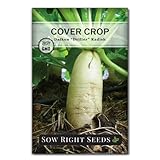



Plant Profile & Key Characteristics
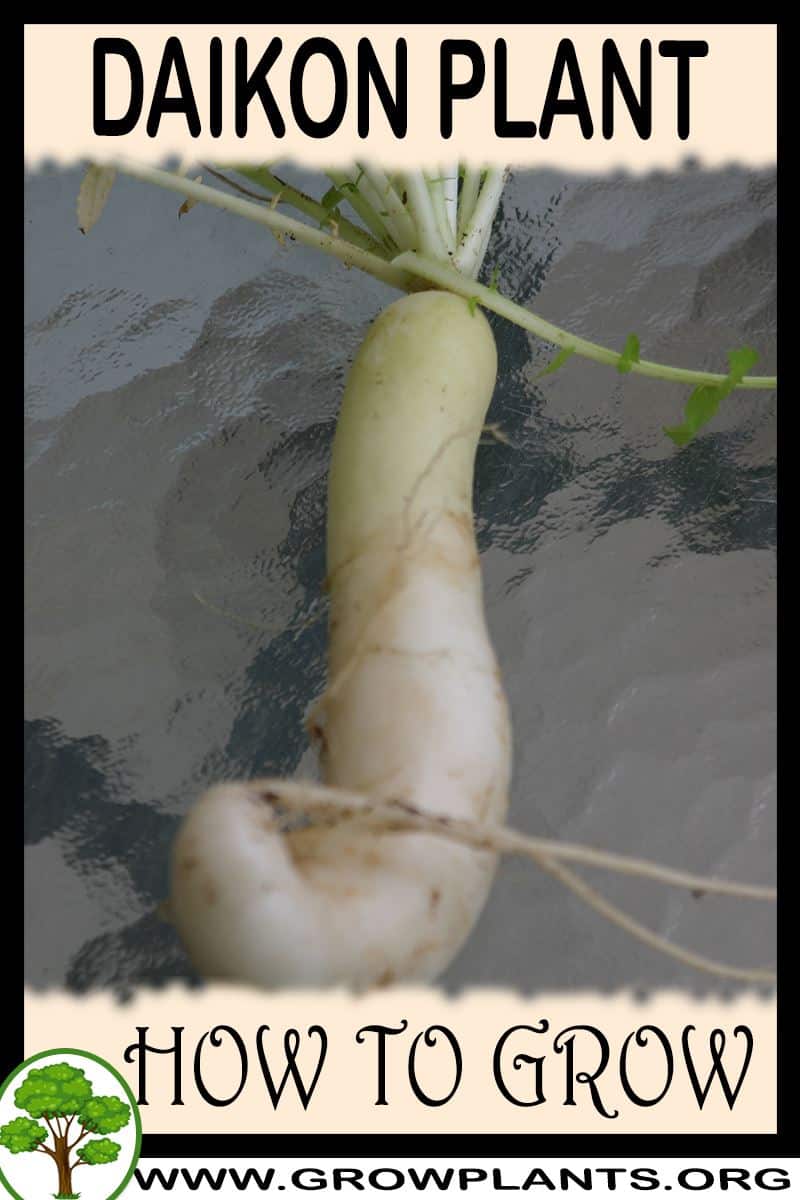
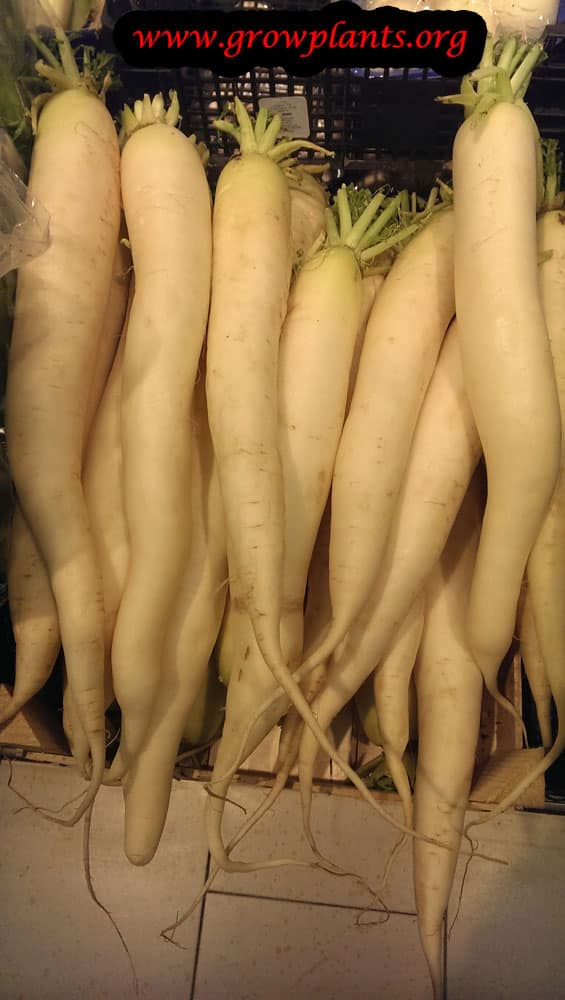
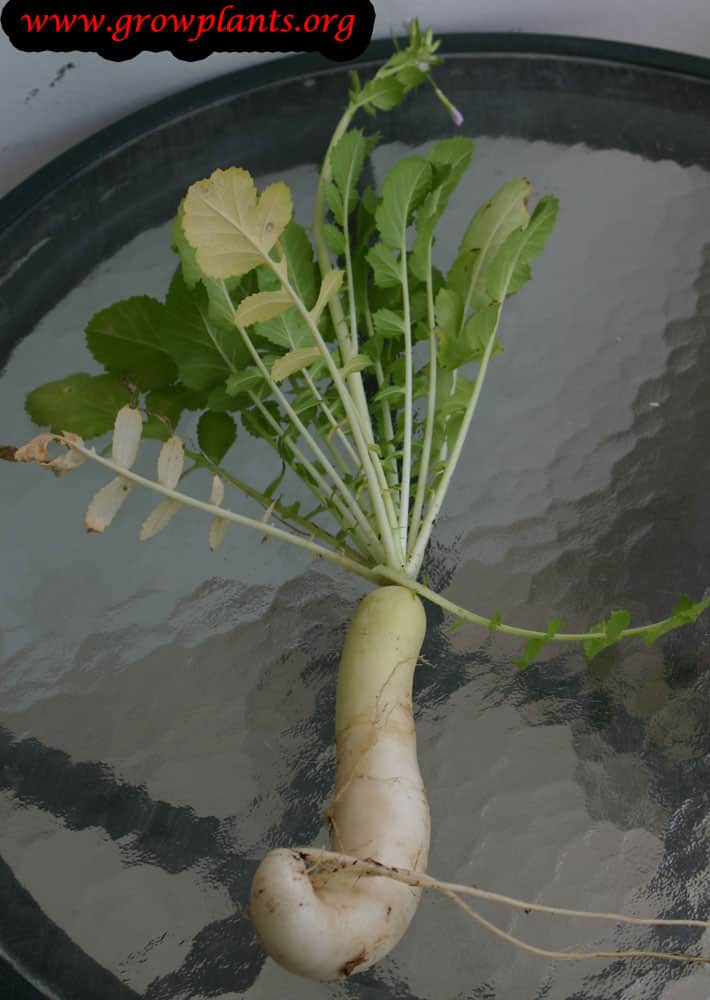
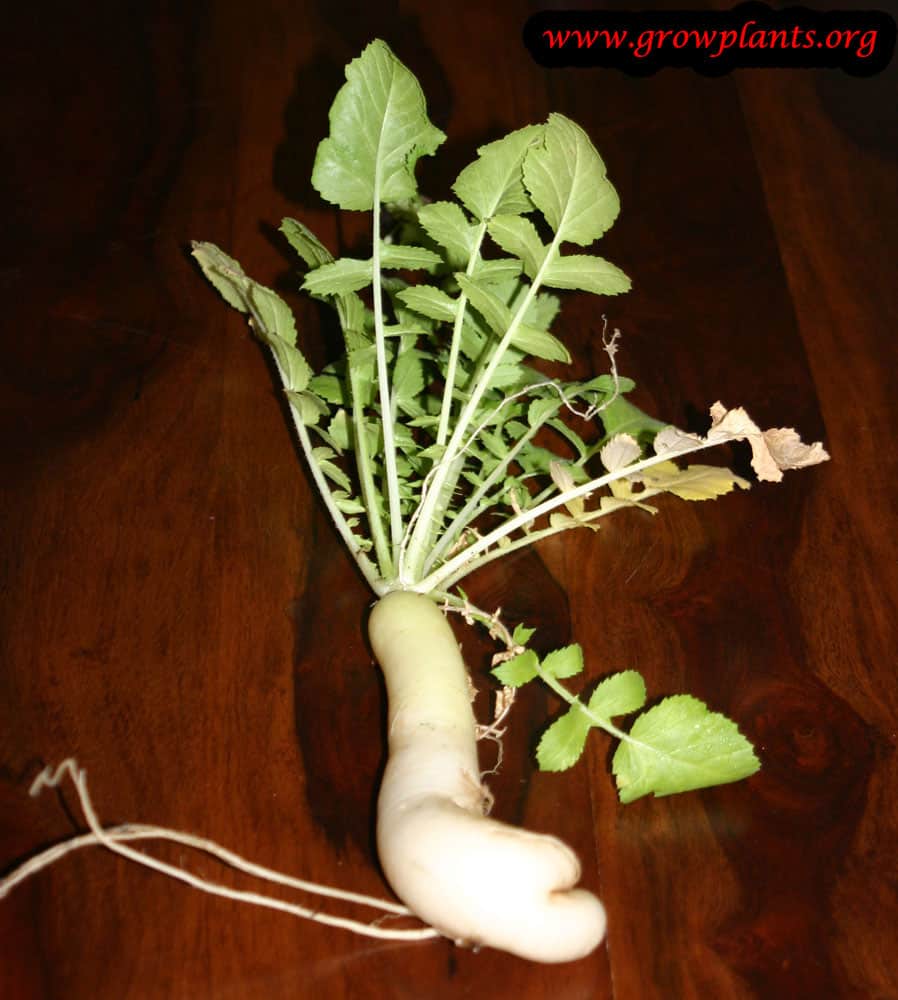
Overview: A fast-growing annual or biennial root vegetable grown for its long white daikon root and edible leaves. It forms a leaf rosette over a swollen taproot, sending up a flowering stem if left to bolt.
Quick Specifications
| Specification | Attribute |
|---|---|
| Plant Type / Life Cycle | Annual or biennial (root vegetable) |
| Foliage Type | Deciduous (herbaceous) |
| Mature Size | Root 10-80 cm (4-32 in); leaf 20-50 cm (8-20 in); flowering stem 0.5-1 m (20-40 in) |
| Growth Rate | Fast to moderate |
| Root System | Swollen edible taproot |
| Toxicity | Non-toxic / edible |
| Hardiness | USDA zones 2-10a (spring), to 10a-11 in autumn planting |
Growth Form & Structure
- Height & Spread: A low leaf rosette over a swollen root, in the ground or a container; it sends up a tall flowering stalk only if left to bolt.
- Growth Habit & Form: Herbaceous rosette-forming root crop.
- Lifespan & Maturity: Grown as a quick seasonal crop; the root is pulled before it turns fibrous.
Anatomy & Physical Features
- Leaves & Foliage: Green leaves, deeply pinnatisect with an oval terminal lobe, arranged in a radial rosette.
- Flower Characteristics: Small white-purple flowers on an inflorescence, pollinated by bees and butterflies.
Primary Uses & Landscape Value
- Edible Uses: Root eaten raw, in salads and pickled; young leaves in salad, mature leaves cooked. The elongated root is white with a white-yellow skin.
- Functional & Ornamental Roles: Grown as a vegetable crop, including in containers.
Care Guide: Planting, Soil & Watering
Overview: Daikon is a cool-season radish grown for its long white taproot, thriving in full sun to part shade in deep, loose, well-drained soil. It needs deep, stone-free ground and steady moisture so the long root can develop fully.
Quick Care Requirements
| Requirement | Ideal Condition |
|---|---|
| Planting Season | Cool season — spring in temperate zones, autumn to winter in frost-free areas |
| Growth Rate | Moderate to Fast |
| Soil Type | Loose, friable, fertile, stone-free, well-draining |
| Soil pH | Slightly acidic to neutral (about 6.0–7.0) |
| Water Need | Moderate — keep evenly and consistently moist |
Planting & Establishment
- Best Planting Season: Radishes are cool-season crops. In temperate climates sow in spring (and again in autumn); in frost-free, warmer climates sow through autumn and winter, avoiding the peak summer heat that pushes plants to bolt.
- How to Plant:
- Hole Preparation: Dig and loosen the seedbed deeply — at least 30 cm for the long daikon root — clearing stones and compaction so the taproot can drive straight down.
- Soil Amendments: Work in a little well-rotted compost for fertility, but avoid fresh manure and heavy nitrogen, which encourage leafy tops and forked, hairy roots.
- Planting Depth: Sow seed shallowly, about 1–2 cm deep, and thin seedlings early to the spacing the variety needs so each root has room to swell.
- Growth Speed & Expectations: Fast-growing once established, but the long taproot needs deep, loose soil and an uninterrupted supply of moisture to reach full size without splitting or turning fibrous.
Soil, Watering & Drainage Care
- Soil Mix & Drainage Needs: Daikon needs deep, loose, stone-free soil so its long root can swell without splitting or forking; dig deeply and ensure free drainage. It can be grown in a deep container of loose, free-draining potting mix.
- Watering Schedule & Technique:
- Young / Newly Planted: Keep the seedbed consistently moist for even germination and never let it dry out while roots are forming.
- Established: Water regularly and evenly — steady moisture is the key to crisp, mild radishes; irregular watering causes splitting, woodiness and excess heat.
- Seasonal Adjustments: Increase watering in warm, dry spells to prevent bolting and pithiness; ease off in cool, wet weather to avoid waterlogging and rot.
Climate, Light & Hardiness
Daikon is a large, cool-season long white radish for temperate, Mediterranean and subtropical gardens in full sun to half shade. It bulks its deep roots in cool weather - a little cold suits it - while heat forces bolting and leaves the roots pithy and over-pungent.
Quick Climate Specifications
| Climate Zones | Temperate, Mediterranean and subtropical (cool-season) |
| USDA Hardiness Zones | Approx. 2–10, grown seasonally |
| Optimal Temp Range | approximately 10–20 °C (50–68 °F) |
| Cold Damage Begins | light frost tolerated; top damage around −3 to −5 °C (27 to 23 °F) |
| Approx. Survival Minimum | tops briefly near −6 to −8 °C (21 to 18 °F); roots in soil tolerate light freezing |
| Frost Tolerance | Moderate |
| Light Conditions | Full Sun / Half Shade |
| Wind Tolerance | Moderate |
Sunlight & Light Exposure
Optimal Light Setup
Full sun gives strong tops and long, well-filled roots; the facts also allow half shade to keep plants cool in warm weather.
Shade & Heat Management
In warm climates light shade slows the bolting that heat triggers and keeps roots milder; daikon is best timed for the cool season.
Best Exposure & Orientation
An open, sunny bed suits spring crops in cool areas; in warmer regions an autumn-to-winter crop lets the long roots bulk as temperatures fall.
Temperature Extremes & Hardiness
USDA Hardiness & Regional Limits
The site lists USDA 2–10 for this seasonal root crop, autumn-to-winter sown in frost-free areas and spring-sown in temperate ones. The zone marks where it can be timed into the cool-season calendar rather than an overwintering plant, though roots stand light frost in the ground.
Cold Damage & Winter Protection
Daikon takes light frost, with top damage around −3 to −5 °C (27 to 23 °F) and hardened tops briefly to about −6 to −8 °C (21 to 18 °F); the deep roots, insulated in soil, tolerate light freezing and store in cool ground. A hard sustained freeze damages exposed shoulders.
Frost Sensitivity
Moderately frost-tolerant - a touch of cold is beneficial, and only a deep freeze ends the crop.
Extreme Heat Tolerance
Heat is the limit: warm weather forces bolting and pithy, harsh roots, so sustained temperatures much above approximately 24 °C (75 °F) are avoided by growing in cool conditions.
Wind, Humidity & Microclimate
Wind Tolerance
The large leafy rosettes (20–50 cm / 8–20 in) are fairly wind-firm; only a bolting flower stem catches strong gusts.
Rainfall & Seasonal Moisture
Adapted to the cool, evenly moist season; steady moisture gives long, smooth, mild roots, while heat and dry spells force bolting and coarse or splitting flesh. This is a climate-adaptation note, separate from routine irrigation.
Microclimate Recommendations
A cool, open, deeply worked, evenly moist bed lets the long roots run straight and hold in the ground through mild frosts.
Growing in Pots, Balconies & Indoors
daikon can be grown in a deep container on a patio or balcony, but it is really an outdoor crop – it needs a good depth of soil and cool, bright conditions to swell a proper root, and the grower does not list it as an indoor houseplant.
Quick Details
- Container Size: A deep pot, at least about 25-30 cm (10-12 in) deep, so the root can run straight down
- Indoor Suitability: Not a houseplant; a sunny sill only raises seedlings or a few leaves, not a usable root
- Best Spot: full sun, with part shade welcome in hot climates – an open, sunny balcony or patio
- Soil & Drainage: Loose, stone-free, deep mix; free-draining so roots do not fork or rot
- Watering in Pots: Keep evenly moist – steady moisture gives smooth, mild roots; drying out then flooding splits them
Indoors & On the Windowsill
- Houseplant limits: Not a houseplant; the root needs full outdoor light, cool temperatures and depth to develop – indoors you get leaves at best.
- Windowsill use: A sunny sill can raise seedlings or a handful of baby leaves, but the root will not size up in a room.
- Overwintering: Hardy roots can sit in the pot through cold weather; otherwise lift and store them cool and dark, or keep pots in a sheltered, unheated spot.
On a Balcony or Patio
- Light & wind: Full sun and cool, even conditions; heat and dry spells make it bolt and turn woody. Pots dry fast against warm walls, so check them often.
- Practicalities: Depth matters more than width – a deep pot prevents forked, stunted roots. Mind the drainage runoff.
Choosing the Pot, Soil & Long-Term Care
- Pot & drainage: A deep container (at least 25-30 cm deep) with strong drainage holes; skip a standing-water saucer to avoid root rot.
- Potting mix: A loose, stone-free, well-aerated mix so roots run straight; avoid fresh lumpy manure, which forks them.
- Feeding: Feed lightly – too much nitrogen gives leaf at the root’s expense; a balanced liquid feed replaces what leaches out.
- Between crops: Sow fresh into refreshed mix each season rather than keeping old plants going.
Growing this plant in a greenhouse
A greenhouse can give daikon cold protection, a longer growing season, winter growing and a head start for propagation.
Greenhouse at a glance
| Greenhouse suitability | Good - clearly useful |
|---|---|
| Main benefits | cold protection, a longer growing season, winter growing, a head start for propagation |
| Season extension | can grow through winter |
| Outdoor protection advisable below | about -5°C |
| Suitable types | unheated greenhouse, polycarbonate greenhouse |
| Heating | No added heat is normally needed. |
Related greenhouse guides
- Greenhouses: How to Choose the Right Greenhouse
- Polycarbonate Greenhouses: What to Look for Before Buying
- Greenhouse Propagation Equipment
Fertilizing & Feeding
A moderate feeder: a balanced start with steady moisture, easing toward potassium as the root swells and stopping before harvest, gives the best-quality roots. A fertilizer formulated for tomatoes and vegetables supports that feeding pattern through harvest.
Quick Fertilizing Specs
| Feeding Level | Moderate |
|---|---|
| Main Nutrient Priority | Balanced at the start, easing toward potassium as the root bulks, with nitrogen kept moderate. |
| Best Feeding Period | During the cool-season active growing period. |
| Organic Options | Compost or well-rotted manure worked in ahead of planting, plus diluted liquid feeds during growth. |
| Micronutrients | Usually supplied by fertile soil; boron shortfalls can cause internal browning of the root in sandy or high-pH ground. |
| Soil pH | Slightly acidic to neutral. |
| Reduce/Stop Feeding | Stop feeding as the root matures, ahead of harvest. |
Feeding by Growth Stage
Establishment after sowing
Settle young plants in and build early roots and leaves in loose soil.
| Nutrient direction | A balanced complete fertilizer worked into loose, well-drained soil before sowing. |
|---|---|
| Timing | From sowing until seedlings are actively growing. |
| Frequency | Light feeding worked into the bed is usually enough at planting. |
| Fertilizer types | Balanced complete garden fertilizer, Well-rotted compost worked into the bed |
| Precautions | Avoid fresh manure and clumps of concentrated fertilizer, which can cause forked or hairy roots; keep the root zone loose and stone-free. |
Leaf-canopy growth
Grow enough leaf to power root development, without running to excess foliage.
| Nutrient direction | A modest nitrogen-forward feed to build the leaf canopy early on. |
|---|---|
| Timing | During early leaf growth before the root begins to swell. |
| Frequency | A light feeding during early leaf growth. |
| Fertilizer types | Nitrogen-forward complete fertilizer, Diluted liquid feed |
| Precautions | Keep nitrogen moderate – too much drives leafy tops at the expense of the root. |
Root bulking and development
Support root swelling, firmness and eating quality.
| Nutrient direction | Shift toward potassium with lower nitrogen as the root begins to swell. |
|---|---|
| Timing | As the root starts to enlarge through to near-maturity. |
| Frequency | A light potassium-leaning feed as roots bulk up. |
| Fertilizer types | Potassium-leaning complete fertilizer, A potassium source such as wood ash used sparingly |
| Precautions | Avoid a late flush of nitrogen, which delays maturity and can hurt flavor and storage. |
Root maturation before harvest
Let the root firm up and finish ahead of harvest.
| Nutrient direction | None – withhold fertilizer as the root finishes. |
|---|---|
| Timing | In the final stretch before lifting the root. |
| Frequency | No feeding at this stage. |
| Fertilizer types | No feeding at this stage – the crop is finishing and needs no further fertilizer. |
| Precautions | Do not fertilize close to harvest; extra nutrients now reduce quality and storage life. |
Nutrient Deficiency Signs & Corrections
Older leaves turn pale and yellow, tops stay small and weak, and root growth is slow.
| Possible causes | Low soil nitrogen or nitrogen leached by heavy watering or rain, Cold or waterlogged soil limiting uptake, Poor, low-organic-matter soil |
|---|---|
| Appears first on | Older, lower leaves |
| What to check | Recent heavy rain or irrigation, Soil organic matter and fertility, Soil temperature and drainage |
| Possible correction | Apply a modest nitrogen-forward feed early in growth and keep the soil evenly moist; avoid overdoing nitrogen once the root is bulking. |
Scorched, browning margins on older leaves with weak, poorly-filled roots.
| Possible causes | Low soil potassium, Sandy soil low in nutrients, Drought stress limiting potassium uptake |
|---|---|
| Appears first on | Margins of older leaves |
| What to check | Soil test for potassium, Watering consistency during bulking, Soil type and organic matter |
| Possible correction | Use a complete fertilizer that includes potassium as the root bulks, and keep watering consistent. |
Internal browning, hollow or corky spots inside the root, sometimes with cracked skin.
| Possible causes | Low soil boron, often in sandy or high-pH soils, Dry soil limiting boron movement to the root, Over-liming raising soil pH |
|---|---|
| Appears first on | Inside the developing root |
| What to check | Soil test for boron before adding any, Soil moisture consistency during bulking, Recent liming or high pH |
| Possible correction | Only if a soil test confirms low boron, apply a boron product very carefully per its label – the margin between enough and too much is narrow; otherwise correct moisture and pH. |
Pruning, Training & Seasonal Maintenance
Daikon (Raphanus sativus) is grown for its long white elongated root, so it is not a plant you prune — almost all cutting is either thinning the stand at the seedling stage or topping the root at harvest. The leaves are the engine that sizes the root, so they stay intact while the plant is bulking; the only growth deliberately removed in season is a bolting flower stalk, which is the signal that the root is turning pithy. Because the root is so long, daikon’s success is decided in the soil, not with the snips: it needs deep, loose, stone-free ground so the root drives straight down. Any obstruction forks it, and no amount of pruning corrects a forked root.
Quick Pruning & Maintenance Specs
| Pruning Tolerance | None as a structural plant — the foliage is the engine that sizes the root |
| Primary ‘Pruning’ Action | Thinning the seedling stand to about 10–15 cm apart |
| Secondary Action | Removing a bolting flower stalk (heat / long days) |
| Typical Frequency | One thinning pass; no ongoing pruning |
| Main Objective | Even spacing for a well-formed root; harvest before it turns fibrous |
| Best Tool Type | Precision snips (thinning and topping only) |
| Days to a Harvestable Root | An autumn crop sized over cool weeks |
| Root at Harvest | 10–80 cm long |
| Avoid Cutting Foliage | Before the root is lifted |
Pruning by Plant Age & Size
Newly Established (Seedling)
Thin—do not transplant—to about 10–15 cm apart, snipping surplus seedlings off at soil level rather than pulling them, which would disturb the roots of the neighbours you are keeping. Crowded, un-thinned rows are the single most common reason radishes fail to bulb.
Young / Bulking
No training and no leaf removal. Daikon forms a leaf rosette over a swelling root, and every leaf left in place feeds that root — so resist the urge to tidy the foliage. There is no structural framework to build.
Mature / Ready to Lift
Lift once the long root has reached full length and thickness but before it bolts or the ground freezes; a daikon left too long or grown into warmth turns fibrous and hollow. A radish left well past maturity splits, turns pithy or woody and becomes sharply hot. Lift the whole plant and cut the tops off cleanly at the shoulder.
Seasonal Pruning Schedule
Cool-Season Growth
Daikon is a cool-season crop; while it bulks in mild weather it needs no cutting at all. It is an autumn crop; sown into spring heat it bolts before the root sizes.
Bolting (Heat & Long Days)
Heat or lengthening days push the plant to send up a flower stalk; once that starts, the root stops enlarging and turns fibrous. Cutting the stalk buys only a little time — the practical response is to harvest immediately.
Ongoing Sanitary
Remove leaves badly chewed by Pieris caterpillars, cutworm (Spodoptera) or slugs, and bin—do not compost—plants showing cabbage root fly (Delia radicum) or clubroot damage.
Special Growth to Remove
- Bolting flower stalk — cut at the base at first sign, but treat it as a cue to harvest rather than a fix.
- Diseased or badly pest-eaten leaves — remove and dispose of, especially root-fly– or clubroot-affected material.
Do not remove healthy leaves before harvest — the note is explicit that foliage should stay on until the root is picked.
Container & Small-Space Pruning
Only a very deep container suits daikon’s long root; most growers keep it in the ground. Thin wide (10–15 cm) and ensure loose, deep soil so the root is not forked or stunted.
Tools
Precision snips are the only tool: fine cuts to thin seedlings at soil line and to top the roots at harvest. Nothing about a radish calls for secateurs, loppers, a saw or shears.
Tool Hygiene & Disease Risk
Routine — a clean, sharp blade is enough. Risk rises only where clubroot is present in the soil: bin affected plants (never compost), and clean the blade so you are not carrying spores between plants. The main radish threats are soil pests (cabbage root fly, slugs), which sanitation and disposal address more than tool hygiene.
Cut Placement & Technique
Thin by snipping unwanted seedlings at the soil surface, leaving the keepers undisturbed. At harvest, lift the whole root and cut the leafy top off at the crown. There is no branch-collar, heading or thinning-cut logic here — a radish has no woody structure.
Heavy Pruning & Rejuvenation
Not applicable, and important to state plainly: a radish is a single-season root crop with no perennial framework and no ability to regrow from hard cutting — there is nothing to rejuvenate. If a stand has bolted or gone over, resow a fresh succession rather than trying to cut it back.
Post-Pruning Care
After thinning, water lightly to resettle the soil around the remaining seedlings. Keep moisture even from then on — irregular watering, not pruning, is what makes radish roots split or turn woody. No feeding is required in response to thinning.
Common Pruning Mistakes
- Sowing too thick and never thinning — crowded radishes make all leaf and no root.
- Trimming the leaves off a bulking plant — premature defoliation directly shrinks the root.
- Sowing into compacted or stony soil, which forks and stunts the long root — deep, loose ground matters far more than any cutting
- Letting it bolt in heat: once the flower stalk rises the root stops enlarging and goes pithy and hot.
When NOT to Prune
Never strip the foliage of a radish that is still bulking — the leaves must stay on until the root is lifted. Avoid disturbing the stand once it is thinned; further ‘tidying’ only checks growth.
Recommended Tools (by task)
- precision_snips — the one tool needed: snip-thinning seedlings at soil level and topping the roots at harvest.
Propagation Guide
Daikon is grown only from seed, sown directly where it is to crop because the swelling taproot resents being transplanted. Germination is fast and even in cool, moist soil, making it an Easy plant to raise; the main skill is timing sowings for cool weather so plants do not bolt before the root fills out.
Quick Propagation Specs
| Best Propagation Method | Seed, direct-sown |
| Alternative Methods | None in practice — radishes are raised only from seed |
| Propagation Difficulty | Easy |
| Seed True-to-Type | Mostly uniform — mostly uniform, but radishes cross readily with other radishes so isolate plants grown for seed |
| Best Propagation Season | Sow autumn to winter in frost-free areas, or in spring in a temperate climate |
| Seed Germination Time | Usually within about a week in warm, moist soil |
| Germination Temperature | Germinates over a wide range, roughly 7–30°C (45–86°F); fastest around 18–24°C (65–75°F) |
| Seed Sowing Depth | About 1–2 cm (0.5–0.75 in) deep, in deep, loose soil worked well below the surface so the long root can drive down |
Growing from Seed
Seed Handling & Viability
Store the dry seed somewhere cool and dark; radish seed stays viable for several years. There is no need for any special pre-sowing treatment.
Sowing Season
Sow autumn to winter in frost-free areas, or in spring in a temperate climate. Sow in cool conditions — heat and long days push plants to run to flower before the root is usable.
Sowing Depth & Spacing
Sow direct, about 1–2 cm (0.5–0.75 in) deep, in deep, loose soil worked well below the surface so the long root can drive down. Thin generously — daikon needs about 10–15 cm (4–6 in) between plants for its long root.
Germination Conditions & Time
Keep the seedbed evenly moist; in warm soil seedlings usually appear within about a week, and germination is typically quick and even rather than staggered.
Seedling Care
Thin early so the remaining plants are not crowded, and keep the soil steadily moist while roots swell.
Bloom & Edible Flower Guide
Quick Details
- Bloom Season: Summer
- Time to First Bloom: Often within weeks to a couple of months in warm, long-day conditions; some plants behave as biennials and flower after a cold spell
- Flower Appearance: Small four-petalled flowers in white flushed with purple, borne in loose clusters (racemes)
- Edibility: Edible – the flowers carry a mild, peppery radish bite and make a lively garnish; the young seed pods are a well-known snack too
Detailed Blooming Overview
Daikon is grown for its long white root, harvested before flowering. Left to bolt, it raises branching stems of small white-and-purple cruciform flowers loved by bees and butterflies. The tender buds and flowers are edible, with the familiar clean radish heat.
Flower Characteristics
- Small four-petalled (cruciform) flowers, white flushed with purple, on branching racemes.
- Followed by plump seed pods (siliques) if left to mature.
Bloom Care & Thinning
- Managing the bloom: For a good root, harvest before the plant bolts; if you let it flower, pick the young buds and flowers to eat, or leave it to set seed.
- Pollination: Pollinated by bees and butterflies.
Bloom Health & Protection
- Aphids: Aphids often cluster on flowering shoots and buds; a strong jet of water, insecticidal soap or neem oil keeps them in check.
- Cabbage white caterpillars: These can graze buds and open flowers – a Bacillus thuringiensis (Bt) spray is a targeted, low-impact option.
Fruit & Uses
Daikon is grown mainly for its long, white taproot, a mild-to-pungent radish eaten raw, in salad or pickled; the green leafy tops are also edible. The root can grow very large and is a staple of East Asian cooking, fresh and fermented.
Quick Edible Specs
| Edible Parts | Taproot; leaves (greens) |
|---|---|
| Main Use(s) | Culinary – root raw, salad, pickled; leaves cooked or in salad |
| Eaten Raw or Cooked | Root usually raw; leaves both |
| Preparation Required | Scrub/peel the root; wash greens; pull before the root turns fibrous |
| Harvest Season | Cold areas spring–summer; frost-free areas autumn–winter |
| Time to First Harvest | Fast to medium; lift before the root becomes woody |
| Storage | Firm root keeps for weeks in cool conditions; often pickled |
| Safety/Toxicity Caveat | No toxic parts; mild-to-pungent radish flavour |
Roots & Tubers
The edible root is white with a white-yellow skin and an elongated shape, and can grow long (site gives 10–80 cm). Lift it in its season before it becomes over-large and fibrous – judging that timing is the main knack.
Leaves & Greens
The green, deeply lobed (pinnatisect) leaves in a radial rosette are edible. Trim leaves at the base next to the stem, using young leaves for salad and mature leaves for cooking; it is better not to strip the leaves until the root has been pulled, so leaf-picking does not draw down the root.
Preparation, Uses & Safety
Grate or slice the root raw into salads and garnishes, simmer it in soups and braises, or pickle it (as in takuan and similar); cook the greens like other brassica leaves or use young in salad. No detoxifying preparation is required and there are no toxic parts.
Pests, Diseases & Troubleshooting
As a fast-growing brassica (Brassicaceae), radish shares the cabbage family’s pest list, led by flea beetles and root maggots, and its diseases favour cool, wet or crowded conditions. Because the crop matures in weeks, good rotation, healthy soil and physical barriers usually deliver a clean harvest with little or no spraying – cultural control is far more important than chemicals here.
Quick Troubleshooting Overview
| Issue / Pest | Main Symptom | Primary Solution |
|---|---|---|
| Flea beetles | Many tiny round ‘shot-hole’ pits in seedling leaves | Floating row cover from sowing; kaolin clay or spinosad if severe |
| Cabbage root maggot | Wilting plants; tunnelled, maggoty roots | Row cover, brassica collars, rotate beds; avoid fresh manure |
| Cabbage aphids | Grey waxy clusters on leaves; distorted growth | Water jet, insecticidal soap, encourage ladybirds |
| Caterpillars (cabbage white, armyworm) | Chewed leaves and green droppings | Handpick, netting, Bacillus thuringiensis (Bt) |
| Slugs & snails | Ragged holes, slime trails on seedlings | Traps, barriers, evening handpicking, iron-phosphate bait |
| Woody / split roots | Tough, pithy or cracked roots at harvest | Harvest young, keep watering even, sow in cool weather |
Common Pests & Management
- Flea beetles (Phyllotreta spp.):
- Symptoms: Tiny black or bronze beetles that jump when disturbed and riddle seedling leaves with countless small round ‘shot-holes’. Young plants can be badly checked or killed; damage is worst in warm, dry spells on emerging seedlings. This is the number-one radish pest and is usually mistranslated or missed in generic pest lists.
- Prevention & Control: Cover seedbeds with floating row cover or fine insect mesh from the moment of sowing, sealed at the edges, since radish needs no pollination. Keep plants growing fast with even moisture, clear crop debris and weeds, and rotate away from other brassicas. Where pressure is high, kaolin-clay film deters feeding and spinosad or pyrethrin can be used as a last resort – in the evening to spare pollinators.
- Cabbage root maggot / cabbage root fly (Delia radicum):
- Symptoms: The adult fly lays at the plant base; white legless maggots tunnel into the swelling root and lower stem, causing wilting, stunting, off-colour foliage and slimy, ruined roots riddled with brown galleries. Worst in cool, moist conditions.
- Prevention & Control: Exclude the egg-laying fly with row cover or fit felt/cardboard collars around each stem base. Rotate crops, avoid fresh manure that attracts flies, and firm the soil around plants. Beneficial nematodes (Steinernema) drenched into the soil help suppress larvae.
- Cabbage aphid (Brevicoryne brassicae):
- Symptoms: Dense grey-green, waxy-coated colonies on leaves and growing points, causing curling, yellowing and sticky honeydew with sooty mould; can also spread viruses.
- Prevention & Control: Dislodge colonies with a strong water spray and encourage ladybirds, lacewings and hoverflies. Remove heavily infested leaves. Insecticidal soap or neem oil, thoroughly wetting leaf undersides, controls stubborn outbreaks; spray in the evening.
- Cabbage white caterpillars (Pieris rapae / Pieris brassicae):
- Symptoms: Green or velvety caterpillars chew large holes in the leaves and leave dark-green pellets of frass; heavy feeding can strip young foliage and check root development.
- Prevention & Control: Net crops to stop the butterflies laying, and squash the clusters of yellow eggs and young larvae on leaf undersides. Handpick larger caterpillars. The biological spray Bacillus thuringiensis (Bt) is highly effective and selective.
- Cutworms & armyworms (Agrotis / Spodoptera spp.):
- Symptoms: Seedlings cut off at ground level overnight (cutworms) or foliage stripped by masses of caterpillars (armyworms, the ‘prodenia’ of old lists); fat larvae hide in the soil or leaf litter by day.
- Prevention & Control: Clear weeds, cultivate the soil before sowing to expose pupae, and fit cardboard collars around seedlings against cutworms. Handpick at dusk, encourage birds and ground beetles, and use Bt for young armyworm larvae.
- Slugs & snails (Deroceras / Cornu spp.):
- Symptoms: Ragged holes in cotyledons and leaves, shredded seedlings and tell-tale silvery slime trails, especially in wet weather and shady, mulched beds.
- Prevention & Control: Remove daytime hiding places, water in the morning so soil dries by night, set beer traps or use copper barriers, and handpick after dark. Iron-phosphate pellets are a pet-safe bait.
Diseases & Fungal Issues
- White rust / white blister (Albugo candida):
- Symptoms: Raised, chalky-white pustules on the undersides of leaves with yellow blotches above; leaves and stems may swell and distort.
- Treatment & Management: Rotate crops, space plants for airflow, avoid overhead watering and remove infected leaves. Copper fungicide protects in wet seasons; choose resistant varieties where available.
- Downy mildew (Peronospora parasitica / Hyaloperonospora):
- Symptoms: Yellow angular blotches on the upper leaf surface with a greyish, downy mould beneath in cool, damp weather; seedlings can be badly stunted.
- Treatment & Management: Improve drainage and ventilation, avoid wetting foliage, and clear debris. Copper-based fungicide gives protection where the disease recurs.
- Clubroot (Plasmodiophora brassicae):
- Symptoms: Stunted, wilting plants with swollen, distorted, galled roots that rot; a persistent soil-borne disease of the whole cabbage family, worst in acid, wet soils.
- Treatment & Management: Practise long rotations, improve drainage and raise soil pH toward neutral with lime. Remove and destroy affected plants – do not compost – and never move infected soil between beds.
- Damping-off (Pythium / Rhizoctonia spp.):
- Symptoms: Seedlings fail to emerge or topple with a pinched, water-soaked, blackened stem base; common in cold, wet, over-sown seedbeds.
- Treatment & Management: Sow into warm, free-draining soil at the right depth, avoid overwatering and over-crowding, and use clean containers and fresh media for transplants.
- Black rot / bacterial leaf spot (Xanthomonas campestris):
- Symptoms: Yellow V-shaped lesions spreading in from the leaf margins with blackened veins; can rot the root and spreads through splashing water and infected seed.
- Treatment & Management: Use clean, hot-water-treated seed, rotate crops, avoid working among wet plants, and remove infected material. Copper sprays give some protection.
- Alternaria leaf spot (Alternaria brassicae):
- Symptoms: Small dark spots that enlarge into brown target-like rings with yellow haloes on leaves; heavy spotting reduces vigour.
- Treatment & Management: Rotate, space for airflow, avoid overhead watering, and clear debris. Copper fungicide helps in prolonged wet weather.
Growing Difficulties & Abiotic Problems
- Woody, pithy or hot roots:
- Cause & Symptoms: Radishes left too long, grown in heat or short of water turn tough, fibrous, pithy and unpleasantly pungent – the grower’s main complaint.
- Correction Strategy: Sow in the cool part of the season, keep the soil evenly moist, thin to correct spacing, and harvest promptly at the right size rather than letting roots stand.
- Splitting / cracked roots:
- Cause & Symptoms: A dry spell followed by heavy watering makes the swollen root take up water fast and split.
- Correction Strategy: Water little and often to keep soil moisture steady, mulch to buffer drying, and harvest on time.
- All top, no root (bolting):
- Cause & Symptoms: Excess nitrogen, shade, over-crowding, or long, warm days push leafy top growth and premature flowering instead of a good root.
- Correction Strategy: Give full sun and thin seedlings properly, go easy on nitrogen, and grow fast-maturing types in cool conditions to beat bolting.
- Forked or misshapen roots:
- Cause & Symptoms: Stony, cloddy or freshly manured soil and transplanting shock deflect the taproot.
- Correction Strategy: Sow directly into finely worked, stone-free soil, avoid fresh manure, and do not transplant radishes.
What Helps – Products & Tools
Radish rarely needs much: floating row cover or insect mesh is the single most valuable ‘product’, excluding flea beetles, root fly and cabbage whites at once. Back it with insecticidal soap or neem oil for aphids, Bacillus thuringiensis (Bt) for caterpillars, iron-phosphate slug bait, beneficial nematodes for root maggots, and copper fungicide for the wet-weather leaf diseases.