


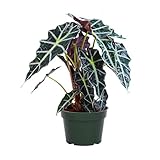

Plant Profile & Key Characteristics
Overview: Cyclamen africanum (African cyclamen) is a small deciduous tuberous perennial about 5–15 cm (2–6 in) high, forming a low rosette of silver-marbled, heart-shaped leaves. Grown as an ornamental and as a pot or house plant, it bears nodding pink to white with a deeper pink base flowers with swept-up petals; like most cyclamen, the tuber is toxic if eaten.
Quick Specifications
| Specification | Attribute |
|---|---|
| Plant Type / Life Cycle | Perennial (tuberous geophyte) |
| Foliage Type | Deciduous (dies back to the tuber in summer dormancy) |
| Mature Size | 5–15 cm (2–6 in) tall |
| Growth Rate | Slow to moderate |
| Root System | Tuberous – grows from a flattened underground tuber |
| Toxicity | Toxic – the tuber and all parts contain saponins (cyclamin); harmful to pets and people if eaten |
| Hardiness | USDA zones 8–10 |
Growth Form & Structure
- Height & Spread: Low rosette about 5–15 cm (2–6 in) high and a little wider; in a container a single tuber grows well in a 0.5–2 L (about ½ gallon) well-drained pot.
- Growth Habit & Form: Low tuberous perennial forming a dense rosette of long-stalked leaves, with flowers held singly on slender stems just above the foliage.
- Lifespan & Maturity: Long-lived from the tuber, which enlarges year on year; seed-grown plants take a few years to reach flowering size.
Anatomy & Physical Features
- Leaves & Foliage: Heart-shaped leaves on long stalks, dark to light green marbled with silver-white patterning that varies between plants.
- Flower Characteristics: Nodding flowers with five reflexed (swept-up) petals, pink to white with a deeper pink base; petals range from flat to twisted between cultivars.
Primary Uses & Landscape Value
- Functional & Ornamental Roles: Ornamental for rock gardens, borders and woodland-edge plantings, and a popular pot or house plant; prized for cool-season colour.
Care Guide: Planting, Soil & Watering
Overview: Cyclamen africanum is a tuberous perennial that thrives in cool conditions in partial to full shade, growing from a tuber that demands sharp drainage above all else. Give it a rich, humus-laden yet free-draining soil and modest watering – evenly moist while in leaf, then much drier as the tuber rests over summer. It is hardy in roughly hardiness zone 8–10.
Quick Care Requirements
| Requirement | Ideal Condition |
|---|---|
| Planting Season | Autumn to winter |
| Growth Rate | Slow to moderate |
| Soil Type | Rich, humus-laden, sharply draining |
| Water Need | Low to moderate – let the surface dry between waterings; keep drier in summer dormancy |
Planting & Establishment
- Best Planting Season: Plant in autumn through winter, while the tuber is dormant or just waking. Cyclamen tubers are best set out while dormant or just breaking growth.
- How to Plant:
- Hole Preparation: Dig a planting hole well wider than the tuber – roughly 100–300% wider – and clear it of stones so roots can spread into loose, open soil.
- Soil Amendments: Work in plenty of organic matter and humus, adding grit if drainage is at all doubtful; once the plant is established, feed lightly about once a year.
- Planting Depth: Set the tuber so its top sits at or just above the soil surface rather than buried – burying it invites rot. Keep the soil lightly moist until growth appears.
- Growth Speed & Expectations: Expect slow to moderate growth, reaching about 5–15 cm (2–6 in) tall; tubers bulk up and flower more freely over several seasons, while seed-grown plants take a few years to reach blooming size.
Soil, Watering & Drainage Care
- Soil Mix & Drainage Needs: Sharp drainage is non-negotiable – a tuber left in cold, waterlogged soil, or hit by heavy summer rain, rots quickly. Plant on a free-draining, humus-rich site in the ground, or use a gritty, well-aerated potting mix in a small container of about 0.5–2 L with drainage holes.
- Watering Schedule & Technique:
- Young / Newly Planted: After planting, keep the soil evenly moist but never soggy until leaves emerge and the plant roots in.
- Established: Water moderately through the growing and flowering season, letting the top of the soil dry before watering again; water at soil level and keep the crown of the tuber dry to avoid rot.
- Seasonal Adjustments: Ease right off as the plant dies back into summer dormancy – most cyclamen want a dry, warm rest – then resume watering as fresh growth returns in autumn.
Climate, Light & Hardiness
Cyclamen africanum is a shade-loving, autumn-to-winter-flowering tuberous perennial for mediterranean and subtropical climates, needing half to full shade rather than direct sun. It is more tender than many other cyclamen, hardy through USDA Zones 8–10 but not built for hard, prolonged freezes.
Quick Climate Specifications
| Climate Zones | mediterranean, subtropical, and indoor |
| USDA Hardiness Zones | Zones 8–10 |
| Optimal Temp Range | Approximately 10–20°C (50–68°F) during its autumn–winter growth and bloom period |
| Cold Damage Begins | Approximately 0°C (32°F) for foliage and flowers |
| Approx. Survival Minimum | Roughly −12 to −7°C (10–20°F) for the dormant tuber, in line with USDA Zone 8 |
| Frost Tolerance | Low to Moderate |
| Light Conditions | Half Shade / Full Shade |
Sunlight & Light Exposure
Shade & Heat Management
Needs half to full shade rather than direct sun; because it flowers in autumn and winter it avoids peak summer heat naturally, but still benefits from a shaded, cooler position year-round.
Best Exposure / Orientation
Shaded beds under trees or shrubs, or a shaded outdoor pot, suit it best; it also grows as an indoor houseplant in bright but indirect light.
Temperature Extremes & Hardiness
USDA Hardiness & Regional Limits
Reliably hardy through USDA Zones 8–10; below Zone 8, cold limits year-round outdoor growth and the tuber is typically lifted for winter or grown indoors instead. As with other cyclamen, cold tolerance can vary somewhat by individual plant vigor and exposure.
Cold Damage & Winter Protection
In climates colder than Zone 8, protect or lift the tuber for winter following the same cold-storage approach used for tender cyclamen generally: dig up, store dry and dark and refrigerated, and replant in the growing season.
Frost Sensitivity
Low to Moderate; unlike some hardier cyclamen, it is not built to shrug off hard, prolonged freezes.
Extreme Heat Tolerance
Blooms in the cooler autumn–winter months and prefers shade, so it is not adapted to prolonged, intense summer heat in full sun.
Wind, Humidity & Microclimate
Humidity Preferences
Moderate humidity suits it well, consistent with a mediterranean/subtropical shaded understory habitat.
Microclimate Recommendations
A cool, shaded, sheltered spot – such as under deciduous trees or shrubs – matches its natural growing conditions better than an open, sunny site.
Growing in Pots, Balconies & Indoors
Cyclamen africanum is one of the classic winter-flowering houseplants and also a fine choice for shady pots and troughs. Grown from a tuber it stays small and thrives in a cool, bright room – indoors it needs good light to flower and, above all, cool temperatures away from heaters.
Quick Details
- Container Size: About 0.5-2 L per tuber, depending on the size of the bulb (the grower’s guidance).
- Indoor Suitability: A genuine houseplant – give it a bright spot and cool room temperatures.
- Best Spot: Part to full shade; bright but out of hot direct sun, and kept cool to set the most flowers. It stays small (5-15 cm, 2-6 inches).
- Soil & Drainage: Well-drained potting mix; tubers rot in soggy soil.
- Watering in Pots: Small to average water – keep just moist, never waterlogged, and ease right off as the plant dies back into summer dormancy.
Indoors & On the Windowsill
- A real houseplant: Yes – cyclamen grow happily indoors. The grower’s keys are enough light to flower and cool temperatures to set buds; keep plants away from radiators and heaters, which halt flowering and stress the plant.
- Windowsill growing: A bright, cool windowsill is ideal. Too little light or too much warmth are the usual reasons an indoor cyclamen refuses to bloom.
- Watering & dormancy: Water carefully – from below is safest, to keep the tuber’s crown dry – then let the plant rest and dry off through its summer dormancy.
- Safety indoors: Cyclamen tubers are toxic if eaten – keep plants out of reach of children and pets.
On a Balcony or Patio
- Light & shelter: These are woodland tuber plants that mostly prefer part to full shade; a cool, shaded balcony or patio suits them, sheltered from harsh midday sun and drying wind.
- Practicalities: Small, light pots are easy to move to the coolest, brightest shaded corner for flowering; protect them from heavy summer rain, which can rot dormant tubers.
Choosing the Pot, Soil & Long-Term Care
- Pot & drainage: 0.5-2 L per tuber with strong drainage holes; skip a standing-water saucer (or empty it) to prevent rot. Set the tuber so its top sits at or just above the soil surface.
- Potting mix: A free-draining potting mix; add grit or perlite for extra drainage.
- Feeding: Potted plants leach nutrients faster, so a light feed during active growth and flowering supports blooming – the grower notes that too little feed is a common cause of poor flowering.
- Refreshing & repotting: Every few years check the mix is still healthy; if it is tired, wash the old soil off the tuber and repot in fresh. If the tubers and roots fill the pot, split them or move up to a larger container to keep the display flowering.
Grower’s Container Tip
- Rest the tuber in dormancy: In the dormant season you can lift the tuber right out of the mix and keep it dry until growth resumes – the grower’s reliable way to carry potted cyclamen over from one year to the next.
Growing this plant in a greenhouse
A greenhouse can give cyclamen africanum frost protection, cold protection, a longer growing season and winter growing.
Greenhouse at a glance
| Greenhouse suitability | Good - clearly useful |
|---|---|
| Main benefits | frost protection, cold protection, a longer growing season, winter growing |
| Season extension | can grow through winter |
| Outdoor protection advisable below | about 0°C |
| Suitable types | unheated greenhouse, polycarbonate greenhouse |
| Heating | No added heat is normally needed. |
Related greenhouse guides
- Greenhouses: How to Choose the Right Greenhouse
- Polycarbonate Greenhouses: What to Look for Before Buying
- Greenhouse Propagation Equipment
Fertilizing & Feeding
A light feeder: this shade-loving cyclamen needs only an occasional light balanced feeding once established and through its autumn-into-winter leaf growth and bloom, with feeding withheld while the tuber is dormant and leafless.
Quick Fertilizing Specs
| Feeding Level | Light feeder |
|---|---|
| Main Nutrient Priority | Balanced feeding that supports leaf growth and autumn-into-winter flowering |
| Best Feeding Period | Through active leaf growth and into the autumn-winter bloom, once established |
| Organic Options | Organic matter and humus worked into the planting hole or potting mix |
| Reduce/Stop Feeding | Stop feeding entirely once the foliage dies back and the tuber goes dormant for summer |
| Micronutrients | Usually adequate from a complete fertilizer and good potting mix; correct only a diagnosed deficiency |
| Soil pH | Prefers well-drained, rock-free soil; exact pH is less important than drainage |
Feeding by Growth Stage
Autumn-to-winter planting and root establishment
Support root development after a tuber, seedling, or nursery plant is first planted into a shaded bed or container, before it draws on added fertilizer.
| Nutrient direction | Organic matter and humus worked into the planting hole do the early work; keep feeding minimal until the plant is settled in and actively growing. |
|---|---|
| Timing | At autumn or winter planting, before or just as the first leaves appear. |
| Frequency | A light feeding once the plant is established and growing is usually enough to start. |
| Fertilizer types | Organic matter and humus worked into the planting hole or potting mix, A light balanced fertilizer once new growth shows |
| Precautions | Keep feeding minimal until roots are established; a freshly planted or transplanted tuber can’t use much fertilizer yet. |
Autumn-into-winter leaf growth and bloom
Support the patterned, heart-shaped foliage and the pink-to-white flowers through this species’ autumn-into-winter growing and blooming season.
| Nutrient direction | A balanced, complete fertilizer applied lightly through the leafy growth and bloom period keeps color and flowering steady, in shaded beds or in containers. |
|---|---|
| Timing | Through autumn-into-winter leaf growth and bloom. |
| Frequency | Occasional light feedings during active growth are enough for this modest feeder. |
| Fertilizer types | A balanced complete fertilizer, A fertilizer labeled for flowering houseplants when grown in containers indoors |
| Precautions | Avoid heavy feeding; a plant that fails to bloom is more often short on shade-appropriate light or cool temperatures than on fertilizer. |
Summer dormancy after foliage dieback
Let the tuber rest through the warm season once the foliage dies back after bloom.
| Nutrient direction | None – withhold fertilizer while the tuber is dormant and has no active leaves to use it. |
|---|---|
| Timing | Over summer, once the foliage has died back. |
| Frequency | No feeding at this stage; feeding resumes only when new leaves emerge in autumn. |
| Fertilizer types | No feeding at this stage; a dormant, leafless tuber cannot use added nutrients. |
| Precautions | Do not fertilize a bare, dormant tuber; keep it on the dry side in a shaded, protected spot and wait for autumn regrowth before feeding again. |
Nutrient Deficiency Signs & Corrections
Leaves are pale and undersized and flowering is weak despite otherwise reasonable care.
| Possible causes | low fertility in the soil or potting mix, infrequent feeding relative to the plant’s pot size, deep shade reducing overall vigor and nutrient use |
|---|---|
| Appears first on | overall leaf size and color |
| What to check | recent feeding history, pot size and time since repotting, how much shade the planting site gets |
| Possible correction | Resume light balanced feeding during active growth and confirm the site isn’t so deeply shaded that growth stalls. |
New leaves emerge yellow between the veins while the veins themselves stay green.
| Possible causes | high soil or potting-mix pH limiting iron availability, waterlogged or poorly drained soil, naturally low iron in the growing medium |
|---|---|
| Appears first on | youngest emerging leaves |
| What to check | drainage and how quickly the mix dries, the planting site’s usual pH tendencies, whether nearby shade plants show the same pattern |
| Possible correction | Improve drainage and correct pH if that’s the cause; apply a chelated iron product per its label if yellowing persists. |
The plant produces healthy leaves but few or no flowers going into autumn.
| Possible causes | too little shade-season light reaching the plant, too little feeding during the active growth period, a young or recently divided tuber not yet mature enough to flower well |
|---|---|
| Appears first on | bloom count relative to leaf growth |
| What to check | how much light the shaded site gets as days shorten, recent feeding during active growth, how recently the tuber was started or divided |
| Possible correction | Site it where it gets appropriate autumn-winter light and apply a balanced fertilizer lightly through the growing season. |
Pruning, Training & Seasonal Maintenance
Cyclamen africanum tolerates only light grooming, never structural pruning – the tuber is its only persistent structure. This species flowers in autumn and winter, so the main cleanup window sits in winter into early spring, once flowering has finished and leaves begin to yellow ahead of the tuber’s summer dormancy. Given this species’ documented risk of tuber rot in wet conditions without good drainage, hygiene – not shaping – is the whole point of pruning here.
Quick Pruning & Maintenance Specs
| Pruning Tolerance | Low – grooming/deadheading only |
| Primary Pruning Window | Winter into early spring, once autumn/winter flowering finishes and leaves yellow |
| Secondary Maintenance Window | Ongoing during active growth for damaged or diseased leaf removal |
| Typical Frequency | Continual light grooming through and after the autumn/winter bloom |
| Main Objective | Prevent crown rot and redirect energy into the tuber ahead of summer dormancy |
| Young Plant Priority | None for seedlings or first-year tubers – leave all foliage in place |
| Mature Plant Priority | Twist-pull spent flower stalks and yellowed leaves at their base as they finish |
| Best Tool Type | Fingers (twist-pull) or precision snips |
| Avoid Heavy Pruning During | The autumn/winter bloom and while leaves are green |
Pruning by Plant Age & Size
Newly Established
Leave newly planted or divided tubers alone through their first leaf cycle so they can build reserves.
Mature / Established
Routine deadhead-and-leaf cleanup each winter/spring, with regular crown checks for rot given this species’ shallow, half-to-full-shade planting niche where soil can stay damp.
Seasonal Pruning Schedule
Post-Flowering (Winter into early Spring)
Objective: remove spent flowers and yellowing leaves as the autumn/winter bloom winds down. What to remove: finished flower stalks and leaves, twisted free at the base. What NOT to remove: any leaf still green and upright. Expected response: tuber conserves energy ahead of its summer rest. Flowering impact: green leaves left in place are what fund next autumn’s flower count.
Ongoing Sanitary
Remove any leaf affected by cyclamen mite or slug damage as soon as it’s noticed.
Special Growth to Remove
Spent flower stalks and yellowed leaves, twisted gently free at the crown rather than cut flush, to avoid a rot-prone stub – a real risk for this species per its own difficulty note on summer-rain rot. Cut any visibly rotten tuber tissue back to firm, healthy tissue with a sterile blade.
Container & Small-Space Pruning
Grows well in small pots (as little as 0.5-2L per bulb); check the crown at the soil surface for rot after wet spells, since potted plants rewet faster than in-ground ones. Size up the pot when roots fill it rather than trying to fix crowding through pruning.
Tools
Fingers for twist-pull deadheading; precision snips only for cutting rot-affected tissue cleanly.
Tool Hygiene & Disease Risk
Routine for ordinary hand-removal of spent flowers/leaves. Increased when cutting rot-affected tuber tissue – disinfect the blade between cuts.
Cut Placement & Technique
Twist-pull the flower or leaf stalk where it meets the tuber crown. If cutting rotten tissue, cut back into firm tissue and let it dry/callus before watering again.
Heavy Pruning & Rejuvenation
Not applicable – no woody top growth to rejuvenate. Discard a severely rotted tuber rather than trying to prune it back to recovery.
Post-Pruning Care
Hold back on watering after removing rot-affected tissue until the wound dries. Do not add extra fertilizer beyond the normal once-yearly feeding in response to grooming.
Common Pruning Mistakes
Cutting spent stalks flush instead of twist-pulling, leaving a rot-prone stub; removing green leaves before the winter bloom cycle naturally finishes; letting summer rain pool around the crown without checking for rot.
When NOT to Prune
During the autumn/winter bloom; while leaves are still green; right after transplanting; during prolonged wet weather given this species’ documented rot risk.
Recommended Tools (by task)
- precision_snips – for clean removal of rot-affected tuber or leaf tissue.
- blade_disinfectant – to limit spread of rot pathogens on a species with known summer-rain rot vulnerability.
Propagation Guide
As with other hardy Cyclamen, seed is the standard method for raising Cyclamen africanum, since its tuber usually carries a single growing point and generally cannot be divided; seed from the true species is reasonably consistent. Occasionally an older tuber develops more than one growth point and can be divided in dormancy for a faster, identical plant, but germination from seed is slow and tubers need sharp drainage to avoid rot, so overall propagation is best rated moderate rather than easy.
Quick Propagation Specs
| Best Propagation Method | Seed |
| Alternative Methods | Tuber division (only where a tuber has more than one growth point) |
| Propagation Difficulty | Moderate |
| Seed True-to-Type | Usually true-to-type (true species) |
| Vegetative True-to-Type | Yes |
| Best Propagation Season | Sow seed in autumn; divide tubers a few weeks into dormancy |
| Seed Germination Time | Slow and often uneven, typically several weeks and sometimes extending to a few months |
| Germination Temperature | Cool, roughly 15–20°C (59–68°F), in darkness |
| Seed Sowing Depth | Shallow, about 0.5–1 cm (0.2–0.4 in), lightly covered |
Growing from Seed
Seed Handling & Viability
Fresh seed is most reliable; long-stored seed tends to germinate slowly and unevenly.
Dormancy & Pre-Sowing Treatment
Soaking seed for several hours to a day before sowing is a common way to help leach natural germination inhibitors from the seed coat; darkness matters more than precise temperature during germination.
Sowing Season
Autumn is the usual sowing time.
Sowing Depth & Orientation
Sow shallowly and cover lightly; keep the container dark until seedlings emerge.
Germination Conditions
Cool, shaded, consistently moist and dark conditions, consistent with this species’ preference for half to full shade.
Germination Time
Slow and uneven; allow several weeks and sometimes a few months.
Seedling Care
Grow seedlings on in half to full shade, watering regularly to keep the soil moist without waterlogging, and watch for slugs, which target seedlings specifically.
Rhizomes, Tubers, Bulbs & Corms
Tuber Division: Only divide a tuber that clearly shows more than one growing point; a single-point tuber should be left whole. Divide roughly 2–4 weeks into dormancy using a sterile knife and sterile potting mix, then let the cut surface callus in the open air for about two weeks before replanting, timed to the autumn/winter planting window this species prefers. Plant divisions or whole tubers in rich, organic-matter-amended soil with the crown at or just above the soil surface, and keep the soil moist until new growth starts. Guard against prolonged summer wet, the main cause of tuber loss in this species.
Bloom & Flower Guide
Quick Details
- Bloom Season: Autumn into winter
- Time to First Bloom: A mature tuber flowers in its first season; plants raised from seed take two to three years to reach flowering size
- Flower Appearance: Nodding flowers with five swept-back, often twisted petals, held on slender stems above the patterned leaves
- Edibility: Toxic – not edible. All parts, including the flowers and especially the tuber, contain irritant saponins; keep well away from children and pets
Detailed Blooming Overview
Cyclamen africanum flowers on slender stems held above the patterned, often silver-marbled leaves. Each bloom nods downward while its five petals sweep sharply up and back, giving the classic shuttlecock or shooting-star outline of a cyclamen. Many kinds open just as the season’s fresh leaves push through.
Flower Characteristics
- Colour: Pink to white, deepening to a darker pink at the mouth.
- Form: Five reflexed (swept-back), often twisted petals on a downward-facing flower; many have a deeper blotch of colour around the mouth.
- Habit: Flowers carried singly on wiry stems above the foliage.
Bloom Care & Thinning
- Deadheading: Remove spent blooms by twisting the stem and pulling it cleanly away from the tuber rather than cutting it, so no wet stub is left to rot back.
- After flowering: Ease off watering as the plant slips into its dormancy, and let the leaves yellow and fade on their own.
- Pollination: The flowers are worked by bees and other insects.
Bloom Health & Protection
- Safety first: Cyclamen is poisonous if eaten, so handle faded flowers and tubers with care and keep them out of reach of pets and children.
- Grey mould (Botrytis): In cool, damp, still air the flowers and stems can develop a fuzzy grey rot; better airflow and prompt removal of faded blooms usually keep it in check, with a suitable fungicide if it persists.
- Cyclamen mite: These near-invisible mites distort buds and streak or stunt the flowers; insecticidal soap or a miticide helps, and badly infested plants are best discarded to protect the rest.
Pests, Diseases & Troubleshooting
Overview: Cyclamen africanum is a vigorous, large-leaved North African species, tender and autumn-flowering. Cyclamen are tuberous plants whose troubles cluster around two themes: tiny, hard-to-see pests (above all the microscopic cyclamen mite) plus root-eating vine weevil grubs, and a range of moisture-driven rots and wilts — grey mould, fusarium wilt, bacterial soft rot and tuber rot. The golden rule is to water from below, keep the crown of the tuber dry, and give cool, airy, bright conditions; most losses come from warm, wet, stagnant handling rather than from pests alone.
Quick Troubleshooting Overview
| Issue / Pest | Main Symptom | Primary Solution |
|---|---|---|
| Cyclamen mite | Curled, distorted new leaves & deformed buds | Isolate, discard if severe, keep cool; specialist miticide |
| Vine weevil | Sudden collapse; C-shaped grubs eating the tuber/roots | Check roots, biological nematodes, remove grubs |
| Aphids & thrips | Distorted, sticky or silvery-streaked leaves and buds | Rinse, sticky traps, insecticidal soap |
| Fungus / sciarid gnats | Tiny flies over soil; larvae in wet compost | Water from below, let surface dry, sticky traps, Bti |
| Grey mould (Botrytis) | Fuzzy grey rot on leaves, stems & flowers | Airflow, remove debris, avoid wetting crown |
| Crown / tuber rot | Soft, collapsing centre; foul smell at the tuber | Water from below, keep crown dry, discard rotten tubers |
Common Pests & Management
- Cyclamen mite (Phytonemus pallidus):
- Symptoms: The signature cyclamen pest — mites are too small to see, but their feeding causes tightly curled, cupped, distorted and stunted new leaves, thickened or streaked foliage, and deformed, discoloured or aborted flower buds. Growth becomes crippled and the plant “stalls.” Easily mistaken for a virus or spray damage.
- Prevention & Control: Isolate suspect plants immediately — the mites spread by contact. Remove and destroy the worst distorted growth; heavily infested plants are best discarded to protect a collection. Keep plants cool (mites love warmth), and use a specialist miticide (predatory mites such as Amblyseius are effective under glass) with repeat treatments.
- Vine weevil (Otiorhynchus sulcatus):
- Symptoms: Sudden wilting and collapse of an otherwise healthy plant; on lifting, fat, C-shaped, cream grubs with brown heads are found eating the roots and hollowing out the tuber. Adults leave tell-tale notches in leaf margins at night.
- Prevention & Control: Inspect the root ball and pick out grubs; drench with pathogenic nematodes (Steinernema / Heterorhabditis) in warm soil for biological control. Trap or hand-collect adults after dark. Fresh, clean compost when repotting reduces introductions.
- Aphids (Myzus / Aphis spp.):
- Symptoms: Clusters of soft insects on flower stalks, buds and young leaves, causing distortion, sticky honeydew and sooty mould; they can also spread viruses.
- Prevention & Control: Rinse or wipe off, remove infested buds, and encourage or introduce natural predators. Insecticidal soap controls larger outbreaks — treat gently to avoid marking the flowers.
- Thrips (Frankliniella / Thrips spp.):
- Symptoms: Silvery, streaked or speckled leaves and petals with tiny black faecal dots; distorted, flecked flowers. They also transmit viruses.
- Prevention & Control: Use blue sticky traps for monitoring, remove badly affected flowers, and improve hygiene. Insecticidal soap or a suitable spray, repeated, manages persistent populations.
- Sciarid / fungus gnats (Bradysia spp.):
- Symptoms: Small dark flies running or flying over the compost; their larvae live in wet peaty mixes and can attack fine roots and the tuber, opening the way to rot.
- Prevention & Control: Let the surface dry and water from below — the key cultural fix. Use yellow sticky traps for adults and a Bacillus thuringiensis israelensis (Bti) drench or a top layer of grit against larvae.
Diseases & Fungal Issues
- Grey mould (Botrytis cinerea):
- Symptoms: Fuzzy grey-brown mould on leaves, leaf stalks and flowers, with soft rotting patches — very common in cool, damp, crowded, still air and where dead leaves are left on the tuber.
- Treatment & Management: Improve ventilation, space plants, avoid wetting the foliage and crown, and promptly twist out (do not cut) faded flowers and yellowing leaves cleanly from the tuber. Remove all debris; a fungicide is a last resort after cultural fixes.
- Cyclamen wilt / fusarium wilt (Fusarium oxysporum f.sp. cyclaminis):
- Symptoms: Progressive yellowing and wilting, often one-sided, that does not recover with watering; cutting the tuber reveals brown-stained internal (vascular) tissue. A soil-borne disease that persists in contaminated media.
- Treatment & Management: No cure — remove and destroy affected plants, discard the compost, and sterilise pots and tools. Prevent with clean media, moderate temperatures, avoidance of overwatering and stress, and healthy stock.
- Bacterial soft rot (Erwinia / Pectobacterium spp.):
- Symptoms: Rapid, slimy, foul-smelling collapse of the tuber and leaf bases, often after the crown has been kept wet or damaged.
- Treatment & Management: No chemical cure — discard badly affected plants and their soil. Prevent by keeping the crown dry, watering from below, avoiding injury to the tuber, and providing cool, airy conditions.
- Tuber / crown rot (Fusarium, Pythium, Rhizoctonia):
- Symptoms: Soft, discoloured, collapsing tuber and crown, typically where water has pooled in the centre of the plant.
- Treatment & Management: Water from below, plant the tuber with its top proud of the surface, use free-draining media, and remove any rotting tissue — badly rotted tubers should be discarded.
- Leaf spot (Colletotrichum / Ramularia / Botrytis):
- Symptoms: Brown or grey spots and blotches on the leaves, sometimes with yellow halos, spreading in humid, wet-foliage conditions.
- Treatment & Management: Remove spotted leaves, keep foliage dry, and improve airflow; sanitation usually suffices.
Growing Difficulties & Abiotic Problems
- Overwatering & crown rot:
- Cause & Symptoms: Yellowing, limp, collapsing plants and a rotting crown — the most common cause of failure — from water sitting in the crown or soggy compost.
- Correction Strategy: Always water from below (stand the pot in water, then drain) or at the pot edge, never over the crown. Keep the tuber’s top exposed and use a gritty, open mix.
- Heat-induced yellowing & dormancy (natural):
- Cause & Symptoms: Leaves yellow and die back as temperatures rise — often this is the plant’s normal summer dormancy, not a problem. Warmth also simply shortens the display of florist types.
- Correction Strategy: Keep cyclamen cool and bright. When natural dormancy begins, reduce watering and let the tuber rest in a cool, dry, shaded spot, resuming water as new growth appears. Do not assume dieback means the plant is dead.
- Poor or short-lived flowering:
- Cause & Symptoms: Few flowers, floppy stems or rapidly fading blooms, usually from too much warmth, too little light, or overfeeding with nitrogen.
- Correction Strategy: Provide cool temperatures and bright, indirect light; feed sparingly with a balanced or potassium-rich feed; and twist off spent flowers cleanly to prolong the display.
- Wilting despite moist soil:
- Cause & Symptoms: Drooping even when the compost is damp — a warning sign of root/tuber rot, vine weevil, or fusarium wilt rather than thirst.
- Correction Strategy: Check the roots and tuber before watering more. Address rot, grubs or wilt as above; do not respond to this wilt by adding water.
What Helps — Products & Tools
Keep insecticidal soap for aphids and thrips, a specialist miticide or predatory mites for cyclamen mite, pathogenic nematodes for vine weevil grubs, yellow/blue sticky traps plus a Bti drench for fungus gnats, and a fungicide (used only after cultural control) for grey mould and leaf spot. The most valuable “tools,” though, are watering from below, a cool airy position, an open free-draining mix and scrupulous removal of faded leaves and flowers — these prevent the rots that cause most cyclamen losses.