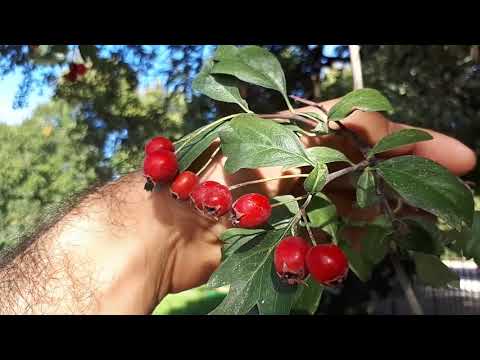

Plant Profile & Key Characteristics
Also known as: Common hawthorn, Oneseed hawthorn, Single-seeded hawthorn, Quickthorn, Whitethorn, Motherdie
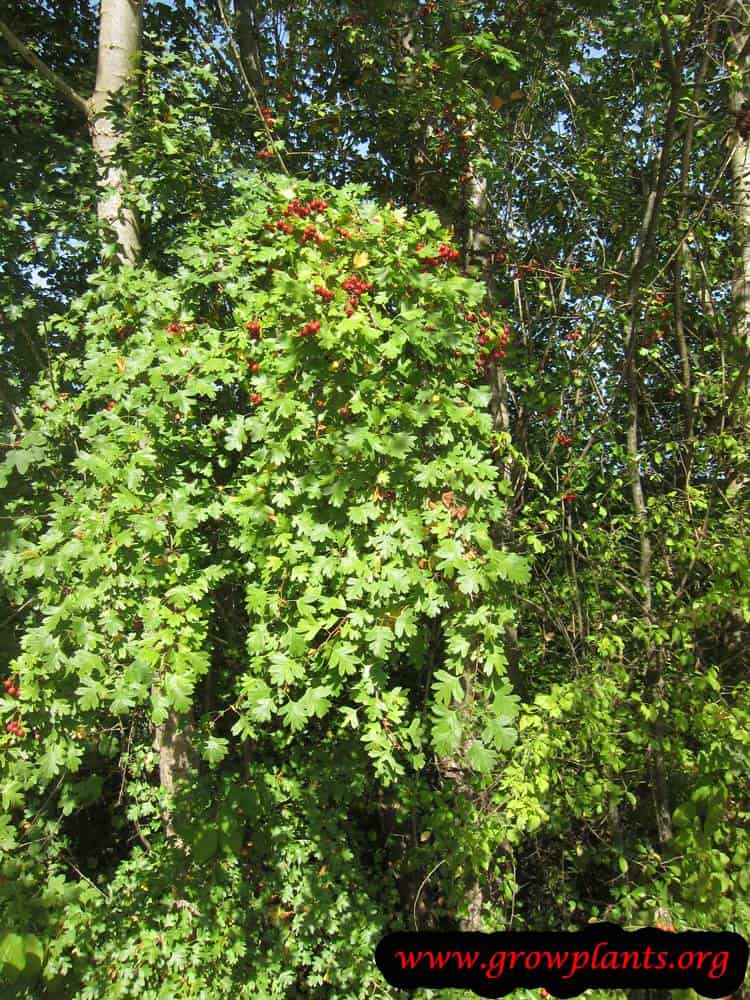
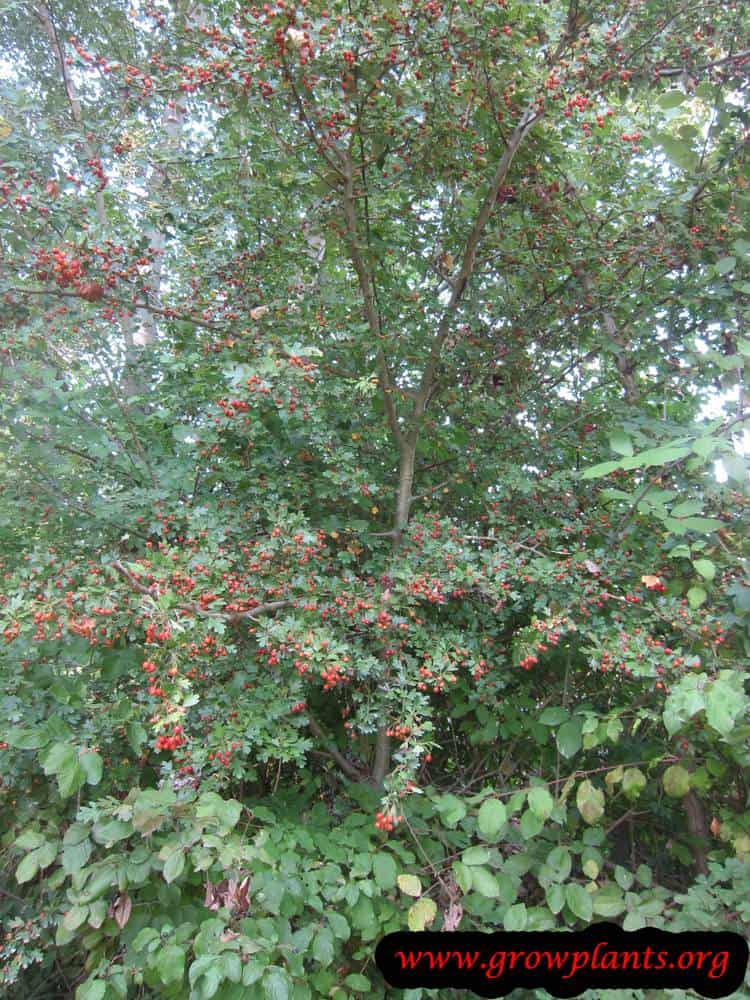
Overview: Common hawthorn (Crataegus monogyna) is a deciduous tree growing 3–10 m (10–30 ft) tall, with lobed, serrated leaves. It is grown mainly for its small edible fruits (haws) and also as an ornamental, hedging and bonsai plant.
Quick Specifications
| Specification | Attribute |
|---|---|
| Plant Type / Life Cycle | Perennial deciduous tree |
| Foliage Type | Deciduous |
| Mature Size | 3–10 m (10–30 ft) tall |
| Growth Rate | Moderate |
| Root System | Deep taproot |
| Toxicity | Non-toxic – fruit flesh is edible (the seeds contain cyanogenic compounds and are not eaten) |
| Hardiness | USDA zones 4b–10a, and 10b with the right care |
Growth Form & Structure
- Height & Spread: 3–10 m (10–30 ft) tall; readily kept compact for hedging or container growing by pruning.
- Growth Habit & Form: Thorny deciduous tree or large shrub with a dense, twiggy crown; a classic hedgerow plant.
- Lifespan & Maturity: Long-lived tree; grafted plants usually begin bearing fruit about 3–4 years after planting.
Anatomy & Physical Features
- Trunk & Bark: Densely thorny branches.
- Leaves & Foliage: Green leaves, lobed to deeply lobed with serrated margins.
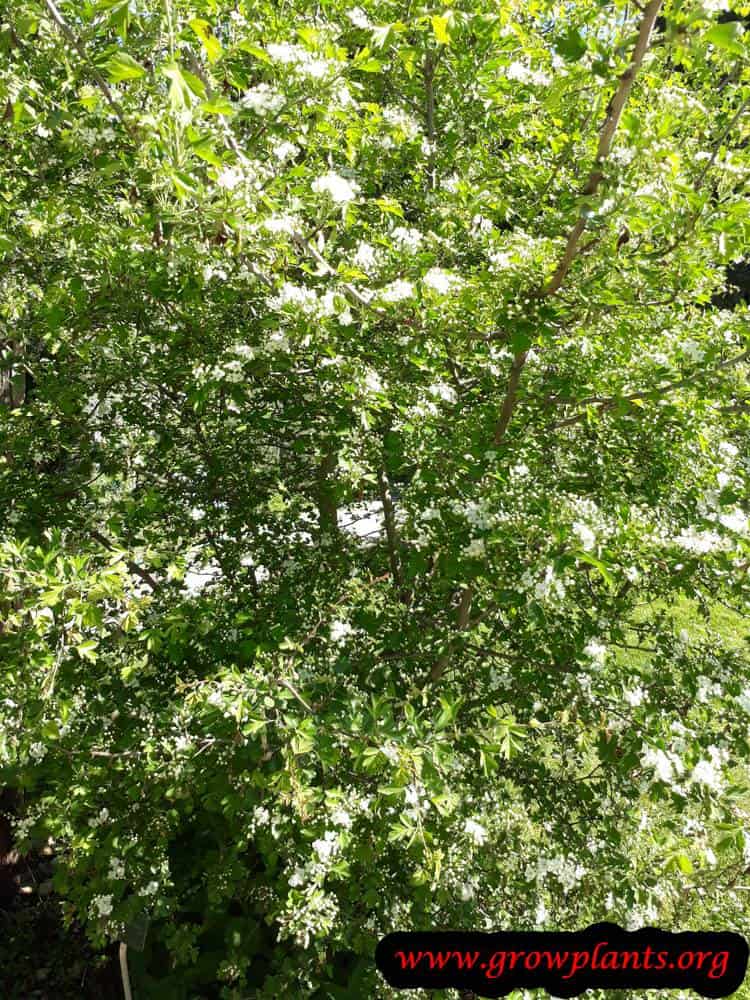
- Flower Characteristics: White flowers with a yellow centre and red stamens, in clusters in spring to summer.
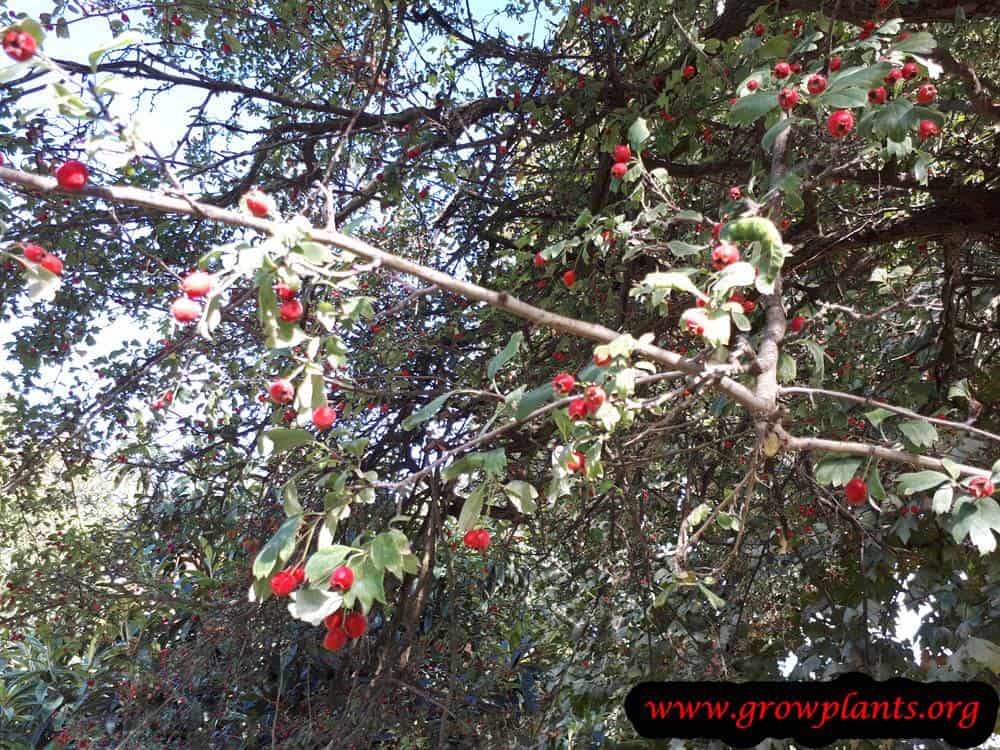
- Fruit Profile: Small red haw shaped like a tiny crowned apple, with white to red flesh; harvested in summer to autumn.
Primary Uses & Landscape Value
- Edible Uses: Fruits (haws) eaten raw, dried or cooked, and used for preserves.
- Functional & Ornamental Roles: Ornamental and fruiting tree, a classic boundary and hedgerow hedge plant, also grown as bonsai.
Care Guide: Planting, Soil & Watering
Overview: Crataegus monogyna (Common hawthorn) is a deciduous fruiting tree that needs winter chill hours and grows best in full sun in deep, moist, well-drained soil. It appreciates steady moisture through the growing season but must not sit in waterlogged ground.
Quick Care Requirements
| Requirement | Ideal Condition |
|---|---|
| Planting Season | Winter through summer in colder zones, winter to spring in the mildest zones; bare-root stock in late winter to early spring |
| Growth Rate | Moderate |
| Soil Type | Deep, moist but well-drained soil; adaptable to most garden soils |
| Water Need | Moderate to high — keep the soil evenly moist, especially while fruiting |
Planting & Establishment
- Best Planting Season: Plant while the tree is dormant or in active growth as described above; set out bare-root stock in late winter to early spring, as it establishes poorly if planted late. Choose an open, sunny position.
- How to Plant:
- Hole Preparation: Dig a hole about twice the width of the root ball and no deeper than it, loosening the sides so the roots spread easily.
- Soil Amendments: Mix compost or organic matter into the backfill to hold moisture while keeping drainage open; on heavy soils improve drainage before planting.
- Planting Depth: Set the tree at the same depth it grew in the nursery, keeping any graft union clearly above the soil line and never burying the trunk base.
- Growth Speed & Expectations: Growth is moderate; keeping the tree compact makes harvest easier and helps light reach all the fruit.
Soil, Watering & Drainage Care
- Soil Mix & Drainage Needs: Wants deep, fertile, moisture-retentive soil that still drains freely; it tolerates a range of garden soils but resents waterlogging. In containers use a peat-based mix with some grit and drainage holes, and empty any saucer the same day so the roots do not stand in water.
- Watering Schedule & Technique:
- Young / Newly Planted: Water regularly and keep the soil consistently moist through the first seasons so the young tree roots in well.
- Established: Water deeply but less often once established, letting the surface dry slightly between soakings; give extra water while flowers and fruit are developing.
- Seasonal Adjustments: Increase watering through summer heat and the fruiting period, and reduce it in cool, wet or dormant winter months.
Climate, Light & Hardiness
Crataegus monogyna (common hawthorn) is a very cold-hardy deciduous tree suited to temperate, Mediterranean, and subtropical climates, requiring a winter chill period to flower and fruit well. It thrives in full sun to half shade and, once dormant, tolerates severe winter cold with ease.
Quick Climate Specifications
| Climate Zones | Temperate, Mediterranean, and subtropical climates |
|---|---|
| USDA Hardiness Zones | Approximately zone 4b–10a, and possible in zone 10b with attentive care |
| Optimal Temp Range | Cool to mild growing-season temperatures with a distinct winter chill period |
| Cold Damage Begins | Spring blossoms are vulnerable to late frost; the dormant tree itself is very cold hardy |
| Approx. Survival Minimum | Established trees tolerate the deep winter cold typical of zone 4b while dormant |
| Frost Tolerance | High (dormant tree); blossoms have Low frost tolerance |
| Light Conditions | Full Sun to Half Shade |
Sunlight & Light Exposure
Optimal Light Setup
Full sun to half shade gives good flowering and fruiting; this species tolerates a range of light levels well.
Direct Sun Requirement
Several hours of direct sun daily support the best bloom and fruit set.
Best Exposure / Orientation
An open site in full sun suits this hardy tree in most of its range.
Temperature Extremes & Hardiness
USDA Hardiness & Regional Limits
Site data places this tree at zone 4b–10a, extending to 10b with the right care, reflecting strong winter cold tolerance once dormant; at the warm end of its range, inadequate winter chill and summer heat become the limiting factors rather than cold.
Cold Damage & Winter Protection
The dormant tree withstands severe winter cold without special protection; the main risk is late spring frost damaging open blossoms.
Frost Sensitivity
Very low frost sensitivity once dormant, but blossoms and young fruit are frost-sensitive in spring.
Extreme Heat Tolerance
Reasonably heat tolerant, though performance declines toward the warmest end of its range where winter chill is marginal.
Chilling Requirement
Requires a period of winter chilling for good flowering and fruit set; the site’s overview note on chill hours reflects this, and inadequate chill in warm climates can reduce flowering and fruit quality.
Wind, Humidity & Microclimate
Microclimate Recommendations
Avoid frost pockets and low-lying, cold-air-collecting sites in spring to protect blossoms; container specimens face faster-freezing root zones than trees grown in open ground and need extra winter protection.
Growing in Pots, Balconies & Indoors
Common hawthorn (Crataegus monogyna) grows into a tree of 3-10 m (10-30 ft), so it is not a long-term pot plant – but the grower explains it can be kept small in a container for years by potting up gradually. It is not a houseplant; grow it outdoors in full sun to half shade.
Quick Details
- Container Size: Start 20-50% bigger than the root ball (less extra for bigger plants) and step up over time (grower’s method); mature size 3-10 m (10-30 ft)
- Indoor Suitability: Not a houseplant – it is an outdoor fruiting tree
- Best Spot: Full sun to half shade (in the hottest climates, half shade)
- Soil & Drainage: Peat-based mix with lava grit or similar in the base; drainage holes are essential
- Watering in Pots: Average to plenty – keep it moist; if using a saucer, let it dry out the same day
Indoors & On the Windowsill
- Not a houseplant: The grower confirms it will not grow indoors – it is a fruiting tree needing full outdoor sun and a cold winter to fruit.
- Windowsill: Not applicable – grow it outdoors, kept small in a pot on a patio if space is tight.
- Overwintering: Hardy – it needs the cold season outdoors; simply protect a small potted specimen from the harshest freezes.
On a Balcony or Patio
- Kept small on a patio: Grown by the pot-up method it can crop on a sunny balcony or patio for years; give it the sunniest spot.
- Water & weight: The tub is heavy and dries in heat – water often, and shelter blossom from strong wind.
Choosing the Pot, Soil & Long-Term Care
- Pot & drainage (grower’s method): Start in a pot 20-50% bigger than the root ball (less extra the bigger the plant). Each time the tree fills its pot, step up to a slightly larger one until it reaches the size you want – this keeps the soil fresh and the tree easy to manage.
- Refresh the soil: Because potting soil loses vigour over time, replace part of the mix once the tree is large; use a peat-based mix with some lava grit in the base for drainage.
- Drainage: Make plenty of holes; if you stand it on a saucer, let the water fill but dry out the same day.
- Feeding & pruning: Feed through the growing season and prune to keep the crown compact and productive.
Fertilizing & Feeding
Common hawthorn is a modest feeder for a fruiting tree: nitrogen-forward feeding while young shifts to balanced feeding through spring and summer once the tree fruits regularly, whether it is grown as a full-size tree, kept small for easy harvest, or trained as a bonsai.
Quick Fertilizing Specs
| Feeding Level | moderate |
|---|---|
| young_feeding | A nitrogen-forward complete fertilizer to build the branch framework while the tree is young. |
| mature_feeding | A balanced, complete fruit-tree fertilizer through spring and summer once the tree fruits regularly. |
| Main Nutrient Priority | Nitrogen while the framework develops, shifting to balanced nutrition with potassium once bearing. |
| Best Feeding Period | Spring and summer, tapering off as the season winds down. |
| Organic Options | Compost or well-rotted organic matter worked into the root zone. |
| Micronutrients | Iron, manganese and zinc are typically supplied by a complete fruit-tree fertilizer once past earliest establishment. |
| Soil pH | Tolerates a range of well-drained soils; grows best where moisture is reliable. |
| Reduce/Stop Feeding | Ease off feeding as summer ends and as the fruit approaches ripeness. |
Feeding by Growth Stage
Newly Planted Tree
Help a newly planted tree establish roots before pushing much top growth.
| Nutrient direction | Light, balanced feeding supports root establishment without overwhelming a young root system. |
|---|---|
| Timing | In the first growing season after planting, once new growth resumes. |
| Frequency | A few light feedings spread across the growing season is usually enough while roots establish. |
| Fertilizer types | A balanced, complete fertilizer formulated for young trees, Well-rotted compost worked into the surrounding soil |
| Precautions | Keep fertilizer away from the trunk and taper off as growth slows toward the end of the season. |
Young, Non-Bearing Tree
Build a strong branch framework through the years before the tree reaches fruiting size.
| Nutrient direction | A nitrogen-forward fertilizer drives the vegetative growth this tree needs to build its framework, paired with a complete formula supplying routine trace elements. |
|---|---|
| Timing | Through spring and summer while the tree develops toward fruiting size. |
| Frequency | Regular light feedings through spring and summer, tapering as growth slows. |
| Fertilizer types | A nitrogen-forward complete fertilizer for young fruit trees, Composted organic matter as a soil-building supplement |
| Routine trace nutrients | iron, manganese, zinc |
| Precautions | Watch for scorched leaf edges, a sign of over-fertilizing – scale back rather than feeding more often. Remove infected branches promptly, since fruit and foliage attract pests readily. |
Established, Approaching Fruiting
Shift from a growth-focused feed to a more balanced one as the tree matures toward flowering and fruit set.
| Nutrient direction | A balanced, complete fertilizer rather than a heavily nitrogen-leaning one. |
|---|---|
| Timing | As the tree matures, in the seasons leading up to its first bloom and fruit. |
| Frequency | A modest, evenly spaced feeding routine through spring and summer. |
| Fertilizer types | A balanced, complete fruit-tree fertilizer, Organic mulch renewed around, not against, the trunk |
| Routine trace nutrients | iron, manganese, zinc |
| Precautions | Avoid excess nitrogen this close to first fruiting; it favors leafy growth over the flowering the tree needs to start bearing. |
Mature, Fruit-Bearing Tree
Sustain flowering and fruit development on a tree bearing fruit regularly, whether grown at full size, kept small for easy harvest, or trained as a bonsai.
| Nutrient direction | Balanced feeding with attention to potassium supports fruit development and quality; trees deliberately kept small or trained as bonsai in a container need comparatively lighter, more careful feeding, since a restricted root zone holds less reserve and overfeeding fights the pruning that keeps the tree compact. |
|---|---|
| Timing | Around the tree’s bloom and fruit-development window in spring and summer, tapering as fruit ripens. |
| Frequency | A steady, moderate feeding routine through the growing season, easing off as fruit nears ripeness. |
| Fertilizer types | A balanced, complete fruit-tree fertilizer with attention to potassium, Organic mulch refreshed seasonally around the root zone |
| Routine trace nutrients | iron, manganese, zinc |
| Precautions | Reduce feeding as fruit approaches ripeness; heavy late feeding can affect fruit quality. Cover the tree or otherwise protect the fruit if fruit flies are a recurring problem. |
Nutrient Deficiency Signs & Corrections
New leaves show yellowing between veins that stay green.
| Possible causes | Iron locked out by alkaline or compacted soil, Poor drainage or waterlogged roots, Root stress after transplanting |
|---|---|
| Appears first on | Newest leaves near the shoot tips |
| What to check | Soil pH, Drainage around the root zone, Recent transplant history |
| Possible correction | Work toward less alkaline soil conditions and apply a chelated iron product per its label if chlorosis persists. |
Pale, undersized leaves and noticeably slower shoot growth than expected.
| Possible causes | Insufficient nitrogen for a young, developing tree, Leaching from heavy rain or frequent irrigation, Root competition from nearby plantings |
|---|---|
| Appears first on | Older leaves first, then newer growth if uncorrected |
| What to check | Recent feeding history, Competing roots nearby, Overall soil fertility |
| Possible correction | Resume nitrogen-forward feeding for a young tree, or balanced feeding for a bearing one. |
Leaf margins scorch yellow to brown while the center stays green; fruit may be smaller than expected.
| Possible causes | Low potassium in sandy or leached soil, Drought stress during fruit development, A nitrogen-heavy recent feeding pattern |
|---|---|
| Appears first on | Older leaves, starting at the margins |
| What to check | Fertilizer history for a nitrogen-heavy pattern, Drought stress during fruiting, Salt buildup, especially in containers |
| Possible correction | Switch to a balanced, potassium-inclusive fertilizer and correct any drought stress. |
Poor fruit set despite good flowering, sometimes with misshapen fruit and dieback at the shoot tips.
| Possible causes | Boron deficiency in the soil around flowering and fruit set, Drought stress during bloom reducing boron uptake, High soil pH reducing boron availability |
|---|---|
| Appears first on | Flowers and developing fruit, plus new shoot tips |
| What to check | Soil boron availability if testable, Watering consistency through bloom and fruit set, Soil pH |
| Possible correction | Apply a boron-containing product strictly per its label – the margin between too little and too much boron is narrow – and keep watering consistent through bloom. |
Pruning, Training & Seasonal Maintenance
Common hawthorn is a thorny, deciduous pome-fruit tree grown as a free-standing ornamental/fruiting specimen, as bonsai, or very commonly as a dense flowering-and-fruiting hedge; it tolerates pruning well, including hard hedge trims. The main objectives are a sound structural framework (or a dense hedge face) while preserving the spring blossom and the autumn/winter haws. The safest structural window is late winter dormancy, timed after birds and wildlife have used the winter berry crop and before the spring nesting season begins in earnest, since this species commonly hosts nesting birds in its dense thorny growth.
Quick Pruning & Maintenance Specs
| Pruning Tolerance | High |
| Primary Pruning Window | Late winter, dormant, before bud break |
| Secondary Maintenance Window | Light trim right after spring bloom, for hedge specimens only |
| Typical Frequency | Specimen: once a year. Hedge: one to two trims a year |
| Main Objective | Structural framework or dense hedge face; preserve bloom and haws |
| Young Plant Priority | Formative framework (specimen) or base-thickening cuts (hedge) |
| Mature Plant Priority | Renewal-thin crowded thorny growth, size control, or maintain hedge face |
| Best Tool Type | Loppers and pruning saw for a specimen; hedge shears only for a clipped hedge |
| Avoid Heavy Pruning During | Spring–summer bird nesting season, and around bloom if fruit is wanted |
Pruning by Plant Age & Size
Newly Established
Minimal cuts – remove only damaged growth from planting.
Young / Formative
For a specimen tree, select a central leader or a small number of main scaffold limbs, given its eventual 3–10 m (10–30 ft) thorny, dense habit. For hedge use, cut back young plants harder to force low, branching growth from the base. Where trained as bonsai, a use this species tolerates per its own facts, wire and pinch young shoots after the initial structural cuts.
Mature / Established
Renewal-thin crowded thorny interior growth, control height and spread, or maintain a clipped hedge face.
Seasonal Pruning Schedule
Dormant/Winter
Objective: structural cuts and hedge renewal, timed after the winter haws have fed wildlife. Remove dead, diseased, or crossing thorny wood and thin crowded growth. Do not strip out all of the spurs and laterals that will carry the spring bloom. Expected response: a strong spring flush and bloom.
Post-Flowering
For hedge-grown plants only, a light trim right after the bee-pollinated spring bloom tidies growth without sacrificing the coming autumn’s haws, since new fruiting wood develops over the summer.
Ongoing Sanitary
Remove dead, diseased, or storm-damaged thorny wood as it appears; because of the thorns, this deferred wood is a safety hazard if left in place.
Flowering & Fruiting Wood
Flowers and the haws that follow form on spurs and short laterals from the previous season’s growth, typical of this pome-family species. Overly hard dormant pruning that removes too much of this wood reduces both bloom and the autumn/winter berry crop this species is valued for; time structural cuts for full dormancy so spurs have a season to set flower buds.
Structural Pruning & Training
Thin crossing and rubbing thorny branches, since dense growth is characteristic of this species and can become tangled. Control height and spread within its 10–30 ft potential. On hedge-grown plants, taper the hedge slightly wider at the base than the top so lower growth still gets light and stays dense. Thinning also improves air movement, useful given the aphid, mite, mealybug, and borer pressure noted for this species.
Special Growth to Remove
- Rootstock suckers below the graft union, since this species is commonly grafted to ensure fruit quality.
- Dead or storm-broken thorny wood, a safety hazard if left in place.
- Crossing interior branches.
Container & Small-Space Pruning
Container growing is possible per the plant’s own facts but needs deliberate size control given its 10–30 ft natural potential; favor more frequent, lighter structural cuts over one large reduction. On bonsai-trained specimens, combine canopy pruning with root pruning at repotting to keep top growth and roots in balance.
Tools
- Bypass secateurs and loppers for most structural and thinning cuts on this thorny, twiggy species.
- Pruning saw for larger scaffold or renewal cuts on a mature specimen.
- Hedge shears only where the plant is maintained as a clipped hedge, never for selective structural cuts on a specimen tree.
Tool Hygiene & Disease Risk
Increased – hawthorn, like other Rosaceae, can host fire blight and cankers, and the plant’s own facts note mite, mealybug, and borer pressure. Disinfect tools between plants when removing visibly diseased or borer-affected wood, and cut back into clean, healthy wood.
Cut Placement & Technique
Favor thinning cuts to a lateral branch or bud over indiscriminate heading, except on a maintained hedge face where heading is the technique. Cut outside the branch collar on larger limb removal. Because of the thorns, plan cut direction and clear fallen material carefully, and wear appropriate gloves when handling cut material.
Heavy Pruning & Rejuvenation
Tolerates hard renewal cutback well, a classic trait of hedgerow hawthorn. An overgrown specimen can be cut back hard in late winter dormancy; expect vigorous regrowth and a temporary loss of that season’s bloom and haws.
Post-Pruning Care
No extra feeding is needed after a hard renewal cut, since regrowth is already vigorous. Monitor new soft growth for the aphids, mites, and mealybug already noted as pest pressure, and watch large wounds for canker or borer entry.
Common Pruning Mistakes
- Pruning during spring/early-summer bird nesting season, disturbing wildlife that commonly nests in dense hawthorn growth.
- Using hedge shears for structural or renewal cuts on a specimen tree, which shreds thorny stems and invites disease entry.
- Stripping out all older spur wood at once and losing a season’s bloom and berries.
When NOT to Prune
Avoid pruning during bird nesting season, spring into summer, in dense hedge-grown specimens. Avoid removing spur wood right before bloom if this season’s flowers or haws are wanted. Avoid heavy cuts during hot, dry stress periods.
Recommended Tools (by task)
- Bypass secateurs – thin thorny twigs and small laterals.
- Loppers – thicker branch removal and thinning through dense thorny growth.
- Pruning saw – larger scaffold limbs on a mature specimen.
- Hedge shears – only for hedge-form specimens maintaining a clipped face.
Pruning Troubleshooting
| Problem | Possible Cause | What to Check | Corrective Action |
| Sparse flowering or few haws | Over-hard or badly-timed dormant pruning removing spur wood | Age and density of remaining laterals | Prune more moderately and time cuts for full dormancy |
| Dense, tangled interior growth | Natural thorny multi-stem habit left unthinned | Crossing or rubbing branches | Selectively thin the oldest or crossing wood in winter |
| Cankered or dying branch sections | Borer or disease entry | Sunken bark, entry holes, dieback | Prune back into clean wood, disinfect tools, remove prunings |
| Hedge thin at the base | Top-heavy shearing without base taper | Overall hedge profile | Taper the hedge wider at the base, trim harder at the top |
Propagation Guide
Crataegus monogyna can be propagated from seed, although seed dormancy makes this a slow method. Vegetative propagation may be used when a particular selected form must be preserved.
Quick Propagation Specs
| Seed | Valid but slow and dormant |
| Selected Forms | Use an appropriate clonal method |
Growing from Seed
Use mature viable seed and expect dormancy to delay germination.
Note: Seeds have a hard coat and complex dormancy — typical protocols use several months of warm stratification followed by several months of cold stratification, and germination itself can take anywhere from several months up to about 18 months.
Bloom & Edible Flower Guide
Quick Details
- Bloom Season: Late spring into early summer
- Time to First Bloom: Once the tree is well established – young trees may take several years to begin flowering freely
- Flower Appearance: White flowers with a yellow centre and distinctive red-tipped stamens, borne in generous clusters
- Edibility: Edible flower – the young blossoms and leaves are traditionally used in teas, salads and country wines. (Do not eat the hard seeds inside the fruit.)
Detailed Blooming Overview
Crataegus monogyna, the Common Hawthorn, foams into blossom in late spring, its branches weighed down with clusters of white flowers. Each bloom has a soft yellow eye and a ring of red-tipped stamens, and the effect over a whole tree is unmistakable in the hedgerow. The flowers have a long history in the kitchen and stillroom: the young blossom and fresh leaves are gathered for teas, salads and traditional flower wines, which is why this earns the Edible Flower guide.
Flower Characteristics
- White five-petalled flowers with a yellow centre and red-tipped stamens.
- Borne in broad clusters (corymbs) all along the branches; single-seeded, as the name monogyna suggests.
Bloom Care & Thinning
- Encouraging bloom: Hawthorn flowers on older wood, so avoid hard shearing in spring; a settled, sunny position gives the fullest blossom.
- Gathering flowers: Pick young, freshly opened blossom on a dry day, and take only a little from each tree so the rest can set fruit for wildlife.
- Pollination: The flowers are freely worked by bees and flies.
Bloom Health & Protection
- Fire blight: A bacterial disease that can enter through the blossom and blacken shoots as if scorched; the usual response is to prune well below the affected wood into healthy growth and avoid heavy nitrogen feeding that pushes soft, susceptible shoots.
- Hawthorn rust: Orange spotting on leaves near the flowers, spread from nearby junipers; removing that alternate host where practical and, if needed, a suitable fungicide at bud break helps keep it down.
Fruit & Uses
Common hawthorn is grown both as an ornamental flowering tree and for its edible fruit (“haws”), which ripen from summer into autumn and are eaten raw, dried, or cooked into jellies and other preserves. The young spring leaves and flower buds are also a long-established foraged nibble, distinct from the fruit harvest later in the year.
Quick Edible Specs
| Edible Parts | Fruit (haws); young leaves and flower buds |
|---|---|
| Main Use(s) | Culinary – jelly, syrup, wine, fruit leather from the fruit; fresh salad/nibble use for young leaves and buds; traditionally used medicinally as a herbal heart tonic (no health claim made here) |
| Eaten Raw or Cooked | Fruit eaten raw, dried, or cooked; leaves and flower buds eaten raw |
| Preparation Required | None for fresh leaves/buds or a few raw haws; remove/strain out seeds before eating fruit pulp in quantity or cooking it down |
| Harvest Season | Fruit: summer to autumn. Leaves/flower buds: spring |
| Time to First Harvest | A young tree takes several years to fruit well (see Care/Pruning for age-related detail) |
| Storage | Fresh haws are perishable; drying or cooking into jelly, syrup or wine extends storage |
| Safety/Toxicity Caveat | Seeds inside the haw contain a cyanogenic compound, as in other Rosaceae fruit – do not chew or eat seeds in quantity; flesh, leaves and flowers are safe |
Fruit
Haws are small, apple-shaped fruits with a red peel and a white or red inner flesh, topped with a small crown; they ripen from summer into autumn, becoming fully red and slightly soft when ready. They are picked by hand, often in clusters; birds and fruit flies compete for the ripening crop, so netting or other protection may be needed (see Pests). The mealy, mildly sweet-tart flesh can be eaten out of hand in small amounts but is more often cooked down and strained to make jelly (the fruit is naturally high in pectin), sauce, syrup or wine, or dried into fruit leather.
Flowers & Flower Buds / Young Leaves
Young spring leaves and unopened flower buds have long been foraged as a fresh, mild, nutty-tasting nibble or salad addition – traditionally known in parts of Europe as “bread and cheese” – though they toughen and turn more bitter as the leaves mature. The open flowers are edible too and are sometimes infused for syrup or tea. This is a light, incidental use rather than the tree’s main crop, and is separate from the autumn fruit harvest.
Harvesting
Pick haws once fully red and slightly soft, from summer into autumn; the crop ripens gradually so can be gathered over more than one visit. If wanted, pick young leaves and flower buds in spring while still tender, before they toughen.
Preparation, Uses & Safety
Wash the fruit; eat a few fresh out of hand, or cook down and strain out the seeds and skins to make jelly, sauce, syrup, wine or fruit leather. Do not chew or eat the seeds in quantity – like apple and other Rosaceae pips they contain a cyanogenic compound and are traditionally spat out rather than swallowed. Young leaves and flower buds need no preparation beyond washing and are eaten raw. Hawthorn has a long history of traditional herbal use as a heart tonic, but no medical or dosing claims are made here – consult a professional for any therapeutic use.
Pests, Diseases & Troubleshooting
Overview: Hawthorns are hardy rosaceous trees whose most serious threats are diseases rather than insects – above all fire blight and the rust and leaf-spot fungi that the whole apple/pear family shares. Insect pests (aphids, lace bug, leaf miners and caterpillars) are usually cosmetic on an established tree. Good management is about airflow, sanitation of fallen leaves, pruning out infected wood, and not over-feeding soft growth.
Quick Troubleshooting Overview
| Issue / Pest | Main Symptom | Primary Solution |
|---|---|---|
| Fire blight | Shoots blacken, wilt and hook over as if scorched; oozing cankers | Prune out well below infection in dry weather; sterilise tools |
| Cedar-hawthorn rust | Orange-yellow leaf spots, later horns on leaves/fruit | Remove nearby junipers; rake leaves; preventive fungicide |
| Leaf blight / spot | Small red-brown leaf spots, early leaf drop (Entomosporium) | Rake and destroy fallen leaves; improve airflow |
| Woolly / leaf aphids | Curled leaves, white woolly clusters, honeydew | Blast with water; encourage predators; oil/soap if severe |
| Hawthorn lace bug | Fine pale stippling on upper leaves; dark specks beneath | Tolerate on healthy trees; soap/oil to undersides if needed |
| Caterpillars / leaf miner | Chewed or webbed foliage; pale mines/blotches in leaves | Hand-pick, remove webs; Bt for caterpillars; usually cosmetic |
Common Pests & Management
- Woolly and leaf-curling aphids (Eriosoma lanigerum & Aphididae):
- Symptoms: Colonies of soft green, grey or woolly-white aphids on new shoots and leaf undersides, often tucked into curled, distorted leaves. They produce sticky honeydew that blackens with sooty mould and attracts ants. Woolly aphid appears as white cottony blobs on twigs and old pruning wounds.
- Prevention & Control: Established trees tolerate a lot – start by hosing off colonies with a jet of water and encouraging natural enemies (ladybirds, lacewings, hoverfly and parasitic wasps) by avoiding broad-spectrum sprays. For heavy attacks on young trees, use insecticidal soap or horticultural oil aimed into the curled leaves. Avoid heavy nitrogen feeding, which drives the soft growth aphids love.
- Hawthorn lace bug (Corythucha cydoniae):
- Symptoms: Fine, bleached stippling that mottles the upper leaf surface (looks like mite or leafhopper damage), while the undersides carry the small lacy-winged adults, dark cast skins and shiny black tar-spots of excrement. Heavy feeding browns and prematurely drops leaves in late season.
- Prevention & Control: Damage is largely cosmetic on a vigorous tree, so tolerance is the first tactic. Where control is wanted, treat the leaf undersides with insecticidal soap or horticultural oil while nymphs are present; encourage predatory bugs and lacewings. Keep the tree well-watered so it shrugs off the stress.
- Leaf miners (Lepidoptera/Diptera larvae):
- Symptoms: Pale winding tunnels or blotchy dead patches inside the leaf, where larvae feed between the surfaces. Unsightly but rarely harmful to the tree overall.
- Prevention & Control: Pick off and destroy mined leaves to reduce the next generation, and rake up fallen leaves in autumn. Encourage parasitic wasps by avoiding routine spraying; chemical control is seldom justified.
- Caterpillars (e.g. Yponomeuta, winter moth, lackey moth):
- Symptoms: Chewed, ragged foliage; some species (ermine moth, lackey moth) spin conspicuous silk webs enclosing shoots or whole branch tips, inside which colonies of caterpillars feed and can defoliate patches.
- Prevention & Control: Cut out and destroy webbed nests by hand while small. Sticky bands on the trunk catch wingless female winter moths in autumn. A biological Bacillus thuringiensis (Bt) spray targets young caterpillars without harming beneficial insects. Healthy trees re-leaf readily after moderate defoliation.
- Scale insects (Coccidae/Diaspididae):
- Symptoms: Brown or greyish limpet-like bumps clinging to bark and twigs; heavy infestations weaken shoots and, on soft scales, coat foliage with honeydew and sooty mould.
- Prevention & Control: Brush off light infestations. Apply horticultural oil to smother scale on dormant or newly-hatched crawler stages, and prune out badly-encrusted twigs. Parasitic wasps and ladybirds keep numbers down where sprays are avoided.
Diseases & Fungal Issues
- Fire blight (Erwinia amylovora):
- Symptoms: The most dangerous hawthorn disease. In warm, wet spring weather blossoms and shoot tips suddenly wilt, blacken and die, with the shoot ends bending into a ‘shepherd’s crook’. Sunken cankers on branches ooze a sticky bacterial slime in humid conditions; the blight runs back into larger wood.
- Treatment & Management: There is no cure once inside the wood, so act mechanically: in dry weather prune out affected shoots 20–30 cm below any visible discolouration, sterilising the saw or secateurs between every cut. Burn or bin the prunings. Avoid heavy nitrogen and heavy summer pruning that push soft, susceptible growth. Choose resistant species/cultivars where the disease is common.
- Cedar-hawthorn & cedar-quince rust (Gymnosporangium spp.):
- Symptoms: Bright orange-yellow spots on the upper leaf surface in spring, developing tube-like or hairy horns on the undersides of leaves, on fruit and on young twigs later in the season. The fungus needs a nearby juniper/cedar to complete its life-cycle, so damage is worst near those hosts.
- Treatment & Management: Where practical, remove or avoid planting susceptible junipers within the vicinity – this breaks the alternating cycle. Rake and destroy fallen infected leaves. On highly-valued trees, preventive fungicide applied as leaves emerge (while juniper galls are releasing spores) reduces infection; choose resistant hawthorn selections for new planting.
- Hawthorn leaf blight / leaf spot (Entomosporium mespili (Diplocarpon mespili)):
- Symptoms: Numerous small reddish-brown to purple spots that merge across the leaf, often with a paler centre and a tiny dark fruiting speck; badly-spotted leaves yellow and drop early, and repeated defoliation weakens the tree over years.
- Treatment & Management: Rake up and destroy all fallen leaves to remove the overwintering source, and prune for an open, airy canopy that dries quickly. Avoid overhead watering. Protective fungicide from bud-break through wet spring weather protects new foliage on trees with a history of the disease.
- Powdery mildew (Podosphaera / Erysiphaceae):
- Symptoms: White powdery coating on young leaves and shoots, sometimes distorting new growth, in warm days with cool humid nights and poor airflow.
- Treatment & Management: Prune to open the canopy, avoid excess nitrogen, and remove badly-affected shoots. Sulphur or potassium-bicarbonate fungicides control it on valued trees; established hawthorns usually tolerate it.
Growing Difficulties & Abiotic Problems
- Waterlogging & root stress:
- Cause & Symptoms: Hawthorns are tough but dislike permanently saturated soil; roots suffocate and the crown thins, with sparse pale foliage and dieback.
- Correction Strategy: Plant on free-draining ground or improve drainage; avoid compacting the root zone. Mulch to buffer moisture without keeping the crown wet.
- Drought scorch:
- Cause & Symptoms: In hot, dry spells young or newly-planted trees show browning leaf margins and early leaf drop as they lose water faster than the roots supply it.
- Correction Strategy: Water deeply and infrequently during establishment and prolonged drought, and mulch the root zone to conserve moisture. Established trees are very drought-tolerant once rooted in.
- Transplant / establishment stress:
- Cause & Symptoms: Bare-root or moved trees may leaf out weakly or die back at the tips in their first season while the root system re-grows.
- Correction Strategy: Plant in the dormant season, keep well-watered through the first summer, stake only if needed, and be patient – recovery is usual once roots take hold.
What Helps – Products & Tools
Management here leans on tools and sanitation more than sprays: sharp, sterilised secateurs and a saw for cutting out fire-blight and cankered wood, a rake to clear fallen infected leaves, and sticky trunk bands for winter-moth females. Where products help, use horticultural oil and insecticidal soap for aphids, lace bug and scale; a Bacillus thuringiensis (Bt) spray for caterpillars; and protective fungicides – copper or a suitable general fungicide – timed to bud-break for rust and Entomosporium leaf blight on trees with a history of them. Disinfect pruning tools between cuts. Spray oils in the evening to protect pollinators.