
Plant Profile & Key Characteristics
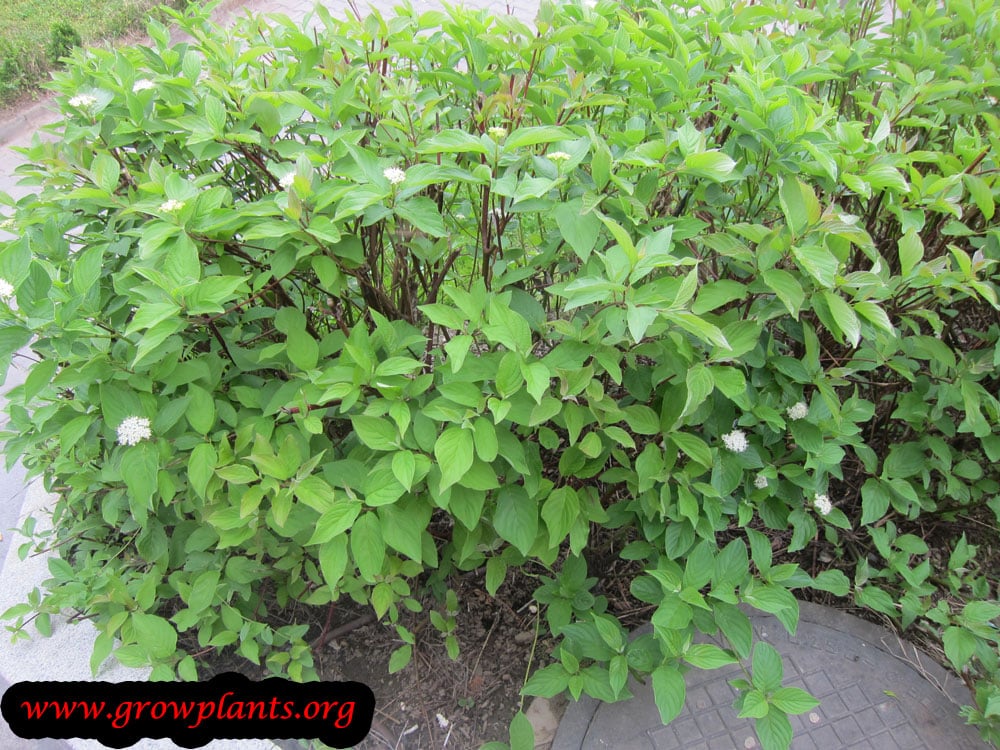
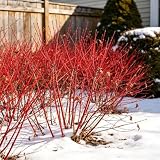
Overview: Cornus alba (Siberian dogwood) is a deciduous, multi-stemmed shrub reaching 1-3 m (3-10 ft), famous for the bright red bark of its winter stems. It is a hardy perennial ornamental grown for winter stem colour and its variegated foliage.
Quick Specifications
| Specification | Attribute |
|---|---|
| Plant Type / Life Cycle | Perennial |
| Foliage Type | Deciduous |
| Mature Size | 1-3 m (3-10 ft) |
| Growth Rate | Slow to moderate |
| Toxicity | Non-toxic |
| Hardiness | USDA zones 3-9 |
Growth Form & Structure
- Height & Spread: A thicket-forming shrub of 1-3 m (3-10 ft); also grown in large containers.
- Growth Habit & Form: Upright, multi-stemmed deciduous shrub that suckers into a broad clump.
- Lifespan & Maturity: Slow to moderate growing and long-lived; regular hard pruning renews the brightly coloured young stems.
Anatomy & Physical Features
- Trunk & Bark: Stems are green in the growing season and turn vivid red in winter, the plant’s key ornamental feature.
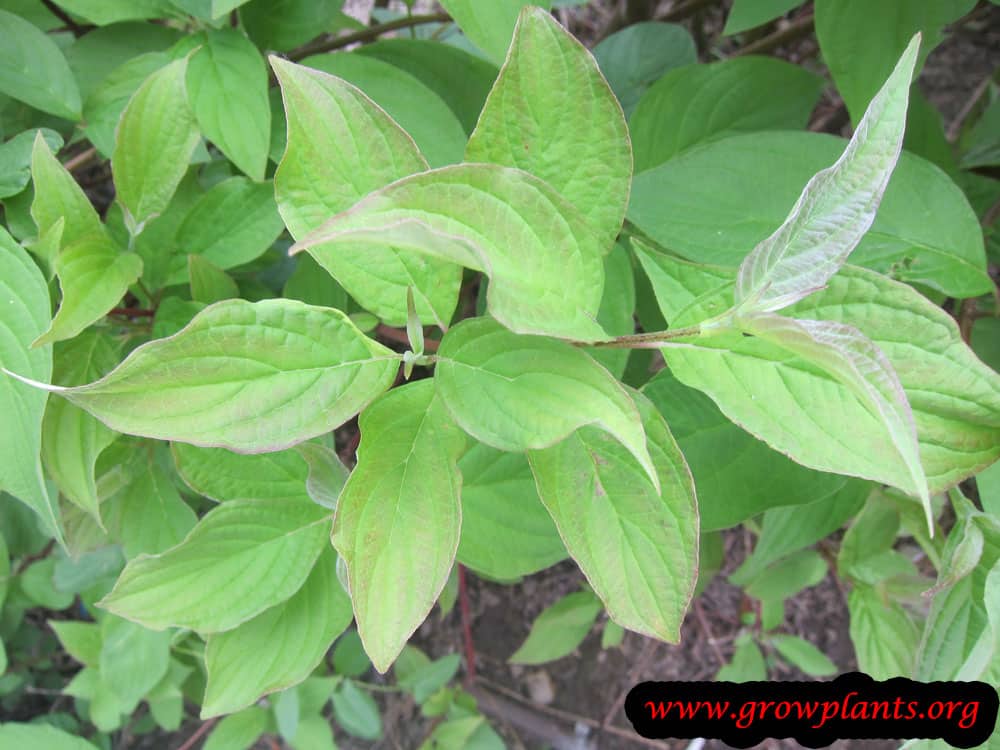
- Leaves & Foliage: Green, or variegated with white, yellow, red or purple.
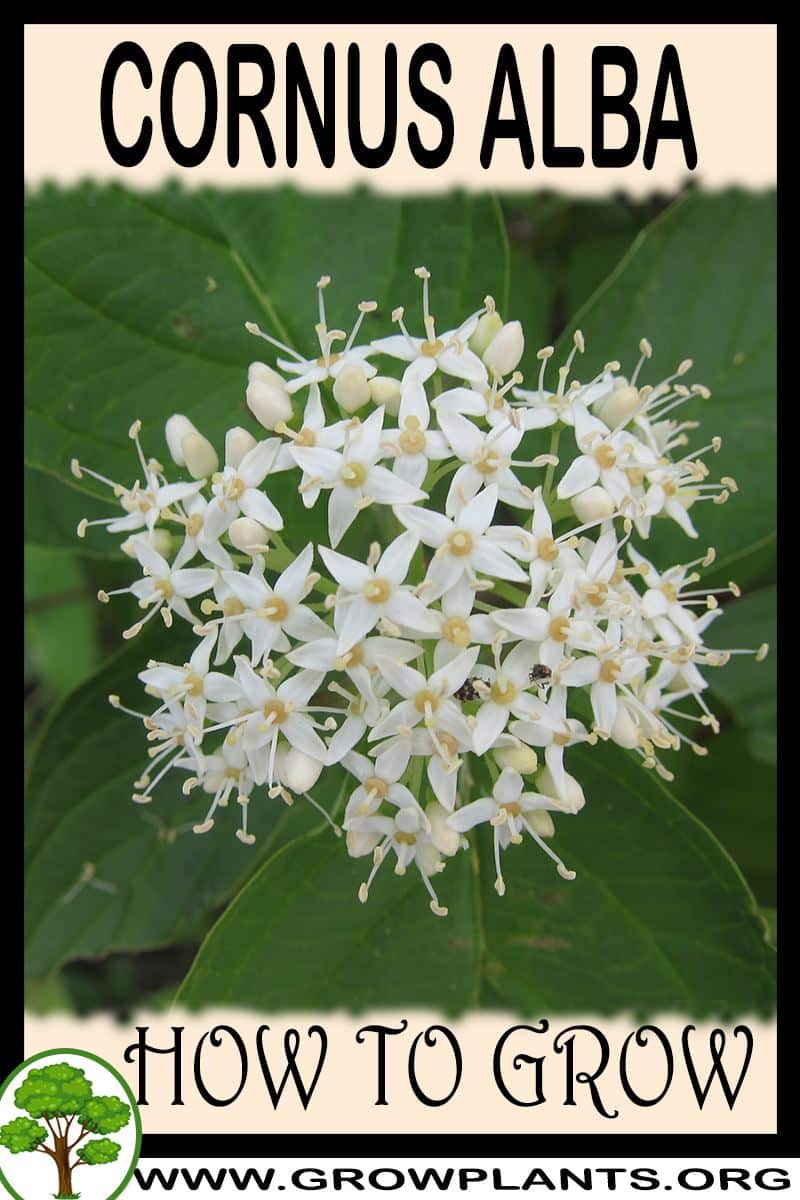
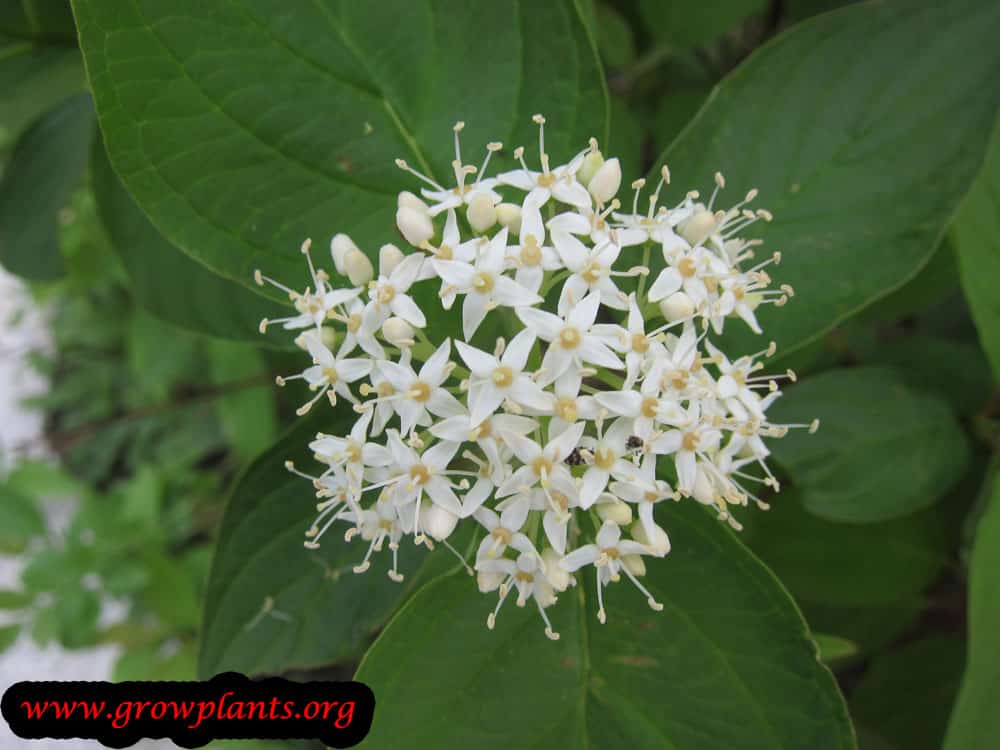
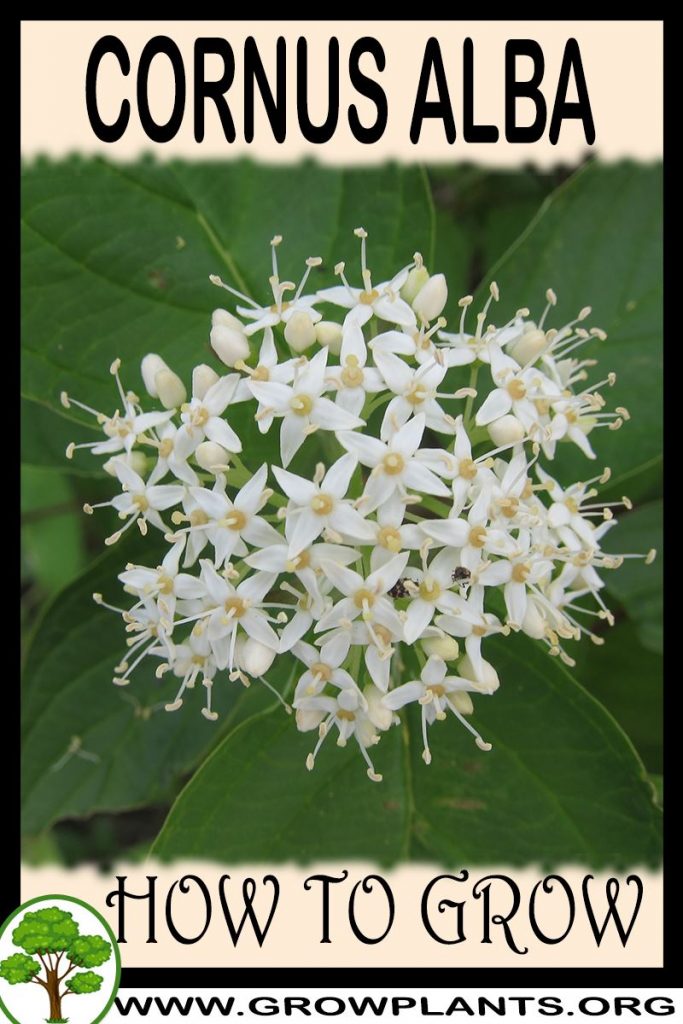
- Flower Characteristics: Small, fragrant white flowers in clusters.
Primary Uses & Landscape Value
- Functional & Ornamental Roles: Ornamental winter-interest shrub for borders, mass plantings, hedging and containers.
Care Guide: Planting, Soil & Watering
Overview: A deciduous dogwood for temperate gardens. It thrives in moist, well-drained soil in sun to part shade and needs a cold winter and generous moisture.
Quick Care Requirements
| Requirement | Ideal Condition |
|---|---|
| Planting Season | In the dormant-to-warm season – winter through spring, into summer |
| Growth Rate | Slow to Moderate |
| Soil Type | Moist, fertile, well-draining |
| Water Need | Moderate to High – keep reliably moist |
Planting & Establishment
- Best Planting Season: Plant while dormant to early in growth, from winter to spring; it needs cold winters (zone 3-9) to thrive.
- How to Plant:
- Hole Preparation: Dig a hole twice the width of the root ball and equally deep.
- Soil Amendments: Incorporate compost or other organic matter to hold moisture and feed the plant.
- Planting Depth: Set the root collar level with the soil and do not bury the stem.
- Growth Speed & Expectations: Slow to moderate growth.
Soil, Watering & Drainage Care
- Soil Mix & Drainage Needs: Moisture-retentive but well-drained soil; it tolerates damp ground better than dry.
- Watering Schedule & Technique:
- Young / Newly Planted: Keep the soil consistently moist while it establishes.
- Established: Water generously and regularly – this plant likes ample moisture.
- Seasonal Adjustments: Water more in summer heat and naturally less during cold dormancy.
Climate, Light & Hardiness
Cornus alba (Siberian dogwood) is a very cold-hardy deciduous shrub prized for its red winter stems, grown in temperate and cool-subtropical climates; it needs full sun to half shade and a genuinely cold winter to look and perform its best.
Quick Climate Specifications
| Climate Zones | Temperate, cool subtropics |
|---|---|
| USDA Hardiness Zones | 3–9 |
| Frost Tolerance | High |
| Light Conditions | Full Sun to Half Shade |
Sunlight & Light Exposure
Optimal Light Setup
Full sun produces the brightest red winter stem color and best autumn foliage.
Shade & Heat Management
Half shade is tolerated, though stem color is typically less vivid than in full sun.
Temperature Extremes & Hardiness
USDA Hardiness & Regional Limits
Zone 3–9, reflecting genuinely cold-hardy stock bred for cold-winter climates.
Cold Damage & Winter Protection
Very winter hardy; in fact its ornamental red stem color is itself a cold-season feature (the bark reddens in winter), so a cold winter is a benefit rather than a stress for this species.
Extreme Heat Tolerance
Less at home in prolonged subtropical heat; it performs best in genuinely temperate to cool climates.
Wind, Humidity & Microclimate
Rainfall & Seasonal Moisture
Prefers consistently moist, well-drained soil; well suited to climates without long summer drought.
Growing in Pots, Balconies & Indoors
Red-twig dogwood is grown for its fiery winter stems, and the grower confirms it takes to containers but not to indoor life. It is a hardy, deciduous shrub that needs a genuine cold winter to perform, so keep it outdoors on a patio or balcony year-round.
Quick Details
- Container Size: A big tub, 30-50 L (8-13 gal); this vigorous shrub needs root room
- Indoor Suitability: Not a houseplant (grower); a hardy outdoor shrub that needs a real winter
- Best Spot: Full sun to partial shade; a bright spot with some direct sun is ideal.
- Soil & Drainage: Aerated, organic-rich mix (quality potting mix, or peat/coir with perlite or vermiculite); it must drain freely.
- Watering in Pots: Keep the mix consistently moist – this one likes water – but make sure it drains freely; never let a potted plant go bone-dry.
Indoors & On the Windowsill
- Not a houseplant: The grower rates it unsuitable indoors. It is fully hardy and deciduous – it needs winter cold and dormancy, which a warm room cannot provide, and the prized red stems are an outdoor winter feature.
- No need to shelter: Unlike tender plants, it should stay outside through winter; do not bring it into heat.
On a Balcony or Patio
- Light & moisture: Happy in sun to part shade; it likes plenty of water, so on a hot, windy balcony the pot can dry quickly – check daily in warm spells. A drip irrigation kit with a timer can take over that watering check automatically.
- Practicalities: A large, wet tub is heavy; ensure free drainage and stand it where runoff can escape.
Choosing the Pot, Soil & Long-Term Care
- Pot & drainage: A large tub with strong drainage holes; skip a standing-water saucer. Terracotta dries faster, which suits this moisture-lover less – glazed or plastic holds water better.
- Potting mix: Use a well-aerated, organic-rich mix – quality potting mix, or peat/coir blended with perlite or vermiculite.
- Feeding: Feed through spring and summer; potted shrubs exhaust their mix faster than those in the ground.
- Repotting: Pot up or root-prune and refresh the mix every couple of years, and cut a proportion of the oldest stems each year for the brightest new bark.
Fertilizing & Feeding
Cornus alba is grown chiefly for its winter stem color and variegated foliage rather than for a flower display, and it is a hardy, easy-care deciduous shrub. Light, balanced feeding during the growing season supports healthy foliage and vigorous new stems, which is what produces the best winter color; heavy feeding is not needed and can encourage overly soft growth.
Quick Fertilizing Specs
| Feeding Level | Light |
|---|---|
| Main Nutrient Priority | Balanced feeding with adequate nitrogen to support vigorous new stem growth, since the youngest stems show the brightest winter color |
| Best Feeding Period | Spring into early summer while the plant is putting on active new growth |
| Soil pH | Prefers moist, well-drained soil and adapts to a range of garden soil types |
| Reduce/Stop Feeding | Stop feeding by mid-to-late summer so new growth has time to harden off before cold weather arrives |
| Organic Options | A mulch layer over the root zone conserves moisture and supplies gentle background nutrition as it breaks down |
Feeding by Growth Stage
Establishment after planting
Support root development in a newly planted shrub before pushing top growth
| Nutrient direction | Light, balanced feeding favors root establishment over rushed top growth in the first season |
|---|---|
| Timing | In the first growing season after planting, once new growth confirms the roots are active |
| Frequency | A few light feedings through the establishment period are usually enough |
| Fertilizer types | A balanced, complete fertilizer formulated for shrubs or general landscape use, A controlled-release balanced fertilizer worked into the planting area at planting time |
| Precautions | Avoid heavy feeding right at planting, since a limited root system cannot take up a large nutrient load and excess fertilizer risks root burn |
Active growth season
Encourage the vigorous new stem growth that produces the brightest winter stem color and keeps foliage full
| Nutrient direction | Balanced feeding with adequate nitrogen supports strong new stems and healthy foliage; established plants that are already growing well often need very little supplemental feeding |
|---|---|
| Timing | Spring through early summer while the plant is actively producing new growth |
| Frequency | Light, regular feeding through spring is usually enough; an already vigorous, well-mulched shrub may need minimal feeding |
| Fertilizer types | A balanced, complete fertilizer suited to deciduous flowering and foliage shrubs, A slow-release balanced fertilizer applied once as growth resumes in spring |
| Routine trace nutrients | iron, manganese |
| Precautions | Keep fertilizer off foliage and away from the base of the stems to avoid burn, and stop feeding in good time so new stems can harden before cold weather |
Dormant season
Let the plant rest through winter dormancy, when its bare red stems are the main ornamental feature
| Nutrient direction | None – withhold fertilizer through dormancy |
|---|---|
| Timing | Autumn through winter while the plant is leafless and dormant |
| Frequency | No feeding at this stage |
| Fertilizer types | No feeding at this stage; resume light feeding once new growth appears in spring |
| Precautions | Do not fertilize a dormant plant, since feeding now offers no benefit and late-season feeding can delay the hardening of stems going into cold weather |
Nutrient Deficiency Signs & Corrections
New spring growth is thin, pale, or slow to emerge, and stem color the following winter is duller than expected
| Possible causes | Nitrogen deficiency limiting the vigorous new stem growth that produces bright winter color, Root stress from poorly drained or compacted soil limiting nutrient uptake, A shrub overdue for renewal pruning, since older stems lose their bright color regardless of feeding, Insufficient light for the planting position |
|---|---|
| Appears first on | New spring shoots and the following season’s stem color |
| What to check | Recent feeding history through the growing season, Soil drainage around the root zone, How long it has been since the shrub was last renewal-pruned, Light exposure at the site |
| Possible correction | Resume light, balanced feeding in spring if the plant has been underfed, and renew older stems through pruning, since the brightest color comes from young growth regardless of fertilizer |
New leaves yellow between the veins while the veins stay green
| Possible causes | Iron deficiency associated with alkaline or waterlogged soil that limits iron uptake, Poorly drained or compacted soil restricting root function generally, Cool, wet spring soil temporarily slowing nutrient uptake |
|---|---|
| Appears first on | Newest leaves |
| What to check | Soil pH and drainage around the root zone, Whether yellowing is confined to new growth, which points toward iron, Recent watering pattern and soil temperature |
| Possible correction | Improve drainage and correct soil pH first; if chlorosis persists in an otherwise healthy, adequately fed plant, a chelated iron product applied per its label can help |
Leaf margins brown or scorch during warm weather, sometimes with an overall dull leaf appearance
| Possible causes | Drought stress or insufficient watering during hot weather rather than a nutrient shortage, Salt buildup from over-fertilizing or from de-icing salt runoff near the planting site, Root stress from poor drainage limiting water and nutrient uptake |
|---|---|
| Appears first on | Leaf edges, most visible on plants in fuller sun |
| What to check | Watering consistency through hot weather, Proximity to walkways or roads treated with de-icing salt, Recent fertilizer history and whether applications have been heavier than recommended, Soil drainage around the root zone |
| Possible correction | Correct watering and site drainage first; if salt buildup is suspected, water deeply to help leach it and reduce fertilizer frequency going forward |
Pruning, Training & Seasonal Maintenance
Cornus alba is a deciduous, multi-stemmed shrub grown chiefly for its brilliant winter stem color – young stems turn red while older stems fade to dull brown-gray – and secondarily for its variegated foliage and small clustered white flowers. It tolerates hard pruning very well, and the main objective is stem renewal: cutting back hard in late winter or early spring, before leaf-out, maximizes the amount of vivid young colored wood on display the following winter. This deliberately trades away most of that year’s already-modest flower and fruit show in favor of a much better stem-color display, a trade most gardeners growing this plant accept.
Quick Pruning & Maintenance Specs
| Pruning Tolerance | High |
| Primary Pruning Window | Late winter/early spring, before bud break |
| Secondary Maintenance Window | Dead/damaged wood removal any time during dormancy |
| Typical Frequency | Annual (maximum color) or on a rotating third every 2–3 years (fuller shrub, less abrupt bare look) |
| Main Objective | Stem-color renewal |
| Young Plant Priority | Let the plant establish 1–2 seasons before the first hard cut; remove damaged growth only |
| Mature Plant Priority | Annual or rotational hard cutback to a low framework |
| Best Tool Type | Loppers/bypass secateurs for base-level renewal cuts |
| Avoid Heavy Pruning During | After leaf-out/through the growing season; hard frost periods |
Pruning by Plant Age & Size
Newly Established
Minimal – remove only dead or damaged wood; allow the root system and multiple basal stems to establish for 1–2 years before the first hard renewal cut.
Young / Formative
No complex training system is needed – this is a multi-stem, thicket-forming shrub; simply allow several basal stems to develop rather than restricting it to one leader.
Mature / Established
Annual or rotational hard renewal cutback of stems to a low stub framework (roughly 10–20cm), or a staggered one-third-of-stems approach for a fuller shrub with continuous height and screening.
Seasonal Pruning Schedule
Pre-Growth/Early-Spring: objective is to stimulate vigorous new colored stems; remove most or all of the previous stems (full renewal) or the oldest third (rotational renewal); do not remove this year’s youngest basal shoots if following a rotational plan; expected response is a vigorous flush of new canes with the best winter color; flowering/fruiting impact is a reduced bloom/fruit set that year, a minor and accepted trade-off.
Ongoing Sanitary: remove dead, damaged, or diseased stems as noticed – dogwoods are prone to canker and dieback.
Flowering & Fruiting Wood
Flowers form on the previous year’s wood and open in spring. Hard spring pruning removes most of that wood, and with it most of the current year’s (already modest) flowers and fruit – but this is an intentional trade-off gardeners make, not a mistake, since the plant’s real ornamental draw is its young colored stems rather than its bloom.
Structural Pruning & Training
Renewal pruning is the central structural technique: on a rotating one-third basis, remove the oldest, thickest, dullest-colored canes at the base each year while retaining a spread of ages for continuous screening and height; remove crossing or overcrowded interior stems to keep an open, multi-stem clump.
Special Growth to Remove
- Basal suckers are generally WANTED, not removed – they are the new colorful stems this plant is grown for and form its natural thicket habit; only the old, dull-colored stems should be taken out.
- Reverted all-green shoots on variegated cultivars – vigorous plain-green reversion shoots should be cut out at the base before they outcompete the variegated growth.
Container & Small-Space Pruning
Possible in a large container; hard cutback each year keeps a compact, colorful stem display suited to a pot, and root restriction naturally moderates vigor, often needing a slightly less aggressive renewal cut than an in-ground plant.
Tools
Loppers for thick base-level renewal cuts on 2–3-year-old stems; bypass secateurs for thinner first-year stems and touch-ups; a pruning saw is rarely needed unless a stem has become unusually thick.
Tool Hygiene & Disease Risk
Increased – Cornus species are susceptible to cankers and dieback that can spread through pruning wounds; disinfect tools between plants, especially if any dieback or canker lesions are visible, and avoid pruning in wet weather where possible.
Cut Placement & Technique
For renewal cuts, cut stems close to the base or just above the low old-wood framework, at a slight angle, avoiding long stubs that die back and invite disease; for selective thinning, remove the oldest stems flush at ground level rather than partway up the cane.
Heavy Pruning & Rejuvenation
Well tolerated – a full stool/coppice cutback to a low stub framework is a standard, expected technique for this plant, not a rare rescue measure, and produces vigorous colorful regrowth the same season; it can be repeated annually or biennially indefinitely without harming the plant’s vigor.
Post-Pruning Care
Water if pruning coincides with a dry spring spell to support the new flush; no heavy feeding is needed given the plant’s naturally vigorous growth; watch soft new spring shoots for aphids.
Common Pruning Mistakes
- Pruning too late in spring after leaf-out, which wastes stored energy and can reduce the following winter’s stem display.
- Shearing into a rounded mound instead of renewal-cutting from the base, which ruins the natural thicket form and produces twiggy growth with poor color.
- Removing all basal suckers, mistaking the desirable new colorful stems for unwanted growth.
- Never cutting back at all, so stems age, dull to gray-brown, and lose their winter ornamental effect.
When NOT to Prune
Avoid pruning after full leaf-out or deep into the growing season, which wastes a season of stem development; avoid a hard cut immediately before an expected severe late frost while new growth is actively pushing.
Recommended Tools (by task)
- loppers – thick base-level renewal cuts on multi-year stems.
- bypass_secateurs – thin first-year stems and selective touch-up thinning.
- blade_disinfectant – canker/dieback risk when moving between plants or cutting visibly diseased wood.
Pruning Troubleshooting
| Problem | Possible Cause | What to Check | Corrective Action |
| Dull, faded stem color in winter | Stems are old (2+ years); color fades with age | Age/thickness of stems and the date of the last renewal cut | Hard renewal-cut to the base in early spring to force young, colorful growth |
| Dieback at cut stem ends | Canker or fungal dieback entering through pruning wounds | Sunken, discolored bark just below the cut | Re-cut lower into clean, healthy wood; disinfect tools; avoid pruning in wet conditions |
| Sparse, twiggy growth with poor color | Repeated shallow shearing instead of base-level renewal cuts | Growth pattern and cutting history | Switch to hard renewal cuts at the base rather than tip-shearing |
Propagation Guide
Cornus alba roots very easily from hardwood cuttings taken in the dormant season, making cuttings the fastest and most practical way to propagate it — and the reliable way to keep the red winter stem color and variegated leaf patterns of named forms true. Seed is also viable and the plain-green species is not difficult to raise this way, but named color forms will not come true from seed.
Quick Propagation Specs
| Best Propagation Method | Hardwood stem cuttings |
| Alternative Methods | Seed (species only) |
| Propagation Difficulty | Easy |
| Seed True-to-Type | Usually true-to-type for the plain-green species; variegated and colored-stem cultivars do not come true |
| Vegetative True-to-Type | Yes |
| Best Propagation Season | Winter (hardwood cuttings, matching the plant’s winter/spring planting season) |
| Cutting Rooting Time | Typically a few months, over the dormant-to-spring period |
Growing from Seed
Dormancy & Pre-Sowing Treatment
Seed often benefits from a period of cold stratification before it will germinate well.
Germination Conditions
Sow in moist, well-drained soil; germination can be slow and may span more than one season.
Stem Cuttings
Cutting Type
Hardwood cuttings taken from dormant, leafless stems.
Best Timing
Late autumn through winter, while the plant is dormant.
Cutting Preparation
Take straight sections of the previous season’s stem, several nodes long, cutting just above a bud at the top and below a bud at the base.
Rooting Setup
Insert cuttings directly into moist, well-drained soil or a cold frame, burying most of their length; this is one of the easiest woody plants to root this way.
Rooting Hormone
Not necessary — this species roots readily from hardwood cuttings without it, though it can be used to improve consistency.
Rooting Time
Roots typically form over the dormant season, with new growth confirming success by spring.
Bloom & Flower Guide
Quick Details
- Bloom Season: Late spring into summer
- Flower Appearance: Small, fragrant, creamy-white flowers in flattened clusters
- Edibility: Ornamental only – grown for its red winter stems and foliage, not eaten
Detailed Blooming Overview
Though best known for its red winter stems, Cornus alba also flowers, carrying flat clusters of small, fragrant, creamy-white flowers in late spring into summer. They are modest next to the bold stems and variegated leaves, but they draw pollinators and give the shrub a fresh, airy look through the warmer months.
Flower Characteristics
- Small white flowers, lightly fragrant.
- Borne in flattened clusters.
- A quieter feature than the plant’s red stems and variegated foliage.
Bloom Care & Thinning
- Managing the bloom: The hard spring pruning done for bright winter stem colour also shapes flowering; otherwise little is needed.
Pests, Diseases & Troubleshooting
Overview: Cornus (dogwoods) are woody shrubs and small trees grown for their bark, flowers or fruit, and their pest/disease profile is dominated by fungal foliage diseases — above all dogwood anthracnose (Discula), plus powdery mildew, Septoria leaf spot and, on stems, canker. Insect pests include dogwood scale, borers, aphids and leaf-feeding sawflies/caterpillars. Airflow, sun-appropriate siting and avoiding trunk wounds keep dogwoods healthy.
Quick Troubleshooting Overview
| Issue / Pest | Main Symptom | Primary Solution |
|---|---|---|
| Dogwood anthracnose | Tan leaf blotches, twig dieback, trunk cankers | Airflow, sun, remove infected wood, resistant cultivars |
| Powdery mildew | White powder on leaves, distorted growth | Airflow, sun, sulfur/bicarbonate, resistant types |
| Septoria leaf spot | Angular brown/purple spots on leaves | Rake debris, airflow, copper if severe |
| Dogwood scale | White crusty scale on bark; branch decline | Prune, horticultural oil at crawler stage |
| Dogwood borer | Wet frass, dieback, bark wounds on trunk | Avoid wounds, keep vigorous, pheromone/BT |
| Aphids & sawflies | Curled shoots or chewed/skeletonized leaves | Water jet, insecticidal soap, hand-pick |
Common Pests & Management
- Dogwood scale (Chionaspis/Pseudaulacaspis spp.):
- Symptoms: White, crusty, immobile scale encrusting the bark of stems and branches; heavy infestations cause yellowing, thinning and branch dieback.
- Prevention & Control: Prune out and destroy heavily encrusted branches, apply horticultural oil to smother crawlers (dormant oil on stems and summer oil at the crawler stage), and conserve parasitic wasps and lady beetles.
- Dogwood borer (Synanthedon scitula):
- Symptoms: Clearwing-moth larvae tunnel under the bark, especially at wounds and the graft/base, causing wet sawdust-like frass, sunken bark, dieback and loose bark.
- Prevention & Control: Prevention is key — avoid mower/trimmer wounds and sunscald, keep trees vigorous and mulched (not against the trunk), and use pheromone traps to time controls; remove and destroy badly infested wood.
- Aphids (Aphis spp.):
- Symptoms: Clusters on soft new shoots causing curling, yellowing and honeydew with sooty mold.
- Prevention & Control: Hose off and rely on beneficials; insecticidal soap clears heavy colonies, and lean feeding limits soft growth.
- Dogwood sawfly & leaf-eating caterpillars (Macremphytus spp.):
- Symptoms: Larvae (often powdery-white when young) chew and skeletonize leaves, sometimes defoliating shrubby dogwoods; caterpillars leave frass.
- Prevention & Control: Hand-pick or knock larvae into soapy water, prune out colonies on a leaf, and apply insecticidal soap; note that Bacillus thuringiensis (Bt) controls true caterpillars but not sawfly larvae, so use hand-picking or soap for sawflies.
- Spider mites & leafhoppers (occasional):
- Symptoms: Stippling and bronzing (mites) or stippled, yellow-edged leaves (leafhoppers) on stressed plants in hot, dry sites.
- Prevention & Control: Hose the foliage, keep plants unstressed and watered, and use horticultural oil or insecticidal soap if numbers build.
Diseases & Fungal Issues
- Dogwood anthracnose (Discula destructiva) — the major disease:
- Symptoms: Tan leaf blotches with purple rims and dead leaf margins, blighted flower bracts, and — most seriously — twig dieback and sunken trunk/branch cankers that can girdle and kill trees, especially flowering dogwoods in cool, wet, shaded sites.
- Treatment & Management: Site in morning sun with good airflow, avoid overhead watering and dense shade, prune out and destroy dead/cankered wood in dry weather, rake and remove fallen leaves, keep trees vigorous, and choose resistant cultivars; protective fungicides help high-value trees during leaf-out in wet springs.
- Powdery mildew (Erysiphe pulchra):
- Symptoms: White powdery coating on leaves with curling, reddening and scorching, common on flowering dogwoods in humid, shaded conditions.
- Treatment & Management: Improve airflow and light, avoid crowding, remove affected leaves, plant resistant cultivars, and treat with sulfur or potassium-bicarbonate; horticultural oil also suppresses it.
- Septoria & Cercospora leaf spot (Septoria, Cercospora):
- Symptoms: Small angular brown-to-purple spots on leaves in wet weather, causing premature leaf drop; usually cosmetic.
- Treatment & Management: Rake and destroy fallen leaves, improve airflow, avoid overhead watering, and use copper only if spotting is severe.
- Canker & crown rot (Botryosphaeria, Phytophthora):
- Symptoms: Sunken, cracked bark cankers and dieback on stressed or wounded stems, or crown rot in wet soil.
- Treatment & Management: Keep trees vigorous and unwounded, prune out cankers in dry weather, ensure good drainage, and avoid trunk injuries; there is no chemical cure for established canker.
Growing Difficulties & Abiotic Problems
- Leaf scorch & drought stress
- Cause & Symptoms: Brown, crisp leaf margins in hot sun, drought, or exposed sites — dogwoods are shallow-rooted and moisture-sensitive.
- Correction Strategy: Mulch to keep roots cool and moist, water deeply in dry spells, and site out of harsh afternoon sun and drying wind.
- Trunk sunscald & wounds
- Cause & Symptoms: Cracked, sunken bark on the south/west trunk from winter sun or mechanical injury — entry points for borers and canker.
- Correction Strategy: Protect young trunks from winter sun, keep mowers and trimmers away, and mulch (not piled against the trunk).
- Chlorosis in alkaline soil
- Cause & Symptoms: Interveinal yellowing in high-pH soils, as dogwoods prefer slightly acidic ground.
- Correction Strategy: Maintain slightly acidic, humus-rich soil, mulch, and correct with chelated iron where needed.
- Winter cold / late-frost bract damage
- Cause & Symptoms: Cold snaps brown emerging leaves and flower bracts.
- Correction Strategy: Site in a sheltered spot; damage is usually cosmetic and outgrown.
What Helps – Products & Tools
Culture is the backbone of dogwood health: proper siting (morning sun, airflow), mulching, deep watering and avoiding trunk wounds prevent most disease and borer entry. For insects, horticultural oil handles scale and mites, insecticidal soap covers aphids and sawfly larvae, and pheromone monitoring plus vigor manage borers. For disease, choose resistant cultivars and use sulfur or potassium-bicarbonate for powdery mildew and a protective fungicide for anthracnose in wet springs. Follow the label and protect pollinators.