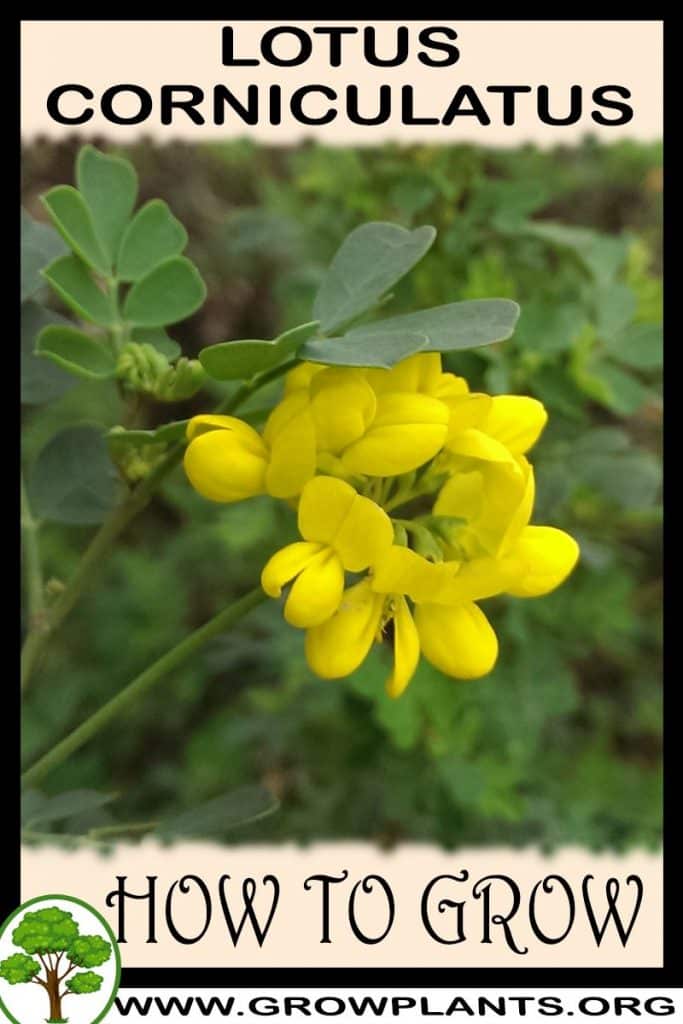
Plant Profile & Key Characteristics
Overview: Low herbaceous perennial legume reaching 30-60 cm, with semi-evergreen trifoliate foliage. Grown as a nitrogen-fixing ornamental groundcover that attracts pollinators.
Quick Specifications
| Specification | Attribute |
|---|---|
| Plant Type / Life Cycle | Perennial (herbaceous legume) |
| Foliage Type | Semi-evergreen (evergreen or deciduous by climate) |
| Mature Size | 30-60 cm (12-24 in) tall |
| Growth Rate | Fast to moderate |
| Root System | Taproot with spreading rhizomes |
| Hardiness | USDA zones 3-10a |
Growth Form & Structure
- Height & Spread: 30-60 cm tall, spreading into a low mat; suits containers and hanging planters.
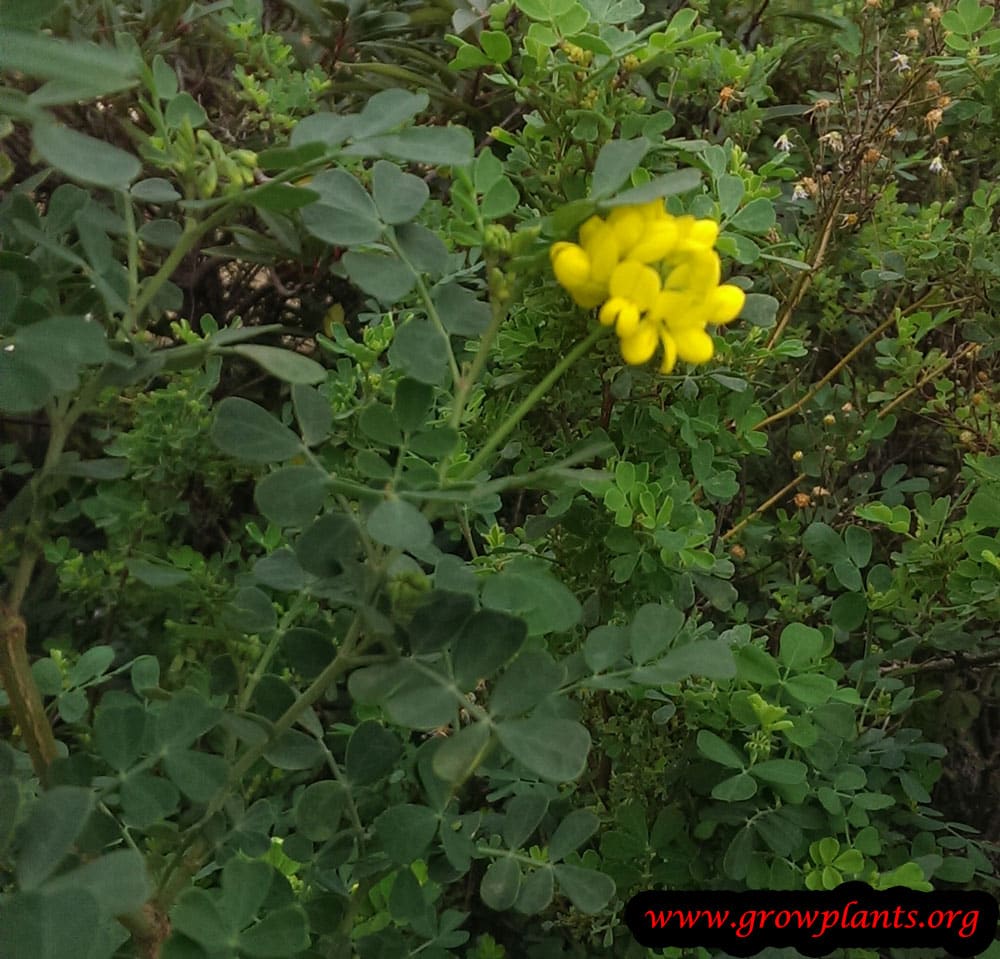
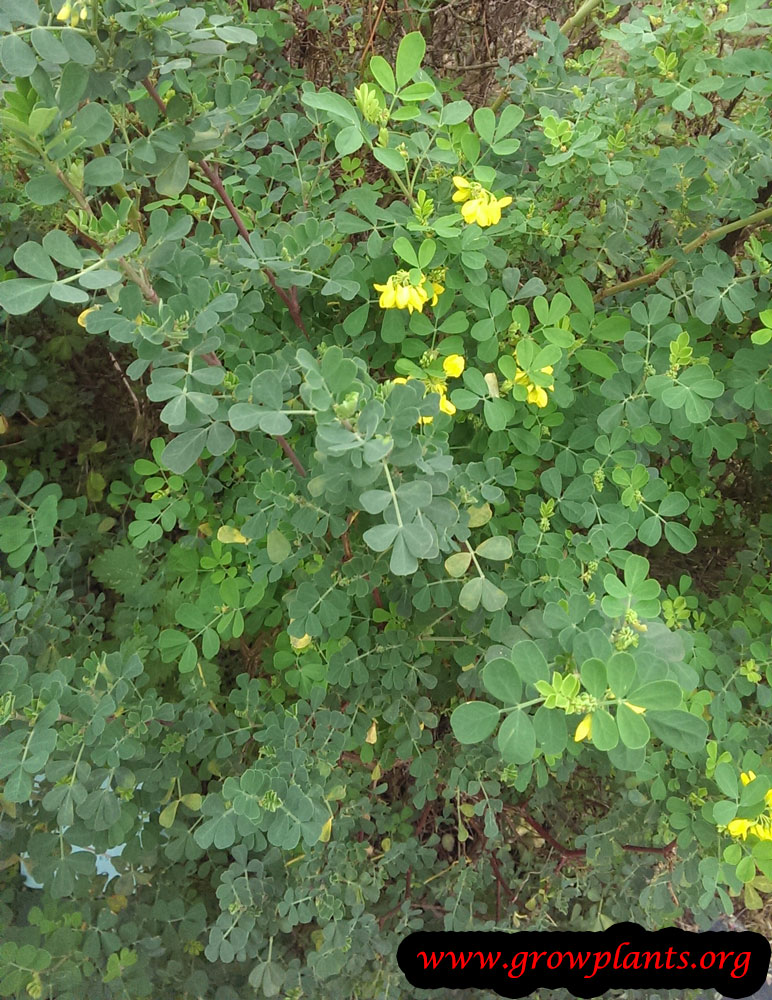
- Growth Habit & Form: Low, sprawling groundcover with slender trailing stems.
- Lifespan & Maturity: Long-lived perennial that establishes quickly and can spread vigorously.
Anatomy & Physical Features
- Leaves & Foliage: Green, lobed leaves with three main leaflets (trifoliate).
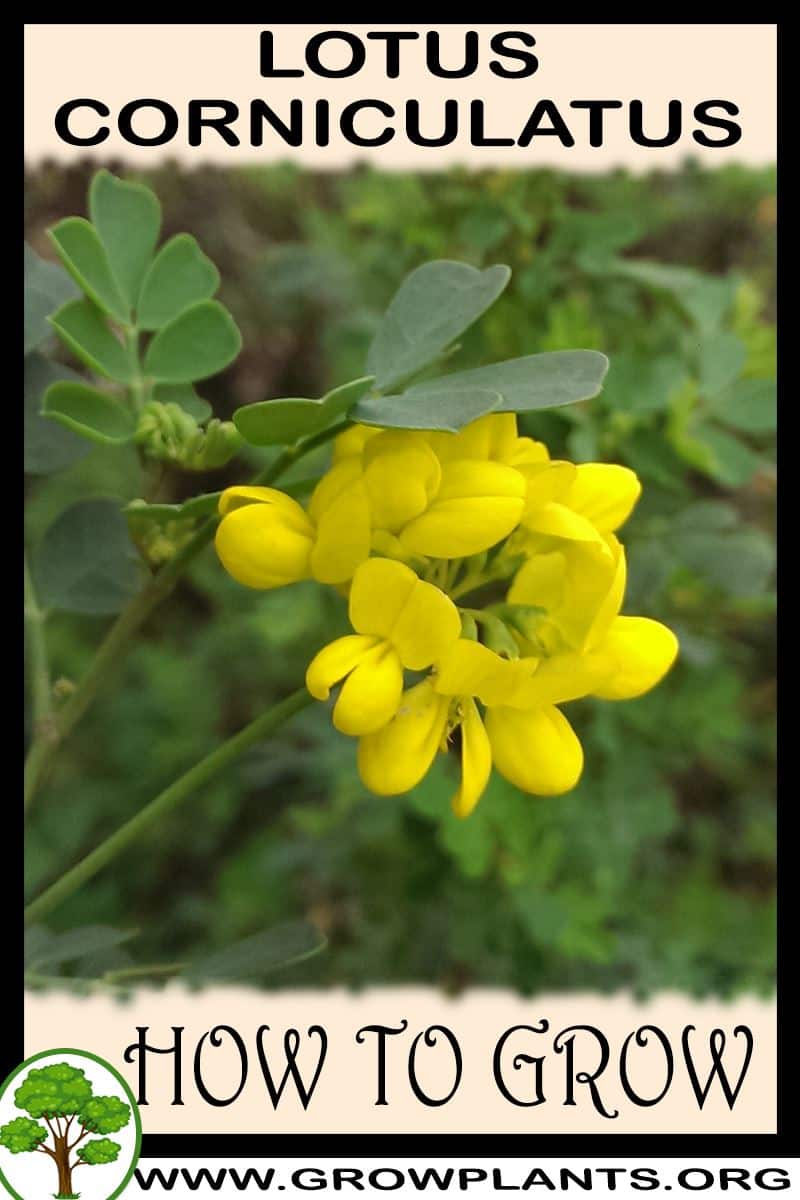
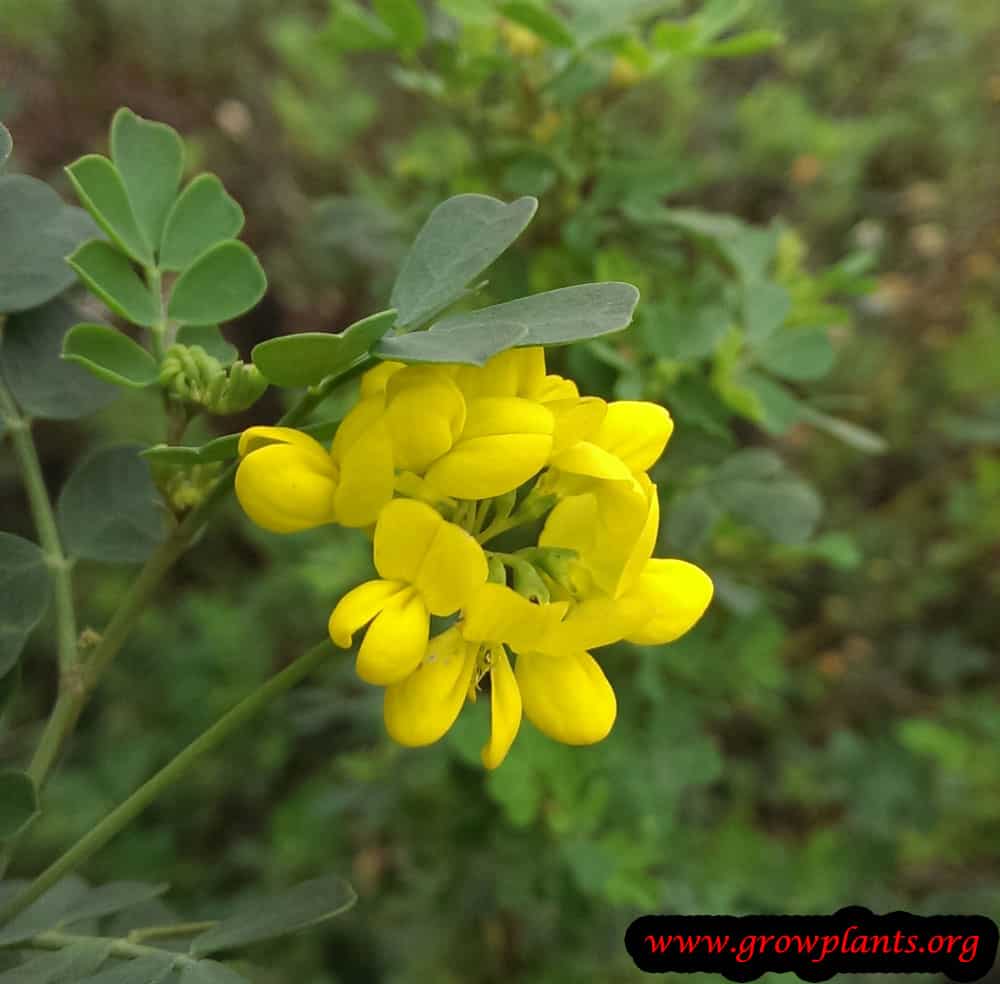
- Flower Characteristics: Fragrant pea-shaped flowers in yellow to orange, often yellow flushed with orange.
Primary Uses & Landscape Value
- Functional & Ornamental Roles: Ornamental groundcover and living mulch that fixes nitrogen and attracts pollinators; note it can be invasive.
Care Guide: Planting, Soil & Watering
Overview: Birdsfoot trefoil is an easy nitrogen-fixing legume for full sun to half shade that grows in almost any well-drained soil, including poor ground. It is drought-tolerant once established and needs only low to moderate watering.
Quick Care Requirements
| Requirement | Ideal Condition |
|---|---|
| Planting Season | During the warm season, spring through autumn |
| Growth Rate | Moderate to Fast |
| Soil Type | Adaptable, well-draining soil; tolerates poor soils |
| Water Need | Low to moderate — let the top of the soil dry between waterings; tolerates short dry spells |
Planting & Establishment
- Best Planting Season: Plant during the warm season, anytime from spring through autumn.
- How to Plant:
- Hole Preparation: Dig a hole a little larger than the root ball and loosen the surrounding soil so young roots can spread easily.
- Soil Amendments: Little amendment is needed — as a nitrogen-fixing legume it grows well even in poor soils; a little compost improves establishment where the ground is very lean.
- Planting Depth: Set the plant at the same level it grew in its pot, with the root collar at the soil surface — do not bury the stem.
- Growth Speed & Expectations: Expect moderate to fast growth in optimal conditions, filling out quickly through the warm season.
Soil, Watering & Drainage Care
- Soil Mix & Drainage Needs: Provide light, aerated, well-draining soil so water never pools around the roots; in containers use a quality free-draining potting mix and make sure the pot has drainage holes to prevent root rot.
- Watering Schedule & Technique:
- Young / Newly Planted: Keep the soil lightly moist while young plants establish, watering whenever the surface begins to dry.
- Established: Once established, water deeply but let the top few centimetres dry before watering again; the plant tolerates short dry spells.
- Seasonal Adjustments: Increase watering in hot, dry weather and reduce it in winter or during rainy spells.
Climate, Light & Hardiness
Birdsfoot trefoil is a tough, cold-hardy perennial groundcover legume for Mediterranean, desert, subtropical and temperate climates, growing in full sun to half shade. The dataset gives roughly zones 3–10a - it is among the hardiest plants in this group, surviving cold winters as a low, spreading mat.
Quick Climate Specifications
| Climate Zones | Mediterranean, desert, subtropical, temperate |
|---|---|
| USDA Hardiness Zones | Approximately 3–10a (per dataset) |
| Optimal Temp Range | Approximately 15–25 °C / 59–77 °F |
| Cold Damage Begins | Top growth checks in autumn cold; the crown is very cold-tolerant |
| Approx. Survival Minimum | Established plants survive hard winter cold within the zone range (roughly to −35 °C / −31 °F) |
| Frost Tolerance | High |
| Light Conditions | Full sun to half shade |
| Wind Tolerance | High (low, ground-hugging habit) |
Sunlight & Light Exposure
Optimal Light Setup
Full sun gives the densest mat and most flowers; it persists in half shade with a looser cover.
Temperature Extremes & Hardiness
USDA Hardiness & Regional Limits
Genuinely hardy across its cited zone 3–10a range, it comes through cold winters from a tough crown and root system and regrows readily - so cold is rarely the limiting factor. Its vigour can make it spread aggressively.
Cold Damage & Winter Protection
Autumn cold checks the foliage but established plants need no protection within their range.
Extreme Heat Tolerance
It also copes with hot Mediterranean and desert summers, making it adaptable across a wide climate range.
Wind, Humidity & Microclimate
Wind Tolerance
Its low, spreading form shrugs off wind, suiting exposed banks and verges.
Dry-Air Tolerance
Tolerant of dry air once established.
Microclimate Recommendations
Adaptable to most open, sunny sites; use it where its toughness and spread are welcome rather than in tight borders.
Growing in Pots, Balconies & Indoors
Bird’s-foot trefoil is a low, spreading perennial that trails prettily from a pot or window box on a sunny balcony or patio. It is not a houseplant.
Quick Details
- Container Size: About 10-20 L (3-5 gal) – a wide or trailing pot suits its spreading habit
- Indoor Suitability: Not a houseplant; a hardy, low-spreading plant for a sunny outdoor pot
- Best Spot: Full sun to light shade
- Soil & Drainage: Water moderately – it is drought-tolerant once established; let the surface dry between waterings and avoid standing water
- Watering in Pots: Houseplant limits: Not a houseplant – it needs real sun and open air to stay compact and flower. Outdoor pot plant: Grow it as a trailing edge plant in a sunny container or window box. Note: The foliage contains small amounts of cyanogenic compounds – fine as an ornamental, but not for nibbling; keep grazing pets off it.
Indoors & On the Windowsill
- Light, heat & wind: Give it the sunniest spot you can. Walls, railings and paving reflect heat, so pots dry quickly – check moisture daily in warm weather, and shelter tall growth from wind. A drip irrigation kit with a timer can take over that watering check automatically.
- Trailing habit: Let it spill over the pot rim or a railing planter; shelter from strong wind.
On a Balcony or Patio
- Pot & drainage: A 10-20 L pot with strong drainage holes; skip a standing water saucer to avoid root rot. Terracotta breathes and dries fast; glazed or plastic holds moisture longer.
- Potting mix: Use a well-aerated, organic-rich mix – peat or coir blended with perlite or vermiculite for free drainage.
- Feeding: Potted plants lose nutrients as watering leaches them, so feed more often than in open ground. As a legume it fixes much of its own nitrogen, so favour a low-nitrogen feed richer in phosphorus and potassium.
- Repotting: Refresh the mix or divide and replant about every two years as it fills the pot.
Choosing the Pot, Soil & Long-Term Care
Fertilizing & Feeding
A light, undemanding feeder: as a legume, Lotus corniculatus fixes some of its own nitrogen and flowers well on modest, balanced feeding rather than heavy nitrogen or high-phosphorus ‘bloom’ products.
Quick Fertilizing Specs
| Feeding Level | Light; flowers well on balanced feeding. |
|---|---|
| Main Nutrient Priority | Balanced nutrition; adequate nitrogen and balanced nutrients drive flowering. |
| Best Feeding Period | During active growth and through the bloom season. |
| Organic Options | Compost and other organic matter provide steady, gentle nutrition. |
| Soil pH | Tolerates a wide range; slightly acidic to near-neutral soil is ideal. |
| Reduce/Stop Feeding | Ease off feeding as flowering ends and the plant rests. |
Feeding by Growth Stage
Early growth
Establish Lotus corniculatus and build a healthy framework of stems and leaves ahead of flowering.
| Nutrient direction | Balanced nutrition to build healthy stems and foliage as growth gets going; as a legume it fixes some of its own nitrogen, so keep nitrogen modest. |
|---|---|
| Timing | As new growth begins in the warm growing season. |
| Frequency | A light feeding as growth begins is usually enough. |
| Fertilizer types | A balanced complete fertilizer used lightly, Compost or other organic matter |
| Precautions | Avoid heavy nitrogen, which favors leaves over flowers and can loosen, floppy growth. |
Blooming
Sustain steady, colorful flowering through the bloom season.
| Nutrient direction | Steady, balanced nutrition through the bloom season; adequate nitrogen and balanced nutrients drive flowering, so ordinary complete fertilizer is what supports bloom. |
|---|---|
| Timing | Through the flowering season. |
| Frequency | Light feedings spread through the flowering season keep bloom going. |
| Fertilizer types | A balanced complete fertilizer used lightly through bloom |
| Precautions | Skip high-phosphorus ‘bloom booster’ products; excess phosphorus provides no real flowering advantage and can harm soil life. |
Dormancy or cool-season rest
Through the cool season the plant rests and takes up little in the way of nutrients.
| Nutrient direction | None – withhold fertilizer while the plant is resting. |
|---|---|
| Timing | During winter dormancy or the cool-season slowdown. |
| Frequency | No feeding at this stage. |
| Fertilizer types | No feeding at this stage – the plant is resting and not actively taking up nutrients. |
| Precautions | Do not fertilize until active growth resumes in the warm season. |
Nutrient Deficiency Signs & Corrections
Older, lower leaves turn pale and growth becomes thin and slow.
| Possible causes | Low available nitrogen in the soil, Cold or waterlogged roots limiting nutrient uptake, Leaching of nutrients from a light or sandy soil |
|---|---|
| Appears first on | Older, lower leaves. |
| What to check | Soil drainage and how wet the roots stay, Recent feeding history and soil richness, Whether the fading starts on the oldest leaves |
| Possible correction | Improve drainage, and apply a light balanced feeding to restore steady, moderate growth. |
The newest leaves yellow between the veins while the veins stay green.
| Possible causes | High soil pH reducing iron or manganese availability, Waterlogged or cold roots that cannot take micronutrients up, A genuine iron or manganese shortage |
|---|---|
| Appears first on | New, upper leaves. |
| What to check | Soil pH, Drainage and root health, Whether only the newest growth is affected |
| Possible correction | Correct soil pH and drainage; if it persists, apply a chelated iron or manganese product according to its label. |
The plant grows plenty of leaves but produces few flowers.
| Possible causes | Excess nitrogen favoring foliage over flowering, Too little light for good bud formation, Heat or drought stress during the bloom period |
|---|---|
| Appears first on | Flowering shoots and buds. |
| What to check | Recent nitrogen inputs and overall soil richness, How much direct light the plant receives, Watering steadiness through the bloom season |
| Possible correction | Ease off nitrogen, give the plant adequate light, and rely on balanced nutrition rather than high-phosphorus bloom products, which offer no real flowering advantage. |
Pruning, Training & Seasonal Maintenance
Birdsfoot trefoil (Lotus corniculatus) is a low, mat-forming herbaceous perennial legume, 30–60 cm high, grown as a ground cover and pollinator plant. Maintenance is about containment and renewal rather than shaping: because it spreads and self-seeds aggressively enough to be considered invasive, the key cutting jobs are shearing the mat back to control its spread and, above all, cutting or shearing off the yellow-orange flowers before their seed pods ripen and scatter.
It flowers on current-season growth over summer and autumn, so cutting the mat back does not sacrifice a permanent flowering structure — the plant simply reflushes from its crown and creeping stems.
Quick Pruning & Maintenance Specs
| Pruning Tolerance | High (mat-forming perennial; regrows from the crown after shearing) |
| Primary Pruning Window | Winter / dormant cut-back for renewal |
| Secondary Maintenance Window | After flowering, before seed set, to limit spread |
| Typical Frequency | Once or twice a year (renewal shear plus seed-control shear) |
| Main Objective | Control spread and self-seeding; renew a tidy, dense mat |
| Young Plant Priority | Little cutting; let it knit into a cover |
| Mature Plant Priority | Shear back edges and flower/seed heads to contain it |
| Best Tool Type | Hedge shears / bypass secateurs for mass cut-back |
| Avoid Heavy Pruning During | Peak flowering if pollinators are the goal (time the cut to seed set) |
Pruning by Plant Age & Size
Newly Established
Cut little in the first season while the plant knits together into a cover — just tidy stray or damaged stems.
Young / Formative
No structural training applies to a groundcover; the aim is even, dense coverage. Shear lightly if it runs beyond its intended patch.
Mature / Established
Shear the whole mat back to renew density and, importantly, cut over the planting after flowering to strip developing seed heads and keep this invasive spreader from seeding into surrounding ground.
Seasonal Pruning Schedule
After flowering (seed control): objective is to prevent self-seeding — shear off spent flowers and forming pods across the mat; keep the leafy creeping stems that form the cover; expect fresh low growth to follow. Winter / dormant (renewal): cut the whole planting back to freshen a matted, woody-based clump and remove old tired growth, so it regrows dense in spring.
Structural Pruning & Training
The only “structure” is the edge: shear or cut back the running margins to hold the plant to its allotted area. Renewal shearing of the whole mass keeps it low and thick rather than open and straggly.
Special Growth to Remove
Prioritise removing spent flower stems and seed heads — this is the single most useful cut on an invasive self-seeder. Also cut back the creeping stems that escape the intended patch before they root down and extend the colony.
Container & Small-Space Pruning
In containers or hanging displays it trails; shear back trailing stems to keep it neat and, as in the ground, remove flowers before seed to avoid it spreading from the pot.
Tools
Because the job is mass cut-back of soft, thin stems over an area, hedge shears (or a strimmer for large plantings) are the efficient choice; bypass secateurs handle spot-cutting of escaping runners. No loppers or saw are needed.
Tool Hygiene & Disease Risk
Routine. The only recorded issue is larvae; there is no notable tool-borne disease, so clean, sharp blades are sufficient.
Cut Placement & Technique
Shear evenly across the mat at the chosen height rather than making selective cuts — a groundcover is renewed as a mass. When containing spread, cut running stems back to within the intended edge before they layer and root.
Heavy Pruning & Rejuvenation
Tolerated well. A tired, woody-centred mat can be sheared hard in the dormant season and will regenerate densely from the crown and creeping stems — a standard way to rejuvenate an old planting.
Post-Pruning Care
Water lightly after a hard shear to speed regrowth; no feeding is needed, as this nitrogen-fixing legume is not hungry. Because it tolerates dry conditions, avoid overwatering the freshly cut mat.
Common Pruning Mistakes
- Letting it flower and seed unchecked, allowing this invasive plant to spread far beyond its bed.
- Never renewing the mat, so the centre goes woody, open and straggly.
- Shearing during peak bloom when the aim was to feed pollinators — time the containment cut to just as pods form instead.
When NOT to Prune
Avoid a hard shear during peak flowering if you are growing it for bees, and do not cut it back into hard frost; leave renewal shearing for the dormant season or immediately after flowering.
Recommended Tools (by task)
- hedge_shears — for shearing the whole mat when renewing it and when stripping flowers/seed heads to control this invasive spreader.
- bypass_secateurs — for spot-cutting individual runners that escape the intended edge.
Propagation Guide
Birdsfoot trefoil is usually sown from seed — often inoculated with Rhizobium and scarified for even germination — and established clumps can also be divided. It cross-pollinates, so seedlings vary and double-flowered forms such as ‘Plena’ are kept by division rather than seed.
Quick Propagation Specs
| Best Propagation Method | Seed (scarified / inoculated) |
| Alternative Methods | Crown division |
| Propagation Difficulty | Easy |
| Seed True-to-Type | Variable — cross-pollinated; cultivars not true from seed |
| Vegetative True-to-Type | Yes |
| Best Propagation Season | Spring to autumn |
| Germination Temperature | Mild, roughly 15–20°C (59–68°F) |
| Seed Sowing Depth | Shallow, about 0.5–1 cm |
Growing from Seed
Dormancy & Pre-Sowing Treatment
Some seed is hard-coated and germinates more evenly after scarifying; inoculating with the matching Rhizobium supports nitrogen fixation. Sow shallowly onto firm, moist soil.
Division, Offsets, Pups & Suckers
Lift and divide the crown in spring, keeping roots on each piece — the way to reproduce a double-flowered selection true to the parent.
Bloom & Flower Guide
Quick Details
- Bloom Season: Summer and autumn
- Time to First Bloom: Usually in its first or second year, once the mat is established
- Flower Appearance: Fragrant pea-shaped flowers in yellow and orange, some forms yellow flushed with orange, in small clusters
- Edibility: Ornamental ground cover; the plant contains cyanogenic compounds and the flowers are not eaten
Detailed Blooming Overview
Birdsfoot trefoil forms a low, spreading mat that lights up in summer with small, honey-scented flowers in warm yellow and orange. It is a tough, drought-tolerant ground cover that fixes its own nitrogen and keeps the bees busy, though it is grown for its bloom and cover rather than the table, as the foliage carries cyanogenic compounds.
Flower Characteristics
- Small pea-shaped flowers in yellow, orange, or yellow flushed with orange.
- Fragrant and carried in little clusters just above the foliage.
- A reliable, nectar-rich draw for bees.
Bloom Care & Thinning
- Site for flowering: Full sun and free-draining soil give the most generous, long-lasting bloom.
- Rebloom: A light trim after the first flush neatens the mat and can bring on a further wave of flowers.
- Self-seeding: It can spread by seed, so shear off spent flowers if you want to keep it in bounds.
Pests, Diseases & Troubleshooting
Overview: Birdsfoot trefoil is a tough perennial legume that is largely trouble-free in lean, well-drained soils, but crowded or overly rich, damp stands invite sap-feeding insects and soil-borne rots. Manage it culturally first – good drainage, airflow and rotation keep it healthy, and its nitrogen-fixing roots mean it rarely needs feeding.
Quick Troubleshooting Overview
| Issue / Pest | Main Symptom | Primary Solution |
|---|---|---|
| Aphids | Sticky, curled shoot tips with clustered green/black insects | Blast off with water; encourage ladybirds; insecticidal soap if severe |
| Sitona weevils | Notched (scalloped) leaf margins; larvae feed on root nodules | Tolerate light damage; rotate; keep plants vigorous |
| Spider mites | Fine stippling and webbing in hot, dry, dusty sites | Raise humidity, hose foliage, horticultural oil |
| Fusarium / root rot | Wilting, yellowing, blackened crown in wet soil | Improve drainage; never overwater; rotate |
| Rust | Orange-brown pustules on undersides of leaves | Improve airflow; remove infected leaves; sulfur if needed |
Common Pests & Management
- Aphids (Aphis craccivora / Acyrthosiphon spp.):
- Symptoms: Small soft-bodied insects massing on tender shoots and flower stalks, causing curling, sticky honeydew and sooty mould; they can also transmit legume viruses.
- Prevention & Control: Dislodge with a firm water jet, protect natural enemies (ladybirds, lacewings, parasitic wasps), and avoid excess nitrogen that flushes soft growth. Insecticidal soap or a light horticultural oil handles heavy outbreaks.
- Clover / Sitona weevils (Sitona spp.):
- Symptoms: Adults chew characteristic U-shaped notches along leaf edges; the larvae feed inside root nodules, weakening nitrogen fixation and stunting young stands.
- Prevention & Control: Damage is usually cosmetic in established plants; keep them growing strongly, rotate legume plantings, and avoid replanting into recently infested ground. Beneficial nematodes can suppress larvae in nursery beds.
- Two-spotted spider mite (Tetranychus urticae):
- Symptoms: Fine pale stippling, bronzing and delicate webbing on leaf undersides during hot, dry spells; leaves dry and drop in severe cases.
- Prevention & Control: Raise humidity and hose the underside of foliage, keep plants unstressed by drought, and conserve predatory mites. Insecticidal soap or horticultural oil for persistent colonies.
- Lygus / plant bugs (Lygus spp.):
- Symptoms: Feeding on buds and developing seed causes distorted growth and poor seed set; small wedge-shaped bugs drop when disturbed.
- Prevention & Control: Keep surrounding weeds down to remove alternate hosts, tolerate low numbers, and support predatory insects. Rarely needs any spray in ornamental or forage use.
Diseases & Fungal Issues
- Rust (Uromyces spp.):
- Symptoms: Raised orange to rusty-brown pustules on leaf undersides, yellowing above, and premature leaf drop in humid, crowded stands.
- Treatment & Management: Improve air movement by thinning, avoid overhead watering late in the day, remove and destroy infected foliage, and use a sulfur or suitable fungicide only for severe recurring pressure.
- Powdery mildew (Erysiphe spp.):
- Symptoms: White powdery patches on leaves and stems in warm, still, humid conditions, leading to yellowing and distortion.
- Treatment & Management: Space plants for airflow, water at the base, and remove affected growth; potassium-bicarbonate or sulfur sprays if it spreads.
- Fusarium / Rhizoctonia root and crown rot:
- Symptoms: Wilting, yellowing and collapse from a browned, rotted crown and roots, especially in heavy, waterlogged soils.
- Treatment & Management: Plant only in free-draining ground, never let the crown sit wet, rotate away from legumes, and remove and destroy collapsed plants. There is no cure once rot is advanced – prevention through drainage is key.
Growing Difficulties & Abiotic Problems
- Waterlogging & poor drainage:
- Cause & Symptoms: Yellowing, stunting and root death where soil stays saturated; birdsfoot trefoil is adapted to lean, dry-to-moist but well-drained sites.
- Correction Strategy: Plant on free-draining ground or raised beds, ease off watering, and improve heavy soils with grit or organic matter before establishment.
- Nutrient imbalance (excess nitrogen):
- Cause & Symptoms: Soft, leafy, floppy growth with few flowers and heightened aphid attack; as a nitrogen-fixer it needs no nitrogen feeding.
- Correction Strategy: Do not fertilise with nitrogen; a light phosphorus/potassium topdressing on very poor soils is enough. Lean conditions give hardier, more floriferous plants.
- Chlorosis on alkaline soil:
- Cause & Symptoms: Interveinal yellowing of younger leaves where high pH locks up iron and manganese.
- Correction Strategy: Confirm with a soil test, add organic matter, and correct with chelated iron if needed; long term, choose sites within its wide tolerance range.
What Helps – Products & Tools
Reach for gentle, cultural tools first: a strong hose spray for aphids and mites, insecticidal soap or light horticultural oil for stubborn sap-feeders, and sulfur or potassium-bicarbonate fungicide for rust and mildew. Beneficial insects (ladybirds, lacewings) and good drainage do most of the work here.