Plant Profile & Key Characteristics
Overview: Cornus capitata (Himalayan strawberry-tree) is a deciduous tree reaching 2-12 m (6-36 ft), grown as an ornamental with edible fruit. It is a perennial valued for its showy creamy bracts and the large red strawberry-like fruits that follow.
Quick Specifications
| Specification | Attribute |
|---|---|
| Plant Type / Life Cycle | Perennial |
| Foliage Type | Deciduous (semi-evergreen in mild climates) |
| Mature Size | 2-12 m (6-36 ft) |
| Growth Rate | Slow to moderate |
| Toxicity | Non-toxic (fruit is edible) |
| Hardiness | USDA zones 8-10a |
Growth Form & Structure
- Height & Spread: A small to medium tree of 2-12 m (6-36 ft); young plants can be container-grown.
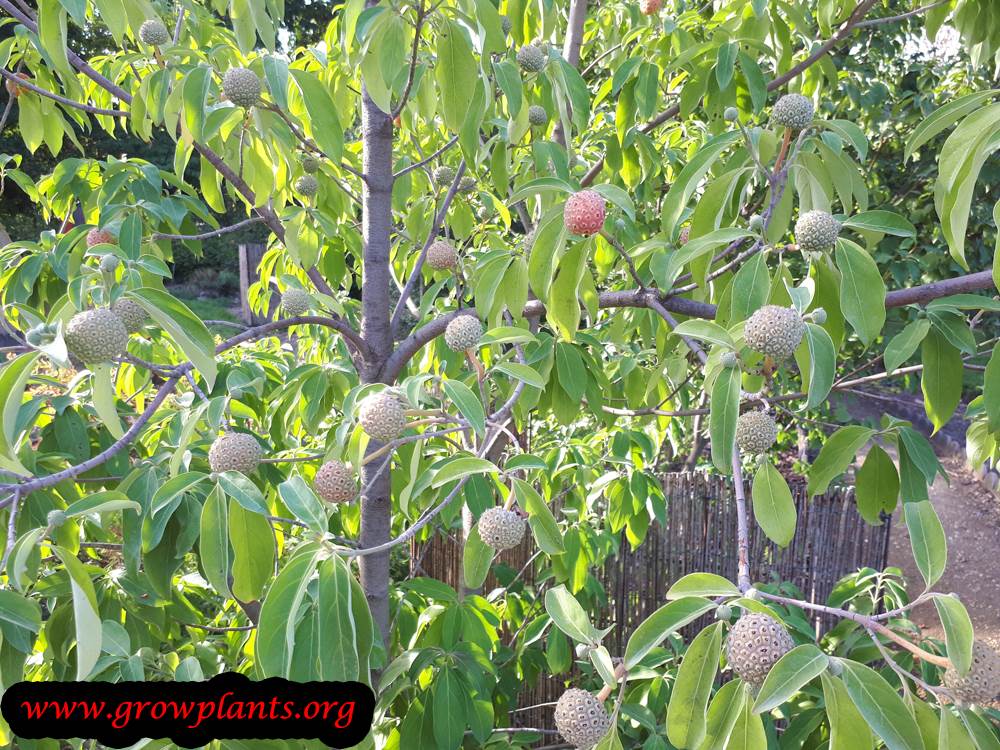
- Growth Habit & Form: Rounded, spreading tree with a broad leafy crown.
- Lifespan & Maturity: Slow to moderate growing and long-lived, flowering and then fruiting through the warm season.
Anatomy & Physical Features
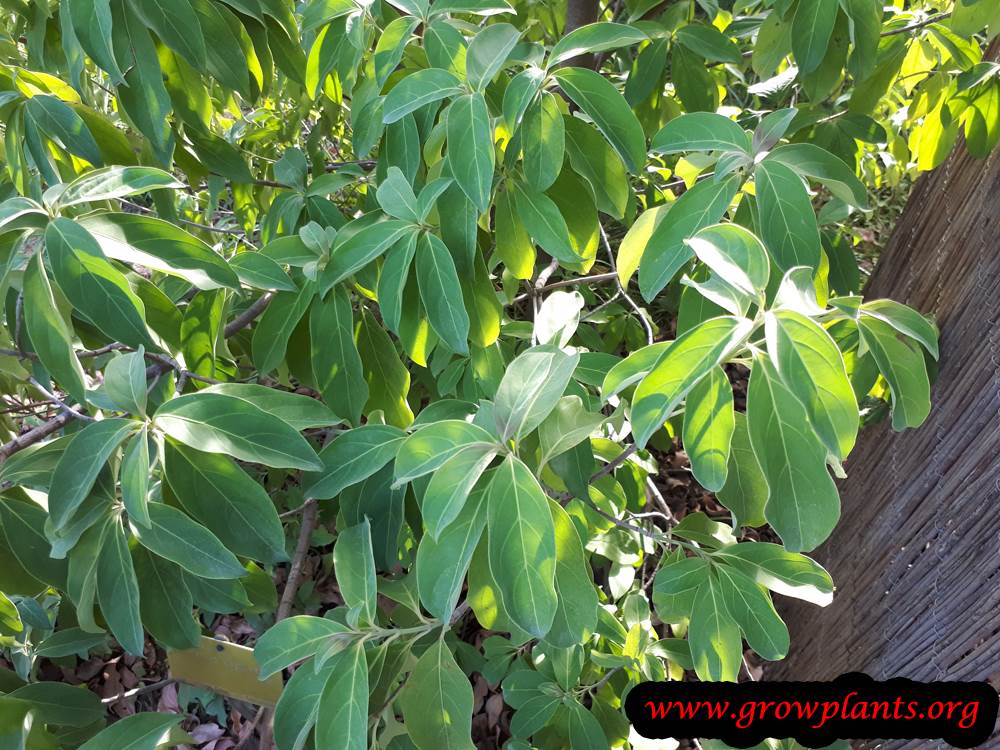
- Leaves & Foliage: Green, elliptic leaves.
- Flower Characteristics: Small fragrant flowers surrounded by showy creamy white-to-yellow bracts, borne in clusters.
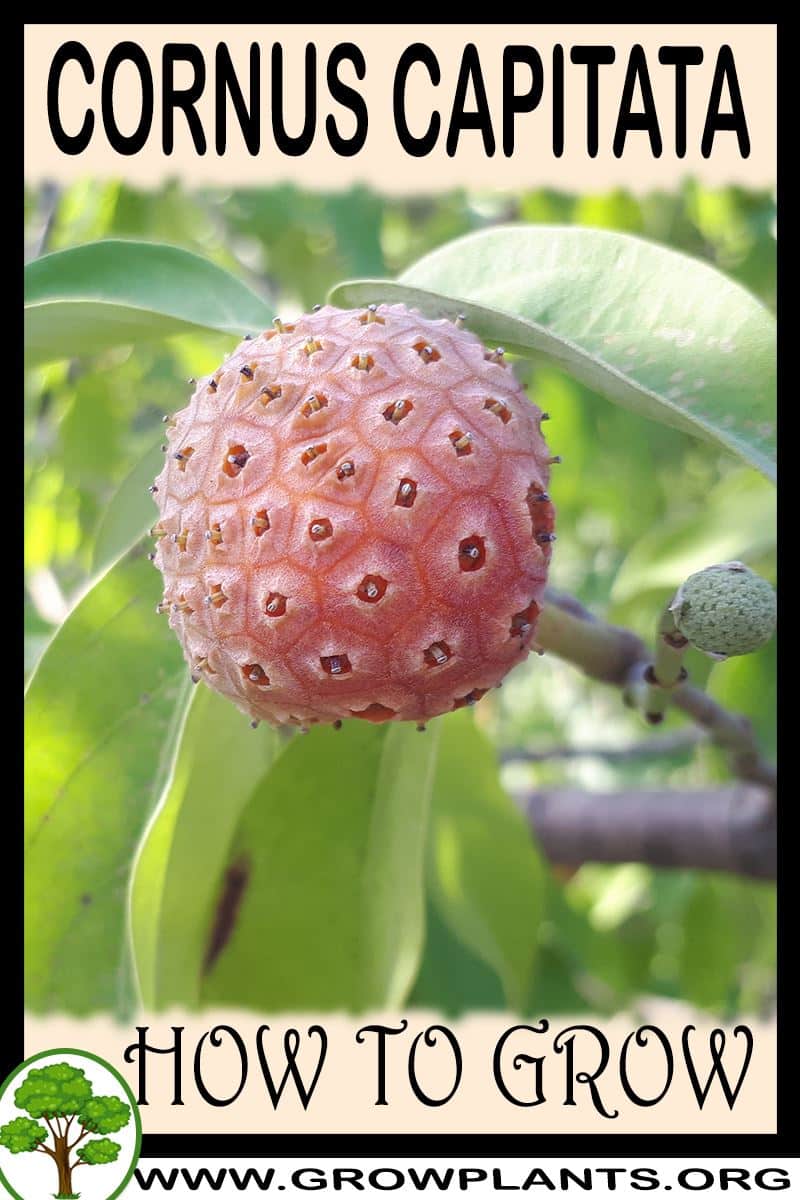
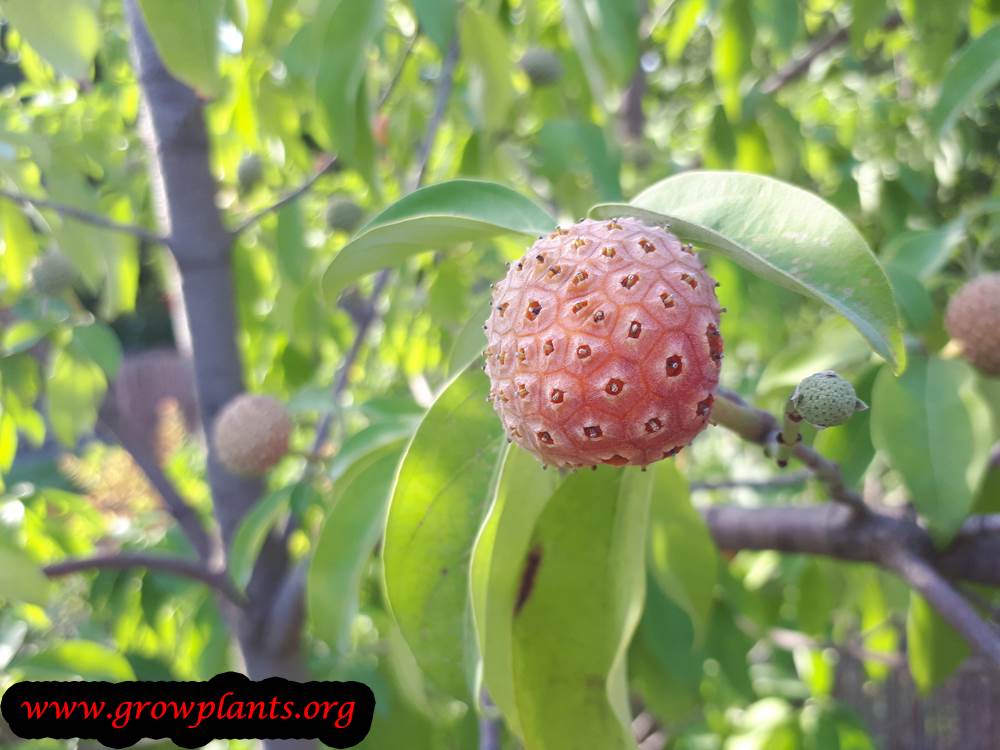
- Fruit Profile: Large, fleshy red strawberry-like fruit that is edible.
Primary Uses & Landscape Value
- Edible Uses: The soft red fruits are edible, eaten fresh.
- Functional & Ornamental Roles: Ornamental flowering and fruiting shade tree for gardens and avenues.
Care Guide: Planting, Soil & Watering
Overview: A deciduous dogwood for temperate gardens. It thrives in moist, well-drained soil in sun to part shade and needs a cold winter and generous moisture.
Quick Care Requirements
| Requirement | Ideal Condition |
|---|---|
| Planting Season | In the dormant-to-warm season – winter through spring, into summer |
| Growth Rate | Slow to Moderate |
| Soil Type | Moist, fertile, well-draining |
| Water Need | Moderate to High – keep reliably moist |
Planting & Establishment
- Best Planting Season: Plant while dormant to early in growth, from winter to spring; it needs cold winters (zone 8-10a) to thrive.
- How to Plant:
- Hole Preparation: Dig a hole twice the width of the root ball and equally deep.
- Soil Amendments: Incorporate compost or other organic matter to hold moisture and feed the plant.
- Planting Depth: Set the root collar level with the soil and do not bury the stem.
- Growth Speed & Expectations: Slow to moderate growth.
Soil, Watering & Drainage Care
- Soil Mix & Drainage Needs: Moisture-retentive but well-drained soil; it tolerates damp ground better than dry.
- Watering Schedule & Technique:
- Young / Newly Planted: Keep the soil consistently moist while it establishes.
- Established: Water generously and regularly – this plant likes ample moisture.
- Seasonal Adjustments: Water more in summer heat and naturally less during cold dormancy.
Climate, Light & Hardiness
Cornus capitata (Himalayan strawberry-tree) is a cold-winter-adapted flowering tree for temperate and cool-subtropical climates. It grows in full sun to half shade and, unlike most of the other plants in this batch, actually benefits from a genuinely cold winter.
Quick Climate Specifications
| Climate Zones | Temperate, cool subtropics |
|---|---|
| USDA Hardiness Zones | 8–10a |
| Light Conditions | Full sun to half shade |
Sunlight & Light Exposure
Optimal Light Setup
Full sun to half shade both suit this small tree well.
Temperature Extremes & Hardiness
USDA Hardiness & Regional Limits
Hardy across USDA zones 8–10a, a relatively narrow, cool-leaning range for this batch of plants.
Cold Damage & Winter Protection
The source data notes it prefers a cold winter; the current-year stems characteristically turn red once winter cold arrives, a visible seasonal cold response rather than damage.
Wind, Humidity & Microclimate
Rainfall & Seasonal Moisture
Appreciates consistently moist, well-drained soil rather than a pronounced dry season.
Growing in Pots, Balconies & Indoors
Cornus capitata (evergreen dogwood) matures into a small tree of 2-12 m, so it is not a long-term pot plant – containers suit it only while young. The grower does not class it as a houseplant; grow it outdoors in sun or part shade.
Quick Details
- Container Size: A large tub while young; it ultimately becomes a 2-12 m (6-36 ft) tree and is best planted out
- Indoor Suitability: Not a houseplant – it is an outdoor tree
- Best Spot: Full sun to half shade
- Soil & Drainage: Rich, moisture-retentive but free-draining organic mix; strong drainage holes
- Watering in Pots: Keep evenly moist – it likes average to plenty of water; never waterlog
Indoors & On the Windowsill
- Not a houseplant: The grower confirms it will not grow indoors – it is a tree that needs full outdoor light.
- Windowsill: Not applicable – far too large; a young plant can spend time on a patio, not a sill.
- Overwintering: Hardy in mild climates; a young potted specimen can be sheltered from hard frost.
On a Balcony or Patio
- While young: A young tree can live in a large tub on a patio for a few years in sun or light shade.
- Water & weight: A big tub is heavy and dries in heat – site it where you can water often and drainage escapes.
Choosing the Pot, Soil & Long-Term Care
- Pot & drainage: A large tub with strong drainage holes; skip a standing-water saucer to avoid root rot.
- Potting mix: A rich, moisture-retentive yet free-draining organic mix.
- Feeding: Feed through the growing season while it is potted.
- Long term: It outgrows pots – plan to plant it in the ground once it fills a large tub.
Fertilizing & Feeding
A slow-to-medium growing deciduous ornamental tree valued for its fragrant white-to-yellow flower clusters, winter-red stems, and strawberry-like fruit display, this tree is a light feeder in the moist, well-drained soil it prefers and does not need heavy fertilizing to perform well.
Quick Fertilizing Specs
| Feeding Level | Light feeder |
|---|---|
| Main Nutrient Priority | Balanced feeding kept light, favoring steady structural growth and flowering over rapid growth |
| Best Feeding Period | From the winter-to-spring planting window through spring flowering |
| Organic Options | Compost or well-rotted organic matter worked into moist, well-drained soil around the root zone |
| Reduce/Stop Feeding | Ease off as flowering finishes and the tree heads toward its winter dormancy |
| Micronutrients | Usually met by a complete fertilizer in moist, well-drained soil; correct only a diagnosed problem |
| Soil pH | Performs best in moist, well-drained soil without needing a particular pH |
Feeding by Growth Stage
Spring growth after planting or winter dormancy
Support root establishment in newly planted trees and fresh stem and leaf growth in established ones as the tree comes out of winter.
| Nutrient direction | A light, balanced feeding supports steady structural growth without forcing overly fast, weak growth on this slow-to-medium growing tree. |
|---|---|
| Timing | During the winter-to-summer planting window for new trees, and as new growth emerges in spring for established ones. |
| Frequency | Light feeding is usually enough at this stage; minimal feeding is needed for an established tree in good soil. |
| Fertilizer types | A balanced, complete fertilizer applied sparingly, Compost or organic matter worked into the root zone |
| Precautions | Keep the moist, well-drained soil this tree prefers evenly moist rather than waterlogged or dry when feeding. |
Spring-to-summer bloom
Sustain the tree through its fragrant white-to-yellow flower clusters, which lead into its later strawberry-like fruit display.
| Nutrient direction | Keep feeding light and balanced; heavy feeding is not needed to support flowering on this tree. |
|---|---|
| Timing | Through the main spring-to-summer flowering period. |
| Frequency | Light feeding is usually enough through bloom; an established tree in good soil often needs little beyond that. |
| Fertilizer types | A balanced, complete fertilizer applied sparingly |
| Precautions | Avoid nitrogen-heavy feeding, which favors leafy growth over the flower and fruit display and can also delay the tree’s winter stem coloring. |
Winter dormancy
Let the deciduous tree rest through winter, when its stems take on their characteristic red winter color.
| Nutrient direction | None – withhold fertilizer while the tree is dormant. |
|---|---|
| Timing | From leaf drop through the winter dormant period. |
| Frequency | No feeding at this stage. |
| Fertilizer types | No feeding at this stage; the tree is dormant rather than in active growth |
| Precautions | Do not fertilize a dormant tree; wait for active spring growth before resuming light feeding. |
Nutrient Deficiency Signs & Corrections
Older, lower leaves fade to pale green or yellow and overall growth slows more than expected for this naturally slow-to-medium grower.
| Possible causes | low soil fertility, nitrogen leaching from heavy rain in moist soil, root competition from turf or nearby plantings |
|---|---|
| Appears first on | older, lower leaves |
| What to check | recent feeding history, soil organic matter, competing root growth nearby |
| Possible correction | Apply a light, balanced feeding and refresh organic matter around the root zone. |
New leaves emerge pale yellow while the veins stay distinctly green.
| Possible causes | high soil pH limiting iron availability, poorly drained or compacted soil despite this tree’s preference for moisture, root stress from recent transplanting |
|---|---|
| Appears first on | newest leaves |
| What to check | soil pH and drainage, recent watering patterns, root health |
| Possible correction | Improve drainage and apply a chelated iron product per its label if the soil is alkaline. |
Tree grows leafy and vigorous but produces fewer flower clusters and less winter stem color than expected.
| Possible causes | overfeeding with a nitrogen-heavy fertilizer favoring leafy growth over flowering and stem coloring, too much shade for a tree that flowers best in full sun to half shade, recent heavy pruning removing flowering wood |
|---|---|
| Appears first on | whole-tree effect rather than a single branch |
| What to check | recent fertilizer type and amount, light exposure, recent pruning severity and timing |
| Possible correction | Cut back to light, balanced feeding, improve sun exposure, and prune only lightly for design as recommended for this tree. |
Pruning, Training & Seasonal Maintenance
Cornus capitata (Himalayan strawberry-tree) needs only light, corrective pruning — the source guidance itself describes cutting simply "for design," not for productivity or plant health. Its main ornamental assets are the clustered white-to-yellow bracted flowers and the stems that redden in winter, so the safest period to prune is spring, and structural cuts should stay modest given the tree’s medium-to-slow growth rate. Heavy or frequent cutting is unnecessary and can cost a season’s flower display if timed poorly.
Quick Pruning & Maintenance Specs
| Pruning Tolerance | Low–Moderate |
| Primary Pruning Window | Spring |
| Typical Frequency | Occasional, light corrective pruning — not an annual structural overhaul |
| Main Objective | Maintain an attractive form; remove dead, damaged or crossing growth |
| Young Plant Priority | Establish a single clear leader and well-spaced scaffold branches |
| Mature Plant Priority | Light shaping and sanitary cuts only |
| Best Tool Type | Bypass secateurs / loppers, pruning saw for larger limbs |
| Avoid Heavy Pruning During | Just before or during bloom, and in prolonged wet weather |
Pruning by Plant Age & Size
Newly Established
Remove only dead or damaged wood; avoid structural cuts in the first year while the tree settles in.
Young / Formative
Central-leader training: select and keep one dominant upright stem and remove competing co-leaders, spacing scaffold branches around the trunk so the canopy develops an open, balanced form as the tree grows toward its mature 2–12 m height.
Mature / Established
Mostly cosmetic maintenance — remove dead, damaged or crossing/rubbing branches and lightly correct form; there is no productivity-driven renewal pruning required.
Seasonal Pruning Schedule
Pre-Growth/Early-Spring
Objective: shape and tidy the tree before or as new growth begins.
Remove: dead, damaged, crossing or awkwardly placed branches.
Don’t remove: branches carrying the current season’s flower buds if bloom display is a priority.
Expected response: clean regrowth with minimal disruption to the coming flower show.
Flowering impact: cutting right before bloom can remove flower buds already set on the previous season’s wood, so favor minor corrective cuts over hard shaping at this time.
Structural Pruning & Training
- Remove crossing or rubbing branches to prevent bark wounds that can invite disease.
- Maintain a single clear leader while the tree is young; once the framework is set, further leader competition is rare.
- Height and spread control is rarely needed given the tree’s medium-to-slow growth — corrective thinning is about form, not restraining vigor.
Special Growth to Remove
- Dead or winter-damaged twigs, noticeable against the reddened winter stem color.
- Watersprouts or vigorous upright shoots that disrupt the tree’s natural branching pattern, if they appear after a pruning cut.
Container & Small-Space Pruning
Container-grown specimens (the plant tolerates pots per source guidance) need more attentive height and canopy control since pot culture restricts root volume — keep formative pruning going a little longer to hold a compact, well-proportioned tree rather than letting it push toward its full in-ground size.
Tools
- Bypass secateurs: for young shoots and small twigs.
- Loppers: for branches too thick for secateurs during formative shaping.
- Pruning saw: for larger structural limbs on a maturing tree.
- Pole pruner: for reaching upper canopy cuts once the tree approaches its mature height of up to 12 m (36 ft).
Tool Hygiene & Disease Risk
Increased risk: Cornus (dogwood) species as a group are known to be susceptible to fungal cankers and dogwood anthracnose, which can spread on contaminated pruning tools, particularly in damp conditions. Disinfect blades between cuts when removing any diseased or dead wood, and avoid pruning during extended wet weather when infection risk is highest.
Cut Placement & Technique
Make thinning cuts back to the branch collar rather than flush with the trunk, and avoid leaving long stubs. When removing a co-leader on a young tree, cut cleanly at its point of origin so the remaining leader is not shaded or crowded.
Heavy Pruning & Rejuvenation
Not typically needed or recommended: given the tree’s design-only pruning need and medium-to-slow growth rate, hard rejuvenation pruning is not part of normal care and would sacrifice a disproportionate amount of flower display for a full season or more while the canopy regrows.
Post-Pruning Care
After removing any larger limb, keep the tree’s preferred moist, well-drained soil consistently watered while the wound seals, and check exposed bark for sunscald if a significant portion of the canopy was opened up.
Common Pruning Mistakes
- Pruning hard right before bloom and removing the season’s flower buds.
- Cutting during prolonged wet weather, raising canker/anthracnose infection risk.
- Treating this as a productivity tree and over-thinning when only light, design-driven cuts are needed.
When NOT to Prune
Avoid pruning immediately before or during flowering if the bloom display matters, and avoid cutting during extended wet, humid weather given the genus’s canker/anthracnose susceptibility. Hold off on structural pruning in the tree’s first year after planting.
Recommended Tools (by task)
- bypass_secateurs – for small twigs and young formative cuts.
- loppers – for mid-size branches during framework training.
- pruning_saw – for larger structural limbs as the tree matures.
- pole_pruner – to reach upper-canopy cuts once the tree nears its full 12 m/36 ft height.
Pruning Troubleshooting
| Problem | Possible Cause | What to Check | Corrective Action |
| Reduced flowering after pruning | Cuts made just before bloom removed flower buds | Timing of last pruning relative to bloom season | Shift corrective pruning to right after flowering finishes next time |
| Canker or dieback on cut branches | Pruning during wet weather or with contaminated tools | Weather conditions at time of cut; tool hygiene | Disinfect tools, prune in drier conditions, remove affected wood back to clean tissue |
| Competing upright leaders | Co-leader not removed while the tree was young | Trunk/branch junctions near the top of the tree | Select the strongest leader and remove the competitor at its base |
Propagation Guide
Cornus capitata can be grown successfully from seed, which the site notes does not require grafting or vegetative reproduction to succeed – unlike many ornamental dogwood cultivars. Semi-hardwood cuttings are a practical vegetative alternative when a particular tree’s form or fruiting is worth preserving exactly; overall this tree is Moderate to propagate, mainly due to the seed’s dormancy requirements.
Quick Propagation Specs
| Best Propagation Method | Seed |
| Alternative Methods | Semi-hardwood stem cuttings |
| Propagation Difficulty | Moderate |
| Seed True-to-Type | Usually true-to-type (species form) |
| Vegetative True-to-Type | Yes |
| Best Propagation Season | Sow in autumn/winter after fruit ripens; take cuttings in summer |
| Seed Germination Time | Often slow and staggered, commonly spanning several months to over a year |
| Cutting Rooting Time | Typically several weeks to a couple of months |
Growing from Seed
Seed Handling & Viability
Clean seed out of the ripe fruit pulp before sowing or storing, as pulp can inhibit germination and encourage mold.
Dormancy & Pre-Sowing Treatment
Cornus seed typically has combined dormancy and benefits from an extended period of cold, moist stratification (commonly given over winter, either outdoors or refrigerated) before it will germinate reliably.
Sowing Season
Sow fresh seed in autumn after harvesting from ripe fruit, allowing it to stratify naturally over winter, or sow in late winter/early spring after artificial cold stratification.
Germination Conditions
Moist, well-drained soil in a sheltered spot suits germination best, consistent with this tree’s general preference for moist, well-drained ground.
Germination Time
Germination is often slow and can be spread over more than one growing season; some seed may not sprout until the second spring.
Stem Cuttings
Cutting Type
Semi-hardwood cuttings, taken from the current season’s growth once it has begun to firm up.
Best Timing
Summer, after the spring flush of growth has hardened somewhat.
Rooting Setup
Root in a well-drained propagation mix under humid conditions (e.g. misting or a covered tray) out of direct hot sun.
Rooting Hormone
Optional but often beneficial for dogwood-type semi-hardwood cuttings, which can be slow to root without it.
Rooting Time
Typically several weeks to a couple of months.
Bloom & Flower Guide
Quick Details
- Bloom Season: Late spring into summer
- Time to First Bloom: Once the tree is well established (usually several years old)
- Flower Appearance: Small, fragrant flowers in white to creamy yellow, borne in clusters
- Edibility: Grown as an ornamental (and later for its fruit); the small flowers themselves are not eaten
Detailed Blooming Overview
Cornus capitata, the Himalayan strawberry-tree, is an evergreen dogwood that flowers in late spring and summer. The true flowers are small and gathered into a tight central cluster; what really lights up the tree are the broad, pale bracts that surround each cluster, so the whole canopy seems to be dusted with soft white-to-cream stars. The blooms carry a light fragrance and are much visited by insects.
Flower Characteristics
- Small, fragrant flowers in white to creamy yellow, packed into rounded clusters.
- Each cluster is framed by pale, petal-like bracts that provide the main show.
Bloom Care & Thinning
- Encouraging bloom: A sheltered, sunny-to-part-shaded position and a settled, mature tree give the best flowering.
- Pruning: Little is needed; any shaping is best done after flowering so you do not remove the coming blooms.
- Pollination: The flowers are worked by bees and other insects.
Fruit & Uses
Cornus capitata (Himalayan strawberry-tree) produces a compound, strawberry-like fruit that is genuinely edible once fully ripe. It can be eaten out of hand, though most people prefer it cooked into jams, jellies, or other preserves rather than eaten raw.
Quick Edible Specs
| Edible Parts | Fruit |
|---|---|
| Main Use(s) | Fresh eating out of hand and preserves – jam, jelly, sauce, or fermented into wine |
| Eaten Raw or Cooked | Both – raw when fully soft and ripe, or cooked into preserves |
| Preparation Required | None to eat fresh; strain out seeds when making jam/jelly |
| Harvest Season | Autumn, following the spring/summer bloom |
| Time to First Harvest | Several years, once the tree is established and mature enough to flower and fruit (see Propagation/Pruning) |
| Storage | Ripe fruit is soft and short-lived – use fresh promptly or process into preserves for longer storage |
| Safety/Toxicity Caveat | No significant toxicity known for the ripe fruit; seeds are hard and usually spat out or strained rather than eaten |
Fruit
The fruit is a rounded, compound berry a few centimetres across that resembles a strawberry in shape and color. It starts green and ripens through autumn to a deep red or pink, softening as it ripens – it is ready to pick once fully colored and yielding gently to the touch. Raw, the pulp is sweet but mild and somewhat mealy/grainy in texture, which is why it is more often cooked into jam, jelly, sauce, or fermented into a homemade wine. The skin can be eaten along with the pulp; the small hard seeds inside are generally discarded or strained out.
Harvesting
Fruit ripens gradually through autumn after the spring-to-summer bloom, so picking can be spread over several weeks as individual fruits color and soften. Pick by hand once fruit is fully red/pink and slightly soft; ripe fruit that has already dropped can also be gathered promptly before it spoils on the ground.
Preparation, Uses & Safety
Once soft and fully colored, the fruit can be eaten straight from the tree, but its mild, mealy raw texture means it is most commonly cooked down into jam, jelly, or sauce, or fermented into wine, straining out the seeds during processing. No significant toxicity is documented for the ripe fruit; it is a traditional foraged fruit in its native range rather than a common orchard crop.
Pests, Diseases & Troubleshooting
Overview: Cornus (dogwoods) are woody shrubs and small trees grown for their bark, flowers or fruit, and their pest/disease profile is dominated by fungal foliage diseases — above all dogwood anthracnose (Discula), plus powdery mildew, Septoria leaf spot and, on stems, canker. Insect pests include dogwood scale, borers, aphids and leaf-feeding sawflies/caterpillars. Airflow, sun-appropriate siting and avoiding trunk wounds keep dogwoods healthy.
Quick Troubleshooting Overview
| Issue / Pest | Main Symptom | Primary Solution |
|---|---|---|
| Dogwood anthracnose | Tan leaf blotches, twig dieback, trunk cankers | Airflow, sun, remove infected wood, resistant cultivars |
| Powdery mildew | White powder on leaves, distorted growth | Airflow, sun, sulfur/bicarbonate, resistant types |
| Septoria leaf spot | Angular brown/purple spots on leaves | Rake debris, airflow, copper if severe |
| Dogwood scale | White crusty scale on bark; branch decline | Prune, horticultural oil at crawler stage |
| Dogwood borer | Wet frass, dieback, bark wounds on trunk | Avoid wounds, keep vigorous, pheromone/BT |
| Aphids & sawflies | Curled shoots or chewed/skeletonized leaves | Water jet, insecticidal soap, hand-pick |
Common Pests & Management
- Dogwood scale (Chionaspis/Pseudaulacaspis spp.):
- Symptoms: White, crusty, immobile scale encrusting the bark of stems and branches; heavy infestations cause yellowing, thinning and branch dieback.
- Prevention & Control: Prune out and destroy heavily encrusted branches, apply horticultural oil to smother crawlers (dormant oil on stems and summer oil at the crawler stage), and conserve parasitic wasps and lady beetles.
- Dogwood borer (Synanthedon scitula):
- Symptoms: Clearwing-moth larvae tunnel under the bark, especially at wounds and the graft/base, causing wet sawdust-like frass, sunken bark, dieback and loose bark.
- Prevention & Control: Prevention is key — avoid mower/trimmer wounds and sunscald, keep trees vigorous and mulched (not against the trunk), and use pheromone traps to time controls; remove and destroy badly infested wood.
- Aphids (Aphis spp.):
- Symptoms: Clusters on soft new shoots causing curling, yellowing and honeydew with sooty mold.
- Prevention & Control: Hose off and rely on beneficials; insecticidal soap clears heavy colonies, and lean feeding limits soft growth.
- Dogwood sawfly & leaf-eating caterpillars (Macremphytus spp.):
- Symptoms: Larvae (often powdery-white when young) chew and skeletonize leaves, sometimes defoliating shrubby dogwoods; caterpillars leave frass.
- Prevention & Control: Hand-pick or knock larvae into soapy water, prune out colonies on a leaf, and apply insecticidal soap; note that Bacillus thuringiensis (Bt) controls true caterpillars but not sawfly larvae, so use hand-picking or soap for sawflies.
- Spider mites & leafhoppers (occasional):
- Symptoms: Stippling and bronzing (mites) or stippled, yellow-edged leaves (leafhoppers) on stressed plants in hot, dry sites.
- Prevention & Control: Hose the foliage, keep plants unstressed and watered, and use horticultural oil or insecticidal soap if numbers build.
Diseases & Fungal Issues
- Dogwood anthracnose (Discula destructiva) — the major disease:
- Symptoms: Tan leaf blotches with purple rims and dead leaf margins, blighted flower bracts, and — most seriously — twig dieback and sunken trunk/branch cankers that can girdle and kill trees, especially flowering dogwoods in cool, wet, shaded sites.
- Treatment & Management: Site in morning sun with good airflow, avoid overhead watering and dense shade, prune out and destroy dead/cankered wood in dry weather, rake and remove fallen leaves, keep trees vigorous, and choose resistant cultivars; protective fungicides help high-value trees during leaf-out in wet springs.
- Powdery mildew (Erysiphe pulchra):
- Symptoms: White powdery coating on leaves with curling, reddening and scorching, common on flowering dogwoods in humid, shaded conditions.
- Treatment & Management: Improve airflow and light, avoid crowding, remove affected leaves, plant resistant cultivars, and treat with sulfur or potassium-bicarbonate; horticultural oil also suppresses it.
- Septoria & Cercospora leaf spot (Septoria, Cercospora):
- Symptoms: Small angular brown-to-purple spots on leaves in wet weather, causing premature leaf drop; usually cosmetic.
- Treatment & Management: Rake and destroy fallen leaves, improve airflow, avoid overhead watering, and use copper only if spotting is severe.
- Canker & crown rot (Botryosphaeria, Phytophthora):
- Symptoms: Sunken, cracked bark cankers and dieback on stressed or wounded stems, or crown rot in wet soil.
- Treatment & Management: Keep trees vigorous and unwounded, prune out cankers in dry weather, ensure good drainage, and avoid trunk injuries; there is no chemical cure for established canker.
Growing Difficulties & Abiotic Problems
- Leaf scorch & drought stress
- Cause & Symptoms: Brown, crisp leaf margins in hot sun, drought, or exposed sites — dogwoods are shallow-rooted and moisture-sensitive.
- Correction Strategy: Mulch to keep roots cool and moist, water deeply in dry spells, and site out of harsh afternoon sun and drying wind.
- Trunk sunscald & wounds
- Cause & Symptoms: Cracked, sunken bark on the south/west trunk from winter sun or mechanical injury — entry points for borers and canker.
- Correction Strategy: Protect young trunks from winter sun, keep mowers and trimmers away, and mulch (not piled against the trunk).
- Chlorosis in alkaline soil
- Cause & Symptoms: Interveinal yellowing in high-pH soils, as dogwoods prefer slightly acidic ground.
- Correction Strategy: Maintain slightly acidic, humus-rich soil, mulch, and correct with chelated iron where needed.
- Winter cold / late-frost bract damage
- Cause & Symptoms: Cold snaps brown emerging leaves and flower bracts.
- Correction Strategy: Site in a sheltered spot; damage is usually cosmetic and outgrown.
What Helps – Products & Tools
Culture is the backbone of dogwood health: proper siting (morning sun, airflow), mulching, deep watering and avoiding trunk wounds prevent most disease and borer entry. For insects, horticultural oil handles scale and mites, insecticidal soap covers aphids and sawfly larvae, and pheromone monitoring plus vigor manage borers. For disease, choose resistant cultivars and use sulfur or potassium-bicarbonate for powdery mildew and a protective fungicide for anthracnose in wet springs. Follow the label and protect pollinators.