Plant Profile & Key Characteristics
Overview: Columbine is a herbaceous perennial (sometimes biennial) 30-60 cm tall, semi-evergreen or deciduous in cold, with nodding, spurred, bell-shaped flowers in many colours. It is an ornamental grown for its blooms and for attracting pollinators.
Quick Specifications
| Specification | Attribute |
|---|---|
| Plant Type / Life Cycle | Perennial (sometimes biennial) |
| Foliage Type | Semi-evergreen (deciduous in cold) |
| Mature Size | 30-60 cm (1-2 ft) |
| Growth Rate | Moderate |
| Root System | Taproot |
| Toxicity | Toxic / poisonous – all parts, especially seeds and roots |
| Hardiness | USDA zones 3-10 |
Growth Form & Structure
- Height & Spread: 30-60 cm (1-2 ft); suits borders and containers.
- Growth Habit & Form: Clump-forming herbaceous perennial with airy foliage and tall flower stems.
- Lifespan & Maturity: Short-lived perennial that self-seeds readily; reaches flowering size at a moderate pace.
Anatomy & Physical Features
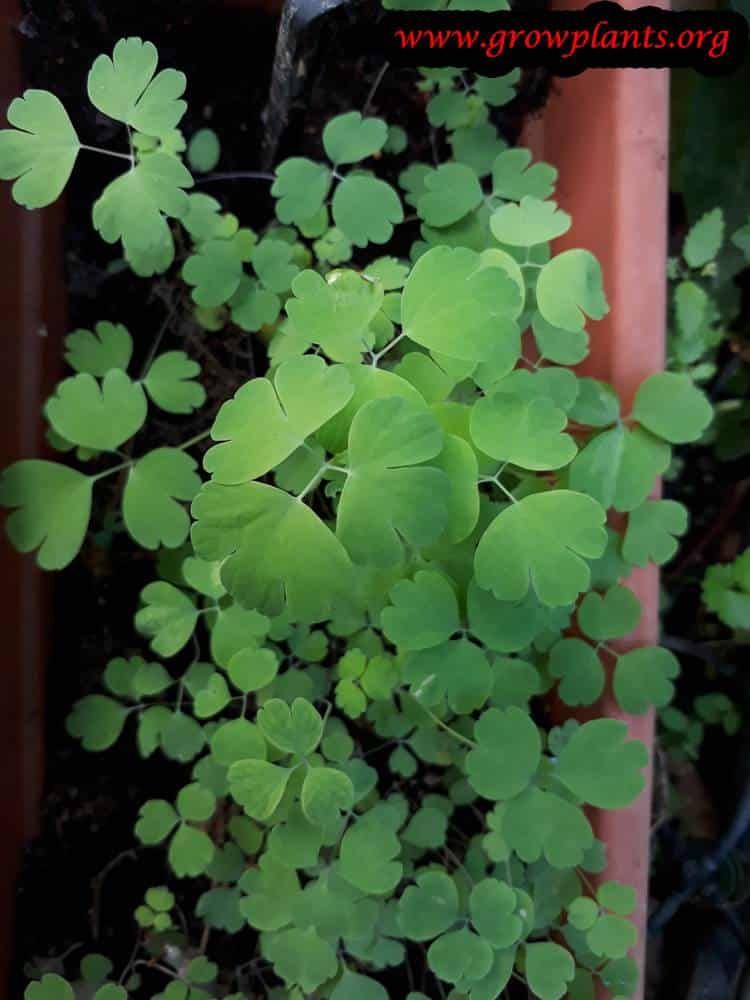
- Leaves & Foliage: Green leaves in groups of three, triangular with lobed edges.
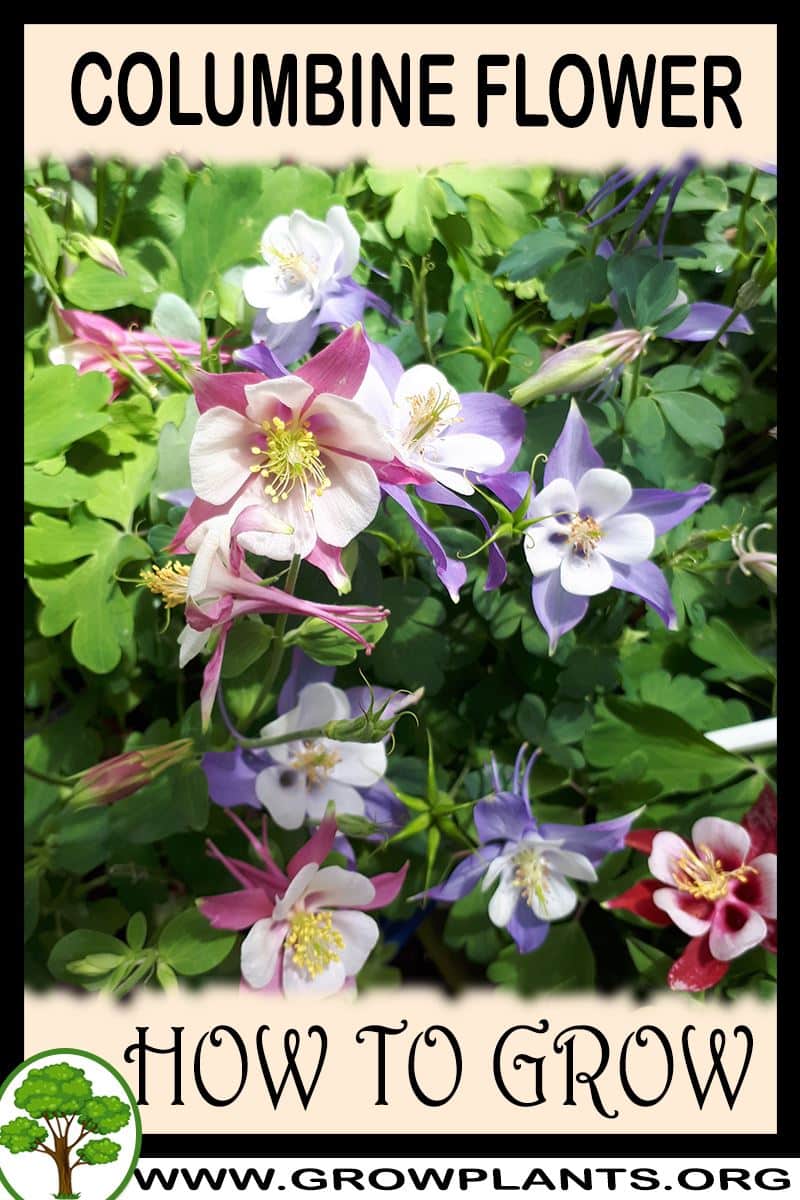
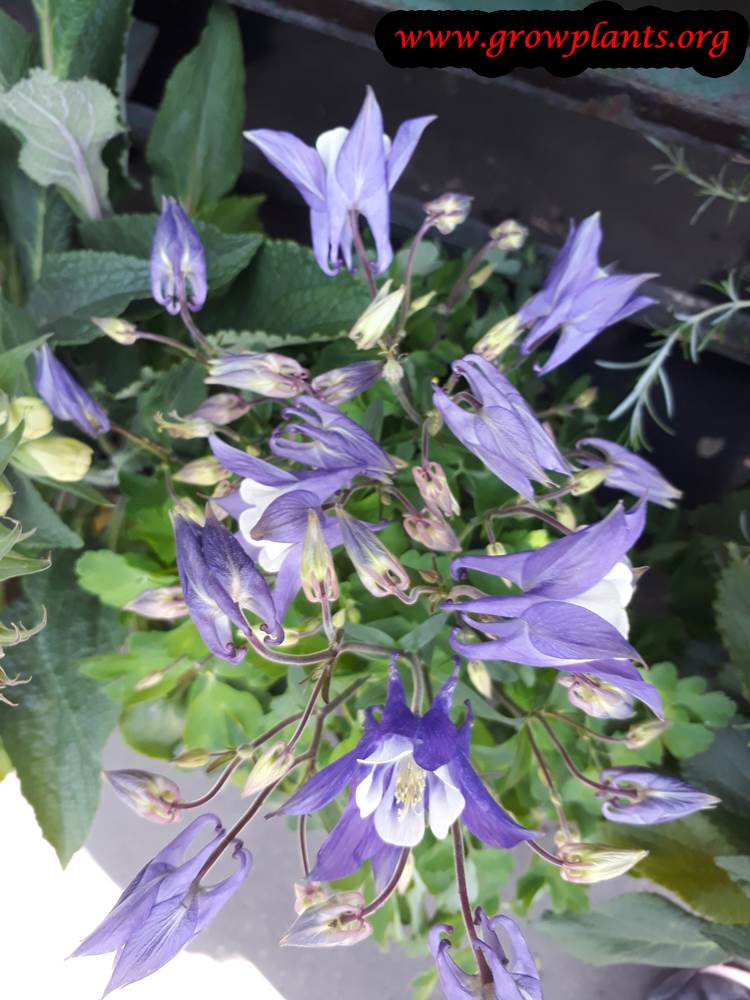
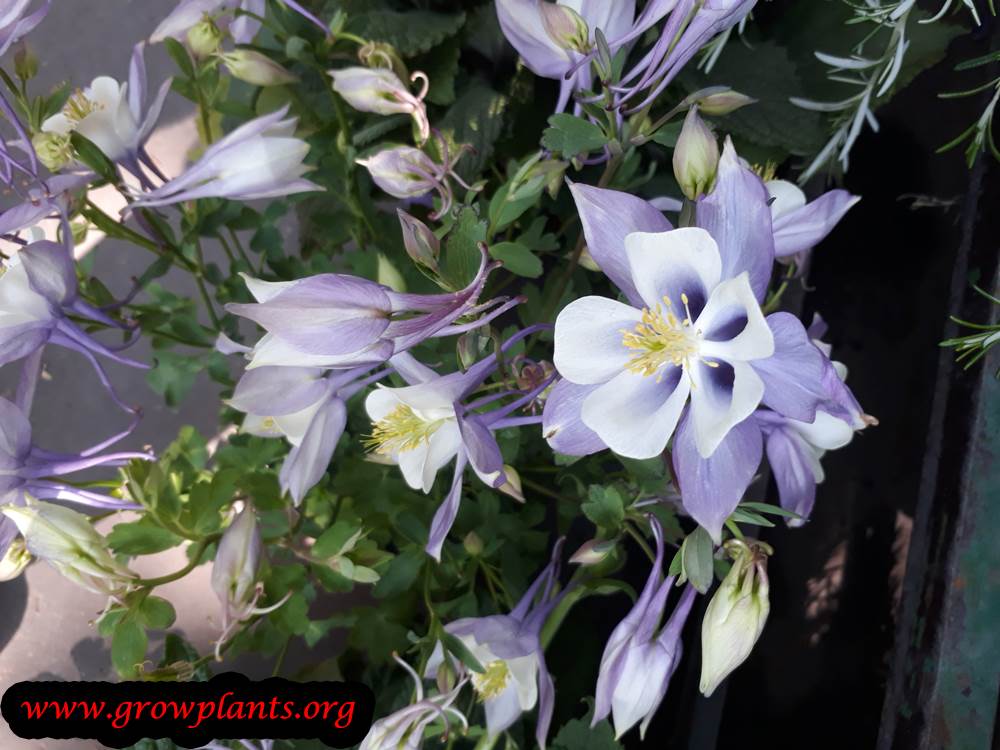
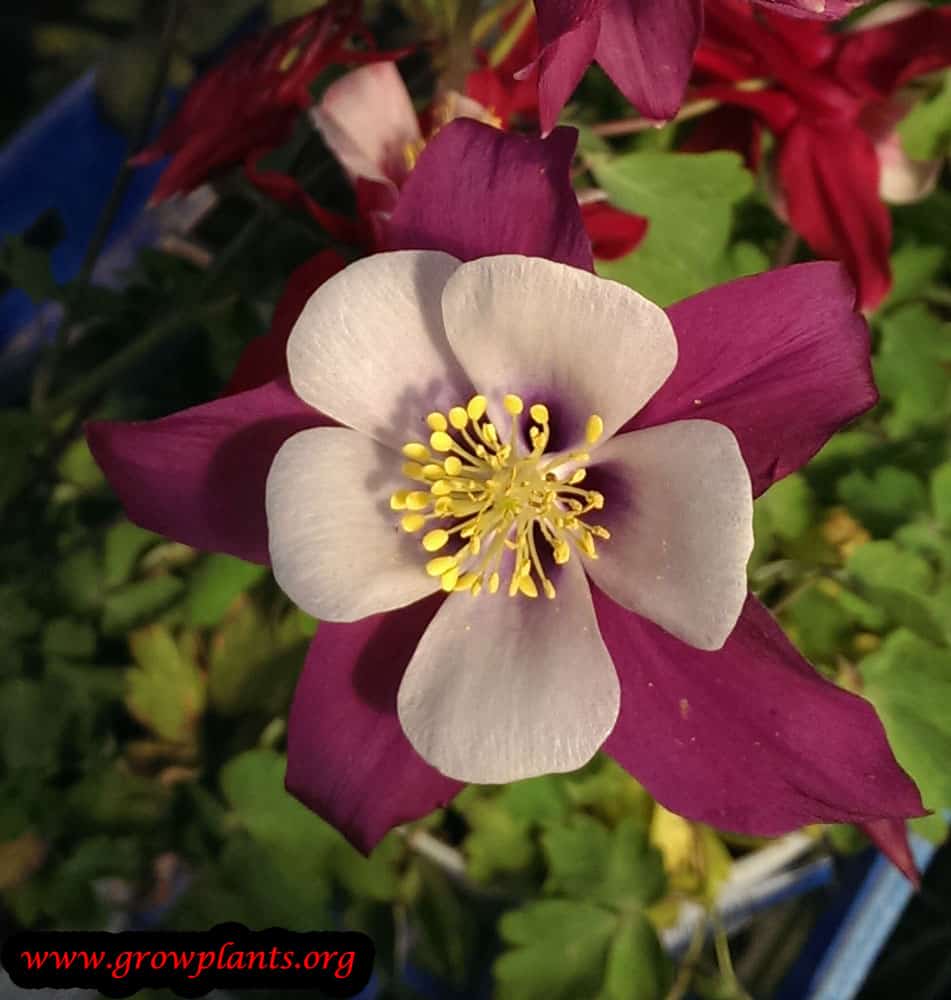
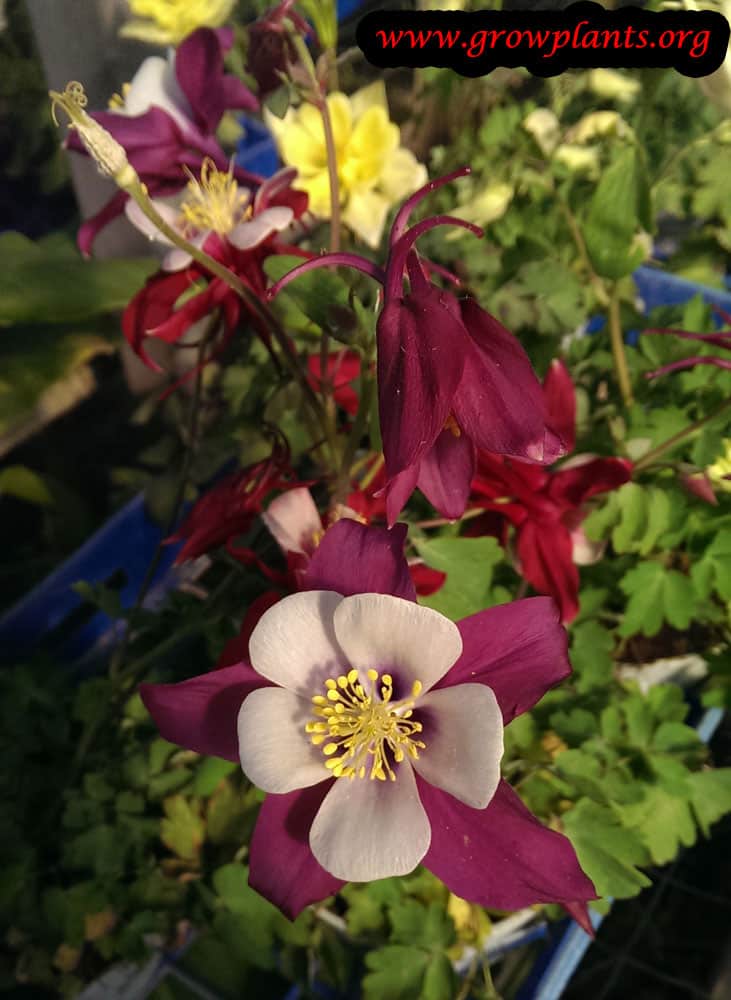
- Flower Characteristics: Nodding bell-shaped flowers with five outer spurred petals and five smaller inner petals, often bicoloured, in purple, blue, red, yellow, pink, white or orange (see the Bloom accordion).
Primary Uses & Landscape Value
- Functional & Ornamental Roles: Ornamental for borders and cottage gardens, grown as a fragrant cut flower and to attract pollinators; also grown as a house plant.
Care Guide: Planting, Soil & Watering
Overview: Columbine is a cottage-garden perennial that grows in humus-rich, well-drained soil in sun to part shade. It likes moderate, even moisture but not soggy ground.
Quick Care Requirements
| Requirement | Ideal Condition |
|---|---|
| Planting Season | Spring and summer (autumn in mild zone 10b) |
| Growth Rate | Moderate |
| Soil Type | Rich, well-draining |
| Water Need | Moderate (keep evenly moist, not soggy) |
Planting & Establishment
- Best Planting Season: Spring and summer (autumn in mild zone 10b)
- How to Plant:
- Hole Preparation: Dig a hole slightly wider than the root ball.
- Soil Amendments: Work in compost or other organic matter for a rich, free-draining bed.
- Planting Depth: Set the root collar at soil level; because of the taproot, plant young and avoid disturbance.
- Growth Speed & Expectations: Moderate, forming a mound of ferny foliage topped with spurred, bell-shaped flowers.
Soil, Watering & Drainage Care
- Soil Mix & Drainage Needs: Moisture-retentive but well-drained soil; sharp drainage prevents crown rot in wet spells.
- Watering Schedule & Technique:
- Young / Newly Planted: Keep the soil evenly moist while the plant establishes.
- Established: Water when the top few centimetres dry out.
- Seasonal Adjustments: More water in summer heat, less in cool or wet weather.
Climate, Light & Hardiness
Columbine (Aquilegia) is a versatile, cold-hardy perennial or biennial grown across an unusually wide climate range, from tropics to temperate zones; it does best in full sun to light shade and is comfortably hardy from zone 3.
Quick Climate Specifications
| Climate Zones | Tropics, subtropics, Mediterranean, temperate |
|---|---|
| USDA Hardiness Zones | 3–10 |
| Frost Tolerance | High (dormant crown in cold-winter climates) |
| Light Conditions | Full Sun, Half Shade, or Full Shade with some light |
Sunlight & Light Exposure
Optimal Light Setup
Full sun suits cooler climates; part shade is recommended where summers are hot.
Shade & Heat Management
Light shade helps prolong bloom and reduces stress in warm-summer areas.
Temperature Extremes & Hardiness
USDA Hardiness & Regional Limits
Zone 3–10 is an exceptionally broad range, spanning severe-winter temperate climates through warm subtropics and tropical highlands.
Cold Damage & Winter Protection
The dormant crown is very cold hardy in zone-3-type winters; in the warmest part of its range (zone 9–10) it behaves more like a cool-season/short-lived perennial, since heat rather than cold is the limiting factor there.
Extreme Heat Tolerance
Moderate; prolonged heat can shorten its life, favoring light shade and consistent moisture in hot climates.
Wind, Humidity & Microclimate
Rainfall & Seasonal Moisture
Adaptable, though it prefers evenly moist, well-drained soil rather than either extreme.
Growing in Pots, Balconies & Indoors
Columbine (Aquilegia) can be grown as a houseplant and in containers, as the grower confirms – a graceful perennial (30-60 cm) with intricate spurred flowers in a wide colour range. Indoors it wants a cool, bright spot, and it needs a cold winter rest to flower well the following season.
Quick Details
- Container Size: A medium, fairly deep pot to suit its taproot
- Indoor Suitability: Grower rates it as growable indoors; keep it cool and bright
- Best Spot: Full sun to part shade (even full shade with light, per the grower)
- Soil & Drainage: Well-drained potting mix
- Watering in Pots: Average – keep evenly moist, letting the surface dry slightly between waterings
Indoors & On the Windowsill
- Indoors: The grower lists it as growable indoors; give it a cool room with bright, indirect light – warmth and deep shade give weak, flowerless growth.
- Winter chill: It is a hardy perennial that needs a cold dormant period to bloom, so let it rest cool over winter (a sheltered balcony or unheated room) before regrowth.
- Overwintering: In cold gardens the pot can stay outdoors; the plant is hardy and benefits from the chill.
On a Balcony or Patio
- Light & wind: On a patio it flowers in sun or part shade; keep the pot evenly moist and shelter the tall flower stems from strong wind.
- Safety: All parts of columbine are toxic if eaten – keep pots away from children and pets, and never treat any part as edible.
Choosing the Pot, Soil & Long-Term Care
- Pot & drainage: Use a medium, deep pot with strong drainage holes; skip a standing-water saucer to avoid root rot. Terracotta breathes and dries faster, while glazed or plastic pots hold moisture longer – a plus for this moisture-loving plant.
- Potting mix: A rich, well-aerated organic mix – peat or coir with plenty of compost or organic matter, lightened with perlite or vermiculite for drainage.
- Feeding: Potted plants exhaust their soil quickly as nutrients leach out – feed lightly but regularly through the growing season.
- Repotting: Refresh the mix or pot up about every two years; for clumping perennials, lift and divide, trimming the roots and old top growth as you go.
Fertilizing & Feeding
A moderate feeder: light, regular feeding through its long bloom season supports the fragrant, bell-shaped flowers and the pollinators they attract, without needing rich fertilizing.
Quick Fertilizing Specs
| Feeding Level | Moderate feeder |
|---|---|
| Main Nutrient Priority | Balanced feeding with adequate nitrogen and phosphorus to support foliage and its long bloom season |
| Best Feeding Period | Spring through its extended bloom season |
| Organic Options | Compost worked into well-drained soil |
| Reduce/Stop Feeding | Ease off feeding as the plant dies back or rests in cooler weather |
| Micronutrients | Usually adequate from a complete fertilizer in well-drained soil |
| Soil pH | Tolerates a wide range of well-drained soil |
Feeding by Growth Stage
Spring growth
Support fresh, lobed foliage as the plant breaks dormancy in spring.
| Nutrient direction | A balanced fertilizer with adequate nitrogen supports healthy foliage ahead of blooming. |
|---|---|
| Timing | In spring as new growth emerges. |
| Frequency | A light feeding at the start of spring growth is usually enough to begin the season. |
| Fertilizer types | A balanced complete fertilizer, Compost worked into the soil around the plant |
| Precautions | Note this plant is poisonous; wear gloves when handling it and applying fertilizer around it. |
Extended spring-through-autumn bloom
Sustain the bell-shaped, spurred flowers across their long bloom season and support pollinator visits.
| Nutrient direction | Continued light, balanced feeding sustains flowering without pushing excess foliage. |
|---|---|
| Timing | Across spring, summer, and into autumn as flowers continue opening. |
| Frequency | An occasional light feeding through this long bloom window is usually enough. |
| Fertilizer types | A balanced complete fertilizer |
| Precautions | Avoid heavy feeding, which can produce excess foliage at the expense of flowers. |
Cold-season dieback or rest
Let the plant die back or rest through cold weather without pushing new growth.
| Nutrient direction | No supplemental feeding is needed while the plant is dormant or dying back. |
|---|---|
| Timing | Through autumn dieback and the cold, dormant part of the year. |
| Frequency | No feeding during this dormant period. |
| Fertilizer types | No feeding at this stage; a dormant or dying-back plant has no active growth to support. |
| Precautions | Withhold fertilizer until new growth resumes in spring. |
Nutrient Deficiency Signs & Corrections
Older leaves fade to pale green or yellow and growth stalls.
| Possible causes | low available soil nitrogen, leaching from heavy watering or rain, thin, low-organic-matter soil |
|---|---|
| Appears first on | older, lower leaves |
| What to check | recent feeding history, soil organic matter, watering and drainage |
| Possible correction | Apply a balanced fertilizer and build soil organic matter. |
Interveinal yellowing appears on older leaves while veins remain green.
| Possible causes | low soil magnesium, high potassium feeding competing with magnesium uptake, leaching in light, sandy soils |
|---|---|
| Appears first on | older, lower leaves |
| What to check | soil magnesium status, recent fertilizer balance, soil texture and leaching |
| Possible correction | Apply a labeled magnesium source such as a dolomitic amendment and rebalance feeding. |
Leaf edges brown or scorch despite adequate watering.
| Possible causes | fertilizer salt buildup in the root zone, under-watering that concentrates salts, excessive or too-frequent feeding |
|---|---|
| Appears first on | leaf margins and tips |
| What to check | recent fertilizer amounts, watering consistency, drainage, especially in containers |
| Possible correction | Ease off feeding, water thoroughly to flush accumulated salts, then return to lighter feeding. |
Pruning, Training & Seasonal Maintenance
Columbine is a short-lived herbaceous perennial (sometimes biennial) that dies back to a basal rosette rather than building any woody framework, so pruning here means deadheading and seasonal foliage cleanup, not structural cuts. It tolerates cutting back very well, its main pruning objective is prolonging bloom and controlling the plant’s strong tendency to self-seed, and the safest general window is right after each flower fades, with a foliage tidy-up in late autumn or winter once the season’s leaves have declined.
Quick Pruning & Maintenance Specs
| Pruning Tolerance | High |
| Primary Pruning Window | Ongoing through bloom (deadheading) |
| Secondary Maintenance Window | Autumn/Winter foliage cleanup |
| Typical Frequency | Deadhead as flowers fade; one autumn/winter tidy |
| Main Objective | Prolong bloom, limit self-seeding, remove tattered/leaf-miner-damaged foliage |
| Young Plant Priority | Minimal cutting; let the rosette establish |
| Mature Plant Priority | Deadhead promptly; cut back scruffy summer foliage to refresh basal growth |
| Best Tool Type | Precision snips |
| Avoid Heavy Pruning During | Hot, dry stress periods |
Pruning by Plant Age & Size
Newly Established
Remove only damaged or yellowing leaves; avoid cutting back a young plant that hasn’t yet built a strong basal rosette.
Young / Formative
No structural training applies – columbine is a clump-forming rosette plant, not a plant that is trained or staked.
Mature / Established
Deadhead continually through the bloom season; if summer foliage becomes tattered or mildewed, cut it back hard to the basal rosette to force a fresh flush of clean leaves.
Seasonal Pruning Schedule
Post-Flowering: objective is to keep the plant tidy and control self-seeding; remove spent flower stalks down to the basal foliage; do not remove healthy green leaves, which continue feeding the crown; expected response is repeat or extended bloom and reduced unwanted seedlings.
Ongoing Sanitary: remove leaves showing leaf-miner tunneling or powdery mildew as seen through summer to slow spread and keep the clump attractive.
Dormant/Winter: cut tired or fully browned foliage down to the crown; this doubles as sanitation, since old leaves can harbor overwintering leaf miners.
Structural Pruning & Training
None needed – columbine has no woody or trainable structure; all seasonal maintenance is at the foliage/flower-stalk level described above.
Special Growth to Remove
- Spent flower stems – deadhead to the basal foliage to extend bloom and curb self-seeding (columbine seeds itself freely if left unchecked).
- Leaf-miner-tunneled or mildewed leaves – remove promptly for sanitation and appearance.
- Fully browned autumn/winter foliage – cut to the crown.
Container & Small-Space Pruning
Columbine grows well in pots; deadhead on the same schedule as in-ground plants, and cut back tired summer foliage a little more readily in containers, where poor airflow can worsen mildew.
Tools
Precision snips or small scissors are all that’s needed – every cut is on a soft, thin flower stalk or leaf.
Tool Hygiene & Disease Risk
Routine – clean, sharp snips are sufficient. Leaf miner is an insect issue, not tool-transmitted, though removing infested leaves (rather than composting them) helps reduce next season’s population.
Cut Placement & Technique
Deadhead by cutting the flower stalk down to just above the basal foliage; when cutting back tired summer leaves, cut close to the crown without damaging the central growing point.
Heavy Pruning & Rejuvenation
A full cutback of scruffy summer foliage to the basal rosette is well tolerated and commonly done; the plant regrows fresh leaves within a few weeks given adequate moisture.
Post-Pruning Care
Water after a hard foliage cutback to support regrowth; note the plant is poisonous (per its own difficulty rating), so wash hands after handling cut sap; watch fresh regrowth for new leaf-miner activity.
Common Pruning Mistakes
- Deadheading every single flower, leaving no seed for gardeners who actually want some self-sown replacements (columbine is short-lived and often relies on self-seeding to persist).
- Leaving leaf-miner-damaged foliage in place all season instead of removing it promptly.
- Cutting the whole plant to the ground while it is still actively flowering.
When NOT to Prune
Avoid cutting back a plant that is still in active bloom if the display is wanted; avoid hard foliage removal during hot, dry stress, when the plant has less reserve to regrow from.
Recommended Tools (by task)
- precision_snips – the only tool needed for deadheading and foliage cleanup on this soft-stemmed herbaceous perennial.
Propagation Guide
Columbine (Aquilegia) is grown almost entirely from seed, which germinates readily and is the standard way to raise new plants. Because Aquilegia cross-pollinates freely between varieties, seed collected from garden plants — especially named or mixed-color cultivars — often produces offspring with variable flower color and form rather than true copies of the parent.
Quick Propagation Specs
| Best Propagation Method | Seed |
| Propagation Difficulty | Easy |
| Seed True-to-Type | Variable for named cultivars/mixes; species types come more consistently true |
| Best Propagation Season | Spring, summer (autumn possible in warm zones) |
| Seed Germination Time | Typically two to four weeks, sometimes longer and uneven |
| Germination Temperature | Cool to moderate, roughly 15–21°C (59–70°F) |
| Seed Sowing Depth | Sow on the surface or barely cover — the fine seed benefits from light |
Growing from Seed
Dormancy & Pre-Sowing Treatment
Fresh seed often germinates without treatment, but a few weeks of cold stratification can improve and speed up germination, particularly for older or store-bought seed.
Sowing Depth & Orientation
Surface-sow or cover only very lightly, since light can aid germination.
Germination Conditions
Cool, consistently moist conditions suit germination best; germination can be slow and irregular, so allow several weeks before judging success.
Germination Time
Commonly two to four weeks, though it can take longer and germinate in flushes.
Seedling Care
Handle young seedlings carefully, as columbine develops a taproot fairly early and does not transplant as easily once established.
Division, Offsets, Pups & Suckers
Division is possible on mature clumps but is not the usual method — Aquilegia’s taproot makes it resent disturbance, so seed remains the more practical and reliable way to propagate this plant.
Bloom & Flower Guide
Quick Details
- Bloom Season: Spring through summer, sometimes into autumn
- Flower Appearance: Nodding, spurred flowers with an outer ring of five tailed petals around a shorter, often contrasting inner set
- Edibility: Not edible – columbine is poisonous, especially the seeds and roots; grow it for looks only
Detailed Blooming Overview
Columbine is loved for its nodding, spurred flowers – an outer ring of five petals, each drawn back into a long tail (spur), around a shorter inner set that is often a contrasting colour. The colour range is wide: purple, blue, red, yellow, pink, white and orange. The nectar-filled spurs are a favourite of hummingbirds and long-tongued bees, from spring into summer. Pretty as it is, the plant is poisonous.
Flower Characteristics
- Bell-like flowers with five spurred outer petals and a shorter inner set, often two-toned.
- Wide colour range: purple, blue, red, yellow, pink, white, orange.
- Nectar-filled spurs attract hummingbirds and long-tongued pollinators.
Bloom Care & Thinning
- Managing the bloom: Shear back spent flower stems; it may rebloom lightly and will self-sow.
- Safety: All parts are poisonous if eaten – despite the attractive flowers, treat none of the plant as edible.
Pests, Diseases & Troubleshooting
Overview: Columbine’s two signature pests are the columbine leaf miner (Phytomyza), which scribbles white trails through the leaves, and the columbine sawfly, whose larvae can strip a plant to bare stalks overnight; aphids are a minor extra. Its main disease is powdery mildew, with downy mildew, rust and crown rot as further issues. Crucially, it is a short-lived perennial that self-seeds freely, so a hard cut-back after flowering and letting it renew from seed are as important as any pest control.
Quick Troubleshooting Overview
| Issue / Pest | Main Symptom | Primary Solution |
|---|---|---|
| Columbine leaf miner | White winding trails in leaves | Remove mined leaves, hard cut-back after bloom |
| Columbine sawfly | Leaves stripped to stalks overnight | Hand-pick early, water jet (Bt does NOT work) |
| Powdery mildew | White powdery coating on leaves | Airflow, even moisture, cut back after flowering |
| Aphids | Sticky, distorted new shoots | Water jet, beneficials, soap if needed |
| Crown/root rot | Wilting, collapsing crown in wet soil | Sharp drainage, avoid burying crown |
Common Pests & Management
- Columbine leaf miner (Phytomyza aquilegiae / Phytomyza minuscula):
- Symptoms: The signature columbine pest: pale, winding, serpentine white trails (or blotchy mines) tunnelled between the leaf surfaces, disfiguring the foliage; badly mined leaves whiten and dry, though the plant itself usually survives.
- Prevention & Control: Pick off and destroy mined leaves as they appear, and cut the whole plant back hard after flowering to remove the mines and force clean new foliage. Hoe lightly to expose pupae to birds; sprays rarely reach the larvae inside the mine, so removal is the mainstay.
- Columbine sawfly (Pristiphora aquilegiae):
- Symptoms: Green caterpillar-like larvae that feed along the leaf margins and can strip a plant to bare stalks with startling speed, often overnight; look for them lined up along leaf edges.
- Prevention & Control: Inspect regularly from the start of the growing season and hand-pick or hose off the larvae early; because they are sawfly (not caterpillar) larvae, Bacillus thuringiensis does NOT work — use a strong water jet, hand removal, or as a last resort a contact insecticidal soap or pyrethrin.
- Aphids (Aphidoidea):
- Symptoms: Clusters of soft green insects on new shoots, buds and flower stems, with honeydew, sooty mould and distorted young growth.
- Prevention & Control: Rinse off with water, encourage ladybirds and lacewings, and use insecticidal soap only if colonies persist.
- Cutworms & caterpillars (Noctuidae):
- Symptoms: Chewed foliage or seedlings severed at soil level; occasional and usually minor on established clumps.
- Prevention & Control: Hand-pick, fit seedling collars, clear sheltering weeds, and use Bt for true caterpillars if numbers rise.
Diseases & Fungal Issues
- Powdery mildew (Erysiphe / Golovinomyces spp.):
- Symptoms: A common columbine disease: white powdery patches coating leaves and stems, worst late in the season and in dry-rooted, crowded plants; foliage yellows, distorts and dries.
- Treatment & Management: Space for airflow, keep roots evenly moist, and cut affected plants back hard after flowering to force clean regrowth. Remove infected debris; potassium-bicarbonate or sulphur spray checks it, and cutting back is often the simplest reset.
- Downy mildew (Peronospora spp.):
- Symptoms: Yellow blotches on the upper leaf with greyish downy growth beneath in cool, damp weather, causing distortion and dieback; an increasingly reported columbine disease.
- Treatment & Management: Improve airflow and spacing, avoid overhead watering, and remove and destroy infected plants promptly; there is no easy cure once established, so sanitation is key.
- Columbine rust (Puccinia spp.):
- Symptoms: Yellow-orange powdery pustules on leaf undersides with pale spots above; heavy infection yellows and drops foliage.
- Treatment & Management: Remove affected leaves, improve airflow, keep foliage dry, and clear debris; sulphur or a rust fungicide protects new growth under pressure.
- Crown & root rot (Sclerotinia / Rhizoctonia / Phytophthora spp.):
- Symptoms: Wilting, blackening and collapse of the crown with browned roots in wet, heavy or poorly drained soil.
- Treatment & Management: Grow in free-draining soil, avoid waterlogging and burying the crown, and remove collapsed plants with surrounding soil.
Growing Difficulties & Abiotic Problems
- Short-lived / decline after a few years:
- Cause & Symptoms: Columbines are naturally short-lived perennials that fade after two to four years, often looking tatty after flowering.
- Correction Strategy: Let plants self-seed (they do so freely) to renew the planting, cut back hard after bloom for fresh foliage, and treat them as a self-sustaining, self-renewing group rather than long-term individuals.
- Tatty foliage after flowering:
- Cause & Symptoms: Leaf miner, mildew and natural senescence leave the foliage shabby by mid-season.
- Correction Strategy: Shear the whole plant to the ground after flowering; it quickly regrows a clean, fresh mound of leaves.
- Hybridising / loss of named forms:
- Cause & Symptoms: Freely cross-pollinating columbines seed into muddled colours, so named or species forms drift over the years.
- Correction Strategy: Deadhead before seed sets to preserve a particular form, or isolate desired plants; otherwise enjoy the natural seedling variation.
What Helps — Products & Tools
The best ‘tool’ is a pair of shears for the hard post-flowering cut-back that removes leaf miner and mildew at a stroke. Where pests warrant it, suitable types are insecticidal soap or pyrethrin for sawfly larvae and aphids (note Bt does NOT control sawflies), and potassium-bicarbonate or sulphur fungicide for powdery mildew and rust; improved drainage addresses crown rot. Allowing self-seeding keeps the planting going.
Frequently Asked Questions
What is a columbine flower?
Columbine (Aquilegia) is a cottage-garden perennial prized for its nodding, intricately spurred flowers in many colours, often bicoloured, that attract hummingbirds and bees. It’s a clump-forming herbaceous perennial (sometimes biennial), 30-60 cm tall, grown for its blooms, as a fragrant cut flower, and to attract pollinators.
Is columbine a perennial?
Yes, columbine is a herbaceous perennial (occasionally grown as a biennial), though it is short-lived, typically fading after two to four years. It keeps a planting going by self-seeding readily, so it’s often treated as a self-renewing group rather than long-term individual plants.
How tall does columbine grow?
Columbine typically grows 30-60 cm (1-2 ft) tall, forming a clump-forming perennial with airy foliage and tall flower stems that suit borders and containers.
What do columbine leaves look like?
Columbine’s leaves are green and arranged in groups of three, with a triangular shape and lobed edges, forming an airy, ferny-looking mound of foliage beneath the flower stems.
How do you care for columbine?
Columbine grows best in humus-rich, well-drained soil in full sun to part shade, with moderate, evenly moist (not soggy) water. Plant in spring or summer (autumn in mild zone 10b), keep young plants evenly moist while they establish, and water established plants once the top few centimetres of soil dry out.
Is columbine poisonous?
Yes, columbine is toxic – all parts of the plant are poisonous if eaten, especially the seeds and roots. It’s grown purely for its ornamental flowers and should never be treated as edible.
How do you grow columbine from seed?
Columbine is grown almost entirely from seed, sown on the surface or barely covered since light aids germination. Sow in spring or summer (autumn possible in warm zones) at a cool to moderate temperature of roughly 15-21°C (59-70°F); germination typically takes two to four weeks, sometimes longer and uneven. Note that seed collected from named or mixed-colour cultivars often doesn’t come true, since columbine cross-pollinates freely between varieties.