Plant Profile & Key Characteristics
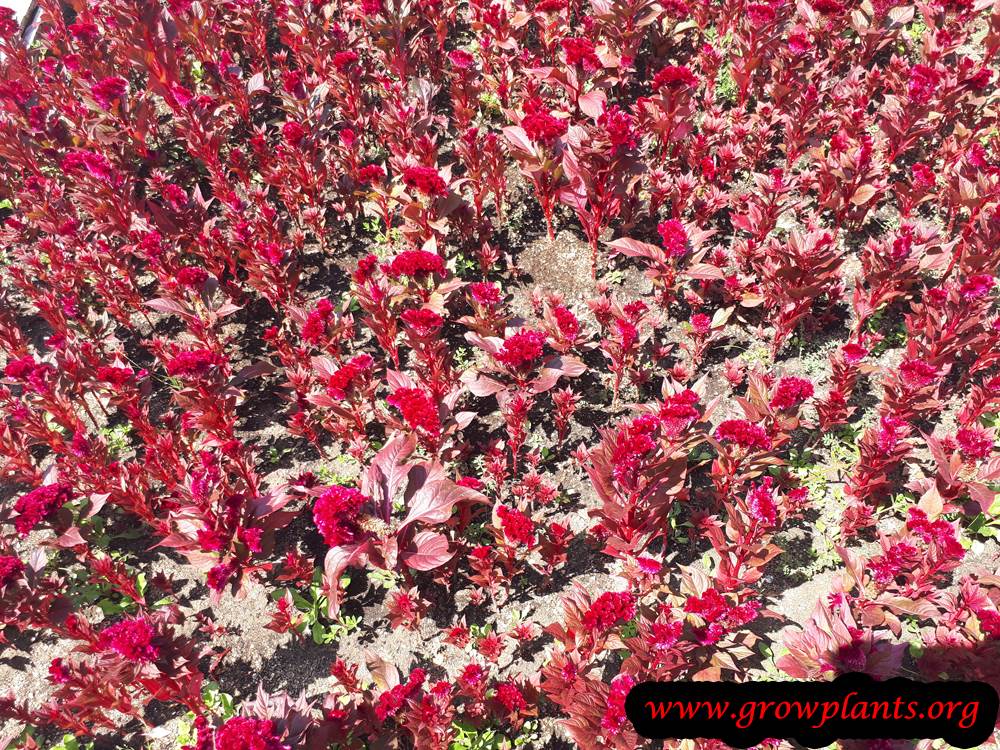
Overview: Celosia cristata (cockscomb) is a fast-growing herbaceous annual, 10-90 cm (4-36 in), grown mainly as a colourful ornamental but with edible leaves and flowers. It produces crested, brain- or comb-shaped flower heads in red, yellow, orange, pink, purple or white in warm-season bedding schemes and containers.
Quick Specifications
| Specification | Attribute |
|---|---|
| Plant Type / Life Cycle | Annual |
| Foliage Type | Herbaceous (grown as a warm-season annual) |
| Mature Size | 10-90 cm tall (4-36 in) |
| Growth Rate | Fast |
| Toxicity | Non-toxic – leaves and flowers are edible. |
| Hardiness | USDA zones 2+ (frost-tender annual) |
Growth Form & Structure
- Height & Spread: 10-90 cm (4-36 in) in beds; also grows well in planters and containers.
- Growth Habit & Form: Upright, bushy herbaceous annual topped by dense flower heads.
- Lifespan & Maturity: Fast-growing single-season annual flowering from spring through autumn.
Anatomy & Physical Features
- Leaves & Foliage: Oval leaves in green, red or purple; edible.
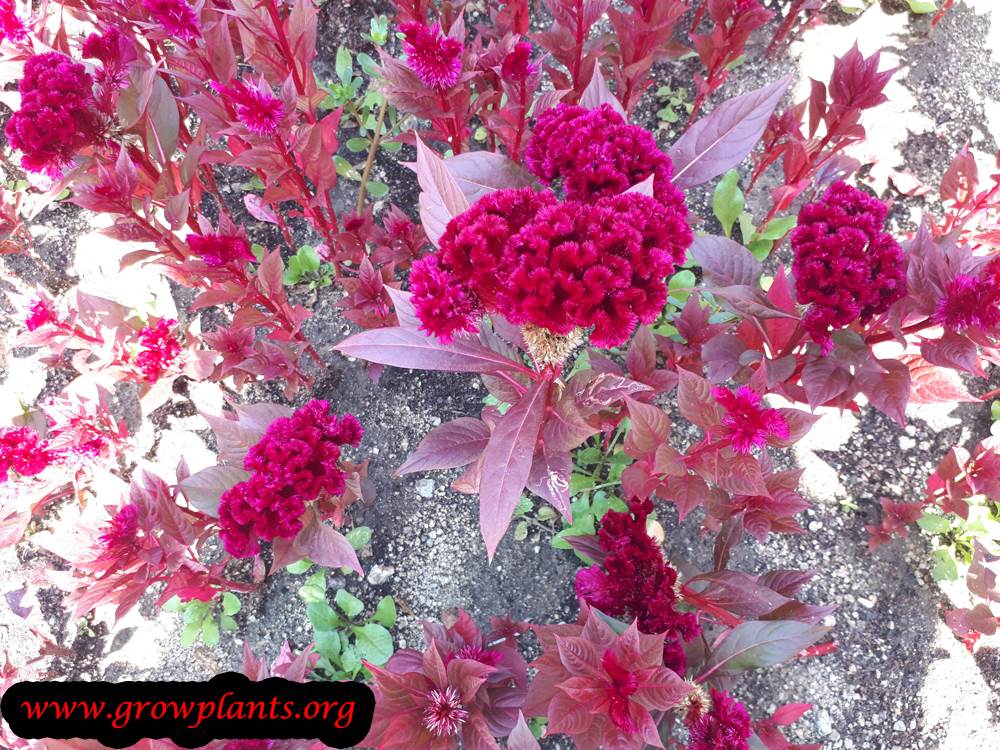
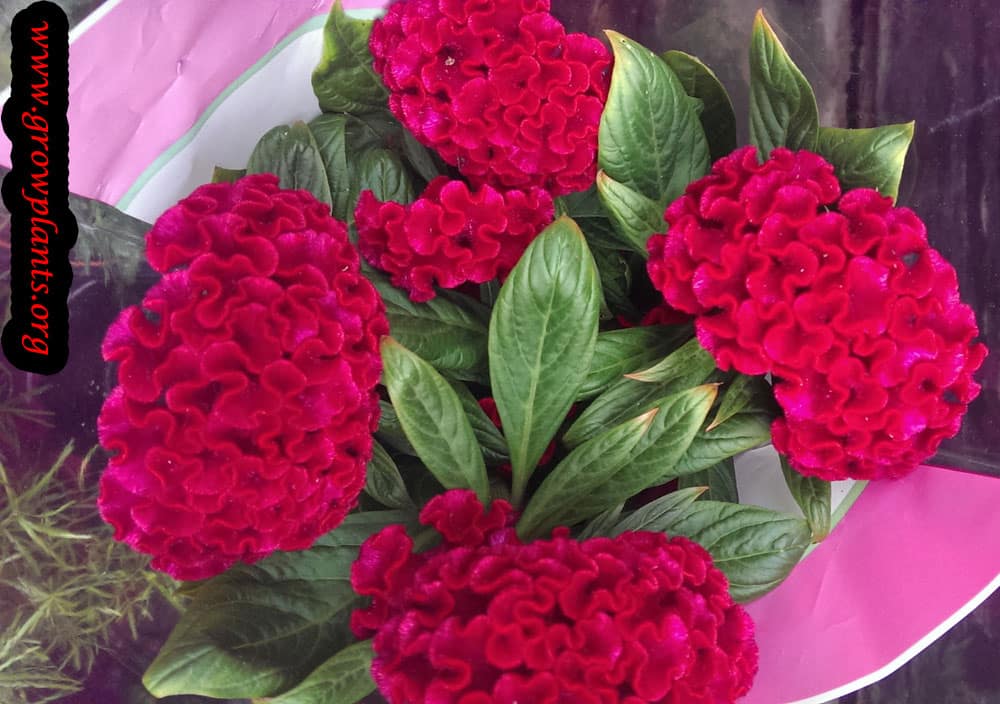
- Flower Characteristics: Small flowers fused into a crested comb- or brain-shaped head, in red, yellow, orange, pink, purple or white; bee-pollinated.
Primary Uses & Landscape Value
- Edible Uses: Young leaves are eaten raw in salads or cooked and stir-fried; the flowers are also edible.
- Functional & Ornamental Roles: Bright ornamental for beds, borders and containers and as a cut and dried flower; also grown as a leafy vegetable.
Care Guide: Planting, Soil & Watering
Overview: Cockscomb (Celosia cristata) is a fast-growing warm-season annual for a wide range of climates (hardiness zone 2+ as a summer annual), thriving in full sun. It likes a rich, moist but well-drained soil and steady moisture through the growing season.
Quick Care Requirements
| Requirement | Ideal Condition |
|---|---|
| Planting Season | In spring once the soil has warmed and frost has passed |
| Growth Rate | Fast |
| Soil Type | Rich, moist, well-drained soil |
| Water Need | Moderate to high – keep the soil consistently moist |
Planting & Establishment
- Best Planting Season: Plant out in spring after the last frost, once the soil has warmed.
- How to Plant:
- Hole Preparation: Loosen the bed to a fine tilth, clear weeds, and space plants to allow airflow.
- Soil Amendments: Work in compost or well-rotted organic matter for fertility and moisture retention.
- Planting Depth: Sow seed shallowly, or set transplants with the root ball level with the soil surface.
- Growth Speed & Expectations: A fast grower that flowers the same season, reaching 10-90 cm (4-36 in) depending on variety.
Soil, Watering & Drainage Care
- Soil Mix & Drainage Needs: A moisture-retentive but free-draining soil is ideal; in containers use a rich, free-draining potting mix.
- Watering Schedule & Technique:
- Young / Newly Planted: Keep the seedbed and young plants consistently moist while they establish.
- Established: Water regularly to keep the soil consistently moist; do not let it dry out fully.
- Seasonal Adjustments: More in summer heat and dry spells; ease back in cool, damp weather, and water at the base to keep foliage dry.
Climate, Light & Hardiness
Cockscomb (Celosia cristata) is a herbaceous plant grown mainly as an ornamental for its velvety, brain-like crested flower heads, with edible young leaves and flowers. It is a tender, heat-loving warm-season annual that needs full sun and warmth and has no frost tolerance, so it is grown through the frost-free part of the year.
Quick Climate Specifications
| Climate Zones | Tropical, subtropical, Mediterranean, desert and temperate; grown in the warm season |
| USDA Hardiness Zones | Grown as a warm-season annual from about zone 2 upward; perennial only in frost-free tropics |
| Optimal Temp Range | Warm, roughly 20–30°C (68–86°F) |
| Cold Damage Begins | Growth stalls and chilling shows as temperatures fall toward 10°C (50°F) |
| Approx. Survival Minimum | Near 0°C (32°F) briefly; frost kills the plant |
| Frost Tolerance | None |
| Light Conditions | Full sun (or nearly full sun) |
| Wind Tolerance | Low to moderate |
Sunlight & Light Exposure
Optimal Light Setup
Full or nearly full sun gives compact plants and the most intense flower colour. In too much shade it stretches and flowers poorly.
Shade & Heat Management
In the fiercest hot-day sun the foliage and flower heads can scorch, so in extreme-heat regions a little relief from harsh afternoon sun keeps the plumes clean while still giving strong colour.
Temperature Extremes & Hardiness
USDA Hardiness & Regional Limits
Commonly grown as an annual wherever there is a warm, frost-free season - which is why it can be raised from cold-winter zone 2 upward - while being perennial only in frost-free tropical climates. Cold winters, not a lack of hardiness knowledge, are what limit it to summer culture.
Cold Damage & Winter Protection
It is planted out in spring once the soil is warm. Cool weather checks it, and the first autumn frost ends the plant; there is no practical winter protection for this soft annual.
Frost Sensitivity
Frost tolerance is none - freezing collapses the tender tissue, so sowing is simply timed to the warm season.
Extreme Heat Tolerance
It is heat-loving and flowers freely through hot summers, provided it is not scorched by the most intense sun on the hottest days.
Frost-Free Growing Season
A warm, frost-free stretch of a few months carries it from planting through its long flowering display; short-season gardens simply grow it as a summer bedding plant.
Wind, Humidity & Microclimate
Microclimate Recommendations
A warm, sunny, sheltered bed gives the sturdiest plants and the boldest flower heads; good air movement helps avoid damp-related problems on the dense plumes.
Growing in Pots, Balconies & Indoors
Cockscomb (Celosia cristata) is a sun-loving flowering annual with crested, brain-like blooms. It is not a lasting houseplant, but compact types flower on a very sunny sill and make bright balcony or patio pots.
Quick Details
- Container Size: A pot of about 5-10 L (1-3 gal), or smaller for dwarf types (general guide)
- Indoor Suitability: Not a lasting houseplant, but a compact plant flowers on a very sunny sill
- Best Spot: Full or almost-full sun and warmth
- Soil & Drainage: Rich, free-draining mix
- Watering in Pots: Keep lightly moist; generous in heat, never waterlogged
Indoors & On the Windowsill
- Houseplant: The grower marks it No – it is a sun-lover, not a foliage houseplant.
- Windowsill growing: A compact cockscomb in bloom can sit on a bright, sunny sill while it flowers; give it the strongest light and warmth you have.
On a Balcony or Patio
- Light & wind: Loves a hot, sunny, sheltered spot; reflected wall heat suits it but dries pots fast, so check moisture in summer.
- Practicalities: Light, small pots are easy to group for colour.
Choosing the Pot, Soil & Long-Term Care
- Pot & drainage: Use a pot with strong drainage holes and skip a standing-water saucer to avoid root rot; terracotta breathes and dries out faster, while glazed or plastic pots hold moisture longer.
- Potting mix: Fill with a well-aerated, organic-rich medium – a quality potting mix, or peat/coir blended with perlite or vermiculite for free drainage.
- Feeding: Potted plants use up their soil quickly because watering leaches nutrients away, so feed a little more often than plants in open ground through the growing season.
- Season: As an annual it finishes in one season, so start each new crop in fresh mix rather than repotting.
Growing this plant in a greenhouse
A greenhouse can give cockscomb flower frost protection, cold protection, humidity control and extra warmth.
Greenhouse at a glance
| Greenhouse suitability | Conditional - depends on your climate |
|---|---|
| Main benefits | frost protection, cold protection, humidity control, extra warmth |
| Season extension | earlier spring & later autumn |
| Outdoor protection advisable below | about 10°C |
| Maintain greenhouse minimum | around 10°C for active growth |
| Suitable types | heated greenhouse, polycarbonate greenhouse |
| Heating | Heating is recommended in cold climates for continuous growth. |
Related greenhouse guides
- Greenhouses: How to Choose the Right Greenhouse
- Best Greenhouse Heaters
- Greenhouse Climate Control: Temperature, Ventilation and Humidity
- Polycarbonate Greenhouses: What to Look for Before Buying
Fertilizing & Feeding
A moderate feeder: light, regular balanced feeding with adequate nitrogen through growth and bloom; extra phosphorus does not increase flowering.
Quick Fertilizing Specs
| Feeding Level | Moderate feeder |
|---|---|
| Main Nutrient Priority | Balanced feeding with adequate nitrogen |
| Best Feeding Period | Through active growth and the flowering season |
| Organic Options | Compost and general organic amendments |
| Micronutrients | Usually met by a complete fertilizer and organic matter; correct only diagnosed issues |
| Soil pH | Slightly acidic to near neutral |
Feeding by Growth Stage
Establishment and early growth
Support rooting and early leafy growth of young plants.
| Nutrient direction | A balanced complete fertilizer to get plants growing steadily. |
|---|---|
| Timing | From transplanting or thinning through early establishment. |
| Frequency | A light feeding as young plants settle in. |
| Fertilizer types | A balanced complete garden fertilizer, Compost worked into the bed |
| Precautions | Keep early feeding light and water in well to avoid burning tender plants. |
Active growth before bloom
Build a full, healthy plant ready to flower.
| Nutrient direction | Balanced feeding with adequate nitrogen to support leafy structure. |
|---|---|
| Timing | Through active growth ahead of the main bloom. |
| Frequency | Light, regular feedings through the growing season. |
| Fertilizer types | A balanced complete fertilizer, Compost or a general organic amendment |
| Precautions | Provide full sun and steady moisture; avoid pushing excess nitrogen. |
Flowering
Sustain the showy plumes or combs through a long flowering season.
| Nutrient direction | Continue balanced feeding with adequate nitrogen; balanced feeding, not extra phosphorus, drives good bloom. |
|---|---|
| Timing | Through the flowering period from summer into autumn. |
| Frequency | Light, regular feeding maintained while the plant is in flower. |
| Fertilizer types | A balanced complete fertilizer |
| Precautions | Do not rely on high-phosphorus bloom formulas; balanced nutrition and full sun give the best flowering. |
Nutrient Deficiency Signs & Corrections
Older, lower leaves fade to pale green or uniform yellow and overall growth slows.
| Possible causes | low available soil nitrogen, nitrogen leaching from heavy watering or rain, thin, low-organic-matter soil |
|---|---|
| Appears first on | older, lower leaves |
| What to check | recent feeding history, soil organic matter, watering and drainage |
| Possible correction | Apply a nitrogen-containing complete fertilizer and build soil organic matter, then water evenly. |
Interveinal yellowing on older leaves while the veins themselves stay green.
| Possible causes | low soil magnesium, high potassium feeding competing with magnesium uptake, leaching in light, sandy soils |
|---|---|
| Appears first on | older, lower leaves |
| What to check | soil magnesium status, how potassium-heavy recent feeding has been, soil texture and leaching |
| Possible correction | Apply a labeled magnesium source such as Epsom salt or a dolomitic amendment and rebalance feeding. |
Leaf margins brown or scorch and growth stalls despite adequate watering.
| Possible causes | fertilizer salt buildup in the root zone, under-watering that concentrates salts, excessive or too-frequent feeding |
|---|---|
| Appears first on | leaf margins and tips |
| What to check | recent fertilizer amounts, watering consistency, drainage, especially in containers |
| Possible correction | Ease off feeding, water thoroughly to flush accumulated salts, then return to lighter feeding. |
Vigorous leafy growth but few flowers.
| Possible causes | excess nitrogen driving foliage over flowers, insufficient light, over-rich soil |
|---|---|
| Appears first on | the whole plant |
| What to check | how nitrogen-heavy the feeding is, light exposure, overall soil richness |
| Possible correction | Reduce nitrogen, give full sun, and feed with a balanced fertilizer; extra phosphorus does not force more bloom. |
Pruning, Training & Seasonal Maintenance
Crested cockscomb is grown for its distinctive brain- or comb-shaped flower head, which is a fasciated (fused) single crest – and that biology drives the key pruning rule: do not pinch or top the main stem, because doing so destroys the very crest you are growing. This is the opposite of the plumed celosia, which is pinched for more plumes. Management here is limited to deadheading spent heads and removing damaged leaves; leaves and flowers are edible, and the plant can scorch in extreme heat.
Pruning & the Edible Harvest
Young leaves, tender shoots and soft flower buds are eaten cooked (Lagos-spinach type Celosia); pinching and cut-and-come-again harvesting directly stimulate fresh edible shoot and leaf growth, while letting plants run to hard crested bloom ends tender-leaf production.
Quick Pruning & Maintenance Specs
| Pruning Tolerance | Low – the main stem/crest must not be pinched |
| Primary Pruning Window | Spring–summer–autumn (bloom), sanitary only |
| Typical Frequency | Deadhead spent heads; remove damaged leaves |
| Main Objective | Preserve the single crested head; tidy spent growth |
| Young Plant Priority | Do NOT pinch – protect the growing tip that forms the crest |
| Mature Plant Priority | Deadhead old crests; remove damaged leaves |
| Best Tool Type | Precision snips or fingers |
| Avoid Heavy Pruning During | Any time on the main crest; extreme heat |
Pruning by Plant Age & Size
Newly Established
Remove only damaged growth. Critically, leave the growing tip alone – the crest forms there, and pinching now would ruin it.
Young / Formative
No formative pinching. Unlike branching plants, this type concentrates into a single crested head, so protect the main stem and do not tip it.
Mature / Established
Once the crest fades, deadhead it back to a side shoot or leaf; remove damaged foliage. Any small side crests can be left or removed for tidiness.
Seasonal Pruning Schedule
Bloom season (spring–autumn): deadhead spent crests to encourage any secondary heads and keep the plant tidy.
Ongoing sanitary: remove damaged or scorched leaves.
Structural Pruning & Training
None – and deliberately so. Pinching, the normal way to branch a celosia, is specifically avoided here because it destroys the single crest.
Special Growth to Remove
Remove spent crests (deadhead) and damaged leaves only. Keep a head at the end if you want to collect seed.
Container & Small-Space Pruning
Fine in pots; simply deadhead and tidy leaves, and do not pinch the tip. Shade lightly in extreme heat to prevent scorch.
Tools
Precision snips or fingers for deadheading and leaf tidying; nothing heavier is needed.
Tool Hygiene & Disease Risk
Routine. The noted problem is soil nematodes rather than tool-borne disease; keep snips clean, with hygiene focused on soil rather than the blade.
Cut Placement & Technique
Deadhead back to a leaf or side shoot below the spent crest. Never cut through the active growing tip while the main crest is forming.
Heavy Pruning & Rejuvenation
Not applicable – an annual that does not rejuvenate from cutting; replace by resowing.
Post-Pruning Care
After deadheading, keep evenly moist and lightly shaded in fierce heat. No feeding is required simply because heads were removed.
Common Pruning Mistakes
- Pinching the tip as you would a plumed celosia – this ruins the crested head.
- Cutting the main crest off prematurely instead of deadheading only spent heads.
- Hard cutting in extreme heat, risking scorch.
When NOT to Prune
Do not pinch or top the main stem at any stage while the crest is developing. Avoid heavy cutting in extreme heat or on a stressed seedling; leave a head if you want seed.
Recommended Tools (by task)
- precision_snips – deadheading spent crests and removing damaged leaves on soft stems.
Propagation Guide
Cockscomb is grown from seed, surface-sown in warm conditions because the fine seed needs light and warmth to germinate. It is Easy to Moderate; the crested forms often do not come true from saved seed.
Quick Propagation Specs
| Best Propagation Method | Seed |
| Propagation Difficulty | Easy–Moderate |
| Seed True-to-Type | Cultivar-dependent — cockscomb is a crested selection of Celosia argentea, and its exaggerated crested forms and F1 hybrids segregate from saved seed, so buy fresh seed of the strain you want |
| Best Propagation Season | Spring, once soil is warm |
| Germination Temperature | Warm, roughly 20–25°C (68–77°F) |
| Seed Sowing Depth | Surface-sow / barely cover — the seed needs light |
Growing from Seed
Seed Handling & Viability
Store the fine seed dry and dark.
Sowing Season
Sow in spring once the soil is warm.
Sowing Depth & Orientation
Surface-sow onto moist, well-drained soil and press in without burying — the seed needs light to germinate.
Germination Conditions
Keep warm, evenly moist and humid.
Seedling Care
Grow seedlings on warmly; shade very hot midday sun, which can scorch young plants.
Bloom & Edible Flower Guide
Quick Details
- Bloom Season: Spring, summer and autumn
- Time to First Bloom: In its first year (annual)
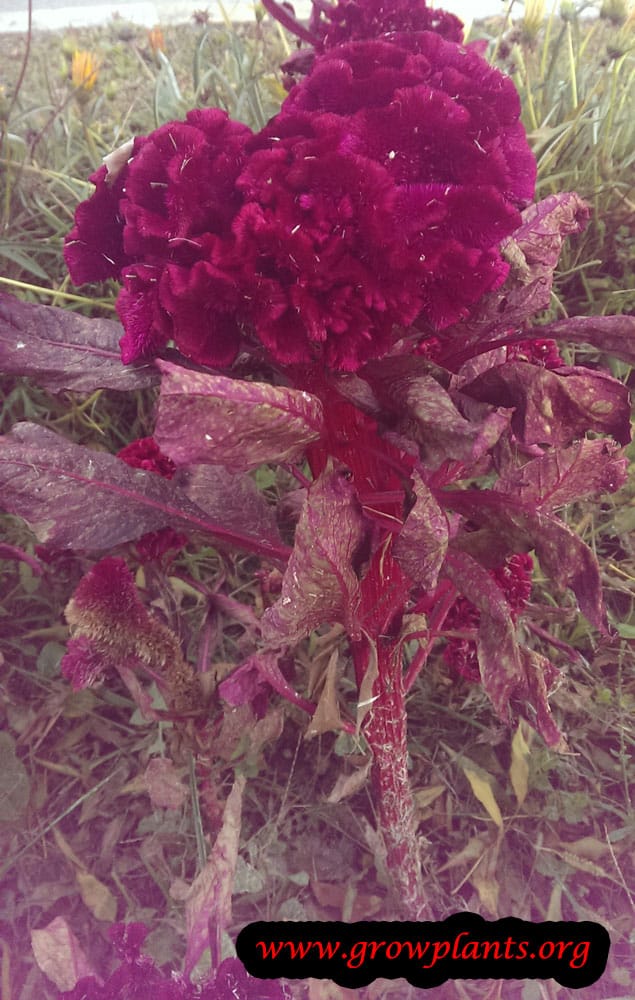
- Flower Appearance: Small flowers fused into a velvety, brain- or comb-shaped crest; colours vary
- Edibility: Edible – the flowers are eaten raw, in salads, stir-fried or cooked
Detailed Blooming Overview
Cockscomb is prized for its distinctive velvety flower crest, shaped like a comb or a brain, carried from spring through autumn. Both the flowers and leaves are edible.
Flower Characteristics
- Appearance & habit: Many small flowers fused into a dense, folded crest on an upright stalk.
- Edible applications: Eaten raw or in salads, stir-fried, or cooked.
Bloom Care & Pollination
- Pollination: Bees – the flowers also attract other pollinators.
Fruit & Uses
Cockscomb (Celosia cristata) is grown mainly as an ornamental, but the young leaves and soft flower heads are edible — like its relative Lagos spinach it is used as a leaf vegetable. Both are eaten raw or cooked.
Quick Edible Specs
| Edible Parts | Leaves; flowers |
|---|---|
| Main Use(s) | Culinary (leaf vegetable) |
| Eaten Raw or Cooked | Both — use young growth; cook older leaves |
| Preparation Required | Wash; cook older leaves (oxalate) |
| Harvest Season | Leaves spring, summer and autumn; flowers while young and soft |
| Storage | Best fresh |
| Safety/Toxicity Caveat | Use tender young growth; leaves contain oxalates, so cook older leaves and eat in moderation |
Leaves & Greens
The oval leaves (green, red or purple) are picked spring to autumn by cutting stems or removing leaves at the base. Use young leaves raw in salad; cook or stir-fry older leaves.
Flowers & Flower Buds
The distinctive comb- or brain-shaped flower heads (red, yellow, orange, pink, purple or white) are edible while young and tender, used raw or cooked.
Preparation, Uses & Safety
Wash before use. Eat young leaves and flowers; cook older leaves, which are higher in oxalate, and keep portions to normal culinary amounts.
Pests, Diseases & Troubleshooting
Celosia is a warm-season annual that is easy in heat but has a clear Achilles heel: it collapses from root, stem and seedling rots (damping-off) in cool, wet or poorly drained conditions. Insect pressure is limited to common sap-suckers and leaf miners, so management centres on warm well-drained soil, careful watering and good airflow rather than heavy spraying. The convoluted ‘cockscomb’ crest can trap moisture, so airflow around the heads matters.
Quick Troubleshooting Overview
| Issue / Pest | Main Symptom | Primary Solution |
|---|---|---|
| Damping-off / stem rot | Seedlings collapse; blackened, pinched stem base | Sterile mix, warm well-drained soil, avoid overwatering |
| Root rot | Wilting despite moist soil, yellowing, stunting | Sharp drainage; water in morning; ease off |
| Aphids | Curled shoot tips, honeydew, sooty mould | Water jet; insecticidal soap; encourage predators |
| Spider mites | Stippling, bronzing, webbing in hot dry air | Raise humidity; hose; horticultural oil |
| Leaf miners | Pale winding tunnels inside leaves | Remove mined leaves; encourage parasitoids |
| Leaf spot | Brown/grey spots, especially in humid weather | Airflow; avoid wetting leaves; copper if severe |
Common Pests & Management
- Aphids (Aphis / Myzus spp.):
- Symptoms: Clusters of soft green or black aphids on tender shoot tips, flower plumes and leaf undersides suck sap, curling new growth and coating plants with honeydew that blackens with sooty mould.
- Prevention & Control: Encourage ladybirds, lacewings and hoverflies; dislodge colonies with a water jet; treat persistent numbers with insecticidal soap or horticultural oil in the evening; control ants that farm them.
- Spider mites (Tetranychus urticae):
- Symptoms: Fine pale stippling and a dull bronzed look to leaves with delicate webbing beneath, worst in hot, dry, sheltered spots and on stressed plants.
- Prevention & Control: Raise humidity and hose foliage; remove badly affected leaves; treat with horticultural oil or insecticidal soap and repeat; keep plants watered to reduce stress; introduce predatory mites under cover.
- Leaf miners (Liriomyza spp.):
- Symptoms: Pale, winding or blotchy tunnels mined between the leaf surfaces by tiny larvae, with pin-prick feeding punctures; disfiguring but rarely fatal.
- Prevention & Control: Pick off and destroy mined leaves as they appear; encourage parasitic wasps by avoiding broad-spectrum sprays; use yellow sticky traps to monitor adult flies; remove badly infested lower foliage.
- Whiteflies (Bemisia / Trialeurodes spp.):
- Symptoms: Tiny white flies rise in clouds when foliage is disturbed; nymphs on leaf undersides suck sap and deposit honeydew that supports sooty mould.
- Prevention & Control: Hang yellow sticky traps to monitor and trap adults; encourage parasitic wasps; spray insecticidal soap or horticultural oil on leaf undersides, repeating; isolate infested stock.
- Caterpillars (Spodoptera / loopers):
- Symptoms: Chewed leaves and ragged holes, sometimes with damage to the flower plumes, plus frass; occasional rather than routine.
- Prevention & Control: Hand-pick caterpillars; encourage birds and parasitic wasps; apply Bacillus thuringiensis (Btk) to young larvae where feeding is heavy.
Diseases & Fungal Issues
- Damping-off and stem rot (Rhizoctonia / Pythium / Fusarium spp.):
- Symptoms: Seedlings topple as the stem base blackens and pinches (damping-off); older plants develop stem-base and root rot, wilting and collapsing, especially in cool, wet, over-sown or poorly drained conditions.
- Treatment & Management: Prevent with clean, sterile seed-starting mix and containers, warm soil and careful, not excessive, watering; sow thinly for airflow; do not plant out into cold wet soil; remove and destroy collapsed plants; avoid overhead watering late in the day.
- Root and crown rot (Phytophthora / Pythium spp.):
- Symptoms: Plants wilt and yellow despite moist soil, with softened, browned roots and a rotting crown; driven by waterlogged, heavy or overwatered soil.
- Treatment & Management: Grow in free-draining soil or raised beds and water in the morning, letting the surface dry; never waterlog; improve heavy soil with grit and organic matter; remove badly affected plants.
- Leaf spot (Cercospora / Alternaria / Phyllosticta spp.):
- Symptoms: Brown, grey or black spots and blotches on leaves in warm, humid, wet weather, sometimes coalescing and causing early leaf loss.
- Treatment & Management: Improve spacing and airflow and keep foliage dry; remove affected leaves and debris; copper fungicide only where spotting is severe and persistent.
- Botrytis / powdery mildew (Botrytis cinerea):
- Symptoms: Grey mould on faded plumes and damaged tissue in cool damp still air, or a white powdery film on leaves late in the season; both are secondary and weather-driven.
- Treatment & Management: Deadhead spent plumes and improve air movement; avoid overhead watering; remove affected tissue; sulphur or potassium-bicarbonate controls mildew if it becomes a nuisance.
Growing Difficulties & Abiotic Problems
- Root rot from overwatering and poor drainage:
- Cause & Symptoms: This is Celosia’s main killer-cool, heavy, waterlogged or overwatered soil suffocates roots and triggers rot, causing wilting, yellowing and collapse.
- Correction Strategy: Plant only in warm, free-draining soil or raised beds; water in the morning and let the surface dry between; never leave pots standing in water; improve drainage before planting.
- Cold sensitivity and stunting:
- Cause & Symptoms: As a heat-lover, Celosia sulks in the cold: chilled plants stall, discolour and remain permanently stunted or ‘check’ and flower prematurely on tiny plants.
- Correction Strategy: Do not sow or plant out until soil is reliably warm; harden off gradually; keep young plants growing steadily without cold checks; protect from unseasonal cold.
- Iron chlorosis and legginess:
- Cause & Symptoms: Alkaline or wet soils cause interveinal yellowing (iron chlorosis), while low light produces weak, leggy, floppy growth with poor plumes.
- Correction Strategy: Ensure drainage and warmth so roots take up iron, correcting with chelated iron if needed; grow in full sun for sturdy, well-coloured plants; feed moderately with a balanced fertiliser.
What Helps — Products & Tools
Management is largely cultural: sterile seed mix, warm free-draining soil, morning watering and good spacing. For insects, insecticidal soap and horticultural oil cover aphids, mites and whitefly, yellow sticky traps monitor leaf miners and whitefly, and Btk targets caterpillars. Copper fungicide addresses leaf spot and sulphur/bicarbonate mildew; chelated iron corrects chlorosis-drainage prevents the rots that most often kill Celosia.
Frequently Asked Questions
How do you grow cockscomb from seed?
Sow in spring once the soil is warm, surface-sowing the fine seed and barely covering it since it needs light to germinate. Keep it warm and evenly moist at around 20–25°C (68–77°F) until it comes up. Because cockscomb is a crested selection of Celosia argentea, its crested forms and F1 hybrids don’t come true from saved seed, so buy fresh seed of the strain you want each year.
Which parts of cockscomb are edible, and how do you eat them?
Both the young leaves and the flowers are edible and non-toxic. The leaves are eaten raw in salads or cooked and stir-fried, and the flowers are edible too.
When does cockscomb bloom?
Cockscomb is a fast-growing annual that flowers from spring through autumn, producing small flowers fused into crested, comb- or brain-shaped heads in red, yellow, orange, pink, purple or white; the blooms are bee-pollinated.
How cold-hardy is cockscomb, and will it survive frost?
Cockscomb is a frost-tender annual with no frost tolerance, grown as a warm-season plant from USDA zone 2 upward. It survives only briefly near 0°C (32°F), and real frost kills it, so it needs to complete its growing season within the frost-free part of the year.
Why do cockscomb flowers scorch in hot summer sun?
Cockscomb wants full or nearly full sun for compact growth and the most intense flower colour, but in the fiercest hot-day sun the foliage and flower heads can scorch. In extreme-heat regions, giving it a little relief from harsh afternoon sun keeps the flower plumes looking clean while it still gets enough sun for strong colour.