

Plant Profile & Key Characteristics
Overview: Chard (Beta vulgaris subsp. cicla, Swiss chard) is a leafy form of beet grown as an annual, biennial or short-lived perennial, forming a rosette of large edible leaves 5-70 cm long. It is grown mainly for the leaves and stalks, with bright-stemmed cultivars also used ornamentally.
Quick Specifications
| Specification | Attribute |
|---|---|
| Plant Type / Life Cycle | Annual / biennial / short-lived perennial |
| Foliage Type | Deciduous (herbaceous) |
| Mature Size | Leaves 5-70 cm long (2-28 in) |
| Growth Rate | Moderate |
| Root System | Taproot (grown for leaves, not the root) |
| Toxicity | Non-toxic / edible |
| Hardiness | USDA zones 2-10 |
Growth Form & Structure
- Height & Spread: Forms an upright leafy rosette with leaves 5-70 cm (2-28 in) long; grows well in the ground or in planters.
- Growth Habit & Form: Clumping rosette of large, long-stalked leaves; bolts to a tall flower stalk when it runs to seed.
- Lifespan & Maturity: Leaves are cut-and-come-again over a long season; the plant flowers in its second year.
Anatomy & Physical Features
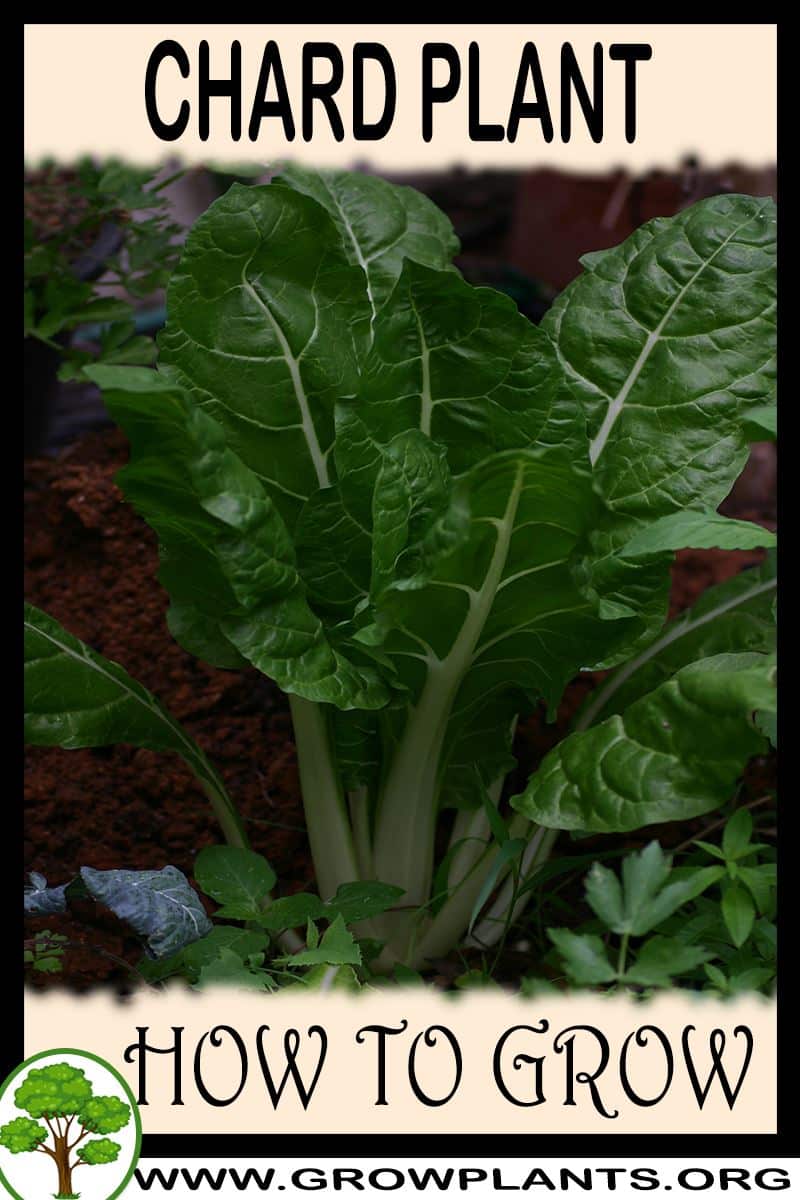
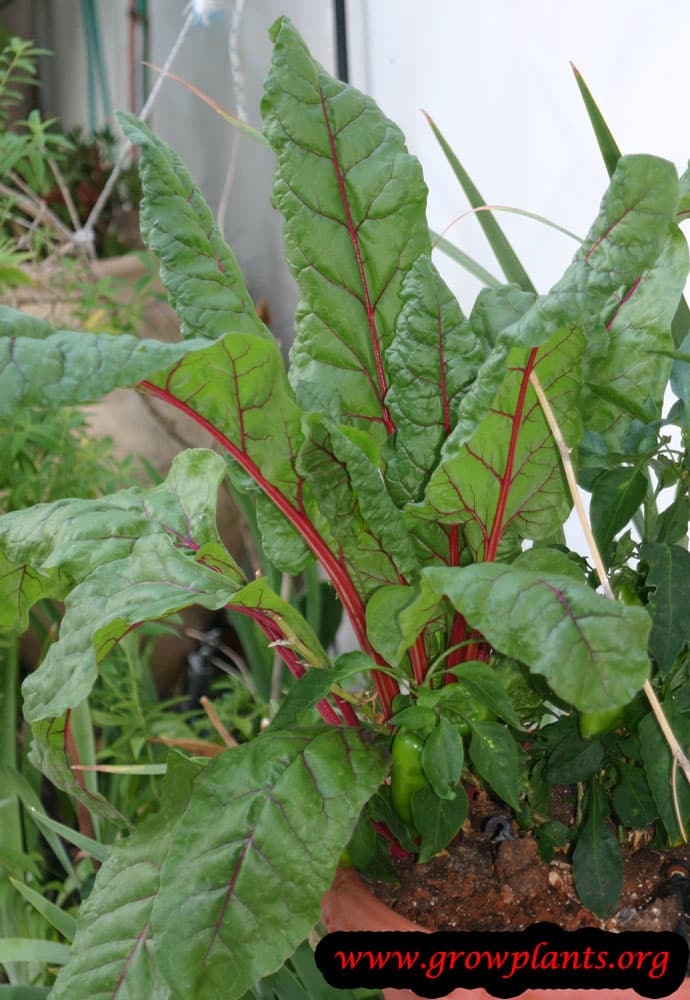
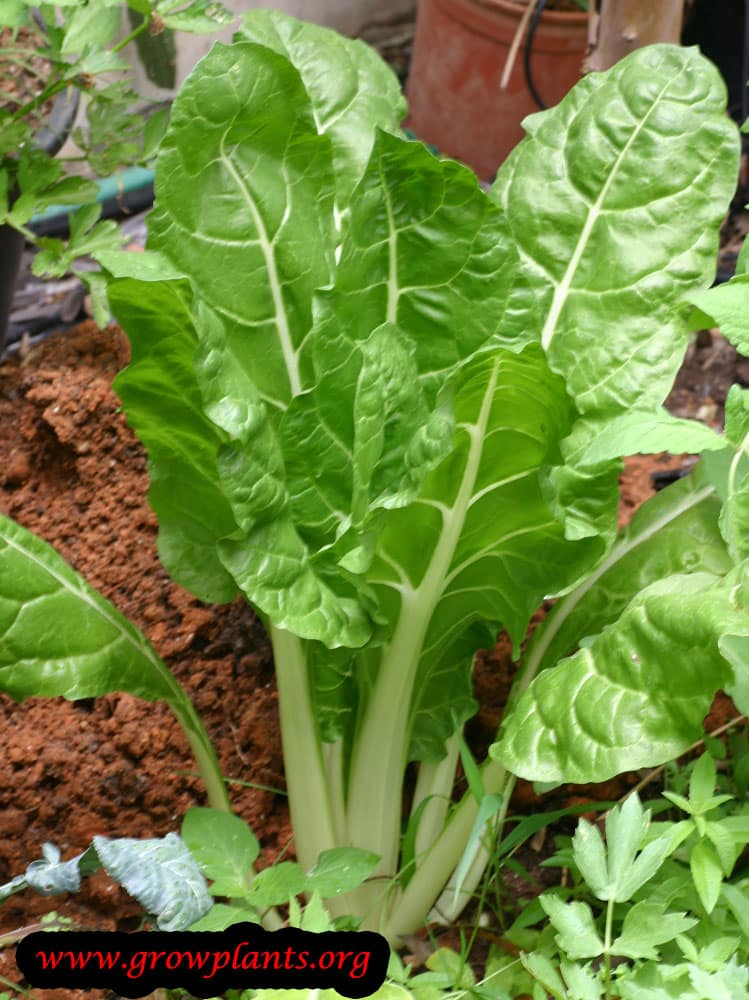
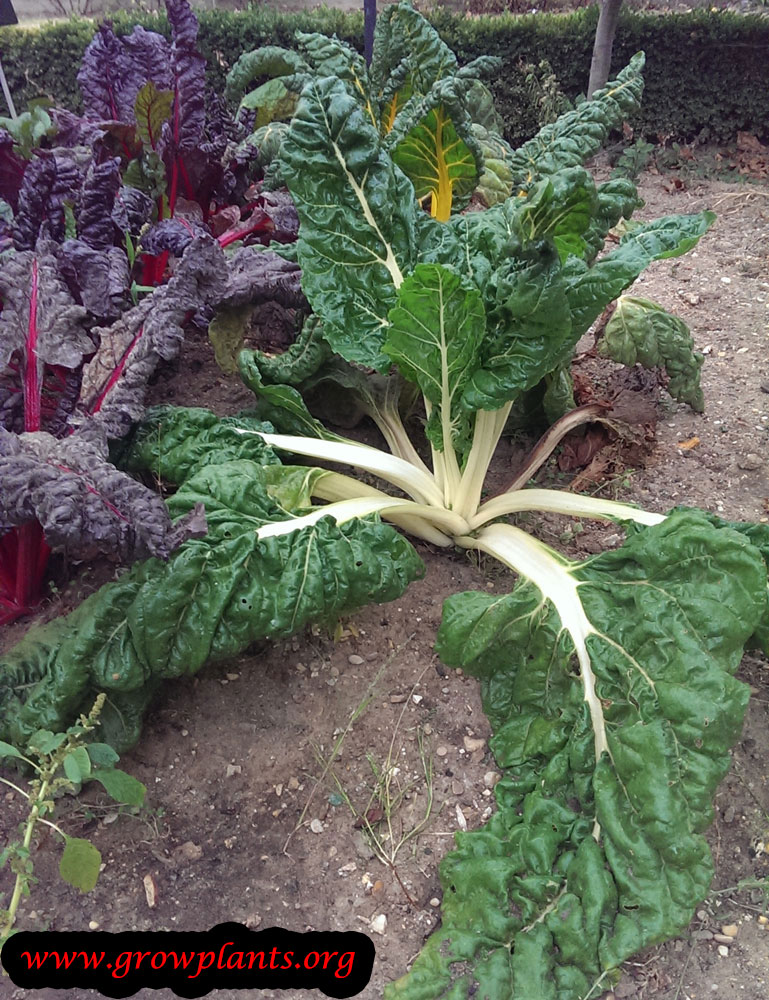
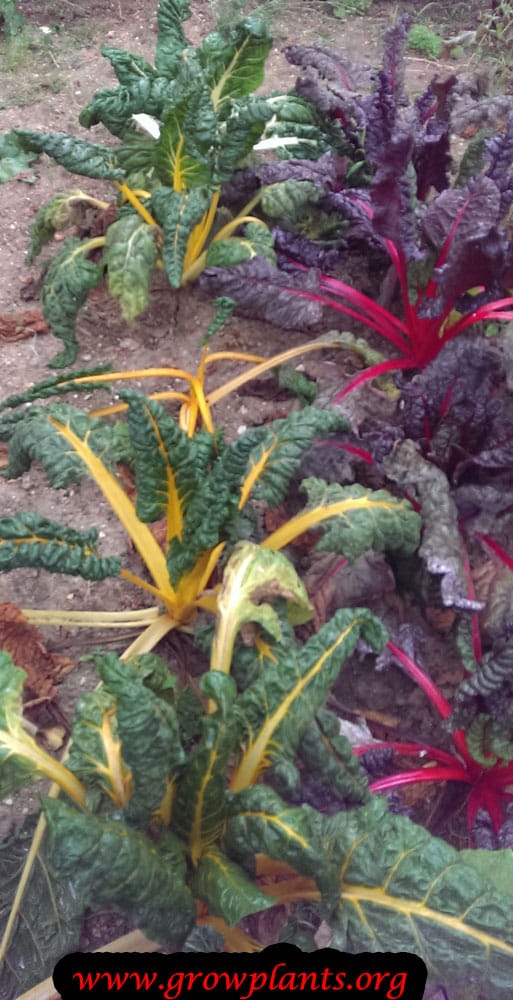
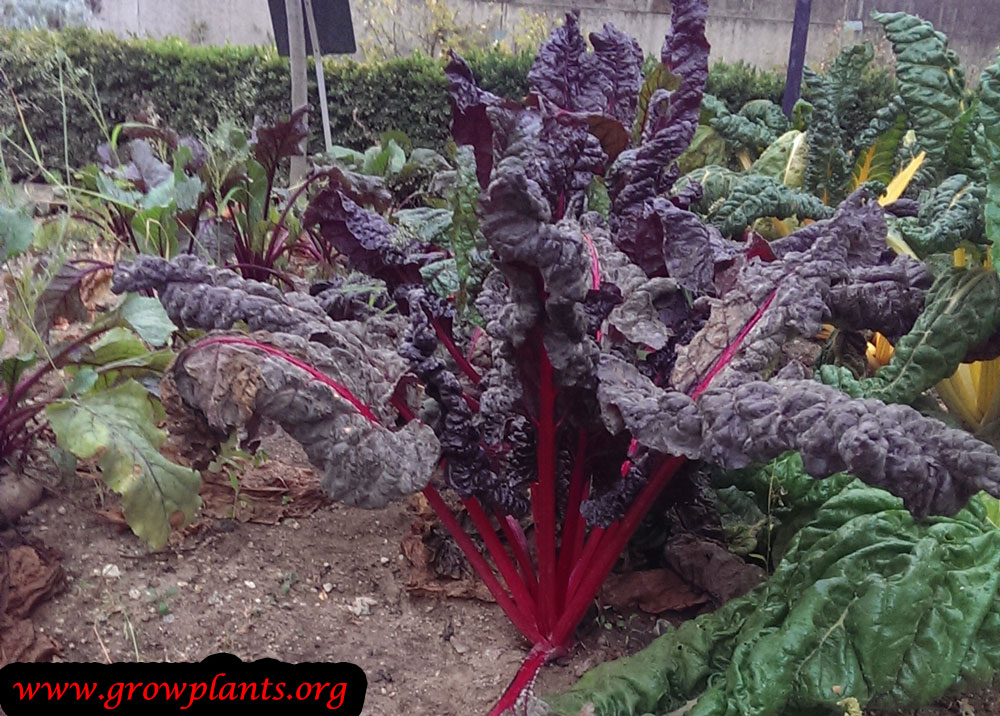
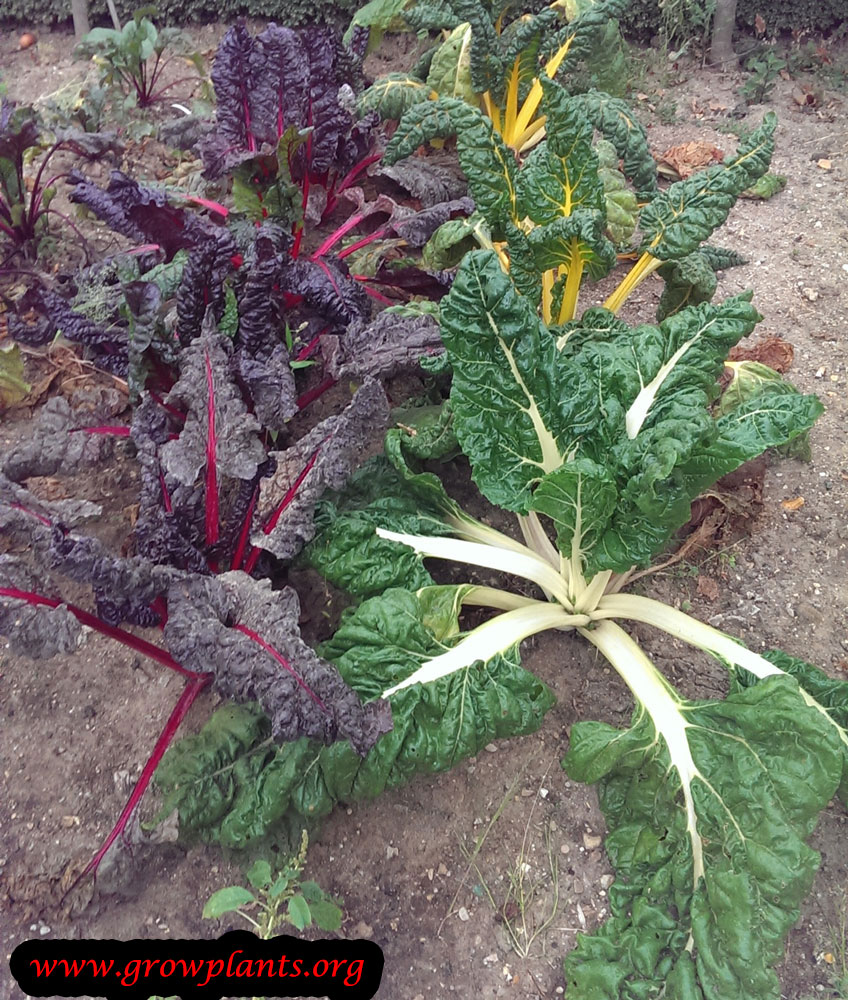
- Leaves & Foliage: Large, often crinkled leaves in green, red or purple, with prominent stalks and veins that may be white, yellow, red, pink or burgundy.
- Flower Characteristics: Very small green-yellow flowers on a tall inflorescence, wind- and bee-pollinated.
Primary Uses & Landscape Value
- Edible Uses: Leaves and stalks used in quiche, cooked, stir-fried or in salad (young leaves).
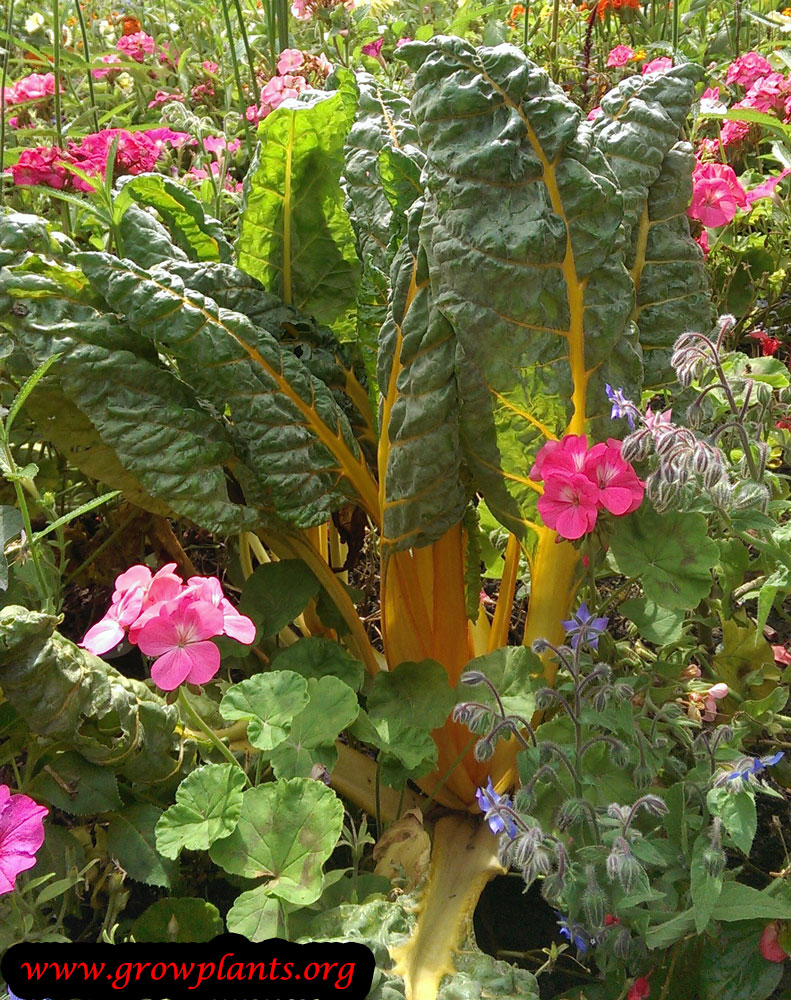
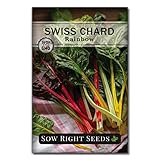
- Functional & Ornamental Roles: Leaf-vegetable crop; brightly coloured-stemmed cultivars such as Rainbow Chard are also grown as ornamentals.
Care Guide: Planting, Soil & Watering
Overview: Swiss chard is a leafy relative of beet grown for its colourful stems and leaves, thriving in full sun and loose, well-drained soil. It likes steady moisture and a slightly acidic bed and tolerates a long growing season.
Quick Care Requirements
| Requirement | Ideal Condition |
|---|---|
| Planting Season | Adaptable – can be planted year-round in mild climates |
| Growth Rate | Moderate |
| Soil Type | Loose, airy, well-drained soil |
| Soil pH | 6.0-7.0 (slightly acidic to neutral) |
| Water Need | Moderate to High – keep evenly moist |
Planting & Establishment
- Best Planting Season: Plant almost any time in mild climates; in colder areas start in spring or autumn.
- How to Plant:
- Hole Preparation: Prepare a loose, weed-free bed; sow seed clusters 1-2 cm deep, spaced 10-20 cm apart, or set transplants at pot depth.
- Soil Amendments: Enrich with organic matter for a fine, moisture-holding but free-draining tilth.
- Planting Depth: Sow about 1-2 cm deep and set transplants at their original soil level.
- Growth Speed & Expectations: A moderate grower yielding leaves you can pick repeatedly; harvest the outer leaves and it keeps producing.
Soil, Watering & Drainage Care
- Soil Mix & Drainage Needs: Wants airy, free-draining soil; grows well in a roomy container with quality mix. Avoid waterlogged ground.
- Watering Schedule & Technique:
- Young / Newly Planted: Keep the seedbed evenly moist for reliable germination.
- Established: Water regularly and evenly to keep leaves tender; irregular moisture makes it bolt or toughen.
- Seasonal Adjustments: Water more in heat and less in cool wet weather; steady moisture discourages premature flowering.
Climate, Light & Hardiness
Chard (Beta vulgaris, Swiss chard / mangold) is a leafy form of beet grown as an annual, biennial or short-lived perennial for its edible leaves and stalks. It is a cool-season crop that grows best in mild weather and full sun and tolerates cold and light frost, while prolonged heat is what degrades roots or leaves and triggers premature bolting.
Quick Climate Specifications
| Climate Zones | Temperate, Mediterranean and subtropical; grown in the cool season |
| USDA Hardiness Zones | 2–10 |
| Optimal Temp Range | Cool to mild, roughly 10–24°C (50–75°F) |
| Cold Damage Begins | Tolerates light frost; leaves damaged by harder freezes below about −4°C (25°F) |
| Approx. Survival Minimum | Established plants often survive near −5 to −7°C (23 to 19°F), lower with mulch |
| Frost Tolerance | Moderate to High |
| Light Conditions | Full sun |
| Wind Tolerance | Moderate |
Sunlight & Light Exposure
Optimal Light Setup
Full sun gives the best growth; some types are sensitive to shade, which produces thin, weak leaves and poor roots.
Temperature Extremes & Hardiness
USDA Hardiness & Regional Limits
Grown across zones 2–10: sown in autumn for winter and spring cropping in frost-free and mild areas, and in spring where winters are cold. A cool spell early in growth suits it, but a prolonged cold snap on young plants can prompt bolting once warmth returns.
Cold Damage & Winter Protection
Light frost does little harm and can improve sweetness; roots and crowns take more cold than the leaves. Hard freezes damage exposed foliage, but a mulch or cover lets plants stand through winter in milder zones.
Extreme Heat Tolerance
Heat is the main limit: hot weather makes roots woody or leaves coarse and pushes the plant to bolt, so the crop is timed to avoid high summer in warm climates.
Wind, Humidity & Microclimate
Microclimate Recommendations
An open, sunny bed with steady moisture and cool growing weather gives the smoothest roots and tenderest leaves; containers heat up faster and bolt sooner.
Growing in Pots, Balconies & Indoors
Chard is a handsome leafy crop with colourful stems. It is not a houseplant, but it grows very well in pots and can be picked from a bright, sunny windowsill.
Quick Details
- Container Size: A pot or trough at least 20 cm (8 in) deep and wide (general guide)
- Indoor Suitability: Not a houseplant, but it crops on a very sunny sill
- Best Spot: Full sun; it tolerates a little shade
- Soil & Drainage: Rich, moisture-retentive but free-draining mix
- Watering in Pots: Keep steadily moist; generous in heat
Indoors & On the Windowsill
- Houseplant: The grower’s answer is No – it is a sun-loving leaf crop.
- Windowsill growing: A bright, sunny sill grows a productive pot of leaves for cut-and-come-again picking; give it as much direct light as possible.
On a Balcony or Patio
- Light & wind: Thrives in sun on a balcony or patio and is one of the most decorative edibles for a pot. Reflected heat dries containers fast, so water often in summer.
- Practicalities: A roomy, stable pot keeps big leaves upright and easy to harvest.
Choosing the Pot, Soil & Long-Term Care
- Pot & drainage: Use a pot with strong drainage holes and skip a standing-water saucer to avoid root rot; terracotta breathes and dries out faster, while glazed or plastic pots hold moisture longer.
- Potting mix: Rich, organic, moisture-holding mix that still drains.
- Feeding: A leafy crop is hungry – feed regularly; Potted plants use up their soil quickly because watering leaches nutrients away, so feed a little more often than plants in open ground through the growing season.
- Season: Usually grown as an annual or biennial – start fresh plants each season rather than repotting.
Fertilizing & Feeding
A moderate feeder grown for its leaves: steady, light nitrogen-forward feeding through the growing season, backed by organic matter, keeps foliage tender and productive. A fertilizer formulated for tomatoes and vegetables supports that feeding pattern through harvest.
Quick Fertilizing Specs
| Feeding Level | Moderate feeder |
|---|---|
| Main Nutrient Priority | Nitrogen-forward, balanced overall |
| Best Feeding Period | Through active leafy growth in the growing season |
| Organic Options | Compost, well-rotted manure, and nitrogen-rich amendments |
| Micronutrients | Usually supplied by compost and a complete fertilizer; correct specific issues only when diagnosed |
| Soil pH | Slightly acidic to near neutral |
Feeding by Growth Stage
Establishment after sowing or transplanting
Support quick rooting and early leaf development as young plants take hold.
| Nutrient direction | A balanced complete fertilizer with steady nitrogen to start leafy growth. |
|---|---|
| Timing | From sowing or transplanting through early establishment. |
| Frequency | A light feeding as growth begins, refreshed gently as the young plants settle in. |
| Fertilizer types | A balanced complete garden fertilizer, Compost or well-rotted organic matter worked into the bed |
| Precautions | Keep feeding light on tender seedlings and water in well to avoid salt burn. |
Active leafy growth and harvest
Drive lush, tender leaves, which are the harvested part of the crop.
| Nutrient direction | Lean nitrogen-forward, since the leaves are the yield, while keeping other nutrients adequate. |
|---|---|
| Timing | Through the main leafy growth and repeated cut-and-come-again harvest. |
| Frequency | Several light feedings across the growing season, easing off as weather turns unfavorable. |
| Fertilizer types | A nitrogen-forward complete or leafy-green fertilizer, Side-dressing with compost or a nitrogen-rich organic amendment |
| Precautions | Avoid heavy single doses that push soft growth or scorch leaves; regular harvest keeps plants productive. |
Nutrient Deficiency Signs & Corrections
Older, lower leaves fade to pale green or uniform yellow and overall growth slows.
| Possible causes | low available soil nitrogen, nitrogen leaching from heavy watering or rain, thin, low-organic-matter soil |
|---|---|
| Appears first on | older, lower leaves |
| What to check | recent feeding history, soil organic matter, watering and drainage |
| Possible correction | Apply a nitrogen-containing complete fertilizer and build soil organic matter, then water evenly. |
Interveinal yellowing on older leaves while the veins themselves stay green.
| Possible causes | low soil magnesium, high potassium feeding competing with magnesium uptake, leaching in light, sandy soils |
|---|---|
| Appears first on | older, lower leaves |
| What to check | soil magnesium status, how potassium-heavy recent feeding has been, soil texture and leaching |
| Possible correction | Apply a labeled magnesium source such as Epsom salt or a dolomitic amendment and rebalance feeding. |
Leaf margins brown or scorch and growth stalls despite adequate watering.
| Possible causes | fertilizer salt buildup in the root zone, under-watering that concentrates salts, excessive or too-frequent feeding |
|---|---|
| Appears first on | leaf margins and tips |
| What to check | recent fertilizer amounts, watering consistency, drainage, especially in containers |
| Possible correction | Ease off feeding, water thoroughly to flush accumulated salts, then return to lighter feeding. |
Pruning, Training & Seasonal Maintenance
Chard is grown for its leaves and colourful stems, and it is a classic cut-and-come-again crop: harvest the outer leaves at the base while always leaving the central growing point, and the plant keeps producing for months. Because it bolts fairly readily, removing the emerging flower stalk is the key cut for prolonging the leaf harvest; there is no structural pruning. Removing yellowing outer leaves also keeps the crown airy and reduces leaf-spot disease.
Pruning & the Edible Harvest
For chard, harvesting the edible leaves and stalks is the pruning. Cutting outer leaves at the base while always leaving the central growing point directly controls the ongoing cut-and-come-again yield, and promptly removing any bolting flower stalk prolongs the productive harvest before the leaves coarsen.
Quick Pruning & Maintenance Specs
| Pruning Tolerance | High for outer-leaf harvest (cut-and-come-again) |
| Primary Pruning Window | Whole harvest season (warm areas nearly year-round) |
| Typical Frequency | Pick outer leaves regularly; remove bolting stalk promptly |
| Main Objective | Sustained leaf harvest; delay bolting; keep crown clean |
| Young Plant Priority | Thin seedling clusters; let the rosette build |
| Mature Plant Priority | Harvest outer leaves; remove bolting stalk and yellow leaves |
| Best Tool Type | Precision snips |
| Avoid Heavy Pruning During | Do not cut out the central growing point |
Pruning by Plant Age & Size
Newly Established
Thin the clustered seedlings (multigerm seed) to spacing and let the plant build a rosette before serious harvesting.
Young / Formative
No structural training. Begin cut-and-come-again harvest of outer leaves once the plant has several full leaves, always leaving the central point to regrow.
Mature / Established
Keep harvesting outer leaves; remove any bolting flower stalk quickly to keep the plant leafy; strip yellowing outer leaves for airflow.
Seasonal Pruning Schedule
Ongoing (harvest season): pick outer leaves; the crown keeps generating new ones.
Sanitary: remove yellowing or leaf-spot-marked leaves to keep the crown open and reduce disease.
Bolting (heat / second season): remove the flower stalk to prolong leaf production; once it bolts strongly the leaves coarsen and it is often best replaced.
Structural Pruning & Training
None – the method is spacing plus outer-leaf harvest. There is nothing to train and no benefit to thinning within a plant beyond removing old leaves.
Special Growth to Remove
Remove the bolting flower stalk and any yellowing or damaged outer leaves. Keep the healthy central rosette. Note chard occasionally forms plantlets on the flower stem, which can be used for propagation.
Container & Small-Space Pruning
Excellent in pots for continual picking – harvest outer leaves and always leave the centre. Pick a little more sparingly in small containers to match the smaller root system.
Tools
Precision snips for cutting leaves at the base and removing the bolting stalk; the petioles are soft enough that nothing heavier is needed.
Tool Hygiene & Disease Risk
Increased around leaf disease. Chard is prone to Cercospora leaf spot; remove and discard (do not compost) infected leaves and wipe snips after cutting diseased tissue to limit spread between plants.
Cut Placement & Technique
Cut outer leaves at the base of the petiole near the crown without nicking the central growing point – that point drives all future harvests. Cut the bolting stalk low.
Heavy Pruning & Rejuvenation
Not applicable as rejuvenation – though very robust, a strongly bolted plant will not return to good leaf. Some gardeners cut a tired plant back to the crown for a flush of new leaves, but replacing it usually gives better quality.
Post-Pruning Care
Keep soil evenly moist after picking to support fresh leaves; consistent water keeps the leaves tender and slows bolting.
Common Pruning Mistakes
- Cutting or damaging the central growing point, which stops regrowth.
- Ignoring the bolting stalk, so the plant runs to seed and the leaves toughen.
- Leaving Cercospora-marked leaves in the crown, spreading leaf spot.
When NOT to Prune
Never remove the central crown during harvest. Avoid stripping every leaf at once, and go easy on a heat-stressed plant that is already inclined to bolt.
Recommended Tools (by task)
- precision_snips – cut-and-come-again outer-leaf harvest, bolting-stalk removal and clearing yellowed leaves.
Propagation Guide
Chard is grown from seed, sown directly; like all beets each seed "ball" holds several seeds and produces a tuft of seedlings to thin. Grown for its leaves, it is cut over a long season and only bolts and sets seed in its second year. A minor vegetative trick — plantlets on the flowering stalk — also works. It is Easy.
Quick Propagation Specs
| Best Propagation Method | Seed (direct-sown) |
| Alternative Methods | Rooting plantlets from the flowering stalk (minor) |
| Propagation Difficulty | Easy |
| Seed True-to-Type | Wind-pollinated and crosses freely with all other Beta vulgaris (beet, mangel, sugar beet, sea beet), so isolate well for pure seed; within a variety, open-pollinated seed comes fairly true |
| Best Propagation Season | Possible all year |
| Seed Germination Time | 3–20 days |
| Seed Sowing Depth | 1–2 cm (0.5–0.75 in) |
| Seed Sowing Spacing | 10–20 cm apart |
Growing from Seed
Seed Handling & Viability
The small black seeds come bound in a woody, corky cluster (the "seed ball") holding several seeds, so each one sends up several seedlings to be thinned to the strongest. Store dry and dark.
Dormancy & Pre-Sowing Treatment
The corky fruit carries germination inhibitors; soaking or rinsing the seed balls before sowing can speed and even out emergence.
Sowing Season
Sowing is possible all year in suitable climates.
Sowing Depth & Spacing
Sow 1–2 cm (0.5–0.75 in) deep, spacing about 10–20 cm; the seed does not need deep burial.
Germination Conditions & Time
Keep the airy, stone-free soil moist; seedlings emerge in about 3–20 days.
Seedling Care
Thin the clustered seedlings early, and keep the soil moist, airy and weed-free.
Division, Offsets, Pups & Suckers
Occasionally small plantlets form along the flowering stalk. These can be rooted by burying the stem sections in the soil with the leaves left above the surface, striking roots in about 1–2 weeks — a minor route rather than the usual way to raise a crop.
Bloom & Flower Guide
Quick Details
- Bloom Season: Summer
- Time to First Bloom: Usually in its second year (grown as an annual/biennial for the leaves)
- Flower Appearance: Very small green-to-yellow flowers on a tall inflorescence spike
- Edibility: Not eaten as a flower – chard is grown for its leaves and stems
Detailed Blooming Overview
Chard usually bolts to flower in its second season, sending up a tall spike of very small green-to-yellow flowers. Once it bolts the leaves turn tough and bitter.
Flower Characteristics
- Tiny green-to-yellow flowers along an upright inflorescence spike.
Bloom Care & Thinning
- Managing the bloom: Harvest the leaves before it begins to bloom – flowering ends the productive leaf stage.
- Pollination & seed set: Mainly by wind (bees may also visit).
Fruit & Uses
Swiss chard is grown for its edible leaves and the thick, often colourful leaf stalks (midribs). It is a cut-and-come-again leafy crop with no edible root.
Quick Edible Specs
| Edible Parts | Leaves; leaf stalks (stems/midribs) |
|---|---|
| Main Use(s) | Culinary |
| Eaten Raw or Cooked | Both — young leaves raw, mature leaves and stalks cooked |
| Preparation Required | Wash; cook mature leaves and stalks |
| Harvest Season | All year in warm areas (less in summer); spring to autumn in cold areas |
| Storage | Best fresh |
| Safety/Toxicity Caveat | Leaves contain oxalates — cooking reduces them; eat in normal culinary amounts |
Leaves & Greens
The large green, red or purple leaves are the main crop. Use young leaves raw in salad and mature leaves cooked — in quiche, stir-fries and cooked dishes. As a cut-and-come-again crop, trim outer leaves at the base so the plant keeps producing.
Shoots & Stems
The broad leaf stalks and midribs — white, or coloured yellow, red, purple or pink in rainbow types — are eaten cooked. They take a little longer to soften than the blades, so separate them and start them cooking first.
Preparation, Uses & Safety
Wash well and cook mature leaves and stalks. Chard leaves are high in oxalate, so cooking is preferred and normal culinary amounts are best.
Pests, Diseases & Troubleshooting
Overview: Swiss chard (Beta vulgaris (Cicla Group)) shares the pest and disease profile of the whole beet/chard group. Its hallmark problems are Cercospora leaf spot and the beet/spinach leafminer disfiguring the edible leaves, backed by aphids (also virus vectors), armyworms and flea beetles. Chard is grown for its leaves and stalks, so leaf-spot and leafminer damage matter most; it does not form the swollen root of beetroot. Rotation, airflow and prompt removal of mined or spotted leaves do most of the work.
Quick Troubleshooting Overview
| Issue / Pest | Main Symptom | Primary Solution |
|---|---|---|
| Cercospora leaf spot | Tan spots with purple borders, blighted leaves | Rotation, airflow, remove debris, resistant types, copper |
| Leafminer | Pale-to-brown blister mines inside leaves | Remove mined leaves, row cover, clear weeds |
| Aphids | Sticky curled leaves, sooty mould, virus | Water jet, beneficials, insecticidal soap |
| Armyworm / loopers (‘prodenia’) | Chewed, skeletonised leaves with frass | Hand-pick, Bt on young larvae |
| Flea beetles | Shot-hole pits in seedling leaves | Row cover, weed-free bed, fast growth |
| Downy mildew | Distorted leaves, violet mould beneath | Airflow, dry foliage, rotation, copper |
Common Pests & Management
- Leafminer (Beet/Spinach Leafminer) (Pegomya hyoscyami / P. betae):
- Symptoms: The signature pest: pale then brown blister-like blotch mines where maggots feed between the leaf surfaces, ruining edible leaves; several generations a season.
- Prevention & Control: Pick off and destroy mined leaves as soon as blotches appear, exclude egg-laying flies with floating row cover, and clear related weeds (lamb’s-quarters). Conserve parasitic wasps by avoiding broad-spectrum sprays.
- Aphids (Myzus persicae, Aphis fabae):
- Symptoms: Green or black colonies on leaf undersides and growing points, sticky honeydew and sooty mould, curled leaves; the green peach aphid also spreads beet viruses.
- Prevention & Control: Encourage ladybirds, lacewings and hoverflies, blast off colonies with water, and avoid excess nitrogen. Insecticidal soap or horticultural oil for heavy outbreaks; rogue out virus-symptomatic plants.
- Beet Armyworm & Loopers (Spodoptera exigua, Trichoplusia ni):
- Symptoms: Ragged, chewed and skeletonised leaves with dark frass; young larvae feed in groups. (The old name ‘prodenia’ refers to this armyworm.)
- Prevention & Control: Hand-pick, encourage birds and parasitic wasps, and spray Bt on young caterpillars for a selective, pollinator-safe control.
- Flea Beetles (Chaetocnema, Phyllotreta spp.):
- Symptoms: Numerous tiny ‘shot-hole’ pits in seedling and young leaves; heavy feeding stunts small plants.
- Prevention & Control: Protect seedlings with row cover, keep the bed weed-free, and grow on strongly so plants outpace the damage.
- Slugs & Snails (Gastropoda):
- Symptoms: Ragged holes in leaves and seedlings, especially in damp, shady beds, with slime trails at night.
- Prevention & Control: Remove hiding places, water in the morning, hand-pick after dark, and ring plants with grit or copper; iron-phosphate bait if pressure is high.
Diseases & Fungal Issues
- Cercospora Leaf Spot (Cercospora beticola):
- Symptoms: The classic Beta disease: many small round spots with pale tan centres and reddish-purple borders that merge and blight the foliage in warm, humid, wet-leaf weather.
- Treatment & Management: Rotate away from beet/chard/spinach, space for airflow, avoid overhead watering, and remove infected debris. Resistant varieties and a protectant (copper or labelled) fungicide manage heavy pressure.
- Downy Mildew (Peronospora farinosa):
- Symptoms: Pale, distorted young leaves with a greyish-violet mould on the undersides in cool, humid conditions; growing points can be killed.
- Treatment & Management: Improve airflow, avoid wet foliage, rotate, and remove infected leaves; copper or a suitable fungicide helps in prolonged damp spells.
- Damping-off & Root/Crown Rot (Rhizoctonia, Pythium, Aphanomyces):
- Symptoms: Seedlings collapse at a pinched, water-soaked base; older plants show dark rot at the crown/root in wet, compacted soil.
- Treatment & Management: Sow into warm, well-drained soil, avoid over-watering and compaction, and rotate. Improve drainage and use clean seed and beds.
Growing Difficulties & Abiotic Problems
- Bolting:
- Cause & Symptoms: A cold spell on young plants, then lengthening days, triggers premature flowering; leaves toughen and (in beet) roots stay small and woody.
- Correction Strategy: Sow at the right time, avoid exposing seedlings to prolonged cold, and choose bolt-resistant varieties for early or late sowings.
- Root/Leaf-stalk Cracking & Toughness:
- Cause & Symptoms: Irregular watering – drought then a sudden soak – splits roots and stalks and makes leaves stringy.
- Correction Strategy: Keep soil evenly moist with mulch and regular watering, and harvest at the right size before tissue toughens.
What Helps – Products & Tools
The beet/chard kit is simple: floating row cover to exclude leafminer flies, copper or a labelled protectant fungicide for Cercospora and downy mildew, insecticidal soap or horticultural oil for aphids, Bt for armyworms and loopers, and iron-phosphate bait for slugs. For beetroot, keep a soil-test-verified boron source on hand. Rotation and airflow prevent most disease.
Varieties & Cultivars
- Fordhook: Big green leaves with white veins. — Shop Fordhook on Amazon
- Rainbow Chard: Green-reddish leaves; veins can be green, yellow, red, burgundy, or pink. — Shop Rainbow Chard on Amazon
- Ruby Red: Red or green leaves with red or green veins. — Shop Ruby Red on Amazon