Care Guide: Planting, Soil & Watering
Overview: Centaurea gymnocarpa (velvet centaurea) is a moderate-growing evergreen perennial ground cover for temperate, Mediterranean and subtropical climates (hardiness zone 8-11a), thriving in full sun. It prefers a well-drained soil kept lightly moist, enjoys a cool winter, and tolerates poor, dry ground once established.
Quick Care Requirements
| Requirement | Ideal Condition |
|---|---|
| Planting Season | From spring through autumn while the weather is mild (it favours a cool winter) |
| Growth Rate | Moderate |
| Soil Type | Well-drained soil |
| Water Need | Low – allow the soil to dry between waterings |
Planting & Establishment
- Best Planting Season: Plant from spring to autumn while conditions are mild; it enjoys a cool winter rest.
- How to Plant:
- Hole Preparation: Dig a hole about twice the width of the root ball and no deeper than it; space plants for good airflow.
- Soil Amendments: Add grit to heavy soils for drainage; it does not need rich ground and dislikes wet feet.
- Planting Depth: Set the root ball level with the soil surface.
- Growth Speed & Expectations: A moderate grower reaching 20-120 cm (12-48 in) and forming a low, spreading clump.
Soil, Watering & Drainage Care
- Soil Mix & Drainage Needs: Sharp drainage is key – soggy soil causes rot and powdery mildew; in pots use a free-draining mix.
- Watering Schedule & Technique:
- Young / Newly Planted: Water moderately to establish, keeping the soil lightly moist.
- Established: Water sparingly once established, letting the soil dry between waterings; it is fairly drought-tolerant.
- Seasonal Adjustments: A little more in summer heat; keep on the dry side in cool, wet weather.
Climate, Light & Hardiness
Centaurea gymnocarpa is a full-sun, cool-winter-preferring perennial that thrives in mediterranean, subtropics, temperate climates. It is reliably cold-hardy from about USDA zone 8–11a, with drought tolerance once established.
Quick Climate Specifications
| Climate Zones | Mediterranean, subtropics, temperate |
| USDA Hardiness Zones | 8–11a |
| Optimal Temp Range | Approximately 13–24°C (55–75°F) during active growth and bloom |
| Approx. Survival Minimum | Established plants may briefly tolerate winter minimums around −12°C to −7°C (10°F to 20°F), reflecting its zone 8 rating |
| Frost Tolerance | Moderate |
| Light Conditions | Full sun |
| Wind Tolerance | Moderate |
Sunlight & Light Exposure
Optimal Light Setup
Full sun is essential for compact growth and the best flowering.
Direct Sun Requirement
Direct sun is required for good performance; it is not adapted to shaded sites.
Best Exposure / Orientation
An open, sunny border or slope with good air movement suits this cool-winter-preferring plant well.
Temperature Extremes & Hardiness
USDA Hardiness & Regional Limits
Reliably hardy outdoors within USDA zone 8–11a.
Cold Damage & Winter Protection
As a herbaceous perennial it dies back in winter and regrows from the roots; foliage is damaged by hard freezes but the dormant crown is cold-hardy within its rated zone range.
Frost Sensitivity
The care notes indicate a preference for a cool winter period; while some frost is tolerated within its hardy zones, young seedlings are more vulnerable than established plants.
Extreme Heat Tolerance
Prefers cooler conditions overall; performance and flowering can decline in very hot, humid summer climates.
Wind, Humidity & Microclimate
Humidity Preferences
Prefers moderate humidity with good air movement, which also helps limit powdery mildew.
Dry-Air Tolerance
Reasonably tolerant of dry air once established, in keeping with its low water requirement.
Wind Tolerance
Moderate wind tolerance for a herbaceous garden plant of this size.
Rainfall & Seasonal Moisture
Prefers well-drained soil with a cool, moist winter period and drier conditions in summer; it does not tolerate waterlogging.
Microclimate Recommendations
An open, sunny, well-drained site with a distinct cool winter period best supports healthy growth and flowering.
Growing in Pots, Balconies & Indoors
Centaurea gymnocarpa is grown mainly for its finely-cut silver foliage in full sun. It is not a houseplant, but it makes a striking, drought-tolerant container plant for a bright patio or balcony.
Quick Details
- Container Size: A medium pot, roughly 8-15 L (2-4 gal), sized to the plant
- Indoor Suitability: Not a houseplant – a full-sun plant for open positions
- Best Spot: Full sun
- Soil & Drainage: Sharply drained, gritty mix – a potting mix with added perlite or coarse sand; lean soil is fine.
- Watering in Pots: Let the top of the mix dry between waterings – these are drought-tolerant plants that resent soggy roots.
Indoors & On the Windowsill
- Houseplant limits: It is grown outdoors for silver foliage in full sun; a room is too dim to keep it dense and bright.
- Windowsill growing: A very sunny sill might hold a compact plant for a while, but these meadow flowers really want open-ground sun – grow them outdoors.
On a Balcony or Patio
- Light & wind: Give it the sunniest, most open spot; it tolerates wind and reflected heat and asks for little once established. Taller kinds may need a discreet stake in a windy pot.
- Practicalities: Water the pot in – allow for its weight on a balcony, and set it where drainage runoff won’t be a nuisance.
Choosing the Pot, Soil & Long-Term Care
- Pot & drainage: Choose a pot with strong drainage holes and skip a standing-water saucer, which invites root rot. Terracotta breathes and dries quickly, which suits these sun-lovers; glazed or plastic pots hold moisture longer if you can’t water often.
- Potting mix: Sharply drained, gritty mix – a potting mix with added perlite or coarse sand; lean soil is fine.
- Feeding: Feed sparingly – these plants flower best in lean soil, so a light feed once or twice in the growing season is plenty for a pot.
- Repotting: Every couple of years, refresh the mix; on perennial clumps, lightly trim the roots and cut back the top growth at the same time.
Fertilizing & Feeding
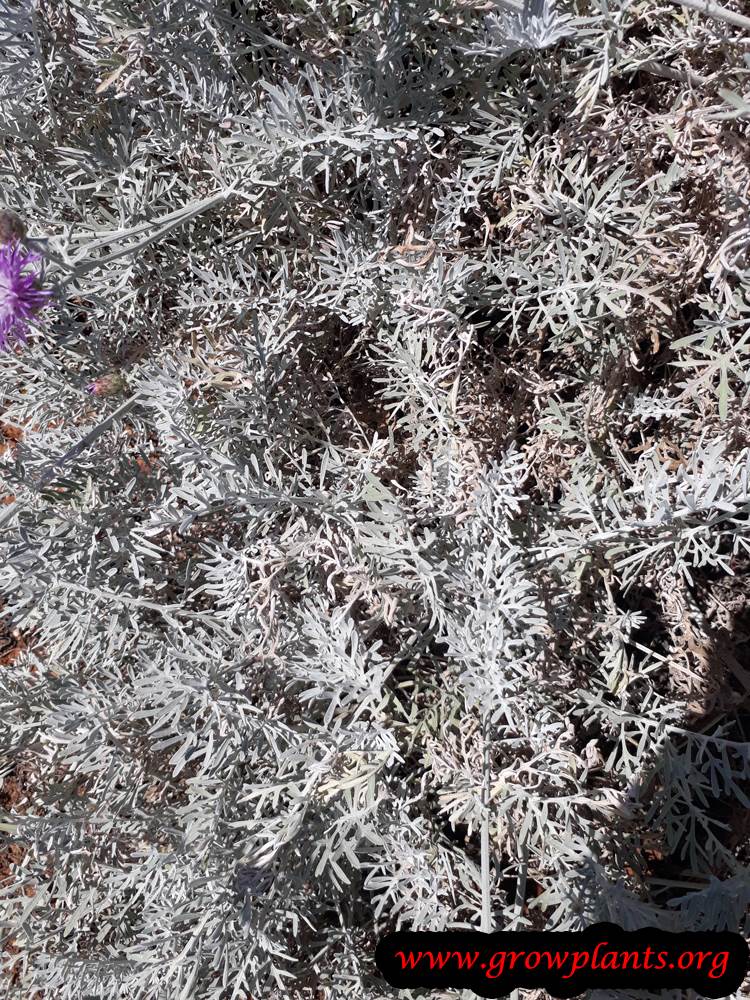
A light feeder: grown largely for its silvery, deeply lobed foliage as a ground cover, it holds its best color and form on modest, balanced feeding rather than rich, nitrogen-heavy soil.
Quick Fertilizing Specs
| Feeding Level | Light feeder |
|---|---|
| Main Nutrient Priority | Balanced feeding kept light to preserve tight, silvery foliage rather than push lush growth |
| Best Feeding Period | Spring through summer while actively growing |
| Organic Options | Compost worked into moist, well-drained soil |
| Reduce/Stop Feeding | Hold off feeding during the cooler part of the year when growth slows |
| Micronutrients | Usually met by a complete fertilizer; correct only a diagnosed deficiency |
| Soil pH | Tolerates a range of soils; prefers moist, well-drained conditions |
Feeding by Growth Stage
Spring growth of foliage and form
Support fresh growth of the gray, deeply lobed foliage that gives this ground cover its ornamental value.
| Nutrient direction | A light, balanced feeding paired with organic matter supports steady growth without softening the plant’s naturally tight, velvety foliage. |
|---|---|
| Timing | Spring, as new growth resumes. |
| Frequency | A single light feeding at the start of the growing season is usually enough. |
| Fertilizer types | A balanced complete fertilizer, Compost worked into the surrounding soil |
| Precautions | Keep feeding light; heavy or nitrogen-rich feeding can soften the tight, silvery foliage that gives this plant its ornamental appeal. |
Summer bloom
Support the purple, spiny-based flowers that appear above the silvery foliage mat.
| Nutrient direction | Balanced feeding, not a high-phosphorus bloom product, supports flowering without overwhelming the foliage display this plant is chiefly grown for. |
|---|---|
| Timing | Through the spring-to-summer bloom period. |
| Frequency | Feeding is rarely needed during bloom beyond the earlier spring application. |
| Fertilizer types | A balanced complete fertilizer, applied sparingly if at all |
| Precautions | Avoid extra feeding during bloom; this ground cover is valued as much for its foliage as its flowers, and modest nutrition keeps both in good form. |
Cool-season rest
Let growth slow through cooler weather, since this species is more tender than its hardier Centaurea relatives.
| Nutrient direction | None – withhold fertilizer while growth is slow through cooler weather. |
|---|---|
| Timing | During the cooler part of the year when growth naturally slows. |
| Frequency | No feeding at this stage. |
| Fertilizer types | No feeding at this stage; do not fertilize while growth is slow through cool weather. |
| Precautions | Withhold fertilizer now; feeding slow winter growth only wastes nutrients and can encourage tender new growth vulnerable to cold, especially given this species’ more tender hardiness range. |
Nutrient Deficiency Signs & Corrections
Foliage loses its usual gray tone, fading toward pale green or yellow, and growth thins out.
| Possible causes | low available soil nitrogen, nitrogen leaching from watering in moist, well-drained soil, several seasons without any soil amendment |
|---|---|
| Appears first on | older, lower foliage |
| What to check | recent feeding history, watering and drainage, how long since the bed was last amended |
| Possible correction | Apply a single light, balanced feeding and work compost into the surrounding soil. |
White powdery patches on the leaves alongside generally weak growth.
| Possible causes | poor air circulation in a dense ground-cover mat, humid conditions combined with inconsistent watering, overly rich feeding producing soft, susceptible growth |
|---|---|
| Appears first on | leaf surfaces, especially in dense mats |
| What to check | planting density and airflow, recent watering pattern, recent feeding amounts |
| Possible correction | Keep feeding light to avoid soft growth, thin dense areas for airflow, and water at the base. |
Foliage grows soft, greener, and looser than its typical tight, silvery form.
| Possible causes | excess nitrogen feeding softening naturally compact, silvery growth, too much shade for a plant that colors best in full sun, overwatering beyond this drought-tolerant plant’s needs |
|---|---|
| Appears first on | new growth across the plant |
| What to check | recent feeding amount and balance, hours of full sun the planting receives, watering frequency relative to this species’ low water needs |
| Possible correction | Cut back on feeding, move toward fuller sun where possible, and let the soil dry appropriately between waterings. |
Pruning, Training & Seasonal Maintenance
Velvet centaurea is grown mainly for its felted gray foliage as a spreading ground cover, so pruning priorities differ from the more flower-focused Centaurea species: pinching and shaping to keep the silvery mound dense and trailing matters as much as deadheading. It tolerates cutting back well, but because it is frost-tender (hardy only in zone 8–11a), pruning is best timed away from cold snaps — fresh cuts and new growth are more cold-sensitive than the established felted foliage.
Quick Pruning & Maintenance Specs
| Pruning Tolerance | High |
| Primary Pruning Window | Winter cutback in frost-free zones; otherwise spring after last frost |
| Secondary Maintenance Window | Spring–summer pinching/deadheading during bloom |
| Typical Frequency | Pinch tips every few weeks to maintain density; deadhead through bloom |
| Main Objective | Keep the silver-foliage mound dense and spreading rather than sparse and leggy |
| Young Plant Priority | Pinch tips early and often to build a full, low mound before it flowers |
| Mature Plant Priority | Trim back straggly trailing stems; optionally pinch out flower buds to keep the display foliage-focused |
| Best Tool Type | Precision snips |
| Avoid Heavy Pruning During | Cold spells — this species is frost-tender and fresh growth is more vulnerable than the established mound |
Pruning by Plant Age & Size
Newly Established
Pinch the growing tips of young plants once they take hold, to encourage low, dense branching rather than a single sprawling stem — important since this species is valued for foliage coverage.
Young / Formative
No formal training system; instead, repeated tip-pinching ("pinching for bushiness") is the main formative technique, shaping it into a tight, spreading mound as it establishes as ground cover.
Mature / Established
Trim back any stems that grow leggy or bare at the base to renew density. If the felted-gray-foliage look is the main goal, pinch out flower buds as they form so energy stays with foliage rather than bloom — a common practice with silver-leaved bedding Centaurea.
Seasonal Pruning Schedule
Pre-Growth/Early-Spring
Objective: refresh the mound after winter and encourage the season's new spreading growth.
Remove: any cold-damaged or dead stems once the frost risk has fully passed.
Do not remove: healthy felted foliage prematurely, since this species is slow to recover from cold damage.
Expected response: vigorous fresh gray growth once temperatures warm.
Ongoing Sanitary
Objective: maintain mound density and appearance.
Remove: spent flower heads (if flowering is allowed) and any straggly overextended trailing stems.
Expected response: denser regrowth and a neater ground-cover profile.
Special Growth to Remove
- Straggly/overextended trailing stems — trim to keep the mound even and prevent bare centers.
- Spent flower stems — remove if flowers were allowed to open, to tidy the display and prevent seed drop.
- Flower buds (optional) — pinch out early if the goal is a purely foliage-focused silver mound rather than the purple thistle-like blooms.
- Cold-damaged tips — remove after any frost event once regrowth begins, not immediately during cold weather.
Container & Small-Space Pruning
This species is well suited to containers and hanging displays because of its trailing habit; pinch more frequently in pots than in-ground plantings to prevent the limited root volume from supporting a few long bare runners instead of a full mound, and bring containers under cover before frost since it is not reliably hardy below zone 8.
Tools
- Precision snips — for routine tip-pinching and shaping of the soft, felted stems.
Tool Hygiene & Disease Risk
Routine — keep tools clean; the felted gray leaves are prone to rot in humid, poorly-drained conditions more than to transmissible disease, so hygiene focus should be on avoiding overhead watering rather than strict tool sterilization.
Cut Placement & Technique
Pinch or snip just above a leaf node to encourage two new shoots at the cut, which is what builds the dense mounding habit this species is grown for.
Heavy Pruning & Rejuvenation
Tolerates a hard cutback well once temperatures are reliably above frost; cut leggy growth back by half to renew density, expecting several weeks before the mound fills back in.
Post-Pruning Care
Water lightly after cutting back — this species prefers good drainage and overwatering fresh cuts increases rot risk. No extra feeding needed. Protect freshly pruned plants from cold snaps until new growth hardens off.
Common Pruning Mistakes
- Hard-pruning right before a cold snap, exposing tender fresh growth to frost damage.
- Letting the flowers dominate at the expense of the felted-foliage display this species is grown for, when bud-pinching would have kept it foliage-focused.
- Overhead-watering after pruning, which encourages rot in the wounded, densely felted foliage.
When NOT to Prune
Avoid pruning during or immediately before cold weather in marginal zones (8–9), since this species is frost-tender and fresh cuts/new growth are the most cold-vulnerable tissue.
Recommended Tools (by task)
- precision_snips — for tip-pinching and shaping the soft trailing stems to maintain a dense silver mound.
Propagation Guide
Centaurea gymnocarpa (velvet centaurea) is usually increased from stem cuttings, which keep its dense, silvery, deeply lobed foliage more reliable than seed-grown plants; seed and separating rooted trailing stems are useful alternatives. It roots readily and is Easy to propagate.
Quick Propagation Specs
| Best Propagation Method | Stem cuttings (semi-hardwood, non-flowering shoots) |
| Alternative Methods | Seed; separating rooted trailing stems |
| Propagation Difficulty | Easy |
| Seed True-to-Type | Mostly uniform, though leaf silveriness can vary somewhat in seedlings |
| Vegetative True-to-Type | Yes |
| Best Propagation Season | Cuttings in spring–summer; seed in spring |
| Cutting Rooting Time | A few weeks |
| Germination Temperature | About 18–24°C (64–75°F) |
| Seed Sowing Depth | Shallow, about 0.5 cm (¼ inch) |
Stem Cuttings
Cutting Type
Semi-hardwood tips from non-flowering shoots, a few nodes long.
Best Timing
Spring through summer during active growth.
Cutting Preparation
Trim just below a node and remove the lower leaves.
Rooting Setup
A free-draining, gritty mix in a warm, bright spot out of direct sun.
Rooting Hormone
Optional – may speed rooting but is not required for this relatively easy-rooting species.
Rooting Time
Typically a few weeks.
Division, Offsets, Pups & Suckers
Because it grows as a spreading ground cover, trailing stems can root where they touch soil; established mats may be lifted in spring and separated into already-rooted sections.
Bloom & Flower Guide
Quick Details
- Bloom Season: Spring and summer
- Time to First Bloom: As an evergreen perennial it usually blooms from the second year, or the first year if bought as an established plant
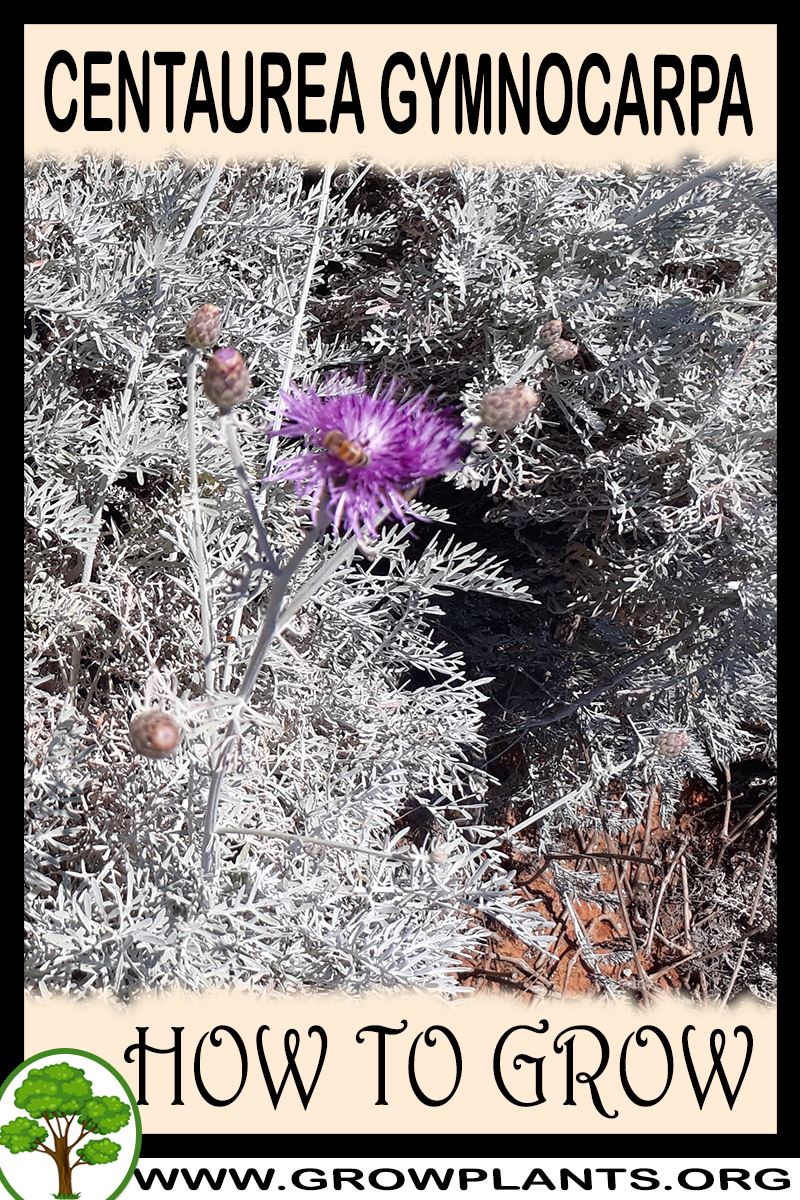
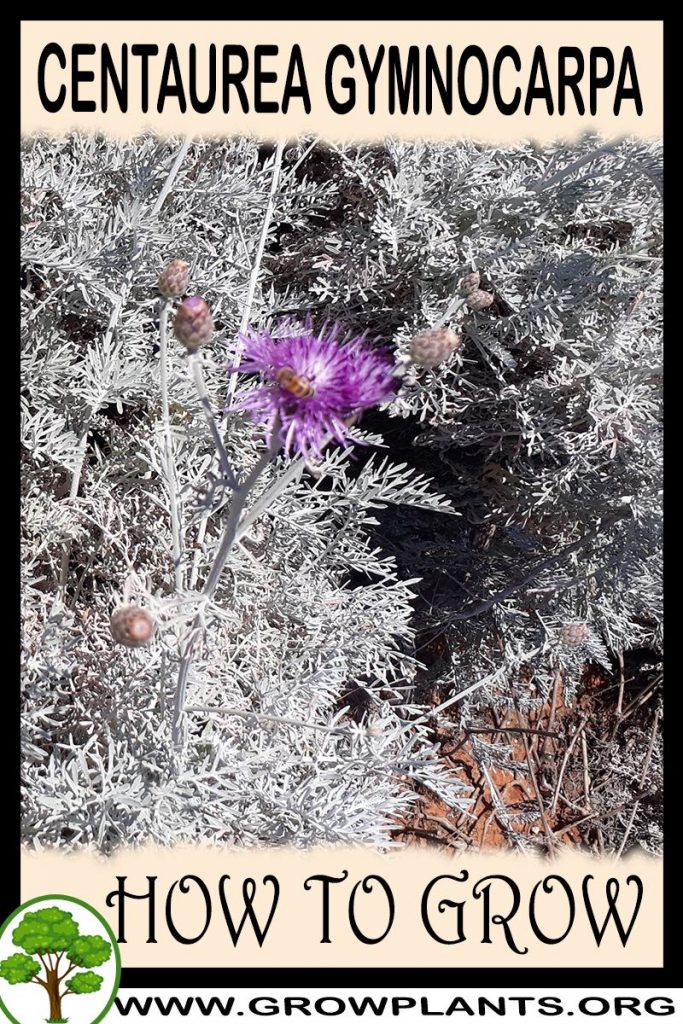
- Flower Appearance: Purple thistle-like heads; the fringed florets flare like little horns that split into needle-like segments, seated on a spiny green base
- Edibility: Ornamental; not eaten
Detailed Blooming Overview
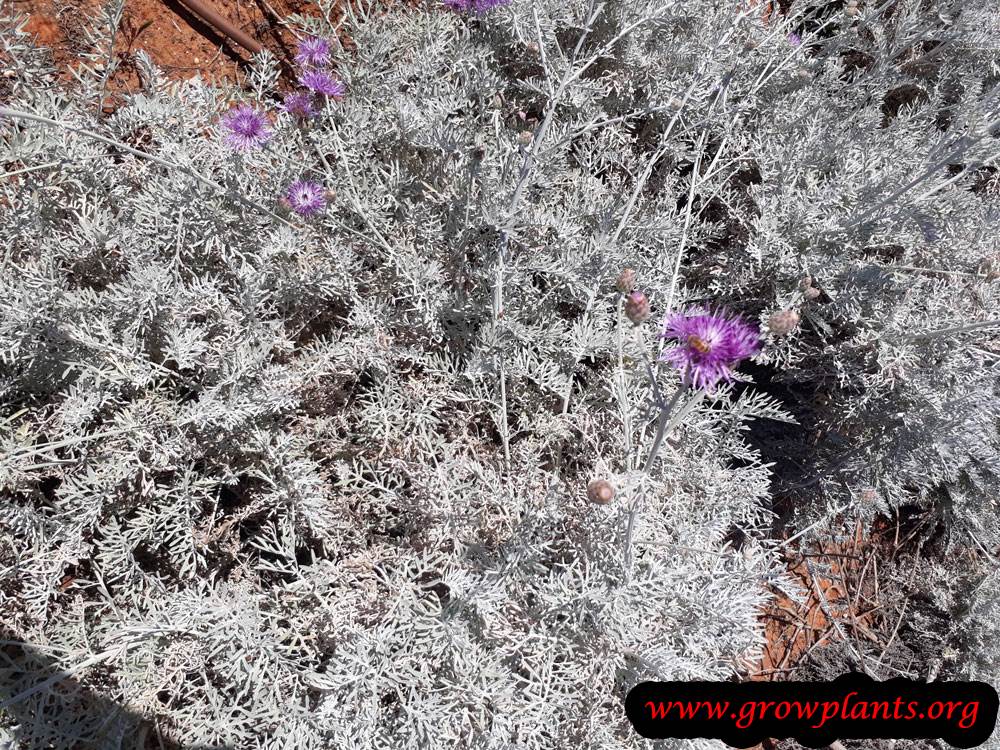
Velvet centaurea is grown above all for its striking silvery, deeply cut foliage. The purple thistle heads appear over spring and summer and are readily worked by bees.
Flower Characteristics
- Purple fringed florets on a spiny green base, held above silver-grey leaves.
Bloom Care & Thinning
- Managing the bloom: Deadhead spent heads; many gardeners trim flower stems to keep the focus on the silver foliage mound.
- Pollination: Pollinated by bees.
Pests, Diseases & Troubleshooting
Centaurea (knapweeds and cornflowers) are generally easy, drought-tolerant plants whose main problems are foliar diseases in humid weather-above all powdery mildew and rust-plus root and crown rot on heavy wet soils, and sap-sucking aphids. Grown lean, sunny and well-drained they are largely trouble-free, so management is mostly about airflow, drainage and tolerating minor cosmetic damage. Its silvery, felted foliage is especially prone to rot in wet or humid conditions, so sharp drainage is essential.
Quick Troubleshooting Overview
| Issue / Pest | Main Symptom | Primary Solution |
|---|---|---|
| Powdery mildew | White powdery coating on leaves, especially late season | Airflow, sun, avoid overhead water; sulphur/bicarbonate |
| Rust | Orange-brown pustules on leaf undersides | Remove affected leaves; airflow; sulphur if severe |
| Aphids | Colonies on buds/stems, honeydew, distorted growth | Water jet; encourage predators; insecticidal soap |
| Root & crown rot | Wilting, blackened crown, collapse on wet soil | Sharp drainage; avoid waterlogging; divide/replant healthy |
| Aster yellows | Green, deformed flowers, witches’-broom, stunting | Rogue out; control leafhoppers; no cure |
Common Pests & Management
- Aphids (Aphis / Uroleucon spp.):
- Symptoms: Colonies of soft aphids cluster on flower buds, stems and leaf undersides, sucking sap, distorting buds and new growth and leaving sticky honeydew and sooty mould; they can also spread aster yellows.
- Prevention & Control: Encourage ladybirds, lacewings and hoverflies, which usually control them; dislodge colonies with a water jet; treat persistent numbers with insecticidal soap or horticultural oil in the evening; control ants.
- Spider mites (Tetranychus urticae):
- Symptoms: Fine pale stippling and a dull, bronzed look to leaves with faint webbing, worst in hot, dry conditions and on drought-stressed plants.
- Prevention & Control: Keep plants watered in dry spells; hose foliage to knock back mites; remove badly affected leaves; horticultural oil or insecticidal soap if needed; conserve predatory mites.
- Thrips (Frankliniella spp.):
- Symptoms: Tiny slender insects rasp buds and petals, causing silvered flecking, distorted or discoloured flowers and occasional bud damage.
- Prevention & Control: Monitor with sticky traps; remove spent flowers and weeds that harbour them; encourage predators; insecticidal soap or spinosad where flower damage is significant.
- Weevils and plant bugs (Larinus / Lygus spp.):
- Symptoms: Larvae feed in flower heads and seeds while plant bugs cause distorted buds and spotting; several weevils are in fact deliberate biocontrol agents on weedy knapweeds.
- Prevention & Control: Tolerate on ornamentals, where damage is largely cosmetic; remove and destroy infested seed heads if self-seeding is unwanted; encourage general predators; targeted treatment is rarely justified.
- Slugs and snails (Deroceras / Cornu spp.):
- Symptoms: Irregular holes and slime trails on seedlings and soft new growth in damp conditions, mainly on young plants.
- Prevention & Control: Hand-pick after dark; remove hiding places; use grit or copper barriers; iron-phosphate pellets around vulnerable seedlings.
Diseases & Fungal Issues
- Powdery mildew (Golovinomyces cichoracearum):
- Symptoms: A white powdery coating on leaves and stems, most common in late season and in crowded, shaded or humid conditions; heavy infection dulls and distorts foliage and weakens the plant.
- Treatment & Management: Grow in full sun with good air movement and avoid crowding and heavy nitrogen; avoid overhead wetting; remove badly affected leaves; sulphur, potassium-bicarbonate or a light horticultural-oil spray controls it; cut back and clear debris in autumn.
- Rust (Puccinia spp.):
- Symptoms: Orange-brown to dark pustules on leaf undersides with yellow flecking above; heavy infection yellows and drops leaves and can distort growth.
- Treatment & Management: Remove and destroy affected leaves and clear debris; improve airflow and avoid overhead watering; sulphur fungicide for severe recurring infections; choose resistant material where available.
- Root and crown rot (Sclerotinia / Rhizoctonia / Phytophthora spp.):
- Symptoms: Plants wilt, the crown and stem base blacken and rot, and clumps collapse-especially on heavy, wet soils and where winter drainage is poor; white fluffy mould with black sclerotia signals Sclerotinia.
- Treatment & Management: Prevention through drainage is key: plant lean and sharply drained, and never waterlog; improve heavy soil and avoid mulch piled on crowns; divide congested clumps to keep centres open; remove and destroy rotted plants and surrounding soil.
- Aster yellows (Candidatus Phytoplasma):
- Symptoms: A leafhopper-spread phytoplasma causing green, deformed flowers (virescence), leafy phyllody, dense witches’-broom growth, stunting and yellowing; it is systemic and incurable.
- Treatment & Management: There is no cure-dig up and destroy symptomatic plants promptly to stop spread; control leafhopper vectors; remove weedy reservoir hosts; do not propagate from affected plants.
- Downy mildew / leaf spot (Peronospora / Cercospora spp.):
- Symptoms: Angular yellow patches with greyish growth beneath (downy mildew) or brown leaf spots in wet weather.
- Treatment & Management: Improve airflow and keep foliage dry; remove affected leaves and debris; copper fungicide only for severe, persistent infection.
Growing Difficulties & Abiotic Problems
- Root rot in heavy, wet soil:
- Cause & Symptoms: Centaurea want lean, well-drained ground; heavy, waterlogged or overwatered soil, especially over winter, suffocates roots and rots crowns, causing wilting and collapse.
- Correction Strategy: Plant in full sun on free-draining soil, adding grit to heavy ground; avoid overwatering and winter wet; raise beds where drainage is poor; keep mulch off the crowns.
- Flopping and lodging:
- Cause & Symptoms: Taller species grow soft and leggy in rich soil, part-shade or after rain and wind, then flop and open at the centre.
- Correction Strategy: Grow hard in sun on lean soil; avoid excess nitrogen; provide support or grow-through staking for tall types; cut back after the first flush to encourage compact re-growth.
- Self-seeding and spread:
- Cause & Symptoms: Several Centaurea self-seed freely or spread, and some (notably the knapweeds) are aggressive or noxious weeds in parts of the world.
- Correction Strategy: Deadhead before seed set to limit spread; remove unwanted seedlings; check regional invasive-species status and avoid planting listed noxious knapweeds where restricted.
What Helps — Products & Tools
Care is mostly cultural: full sun, lean free-draining soil, good spacing and autumn cleanup. Sulphur and potassium-bicarbonate control powdery mildew and rust; insecticidal soap and horticultural oil handle aphids, mites and thrips, with iron-phosphate pellets for slugs. Copper fungicide addresses leaf spot; there is no cure for aster yellows or established crown rot-drainage and sanitation are decisive.