Plant Profile & Key Characteristics
Also known as: African wintersweet, Dune poison bush, Hottentot's poison, Poison arrow plant, Wintersweet
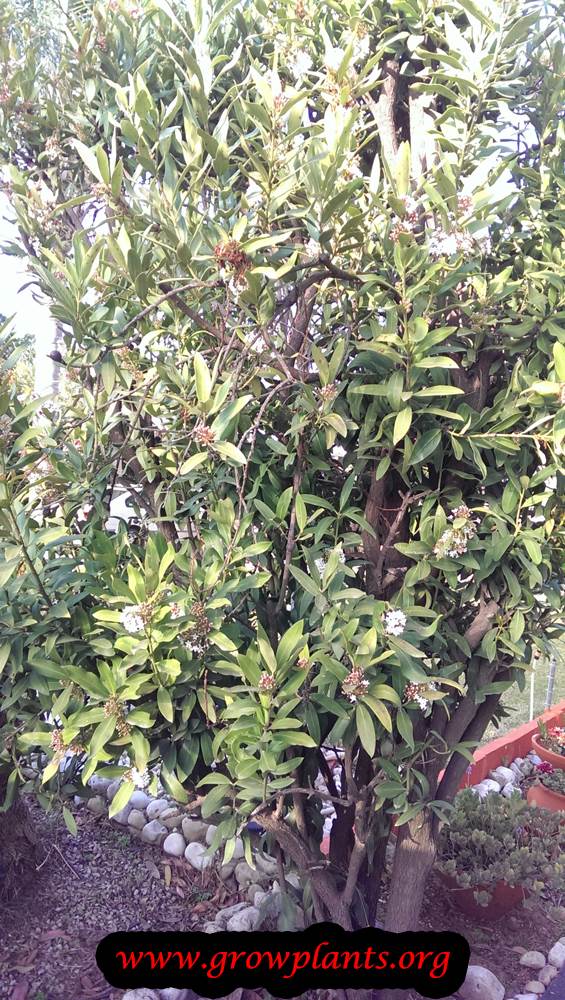
Overview: Acokanthera spectabilis (African wintersweet, poison arrow plant) is an evergreen shrub to small tree of 2–6 m, grown as an ornamental and hedge for its glossy foliage, fragrant flowers and coloured fruit. All parts are highly poisonous, so it must be sited with care.
Quick Specifications
| Specification | Attribute |
|---|---|
| Plant Type / Life Cycle | Perennial (evergreen shrub / small tree) |
| Foliage Type | Evergreen |
| Mature Size | H: 2–6 m (6–18 ft) |
| Growth Rate | Moderate |
| Toxicity | Highly toxic – all parts contain cardiac glycosides (used traditionally as an arrow poison); the fruit is NOT edible |
| Hardiness | USDA zone 10b+ |
Growth Form & Structure
- Height & Spread: 2–6 m as a large shrub or small tree; responds to pruning and can be grown as a hedge or in containers.
- Growth Habit & Form: Dense, bushy evergreen shrub or small tree.
- Lifespan & Maturity: Long-lived evergreen; slow-to-moderate to reach full size.
Anatomy & Physical Features
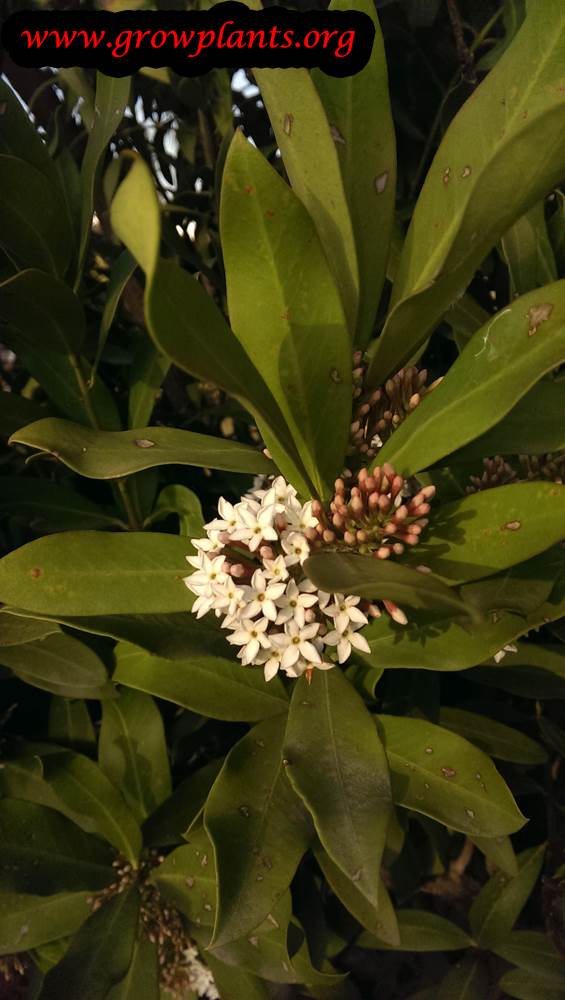
- Leaves & Foliage: Glossy green, elliptic leaves.
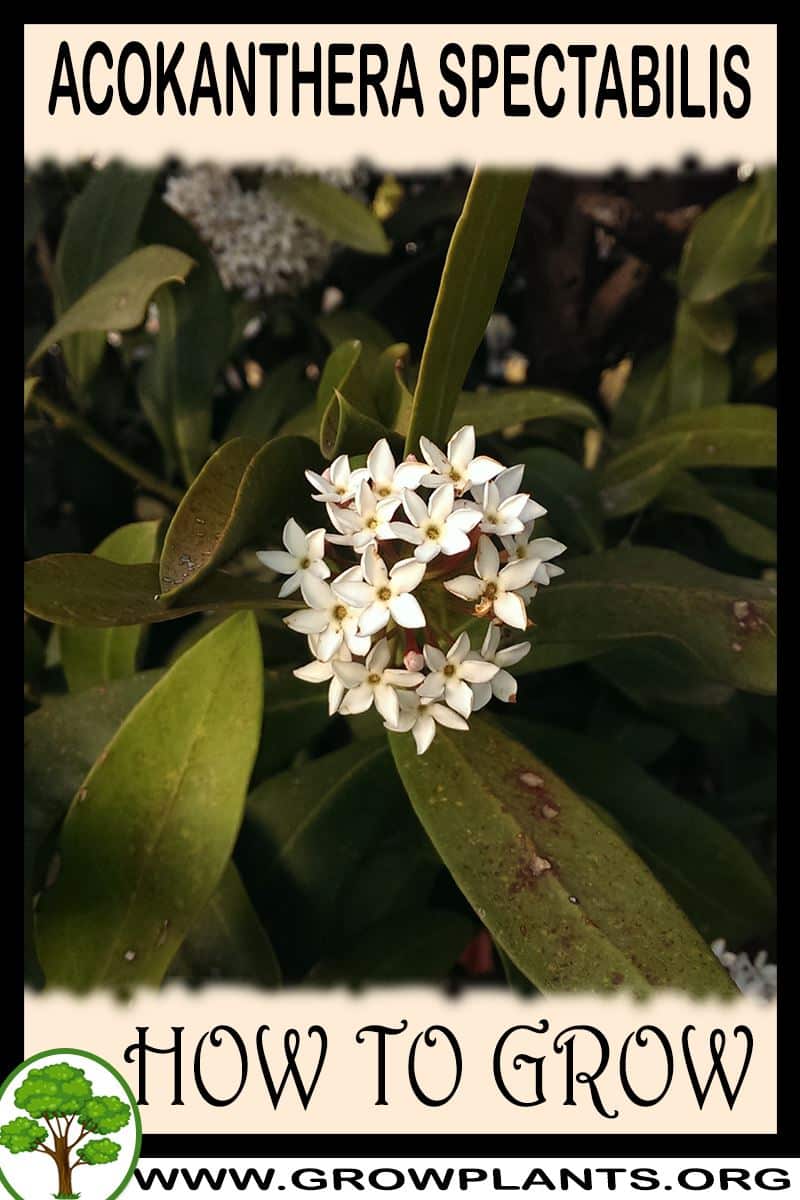
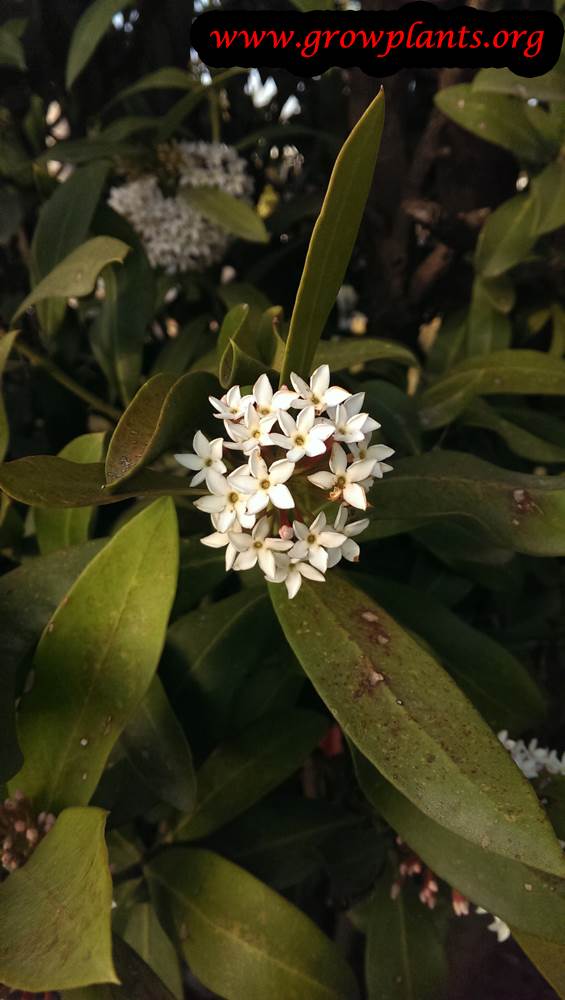
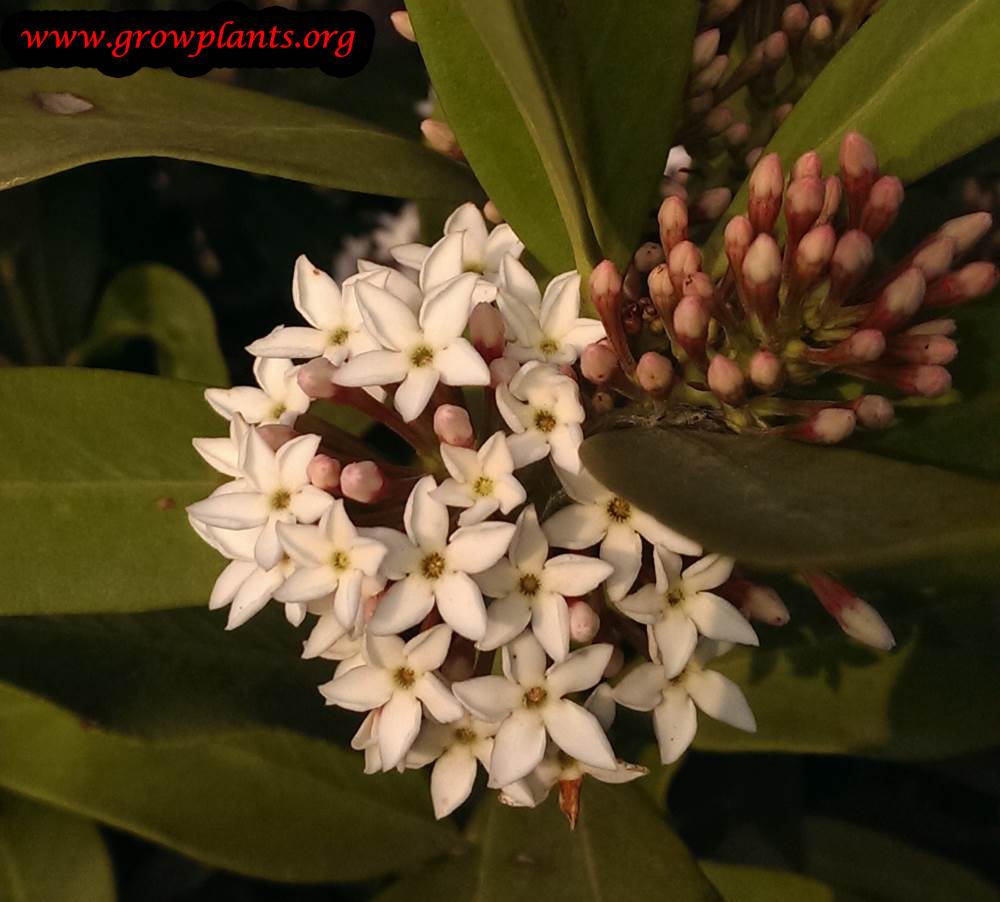
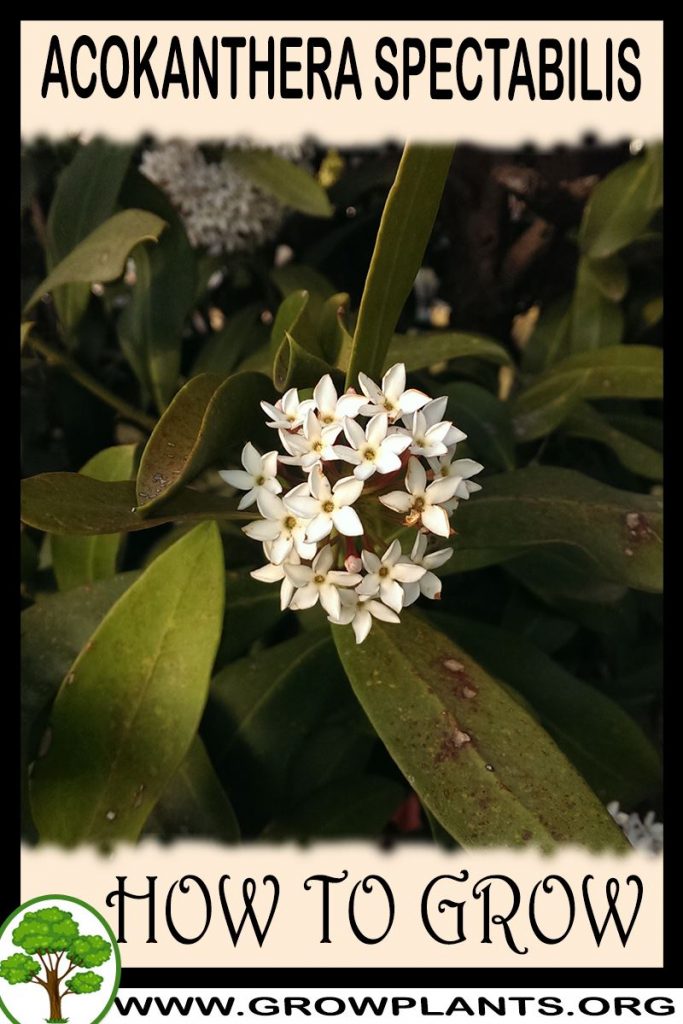
- Flower Characteristics: Fragrant white five-petalled star-shaped flowers in spring.
- Fruit Profile: Oval fruit ripening red to black – ornamental but poisonous and not edible.
Primary Uses & Landscape Value
- Functional & Ornamental Roles: Ornamental evergreen and fragrant hedge/screen plant – grown for foliage, flowers and fruit, but must be kept away from children, pets and livestock because of its toxicity.
Care Guide: Planting, Soil & Watering
Overview: Acokanthera spectabilis (Wintersweet) is a moderate-growing evergreen shrub for full sun that grows well in clay-loam soils and, once established, is fairly drought-tolerant. It needs only low to moderate water and, above all, soil that drains rather than stays wet.
Quick Care Requirements
| Requirement | Ideal Condition |
|---|---|
| Planting Season | Warm season — spring, summer or autumn |
| Growth Rate | Moderate |
| Soil Type | Clay-loam; tolerant, but must drain freely |
| Water Need | Low to moderate — drought-tolerant once established |
Planting & Establishment
- Best Planting Season: Plant in the warm season — spring, summer or autumn — giving it time to root in before cold or drought.
- How to Plant:
- Hole Preparation: Dig a hole a little wider than the root ball to loosen the surrounding soil.
- Soil Amendments: It grows happily in clay-loam; on heavy ground improve drainage with grit or organic matter to prevent the roots sitting wet.
- Planting Depth: Set the root ball level with the surrounding soil, keeping the stem base at the surface.
- Growth Speed & Expectations: Moderate, developing slowly into a dense evergreen shrub or small tree of around 2–6 m.
Soil, Watering & Drainage Care
- Soil Mix & Drainage Needs: Tolerant of clay-loam soils but needs those to drain; avoid waterlogged ground, and in containers use a free-draining mix.
- Watering Schedule & Technique:
- Young / Newly Planted: Water regularly to keep the soil lightly moist while the shrub establishes.
- Established: Water sparingly to moderately once established — it is fairly drought-tolerant and prefers the soil to dry between waterings.
- Seasonal Adjustments: A little more in summer heat; much less in cool or wet weather.
Climate, Light & Hardiness
Acokanthera spectabilis (African wintersweet) is a warm-climate shrub suited to Mediterranean, desert, subtropical, temperate, and tropical gardens, growing in full sun to half shade. It has essentially no cold tolerance and is reliably hardy outdoors only in USDA zone 10b and warmer.
Quick Climate Specifications
| Climate Zones | Mediterranean, Desert, Subtropical, Temperate, Tropical |
|---|---|
| USDA Hardiness Zones | 10b and warmer |
| Frost Tolerance | Low |
| Light Conditions | Full Sun to Half Shade |
Sunlight & Light Exposure
Optimal Light Setup
Full sun to half shade both suit this shrub; full sun generally supports the best flowering and fruiting.
Temperature Extremes & Hardiness
USDA Hardiness & Regional Limits
Reliably hardy only in USDA zone 10b and warmer, reflecting its need for essentially frost-free winters.
Frost Sensitivity
Frost-tender; freezing temperatures are likely to damage or kill the plant.
Growing in Pots, Balconies & Indoors
Bushman’s poison (Acokanthera spectabilis) is a 2-6 m (6-18 ft) evergreen tree or shrub that the grower grows in containers but not as a houseplant. It makes a handsome, drought-tolerant patio specimen while young – but every part is extremely poisonous, so site it with great care.
Quick Details
- Container Size: A large tub (30 L+ / 8 gal+) while young; it will eventually want the open ground
- Indoor Suitability: Not a houseplant – too large, and far too toxic to have in a living space
- Best Spot: Full sun to half shade – warm and bright
- Soil & Drainage: Free-draining mix; it is drought tolerant and dislikes wet feet
- Watering in Pots: Modest – let the surface dry between waterings; avoid overwatering
Indoors & On the Windowsill
- Safety first: All parts (and the milky sap) are extremely toxic – historically used as arrow poison. Never keep it where children or pets could reach it, and wash hands and tools after handling; do not grow it indoors.
- Houseplant limits: Not a houseplant – it is a large shrub or small tree and is unsuitable for indoor spaces on safety grounds alone.
On a Balcony or Patio
- Light & wind: A warm, sunny patio suits it; walls and paving reflect heat, so check moisture, and keep it well out of reach given its toxicity.
- Practicalities: Account for the weight of a full pot and make sure drainage water can run away freely without staining the balcony.
Choosing the Pot, Soil & Long-Term Care
- Pot & drainage: Use a pot with strong drainage holes and skip a standing-water saucer to avoid root rot; terracotta breathes and dries faster, while glazed or plastic holds moisture longer.
- Potting mix: Well-aerated and organic-rich – a quality potting mix, or peat/coir with perlite or vermiculite.
- Feeding: Potted plants use up their soil faster as nutrients leach out with each watering – feed lightly through the growing season.
- Repotting: Refresh the surface mix each year and pot on or divide every couple of years, trimming the roots lightly once it fills the container.
Fertilizing & Feeding
A tough, drought-tolerant evergreen shrub grown for its fragrant flowers, glossy foliage, and ornamental fruit; light, balanced feeding is enough to keep it looking good, whether grown as a specimen or a hedge.
Quick Fertilizing Specs
| Feeding Level | Light feeder |
|---|---|
| Main Nutrient Priority | Balanced feeding to support foliage density and fragrant flowering |
| Best Feeding Period | During the main spring growth and flowering period |
| Organic Options | Compost or well-rotted organic matter worked into the clay-loam planting area |
| Micronutrients | Usually supplied by a complete fertilizer; correct specific issues only when diagnosed |
| Soil pH | Adapts to a range of soils, including heavier clay-loam types, provided drainage is adequate |
| Reduce/Stop Feeding | Ease off feeding as growth slows outside the main spring-to-summer active period |
Feeding by Growth Stage
Spring flush of leaf and stem growth
Support fresh foliage and stem growth, whether the plant is grown as a specimen shrub, small tree, or hedge.
| Nutrient direction | A balanced, general-purpose fertilizer applied lightly to encourage even, healthy growth. |
|---|---|
| Timing | As new growth resumes in spring. |
| Frequency | A light feeding at the start of active growth is generally enough. |
| Fertilizer types | A balanced complete garden fertilizer, Compost or well-rotted organic matter |
| Precautions | In heavier clay-loam soil, confirm drainage is adequate before feeding, since waterlogged roots absorb nutrients poorly. |
Fragrant flowering and fruit set
Support the fragrant white flowers and the ornamental (non-edible) fruit that follows.
| Nutrient direction | Keep feeding light and balanced; heavy feeding is not needed to flower or fruit well. |
|---|---|
| Timing | Through the spring bloom period and into fruit development. |
| Frequency | Minimal additional feeding is usually needed once the spring application has been given. |
| Fertilizer types | A balanced complete garden fertilizer, applied sparingly |
| Precautions | Avoid excess nitrogen during bloom, which favors leafy growth over flowering and fruiting. |
Slower-growth rest period
Let this evergreen shrub coast through its slower-growing part of the year without pushing new growth.
| Nutrient direction | None – withhold fertilizer while growth is slow outside the main spring-to-summer period. |
|---|---|
| Timing | During the cooler or slower-growing months outside the main active season. |
| Frequency | No feeding at this stage. |
| Fertilizer types | No feeding at this stage – allow the plant to rest undisturbed |
| Precautions | Do not fertilize during the slow-growth period; resume only once active spring growth is clearly underway. |
Nutrient Deficiency Signs & Corrections
New leaves emerge yellow while the veins stay green.
| Possible causes | high soil pH limiting iron availability, heavy clay-loam soil with poor drainage, root stress from overly wet conditions |
|---|---|
| Appears first on | youngest leaves |
| What to check | soil pH, drainage in the clay-loam planting area, recent watering pattern |
| Possible correction | Correct pH toward a more favorable range and apply a chelated iron product per its label if chlorosis persists. |
Overall pale foliage color and noticeably slower shoot growth than expected.
| Possible causes | low soil nitrogen, poor soil organic matter, root competition in a dense hedge planting |
|---|---|
| Appears first on | older, lower leaves |
| What to check | recent feeding history, soil organic matter, plant spacing and root competition |
| Possible correction | Apply a balanced complete fertilizer or work in compost around the root zone. |
Yellowing and dieback of leaves or stems despite otherwise adequate feeding.
| Possible causes | poor drainage in heavy clay-loam soil, overwatering, root rot limiting nutrient uptake |
|---|---|
| Appears first on | whole plant, starting with lower or interior stems |
| What to check | soil drainage, watering frequency, root condition near the base of affected stems |
| Possible correction | Improve drainage, reduce watering frequency, and avoid feeding until active healthy growth resumes. |
Pruning, Training & Seasonal Maintenance
Acokanthera spectabilis is an evergreen shrub to small tree commonly grown as a hedge or screen, and it tolerates moderate to fairly hard pruning, including regular shearing when trained formally. Left as a specimen it needs only light shaping. The safest window is autumn to winter, after flowering finishes and before the spring growth flush that carries the next bloom, so structural or hedge-trimming cuts made then do not sacrifice the coming season’s flowers. All parts of this plant, especially the sap, are toxic, so pruning also carries a handling-safety element not present in most other species.
Quick Pruning & Maintenance Specs
| Pruning Tolerance | Moderate to High (higher when trained as a clipped hedge) |
| Primary Pruning Window | Autumn to winter, after flowering and before the spring growth flush |
| Secondary Maintenance Window | Light trims after the spring bloom on hedges kept more formally |
| Typical Frequency | One to two trims a year for hedges; occasional shaping for specimen shrubs |
| Main Objective | Maintain hedge density and screening value, or shape as a specimen shrub/small tree |
| Young Plant Priority | Tip-prune early to encourage low, bushy branching, especially for hedge use |
| Mature Plant Priority | Maintain density and shape; remove dead or crossing wood |
| Best Tool Type | Bypass secateurs and loppers for specimen shaping; hedge shears only if formally clipped as a hedge |
| Avoid Heavy Pruning During | The spring bloom period |
Pruning by Plant Age & Size
Newly Established
Remove only damaged growth in the first year; avoid heavy shaping until the plant is established.
Young / Formative
For hedge or screen use, pinch or tip-prune young plants to encourage low, dense branching from the base. For a specimen shrub or small tree, allow its natural multi-stemmed form with only light corrective shaping — no rigid leader training is needed.
Mature / Established
Maintain hedge density with routine trims, or keep a specimen’s natural shape with light annual shaping; remove dead, crossing or rubbing wood as it appears.
Seasonal Pruning Schedule
Dormant/Winter (post-flowering)
Objective: structural shaping or hedge trimming while the plant is between bloom cycles. Remove: dead, damaged or crossing wood, and excess growth to maintain hedge shape or specimen form. Do not remove: more than a moderate portion of the canopy in one session. Expected response: a vigorous spring flush that carries the next round of flowers. Flowering impact: flowers form on the new growth produced after this pruning, so this window does not sacrifice bloom the way pruning during active spring growth would.
Flowering & Fruiting Wood
Flowers form on new growth produced in the spring flush rather than on older persistent wood, so pruning in autumn/winter dormancy allows a full flowering flush to develop before bloom time; pruning during or just before the spring bloom removes developing flower buds and reduces that season’s display. The fruit is ornamental only and not edible (it is toxic), so fruit retention is not a pruning consideration here.
Structural Pruning & Training
For hedges, encourage lateral branching low down for a dense screen and keep the canopy full rather than thinned. For specimen shrubs, remove crossing or rubbing branches and thin an overly dense interior occasionally to improve airflow. Control height and spread with shaping cuts as needed for the intended screening or specimen size.
Container & Small-Space Pruning
Container growth is possible for this species; more frequent light shaping is needed to keep a potted specimen compact, since the confined root zone limits the natural size but not the plant’s branching vigor.
Tools
- Bypass secateurs for routine shaping cuts on a specimen shrub.
- Loppers for thicker structural branches.
- Hedge shears only where the plant is maintained as a formally clipped hedge or screen.
Because the sap is toxic, wear gloves and eye protection when pruning, and avoid touching your face until hands are washed.
Tool Hygiene & Disease Risk
Routine risk — clean, sharp tools are sufficient; no major transmissible pathogen is noted for this species. A densely sheared, unthinned hedge can trap moisture and encourage interior fungal dieback, so occasional selective thinning helps more than tool sterilization does here.
Cut Placement & Technique
Use heading cuts for formal hedge shape and thinning cuts for a natural specimen form; on larger structural cuts, cut just outside the branch collar and avoid flush cuts or long stubs.
Heavy Pruning & Rejuvenation
A leggy or overgrown hedge generally tolerates a hard renewal cutback in late winter, removing up to about a third of the growth to encourage denser regrowth from lower on the plant; expect reduced flowering the following season as the plant regrows rather than blooms.
Post-Pruning Care
Water normally after routine trims; after a hard renewal cut, watch the regrowth flush rather than fertilizing immediately. Collect and dispose of clippings carefully given the toxic sap, keeping them away from children, pets and livestock.
Common Pruning Mistakes
- Shearing or shaping too late, into the spring growth flush, which removes the developing flower buds.
- Handling cuttings without gloves given the toxic sap.
- Over-thinning a hedge grown for privacy screening, which reduces the density it is grown for.
When NOT to Prune
Avoid pruning during the spring bloom period, when cuts remove flowers or flower buds directly. Avoid heavy pruning during heat or drought stress. Handle all cut material with care due to the toxic sap.
Recommended Tools (by task)
- Specimen shrub, routine shaping, small branches — bypass_secateurs: clean cuts for light structural work.
- Specimen or hedge, thicker structural wood — loppers: extra leverage for branches too thick for hand secateurs.
- Formal hedge or screen, regular density trimming — hedge_shears: only appropriate because this species is specifically grown and maintained as a clipped hedge plant.
Pruning Troubleshooting
| Problem | Possible Cause | What to Check | Corrective Action |
| Reduced flowering after pruning | Pruned too late, into the spring flush, removing developing buds | Timing of the last trim relative to spring bloom | Shift pruning to the autumn/winter dormant window instead |
| Interior dieback or fungal spotting in a dense hedge | Overgrown, unthinned hedge trapping moisture | Airflow and shade inside the hedge, especially after wet weather | Thin selectively to open the interior rather than only shearing the surface |
| Bare, hollow lower stems on a hedge | Repeated shallow surface shearing without renewal cuts | Look for a hollow center and bare base below a green shell | Apply a hard renewal cut to force new lower branching |
Propagation Guide
Acokanthera spectabilis is most practically grown from semi-hardwood stem cuttings, which root reasonably well and avoid the slower, more variable process of raising seedlings; seed is a workable alternative when fresh. Propagation is moderate in difficulty rather than easy, mainly because of slower rooting and the plant’s milky, toxic sap.
Quick Propagation Specs
| Best Propagation Method | Semi-hardwood stem cuttings |
| Alternative Methods | Seed (best when fresh) |
| Propagation Difficulty | Moderate |
| Seed True-to-Type | Usually true-to-type for this species |
| Vegetative True-to-Type | Yes |
| Best Propagation Season | Spring to summer, in step with the plant’s warm-season planting window |
| Cutting Rooting Time | Rooting is often slow, typically taking several weeks to a couple of months |
| Germination Temperature | Warm, roughly 21–27°C (70–80°F) |
| Seed Sowing Depth | Just cover the seed lightly |
Growing from Seed
Seed Handling & Viability
Use fresh seed where possible; viability in this genus tends to decline once seed dries out or is stored long-term.
Sowing Season
Spring to summer, matching the plant’s warm-season growth period.
Sowing Depth & Orientation
Sow shallowly, just covering the seed.
Germination Conditions
Warm temperatures around 21–27°C (70–80°F) with consistent moisture; germination can be slow and uneven.
Germination Time
Variable, often several weeks; be patient and keep the mix from drying out.
Stem Cuttings
Cutting Type
Semi-hardwood tip cuttings.
Best Timing
Spring through summer, during active growth.
Cutting Preparation
Take cuttings and allow the cut surface to dry briefly before inserting, since the plant exudes a toxic milky latex; wear gloves during preparation, as the whole plant is poisonous.
Rooting Setup
A free-draining, sandy propagation mix with warmth and humidity.
Rooting Hormone
Optional; may help speed and even out rooting in this genus.
Rooting Time
Several weeks to a couple of months.
Bloom & Flower Guide
Quick Details
- Bloom Season: Spring
- Flower Appearance: Fragrant white, five-petalled, star-shaped flowers in tight clusters
- Edibility: Highly toxic – every part contains potent cardiac poisons; never eat any part of the plant, flower or fruit
Detailed Blooming Overview
African wintersweet is grown for its glossy leaves and its clusters of sweetly fragrant, star-shaped white flowers. Beautiful as it is, this is a dangerous plant: all parts contain powerful cardiac glycosides – the source of a traditional arrow poison – so it must never be eaten and should be handled with care.
Flower Characteristics
- White, five-petalled, star-shaped flowers.
- Sweetly fragrant.
- Borne in tight clusters among the glossy leaves.
Bloom Care & Thinning
- Pollination: The fragrant flowers attract insect pollinators.
- Handling: Wear gloves when pruning and keep the sap off skin and eyes.
- Safety: All parts are highly poisonous – keep well away from children, pets and livestock, and never eat any part.
Pests, Diseases & Troubleshooting
Overview: Wintersweet or bushman’s poison (Acokanthera spectabilis, family Apocynaceae) is a tough, drought-hardy evergreen shrub that is largely pest-free; its main issues are the sap-suckers typical of oleander relatives (oleander aphid, scale, mealybug, whitefly and spider mite) with the sooty mould that follows their honeydew, plus root rot in wet soil. Note: every part is highly poisonous – wear gloves and keep tools and trimmings away from people and pets.
Quick Troubleshooting Overview
| Issue / Pest | Main Symptom | Primary Solution |
|---|---|---|
| Oleander aphid | Bright yellow aphid colonies with honeydew on new shoots/buds | Water jet, insecticidal soap, encourage predators |
| Scale insects | Brown or grey bumps on stems/leaves; honeydew and sooty mould | Horticultural oil, prune out heavy infestations, control ants |
| Mealybugs | White cottony tufts in leaf axils; honeydew | Alcohol swab/soap, horticultural oil, control ants |
| Sooty mould | Black sooty film over leaves (grows on pest honeydew) | Control the sap-suckers producing honeydew; wash foliage |
| Root rot | Wilting, dieback and dark roots in wet, heavy soil | Improve drainage, water less, plant in free-draining soil |
Common Pests & Management
- Oleander aphid (Aphis nerii):
- Symptoms: Bright yellow aphids with black legs mass on soft new shoots, flower buds and stems (a signature pest of Apocynaceae), leaving sticky honeydew and sooty mould and distorting growth.
- Prevention & Control: Dislodge with a jet of water, treat persistent colonies with insecticidal soap or horticultural oil, and encourage ladybirds, lacewings, hoverflies and parasitic wasps. Wear gloves, as the sap is toxic.
- Scale insects (Coccus / Saissetia / Hemiberlesia spp.):
- Symptoms: Flat brown, black or grey bumps along stems, twigs and leaf veins that do not brush off; soft scales excrete honeydew that blackens with sooty mould, and heavy infestations cause dieback.
- Prevention & Control: Prune out heavily encrusted wood, scrape off light infestations, and apply horticultural oil to smother crawlers, repeating to catch generations. Control the ants that farm and protect scale.
- Mealybugs (Planococcus citri):
- Symptoms: White, cottony, waxy clusters in leaf axils, on shoot tips and stems, with honeydew and sooty mould.
- Prevention & Control: Spot-treat with rubbing alcohol on a cotton bud, spray insecticidal soap or horticultural oil, and control ants; keep plants unstressed and encourage predators.
- Whiteflies (Aleurodes / Bemisia spp.):
- Symptoms: Small white flies rise when the plant is disturbed; nymphs on leaf undersides cause yellowing and honeydew.
- Prevention & Control: Use yellow sticky traps and insecticidal soap on the undersides; encourage natural enemies and remove badly affected leaves.
- Spider mites (Tetranychus urticae):
- Symptoms: Fine stippling, bronzing and faint webbing on leaves in hot, dry, dusty conditions.
- Prevention & Control: Hose down dusty foliage, keep the plant watered, and treat outbreaks with insecticidal soap or a light horticultural oil on the undersides.
Diseases & Fungal Issues
- Sooty mould (Capnodium spp.):
- Symptoms: A black, soot-like fungal film coating leaves and stems; it grows on the honeydew excreted by aphids, scale, mealybug and whitefly rather than infecting the plant directly, but blocks light.
- Treatment & Management: Control the underlying sap-sucking pests (and the ants that farm them) to cut off the honeydew supply; wash or wipe the mould off foliage once the pests are gone.
- Fungal leaf spot (Cercospora / Colletotrichum spp.):
- Symptoms: Brown or dark spots and blotches on the leaves in warm, wet, humid conditions.
- Treatment & Management: Remove affected leaves, improve airflow, and avoid overhead watering; this tough shrub rarely needs fungicide, though copper can be used for persistent spotting.
- Phytophthora root & collar rot (Phytophthora spp.):
- Symptoms: Yellowing, wilting, branch dieback and poor vigour with darkened, rotted roots, in wet, heavy or poorly drained soil.
- Treatment & Management: Prevention is essential: plant in free-draining soil, avoid overwatering and waterlogging, and do not mulch heavily against the stem. There is no reliable cure once established.
Growing Difficulties & Abiotic Problems
- Overwatering / root rot:
- Cause & Symptoms: A drought-tolerant shrub that yellows, wilts and rots when kept too wet or planted in heavy, poorly drained soil.
- Correction Strategy: Water only when needed once established, plant in free-draining soil, and avoid soggy sites; it prefers to run on the dry side.
- Iron chlorosis:
- Cause & Symptoms: Yellowing leaves with green veins on very alkaline soils.
- Correction Strategy: Improve soil with organic matter, correct extreme pH where practical, and apply chelated iron for a quick fix.
- Cold / frost damage:
- Cause & Symptoms: Blackened, wilted growth after frost on this frost-tender subtropical shrub.
- Correction Strategy: Site in a warm, sheltered, frost-free position or grow in a container to move under cover; protect young plants from cold.
- Toxicity handling:
- Cause & Symptoms: All parts contain potent cardiac-glycoside toxins; sap, leaves, fruit and prunings are dangerous to people and pets, and smoke from burning is hazardous.
- Correction Strategy: Always wear gloves when pruning or handling, keep cuttings and fruit away from children and animals, never burn the prunings, and wash up afterwards.
What Helps – Products & Tools
This is a tough, low-maintenance shrub that seldom needs spraying: free-draining soil prevents root rot, and controlling the honeydew-producing sap-suckers prevents sooty mould. Keep insecticidal soap and horticultural oil for oleander aphid, scale, mealybug, whitefly and mites, ant control to stop them farming pests, and chelated iron for chlorosis. Given the plant’s high toxicity, always wear gloves and handle prunings with care.