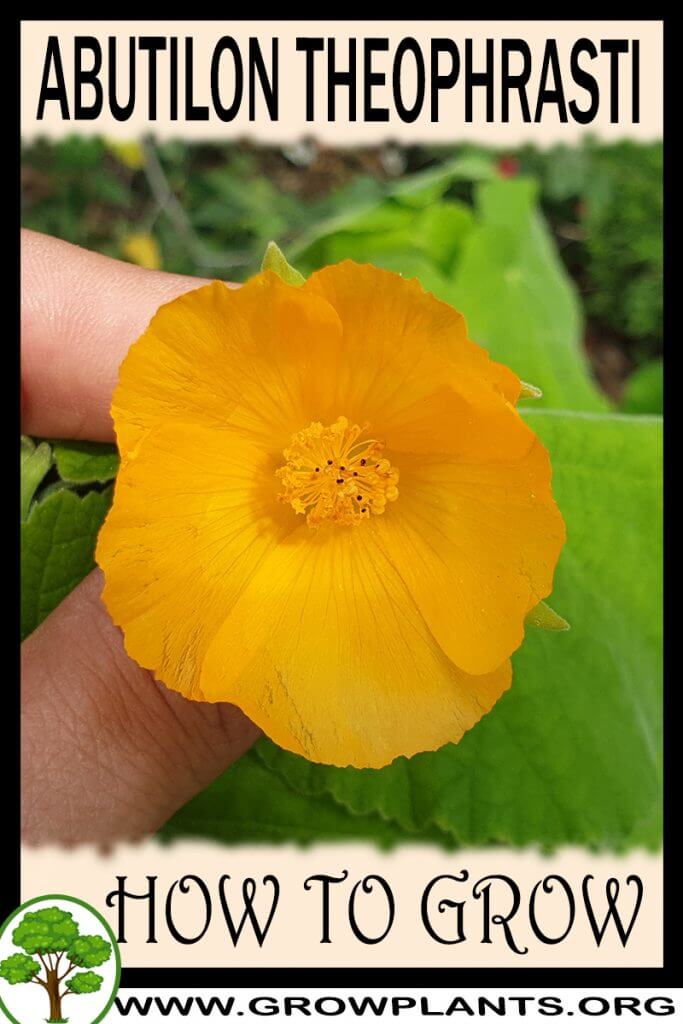
Plant Profile & Key Characteristics
Overview: Abutilon theophrasti (velvetleaf), 50–100 cm (20–40 in) tall, is a fast-growing, often annual mallow grown as an ornamental and used medicinally. It is a vigorous, potentially invasive plant with soft velvety leaves and yellow bowl-shaped flowers.
Quick Specifications
| Specification | Attribute |
|---|---|
| Plant Type / Life Cycle | Annual (perennial in warm climates) |
| Foliage Type | Frost-tender; grown as an annual, or evergreen in warm climates |
| Mature Size | 50–100 cm (20–40 in) tall |
| Growth Rate | Fast |
| Root System | Taproot |
| Toxicity | Non-toxic |
| Hardiness | USDA zone 11+ as a perennial, 5–9 grown as an annual |
Growth Form & Structure
- Height & Spread: Erect plant to 50–100 cm (20–40 in) tall; can be grown in containers.
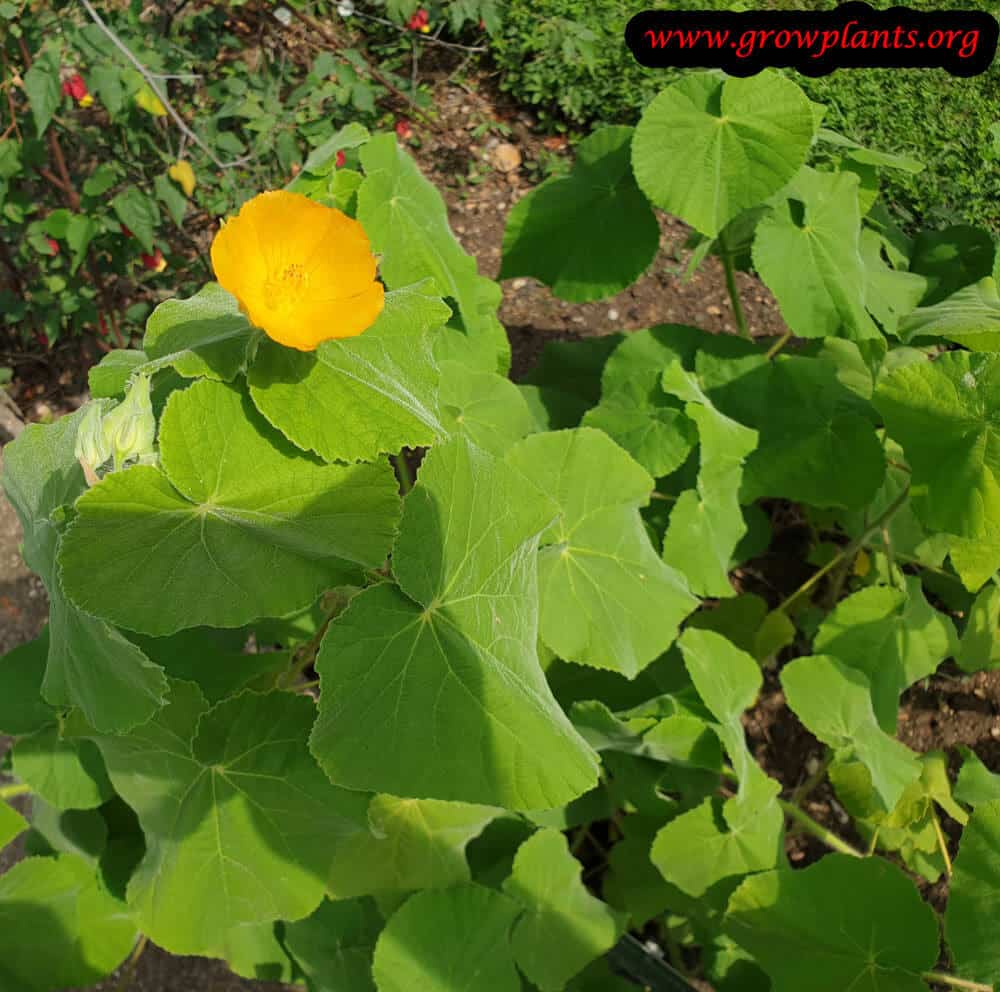
- Growth Habit & Form: Upright, softly hairy annual shrub; vigorous and can become invasive.
- Lifespan & Maturity: Completes its cycle rapidly in one season, self-seeding freely.
Anatomy & Physical Features
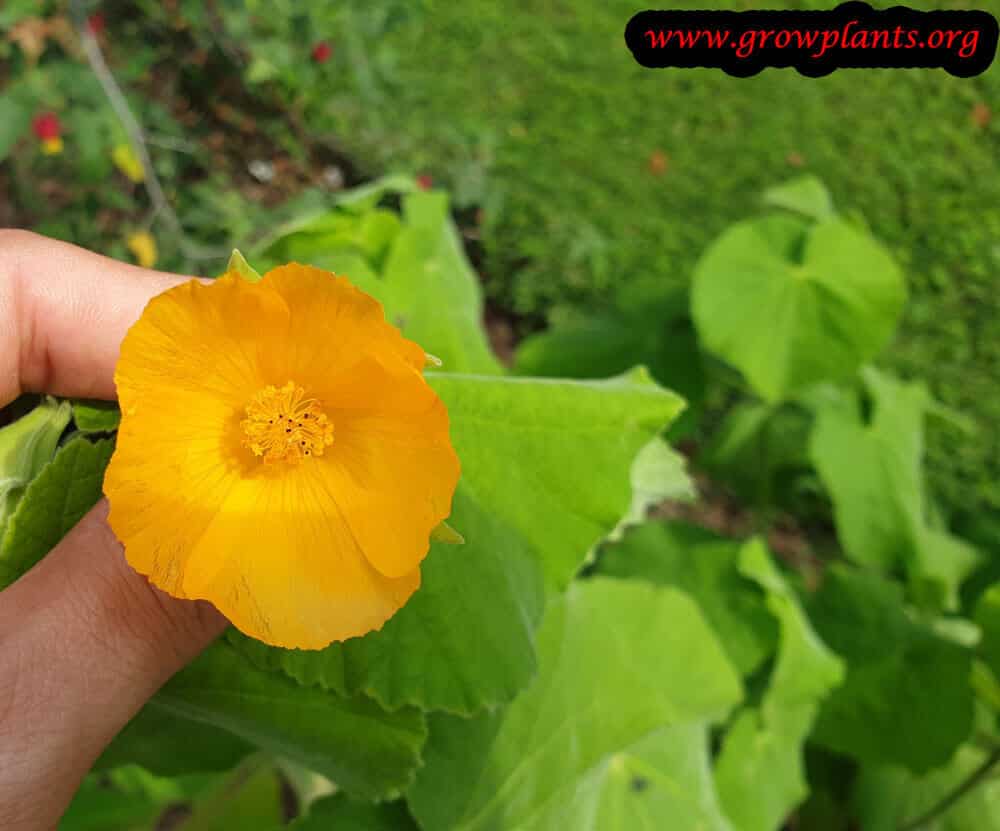
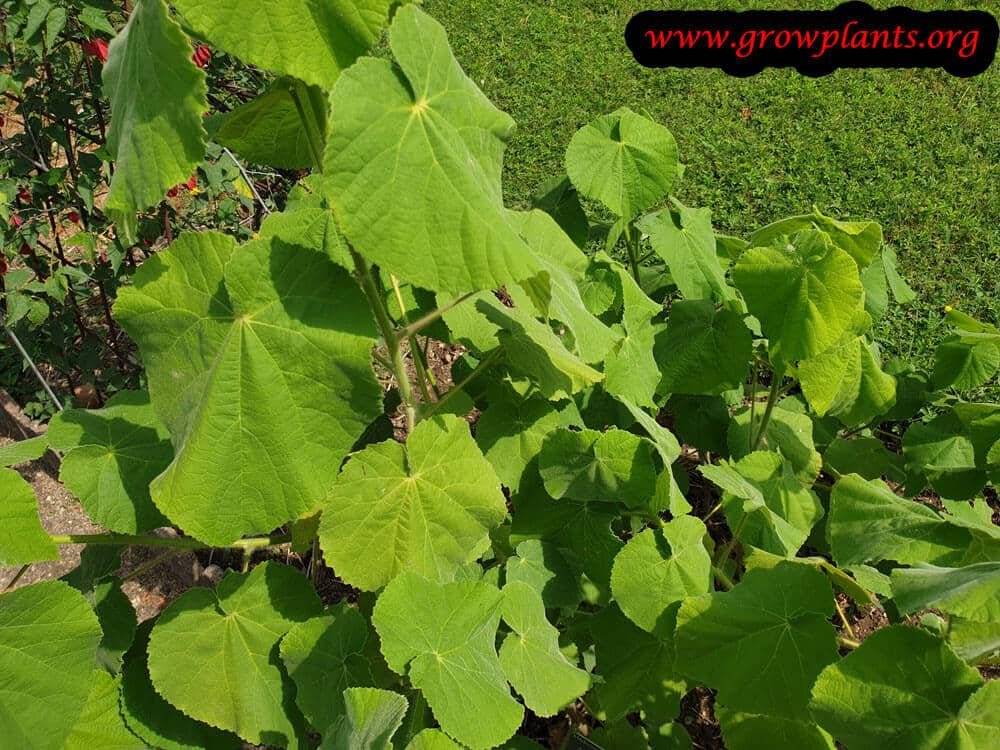
- Leaves & Foliage: Large, soft velvety, hand-shaped and deeply lobed green leaves, sometimes with yellow markings.
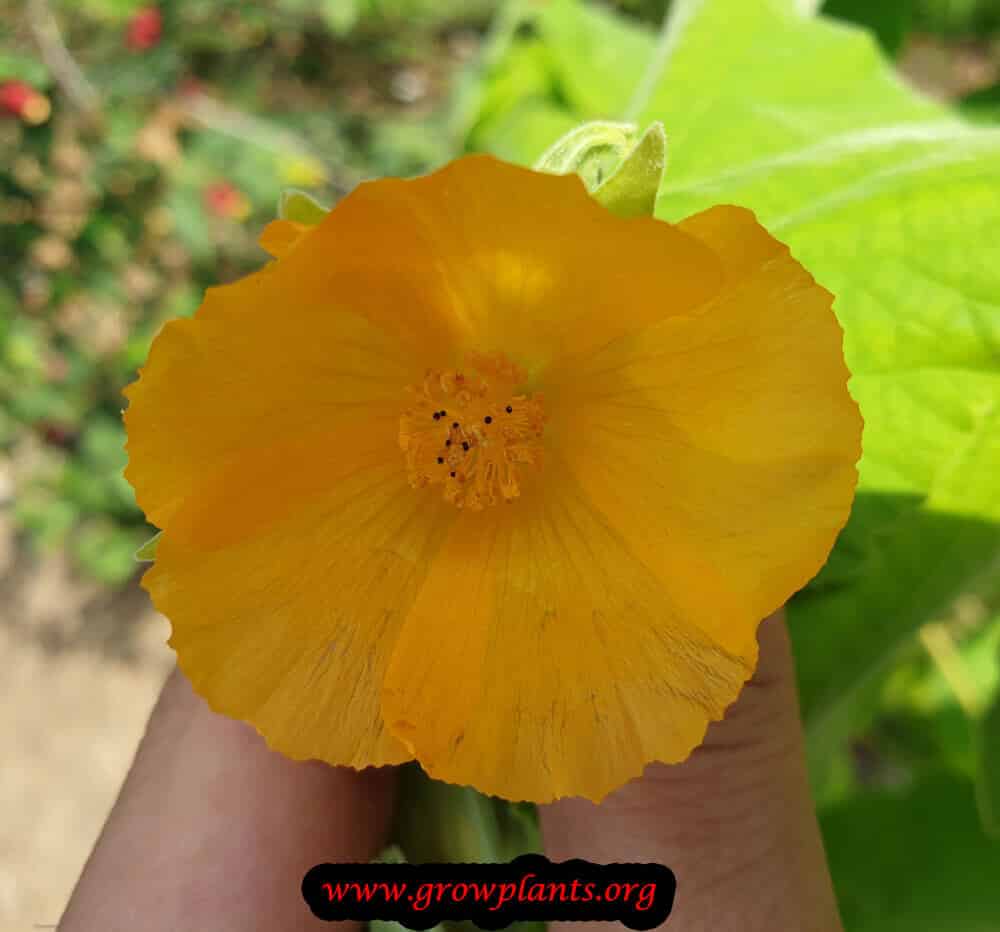
- Flower Characteristics: Yellow bowl-shaped flowers with a rounded cluster of central stamens.
Primary Uses & Landscape Value
- Functional & Ornamental Roles: Grown ornamentally and used medicinally; note its weedy, invasive tendency where it naturalises.
Care Guide: Planting, Soil & Watering
Overview: Velvetleaf (Abutilon theophrasti) is a fast-growing flowering shrub for full sun to half shade that thrives in rich, fertile, well-draining soil with steady moisture. It grows vigorously and can be invasive, so site it with care.
Quick Care Requirements
| Requirement | Ideal Condition |
|---|---|
| Planting Season | Through the warm season (spring to autumn); in spring after frost where grown as an annual |
| Growth Rate | Fast |
| Soil Type | Rich, fertile, well-draining soil |
| Water Need | Moderate to High — keep the soil moist through the growing season, with good drainage |
Planting & Establishment
- Best Planting Season: Plant in the warm season (spring through autumn). Grown as a perennial in frost-free zones (11+) or as an annual in cooler areas (zones 5–9), where it should go out in spring after the last frost. It self-seeds readily and can become invasive, so contain spent seed heads.
- How to Plant:
- Hole Preparation: Dig a hole a little wider than the root ball and at the same depth, so the plant sits at its original level.
- Soil Amendments: Work compost or well-rotted organic matter into the backfill for a rich, fertile bed that still drains freely.
- Planting Depth: Set the plant so the root collar sits at soil level — do not bury the stem.
- Growth Speed & Expectations: Fast — it establishes and grows quickly, so allow space and keep an eye on self-seeding.
Soil, Watering & Drainage Care
- Soil Mix & Drainage Needs: Wants rich yet free-draining soil; in containers use a fertile, free-draining potting mix with ample drainage holes.
- Watering Schedule & Technique:
- Young / Newly Planted: Keep the soil evenly moist while the roots establish.
- Established: Water regularly to keep the soil moist during active growth, letting only the surface dry between waterings; ensure excess water drains away freely.
- Seasonal Adjustments: Water more in summer heat and active growth; reduce in cooler weather to avoid soggy roots.
Climate, Light & Hardiness
Abutilon theophrasti (velvetleaf) is an adaptable, sun-loving plant that behaves as a true perennial only in essentially frost-free climates, while in cooler temperate regions it completes its life cycle in a single season before winter frost kills it. It grows best in full sun to half shade across subtropical, Mediterranean, temperate, and tropical climates.
Quick Climate Specifications
| Climate Zones | Subtropical, Mediterranean, temperate, and tropical climates |
|---|---|
| USDA Hardiness Zones | Perennial in zone 11 and warmer; commonly grows and completes its cycle as an annual through zones 5–9, where winter frost kills the top growth |
| Frost Tolerance | Low |
| Light Conditions | Full sun to half shade |
Sunlight & Light Exposure
Optimal Light Setup
Full sun gives the strongest growth and best flowering; half shade is also tolerated.
Direct Sun Requirement
Grows and flowers well in full, direct sun.
Shade & Heat Management
Half shade is tolerated without apparent issue; the source data does not indicate any particular heat-stress sensitivity.
Best Exposure/Orientation
Open, sunny beds or field-type conditions suit it best.
Temperature Extremes & Hardiness
USDA Hardiness & Regional Limits
Hardy as a true, longer-lived perennial only in zone 11 and warmer, essentially frost-free conditions. Across zones 5–9 it is grown and persists as an annual, completing growth, flowering, and seed set before winter frost ends the season.
Cold Damage & Winter Protection
Freezing temperatures kill the top growth; because it is treated as an annual outside zone 11 and warmer, winter protection is not typically attempted.
Frost Sensitivity
Frost-sensitive - the first hard autumn frost typically ends the growing season in temperate climates.
Extreme Heat Tolerance
Well suited to warm-season heat, consistent with its subtropical-to-tropical native range and its fast-to-medium growth rate.
Frost-Free Growing Season
Where it is grown as an annual (zones 5–9), it needs a full frost-free warm season to grow, flower, and set seed before autumn frost arrives.
Growing in Pots, Balconies & Indoors
Abutilon theophrasti (velvetleaf) is a fast, upright annual reaching 50-100 cm (20-40 in). It is not a houseplant – it needs full sun and open space – but it will grow in a large pot outdoors. Note the grower flags it as invasive, so containing it in a pot and preventing seeding is wise.
Quick Details
- Container Size: A large pot to support its fast, upright growth
- Indoor Suitability: Not a houseplant – it needs full sun
- Best Spot: Full sun to half shade outdoors
- Soil & Drainage: Ordinary well-drained potting mix
- Watering in Pots: Average to plenty; keep it from drying out in a pot
Indoors & On the Windowsill
- Not indoors: The grower marks it unsuitable as a houseplant – it is a sun-loving annual weed that will not thrive in room light.
- Seasonal: As an annual it completes its life in one season; there is nothing to overwinter.
- Note: The grower flags it as invasive – grow it in a contained pot and remove seed heads before they ripen to prevent spread.
On a Balcony or Patio
- Light & wind: Give it the sunniest spot; the tall stems may need staking on an exposed balcony. Pots dry fast in sun, so check moisture in warm weather.
- Practicalities: Deadhead to stop self-seeding, since it spreads readily.
Choosing the Pot, Soil & Long-Term Care
- Pot & drainage: A large pot with strong drainage holes; skip a standing-water saucer.
- Potting mix: Ordinary free-draining potting mix.
- Feeding: Potted plants exhaust and leach nutrients faster than those in the ground, so feed lightly during active growth – more often than you would in open soil.
- Repotting: Not needed for a single-season annual – simply resow.
Fertilizing & Feeding
A moderate feeder that grows fast in rich soil: keep it fed with a balanced fertilizer through its long spring-to-autumn bloom, then let it coast once growth slows.
Quick Fertilizing Specs
| Feeding Level | Moderate feeder |
|---|---|
| Main Nutrient Priority | Balanced feeding with adequate nitrogen to fuel its fast, leafy growth and long bloom run |
| Best Feeding Period | Spring through autumn while the plant is actively growing and flowering |
| Organic Options | Compost or rich organic matter worked into the soil |
| Reduce/Stop Feeding | Ease off feeding as growth slows going into cooler weather |
| Micronutrients | Usually met by a complete fertilizer in rich soil; correct only diagnosed issues |
| Soil pH | Tolerates a wide range in rich garden soil |
Feeding by Growth Stage
Spring establishment and growth
Build vigorous stem and leaf growth as the plant gets going for the season.
| Nutrient direction | A balanced complete fertilizer with adequate nitrogen supports the fast, bushy growth this plant is known for. |
|---|---|
| Timing | As new growth begins in spring. |
| Frequency | A feeding at the start of active growth, with rich soil supporting the plant between applications. |
| Fertilizer types | A balanced complete fertilizer, Compost or other organic matter |
| Precautions | This is a vigorous, fast grower that can turn weedy; avoid pushing it with excess nitrogen beyond what a balanced feed provides. |
Extended summer-into-autumn bloom
Sustain the long run of yellow bowl-shaped flowers through summer and into autumn.
| Nutrient direction | A balanced fertilizer maintains steady flowering without forcing soft, weak growth. |
|---|---|
| Timing | Through the summer bloom period and into autumn while flowering continues. |
| Frequency | An occasional balanced feeding to sustain flowering over this extended bloom window. |
| Fertilizer types | A balanced complete fertilizer |
| Precautions | Avoid overfeeding, which favors leafy growth over flowering and can worsen this plant’s tendency to spread aggressively. |
Cool-season rest
Let the plant coast through cool weather without pushing new growth.
| Nutrient direction | None – withhold fertilizer while growth is dormant or minimal. |
|---|---|
| Timing | Once cool weather slows or stops growth at the end of the season. |
| Frequency | No feeding at this stage. |
| Fertilizer types | No feeding at this stage; do not fertilize until active growth resumes. |
| Precautions | Do not fertilize during this rest; feeding a non-growing plant wastes nutrients and can encourage salt buildup. |
Nutrient Deficiency Signs & Corrections
Older leaves turn pale green to yellow and overall growth loses its usual vigor.
| Possible causes | low available soil nitrogen, nitrogen leaching after heavy watering or rain, thin, low-organic-matter soil |
|---|---|
| Appears first on | older, lower leaves |
| What to check | recent feeding history, soil organic matter, watering and drainage patterns |
| Possible correction | Apply a balanced fertilizer with adequate nitrogen and build up soil organic matter. |
New leaves come in yellow between the veins while the veins themselves stay green.
| Possible causes | high or alkaline soil pH tying up iron, waterlogged or compacted soil limiting root function, root stress from transplant or damage |
|---|---|
| Appears first on | newest leaves |
| What to check | soil pH, drainage and soil compaction, recent root disturbance |
| Possible correction | Correct pH where practical and apply a chelated iron product per its label. |
Leaf edges scorch or brown and flowering weakens despite otherwise healthy-looking growth.
| Possible causes | low soil potassium, heavy, sustained watering that leaches nutrients, an overly nitrogen-heavy feeding history |
|---|---|
| Appears first on | older leaf margins |
| What to check | recent fertilizer balance, watering frequency and drainage, flowering vigor over recent weeks |
| Possible correction | Switch toward a balanced fertilizer and confirm drainage is not washing nutrients away. |
Pruning, Training & Seasonal Maintenance
Velvetleaf is a fast-growing, soft-stemmed annual or short-lived plant, and it tolerates frequent light trimming rather than needing a formal cutting schedule. Pruning here is almost entirely cosmetic – shaping the plant and keeping it from sprawling – and can be done any time new growth appears leggy. Because the species self-seeds aggressively (it is flagged as invasive), removing spent flower and seed stalks before the seed pods ripen is the single most useful cut you can make, more important than any structural work.
Quick Pruning & Maintenance Specs
| Pruning Tolerance | High – soft new growth responds quickly to cutting back |
| Primary Pruning Window | Anytime during active growth, spring through autumn |
| Typical Frequency | Informal, as needed (not a fixed seasonal event) |
| Main Objective | Shape/size control and seed-head removal to limit self-seeding |
| Young Plant Priority | Pinch growing tips to build a bushier habit |
| Mature Plant Priority | Cut back leggy stems; remove flower/seed stalks before pods mature |
| Best Tool Type | Hand snips / secateurs |
| Avoid Heavy Pruning During | Peak summer heat stress or immediately after transplanting |
Pruning by Plant Age & Size
Newly Established
Leave alone except to remove any damaged growth; let the plant root in before any shaping cuts.
Young / Formative
No structural training system is needed – this is a soft subshrub, not a framework tree or vine. Pinch the growing tips once or twice to encourage a bushier, more compact habit.
Mature / Established
Cut back sprawling or leggy stems by up to one-third to refresh the shape, and keep removing spent flower stalks through the bloom period so seed pods do not set and drop.
Special Growth to Remove
- Spent flower stalks and developing seed pods – remove before they ripen; this is the key control point given the plant’s invasive tendency
- Damaged, yellowing or lower leaves as they decline
Structural Pruning & Training
Minimal: just cut back floppy or overly long stems to keep a compact outline. There is no woody canopy to thin, so density management is not a concern.
Container & Small-Space Pruning
In pots, pinch more frequently than in-ground plantings since container plants still grow fast but have less room – regular tip pinching keeps the habit tidy rather than letting it stretch.
Tools
- Precision snips – for pinching tips and deadheading
- Bypass secateurs – for cutting back thicker basal stems on a mature plant
Tool Hygiene & Disease Risk
Routine: clean, sharp tools are sufficient. No transmissible disease risk is noted for this species beyond common aphids, which are a pest issue rather than a tool-hygiene one.
Cut Placement & Technique
Pinch or cut just above a leaf node to encourage branching from that point; there is no branch collar or bark-tear risk to manage on this soft-stemmed plant.
Post-Pruning Care
Water normally after cutting back; watch new flushes of soft growth for aphids, which are drawn to fresh tissue.
Common Pruning Mistakes
- Letting seed heads mature and drop, which fuels the plant’s invasive spread
- Over-shaping into a rigid, formal outline – the species naturally has a loose, informal habit
When NOT to Prune
Hold off on shaping cuts immediately after transplanting until the plant is rooted in. Otherwise there is no strict seasonal restriction; the main caution is not skipping seed-stalk removal during the flowering period.
Recommended Tools (by task)
- Precision snips – pinching soft tips and deadheading flower/seed stalks
- Bypass secateurs – cutting back thicker stems on a mature, leggy plant
Propagation Guide
Velvetleaf is propagated almost entirely from seed, which comes true to type since the species is not a cultivated hybrid; where it is grown as an annual, fresh seed needs to be sown each cycle to keep the planting going. Germination is generally easy once the seed’s hard coat is addressed, making this an Easy plant to start from seed.
Quick Propagation Specs
| Best Propagation Method | Seed |
| Propagation Difficulty | Easy |
| Seed True-to-Type | Yes |
| Best Propagation Season | Spring through summer/autumn planting window |
Growing from Seed
Dormancy & Pre-Sowing Treatment
Abutilon theophrasti seed has a hard, water-impermeable seed coat typical of the mallow family, which can keep unscarified seed dormant for a long time; lightly nicking or sanding the seed coat, or soaking seed briefly before sowing, generally improves and speeds germination.
Sowing Season
Sow in spring through summer, in line with the plant’s spring/summer/autumn planting window.
Germination Conditions
Sow in rich soil with average to generous moisture in a full-sun to half-shade spot.
Stem Cuttings
Cutting Type
Where seed is not wanted or a particular plant is being kept going as an annual, soft stem cuttings can be used as a quick vegetative alternative, though this is not the standard method for the species.
Rooting Setup
Root cuttings in a moist, well-drained medium with average watering, out of harsh direct sun until roots form.
Rooting Hormone
Not required, though a rooting hormone can modestly speed and improve rooting consistency.
Bloom & Flower Guide
Quick Details
- Bloom Season: Spring, summer and autumn
- Flower Appearance: Bowl-shaped yellow flowers with a rounded cluster of stamens at the centre, sometimes veined in other tones
- Edibility: Grown as an ornamental and traditional medicinal plant; the flowers are not a recognised edible flower, so treat them as ornamental only.
Detailed Blooming Overview
A member of the mallow family, Abutilon theophrasti opens open-faced, bowl-shaped yellow flowers from spring right through to autumn. Each bloom shows the family’s signature central column of stamens, and some flowers carry fine veining in contrasting shades.
Flower Characteristics
- Bowl or cup shape, mostly yellow, occasionally with contrasting veins.
- A rounded cluster of stamens sits at the centre.
Bloom Care & Thinning
- Encouraging flowers: Full sun and warmth bring the best and longest display.
- Managing seed: The plant sets seed very freely and can self-sow widely, so deadhead spent flowers if you want to limit its spread.
Bloom Health & Protection
- Aphids and whitefly: Both are drawn to soft new growth and buds; insecticidal soap or neem oil keeps the flowering shoots clean.
Fruit & Uses
Safety note first: velvetleaf is not a mainstream food crop and the site does not document it as edible – the notes below reflect a minor, historical/traditional food use in parts of Asia, not a recommended everyday vegetable or grain. Where it has been eaten, it is the seed that is used most, either as an occasional roasted or boiled snack or ground into flour; young leaves are used only sparingly as a cooked green.
Quick Edible Specs
| Edible Parts | Seeds (main); young leaves (minor, occasional use) |
|---|---|
| Main Use(s) | Roasted/boiled snack seed, seed flour or hot cereal; occasional cooked leaf green |
| Eaten Raw or Cooked | Unripe seed sometimes eaten raw as a snack; ripe seed and leaves should be cooked |
| Preparation Required | Cook (boil or roast ripe seed; cook leaves) – use only small amounts |
| Harvest Season | Late summer to autumn, as seed pods mature; leaves can be picked while the plant is actively growing |
| Storage | Dried seed stores well in a cool, dry container |
| Safety/Toxicity Caveat | Minor/occasional food only – avoid large quantities (reported to cause digestive upset and other adverse effects), some people develop skin irritation from handling the plant, and use is not advised during pregnancy or breastfeeding |
Seeds, Pods & Nuts
The seeds develop inside the plant’s distinctive cup-shaped seed capsules through late summer and autumn. Immature (still soft, unripe) seed has traditionally been nibbled raw as an occasional snack, with a mild, slightly nutty flavour. Fully ripe, hardened seed is not eaten raw – it is boiled or roasted first, and can be ground into a flour or cooked as a hot-cereal-style grain substitute. Only small quantities are appropriate; this is a foraged/traditional-use seed, not a cultivated grain crop.
Leaves & Greens
Young, tender leaves have occasionally been used as a cooked potherb in traditional Asian cuisine, similar to other wild greens. They are not eaten raw in quantity and should always be cooked before eating. Use sparingly – this is a minor, occasional green rather than a everyday leafy vegetable.
Harvesting
Pick young leaves while the plant is actively growing, before they toughen. Allow seed capsules to mature and dry on the plant through late summer into autumn before collecting seed; ripe capsules split open and release the hard seed, which can then be stored dry.
Preparation, Uses & Safety
Lead with caution: this is a minor/traditional food use, not a mainstream crop, and the site itself lists the plant only as ornamental/medicinal. Ripe seed should always be boiled or roasted before eating in any quantity, and leaves should be cooked. Some people experience an allergic skin reaction from contact with the plant, and eating large amounts of seed or leaf has been associated with digestive upset and other adverse effects, so intake should stay small and occasional. Use during pregnancy or breastfeeding is not advised. A traditional medicinal use of the plant is also noted in some sources, but no health claims are made here.
Pests, Diseases & Troubleshooting
Overview: Abutilon are soft-wooded Malvaceae shrubs whose tender leaves and long flowering draw sap-sucking pests – whiteflies above all, plus aphids, mites, scale, and mealybugs – especially under glass or in still, warm air. Velvetleaf is a coarse annual Malvaceae (a noxious crop weed rather than an ornamental) but carries the same family pest and disease picture. They are otherwise easy-going; good airflow, steady but not soggy watering, and a cultural, organic-first routine keep them clean and blooming.
Quick Troubleshooting Overview
| Issue / Pest | Main Symptom | Primary Solution |
|---|---|---|
| Whiteflies | Clouds of tiny white flies under leaves; yellowing and honeydew | Sticky traps, Encarsia; insecticidal soap/neem on leaf undersides |
| Aphids | Curled sticky shoot tips with clustered soft-bodied insects | Water jet, ladybirds; insecticidal soap if heavy |
| Spider mites | Fine stippling, bronzing and webbing in hot, dry air | Raise humidity, hose foliage; horticultural oil if severe |
| Mealybugs / scale | White cottony or brown bumps in leaf joints; honeydew, sooty mold | Dab with alcohol, prune out; horticultural oil in the evening |
| Rust / leaf spot | Orange pustules or brown spots on leaves in humid conditions | Airflow, remove leaves; sulfur or copper if persistent |
| Root rot | Wilting and leaf drop in cold, wet soil | Free-draining mix, ease off watering, warmth |
Common Pests & Management
- Whiteflies (Trialeurodes vaporariorum / Bemisia tabaci):
- Symptoms: Clouds of tiny white moth-like flies erupt from leaf undersides when disturbed; scale-like nymphs suck sap, yellow and weaken foliage, and coat leaves with sticky honeydew and sooty mold. Abutilon is a classic whitefly magnet, especially under glass.
- Prevention & Control: Monitor and thin adults with yellow sticky traps, and release Encarsia formosa parasitoids in greenhouses. Rinse leaf undersides, keep plants unstressed, and apply insecticidal soap, neem, or horticultural oil to the undersides where nymphs feed, repeating to catch new hatches.
- Aphids (Aphis / Myzus spp.):
- Symptoms: Clusters of green, black, or peach-coloured soft-bodied insects on tender tips and flower buds, curling and distorting the new growth; honeydew, sooty mold, and ants follow.
- Prevention & Control: Knock colonies off with water, encourage ladybirds and lacewings, and avoid overfeeding with nitrogen. Treat persistent outbreaks with insecticidal soap or neem in the cool of the evening to protect pollinators.
- Spider mites (Tetranychus urticae):
- Symptoms: Fine pale stippling and bronzing of leaves with delicate webbing on undersides in hot, dry, indoor, or greenhouse air; heavy feeding scorches and drops foliage.
- Prevention & Control: Raise humidity, hose the foliage, and keep plants watered to break the dry conditions mites love. Introduce predatory mites under glass and use horticultural oil or a labelled miticide only for stubborn infestations.
- Mealybugs (Planococcus / Pseudococcus spp.):
- Symptoms: White, cottony, waxy masses tucked into leaf axils, stem joints, and undersides; they suck sap, stunt growth, and drip honeydew that blackens with sooty mold.
- Prevention & Control: Dab colonies with an alcohol-soaked swab, prune out heavily infested tips, and isolate new or affected plants. Encourage natural enemies and follow up with insecticidal soap or horticultural oil, repeating to reach protected nymphs.
- Soft & armored scale (Coccus / Saissetia spp.):
- Symptoms: Immobile brown, tan, or waxy bumps along stems and leaf veins; soft scales excrete honeydew and sooty mold, and heavy colonies thin and weaken shoots.
- Prevention & Control: Scrape or rub off light colonies, prune out encrusted wood, and support parasitic wasps and lady beetles. Smother survivors with horticultural oil timed to the crawler stage, applied in the evening.
- Caterpillars (Various Lepidoptera larvae):
- Symptoms: Ragged chewed holes and notches in leaves, with frass pellets and occasional rolled or tied leaves; damage is usually cosmetic on an established plant.
- Prevention & Control: Handpick larvae and eggs, encourage birds and parasitic wasps, and tolerate light feeding. Spot-treat heavier outbreaks with Bt or spinosad, sparing pollinators and beneficials.
Diseases & Fungal Issues
- Rust (Puccinia spp.):
- Symptoms: Yellow flecks on the upper leaf with powdery orange-to-brown pustules beneath, common on Malvaceae in humid, crowded conditions; heavy rust yellows and drops leaves.
- Treatment & Management: Remove and destroy affected leaves, improve airflow and spacing, and water at the base to keep foliage dry. Sulfur or a copper/labelled fungicide checks persistent rust, applied early on unstressed plants.
- Fungal leaf spot (Cercospora / Alternaria spp.):
- Symptoms: Brown to grey angular spots that may merge and cause leaf yellowing and drop, usually after wet weather or overhead watering.
- Treatment & Management: Clear infected and fallen leaves, water at soil level, and space for airflow. Copper fungicide protects new growth during prolonged wet spells but is rarely needed on a well-grown plant.
- Powdery mildew (Erysiphe / Podosphaera spp.):
- Symptoms: White powdery patches on leaves and shoots in crowded, shaded, or humid-but-dry conditions, dulling and distorting foliage.
- Treatment & Management: Improve light and airflow, avoid crowding, and clear debris. Sulfur, potassium bicarbonate, or horticultural oil controls it when applied early.
- Root & stem rot (Phytophthora / Pythium / Botrytis):
- Symptoms: Wilting, blackening at the base, and collapse in cold, wet, poorly drained soil; grey mold (Botrytis) can also rot spent flowers and soft growth in damp, still air.
- Treatment & Management: Use a free-draining mix, water only when the surface dries, and give warmth and airflow; remove faded flowers and dead tissue. There is no cure for advanced root rot – improve conditions and take healthy cuttings to start over.
- Abutilon mosaic virus (Abutilon mosaic begomovirus):
- Symptoms: Bright yellow mottling and vein-clearing on the leaves; note that in some ornamental variegated Abutilon this pattern is a stable, harmless graft-transmissible feature, not a sign of a sick plant.
- Treatment & Management: Where mosaic reflects true infection, whitefly control and removal of genuinely declining plants is the answer; propagate only from healthy, vigorous stock. Do not cull the deliberately variegated ornamental forms, whose ‘mosaic’ is prized.
Growing Difficulties & Abiotic Problems
- Leaf & bud drop:
- Cause & Symptoms: Sudden shifts in temperature, drought, cold draughts, or a big change in light make Abutilon shed leaves and drop buds abruptly.
- Correction Strategy: Keep watering and temperature steady, shelter from cold draughts, and acclimatise plants gradually when moving them; recovery follows once conditions stabilise.
- Frost tenderness:
- Cause & Symptoms: Abutilon are frost-tender; freezing blackens soft growth and can kill the plant outright, and cold, wet winters cause dieback.
- Correction Strategy: Grow in containers to move under cover, or shelter and mulch in mild areas; overwinter frost-free and prune out cold-damaged wood only once new growth resumes.
- Iron chlorosis:
- Cause & Symptoms: New leaves yellow between green veins on alkaline soils or in tired potting mix where iron is unavailable.
- Correction Strategy: Feed regularly through the growing season, refresh or acidify potting mix, and apply chelated iron for a quick correction; keep the root zone healthy and not waterlogged.
- Overwatering & edema:
- Cause & Symptoms: Soggy roots cause yellowing and leaf drop, while erratic wet-dry swings can raise corky edema bumps on leaf undersides.
- Correction Strategy: Water evenly, let the surface dry between waterings, and ensure pots drain freely; steady moisture and good light prevent both problems.
What Helps – Products & Tools
For flowering maples the go-to kit is soft and mostly organic: yellow sticky traps and Encarsia parasitoids plus insecticidal soap, neem, or horticultural oil for whiteflies, aphids, mites, mealybugs, and scale; Bt or spinosad for stray caterpillars; sulfur, potassium bicarbonate, or copper for rust, leaf spot, and mildew; and a chelated iron feed to green up chlorotic foliage. Reach for cultural fixes – airflow, steady watering, hygiene – before any product.