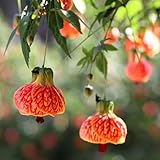


Plant Profile & Key Characteristics
Overview: Abutilon (Indian mallow, flowering maple), 0.5–4 m (1.8–12 ft) tall, is a fast- to moderate-growing evergreen shrub or small tree, often grown as an annual or houseplant in cold climates. It is grown as an ornamental for its edible, bell-shaped flowers.
Quick Specifications
| Specification | Attribute |
|---|---|
| Plant Type / Life Cycle | Perennial shrub or small tree, grown as an annual in cold climates |
| Foliage Type | Evergreen (or grown as an annual where winters are cold) |
| Mature Size | 0.5–4 m (1.8–12 ft) tall |
| Growth Rate | Moderate to fast |
| Toxicity | Non-toxic (flowers edible) |
| Hardiness | USDA zone 9+ as a perennial, 6–9 grown as an annual |
Growth Form & Structure
- Height & Spread: Ranges from 0.5–4 m (1.8–12 ft) depending on species and pruning; kept compact in pots and indoors.
- Growth Habit & Form: Upright, softly woody shrub to small tree with maple-like foliage.
- Lifespan & Maturity: Fast-growing perennial reaching flowering size within a season.
Anatomy & Physical Features
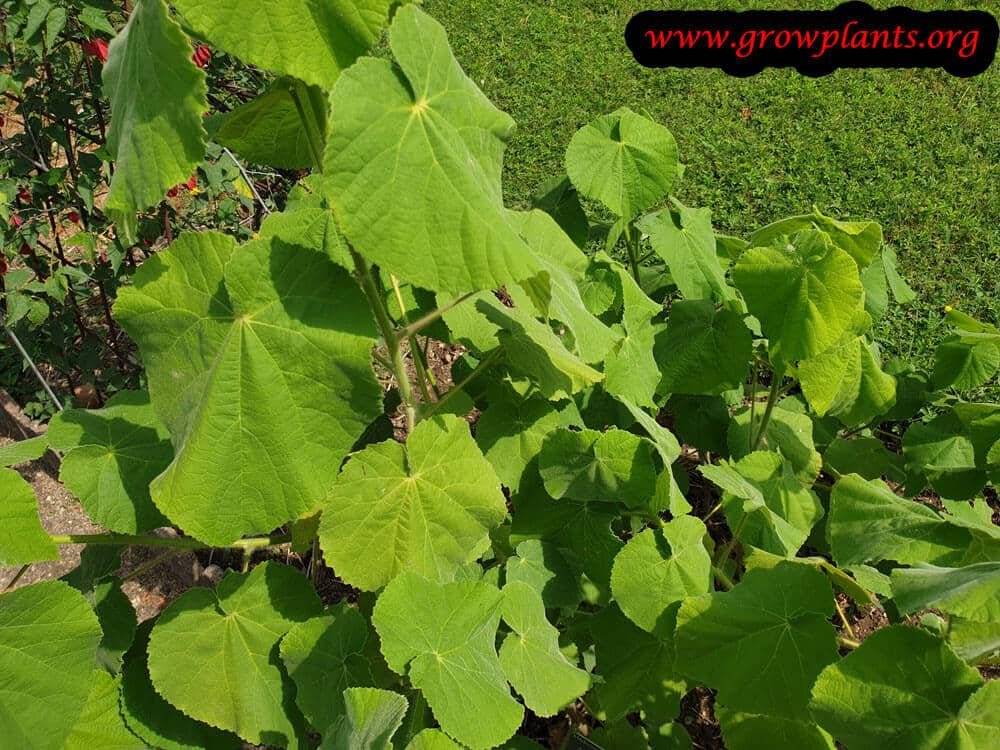
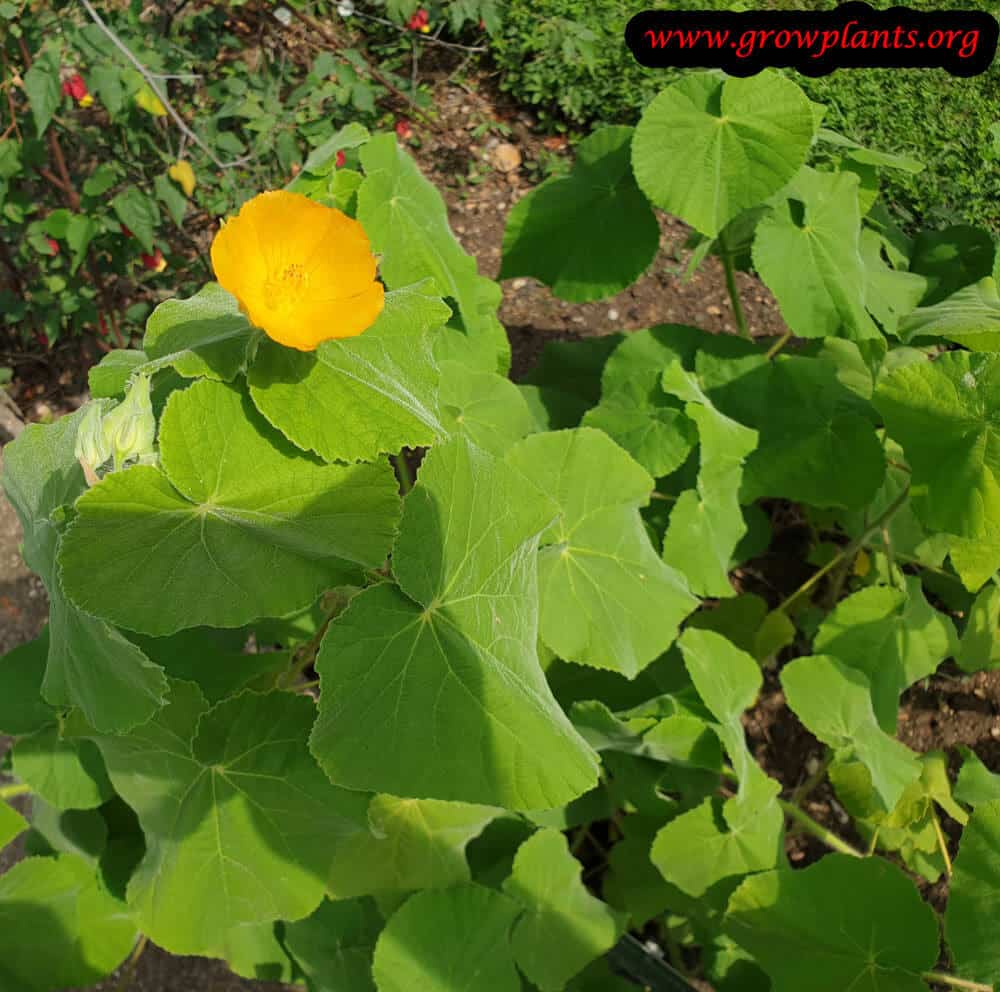
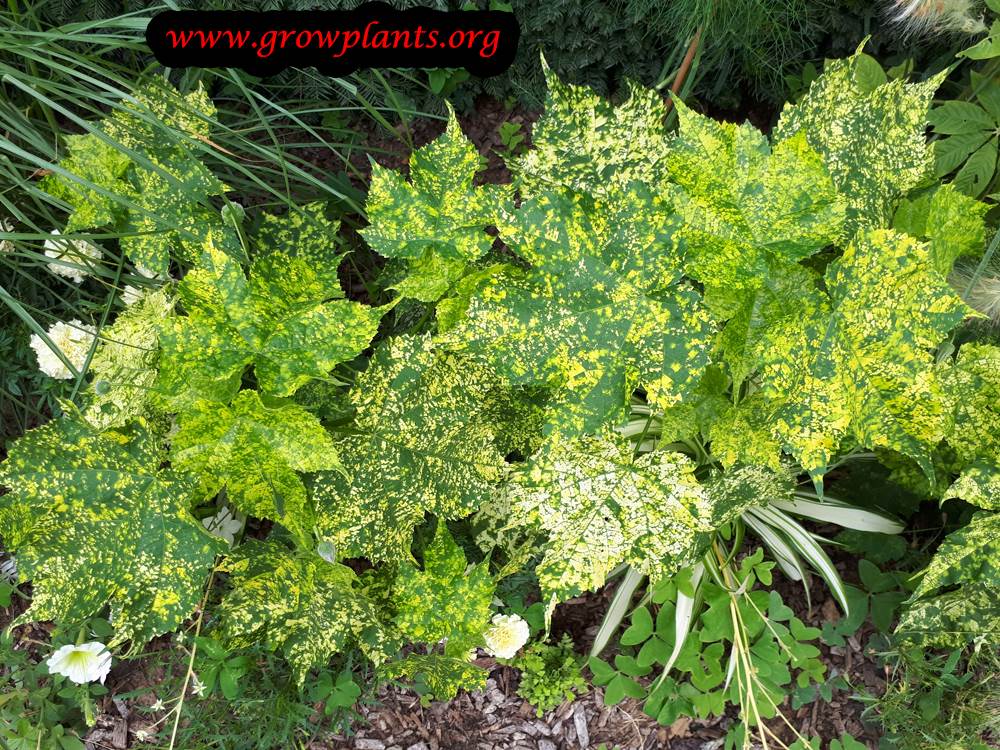
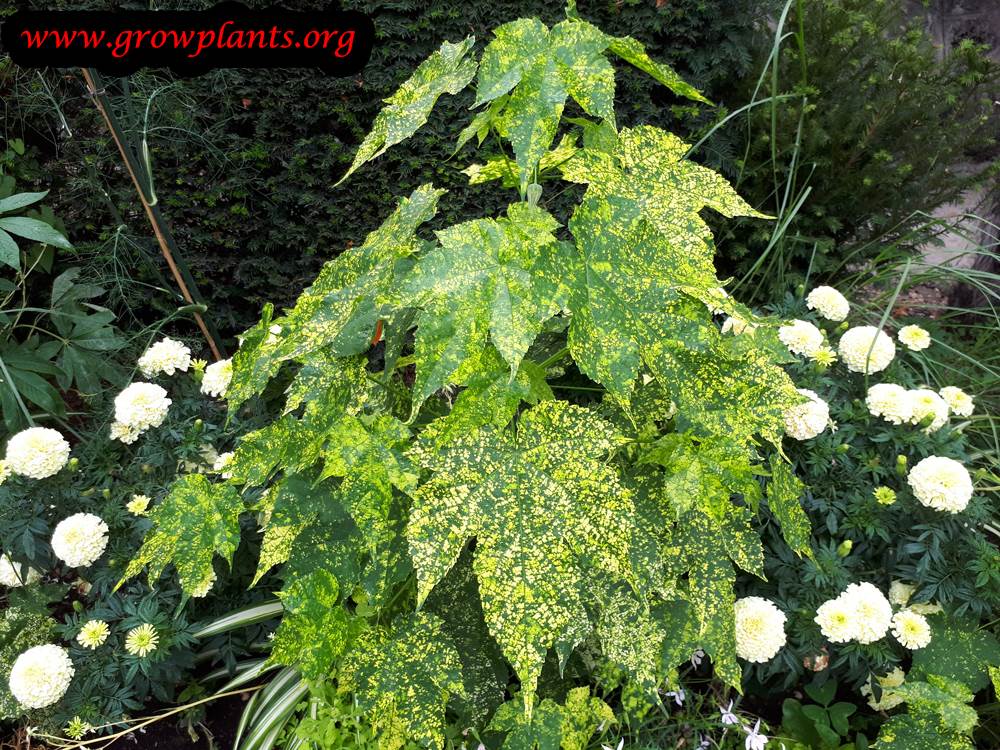
- Leaves & Foliage: Green hand-shaped, deeply lobed leaves.
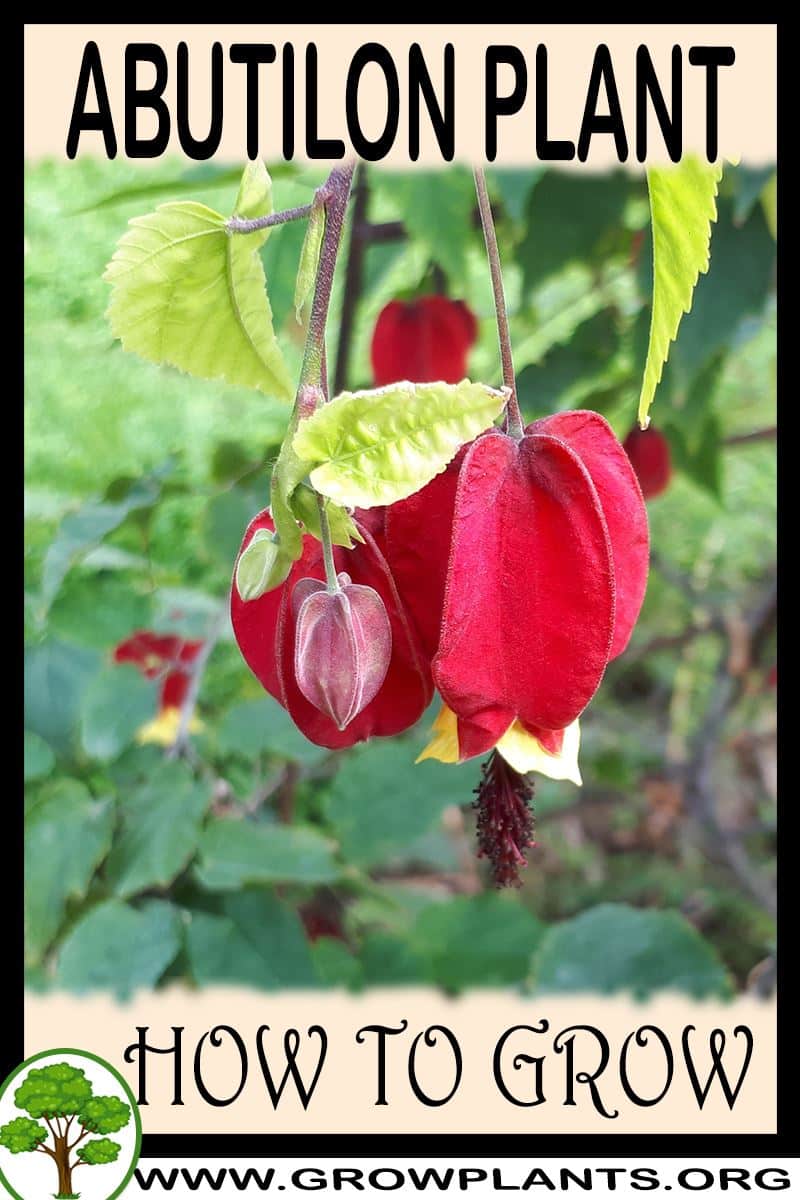
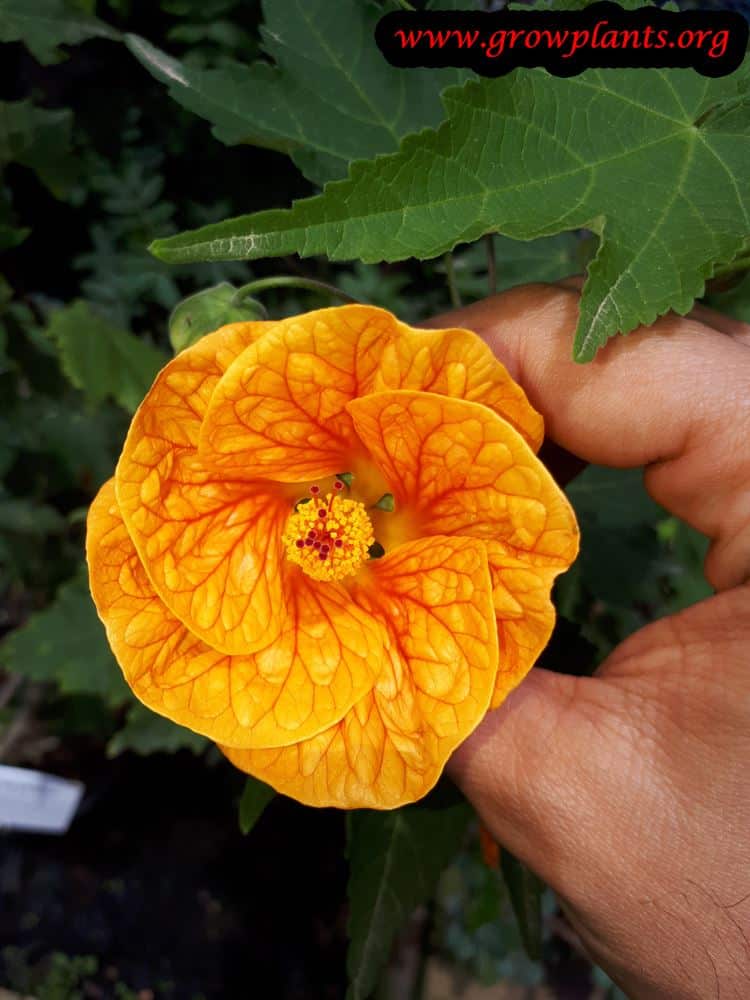
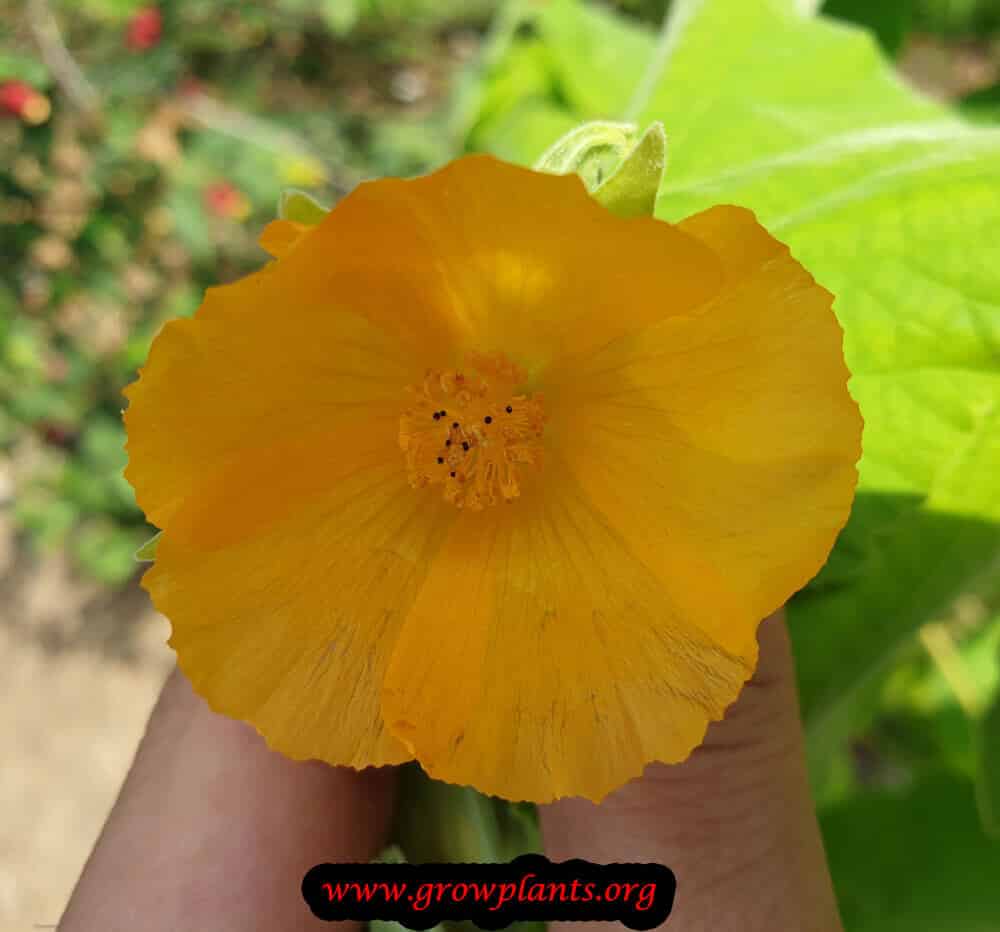
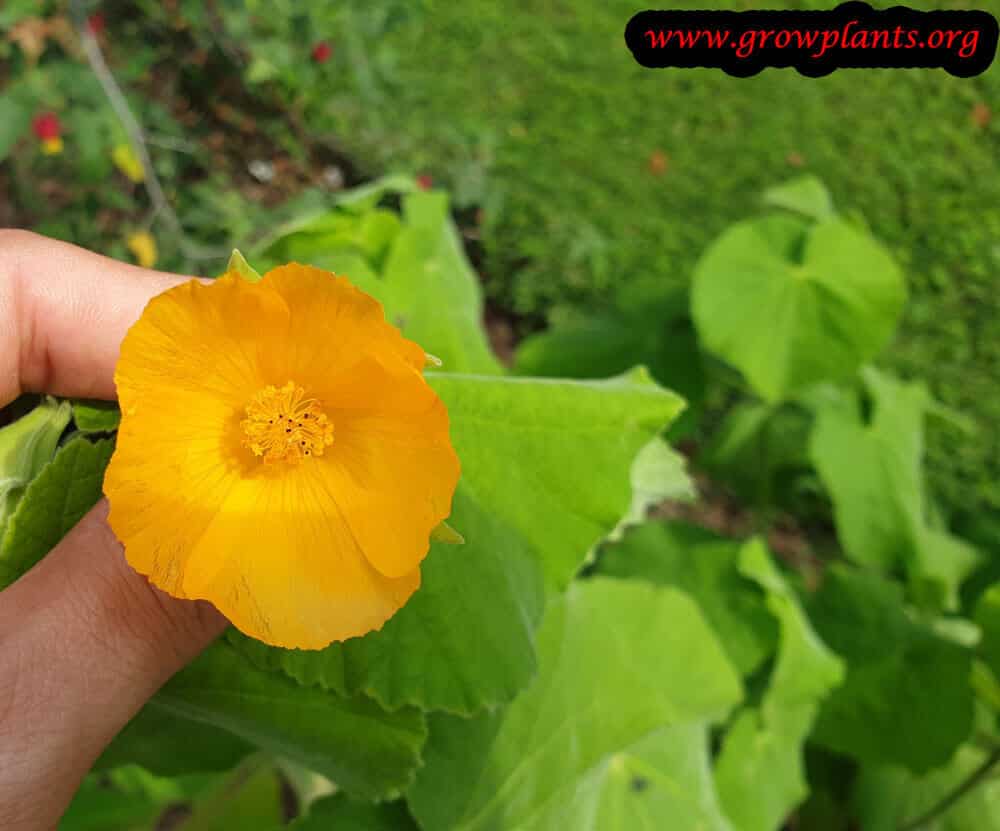
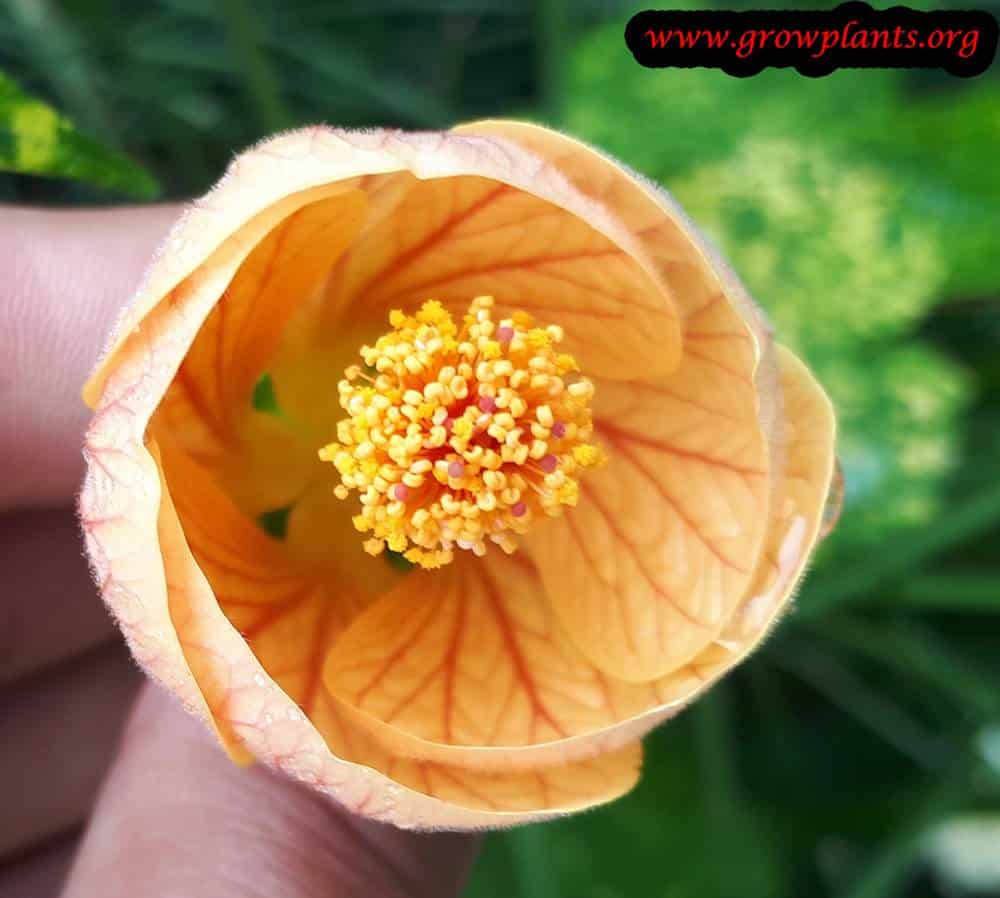
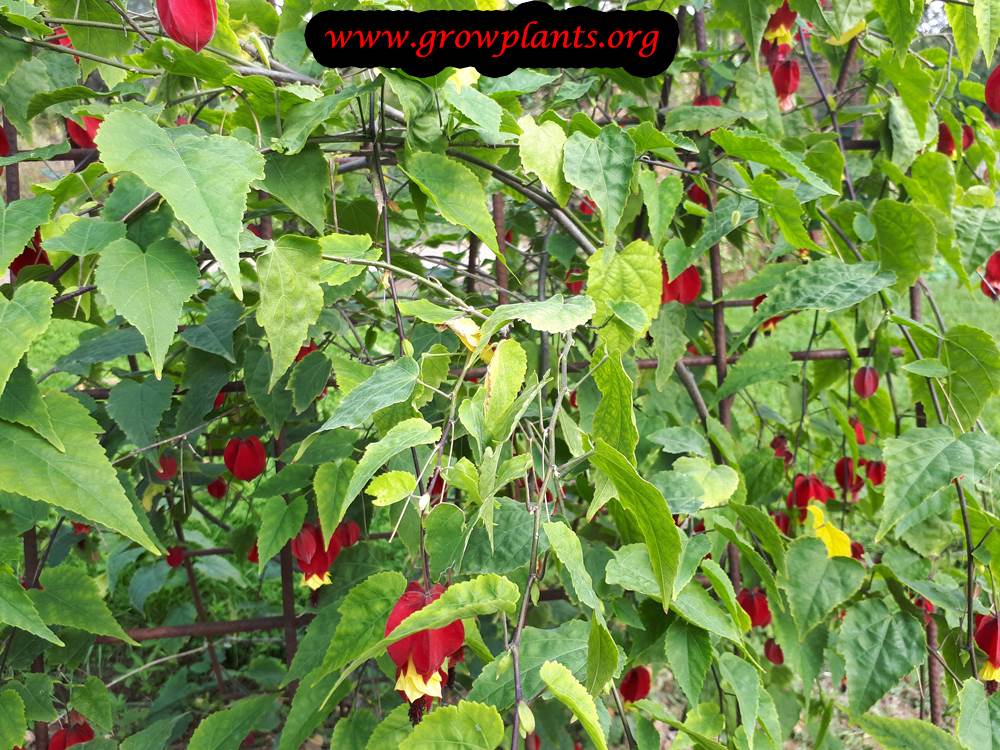
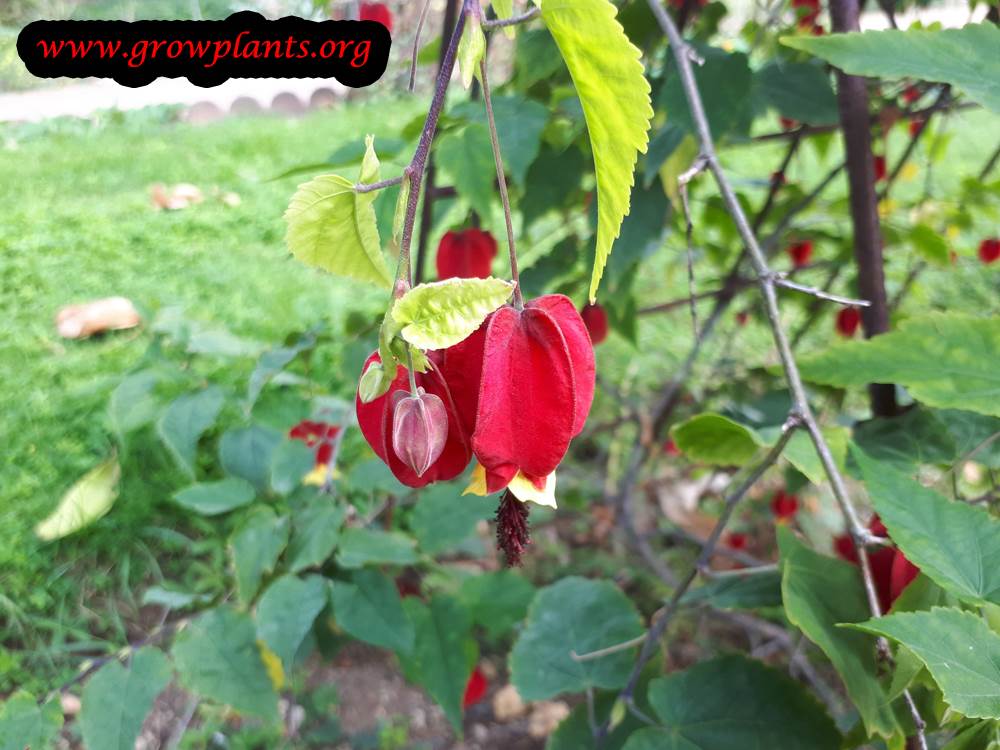
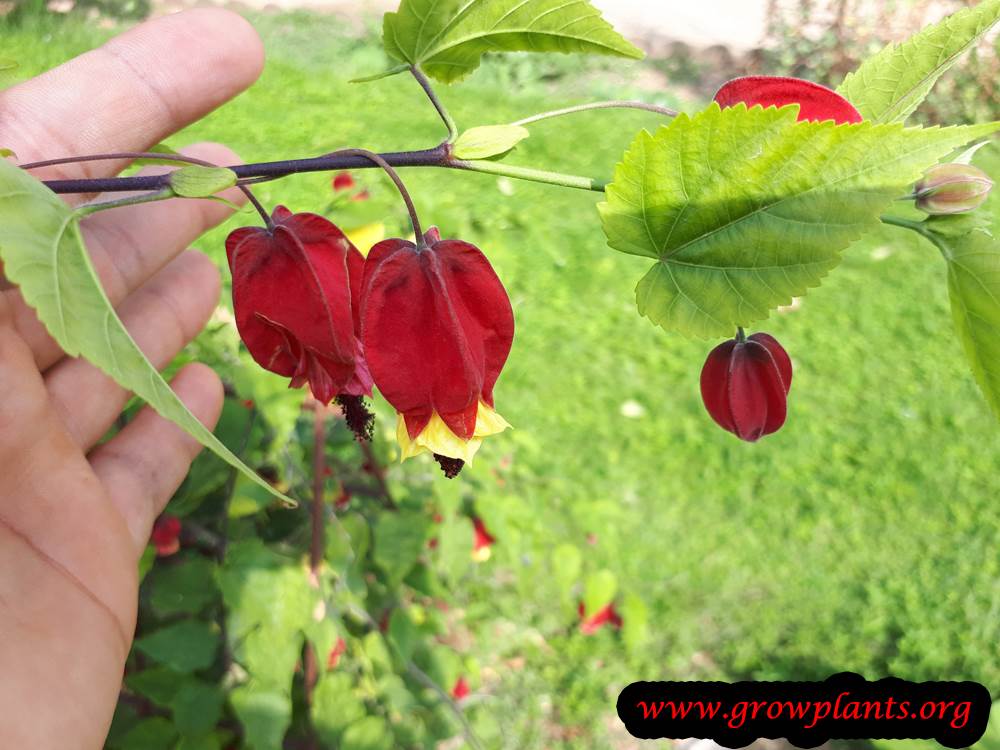
- Flower Characteristics: Pendent bell-shaped flowers in orange, red, yellow, pink or bicoloured tones with a rounded cluster of central stamens; edible.
Primary Uses & Landscape Value
- Edible Uses: Flowers are edible, eaten raw or cooked.
- Functional & Ornamental Roles: Ornamental flowering shrub for borders and large containers, and a popular flowering houseplant.
Care Guide: Planting, Soil & Watering
Overview: Abutilon (Indian mallow) is a moderate-to-fast flowering shrub for sun or partial shade that thrives in rich, fertile, well-draining soil. It likes steady, generous moisture through the growing season — keep the soil moist but never waterlogged.
Quick Care Requirements
| Requirement | Ideal Condition |
|---|---|
| Planting Season | Through the warm season (spring to autumn); in spring after frost where grown as an annual |
| Growth Rate | Moderate to Fast |
| Soil Type | Rich, fertile, well-draining soil |
| Water Need | Moderate to High — keep the soil moist through the growing season, with good drainage |
Planting & Establishment
- Best Planting Season: Plant in the warm season (spring through autumn). Grown as a perennial in mild zones (9+) or as an annual in colder areas (zones 6–9), where it should go out in spring after the last frost.
- How to Plant:
- Hole Preparation: Dig a hole about twice the width of the root ball and no deeper, so the plant sits at its original level.
- Soil Amendments: Enrich the backfill with compost or well-rotted organic matter for a rich, fertile bed that still drains freely; mulch to conserve moisture.
- Planting Depth: Set the plant so the root collar sits at soil level — do not bury the stem.
- Growth Speed & Expectations: Moderate to fast, quickly building into a soft-wooded, free-flowering shrub.
Soil, Watering & Drainage Care
- Soil Mix & Drainage Needs: Wants rich yet free-draining soil; in pots or indoors use a fertile, free-draining potting mix with good drainage holes to avoid soggy roots.
- Watering Schedule & Technique:
- Young / Newly Planted: Keep the soil evenly moist while the roots establish.
- Established: Water generously and regularly to keep the soil moist during active growth, letting only the surface dry between waterings; make sure excess water drains away freely.
- Seasonal Adjustments: Water more in summer heat and full growth; reduce in winter or indoors when growth slows.
Climate, Light & Hardiness
Abutilon (flowering maple / Indian mallow) is a fast-growing, adaptable genus of shrubs for subtropical, mediterranean, temperate, and tropical climates or as a houseplant, tolerant of full sun through full shade. As a genus it is reliably perennial from USDA zone 9 and warmer, with some species usable as a warm-season annual in zone 6–9, though not every species in the genus can be grown that way.
Quick Climate Specifications
| Climate Zones | Subtropical, mediterranean, temperate, tropical, or as a houseplant |
|---|---|
| USDA Hardiness Zones | 9+ as a perennial; 6–9 as an annual for some species (not all) |
| Frost Tolerance | Low |
| Light Conditions | Full Sun / Half Shade / Full Shade |
Sunlight & Light Exposure
Optimal Light Setup
Adaptable from full sun to full shade, though full sun to half shade typically supports the heaviest flowering.
Direct Sun Requirement
Not strictly required given the genus’s wide shade tolerance, though it benefits from at least some direct sun.
Best Exposure / Orientation
Flexible siting outdoors, or a bright indoor spot when grown as a houseplant.
Temperature Extremes & Hardiness
USDA Hardiness & Regional Limits
Reliably perennial outdoors from USDA zone 9 and warmer as a genus-wide rule; some species can be grown as a warm-season annual in USDA zone 6–9, but the source explicitly notes not every species tolerates this treatment, so individual species should be checked.
Cold Damage & Winter Protection
Frost damages or kills top growth; where grown as a perennial near the cool edge of zone 9, mulching the root zone helps recovery.
Frost Sensitivity
Frost-sensitive across the genus; freezing temperatures damage foliage and stems.
Extreme Heat Tolerance
Good, given the average-to-large water most species need; performs well in warm subtropical and tropical summers.
Wind, Humidity & Microclimate
Wind Tolerance
Moderate; the pendant, bell-like flowers typical of the genus can be sheltered from strong wind for a tidier display.
Rainfall & Seasonal Moisture
Prefers rich soil and average-to-generous moisture through the growing season.
Microclimate Recommendations
A warm, sheltered spot benefits species grown at the cool edge of their perennial range; as houseplants, a spot with reliable bright light suits the genus broadly.
Growing in Pots, Balconies & Indoors
Abutilon (flowering maple) is a fast, shrubby plant the grower rates as a houseplant that also does well in pots. Sizes range widely by type, but in a container it is easily kept compact, flowering over a long season wherever the light is bright.
Quick Details
- Container Size: A medium to large pot; pot up as it grows into a shrubby plant
- Indoor Suitability: A good indoor plant for a bright room – the brighter the light, the more it flowers
- Best Spot: Full sun to shade; brightest indoor light for bloom
- Soil & Drainage: Free-draining, organic-rich mix
- Watering in Pots: Average to generous – keep evenly moist, never standing wet
Indoors & On the Windowsill
- Houseplant: A genuine houseplant. Stand it at the brightest window; with enough light it flowers over a long season indoors.
- Windowsill growing: A sunny sill gives the most bloom; in a dim spot it grows leafy and flowers little.
- Overwintering: Tender to frost – a potted plant is easily kept indoors over a cold winter and pruned back to shape.
On a Balcony or Patio
- Light, wind & heat: Give it the brightest, sunniest spot; walls and paving throw heat back so pots dry quickly – check moisture daily in warm spells, and stake or shelter anything tall or exposed from wind.
- Practicalities: Pinch and lightly stake to keep the soft, shrubby growth tidy; shelter from strong wind.
Choosing the Pot, Soil & Long-Term Care
- Pot & drainage: Use a pot with strong drainage holes and skip a standing saucer of water, which invites root rot; terracotta breathes and dries fast, while glazed or plastic holds moisture longer.
- Potting mix: Well-aerated and organic-rich – a peat- or coir-based mix opened up with perlite or vermiculite and enriched with compost.
- Feeding: Potted plants use up their food faster because frequent watering leaches nutrients away – feed a little more often through the growing season than plants in open ground.
- Repotting & pruning: Refresh the mix and pot up every couple of years, and prune after flowering to keep it bushy and in bounds.
Fertilizing & Feeding
As a genus, Abutilon are moderate feeders: whether grown in the ground or in a container as a houseplant, steady balanced feeding through active growth keeps the bell-shaped flowers coming, with a clear rest once growth slows.
Quick Fertilizing Specs
| Feeding Level | Moderate feeder |
|---|---|
| Main Nutrient Priority | Balanced feeding with adequate nitrogen for both foliage and continuous flowering |
| Best Feeding Period | Spring through the summer-into-autumn bloom season, or year-round indoors if growth continues |
| Organic Options | Rich, organic-matter garden soil, or a quality potting mix for container plants |
| Reduce/Stop Feeding | Cut back on feeding as growth and flowering slow toward the end of the season |
| Micronutrients | Usually met by a complete fertilizer; correct only a diagnosed deficiency |
| Soil pH | Adaptable to a fairly wide pH range in rich, well-drained soil |
Feeding by Growth Stage
Spring growth flush
Support new stem and leaf growth as the plant resumes active growth, whether in the garden or a container.
| Nutrient direction | A balanced, nitrogen-leaning feeding builds the framework for the season’s flowers. |
|---|---|
| Timing | As new growth begins in spring, or after a winter indoors as light and warmth increase. |
| Frequency | Regular light feeding as active growth ramps up. |
| Fertilizer types | A balanced complete fertilizer, Organic matter for in-ground plantings, or a fresh potting mix for containers |
| Precautions | Ease into feeding gradually rather than feeding heavily right as growth restarts. |
Extended repeat bloom
Sustain the characteristic bell-shaped, often multi-colored flowers through an extended bloom season.
| Nutrient direction | Steady balanced feeding maintains flowering without needing a phosphorus-heavy product. |
|---|---|
| Timing | Through summer and into autumn while flowering continues, or year-round for actively growing indoor plants. |
| Frequency | Regular light feedings support continuous bloom production. |
| Fertilizer types | A balanced complete fertilizer, A container-appropriate feeding routine for potted or houseplant specimens |
| Precautions | If leafy growth outpaces flowering, ease back slightly on nitrogen to favor more bloom. |
Cool-season rest
Let the plant slow down through cooler weather, overwintering, or reduced indoor light without pushing tender new growth.
| Nutrient direction | None – withhold fertilizer while growth is slowed or the plant is resting. |
|---|---|
| Timing | Late autumn through winter outdoors, or during a low-light indoor slowdown, or wherever grown as an annual nearing the end of its cycle. |
| Frequency | No feeding during this rest period; resume once active growth clearly returns. |
| Fertilizer types | No feeding at this stage; do not fertilize during the rest period. |
| Precautions | Do not fertilize while growth is dormant, minimal, or the plant is finishing its annual cycle. |
Nutrient Deficiency Signs & Corrections
Older leaves fade to pale green or yellow and both growth and flowering slow.
| Possible causes | low available soil or potting-mix nitrogen, leaching from frequent watering, underfeeding for a moderate, continuous-blooming feeder |
|---|---|
| Appears first on | older, lower leaves |
| What to check | recent feeding history, watering frequency, whether the plant is root-bound in its container |
| Possible correction | Apply a balanced, nitrogen-containing fertilizer and resume regular light feeding. |
New leaves emerge yellow with a network of distinctly green veins.
| Possible causes | alkaline soil or irrigation water limiting iron availability, waterlogged or poorly drained soil or potting mix, root stress from a cramped container |
|---|---|
| Appears first on | newest leaves |
| What to check | soil or water pH, drainage, container size and root crowding |
| Possible correction | Correct the underlying pH or drainage issue and apply a chelated iron product per its label. |
Leaf tips and margins brown or scorch, especially on container-grown plants.
| Possible causes | fertilizer salt buildup in a container’s limited soil volume, feeding more heavily or more often than needed, under-watering that concentrates salts |
|---|---|
| Appears first on | leaf tips and margins |
| What to check | recent fertilizer amounts and frequency, watering consistency, drainage, especially in pots |
| Possible correction | Ease off feeding, water thoroughly to help flush salts, then return to a lighter feeding routine. |
Pruning, Training & Seasonal Maintenance
This entry covers the Abutilon genus broadly – plants ranging from low sprawling subshrubs to small trees roughly 0.5–4m tall, grown as tender perennials or, in colder zones, as annuals. Across the genus the shared trait that drives pruning strategy is that flowers form on current-season growth rather than old wood, so Abutilon in general tolerates frequent, even hard, pruning without sacrificing bloom. Exact scale and severity should be adjusted to the actual species/cultivar grown: small trailing types need only light shaping, while tree-sized types can carry a structural framework. The safest period for the main structural cutback is late winter/early spring before new growth starts; light shaping continues through the growing season.
Quick Pruning & Maintenance Specs
| Pruning Tolerance | High (genus-wide) |
| Primary Pruning Window | Late Winter – Early Spring |
| Secondary Maintenance Window | Spring – Autumn light shaping/deadheading |
| Typical Frequency | One annual structural prune plus ongoing light trims, scaled to the size of the species/cultivar |
| Main Objective | Maintain shape/scale appropriate to the species and keep fresh flowering wood coming |
| Young Plant Priority | Pinch for bushiness, or select a leader if the species/cultivar is being grown to tree form |
| Mature Plant Priority | Renewal-thin old wood; scale and canopy control |
| Best Tool Type | Bypass secateurs for most species; loppers for larger, tree-form types |
| Avoid Heavy Pruning During | Peak summer heat and heavy flowering flushes |
Pruning by Plant Age & Size
Newly Established
Remove only damaged growth; do not hard-prune plants being grown as annuals, which will not have a second season to recover.
Young / Formative
Where grown as a perennial, decide the target form early – repeated pinching for a bushy shrub or a single selected leader for a small-tree form – since the genus spans both habits depending on species.
Mature / Established
Annual renewal-thinning of old wood on shrub-form types; canopy and height management on tree-form types.
Seasonal Pruning Schedule
| Pre-Growth / Early-Spring | Objective: reset size before new growth. Remove: leggy or winter-damaged stems. Do not remove: all old wood at once on a plant still being trained to a shape. Response: vigorous new flowering shoots. Flowering impact: brief pause, then fuller bloom. |
| Summer Canopy Management | Objective: maintain shape and continuous bloom. Remove: spent flowers and wayward shoots. Response: sustained flowering from new growth. |
Flowering & Fruiting Wood
As a genus, Abutilon flowers on current-season growth, which is why frequent and even hard pruning is generally well tolerated – the plant simply regrows and reflowers on the new wood produced afterward.
Structural Pruning & Training
Ranges from no formal training needed on low, trailing species/cultivars to a clear single-trunk small-tree framework on larger types; select the approach based on the actual species being grown rather than treating all Abutilon identically.
Special Growth to Remove
- Spent flower stems
- Weak interior growth shaded out by denser canopy
- Suckers competing with a trained single-trunk form, where applicable
Container & Small-Space Pruning
Suits containers well across the genus, including houseplant use for many species; keep more compact with frequent pinching than an equivalent in-ground plant, and actively restrain height on the larger-growing species/cultivars rather than letting them approach their full in-ground size in a pot.
Tools
Bypass secateurs for most cuts on soft, pliable growth; loppers only for thicker wood on larger, tree-form specimens.
Tool Hygiene & Disease Risk
Routine – clean, sharp tools are sufficient. Aphids are a common genus-wide pest; wipe tools after cutting through heavily infested growth.
Cut Placement & Technique
Cut just above an outward-facing bud; on trained tree-form plants remove side shoots flush to the trunk.
Heavy Pruning & Rejuvenation
Generally tolerated well on perennial-grown plants – hard cutback in late winter is followed by strong regrowth and renewed flowering the same season. Avoid on plants being grown as annuals, and be more conservative on trained tree-form specimens to protect the trunk investment.
Post-Pruning Care
Water needs vary by species/climate (light to moderate for the genus generally); shield hard-cut plants from harsh midday sun until regrowth covers the canopy, and watch for aphids on fresh growth.
Common Pruning Mistakes
- Applying one fixed pruning regime to every Abutilon regardless of whether the species/cultivar is a trailing subshrub or a tree-form type
- Hard-pruning annual-grown plants
- Neglecting renewal pruning until the plant is mostly bare, woody stems with flowers only at the tips
When NOT to Prune
Avoid hard structural cuts in peak summer heat or during a heavy bloom flush, and do not hard-prune plants grown as annuals.
Recommended Tools (by task)
- bypass_secateurs – the main tool across the genus for shaping, deadheading and renewal cuts
- loppers – thicker wood on larger tree-form species/cultivars
- soft_ties_stakes – staking a young leader on tree-form training
Propagation Guide
Most Abutilon shrubs are easiest to keep from stem cuttings, which root readily and preserve named flower colors and forms; in cooler zones where a species is grown as an annual, taking cuttings before frost to overwinter indoors is the practical way to carry it over, since seed alone is a slower route back to a flowering plant. Propagation is generally easy.
Quick Propagation Specs
| Best Propagation Method | Stem Cuttings |
| Alternative Methods | Seed |
| Propagation Difficulty | Easy |
| Seed True-to-Type | Cultivar-dependent — straight species tend to come reasonably true, named cultivars may not |
| Vegetative True-to-Type | Yes |
| Best Propagation Season | Spring to summer where grown as a perennial (zone 9+); in zones 6-9 where grown as an annual, take cuttings in late summer/early autumn before frost to overwinter |
| Cutting Rooting Time | Typically a few weeks under warm conditions |
Stem Cuttings
Cutting Type
Semi-hardwood tip cuttings with a couple of leaf nodes.
Best Timing
In warm zones where a species is perennial, take cuttings in spring or summer. Where grown as an annual (zones 6-9), take cuttings in late summer or early autumn before frost so they can be overwintered indoors — per the site, vegetative propagation becomes necessary in this situation.
Cutting Preparation
Trim just below a node and remove lower leaves before inserting into the rooting medium.
Rooting Setup
Use a moist, well-drained medium and keep humidity moderate while roots form.
Rooting Hormone
Not required, but optional and may speed rooting.
Rooting Time
Not precisely documented; typically a few weeks under warm conditions.
Growing from Seed
Seed is listed by the site as an option but with no further detail. Sow in warm conditions; germination typically takes a few weeks, and named color forms may not come true from seed.
Bloom & Edible Flower Guide
Quick Details
- Bloom Season: Spring through autumn
- Flower Appearance: Bowl-shaped flowers that hang like bells, in orange, red, yellow or pink (sometimes multicolored), with rounded central stamens
- Edibility: Edible — the flowers can be eaten raw or cooked
Detailed Blooming Overview
Abutilon — the flowering maples or Indian mallows — are grown as much for their long flowering season as their maple-like leaves. The bowl-shaped, bell-like flowers hang gracefully from the stems across spring, summer and autumn in warm reds, oranges, yellows and pinks, and are edible with a mild flavor.
Flower Characteristics
- Bowl-shaped flowers that hang downward like bells.
- Orange, red, yellow or pink, sometimes more than one color.
- Rounded stamens in the center.
Bloom Care & Thinning
- Managing the bloom: Grow in sun to light shade and deadhead lightly to keep it flowering over a long season.
- At the table: Use only clean, unsprayed flowers, raw or lightly cooked, as a mild garnish.
Bloom Health & Protection
- Aphids on buds: Tender buds can draw aphids — a rinse of water or insecticidal soap / neem oil keeps them down; rinse flowers before eating.
Fruit & Uses
Abutilon flowers are edible across the ornamental species and cultivars commonly grown under this genus, eaten raw or cooked. The bell-shaped blooms have a mild, sweet flavor and are used mainly as a garnish rather than a staple food.
Quick Edible Specs
| Edible Parts | Flowers |
|---|---|
| Main Use(s) | Culinary garnish (salads, desserts) |
| Eaten Raw or Cooked | Raw or cooked |
| Preparation Required | None – rinse before use |
| Harvest Season | Spring through autumn, while in bloom (see Blooming) |
| Time to First Harvest | Not meaningful for a flower crop – pick once the plant is blooming |
| Storage | Best used the same day, fresh |
| Safety/Toxicity Caveat | None broadly known for the flowers; since this entry covers a whole genus, confirm the specific species/cultivar before eating, and use only unsprayed flowers |
Flowers & Flower Buds
Pick flowers once fully open; colors vary by species and cultivar (orange, red, yellow, pink or bicolor), hanging bell-like from the branches. Use whole flowers raw as a garnish, or lightly cooked; flavor is mild and sweet.
Preparation, Uses & Safety
No processing is required beyond rinsing. Because “Abutilon” covers many species and hybrids, edibility and flavor can vary slightly by specific plant – individual species pages in this genus (e.g. Abutilon pictum, Abutilon megapotamicum) confirm the same edible-flower use.
Pests, Diseases & Troubleshooting
Overview: Abutilon are soft-wooded Malvaceae shrubs whose tender leaves and long flowering draw sap-sucking pests – whiteflies above all, plus aphids, mites, scale, and mealybugs – especially under glass or in still, warm air. This is a genus-level entry covering the shared flowering-maple pest picture across ornamental Abutilon. They are otherwise easy-going; good airflow, steady but not soggy watering, and a cultural, organic-first routine keep them clean and blooming.
Quick Troubleshooting Overview
| Issue / Pest | Main Symptom | Primary Solution |
|---|---|---|
| Whiteflies | Clouds of tiny white flies under leaves; yellowing and honeydew | Sticky traps, Encarsia; insecticidal soap/neem on leaf undersides |
| Aphids | Curled sticky shoot tips with clustered soft-bodied insects | Water jet, ladybirds; insecticidal soap if heavy |
| Spider mites | Fine stippling, bronzing and webbing in hot, dry air | Raise humidity, hose foliage; horticultural oil if severe |
| Mealybugs / scale | White cottony or brown bumps in leaf joints; honeydew, sooty mold | Dab with alcohol, prune out; horticultural oil in the evening |
| Rust / leaf spot | Orange pustules or brown spots on leaves in humid conditions | Airflow, remove leaves; sulfur or copper if persistent |
| Root rot | Wilting and leaf drop in cold, wet soil | Free-draining mix, ease off watering, warmth |
Common Pests & Management
- Whiteflies (Trialeurodes vaporariorum / Bemisia tabaci):
- Symptoms: Clouds of tiny white moth-like flies erupt from leaf undersides when disturbed; scale-like nymphs suck sap, yellow and weaken foliage, and coat leaves with sticky honeydew and sooty mold. Abutilon is a classic whitefly magnet, especially under glass.
- Prevention & Control: Monitor and thin adults with yellow sticky traps, and release Encarsia formosa parasitoids in greenhouses. Rinse leaf undersides, keep plants unstressed, and apply insecticidal soap, neem, or horticultural oil to the undersides where nymphs feed, repeating to catch new hatches.
- Aphids (Aphis / Myzus spp.):
- Symptoms: Clusters of green, black, or peach-coloured soft-bodied insects on tender tips and flower buds, curling and distorting the new growth; honeydew, sooty mold, and ants follow.
- Prevention & Control: Knock colonies off with water, encourage ladybirds and lacewings, and avoid overfeeding with nitrogen. Treat persistent outbreaks with insecticidal soap or neem in the cool of the evening to protect pollinators.
- Spider mites (Tetranychus urticae):
- Symptoms: Fine pale stippling and bronzing of leaves with delicate webbing on undersides in hot, dry, indoor, or greenhouse air; heavy feeding scorches and drops foliage.
- Prevention & Control: Raise humidity, hose the foliage, and keep plants watered to break the dry conditions mites love. Introduce predatory mites under glass and use horticultural oil or a labelled miticide only for stubborn infestations.
- Mealybugs (Planococcus / Pseudococcus spp.):
- Symptoms: White, cottony, waxy masses tucked into leaf axils, stem joints, and undersides; they suck sap, stunt growth, and drip honeydew that blackens with sooty mold.
- Prevention & Control: Dab colonies with an alcohol-soaked swab, prune out heavily infested tips, and isolate new or affected plants. Encourage natural enemies and follow up with insecticidal soap or horticultural oil, repeating to reach protected nymphs.
- Soft & armored scale (Coccus / Saissetia spp.):
- Symptoms: Immobile brown, tan, or waxy bumps along stems and leaf veins; soft scales excrete honeydew and sooty mold, and heavy colonies thin and weaken shoots.
- Prevention & Control: Scrape or rub off light colonies, prune out encrusted wood, and support parasitic wasps and lady beetles. Smother survivors with horticultural oil timed to the crawler stage, applied in the evening.
- Caterpillars (Various Lepidoptera larvae):
- Symptoms: Ragged chewed holes and notches in leaves, with frass pellets and occasional rolled or tied leaves; damage is usually cosmetic on an established plant.
- Prevention & Control: Handpick larvae and eggs, encourage birds and parasitic wasps, and tolerate light feeding. Spot-treat heavier outbreaks with Bt or spinosad, sparing pollinators and beneficials.
Diseases & Fungal Issues
- Rust (Puccinia spp.):
- Symptoms: Yellow flecks on the upper leaf with powdery orange-to-brown pustules beneath, common on Malvaceae in humid, crowded conditions; heavy rust yellows and drops leaves.
- Treatment & Management: Remove and destroy affected leaves, improve airflow and spacing, and water at the base to keep foliage dry. Sulfur or a copper/labelled fungicide checks persistent rust, applied early on unstressed plants.
- Fungal leaf spot (Cercospora / Alternaria spp.):
- Symptoms: Brown to grey angular spots that may merge and cause leaf yellowing and drop, usually after wet weather or overhead watering.
- Treatment & Management: Clear infected and fallen leaves, water at soil level, and space for airflow. Copper fungicide protects new growth during prolonged wet spells but is rarely needed on a well-grown plant.
- Powdery mildew (Erysiphe / Podosphaera spp.):
- Symptoms: White powdery patches on leaves and shoots in crowded, shaded, or humid-but-dry conditions, dulling and distorting foliage.
- Treatment & Management: Improve light and airflow, avoid crowding, and clear debris. Sulfur, potassium bicarbonate, or horticultural oil controls it when applied early.
- Root & stem rot (Phytophthora / Pythium / Botrytis):
- Symptoms: Wilting, blackening at the base, and collapse in cold, wet, poorly drained soil; grey mold (Botrytis) can also rot spent flowers and soft growth in damp, still air.
- Treatment & Management: Use a free-draining mix, water only when the surface dries, and give warmth and airflow; remove faded flowers and dead tissue. There is no cure for advanced root rot – improve conditions and take healthy cuttings to start over.
- Abutilon mosaic virus (Abutilon mosaic begomovirus):
- Symptoms: Bright yellow mottling and vein-clearing on the leaves; note that in some ornamental variegated Abutilon this pattern is a stable, harmless graft-transmissible feature, not a sign of a sick plant.
- Treatment & Management: Where mosaic reflects true infection, whitefly control and removal of genuinely declining plants is the answer; propagate only from healthy, vigorous stock. Do not cull the deliberately variegated ornamental forms, whose ‘mosaic’ is prized.
Growing Difficulties & Abiotic Problems
- Leaf & bud drop:
- Cause & Symptoms: Sudden shifts in temperature, drought, cold draughts, or a big change in light make Abutilon shed leaves and drop buds abruptly.
- Correction Strategy: Keep watering and temperature steady, shelter from cold draughts, and acclimatise plants gradually when moving them; recovery follows once conditions stabilise.
- Frost tenderness:
- Cause & Symptoms: Abutilon are frost-tender; freezing blackens soft growth and can kill the plant outright, and cold, wet winters cause dieback.
- Correction Strategy: Grow in containers to move under cover, or shelter and mulch in mild areas; overwinter frost-free and prune out cold-damaged wood only once new growth resumes.
- Iron chlorosis:
- Cause & Symptoms: New leaves yellow between green veins on alkaline soils or in tired potting mix where iron is unavailable.
- Correction Strategy: Feed regularly through the growing season, refresh or acidify potting mix, and apply chelated iron for a quick correction; keep the root zone healthy and not waterlogged.
- Overwatering & edema:
- Cause & Symptoms: Soggy roots cause yellowing and leaf drop, while erratic wet-dry swings can raise corky edema bumps on leaf undersides.
- Correction Strategy: Water evenly, let the surface dry between waterings, and ensure pots drain freely; steady moisture and good light prevent both problems.
What Helps – Products & Tools
For flowering maples the go-to kit is soft and mostly organic: yellow sticky traps and Encarsia parasitoids plus insecticidal soap, neem, or horticultural oil for whiteflies, aphids, mites, mealybugs, and scale; Bt or spinosad for stray caterpillars; sulfur, potassium bicarbonate, or copper for rust, leaf spot, and mildew; and a chelated iron feed to green up chlorotic foliage. Reach for cultural fixes – airflow, steady watering, hygiene – before any product.