
A raised bed kit is the quickest way to start raised-bed gardening — flat-pack panels that assemble into a ready-to-fill bed. They come in wood, metal and composite, in many sizes. This guide covers how to choose one and what else you’ll need.
GrowPlants is reader-supported. We may earn a commission from qualifying purchases made through links on this page, at no extra cost to you.
Materials
- Metal (galvanised / corten steel) — long-lasting, modern look, won’t rot; see metal raised beds.
- Wood (cedar, treated softwood) — natural look, good insulation; cedar resists rot, softwood is cheaper but shorter-lived.
- Composite / recycled plastic — rot-proof and low-maintenance.
Size and depth
Choose a width you can reach across without stepping in (about 1.2 m/4 ft for double access), any comfortable length, and enough depth for your crops — deeper is better for root vegetables and where the ground beneath is poor.
What else to consider
- Assembly — most kits are tool-light and quick; check reviews for fit.
- Durability — metal and cedar last longest.
- Add-ons — covers/hoops and irrigation; see raised bed supplies.
Raised bed kits

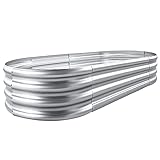
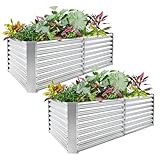
Metal raised beds
Then fill it well
How you fill the bed decides how it grows — see how to fill a raised bed and best soil for raised beds.
Choose your material
- Metal (galvanised/corten) — longest life, modern look, no rot; see metal raised beds.
- Wood (cedar/treated) — natural look and good insulation; cedar lasts, softwood is cheaper.
- Composite — rot-proof and low-maintenance, usually pricier.
Depth drives soil volume (and cost)
Taller beds need a lot more fill — work out length × width × depth before buying, as the soil can cost more than the bed. Deeper suits root crops and poor ground; shallower is cheaper for salads. See how to fill a raised bed.
Assembly and drainage
Most kits are tool-light flat-packs; check reviews for panel fit. Make sure the base drains — open bottom on soil, or drainage holes on a hard surface.