
Two of the most common plant problems — overwatering and the wrong soil pH — are invisible until damage shows. A cheap soil meter takes the guesswork out: a moisture meter tells you when to water (and when not to), and a pH meter tells you whether your soil suits the plant, which controls whether it can even absorb nutrients. This guide covers moisture, pH and combination meters, and how to use them well.
As an Amazon Associate GrowPlants earns from qualifying purchases. We recommend product types that genuinely suit the plant; prices and availability are set by Amazon.
Quick recommendations
- Best for watering: a soil moisture meter
- Best for plant selection & problems: a soil pH meter
- Best value: a combination moisture/pH/light meter
- Best accuracy for pH: a dedicated digital pH meter or test kit
How we chose
We focused on what actually helps plants: reliable relative moisture readings to time watering, and pH readings accurate enough to guide plant choice and diagnose nutrient lock-out. Simple probe meters are great for moisture; pH is where accuracy matters most.
Types of meter
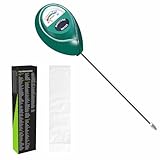
Moisture meters
A probe that reads how wet the root zone is — the single best cure for overwatering, especially for houseplants and anyone who waters “on a schedule” instead of by need.

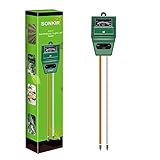
pH meters
Soil pH controls nutrient availability: too acidic or too alkaline and plants can’t take up nutrients even when fed. A pH meter helps you match plants to soil (e.g. acid-loving blueberries, azaleas) and diagnose deficiencies.
Combination & light meters
3-in-1 meters add a light reading — handy for placing houseplants — at a budget price. Convenient, though dedicated meters are more accurate.


What each meter tells you
| Meter | Answers | Best for |
|---|---|---|
| Moisture | Do I water now? | Preventing over/under-watering |
| pH | Does soil suit this plant? | Plant choice, deficiency diagnosis |
| 3-in-1 | Rough moisture/pH/light | Budget all-rounder |
How to use them well
- Push the probe into the root zone, not just the surface, and take a few readings around the pot or bed.
- For moisture, read the trend — water when it reads dry for that plant, not on a fixed day.
- For pH, test moist (not bone-dry) soil and clean the probe between readings; for important decisions, confirm with a test kit.
- Wipe the probe dry after use to prevent corrosion.
Common mistakes
- Trusting cheap pH probes as lab-accurate — use them as a guide and confirm big decisions.
- Reading only the surface, which dries first.
- Leaving the probe in the soil (it corrodes).
- Watering by the calendar and ignoring what the meter says.
FAQ
Are soil moisture meters accurate? They give a reliable relative reading that’s ideal for timing watering, even if not a precise percentage.
Why does soil pH matter? It controls whether plants can absorb nutrients; the wrong pH causes deficiencies even in well-fed soil.
Are cheap 3-in-1 meters any good? Fine for moisture and rough guidance; for accurate pH, use a dedicated meter or test kit.
How do I fix soil that’s too acidic or alkaline? Amend gradually (e.g. lime to raise pH, sulfur or acidic matter to lower it) and re-test — or simply choose plants that suit your existing pH.
Final recommendation
If you buy one meter, make it a moisture meter — it prevents the overwatering that kills most houseplants. Add a pH meter (or test kit) when choosing plants for a bed or diagnosing stubborn yellowing. Push the probe into the root zone, read the trend, and wipe it dry afterwards.
As an Amazon Associate GrowPlants earns from qualifying purchases. GrowPlants does not sell these products.
See also: best pruning shears · all garden tools.