
A good pair of pruning shears (secateurs) is the one tool almost every grower uses constantly — deadheading, trimming, harvesting and shaping. The right pair makes clean cuts that heal fast and don’t crush stems, and it saves your hands over a long session. The main choice is bypass vs anvil, plus fit and blade quality. This guide covers the types, how to choose for your hands and plants, and how to keep them cutting cleanly.
As an Amazon Associate GrowPlants earns from qualifying purchases. We recommend product types that genuinely suit the plant; prices and availability are set by Amazon.
Quick recommendations
- Best all-round: bypass pruning shears for living stems
- Best for deadwood: anvil pruners
- Best for small hands / precision: compact bypass snips
- Best for thicker branches: ratchet pruners or step up to loppers
How we chose
We looked at cut quality on living stems, comfort over long use, blade material and sharpen-ability, build quality, and safety features like a locking catch. Match the tool to the plant tissue and to your hand size.
Bypass vs anvil
Bypass pruners
Two curved blades pass like scissors for a clean, close cut on living stems — the right choice for most pruning, roses, soft growth and harvesting.
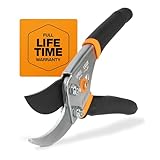
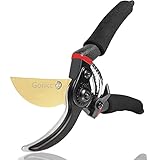
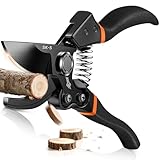
Anvil pruners
A blade closes onto a flat “anvil,” crushing through dead, dry wood efficiently — but they bruise living stems, so keep them for deadwood.


Ratchet & compact snips
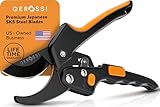
Ratchet pruners cut thicker branches with less hand force; small precision snips suit detailed work, herbs and houseplants.
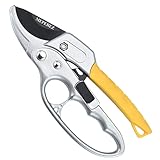
Bypass vs anvil at a glance
| Type | Cut | Best for | Avoid on |
|---|---|---|---|
| Bypass | Clean, close | Living stems, roses, harvest | Very hard deadwood |
| Anvil | Crushing | Dead, dry wood | Living stems (bruises) |
| Ratchet | Assisted | Thicker branches, weak grip | Fast fine work |
How to choose
- Living stems? Bypass. Deadwood? Anvil.
- Fit your hand: shears that are too big tire and blister you — compact models suit smaller hands.
- Check capacity: don’t force shears through branches beyond their rated diameter; use loppers or a saw.
- Prefer replaceable blades and a comfortable locking catch.
Maintenance
- Wipe clean and dry after use; a spot of oil prevents rust.
- Keep the blade sharp — a dull blade tears and spreads disease.
- Disinfect between plants when pruning diseased material.
Common mistakes
- Using anvil pruners on living stems and crushing them.
- Forcing shears through too-thick branches, springing the blades.
- Letting blades go dull and rusty, so cuts tear and heal badly.
- Buying oversized shears that don’t fit your hand.
Final recommendation
For almost everyone, a quality pair of bypass pruning shears that fits your hand is the right first buy — add anvil pruners for deadwood and a ratchet or loppers for thicker branches. Keep the blades sharp, clean and disinfected, and they’ll cut cleanly for years.
As an Amazon Associate GrowPlants earns from qualifying purchases. GrowPlants does not sell these products.
See also: soil pH & moisture meters · all garden tools.