
A bonsai pot is part of the growing system, not just a dish. Its size, depth and drainage control how the roots develop and how often you water, and the right pot balances the tree visually. Most bonsai pots share three essentials: generous drainage holes, wire holes to tie the tree in, and frost-resistant material if the tree lives outdoors. This guide covers the main pot types and how to match a pot to your tree.
As an Amazon Associate GrowPlants earns from qualifying purchases. We recommend product types that genuinely suit the plant; prices and availability are set by Amazon.
Quick recommendations
- Best for training/development: plastic or mica training pots
- Best for display: glazed or unglazed stoneware pots
- Best for beginners: a starter pot set with mesh and wire
- Best for conifers/evergreens: unglazed earthy-toned pots
- Best for small/mame bonsai: mini bonsai pots
How we chose
We judged pots on drainage (multiple holes, not one), tie-down/wire holes to anchor the tree, frost resistance for outdoor species, the size-and-depth ratio that suits bonsai roots, and material durability. Style is personal, but the horticulture comes first.
Recommended pot types
Glazed ceramic pots
Coloured, glazed stoneware suits flowering and fruiting trees and deciduous species – the glaze complements blossom and autumn colour. Look for high-fired, frost-proof stoneware if the tree stays outside.


Unglazed stoneware pots
Earthy, matte browns and greys are the traditional choice for conifers and pines, letting the foliage take centre stage. Also high-fired and frost-resistant.


Plastic & mica training pots
Cheap, deep and durable – ideal while you thicken trunks and build roots. Mica pots are tough and frost-resistant for years of development before a tree graduates to a display pot.

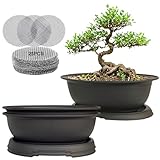

Starter pot sets
A set of small pots (often with mesh and wire) is the easiest way to begin, especially for seedlings, cuttings and mame bonsai.


Bonsai pot types at a glance
| Pot type | Frost-proof | Look | Best for |
|---|---|---|---|
| Glazed ceramic | If high-fired | Colour, refined | Flowering/deciduous, display |
| Unglazed stoneware | If high-fired | Earthy, muted | Conifers, pines, display |
| Plastic / mica | Yes | Utilitarian | Training, development |
| Mame (mini) | Varies | Tiny | Small/mame bonsai |
How to choose the right size
- Depth is often roughly the diameter of the trunk base; thick-trunked trees want deeper pots, cascades use tall pots.
- Length is commonly about two-thirds the height of an upright tree (or its spread for wide trees).
- Style: unglazed for conifers/pines; glazed for flowering, fruiting and deciduous trees.
- Development vs display: keep trees in deep training pots while thickening; move to a shallow display pot once refined.
Common mistakes
- Pots with no drainage or wire holes – you can’t anchor the tree or drain the soil.
- Jumping a developing tree into a shallow display pot too soon – it slows growth.
- Using a low-fired pot outdoors in freezing climates – it cracks.
- Choosing a pot far too large “to give room” – bonsai roots want to be contained.
FAQ
Do bonsai pots need drainage holes? Yes – multiple drainage holes are essential, plus wire holes to tie the tree in. Avoid pots without them.
What size bonsai pot should I use? As a guide, depth about equal to the trunk’s base diameter and length around two-thirds the tree’s height; deeper for development, shallower for display.
Glazed or unglazed? Unglazed, earthy pots suit conifers and pines; glazed, coloured pots suit flowering, fruiting and deciduous trees.
Can I use a regular plant pot? For training, yes (deep plastic is fine). For display and correct root development, a proper bonsai pot with the right proportions and holes is better.
Final recommendation
While a tree is developing, keep it in a deep plastic or mica training pot. For display, match the material to the tree: unglazed for conifers and pines, glazed for flowering and deciduous species – always high-fired and frost-proof if it lives outdoors, and always with drainage and wire holes.
As an Amazon Associate GrowPlants earns from qualifying purchases. GrowPlants does not sell these products.
See also: all bonsai supplies · growing supplies & equipment.