
Fabric grow bags have quietly become one of the most useful containers in gardening. Because the fabric breathes, roots that reach the edge meet air and stop, branching instead of circling – “air-pruning” that gives a denser, healthier root system than a plastic pot. They drain freely, are hard to overwater in, and fold away flat at season’s end. This guide covers what grow bags do well, sizes, and how to use them.
As an Amazon Associate GrowPlants earns from qualifying purchases. We recommend product types that genuinely suit the plant; prices and availability are set by Amazon.
Quick recommendations
- Best all-round: breathable fabric grow bags with handles
- Best for potatoes/root crops: tall bags, some with a harvest flap
- Best for trees & large plants: heavy-duty large-volume bags
- Best for small spaces: a set of smaller bags for herbs and veg
How we chose
We looked at fabric breathability and durability, drainage, stitching and handle strength, and the size range for everything from herbs to trees. The point of a grow bag is air-pruning and drainage, so breathable, sturdy fabric matters most.
Why grow bags work
Fabric sides let air reach the roots, so roots air-prune instead of circling the pot; excess water drains straight through, making overwatering and root rot far less likely than in plastic. They also keep roots cooler in summer.
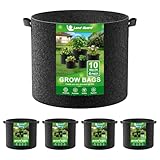
General fabric grow bags
The everyday choice for vegetables, flowers, shrubs and patio plants – with handles for moving.


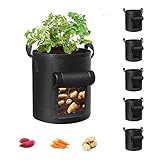
Potato & root-crop bags
Tall bags (often with a side flap) make growing and harvesting potatoes and root veg easy in small spaces.

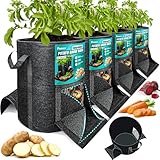
Large / heavy-duty bags
Big-volume bags for trees, tomatoes and shrubs that need more root room and stability.

Fabric vs plastic pots
| Factor | Fabric grow bag | Plastic pot |
|---|---|---|
| Roots | Air-pruned, dense | Can circle/bind |
| Drainage | Excellent | Holes only |
| Watering | Dries faster (water more) | Holds longer |
| Storage | Folds flat | Bulky |
How to choose & use
- Size to the plant: herbs in a few litres, tomatoes and shrubs in larger bags, trees in the biggest.
- Expect to water more often – the breathability that helps roots also dries the mix faster, especially in heat.
- Use a good potting mix, not garden soil, and stand bags where drainage won’t stain a patio.
Common mistakes
- Letting bags dry out in summer – they need more frequent watering than plastic.
- Choosing a bag too small for a hungry plant like a tomato.
- Filling with heavy garden soil instead of potting mix.
- Placing them where constant drainage causes problems indoors.
FAQ
Are fabric grow bags better than pots? For many plants, yes – they air-prune roots and drain well, making overwatering harder; the trade-off is more frequent watering.
How long do grow bags last? Quality bags last several seasons; lighter ones a year or two. Empty, dry and store them flat over winter.
Do I water grow bags more? Yes – the breathable fabric dries faster than plastic, so check them more often in hot weather.
What can I grow in them? Vegetables, potatoes, herbs, flowers, shrubs and even small trees – match the bag volume to the plant.
Final recommendation
Fabric grow bags are an excellent, forgiving container for vegetables, patio plants and even trees – you get air-pruned roots and near-foolproof drainage in exchange for watering a bit more often. Size the bag to the plant, fill with potting mix, and store them flat at season’s end.
As an Amazon Associate GrowPlants earns from qualifying purchases. GrowPlants does not sell these products.
See also: moss poles & plant supports · all pots, planters & supports.